Tag: drug detection

  • Fentanyl Test Strips: Important Tool Or False Security?

    Fentanyl Test Strips: Important Tool Or False Security?

    A recent study suggests that the testing strips should be widely distributed though some experts say the strips are not an adequate prevention measure.

    Last year, fentanyl became the most deadly drug in the country, responsible for more overdose deaths than any other substance. In addition to being found in — or even replacing — opioids like heroin and prescription pills, fentanyl has increasingly been detected in drugs like cocaine, whose users are at increased risk for overdose because they have not built up a tolerance to opioids. 

    That’s why some people say fentanyl test strips are an important tool to help cut back on opioid overdose deaths. Some users say they often have no idea whether the drugs they’re buying contain fentanyl, which is many times more powerful than other opioids and can cause an overdose in even a small amount.

    The test strips are able to detect the presence of the synthetic opioid, empowering users to make an informed decision about whether to take the drugs and about how much to use. 

    “Evidence to date suggests that people who use drugs often do not know whether fentanyl is present in what they are about to consume,” authors of a report prepared by the John Hopkins Bloomberg School of Public Health wrote last year

    The school conducted a study that found fentanyl test strips to be effective at detecting the drug. The researchers then interviewed people who use drugs about whether or not they would use the test strips: 84% said they were concerned about fentanyl, and 85% of people who thought they had taken fentanyl in the past said they wished they had known beforehand. Despite the drug’s powerful high, only 26% of users surveyed said that they sought drugs with fentanyl. 

    “Drug checking was viewed as an important means of overdose prevention, with 89% agreeing that it would make them feel better about protecting themselves from overdose. Interest in drug checking was associated with having witnessed an overdose and recently using a drug thought to contain fentanyl,” study authors wrote. 

    The study’s authors suggested that more agencies distribute fentanyl test strips. 

    “Drug checking strategies are reliable, practical and very much desired by those at greatest risk of overdose,” they wrote. “Drug checking services have the potential to facilitate access to treatment for substance use disorders and other essential services, as well as provide real-time data about local drug supplies for public health surveillance.”

    However, Assistant Secretary for Mental Health and Substance Use Elinore F. McCance-Katz wrote in an editorial on the SAMHSA website that fentanyl test strips are not a prevention measure that people should be focused on. 

    “Can’t the nation do better?” she wrote.

    She continues, “The entire approach is based on the premise that a drug user poised to use a drug is making rational choices, is weighing pros and cons, and is thinking completely logically about his or her drug use. Based on my clinical experience, I know this could not be further from the truth.” 

    Like needle exchanges, fentanyl test strips are likely to remain a controversial —but potentially lifesaving — tool. 
    View the original article at thefix.com

  • Fingerprint Test Can Identify Drug Use With Striking Accuracy

    Fingerprint Test Can Identify Drug Use With Striking Accuracy

    The testing device is already being used in some morgues and at treatment centers in the UK to detect drug use.

    Drug testing is important, whether to determine how someone died or to show that someone was under the influence of drugs while behind the wheel.

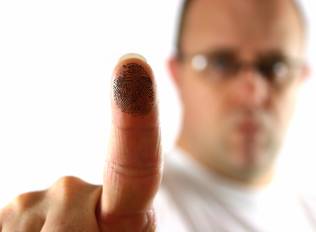
    However, current drug-testing methods that use samples of blood, saliva or hair are slow, invasive and expensive. Now, a fingerprint drug-testing system has been proven to detect the presence of drugs in sweat with up to 99% accuracy. 

    A study, published in the Journal of Analytical Toxicology, found that the Reader 1000, manufactured by U.K. firm Intelligent Fingerprinting, can detect cannabis, amphetamines, opiates, and cocaine, the substance that make up the majority of illicit drug use.

    The device works by analyzing sweat from the fingerprints of people who are alive or dead. The sweat contains metabolites that show that the body was clearing certain illicit substances. Using the device speeds up the process of drug testing. 

    “This new research highlights how our [device] can screen rapidly for drug use in individuals using a fingerprint sample with a sample collection time of only five seconds, and a total analysis time of ten minutes,” David Russell, an Emeritus Professor at the University of East Anglia, who is co-author of the research and founder of the manufacturer, told The Daily Mail.

    For the study, researchers used the Reader 1000 on 75 dead bodies, as well as testing those individuals with traditional blood and urine drug screenings.

    Comparing the readings, researchers found that the Reader 1000 was up to 99% effective at detecting cannabis, 95% for cocaine, 96% for opiates and 93% for amphetamines.

    “We matched the coroners’ drug test results obtained using our fingerprint drug screen with a second sample tested in laboratory conditions, achieving excellent correlation in terms of accuracy,” Russell explained.

    The research proved the concept of analyzing sweat collected through fingerprints, Intelligent Fingerprinting argued.

    “This important research demonstrates how there is sufficient sweat present in a subject’s fingerprint, regardless of whether the person is alive or dead, to enable our fingertip-based drug screening system to detect the presence of four major drugs of abuse at the same time,” Intelligent Fingerprinting’s Dr Paul Yates said in a news release.

    The device is already being used in some morgues and at treatment centers in the UK to detect drug use. Testing is underway to make it available at prisons and in other law enforcement settings. Although the device was able to detect the presence of opioids and other drugs, its ability to measure the amount of the substances was not studied.

    View the original article at thefix.com

  • Nigerian Girls Win Tech Challenge With Counterfeit Drug Detection App

    Nigerian Girls Win Tech Challenge With Counterfeit Drug Detection App

    The teen team hope that their app can stem the sale of counterfeit medications in their home country.

    A team consisting of five teenage girls from Nigeria has won Silicon Valley’s 2018 Technovation Challenge by building an app that detects counterfeit drugs.

    The app, called FD-Detector, works by scanning the medicine’s barcode and checking is validity and expiration date.

    The victory comes especially as a surprise considering Team Save-A-Soul having limited experience in technological skills–five months prior one of the team’s members, Jessica Osita, never even used a computer, let alone browsed the Internet.

    “I feel very excited and relieved. I’m extremely proud of myself,” Osita said to CNN.

    The teenaged team, composed of Promise Nnalue, Jessica Osita, Nwabuaku Ossai, Adaeze Onuigbo and Vivian Okoye, hope that their app can stem the sale of counterfeit medications in their home country.

    Osita herself had a personal brush with fake drugs. Her brother was involved in an accident and died after being given fake drugs.

    “My brother died from fake drugs. I’m very motivated by the death of my brother to solve this problem,” she revealed. “With this app, we will relieve the burden. I feel very excited.”

    She one day hopes to become a pharmacist.

    “I want to produce genuine drugs,” she said.

    To claim victory, the team had to beat representatives from all over the world, including the United States, Turkey, Uzbekistan, and China in the finals.

    “People are calling us celebrities and taking pictures with us. I’m very happy. We could not have done this without our mentor. She really believed in us and encouraged us,” Nnalue told interviewers.

    Their mentor, Uchenna Ugwu, introduced computers and coding to the girls through her organization, Edufun Technik, which seeks to bring STEM to the underprivileged children of Anambra State in Nigeria.

    “They have experienced so many firsts. They were entering a flight for the first time. The girls were scared and overwhelmed. They asked me, ‘How can we compete with these countries who have been using tech for a very long time?’” Ugwu recalled. “I told them ‘it’s not how long ago you started, but how well you do.’ I’m so proud of them because they were so determined to learn. They were not the most talented in the coding class but they were the most determined. They stuck with the classes when a lot of their peers dropped out.”

    The girls’ project could potentially have a huge impact back home, where Nigerian officials have long been battling counterfeit drugs.

    Just last June, the Nigerian National Agency for Food and Drug Administration and Control had to destroy nearly $10 million in counterfeit drugs.

    Fake drugs are also a problem in the United States. Lethal counterfeit opioid painkillers are growing in the black market. Music legend Prince passed away after taking fentanyl-laced counterfeit Vicodin.

    View the original article at thefix.com