Tag: Drug Enforcement Administration

  • DEA Kept Database Of People Who Bought Money Counters To Get Drug Convictions

    DEA Kept Database Of People Who Bought Money Counters To Get Drug Convictions

    Over a six-year period, the agency collected “tens of thousands of records, including the names, addresses, and phone numbers” from sellers of money counters.

    For years, the Drug Enforcement Administration collected data on purchases of money counters hoping to net drug convictions. But the controversial program not only pushed the limits of government surveillance, it wasn’t very successful either.

    “Program B,” as it is referred to in a report by the U.S. Department of Justice Office of Inspector General (OIG), which audited the DEA, collected bulk purchaser data on “tens of thousands of records, including the names, addresses, and phone numbers of buyers” from 2008 to 2014, Forbes reports.

    The DEA would issue “administrative” subpoenas to sellers of money counters, and send the data to field offices to cross-reference against law enforcement databases, including records from more than 15 different federal agencies including the ATF, FBI and ICE.

    Even more troubling is that the DEA sought data on people buying money counters with no specific target in mind. The subpoenas were “unrelated to a specific drug trafficking investigation or target,” the report said. The practice of issuing blanket subpoenas “wasn’t predicated on individual cases or individual suspicions,” but was “just a general fishing expedition,” as one FBI agent who questioned the integrity of the DEA’s activities explained.

    “You can’t just take any innocent activity that Americans engage in and go grab all their records knowing that a small percentage of it is potentially connected to illegal activity,” the FBI agent added. “And that sounded exactly like what the DEA was looking to do.”

    The program did little to “win” the war on drugs. Of all the people it collected data on, the program netted only 131 arrests. The DEA declined to say how many of these resulted in convictions.

    While the American public had little to show for Program B, the agency certainly benefited from it. From 2008 to 2014, the surveillance program helped the DEA seize $48 million in cash, $4 million in real estate, 88 vehicles, 179 firearms, nearly 1,500 pounds of cocaine and over 21,300 pounds of marijuana.

    Overall, it was “troubling” to the Inspector General that the DEA failed to consider the legal limits of its surveillance program. Scandals are not new to the agency, and the Inspector General seemed to imply that this likely won’t be the last.

    As Forbes reported, “Although both the Justice Department and the DEA say they have ‘no plans to reinstate any of the discontinued bulk collection programs,’ the Inspector General noted that ‘there is nothing preventing the DEA or the Department from seeking to start such a program at any time in the future.’”

    According to a 2015 report by the Drug Policy Alliance, the agency has been investigated by the OIG for numerous scandals including the massacre of Honduran civilians, the use of NSA data to spy on Americans and fabricate evidence, controversial uses of confidential informants, and airline passenger searches.

    View the original article at thefix.com

  • Former DEA Official Now A Paid Consultant For Purdue Pharma

    Former DEA Official Now A Paid Consultant For Purdue Pharma

    Insiders wonder if the former DEA official anticipated becoming a paid consultant for Big Pharma when she was with the agency.

    Demetra Ashley, former acting assistant administrator and senior official for the U.S. Drug Enforcement Administration (DEA), is currently a paid consultant for one of the top opioid drug manufacturers in the country, according to NBC News sources.

    As acting assistant administrator, Ashley warned the Senate in 2017 that a “robust regulatory program” would be needed in order to prevent the misuse of controlled prescription drugs such as Purdue Pharma’s OxyContin and other opioid medications.

    She specifically called out the over-prescribing of these drugs as “inextricably linked with the threat the United States faces from the trafficking of heroin, illicit fentanyl and fentanyl analogues,” and by extension, the entire opioid epidemic.

    At the same Senate hearing, Ashley argued for a law that made it very difficult for the DEA to use immediate suspension orders against companies like Purdue Pharma to either be revised or repealed.

    The Ensuring Patient Access and Effective Drug Enforcement Act, passed in 2016, made it nearly impossible for the DEA to take urgent action against a drug company when it “represents an imminent danger to public health or safety,” she said.

    Now, she is being paid by Purdue to advise them via her new consulting firm, Dashley Consulting, LLC. Purdue is currently facing around 2,000 lawsuits for its alleged role in the opioid epidemic via deceptive marketing tactics and encouraging doctors to over-prescribe OxyContin and similar drugs.

    After decades of specializing in preventing the diversion of prescription drugs, some are questioning whether Ashley did all she could to combat the alleged role of Purdue Pharma and other companies in the opioid epidemic and whether her new consulting position is a violation of ethics.

    While there is nothing technically illegal about this, Washington University law professor and government ethics expert Kathleen Clark says that Ashley’s new role with Purdue raises questions about “whether the prospect of a payday after leaving government tainted the actions of the regulator while still in government.”

    “Did this person act differently in government because they anticipated or wanted to get the payday from these very powerful economic actors who have huge amounts at stake?” Clark asks.

    When contacted by NBC News, Ashley did not confirm or deny consulting for Purdue Pharma, but acknowledged that she has “been consulting for members of the industry” since June 2018, three months after she retired from the DEA.

    She also confirmed that she has been subpoenaed as part of a consolidated lawsuit against opioid companies because of her former role in the DEA.

    View the original article at thefix.com

  • DEA Plans To Burn Tons Of Marijuana This Summer

    DEA Plans To Burn Tons Of Marijuana This Summer

    Tons of seized marijuana will go up in smoke in the coming months.

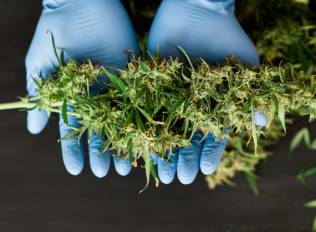
    The Drug Enforcement Administration (DEA) wants to burn tons of weed over the next six months, and is looking for the right contractor to help with the job. 

    According to a contracting notice, the agency wants to burn 1,000 pounds of marijuana an hour between March and September. The contract is for the “destruction by incineration of evidence located in the following cities in the state of Texas—McAllen, Brownsville, Corpus Christi, Laredo, and Eagle Pass.”

    Despite putting out the notice, the DEA already has a partner in mind for the epic pot burn: Tucson Iron & Metal in Tucson, Arizona. 

    “Research has shown there is only one vendor in close proximity to the district and resident offices of McAllen, Brownsville, Corpus Christi, Laredo, and Eagle Pass capable of providing the services necessary for this requirement,” the notice says. 

    That’s because the DEA has strict requirements for disposing of marijuana seized from the black market, according to Quartz

    “The integrity of the destruction process shall be such that the material to be destroyed cannot be redirected or retrieved once it is committed to destruction,” the notice reads. The cannabis must be destroyed “to a point where there are no detectable levels, as measured by standard analytical methods, of byproduct from the destruction process. DEA shall inspect the incinerator to ensure no drug residue remains.”

    In addition, there will be tight DEA regulation of the entire process, and a need to privacy. The DEA requires that the company that destroys the pot have a large fence on their premises, and drug test employees yearly. The DEA sends staff to oversee the burns, and also records them. 

    The agency “reserves the right to access the video feed as necessary to ensure the proper destruction of its drugs and safety of its representatives.”

    The Atlanta office of U.S. Customs and Border Protection is also looking for a contractor to help dispose of drug evidence, including marijuana, meth, cocaine and more. 

    Recently the DEA put out a different type of contracting notice, asking for help finding a product that could assist agents in differentiating between hemp (which is legal federally) and psychoactive marijuana as we know it (which is not). The different species of cannabis plant can confuse DEA agents.

    In addition to destroying drug evidence, the DEA is also responsible for approving applications to grow marijuana for research. The agency has promised to make more permits available, but the process has been slow, further delaying marijuana research. 

    “The DEA continues to review applications for registration and registers the number of bulk manufacturers of a controlled substance that is necessary to produce an adequate and uninterrupted supply,” the agency wrote last year. 

    View the original article at thefix.com

  • Top DEA Agent Accused Of Laundering Over $7 Million In Drug Money

    Top DEA Agent Accused Of Laundering Over $7 Million In Drug Money

    The former DEA agent allegedly kept $7 million of money laundered from drug sales in a business account.

    A former Drug Enforcement Administration (DEA) agent who oversaw a high-profile undercover operation has been linked to a $7 million money-laundering scheme involving Colombian drug cartels.

    Five current and former law enforcement officials told the AP that Jose Irizarry—who left the DEA in 2017—may be the co-conspirator in a recent federal case in which former DEA informant Gustavo Yabrudi pled guilty to laundering money for cartel members as part of an undercover contraband operation.

    Yabrudi claimed that he and the co-conspirator kept $7 million of money laundered from drug sales in a business account. Investigators are also investigating Irizarry’s second wife, who is related to a top money-laundering suspect in Colombia.

    The information about Irizarry came about as part of a plea agreement between the Venezuelan-born Yabrudi and federal prosecutors who were overseeing the case in Atlanta, Georgia.

    According to court records, Yabrudi—who worked as an informant for the DEA between 2010 and 2016—and Irizarry allegedly opened a bank account to direct deposits from a network of cartel contacts who sought to filter drug money through a contraband merchandise operation overseen by Irizarry for the DEA.

    Irizarry allegedly used a variety of means to launder the money, including shell companies and a variety of goods—including electronics and textiles—which were exported to Colombia for resale in pesos, which were then given to the cartel members. 

    According to Yabrudi’s plea agreement, the two men opened a secret account through which $7 million in drug cartel funds flowed over a period of six years. Yabrudi admitted that he withdrew money from the account to give to the co-conspirator, who according to the aforementioned officials, was Irizarry.

    “None of these deposits, nor the use of the funds that followed were officially sanctioned DEA operations,” wrote federal prosecutors in court filings.

    The AP noted that Irizarry, who was once a highly regarded agent, had come under scrutiny by DEA officials over a series of questionable decisions and connections. While conducting the undercover contraband operation, Irizarry reportedly bought an expensive home and vehicle, and hosted parties involving sex workers. 

    Irizarry’s marriage to his second wife, Nathalia Gomez, has also caught the attention of investigators due to her familial relationship with Diego Martin, whom the AP labeled as Colombia’s “contraband king.” Martin allegedly bought shipping containers filled with goods using drug money. Martin has remained out of the law’s grasp by serving as an informant for various U.S. law enforcement entities.

    The current whereabouts of Irizarry, who resigned from the DEA in 2017 after being recalled to Washington, D.C., are unknown. The AP noted that calls to a cell phone which officials said belonged to him went unreturned, as did calls to Gomez. It is also unknown if Irizarry has been charged in regard to the allegations.

    View the original article at thefix.com

  • Doctor Accused Of Prescribing Pills Linked To Overdose Deaths

    Doctor Accused Of Prescribing Pills Linked To Overdose Deaths

    The doctor’s prescription writing was allegedly so extreme that a local CVS stopped accepting prescriptions he wrote. 

    There’s a lot of attention on the so-called “third wave” of the opioid epidemic, synthetic opioids, but the arrest of a California doctor this week for allegedly illegally distributing prescription pills shows that medications are still a dangerous part of the epidemic.

    Orange County doctor Dzung Ahn Pham, 57, who owns Irvine Village Urgent Care was arrested on Tuesday for allegedly providing prescriptions to patients whom he never actually examined, according to a press release issued by the U.S. Attorney’s Office.

    He is facing two charges of illegally distributing oxycodone. At least five people who reportedly received medications from Pham overdosed, and another man who was allegedly using pills from Pham was involved in a fatal car accident.  

    “This case clearly and tragically illustrates the dangers of drug dealers armed with prescription pads,” United States Attorney Nick Hanna said in the press release. “This doctor is accused of flooding Southern California with huge quantities of opioids and other dangerous narcotics by writing prescriptions for drugs he knew would be diverted to the street. Prosecutors in my office, working with their law enforcement partners, will tirelessly pursue everyone involved in the trafficking of opioids as part of our persistent and ongoing efforts to stop the trail of misery that follows these dangerous drugs.”

    Pham’s prescription writing was allegedly so extreme that a local CVS stopped accepting prescriptions he wrote. 

    According to an affidavit, Pham provided medications including Adderall, oxycodone, tramadol, sSuboxone, norco, soma, alprazolam, and hydrocodone bitartrate-acetaminophen to patients who requested them via text message. At least 84 patients had prescriptions within a day or two after sending texts. 

    Last summer, undercover agents from the Drug Enforcement Administration also reportedly received pills from Pham, including a “Holy Trinity, [which] is the combined use of an opioid (such as hydrocodone), a benzodiazepine (such as Valium), and carisoprodol (a muscle relaxer like Soma),” according to the press release. The doctor then reportedly sent the undercover agent to a specific pharmacy that still accepted his prescriptions. 

    The pill mill operation was reportedly lucrative for Pham, who is believed to have deposited more than $5 million into personal accounts over the past five years. He also reportedly deposited $1.7 million into a business account. Investigators say he was charging $100-$150 per visit; it’s not clear how patients who requested prescriptions via text were charged. 

    William D. Bodner, DEA Los Angeles Associate Special Agent in Charge, said that targeting doctors who write prescriptions irresponsibly is a priority. 

    “This arrest should serve as a warning to any physician who utilizes their position to traffic opioids,” he said.

    View the original article at thefix.com

  • DEA Wants More Medical Marijuana, Fewer Opioids To Be Produced In 2019

    DEA Wants More Medical Marijuana, Fewer Opioids To Be Produced In 2019

    The new quotas are in line with the federal government’s goal of cutting opioid prescriptions by one-third in three years.

    When setting quotas for marijuana and opioid production for 2019, the Drug Enforcement Administration (DEA) did the unexpected.

    The DEA is raising the quota of cannabis that can be grown in the United States from 1,000 pounds (in 2018) to 5,400 pounds for 2019, Forbes reported.

    And in an attempt to push back on the opioid crisis, the agency lowered the production quota of opioids including oxycodone, hydrocodone, oxymorphone, hydromorphone, morphine and fentanyl.

    The quotas represent “the total amount of controlled substances necessary to meet the country’s medical, scientific, research, industrial, and export needs for the year and for the establishment and maintenance of reserve stocks,” the DEA said in a press release.

    The opioid quota reductions are in line with the federal government’s goal of cutting opioid prescriptions by one-third in three years.

    According to U.S. Attorney General Jeff Sessions, there’s already been “significant progress” in doing so in the last year.

    “Cutting opioid production quotas by an average of 10% next year will help us continue that progress and make it harder to divert these drugs for abuse,” said Sessions, according to High Times.

    The DEA’s decision to raise the quota for research cannabis grown in the U.S. is a welcome change for researchers and advocates alike.

    Strict regulations surrounding the cultivation and dispensation of research cannabis has made it difficult for the body of research to catch up to the increasing number of states that are “legalizing it” in some form.

    The current White House is blamed for stalling progress on this issue. As of July 2018, STAT News reported that the DEA still had not granted additional licenses to cannabis growers, despite a 2016 announcement by the agency that it would be open up the application process to new growers.

    It was reported that the directive to stop accepting and processing new applications came from the Department of Justice via Attorney General Sessions.

    Sessions had hinted in April that, “fairly soon I believe… we will add additional suppliers of marijuana under controlled circumstances.” But despite this cryptic promise, and calls for change from bipartisan lawmakers in Congress, there’s been little movement on the issue.

    Perhaps the updated quotas may fill in the demand for research cannabis, though pain patients will no doubt worry about how lower opioid production will affect them.

    View the original article at thefix.com