Tag: drug screenings

  • All Adults Should Be Asked About Illicit Drug Use, Task Force Finds

    All Adults Should Be Asked About Illicit Drug Use, Task Force Finds

    According to the task force, 10% of American adults have used illegal drugs in the past month.

    All adult patients in the U.S. should be asked about their illicit drug use, according to recommendations released this week by the U.S. Preventive Services Task Force. 

    “Illicit drug use can have a devastating impact on individuals and families,” task force co-vice chair Karina Davidson said in a statement with the release of the recommendation, which is available here. “Clinicians can help by screening their adult patients and connecting people who use illicit drugs to the care they need to get better.”

    According to the task force, 10% of American adults have used illegal drugs in the past month. If doctors ask about this and know about their patients’ drug use, they will be better able to deliver care and connect their patients with evidence-based treatments for drug use and abuse.

    Dr. Gary LeRoy, president-elect of the American Academy of Family Physicians, told The Los Angeles Times that he has been screening patients for drug use for 10 years in his Dayton, Ohio practice.

    “All of us should be keenly aware that on average, one in 10 of our patients are doing drugs—whether we ask them or not—and we’re not going to cause someone to use illicit drugs because we ask the question,” he said. “When you create an atmosphere of trust where you have safe conversations, they appreciate that you ask.”

    LeRoy said that asking all patients about their drug use—of so-called street drugs and misuse of prescription medications—can help doctors get to know their patients better.

    “They say, ‘Oh, I had no idea I already had these people in my practice,’” he said. “When I started asking these questions and providing the service, they came out of the woodwork.”

    The task force considered recommending screenings for everyone in 2008, but opted not to. That has changed at least in part because there are now more proven ways to treat drug addiction, said UCLA internal medicine specialist and task force co-chair Dr. Carol Mangione.

    Treatment & Prevention

    Mangione said, “We don’t want to screen for something unless we know there’s an effective treatment. If you don’t have a treatment that’s effective for people who screen positive, you haven’t really helped.”

    Today, people who talk to their doctor about illicit drug use can be connected with help that is proven to be efficient.

    The recommendation only concerns adults ages 18 and older, but the task force said that doctors should consider asking teens about illicit drug use too.

    “We want to help prevent illicit drug use in teens, so we’re calling for more research on the benefits of screening,” Mangione said in a statement. “Clinicians should continue to use their professional judgement to determine what’s best for their teen patients.”

    View the original article at thefix.com

  • Screening Job Applicants For Marijuana Use Is Now Against The Law In NYC

    Screening Job Applicants For Marijuana Use Is Now Against The Law In NYC

    NYC is the first jurisdiction in the U.S. to explicitly prohibit this practice.

    Most New York City employers can no longer require a marijuana test from job applicants as a condition of employment. The new law, which the City Council “overwhelmingly” passed in April with a 40-4 vote, will take effect in May 2020.

    “If we want to be a progressive city, we have to really put these things into action,” bill sponsor and NYC public advocate Jumaane D. Williams said at the time.

    NYC is the first jurisdiction in the U.S. to explicitly prohibit this practice.

    While Mayor Bill de Blasio had said that he would sign the legislation—calling it a “healthy step” and “part of how we change our culture to be less punitive and exclusionary”—he ultimately did not sign.

    Marijuana Moment reports that it is “unclear what changed” between then and now. Regardless, the law will take effect in one year.

    The bill’s text reads: “[E]xcept as otherwise provided by law, it shall be an unlawful discriminatory practice for an employer, labor organization, employment agency, or agent thereof to require a prospective employee to submit to testing for the presence of tetrahydrocannabinols or marijuana in such prospective employee’s system as a condition of employment.”

    Certain occupations—“safety and security sensitive jobs”—are exempt from the rule including construction, law enforcement, child care, medical care, truck driving and aviation.

    Federal or state employees and government contractors are also exempt as they do not fall under the city’s jurisdiction. Employers may also test workers if they appear to be under the influence of marijuana at work.

    Williams, who authored the legislation, says the city will not wait for the state government to legalize marijuana for it to start reforming marijuana policies. “NYC must lead the way on this issue,” he stated.

    New York’s efforts to legalize marijuana for recreational use have lost momentum ahead of the time remaining in New York’s legislative session.

    The New York Times notes that while it is still possible for the state to “legalize it” by late June, it’s unclear whether NY lawmakers have finally come to agree on the details of the marijuana legalization initiative.

    “It’s clear that we cannot wait until legalization on the state level before moving to reduce the impact that marijuana prohibition has had on individuals and communities,” said Williams. “Testing isn’t a deterrent to using marijuana, it’s an impediment to opportunity that dates back to the Reagan era—a war on drugs measure that’s now a war on workers. We need to be creating more access points for employment, not less—and if prospective employers aren’t testing for past alcohol usage, marijuana should be no different.”

    If legalization does not happen this year, the state is planning to expand its medical marijuana program, NYT reported.

    View the original article at thefix.com

  • Positive Drug Tests At Work Continue To Rise

    Positive Drug Tests At Work Continue To Rise

    Marijuana is the substance most often detected in workplace drug screenings, according to a new study.

    More and more employees are testing positive for drugs in workplace screenings, an increase that is concerning for some employers and safety specialists. 

    According to a study by Quest Diagnostics, positive drugs tests have increased significantly in a two-year period between 2015 and 2017. Marijuana is the substance most often detected in workplace drug screenings, and analysis found that it was detected 33% more often in 2017 than in 2015. That jump may be expected, as more states make cannabis legal for recreational and medicinal use. 

    However, it’s alarming that the industry with the most significant increase was transportation and warehousing. In this industry, people often operate heavy machinery, and being intoxicated could put them at risk for accidents, human resources expert Rob Wilson, president of Employco USA, told WXYZ Detroit

    “Test results showed that there was a double-digit jump of marijuana use in transportation and warehouse fields, which could be very problematic as operating heavy machinery while under the influence of marijuana could be very dangerous indeed,” he said.

    Despite the fact that more states are legalizing cannabis, employees could still put their jobs at risk by using it. Whether or not medical use of cannabis is protected is the subject of many legal battles, but Wilson said that employers can treat cannabis like other legal substances: employees can use them, but not at work. 

    “While it is against the law to discriminate against someone simply because they have a medical marijuana card, as this could be seen as discrimination against someone with a disability, you can still require sobriety among your employees and treat marijuana the same way you would alcohol or prescription drugs like Vicodin. Whether an employee is driving heavy machinery or approving loans, you need your workers to be clear-headed and capable of performing at a high level,” he said. 

    However, this can complicate drug testing because the tests usually just show whether a substance is in someone’s system, without indicating the level, which is needed to know whether someone is currently under the influence of marijuana

    In addition, employers could face pushback for testing employees, Wilson said. 

    “Your ability to monitor drug use among your employees is going to depend on whether or not you are a unionized or private workplace,” he explained. “While you have the right to expect and require sobriety from workers on the job, it can become a bit tricky when you suspect drug use and want to act on your fears.”

    In addition to marijuana, more people also tested positive for cocaine and amphetamines, suggesting that the rise in positive tests can’t be wholly explained by cannabis legalization. 

    View the original article at thefix.com

  • Fingerprint Test Can Identify Drug Use With Striking Accuracy

    Fingerprint Test Can Identify Drug Use With Striking Accuracy

    The testing device is already being used in some morgues and at treatment centers in the UK to detect drug use.

    Drug testing is important, whether to determine how someone died or to show that someone was under the influence of drugs while behind the wheel.

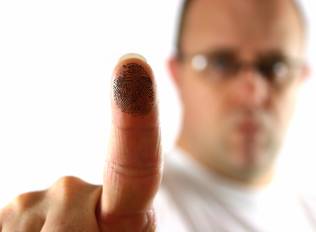
    However, current drug-testing methods that use samples of blood, saliva or hair are slow, invasive and expensive. Now, a fingerprint drug-testing system has been proven to detect the presence of drugs in sweat with up to 99% accuracy. 

    A study, published in the Journal of Analytical Toxicology, found that the Reader 1000, manufactured by U.K. firm Intelligent Fingerprinting, can detect cannabis, amphetamines, opiates, and cocaine, the substance that make up the majority of illicit drug use.

    The device works by analyzing sweat from the fingerprints of people who are alive or dead. The sweat contains metabolites that show that the body was clearing certain illicit substances. Using the device speeds up the process of drug testing. 

    “This new research highlights how our [device] can screen rapidly for drug use in individuals using a fingerprint sample with a sample collection time of only five seconds, and a total analysis time of ten minutes,” David Russell, an Emeritus Professor at the University of East Anglia, who is co-author of the research and founder of the manufacturer, told The Daily Mail.

    For the study, researchers used the Reader 1000 on 75 dead bodies, as well as testing those individuals with traditional blood and urine drug screenings.

    Comparing the readings, researchers found that the Reader 1000 was up to 99% effective at detecting cannabis, 95% for cocaine, 96% for opiates and 93% for amphetamines.

    “We matched the coroners’ drug test results obtained using our fingerprint drug screen with a second sample tested in laboratory conditions, achieving excellent correlation in terms of accuracy,” Russell explained.

    The research proved the concept of analyzing sweat collected through fingerprints, Intelligent Fingerprinting argued.

    “This important research demonstrates how there is sufficient sweat present in a subject’s fingerprint, regardless of whether the person is alive or dead, to enable our fingertip-based drug screening system to detect the presence of four major drugs of abuse at the same time,” Intelligent Fingerprinting’s Dr Paul Yates said in a news release.

    The device is already being used in some morgues and at treatment centers in the UK to detect drug use. Testing is underway to make it available at prisons and in other law enforcement settings. Although the device was able to detect the presence of opioids and other drugs, its ability to measure the amount of the substances was not studied.

    View the original article at thefix.com

  • Controversial Lawmaker Wants Congress Members Tested for Drugs

    Controversial Lawmaker Wants Congress Members Tested for Drugs

    The bill was dismissed by the state’s Democratic Party, whose executive director dismissed Higgins’ proposition as “gimmicks and bravado.” 

    A Louisiana representative has introduced a resolution that would lawmakers in Congress to submit to drug screenings once every term. 

    U.S. Rep. Clay Higgins (R-LA), who is also a Reserve Deputy Marshal and former St. Landry’s Parish public information officer who has drawn criticism for combative social media posts, said that House Concurrent Resolution 135 is intended to hold elected officials to the same standards as their constituents, who have to submit to drug testing for their jobs.

    The bill, which currently has no co-sponsors, was dismissed by the state’s Democratic Party, whose executive director dismissed Higgins’ proposition as “gimmicks and bravado.”

    Higgins’ resolution would require lawmakers to not only subject to the random testing, but also reimburse taxpayers for costs.

    Those who test positive would be reported to the House or Senate Committee on Ethics, which would also publicize the names of any Congress members that did not submit to the tests.

    In an interview with USA Today, Higgins initially joked that his resolution was based on his observation of “behavior that would cause one to wonder” about his colleagues in the U.S. House and Senate. But in a statement issued on September 13—the same day he introduced the resolution—Higgins took a more serious tone about his intentions. 

    “Elected officials in Washington, D.C. should be subject to the same kind of random drug screenings that blue-collar, working-class Americans have to endure,” he wrote. “Congress shouldn’t live by a different set of rules. This effort is about maintaining accountability and ensuring sober service to We, the People.” 

    Higgins previously proposed a similar resolution in a June 2018 Facebook video, in which he stated, “Based on some of the behavior I’ve seen, I’d be very interested to know what kind of illegal drugs are flowing through the veins of our elected officials in Washington, D.C.”

    CBS affiliate KLFY-TV noted that Higgins had not specified whether he had actually seen any elected officials using or under the influence of drugs.

    Louisiana Democratic Party executive director Stephen Handwerk responded to Higgins’ resolution on Twitter. “When you haven’t delivered at all for your district I guess all you have is gimmicks and bravado,” wrote Handwerk, who also promoted Higgins’ opponent for the 3rd District seat, Mimi Methvin.

    Higgins initially made a name for himself on both the state and national front while with the St. Landry Parish Sheriff’s Office, where his weekly “Crime Stoppers” segments earned a following for his draconian approach to suspected criminals. A 2016 video in which he referred to predominately black gang members as “heathens” and “animals” earned a reprimand from Parish Sheriff Bobby Guidroz, after which Higgins resigned from the parish. 

    In 2017, Higgins posted a video in which he stated that “radicalized Islamic suspect[s]” should be “[hunted] down and [killed].” That same year, he posted a video taken at the Auschwitz-Birkenau Memorial site, where he stated that such concentration camps are the reason why the United States needs stronger homeland security and military measures.

    View the original article at thefix.com