Tag: drug tests

  • Feuding Politicians Challenge Each Other To Drug Tests In 'Pissing Contest'

    Feuding Politicians Challenge Each Other To Drug Tests In 'Pissing Contest'

    An online squabble turned ugly when allegations of drug use were brought up.

    Two U.S. politicians got into an argument in the comments section of a political blog and ended up challenging each other to drug tests in what some are calling a literal pissing contest.

    Bridgeport City Councilman Ernest Newton and Board of Education member Maria Pereira, both Connecticut Democrats, began the argument about budget figures in the comments of the local blog Only in Bridgeport (OIB) before it started turning ugly.

    The internet fight turned to the topic of drugs when Newton took a shot at Pereira’s mental health. “Please remember to take your med”s [sic],” he wrote. Pereira turned the thinly veiled insult around by going after Newton’s history of addiction.

    “Ernie, I promise I will continue to take any and all prescribed medicine,” she replied. “In turn, please ensure you take anything you need that may have to be swallowed, snorted, inhaled, or injected.”

    In 1997, Newton confessed to his fellow legislators in the Connecticut General Assembly that he had been through rehab for his addiction to crack cocaine. The disorder was active in Newton’s life for four years while he served as a Connecticut state congressman.

    In the online argument, Newton hit back by accusing Pereira of overdosing on some kind of medication, landing her in a psychiatric ward. Pereira vehemently denied these claims and issued a challenge.

    “I’ll tell you what, Ernie,” she wrote. “I will gladly pay for both you and I to take a drug test with the understanding the results, whatever they may be, will be released to OIB. I have absolutely nothing to worry about. Will you agree to take a drug test I pay for on the condition the results are released to OIB?”

    Newton did agree, telling her to name the time and place. Pereira named the local AFC Urgent Care as the place for an observed 10-panel urine drug test.

    Both Newton’s and Pereira’s results came back negative.

    The test results did not put an end to the feud, however.

    Pereira accused Newton of faking his results when he posted that they came back negative in the comments rather than submitting a photo of the results to Only in Bridgeport like she had wanted. Newton then questioned why Pereira’s results took longer than his to come back and accused her of foul play. He also accused her of racism, saying that she “wouldn’t have challenged a white person” to a drug test contest and that she’s “just like Donald Trump.”

    The online fight apparently ended on April 15 after citizen commenters began questioning why the two were engaging in an unproductive fight, with one calling it “embarrassing to the city.”

    View the original article at thefix.com

  • Alabama Lawmaker Wants To Drug Test Food Stamp Recipients

    Alabama Lawmaker Wants To Drug Test Food Stamp Recipients

    The state rep’s new bill targets SNAP beneficiaries who have a “reasonable suspicion” of drug use.

    An Alabama lawmaker has introduced legislation that would require people to undergo a drug test before they receive SNAP benefits, formerly known as food stamps.

    Republican state Representative Tommy Hanes drafted the bill, which targets SNAP beneficiaries who have a “reasonable suspicion” of drug use. The bill defines “reasonable suspicion” as having a drug conviction within the past five years—thus, the legislation would heavily affect people with a history of substance use disorders.

    According to Think Progress, SNAP recipients are already required to disclose any drug-related convictions. 

    Under the bill, if a SNAP recipient tests positive for drugs, they would receive a warning. If they test positive a second time, their food assistance would be cancelled for a year, and if they test positive a third time they would be ineligible for life. However, recipients who have children could appoint someone else to get the children’s food assistance. 

    People against this practice say that in addition to stigmatizing people on assistance, the bill would create financial stress, since drug tests after the first must be paid for by the SNAP recipient. However, people who pass their tests would be reimbursed. Anyone who refuses to be tested would not receive food assistance. 

    Emily Moon of the Pacific Standard wrote that the bill would put the state’s SNAP program in jeopardy. 

    “Drug tests for public benefits does not reduce drug use,” she wrote. “Instead, it makes federal assistance programs more expensive and less effective; research shows the requirements discourage people from applying and fail to help those with illegal drug dependences get jobs—the long-term goal of most public-assistance programs.”

    Political science professor Matthew Gritter, of Angelo State University, said that drug testing can be a hassle that prevents people who need benefits from applying for them. Therefore, it reduces the efficiency of the SNAP program, he told the Pacific Standard last year. 

    “One of the things that we found in states that have drug tested welfare recipients is that very few welfare recipients test positive, but it becomes very expensive to test them,” he said. “So you’re raising the overhead costs to the program—and SNAP traditionally has had a very low overhead and a pretty positive impact. So a lot of these reforms, coming from people that advocate small government, are actually making the program clunkier and more bureaucratic.”

    However, writing for the Alabama Political Reporter, Josh Moon said that facts like these do not matter to Rep. Hanes and others who support drug testing SNAP recipients.

    “The liberal news media is playing a role in spreading false information about conservatives who attempt to implement common sense reform,” Hanes said in a press release. “Our goal should be helping folks become independent, so they are able to obtain a much higher standard of living.”

    View the original article at thefix.com

  • Thousands More Cases Up For Dismissal Due To Corrupt Drug Lab Chemist

    Thousands More Cases Up For Dismissal Due To Corrupt Drug Lab Chemist

    The ACLU estimates that at least 12,000 cases will be dismissed as a result of Sonja Farak’s actions.

    A disgraced state chemist who admitted to tampering with, stealing and using drug evidence, completed her 18-month prison sentence in 2015. But we’re still seeing the impact of Sonja Farak’s misconduct while testing drug evidence for the state of Massachusetts for over a decade.

    The Massachusetts Supreme Judicial Court (SJC) ruled last Thursday (Oct. 11) that more drug-related cases should be dismissed as a result of Farak’s actions. While the exact number of affected cases is to be determined, the American Civil Liberties Union of Massachusetts estimated that it could be at least 12,000 or more, according to WBUR.

    “We conclude that Farak’s widespread evidence tampering has compromised the integrity of thousands of drug convictions apart from those that the Commonwealth has agreed should be vacated and dismissed,” said Associate Justice Frank Gaziano. “Her misconduct, compounded by prosecutorial misconduct, requires that this court exercise its superintendence authority and vacate and dismiss all criminal convictions tainted by governmental wrongdoing.”

    Farak was at the Amherst lab for 11 years. Not only was she stealing drug samples and tampering with evidence, she was under the influence while working.

    The SJC already ruled in April that more than 7,500 cases should be dismissed, because Farak had signed off on them. However, the court has now agreed to invalidate every drug sample tested at the Amherst lab where Farak worked—even if she did not sign off on them—as well as the cases related to the drug sample.

    In 2013, Sonja Farak was arrested for stealing cocaine from the Amherst lab, which has since closed. She eventually admitted to tampering with drug evidence and making a “daily habit of treating the drug lab’s evidence supply as a personal narcotics buffet” for nearly a decade before her arrest, according to Courthouse News.

    New “Farak defendants” whose cases will be affected include “those convicted of methamphetamine offenses while Farak worked at the Amherst lab, and any defendants who had drugs in their cases tested between January 2009 and January 2013—the last four years that Farak was at the lab.

    For now, the ACLU and Committee for Public Counsel Services (CPCS) have been tasked with identifying the new Farak defendants and determining how many new cases should be dismissed.

    “There’s a lot of work to be done, but we’re incredibly pleased to have all this work to do to get people the justice they deserve and be able to move on from this disaster,” said Rebecca Jacobstein, staff attorney for the CPCS.

    This is not the first time that thousands of drug-related cases have been dismissed as a result of a state chemist being found guilty of misconduct.

    View the original article at thefix.com

  • Fingerprint Test Can Identify Drug Use With Striking Accuracy

    Fingerprint Test Can Identify Drug Use With Striking Accuracy

    The testing device is already being used in some morgues and at treatment centers in the UK to detect drug use.

    Drug testing is important, whether to determine how someone died or to show that someone was under the influence of drugs while behind the wheel.

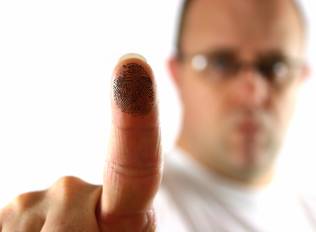
    However, current drug-testing methods that use samples of blood, saliva or hair are slow, invasive and expensive. Now, a fingerprint drug-testing system has been proven to detect the presence of drugs in sweat with up to 99% accuracy. 

    A study, published in the Journal of Analytical Toxicology, found that the Reader 1000, manufactured by U.K. firm Intelligent Fingerprinting, can detect cannabis, amphetamines, opiates, and cocaine, the substance that make up the majority of illicit drug use.

    The device works by analyzing sweat from the fingerprints of people who are alive or dead. The sweat contains metabolites that show that the body was clearing certain illicit substances. Using the device speeds up the process of drug testing. 

    “This new research highlights how our [device] can screen rapidly for drug use in individuals using a fingerprint sample with a sample collection time of only five seconds, and a total analysis time of ten minutes,” David Russell, an Emeritus Professor at the University of East Anglia, who is co-author of the research and founder of the manufacturer, told The Daily Mail.

    For the study, researchers used the Reader 1000 on 75 dead bodies, as well as testing those individuals with traditional blood and urine drug screenings.

    Comparing the readings, researchers found that the Reader 1000 was up to 99% effective at detecting cannabis, 95% for cocaine, 96% for opiates and 93% for amphetamines.

    “We matched the coroners’ drug test results obtained using our fingerprint drug screen with a second sample tested in laboratory conditions, achieving excellent correlation in terms of accuracy,” Russell explained.

    The research proved the concept of analyzing sweat collected through fingerprints, Intelligent Fingerprinting argued.

    “This important research demonstrates how there is sufficient sweat present in a subject’s fingerprint, regardless of whether the person is alive or dead, to enable our fingertip-based drug screening system to detect the presence of four major drugs of abuse at the same time,” Intelligent Fingerprinting’s Dr Paul Yates said in a news release.

    The device is already being used in some morgues and at treatment centers in the UK to detect drug use. Testing is underway to make it available at prisons and in other law enforcement settings. Although the device was able to detect the presence of opioids and other drugs, its ability to measure the amount of the substances was not studied.

    View the original article at thefix.com

  • The US Workforce Is Taking More Drugs

    The US Workforce Is Taking More Drugs

    A new study about workplace drug testing found that opioid use declined between 2016 and 2017, while use of other drugs is on the rise.

    Members of the workforce in the United States are testing positive for drugs more often than they have in the past 10 years, according to a new study that analyzed more than 10 million drug test results. 

    The study, conducted by Quest Diagnostics, painted an interesting picture of the ways that drug use is affecting different areas of the country. Overall, 4.2% of people drug tested at work tested positive, up from 3.5% in 2012, which was a 30-year low. 

    “It’s unfortunate that we mark 30 years of the Drug-Free Workplace Act with clear evidence that drugs continue to invade the country’s workplaces. Not only have declines appeared to have bottomed out, but also in some drug classes and areas of the country drug positivity rates are increasing,” said Barry Sample, senior director of science and technology at Quest Diagnostics.

    The data, perhaps unsurprisingly, showed that marijuana use is up in states that have legalized recreational use. It also indicated that use of cocaine and methamphetamine is on the rise. 

    “These changing patterns and geographical variations may challenge the ability of employers to anticipate the ‘drug of choice’ for their workforce or where to best focus their drug prevention efforts to ensure a safe and healthy work environment,” Sample said. 

    Cocaine use increased for the fifth year in a row. The jump was particularly sharp in Nebraska (which had a stunning 91% increase between 2016 and 2017), Idaho (88% increase) and Washington (31% increase).

    Use of methamphetamine was up in midwest and southern states. Between 2013 and 2017 positive tests for methamphetamine positivity increased 167% in the region covering Illinois, Indiana, Michigan, Ohio, Wisconsin; 160% in the region covering Alabama, Kentucky, Mississippi, Tennessee; 150% in the region covering New Jersey, New York, Pennsylvania; and 140% in the region covering the eastern seaboard from Delaware to Florida.

    The number of people testing positive for opioids declined 17% between 2016 and 2017, suggesting that efforts to address the opioid epidemic have been paying off. 

    “The depth of our large-scale analysis supports the possibility that efforts by policymakers, employers, and the medical community to decrease the availability of opioid prescriptions and curtail the opioid crisis is working to reduce their use, at least among the working public,” said Kim Samano, scientific director at Quest Diagnostics.

    Matt Nieman, general counsel at the Institute for a Drug-Free Workplace said that the opioid numbers were encouraging, but there was still work to be done. 

    “The 10-year high in positivity rates—spurred by nationwide surges in cocaine and methamphetamine positivity as well as double-digit marijuana spikes in states with newly implemented recreational laws—serves as a stark warning that efforts to prevent substance abuse in the workplace are as important today as ever,” he said. 

    View the original article at thefix.com