Tag: drunk father

  • "I Wish Daddy Didn't Drink So Much": Judith Vigna’s Misguided Bibliotherapy

    "I Wish Daddy Didn't Drink So Much": Judith Vigna’s Misguided Bibliotherapy

    Vigna seems convinced that a few watercolor washes can make the world a better place, but her idealism is misguided; stories of the horrible undercurrent of the real world are more likely to scare children.

    Although the following review is not positive, I empathize with what Judith Vigna tried to accomplish. In the late 1980’s, she took on a topic that few writers of children’s books would choose to address: how to explain family difficulties brought on by alcoholism and addiction. Beyond the intimate connection of a parent or trusted family member talking directly to a child, raising this issue on a public platform is like walking through a minefield. It’s so easy to make a single misstep that blows the project straight to heck. Not to hell, mind you, we’re talking about children’s books.

    I Wish Daddy Didn’t Drink So Much (1988) and My Big Sister Takes Drugs (1990) were published by Albert Whitman & Company as fictional self-help stories to educate kids about alcoholism and substance use disorder. With these books, Vigna invents a kind of misguided bibliotherapy designed for children in preschool to grade 3. The books do a belly flop, and it’s hard to imagine that either would successfully educate or console a young child, although that is their goal. Moreover, both books are culturally biased since they focus on white characters in either suburban America or a strange rural environment where isolated houses exist in the middle of nowhere for no good reason.

    Is such grim reality needed in children’s picture books? In the context of both of these efforts, there is a sense that something precious has been hijacked to accomplish a worthy educational goal. Children’s storybooks and picture books are a beloved part of childhood, combining the visual imagination with language. The innocence of the genre is a key element to the lasting success of so many outstanding children’s books from Maurice Sendak’s Where The Wild Things Are and Dr. Seuss’s The Cat In The Hat to Shel Silverstein’s The Giving Tree and Margaret Wise’s Goodnight Moon.

    Although each of these stories teaches a life lesson about good behavior and decency, they don’t cross the line by subverting the fantasy to morality. Indeed, the fantasy bolsters the moral message, taking it to the next level by presenting the ideas in an artistic context that provides access for a child. When I recall first reading books as a little boy, I remember the fun I experienced and the thrill of turning the pages. In Judith Vigna’s stories, the fun is replaced by a dull melancholy ruptured here and there by a disturbing undercurrent of anxiety and fear. Even when hope is presented in the end and partial solutions proffered, the ugliness remains, like the father’s undeterred alcoholism in I Wish Daddy Didn’t Drink So Much.

    The best example of this replacement happens in I Wish Daddy Didn’t Drink So Much, aimed at kids in pre-school to grade 2. The night before Christmas is disturbed when young Lisa’s drunken father stumbles into her bedroom dressed as Santa Claus. On the very first page of text in the book, Lisa explains that the costume did not fool her for a second. She says, “I knew it was only Daddy in a Santa Claus suit because he bumped into my bed twice and spilled beer on the rug. I didn’t like that. When Daddy drinks a lot of beer, he acts funny.”

    In other words, even a child knows that Santa Claus doesn’t show up drunk. Still, Lisa is excited because her father is going to take her sledding the next day. Santa even leaves a note taped to her new sled that says her daddy promised him that they would go sledding and try out the present after breakfast. Unfortunately, Daddy is too hungover to go sledding. Lisa asks later in the day if they can go, but Dad is drinking beer while watching television, focused solely on the hair of the dog that bit him the night before.

    Lisa’s father ignores her request, and she gets mad, telling him that he promised. The face of the little girl is drawn with such sadness and disappointment. Reacting to her feelings, her father lashes out and yells at Lisa. She ends up playing with her sled in the house, imagining that she’s in the clouds but feeling sad and scared.

    Although there is no direct physical violence in the book, beyond loud fights between the mother and father, the threat looms. The bad times continue and culminate with an intoxicated failed attempt to go sledding. Later, Lisa mopes outside as her mother and father have a big screaming match inside the house with sounds of breaking glass.

    The story ends when Lisa and her mother escape her father’s drunken anger by going over to Mrs. Field’s house. They have a nice Christmas dinner with this old lady, and Lisa opens up about how her father’s drinking destroyed Christmas. Mrs. Field tells Lisa that she used to drink too much before she got help. One day, her father might be ready to get help as well. Until then, she advises this little girl, “you can learn to be happier. You can try to do one of your favorite things every day.”

    And that’s about it. There’s a closing bit where Lisa returns home and her father promises to take her sledding on Sunday. But nothing changes, and Lisa remains in a crappy situation with little learned and less relieved. Telling a child to do one of her favorite things every day as a response to alcoholism in the family is like telling a cancer patient to go to Disneyland every weekend. It profoundly fails to address the primary problem.

    Vigna seems convinced that a few watercolor washes can make the world a better place, but her idealism is misguided; stories of the horrible undercurrent of the real world are more likely to scare children. Story time is not when the dark issues of humanity should be raised with children. Going out and doing a favorite thing is not an effective approach to dealing with an alcoholic parent.

    In complex.com’s list of The 25 Most Ridiculous Holiday Children’s Books, Vigna’s book comes in at number one. It’s an impressive accomplishment because the competition is stiff, ranging from How Santa Lost His Pants and How Santa Lost His Job to Santa Cow Island and The Flying Canoe: A Christmas Story.

    My Big Sister Takes Drugs is Judith Vigna’s second attempt at the bibliotherapy children’s picture book genre. Designed for Grades 2 through 3, a slightly older crowd from seven to nine years old, the book tells the story of little Paul who is dealing with the fact that his teenage sister, Tina, is using drugs. The drugs profoundly change Tina in a negative way. Rather than play games with Paul, she offers him prescription pills. Later, after being busted by the cops for smoking crack in the park with her delinquent friends, Tina is shipped off to rehab. Tina’s drug use causes Paul to lose friends because other parents don’t want their kids around his older sister. Also, once Tina goes to rehab, there is no money left to send him to soccer camp.

    As part of a Vigna’s desperate drug education and awareness program, this dank children’s picture book only succeeds in stigmatizing substance use disorder. Okay, Tina has become a mean big sister and hangs out with mean kids. Paul feels threatened in his own home. However, these scare tactics of losing friends and opportunities because of drug usage are counterproductive to any real understanding of addiction as a disease in general and a family disease in particular.

    The story is poorly told and not believable. For example, there is a weird section where Tina tries to get her brother high on New Year’s Eve, offering him prescription medication while she reclines on her bed. Paul declines and Tina calls him a chicken. When Paul inevitably tells his parents about the incident, Tina is grounded for a week.

    Such a sequence makes little or no sense. Why would a teenage sister want to give her little brother drugs? Why would she be home on New Year’s Eve with her little brother and not out with her friends? Does Vigna understand drug culture and teens at all? Tina is way too open about what she is doing with both her parents and Paul. The generally secretive nature of adolescent drug use is replaced with typical adolescent rebellion, a replacement which does not do justice to the truly insidious nature of drug abuse and addiction. I wondered why Judith Vigna did not do more first-hand research before writing a book designed to educate children on such a crucial issue.

    At the same time, at this very moment, I feel a bit guilty about being so hard on Judith Vigna. Although her idealism might be misdirected, it comes from a loving instinct to do good in the world and help other people. At the end of I Wish Daddy Didn’t Drink So Much, she includes A Note to Grown-ups. In this note, Vigna writes about the challenge of alcoholism as a family disease: “The children tend to blame themselves, and without adequate support, may feel ashamed, confused, and alone… Parents and other caring adults can help by reassuring children that they are not responsible for the drinking.”

    But despite such good intentions, Vigna’s attempt to offer such reassurance and educate children about substance use disorder, a worthy and necessary goal, falls flat. 

    View the original article at thefix.com

  • An End to the Parent-Child Role Reversal: Taking Care of Me

    An End to the Parent-Child Role Reversal: Taking Care of Me

    When my dad drank, he folded in on himself and quietly disappeared. When this happened, I’d wait patiently for his return while dreaming up myriad ways to make his life better.

    There was a little more than a week to go before my wedding day. Left on my to-do list was an array of tasks:

    • Pick up the marriage license.
    • Finalize the seating chart.
    • Tell my dad he wouldn’t be walking me down the aisle.

    I called him on a Sunday afternoon, and he responded the following Thursday. After awkwardly discussing the weather, I said, “Dad, I need to talk to you about the wedding.”

    As I waited for him to say something, I pictured him gently resting his cigarette in an ashtray on the kitchen table, leaning back in a chair and adjusting his thin-rimmed glasses away from the tip of his nose. Finally, he cleared his throat and let out a long and careful, “Okaay.”

    “Listen, I want you to know this isn’t because I’m angry.” I paused. “It’s just I’ve thought about it and…I’ve decided it wouldn’t be appropriate for you to walk me down the aisle.”

    “Mmm hmm,” he grunted.

    “I mean…I wanna hear whatever you have to say,” I told him. “Do you want to ask me anything? Do you want to talk about it?” I waited. I wanted to know what he was thinking, and I thought he’d do so with words, but instead, he chose silence.

    “Do you have anything at all to say about this?” I asked.

    “Nope,” he snapped. “I got nuthin to say.”

    *

    If you ask my mother, my father didn’t come to the hospital the day I was born. It’s not that he didn’t know my mom was in labor, or that I arrived earlier than expected, it was because he didn’t believe I was his. And, knowing my father, he probably assured my mother he’d be there, in the delivery room, and then decided not to come and didn’t think to tell her.

    But despite his absence, which I was dull to as a newborn, as a kid I possessed an untempered affinity for my father. When my parents divorced when I was four years old, they agreed he would keep the house and my mother and I would move a 30-minute drive away, back to her hometown of East Falls, Philadelphia. On the day we left, I sat on my parents’ bed with my Raggedy Ann doll and watched my mother dump her side of their dresser into a suitcase, whining to the back of her head, “I don wanna leave daddy. I wanna stay wit daddy.”

    As I was growing up, my dad was drunk more often than I realized. I watched him stumble and bump into walls, and walked in on him passed out, chin on chest at the kitchen table. I sat and listened to his drunken, swear-laced ramblings about his bastard father, the assholes at work and the overall unfairness of life, but I never considered my dad an alcoholic because he didn’t behave like the ones I knew. Unlike my mom and stepdad whose drinking guaranteed violence, when my dad drank, he folded in on himself and quietly disappeared. When this happened, I’d wait patiently for his return while dreaming up myriad ways to make his life better.

    At some point, this dysfunctional pattern led to a complete role reversal: my father regressed into the helpless child, and I became the dutiful parent.

    When he was drunk and while I still believed in Santa Claus, we slipped effortlessly into our roles, but when I became a teenager who needed more than my father could give, the cracks in our relationship began to show.

    During my junior year of high school, I got a job as a telemarketer selling frozen beef. One night after a shift, I headed outside to the parking lot, expecting my dad’s truck to be idling by the curb, but he wasn’t there.

    I waited about 10 minutes before I left the parking lot to use the payphone across the street. I called home collect at least a dozen times and each time the operator came back with the same disappointing response, “No one’s home,” she said. “Do you want me to try again?”

    After an hour of pacing in the dark, I embraced my only option and started walking. By car, the drive home would’ve taken 20 minutes, but on foot, it took me over two hours. At 11 pm, I arrived home to find I couldn’t open the front door because my father had jammed a kitchen chair under the handle. When he finally let me in, he refused to believe that I’d walked for two hours.

    “Where the fuck were you?” He screamed.

    “Where was I?” I punched back. “Where the hell were you?”

    “I was in the parking lot, and you weren’t there,” he lied.

    “What are you talking about? I waited an hour, and I called a million times,” I yelled.

    “Who were you with?” He took a long drag from his cigarette.

    “What do you mean who was I with?” I roared. “I walked home alone, two hours down Germantown Pike like a freakin’ prostitute.”

    “No, you didn’t.”

    “I didn’t?” I asked in disbelief. “Look at me: I’m soaked with sweat. Look at my feet!” I pointed at the dirt filled cuts and raw blisters my sandals left behind. Halfway through my journey, when the pain became unbearable, I ripped them off and walked the rest of the way barefoot. The black layer of grime and dried blood coating my feet was all the proof I thought my father needed. But he was drunk, and he’d already made up his mind.

    “You’re a fuckin liar.” He slurred as he looked at my feet.

    *

    My father’s greatest disappearing act occurred when I was in my freshman year of college. After months of chat room flirting, my stepmother packed up her car and drove to Florida to be with her Internet lover. On the day she left, my father called and left a message on my dorm room answering machine.

    “She left me for a guy living in a trailer park! She’s telling everyone I beat her,” he wailed. “You’re all that matters to me now; it’s just you and me, kiddo.”

    That weekend I drove home to be with my father. When I walked through the front door I found him drunk at the kitchen table, smoking a cigarette and staring blankly at the white wall in front of him. I sat and watched him cry, promising him that the pain he felt was temporary and that my stepmother was a complete fool for leaving him. Driving to a Friendly’s restaurant for dinner one night, I sat in the passenger seat and watched my father get lost on a route that he’d driven a thousand times before. Seeing him hurting so profoundly cut me wide open. And although I didn’t have the tools to fix it, I knew he needed me, and I was going to be there for him even if it meant losing myself along the way.

    Back at school, worrying about my father edged out my sanity. I worried about him driving drunk, I worried about him feeling alone, and I lost sleep over the fear of him taking his own life. I became so consumed with him that I barely noticed the cloud of depression that stopped me from brushing my teeth or the bursts of anxiety that stole my sleep. But still, I answered my father’s every phone call, I walked with him through the grief, and I did my best to coach him back to life.

    And then one day, he stopped calling and just disappeared.

    Fearing the worst, I stalked his phone. I called and left messages on his voice mail until the mailbox was full. After a week of torture, I reached his co-worker.

    “Oh yeah, your dad’s fine,” he told me calmly. “He’s on vacation with your stepmom in Florida.”

    *

    To my shock and surprise, my father showed up on my wedding day, and from the sidelines he watched me walk down the aisle. Since then, almost seven years have passed, and I can honestly say I don’t regret my decision because it reflected the truth about my relationship with my father: he’s always been the petulant child while I’ve played the role of the ill-prepared adult. For years, I took care of him, catering to his every emotional need while he couldn’t bother to be concerned with mine.

    On my wedding day, I retired from that role and did what was right for me.

    View the original article at thefix.com

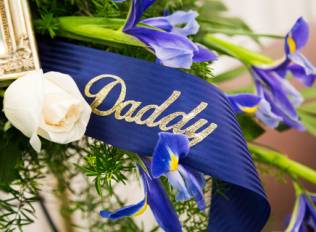
  • I'm Sorry Daddy, I Won't Be at Your Funeral

    I'm Sorry Daddy, I Won't Be at Your Funeral

    I used to think my relationship with my father was unique, different: complicated on its best day and toxic, disruptive, and unbearable on its worst. I know now it’s not unique.

    I have always known—well maybe not always, but for a very long time—that I would most likely not be attending my father’s funeral. I made that choice in my mind and in my heart a long time ago. Not due to lack of love, but for personal preservation. For my own health. For my own happiness. For my sanity. For my spirit. He didn’t need to be sick for me to envision the day that he would pass; after all if I have learned anything in my 49 years of this journey, it is that we are all dying. And we should not assume it is going to be when we are old.

    My dad was diagnosed with stage 4 cancer a few months back and it had spread to various parts of his body—the prognosis wasn’t good. I really don’t know all the details; most of my family members didn’t speak to me about it, and I take responsibility for not asking. For the ones who stayed silent to protect me and my heart, I am forever grateful. And for those who didn’t whisper a word because they thought I was a self-centered, disrespectful, heartless, unkind, unforgiving, uncaring, cold-hearted, and insensitive daughter, I understand those perceptions too; that is part of my internal struggle and at times exactly how I feel about myself.

    I used to think my relationship with my father was unique, different: complicated on its best day and toxic, disruptive, and unbearable on its worst. I know now it’s not unique. There are many people who for a variety of reasons have infrequent contact (or like me, no contact at all) with one or both of their parents.

    I am what is known as an ACOA: Adult Child of an Alcoholic.

    My parents divorced when I was nine years old, and the oddest thing is I have no memory whatsoever of anything happy or any special moment with my father before that time. None.

    The only memory I have of my daddy from my childhood before age nine is the drunken fighting. The chaos, the yelling, the screaming, the violence; my little brother and me not being picked up from the babysitter’s when it closed because he was out at the bar, and other memories of having to flee the house in the middle of the night. I have no recollection of any Christmas mornings opening gifts under the tree; a birthday party or vacation; a family dinner. No memory whatsoever, although we did all of those things. I know there were happy times, I have seen pictures of our family. My beautiful mom, my little brother, me, and our daddy in slightly cracked, old, seventies pictures looking like a perfect family.

    But after years of therapy, I have learned and continue to learn so much, not only about being the child of an alcoholic but about trauma. I believe that things that terrify you—make you feel unsafe, frightened, scared—far outweigh any good.

    My permanent estrangement from my dad came much later. I am filled with many happy memories after my parents’ divorce: weekend visits, camping, fishing, four-wheel driving in his big truck, snowmobiling, and mostly big family get togethers with all of my aunts, uncles, and cousins. Some would ask if I had forgiven my father for the past, and the honest answer is that I never looked at it in those terms. I didn’t need to forgive my father, I didn’t blame him or hate him; I felt nothing but love for him. Sure, the drinking continued throughout my teenage years, but I ignored the things that bothered me. It wasn’t that bad.

    As I grew into a young adult, got married, and had children of my own, the dynamic changed. Or maybe it was exactly the same, only I saw things through a different lens. I now had two little boys of my own who were witnessing, analyzing, and interpreting, just as I did when I was a little girl. There was no violence or anything of that nature, but wounds don’t always leave broken bones and bruises. The drama-filled drunken theatrics continued and so our relationship was off and on. Off. On.

    For me, the point of no contact with my father came when my younger brother became another alcoholic branch in our family tree. While I was trying to survive a war zone of 911 calls, hospital stays, psychiatrists, psychologists, seven rehab stays, several suicide attempts, denial, blame, and absolute destruction, the drunken late night calls from my father became too much. I never told him how they hurt me, like spraying gasoline on an inferno. I just simply hung up the phone. And eventually the calls stopped.

    That was more than 12 years ago. As in my early childhood, the bad eventually overpowered any good.

    Since I was a little girl, my perception was that alcohol was responsible for everything bad that happened in my life. And I did not come to this realization easily or lightly. Long before I was married, long before I had children of my own, there was my mom. My dad. My brother. And eventually a baby sister. The ones I loved more than anyone else in the whole world. I wish with all of my heart I could have changed some of these dynamics in my family and, God knows, I gave it my best shot. But I know now that task was not mine; it’s just my overdeveloped sense of responsibility coming from an alcoholic home.

    Sadly, my brother lost his battle with alcohol addiction and mental illness in March 2012 by taking his own life. My brother’s drinking affected all of our lives in a negative way. I would have welcomed the chance to sit face to face with my own father if he wanted to and tell him that I understood, and that he should hold no blame where my brother is concerned. We were all in way over our heads. And that I love him, and my brother did too. I wish I had done things differently back then, as I made many mistakes myself. 

    My father and I do not need to work out out differences, we are are out of time. But we could both say sorry for hurting each other, it wasn’t intentional. My brother’s death could have brought our family closer together; he would have wanted that. 

    Perhaps for my dad, the point of no return was when I did the unthinkable. I wrote a memoir of my journey with my brother in the hope of helping other families to see the effects of childhood trauma, to not make the same mistakes, to take a different path, and to change.

    But the truth is my father and I were estranged long before the mention of a book. So, it would not be fair to put our estrangement solely on my shoulders. I only take responsibility for my part.

    After a few months, Dad’s cancer had spread, and I heard that he was hospitalized. I knew he didn’t have much time so, to look after my own thoughts and feelings, I made an appointment with my therapist. I have worked very hard to be a better and healthier version of myself—I take my own recovery very seriously. And I do mean recovery; although I don’t drink, I too had to “recover.”

    As my therapist and I talked for that hour, I accepted what was to come, and what I was sure of: I wasn’t going to cry when he died. Not because there was a lack of love, but I had mourned the loss of my father a long time ago.

    Less than a week later, I woke up early on February 5th, put on my robe, poured myself a coffee, and turned on my iPhone. As I scrolled through Facebook I saw a post, something about heaven got another angel. My father had passed away.

    A whirlwind of pictures flashed though my mind.

    I had completely misjudged my reaction: my eyes instantly filled with tears. I was wrong. I did cry. And cried. And cried. I was overwhelmed with emotion: this is all so messed up; it is not how families are supposed to be. It is not what I would want and totally against who I am.

    I spent the next two evenings crying myself to sleep as I knew it was official—I wasn’t going to the funeral.

    I won’t stay away out of anger, spite, or stubbornness. Whether someone else thinks I am right or wrong, what is best for me is being steadfast and confident in my knowledge that I am the daughter, not the parent. If it had been my instinct to run to my father’s side when he was sick, I would have done that when he was healthy. In my life, I do not react anymore out of pity or guilt, misinterpreting those sentiments as love. I did that most of my life, and I lost my own identity in the process. 

    I will stay away from the funeral, not because I didn’t love my dad, but because I did. We all must live with the consequences of our choices and I am no different from him. I would never disrespect his wife, his other children, his friends, or even some of my own family by being there. I would never want to cause them pain with my presence and I am sorry for their loss.

    My father’s drinking affected my life in a negative way, but that doesn’t mean he wasn’t a good person. He was loved by many, had lots of friends, other children who accepted him for who he was, and he continued a relationship and was married to his third wife for almost 27 years. Most likely, the funeral home will be filled with a couple hundred people. All of this is true.

    My absence just means that on this journey of life, the relationship between him and me wasn’t good for me. It wasn’t healthy and what I needed. And I am allowed to decide.

    It’s days later. While still crying, I am imagining all of those people at the funeral tomorrow wondering why I’m not there; judging and whispering that I am self-centered, disrespectful, heartless, unkind, unforgiving, uncaring, and cold-hearted.

    I have been plagued with the haunting visions of my father leaving his little farmhouse for the last time, knowing he was going to the hospital to die. Looking to the right at the garden where the children had Easter egg hunts, to the left at the creek where we used to snowmobile together in the cold Alberta winters. Perhaps as he got closer to the car, he looked to the right and the garage where we all used to sit in front of the campfire as a family that included my brother, my sister and her daughter, and my husband and me with our sons. Happy. A simpler time, years before all of this fell apart. And then I realized, maybe that isn’t what my dad saw; maybe it’s what I see.

    As I crawled into bed, my feelings of guilt had begun to subside, no more visions of my frail father lying in a hospital room hoping his daughter would arrive. I would have no reason to believe he ever thought that—and I know that is just my heart playing with my head.

    I do wish things were different, and I am sorry that I won’t be at my father’s funeral.

    What anyone thinks of that really has nothing to do with me.

    Sometimes it is hard for the outside world to understand. But for your own survival you need to think of your own needs over and above someone else’s. That is not selfish or callous (I have learned this too). It’s necessary. 

    My tears will eventually subside; they always do. But for tonight, if you don’t mind, I am going to shed tears for the little girl whose Daddy didn’t call.


    Jodee Prouse is a mom, wife, sister, friend and author of the memoir, The Sun is Gone: A Sister Lost in Secrets, Shame, and Addiction, and How I Broke Free. She is an outspoken advocate to eliminate the shame and stigma surrounding addiction and mental illness and empowering women through their journey of life and family crisis. Visit jodeeprouse.com to learn more.

    View the original article at thefix.com