Tag: ending stigma

  • Should Narcan Training Be The New CPR?

    Should Narcan Training Be The New CPR?

    “Who should carry Narcan? The same people who should carry an EpiPen: anyone who’s around someone who might need it. And, in today’s opioid crisis, that’s nearly everyone.”

    Each year, 12 million Americans are trained to deliver lifesaving CPR. Vastly fewer are trained to use the opioid overdose reversing drug, Narcan. 

    Dr. Mark Calarco, national medical director for clinical diagnostics of American Addiction Centers, says that we need to make Narcan training the new CPR, getting more people to carry the lifesaving drug and administer it in emergencies. 

    “With tens of thousands of American lives lost each year to drug overdose, it’s critical that we begin training Americans to administer Narcan (naloxone), just as we did with CPR, to help save the lives of our neighbors, family members and friends,” Calarco writes for MedCity News.

    Surgeon General Wants All Americans To Carry Narcan

    In April, Surgeon General Jerome Adams called on all Americans to carry Narcan and learn how to use it. 

    “We should think of naloxone like an EpiPen or CPR. Unfortunately, over half of the overdoses that are occurring are occurring in homes, so we want everyone to be armed to respond,” Adams told NPR at the time

    Stigma Persists

    And yet, stigma against mental illness and addiction has kept this from happening, Calarco writes. 

    “While there’s some controversy over making Narcan so readily and widely available, the reluctance is based mostly on the stigma associated with addiction and mental health issues, and an overall lack of understanding about how addiction impacts an individual and the community. The truth is, addiction and overdose can affect anyone. It doesn’t discriminate based on income, gender, ethnicity, or background,” he writes.

    While Calarco says he would “encourage everyone to take a CPR course,” he noted that CPR is physically taxing and difficult to learn, and 45% of people who need it will die from their condition anyway. 

    “In contrast, administering naloxone (Narcan) is relatively easy for non-medical personnel, and giving it quickly after an opioid overdose rapidly reverses respiratory depression—the primary cause of death. It is extremely safe, effective, and works in seconds,” Calarco writes. 

    Forty-nine states allow anyone to carry and administer Narcan. In most areas, getting trained is as simple as going to your pharmacy, asking for a kit (which is usually covered by insurance) and listening to the pharmacist for a few minutes. This is a step everyone should take, Calarco writes.

    Saving Lives

    “Who exactly should carry Narcan? The same people who should carry an EpiPen: anyone who’s around someone who might need it. And, in today’s opioid crisis, that’s nearly everyone.”

    Taking this small step could be lifesaving, he writes. 

    “Carry it with you at all times and hope you never have to use it,” Calarco writes. “But know that you could be the difference between life and death for someone if you do.”

    View the original article at thefix.com

  • Ariana Grande Among The Dozens Of Celebs Helping To End Mental Health Stigma

    Ariana Grande Among The Dozens Of Celebs Helping To End Mental Health Stigma

    People magazine has given props to Ariana Grande and 45 other celebs who have opened up about their mental health.

    The stigma surrounding mental health is being dismantled as people go public with their own struggles, including celebrities who have used their platform for advocacy. To celebrate, People put together a list of big names who have come forward.

    Among the celebrities mentioned was pop star Ariana Grande, who has struggled with PTSD and anxiety after a bombing attack at one of her performances in Manchester, UK.

    “I think a lot of people have anxiety, especially right now,” Grande said. “My anxiety has anxiety… I’ve always had anxiety. I’ve never really spoken about it because I thought everyone had it, but when I got home from tour it was the most severe I think it’s ever been.”

    The pop star provided fans with an update on her mental health in a now-deleted Instagram post.

    “I feel everything very intensely,” she wrote, “and have committed to doing this tour during a time in my life when I’m still processing a lot… so sometimes I cry a lot!”

    Kid Cudi Opens Up

    Singer, rapper and actor Kid Cudi was also featured, having spoken before about being “ashamed” to discuss his mental health

    “I was really good at keeping my troubles hidden… even from my friends,” Cudi said on Red Table Talk. “I really was good with that. And it’s scary because you hear people say, ‘I had no clue.’ I really went out of my way to keep what I was going through hidden because I was ashamed.”

    Riverdale actress Lili Reinhart made the list too, once announcing that she was seeking treatment for depression in a February Instagram post.

    “Friendly reminder for anyone who needs to hear it. Therapy is never something to feel ashamed of. Everyone can benefit from seeing a therapist. Doesn’t matter how old or ‘proud’ you’re trying to be,” she wrote. “We are all human. And we all struggle. Don’t suffer in silence. Don’t feel embarrassed to ask for help. I’m 22. I have anxiety and depression And today I started therapy again.”

    The Royals Lead The Way

    Even Prince Harry was recognized, having made big strides in the UK as he spoke openly about his depression and advocated for mental health.

    “We were all beginning to grasp that mental fitness was an issue worth talking about, for every one of us,” he said in a speech. “And while just talking doesn’t cure all ills, we are now shattering the silence that was a real barrier to progress. People are now really talking about their own well-being and how to help those around us.”

    Many more made the list as advocacy for mental health continues to gain traction, including Janet Jackson, singer Camila Cabello, and comedian Pete Davidson.

    View the original article at thefix.com

  • Disturbed’s "A Reason To Fight" Video Puts Spotlight On Depression

    Disturbed’s "A Reason To Fight" Video Puts Spotlight On Depression

    The touching music video features fans of the band sharing their personal experiences with mental health issues and addiction. 

    Heavy metal group Disturbed recently released a music video for their single “A Reason To Fight” which addresses mental health and the stigma surrounding it. 

    According to Blabbermouth, guitarist Dan Donegan told Columbus, Ohio station 99.7 The Blitz that the tragic suicide of Robin Williams was one of the inspirations for the song.

    “I think the first time it really hit me was when Robin Williams died, I used to always get angry and think that [suicide] is very selfish, and I’d get angry and think, ‘How could somebody do this?’ Then you look at somebody like Williams, and you’re, like, ‘This guys makes everybody in the world laugh. Everybody loves him. He has family, money, success.’ Then it dawned on me that this is a disease.”

    Donegan talked to Disturbed’s lead singer David Draiman about what kinds of subjects they wanted to cover in their Evolution album. “I suggested to David, ‘I’d really like to try and find a song that can touch on depression and addiction because we’ve all had either family, friends, or people close to us that have had their struggles, or continue to struggle.”

    Stigma was another major issue that Donegan wanted to tackle with the song.

    “I thought it was important for us to try to address the issue to let people know that it’s nothing to be ashamed of. It’s nothing to be embarrassed by. It’s a disease, and you’re not alone,” he said. “We’re not trying to claim that we’re saving the world—we’re just trying to shed light on a dark subject, and trying to encourage people that when you see the signs, jump in and do what you can to try to offer a hand.”

    In the video for “A Reason to Fight,” a number of people speak out about their struggles with depression, and Draiman tells a sold-out arena, “We keep losing soldiers in this war, and I’m tired of losing so many people that are so talented, so many people that I care so deeply about to the demons of addiction and depression.”

    The arena lights go up, and Draiman tells the audience, “To prove to you that this is not an affliction that is exclusive to the world of entertainment, by a show of hands, how many of you have dealt with the demons of depression yourselves, or know someone who has?” As countless people raise their hands, along with the members of Disturbed, Draiman says, “You are not alone. We’re in this together my brothers, my sisters, my blood.”

    View the original article at thefix.com

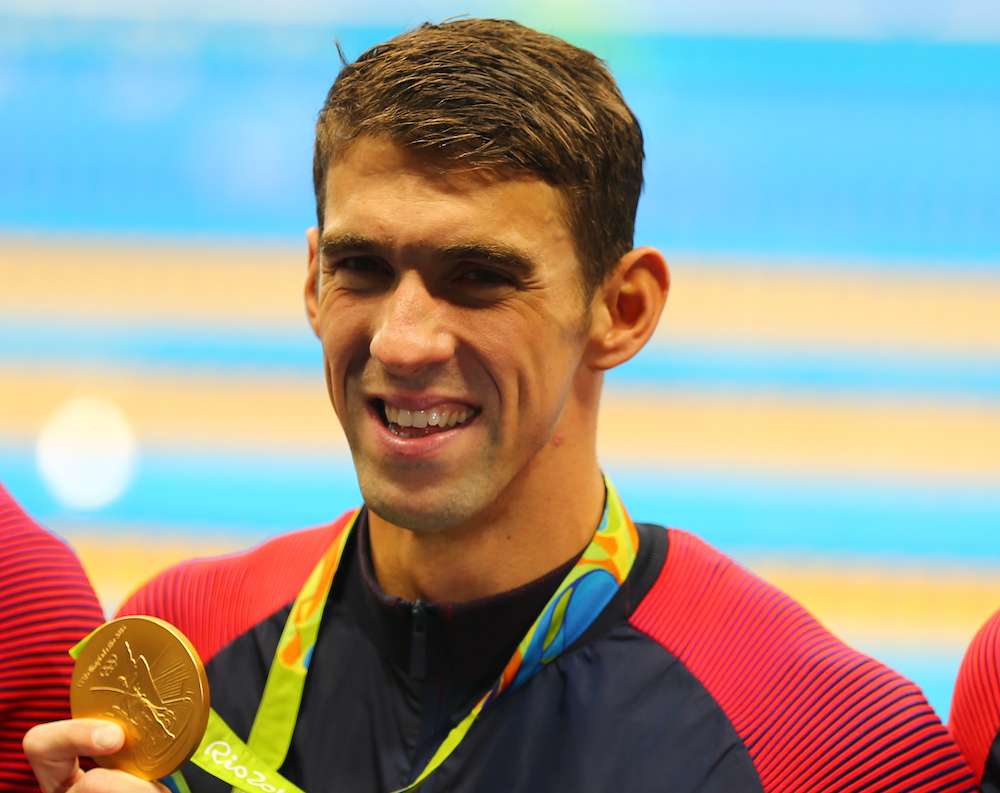
  • Michael Phelps Receives Award For Mental Health Advocacy

    Michael Phelps Receives Award For Mental Health Advocacy

    Phelps has been working to end the stigma associated with mental illness through his nonprofit foundation.

    With 23 Olympic gold medals, Michael Phelps is the most successful Olympian in history—but that didn’t stop him from experiencing mental illness. 

    “Probably my first real depression spell was after 2004, then the next big one was after 2008,” Phelps told the Associated Press in a recent interview, ESPN reported. “When you set out to be an Olympian, your whole life is put on hold. All the eggs are in one basket. I would say 2004, 2008, 2012, partly after ’16 (all Olympic years) I’ve dealt with pretty severe depression spells. I was kind of lost at that point.”

    After two DUIs, by 2014 Phelps checked himself into treatment, and since then he has been a vocal proponent for reducing stigma around depression and other mental illnesses. On Tuesday (May 21) Phelps received the Morton E. Ruderman Award in Inclusion for the work he has done to reduce stigma through the Michael Phelps Foundation.

    “Michael Phelps is a unique leader who has used his fame and status as the greatest swimmer of all time to challenge our society to remove stigma surrounding mental health,” said Jay Ruderman, president of the Ruderman Family Foundation. 

    Phelps never planned to become a mental health advocate. 

    “When I first really opened up about the struggles that I had in ’15, obviously I dreamed of being able to get more publicity to this and to really share my journey and have other people share their journeys with me as well,” he said. “Honestly, I never thought it would be as big as this, but it’s been a true dream to be able to watch the growth that mental health has taken, almost being at center stage.”

    Being able to help other people struggling with depression has meant more to him than his athletic success, he said. “Through this, if I can save one life, two lives, five lives, a thousand, a million, to me that’s so much more important than winning a gold medal.” 

    Phelps said that he has seen firsthand the difference that quality mental health treatment can make. Today, he is married with two children and a third on the way, and he has embraced his new role as a mental health advocate. 

    “When I was in my room and not wanting to talk to anybody for a number of days and not wanting to be alive, I wanted to see what other roads I could take to see if there was help,” he said. “I know it’s something that changed my life and saved my life and allowed me to be able to be where I am today, enjoying the platform of talking about something that’s so important.”

    View the original article at thefix.com