Tag: family

  • Evolution of a Beard: My Growth as Reflected Through Facial Hair

    Evolution of a Beard: My Growth as Reflected Through Facial Hair

    My hatred and rage grew alongside my father’s beard. Beards represented mental illness. Beards represented embarrassment. Beards represented my failed family.

    The last time I saw my father without a beard was the night he accused me of being an alien sent to harvest his testicles. It was the summer before I entered eighth grade.

    My father’s mustached face was otherwise smooth. Always had been as far as I knew. I remember kissing his cheeks as a child. Avoiding the scratchy upper lip hair.

    Now, my father’s cheeks were blushed with anger and fear. I lost myself staring into his terrified eyes.

    That night was the culmination of months of odd behavior. Standing outside at my sister’s Girl Scout summer camp, my father screamed accusations at everyone. His family had been replaced by testicle harvesting aliens. The other parents were FBI agents who’d been stalking him at work and recording his thoughts for months.

    I’d always known my dad was a little odd. He had disappeared a few times for no reason. Usually my sister and I would end up staying a few nights at my grandparents’ house. My mom would buy us new toys. My dad would eventually reappear. Things returned to our version of normal. Unknown to me was his diagnosis of schizophrenia.

    This time I knew exactly why my dad disappeared, he was going to the mental hospital; the loony bin. My dad was certifiably crazy and teenage me knew it. Worse, other people knew it. Other teens! Complete strangers. This last image of my father without a beard is seared into my memory.

    My father came home from the hospital with a beard. Well, he came home with three days of unshaven stubble. Still, it was thick, dark, and covered his face. This bearded man no longer looked like my dad. This bearded man no longer acted like my dad.

    The bearded stranger talked to himself out loud in private and public. He cursed and gestured wildly at random times, crossing himself with vigor as he watched Catholic Mass on TV three times a day. We weren’t Catholic. The bearded man spent evenings and weekends shopping for pornographic movies that sat unwatched and unopened in haystack shaped piles in our basement.

    My hatred and rage grew alongside his beard. I hated my father. I hated his beard. By extension, I hated everyone with a beard. Beards represented mental illness. Beards represented embarrassment. Beards represented my failed family. Beards were something crazy people used to hide behind.

    I daydreamed of shaving my father’s beard. Peeling off the stubble to reveal the man he had been prior to having a beard: the father I no longer had.

    At the time I wasn’t able to grow my own beard. That didn’t stop me from making a pact with myself – I would never grow a beard, damn it.

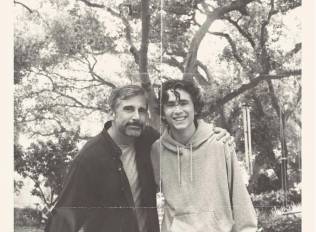
    As you can see in the image accompanying this article, I did not keep my pact.

    As an adult, I didn’t have a beard or a relationship with my father. I became a father myself and vowed to never put my children through what I had gone through: a childhood filled with an empty father.

    I didn’t prevent my father from having a relationship with my children. My mother and father would visit sporadically throughout the year and at holidays. My children were fine interacting with my father. Hell, sometimes I’d catch a glimpse in my children’s eyes of what looked like love toward their grandfather.

    I wasn’t doing so well, though. I treated lingering depression and anxiety with antidepressants, sporadic counseling, and another illness: alcohol use disorder.

    I was failing at life and I frequently drank until I blacked out. I was divorced and only seeing my kids every other weekend. I tried to wash away my bitterness and guilt but instead I found myself on an alcohol-fueled ride to my rock bottom.

    The last time I remember not having a beard was the last time I remember drinking alcohol. I had an appointment with a new counselor. He told me that nothing could improve if I kept drinking and that he wouldn’t work with me if I didn’t stop. Somehow, I heard him. I also heard what he wasn’t saying: things could improve if I stopped drinking.

    I went home and got drunk for the last time that evening.

    It wasn’t easy to stop drinking. At first, every minute of every day was hard. I didn’t have the energy to do anything other than attend AA meetings and counseling. Then, without thinking, I stopped shaving and grew a short beard. At first it brought me comfort in a tangible way: I’d rub on it and scratch it and twist the hairs. After a few weeks it started filling in. And so did my sobriety. My beard grew thicker along with my willpower. I kept the beard and I’ve kept my sobriety.

    At some point I made the first proactive phone call to my father I’d ever made. It wasn’t a magical conversation– we talked about sports and the weather, the same topics we’ve always been able to safely cover during face-to-face conversations over the years. When it was over, I hung up the phone, feeling sick to my stomach. I knew I’d never have the dad I wish I had. I know it’s on me to deal with it. But I wanted to have whatever relationship I could with him.

    I’m four years sober. In these four years I’ve searched my soul to forgive my father. My children love their grandfather. They don’t know the bearded stranger I knew when I was growing up. They’ve never known him without a beard. They only know him as Grandpa!

    I can’t regain my childhood. And I can’t undo what I’ve done to my children. But I can make sure I don’t go back to the dark place of alcohol abuse.

    I kiss my children with a beard. I cuddle my youngest daughter and tickle her with my whiskers. She’s never known me without a beard. My kids see beards differently than I did.

    Today I still have a beard. I keep this beard as a reminder of the importance of staying sober; a reminder of the importance of my family; a reminder of the forgiveness I’ve given others and that I’ve asked for from my loved ones.

    View the original article at thefix.com

  • Death Threat: The Unique Dangers of Grieving in Recovery

    Death Threat: The Unique Dangers of Grieving in Recovery

    Though I’ve developed tools for dealing with heartache and anguish in sobriety, this level of grief is a sadness on steroids against which I feel futile and frightened.

    My father’s older brother, Stephen Dale, died at age 69 in mid-August. He was more than the family’s patriarch; he was its ballast, its mooring. The home he made with my aunt Linda served as safehouse to a chaotic tribe on holidays, birthdays, and just-for-the-hell-of-it pop-ins.

    Uncle Steve and I enjoyed a relationship where calls and text messages about long-debated or joked about topics would rouse the other in real-time. “Hey Uncle Steve, guess what I just saw…” We lived our lives in each other’s pockets — an intimate, instant-access closeness that is simply irreplaceable.

    He died very suddenly. One day he was there; then the next morning, before I could even reach the hospital, he was gone. Massive heart attack. By the early afternoon, I was writing the obituary, a prelude to the eulogy I would deliver days later.

    But this is not an obituary, nor a eulogy. This is about what happens next — when a recovering alcoholic, like me, finds himself mired in grief and unable to anesthetize himself with drugs or alcohol. It’s about the specific attributes of grief that, I’m finding, are particularly dangerous to people in recovery. And it’s an attempt to identify with my peers who may have suffered similarly but, as often happens to me, couldn’t quite congeal their disjointed feelings into a cohesive narrative.

    Grieving has peculiarities and pitfalls for those of us in recovery. Let’s discuss why.

    Pain That Many Know, Reactions That Few Experience

    Everyone in recovery has heard the cliché: “Bad things don’t stop happening just because you got sober.” In my seven years of sobriety, my wife has miscarried and, during her next pregnancy, I had a small stroke a week before our son was born.

    And given the recovery forums in which we now find ourselves — AA meetings, SMART, sober networks, etc. – most of us see death. We witness fellows with a common disease relapse and die. A record 72,000 Americans died of drug overdoses in 2017. I personally knew three of them — people who, sadly, literally couldn’t get clean to save their own lives.

    But Uncle Steve is different. He knew more about my past, my present and my psyche than anyone save my wife. He was incredibly well-read and unyieldingly tolerant, a combination that made him my chief counsel and safest sounding board. He was flesh and blood that, given a world of other options, I would have chosen to be my flesh and blood.

    A lot of us have Uncle Steves, that most special of relatives. Upon losing that person, anyone — normie or alky — suffers a harsh blow. We feel like a piece of our foundation has been uprooted, part of our shared history deleted. There are secrets about us that die with our Uncle Steves. They leave an unfillable hole, forever, and we know it. 

    For those of us in recovery, though, grief of this depth has its own oddities and perils. Strangely, upon learning the terrible news, our initial reaction can be both validating and shame-inducing: When I learned that Uncle Steve had died, my very first thought was “Shit, I can’t drink over this.” And because I knew I couldn’t, I knew I wouldn’t; the work I’d done in sobriety was about to pay off again, big time.

    Though comforting, this survival-minded reassurance brought an unsettling guilt exclusive to recovering addicts: the self-congratulation of passing a tough test to sobriety. It was just the beginning of what has become an ongoing struggle to rectify grief with recovery.

    Disruption, Deserved.

    Many of us in recovery have struggled mightily with both temperament and resentments. As someone for whom anger has been a tremendously burdensome issue, one AA literature passage that has always resonated with me is from the Twelve Steps & Twelve Traditions. In the chapter discussing Step Ten, it cites justifiable anger as an emotion that “ought to be left to those better qualified to handle it.” Alcoholics are inherently tone deaf when it comes to the level of outrage a given situation warrants – usually, we overshoot it considerably.

    In sobriety, then, we work to temper most of our emotions — good and bad — to find a balance most of us never knew. My dramatically downplayed demeanor has been a crucial element to my recovery. In this space a few months ago, I discussed the importance of limiting the amount of people, places and things that can “anger, intimidate, or otherwise derail” us. In my opinion, this is as true a marker of sober progress — and maturity — as exists.

    Grief, however, sticks out from this everyday mantra like a sore thumb. Especially when we lose someone of Uncle Steve-caliber closeness, deep sadness is not only justified but altogether appropriate. In fact, lack of sadness could be considered insulting to the deceased… our dead loved one deserves our emotional disruption. We owe our Uncle Steves that.

    For those of us whose recovery includes maintaining healthy habits and routines, the combination of a broken stride and broken heart is uniquely troubling. The aversion we’ve built up to emotional disturbances can be a disservice to our sobriety in these instances.

    Since my uncle’s passing, I’ve found myself nipping around the edges of a turbulent sea of grief, afraid to do anything more than dip my toe in lest I drown. Though I’ve developed tools for dealing with heartache and anguish in sobriety, this level of grief is a sadness on steroids against which I feel futile and frightened.

    More than anything, I fear that wading into these waters may lead directly to diving into a bottle; as far-fetched as that may seem for those of us with longstanding recovery, this guarded approach to our most valuable asset — our sobriety — is entirely understandable. In grief, however, it can become a hindrance — a defense mechanism stranding us ashore, emotional landlubbers.

    At least a portion of this procrastination, I realize, is rooted in fear of a less drastic reversion. With seven solid years of recovery, I know the chance of a physical relapse from this is slim. For one, it would be the absolute last thing Uncle Steve wanted. Whether they were in recovery themselves (my uncle was not an alcoholic), our Uncle Steves are vital aspects of our sobriety, and drinking or drugging upon their deaths is undoing part of their legacy. For that reason, among others, getting drunk over this is a nonstarter.

    No, what many of us fear upon losing an Uncle Steve isn’t physical relapse, but rather regressing to a state of heightened emotional vulnerability. In addiction and fledgling recovery, we were often hypersensitive and underprepared to meet life on life’s terms. Now, atop solid sober ground, meeting death on death’s terms feels like a rare, even unique scenario capable of causing a catastrophic earthquake.

    Sure, I’ve been shaken in sobriety before — but not this violently. I’m afraid of the aftershocks of so seismic an event. In recovery, we have healthy fears not only of drinking and drugging, but of revisiting the level of emotional rawness that made us stuck in addiction in the first place.

    Gradually, in recovery we’ve pieced our lives back together, and we don’t want these blessings to unravel in one calamitous emotional nosedive. This may ring particularly true with the multitudes of addicts who, like me, also have struggled with depression. Regardless, everyone in recovery can recall a time when emotional fragility made us unable to adequately function. As a husband, father and career communicator, it’s that panicked, fuzzyheaded state that I most fear.

    Like hard truths in early recovery, though, I’m finding that Uncle Steve-level grief has a ready-or-not resonance. When we lose someone that close, there’s simply too many things in our day-to-day lives that remind us of the deceased. Almost daily, I find myself reaching for my phone to share something Uncle Steve would find equally interesting or humorous. The resulting double-edged sword leaves me both missing my uncle and mad at myself for forgetting, albeit momentarily, to miss him.

    And more frequently, during fleeting moments of calm in my crowded-with-blessings sober life, Uncle Steve is there, quietly commanding attention. Ever patient, his spirit seems to loom as large, or as little, as I can handle in that moment. I swallow manageable doses of sadness with limited side effects and reassurance that, like in recovery, more will be revealed.

    That last sentence would have made for an artful sign-off, but life — or death — seldom provides such tidiness. As much as a loss can be a learning experience it is still, on the whole, a loss. And, like some of our worst acts in full-blown addiction, sometimes the knowledge and growth bestowed in recovery aren’t enough to offset the bad with the good. Some transgressions can’t be wiped away with transcendence.

    Uncle Steve has been gone two months and I, a recovering addict whose present peak required a series of bottoms, still subconsciously — and egotistically —expects this is building toward something grander than the inglorious absorption of tragedy. Often, our post-relapse recoveries from addiction have been linear, accruing wisdom and utilizing lessons learned. I keep waiting for Uncle Steve’s death to ascribe to a similar, simpler healing process – an expectation that has proven persistently misguided.

    No such revelations exist. In the end, those of us who struggle with addiction, despite being affected by grief in ways that differ from others, must deal with it in the same fashion: imperfectly, inconsistently, and with ultra-personalized feelings toward the dearly departed that were endearing in life but alienating in death. Unlike recovery, there’s no program for losing our Uncle Steves.

    View the original article at thefix.com

  • My "Beautiful Boy": David Sheff on Bringing His Family’s Story to the Big Screen

    My "Beautiful Boy": David Sheff on Bringing His Family’s Story to the Big Screen

    While watching the film, I would look over at Nic sitting next to me and get so emotional. I would start to cry and I feel like I’m about to start crying right now because I came so close to losing him.

    In “The David Sheff Solution,” The Fix interviewed the National Book Award-winning author of Beautiful Boy about his struggles as the father of a child with a substance use disorder. Now David Sheff’s story is about to be vaulted to the next level of national prominence. On Friday, Amazon Studios released the feature film Beautiful Boy, starring Steve Carrell as David Sheff and Timothée Chalamet as Nic Sheff.

    As opposed to being intimidated by this move into the public eye, David Sheff is excited. Since helping his son Nic find the path of long-term recovery, Sheff has dedicated his time and energy to raising awareness and continuing his efforts to reduce –and ultimately remove—the stigma surrounding addiction. Without stigma, Sheff knows from firsthand experience, prevention efforts will improve and treatment will become more accessible. Indeed, Sheff’s ultimate goal in allowing his story to be brought to the big screen is to bring greater compassion and understanding for this disease. Given our similar focus at The Fix, we are thrilled to again speak with David Sheff.

    The Fix: Beautiful Boy is a rare combination of both your most deeply personal work as a human being and your most successful book as an author. Was it hard to decide to expose such a story to the world, particularly in a visual format that lacks the distance of the written word? Was it difficult to let go and give director/writer Felix Van Groeningen the space to tell your story?

    The direct answer is yes. It was hard. Even from the beginning, exposing our family to potential criticism in a public forum was worrying. It has been worrying from the very beginning when I first decided to write about what was happening to my family for The New York Times Magazine. I remember asking a friend of mine to read the manuscript after I first wrote it. She was an editor, and I respected her opinions. I must admit today that her response surprised me. She told me, “You can’t publish this. There is all this stigma against addiction, and your family will be judged harshly.” As you can tell, she really counseled against moving forward.

    At that point, I already had made the commitment. I had talked with everyone involved, including Nic, and we decided to move forward. When it came out, there were no negative consequences at all. In fact, it was the opposite. I heard over and over again from people who had been impacted by addiction. It was all about sharing stories, and people seemed relieved to be able to share. They had kept their experiences quiet because these were their deep, dark secrets. They also had felt that they would be judged. It was so positive that the article and then the book led to the creation of such an open dialogue in a variety of ways from in-person to on the phone to online messages in emails plus on Facebook and Twitter.

    It’s important to note that every word in that book I scrutinized. I wanted to make sure that I said what I wanted to say while also protecting everyone involved. It ends up being really complicated. I felt everybody had suffered enough, and I didn’t want to increase anyone’s suffering. As a writer, I tried to be as meticulous as I knew how to be. The idea of allowing someone else to tell our story was scary in a different way: I knew I would not have that kind of control.

    Before it happened, the idea of doing a movie had never really occurred to me. To begin with, the writing started as a way to get through the night. The writing was a way of expurgating this deep, dark turmoil that I was experiencing. When we were approached about doing a movie, the first guy turned out to be the right guy. We were approached by Jeremy Kleiner, one of the principals at Plan B Entertainment, and he was sincerely moved by both of our books. He cared deeply about this issue because he had been through it with friends while also being deeply affected by the Dad’s perspective and the family story. He felt it made it different from the vast majority of addiction memoirs. The key point he made was that addiction was not portrayed in either of our books in a simplistic or clichéd way. He made the commitment to make a movie that would show the complexity of addiction, the fact that there are no easy answers.

    Although Jeremy was just starting out at this time, we believed in him and in Dede Gardner, his partner at Plan B, along with Brad Pitt, who is the CEO and started the company. It seemed obvious to make the decision to make the movie with them. Since then, they have won Academy-Awards for making 12 Years a Slave and Moonlight, but this was before they experienced such incredible success. When they brought on Felix Van Groeningen, the director of the movie, I was even more convinced. He’s a genius, and I was incredibly impressed and moved by his past films. Like the producers, he was connected and committed to the material. I knew we were in good hands, and I knew they would tell our story in all of its complexity.

    Steve Carrell is an American comic icon. In movies like The Office and The Forty-Year-Old Virgin, he has made us laugh (although he showed dramatic chops in Foxcatcher). What do you think of his portrayal of you in this film?

    There is no doubt that he’s a comic genius, but he’s so much more as well. Steve is an astounding actor, and I knew that long before this movie. Indeed, Nic and I remember so clearly the experience of seeing him in Little Miss Sunshine together. He was heartbreaking in that movie in such a beautiful way, and it was a moving experience for us to see that film together when it first came out in the theaters.

    When I met Steve, he was so sincere, warm, and committed to telling the story right. The other thing I realized was that he connected to the story as a father. It was not the drug experiences that drew him to the story, but the opportunity as a father to play a father desperately trying to help a child. He understood the deep desire as a parent to do anything we can to protect our kids. He expressed how badly he wanted to play that role because of the emotional component of the story.

    I must admit, however, that when I saw the movie, I still couldn’t imagine anyone playing me. It just seemed too weird. It really is disconcerting when you think about it, and, as a writer, I tend to think about things. When I finally saw the movie from beginning to end, I feel like he nailed it. He captured how hard it is and how hard it was for me to go through this period in my life. He captured what it’s like to be a parent of an addicted child, somebody you love more than anything and all you want to do is save them, but you keep running into obstacles like the denial and the horror of addiction. He captured that difficulty of helping someone who is angry and rebellious and lashing out at you as you try to save their life. I lived through that anguish, and that anguish is in every nuance of his performance and his expression and in his acting. I really was blown away and felt that he got it. Before I saw him do it, I honestly doubted whether anyone could do what he has accomplished in this film. You see his optimism and his crushing defeat, then you see him become optimistic again and then his desperation as his son keeps relapsing. The up and down and up and down is so powerful, but even more powerful is the through-line of his love for his son.

    How did you and Nic decide to move forward with the movie project? Did you both feel from the beginning that your book and his book should be turned into a combined film? How did you decide to combine the Beautiful Boy story with Nic’s Tweak, or was this choice made by the filmmakers?

    The choice was completely made by the filmmakers. It was inconceivable at first that they would be able to pull off two such different takes on the same story in a single film. However, I had heard how valuable it was for other parents to read Nic’s book and develop a new perspective on what their addicted son or daughter was going through. At the same time, it was really valuable for a lot of kids to read Beautiful Boy to get a sense of what their parents were going through, both from the perspective of the how much they suffered and the depth of their love. Many kids don’t realize how much a parent’s love is a constant in the process of trying to help their child recover.

    Still, each story had been told in book form with over three-hundred pages dedicated to each story. The idea that somebody could pull it all together in a two-hour movie was hard for me to imagine. It was not at all our choice, and it felt like they were jumping into the deep end of a stormy ocean without a life vest. Also, there was no precedent for it. I can’t think of a movie that was ever based on two different memories; one from the parent’s perspective and the other from the child’s perspective. I wasn’t sure that it could be done.

    However, you really got the emotional journey through the parent and the kid. I knew it was going to be challenging, but, once they made the decision, they never looked back. Over the two years that it took to make the movie, they kept to the course, and I feel they did it masterfully. It was a hard choice to make in the beginning, and it definitely was the decision of the filmmakers.

    As an aside, Nic did amazing in his interview. I was so impressed by the depth of his compassion and the veracity of his gratitude.

    He’s an extraordinary example of recovery in practice. All the time, I hear from people who are so discouraged because they’ve been through years of watching a child’s descent into addiction. I hear it about other family members and friends as well. They just don’t feel like recovery is possible.

    We are so lucky that Nic made it. Any parent is lucky that has a child who makes it. Nic’s drug use was so extreme, and the combination of drugs that he was doing was truly dangerous. He put himself into so many life-threatening situations during those dark days. There were so many times when it could have ended up differently. Tragically—and I feel so deeply for them because I could have been there— so many parents now experience the unforgiving horror of that outcome where they lose a child. Given Nick’s recovery now, we were very lucky.

    My experience seeing Nic go through this process has been incredible. People that go through recovery and come out the other end don’t just survive. Because of all the hard work that needs to be done, because of all the suffering, because of all the self-examination required to get sober and then stay sober, they become some of the most extraordinary people that you’ll ever meet. In fact, John, you are a case in point, and that journey from addiction to recovery, as you know from your own experience, can be inspiring to other people that you meet along the way. People that come out the other side can have the most rewarding and fulfilling lives afterward.

    I hear from so many families that are close to losing hope or have lost hope. Their relationships have been shattered, and they can’t imagine them ever being put back together. My experience with Nic has shown that families that do explode; [families that] feel—amidst the ruins—that it’s almost inconceivable that they will survive it—they do survive it, and they can survive. Recovery is still a possibility. If they do the hard work and give it time, they can be closer than ever. I believe we can say that about our family.

    Nic and David Shef
    Image Credit: Reed Hutchinson for UCLA Friends of Semel

    If this movie could accomplish one goal, what would you want that goal to be? What do you believe can be achieved?

    I feel the biggest impediment moving forward to end addiction, to face this disease in all its difficulty, to prevent people from becoming addicted and to treat people that do become addicted, is the ongoing stigma. Too many people keep their problem hidden because they are judged. People don’t go get treatment because they are hiding the reality of their addiction. When people start to get treatment, if they have the normal challenges of the usual ups and downs, if they relapse, they are judged very harshly. Being judged in such a way is the last thing needed by somebody who is addicted. They already feel terrible about themselves. They are caught in a cycle that’s like a vise, and they don’t want to be doing the terrible things that they do to themselves and to their families.

    I hope the movie can show people that addiction is not about choice. It’s not about a young person going out and doing these things just because they want to have fun and party and get high. It might be about that a little in the beginning, but it quickly shifts. Essentially, it is about pain and suffering and a desperate attempt to find some sense of peace within themselves. Addicted people talk about this hole inside them that they are trying to fill. The hole can be anything from an undiagnosed psychiatric problem like depression or anxiety to untreated childhood abuse and trauma. Whatever it is, I have come to see that it is about a pain that the person is trying to self-medicate.

    If this film can help with anything, I hope it opens the door to greater compassion and understanding for this disease. Without the burden of the stigma, we can move forward and actually help the people that need our help. We need to help people by overcoming stigma by focusing on effective prevention and treatment. People who are addicted are not weak. They are ill, and they deserve our compassion.

    At the Colorado Health Symposium in August, you start your keynote address after watching the film’s trailer by saying, “I’ve only seen that once, and it’s hard to watch.” What parts exactly were so hard to watch? Was it a combination of Nic’s descent into addiction and your inability to stop it? Did you have any PTSD-like reactions to the film, or was it a cathartic experience that freed you from the lingering demons of the past?

    Wow! That’s a good question. I guess the answer is both. It brought it all back, and it’s not like I had forgotten. However, when we get past traumatic experiences in our lives, we do put them in a place that we can live with. I feel like I had done that to some degree, and it made watching the film challenging. The experience of seeing it again opened up the whole thing again, meaning it opened up the old wounds. I just remembered how hard it was and how hard it was to watch Nic suffer. I felt again how hard it was for all of us to survive as a family.

    At the same time, it was amazingly cathartic to process what we had been through as a family. It was another version of writing the book, which had been really cathartic as well. It also was an affirmation of the hard work Nic has done to get sober and to stay sober. It was a reminder of how lucky we are to have come out the other side. While watching the film, I would look over at Nic sitting next to me and get so emotional. I would start to cry and I feel like I’m about to start crying right now because I came so close to losing him. It was a reminder of how close I came to losing him.

    In another sense, it was cathartic because I felt like it mirrored the experience of so many other people. It was a reminder of how many of us are in this together. When Beautiful Boy first came out in 2008, I thought it couldn’t get worse in terms of the number of people that were dying from addiction. The number then was about 36,000, and that doesn’t include people dying from alcohol-related causes. Of course, we know that in 2017, it was 72,000 dying from addiction-related causes alone, twice the original number. Things have gotten so much worse, and that’s why I feel that this movie is coming out at just the right time. So many people are suffering, and I hope this movie can help bring us all together and make us feel that we are not alone.

    You talk about how hard the disease of addiction is on families. Should families see this film together? Should parents take their teenagers? If they do, how should they prepare both themselves and their kids for the film and what should they do afterwards?

    Wow! That’s another good question. I guess what I would say is that every family is different. A reality that many of us would prefer not to face is that every kid is going to encounter drugs as they are growing up. It’s a prevalent reality in the world. Many parents ask me if it’s too early to start talking about drugs with their child if they are a freshman in high school. The clear answer is no. It’s not too early to start talking about drugs to your young, young child. Drugs are pervasive in our culture, and kids are curious by nature. They are confused, and it’s our responsibility to provide them with quality information to help lift that confusion. It’s our responsibility to shed light.

    Still, every family and every parent has to determine what’s appropriate for their own child. When it comes to seeing this film, that decision needs to be made for each family. In general, if your child is mature enough to see explicit and disturbing scenes of drug use, then I think this film could provide an amazing way to start that conversation in a family. What does it mean to use drugs? Why do people use drugs? What are the potential consequences to using drugs? These are crucial questions. Before watching the film, there should be a conversation that provides some education. In other words, a conversation that opens the door to a conversation. The best part of such a conversation is if parents can get their kids to talk.

    It reminds me of this recent work I’ve been doing with Jarvis Masters, a California inmate at San Quentin on death row. I’ve spent a lot of time in the prison, and I recently sat in with a group of inmates in the program as they talked about their experiences and their lives. They are trying to face the consequences of their actions by doing restorative justice. When I was leaving, I happened to be going to talk to a group of teenagers that night. I asked these men: “I’m going to talk to these kids tonight. Is there anything I should tell them? Is there anything anyone would have said to you that would have helped you growing up so you could have made better decisions later on? Maybe you would not have fallen into addiction and fallen into crime?”

    A lot of the men had really interesting things to say. At the end, there was this one guy who has been super quiet the whole time. He said something under his breath, and I couldn’t hear him. I asked him to say what he had said again. He looked up at me and said, “When you talk to these kids tonight, don’t say anything. Just listen to them.”

    I thought that was incredibly powerful, and that’s the message I would give to parents. Try to engage your kids in conversation and really figure out who they are and what’s going on in their lives. Then, it’s super important to continue the conversation after the movie. Keep talking and, more importantly, keep listening.

    Finally, people in early recovery should be careful when deciding whether or not to see this film. Given the explicit drug use and the unvarnished reality of addiction presented in the film, it may not be the best choice so they should talk it through with their counselors, therapists, sponsors or whomever they are working with to maintain their recovery. The research tells us that such scenes of drug use can be triggering, and that’s the last thing we want to do with this movie. Part of the reason the movie is so powerful is because the filmmakers committed to telling the truth, and that truth is that drug use is not glamorous in the slightest, but rather horrifying to watch.

    View the original article at thefix.com

  • In Praise of the Geographical Cure

    In Praise of the Geographical Cure

    For me, leaving was about survival and going back to supportive friends and family who had known me my whole life and who would give me a temporary place to stay.

    When I moved to the city of my dreams, I drove my Navy Subaru Impreza stuffed so full that I couldn’t see out of the rearview mirror the entire 1300-mile trek. My backseat was packed with my white cat Toby, my maple-bass guitar Helga, a vintage amp, a typewriter, a case of angsty journals, and a ridiculous amount of polka-dot and striped clothes. All things that I deemed too valuable for the moving truck. A month later, my serious boyfriend finished welding school back home and joined me. After finally leaving our sleepy home state of North Dakota, we were excited to start our new life together.

    Fast forward a few chaotic years to a plot that is achingly familiar for those of us who struggle with addiction; a plot almost sad and pathetic enough to make me a country song — if only I drove a pick-up truck and was a dog person rather than a cat lady. When the city of my dreams became the city of my nightmares, I decided to leave. My addiction counselor warned me that running away from my problems wouldn’t fix me, but I didn’t care. My drug hook-ups practically lived outside the Whole Foods across the street from my apartment, the same store that I had been kicked out of for stealing. My rent check bounced so I was on the verge of eviction. I needed to get the hell out.

    When I left the nightmare city, my cat Toby had died, my car had died, my identity had been stolen, and worst of all, I had broken up with that boyfriend who was supposed to be my forever mate. Then I fell in love again and that passionate, drug-fueled love also didn’t work out. Since I had sold or given away most of my possessions, pawned my bass and amp, there was no need for a moving truck this time around. I left, feeling broken.

    I sobbed as I said goodbye to the stunning Pacific Northwest wonderland with its gleaming snow-topped mountains and volcanoes, waterfalls, rainforest. As I drove east, I felt as flattened and empty as the prairies of my home state.

    I knew that just because I was moving home, it didn’t mean that I’d be magically fixed. I tried not to fall under the spell of what folks in the program call the “geographical cure.” Kerry Neville recently wrote a beautiful, lyrical, and illuminating piece on the geographical cure in which she says: “a change in external position on the map doesn’t reset the compass and point us to true north, because we always meet up with the self we are, no matter where we are.”

    I agree with some of Neville’s points, namely that taking vacations to topical locales will not get rid of our problems and provide us with a healthy, extended recovery. Yes, I knew that changing my zip code wouldn’t necessarily change my soul. I knew that I’d have to really dig down and do the hard, gritty work of recovery. But for me, leaving wasn’t about a vacation. I couldn’t afford vacation, I couldn’t even afford my rent. For me, leaving was about survival and going back to supportive friends and family who had known me my whole life and who would give me a temporary place to stay.

    Now that I mention it, the geographical cure warning is ironic because it contradicts other 12-step platitudes. These platitudes are like currency in the rooms, exchanged as freely as the collection basket for money and meeting lists: If you go to the barbershop enough times, eventually you’re going to get a cut, and: The only thing you have to change is everything. Change people, places, and things.

    Why are those of us who do decide to change our location criticized? Why do certain meetings and rehabs keep using their one-size-fits-all mottos rather than listen and embrace the many winding paths that lead us to recovery? In the few meetings I attended and the online recovery groups I participated in, people reacted negatively when I told them what I was doing. The consensus was that I was making a mistake. Even my counselor was quick to remind me that I wasn’t “special and unique,” and if this plan didn’t work for others, then why should it work for me? But I chose to do the thing that I knew would help me and my recovery. It wasn’t a mistake; it saved my life.

    Surely I wasn’t the only one who felt that perhaps the geographical cure may have been successful, so I decided to research the power of environmental cues, aka triggers, for addiction, relapse, and recovery. It’s likely you’re familiar with Pavlov’s classic dog study and the mechanics of classical conditioning, but I want to review it because it’s the foundation of every study that I read on this topic. Russian physiologist Ivan Pavlov was studying salivation in dogs when he noticed that the dogs salivated every time a door was opened, even when researchers didn’t have food. This was because the dogs began associating a neutral stimulus like opening a door (or, later, ringing a bell or flashing a light), with food. Researchers later used this model to study people with addictions.

    Studies found that people who develop alcoholism and addictions develop strong associations with drug-associated cues and environmental stimuli like Pavlov’s dogs. In other words, after repeated experiences, drug users relate the rewarding effects of a drug (like euphoria and relaxation) with the people, places, and things that are present when we are using. For example, one study found that smokers who received IV nicotine still reported cravings, whereas smokers who received IV nicotine and nicotine-free cigarettes didn’t. Why? Because of the power of environmental cues, including the feeling of holding a cigarette in one’s hand, the smell of smoke, and even packaging of a cigarette box.

    I mention these study results not just because they confirm what I already knew in my heart to be true and I love being right, but because they are vital for understanding recovery and relapse prevention. We must acknowledge the power of our environment and triggers. Although most of us won’t take the extreme step of moving across the country, we all can minimize our exposure to triggers until we feel strong enough to deal with them. We can also bring a friend or family member to face triggers and create new associations, as the studies I read suggested.

    Above all, we should all learn to embrace our own unique path to find what works best for us, even if it goes against the current of AA axioms. I will always be grateful that I listened to the fluttering in my chest. Wisdom means knowing when to keep your feet firmly planted in place or when to take flight. Sometimes leaving is the thing that saves you after all.

    View the original article at thefix.com

  • The Rules of Marriage…In Recovery

    The Rules of Marriage…In Recovery

    Even though it’s a positive change, adjusting to marriage with a newly sober spouse is a challenge. Some situations are a little tricky to navigate.

    After being with my husband for 15 years, it might seem like there would be few suprises left. We have the kind of relationship that includes conversations like, “Hey, Harmony, will you cut off this skin tag on my back?” followed by, “Um, no; I’ll make you a doctor’s appointment.” And later, “Does this look infected to you?”

    Robbie is what people in recovery like to call a “normie.” When it comes to alcohol, he can take it or leave it. He can just have one beer, and he doesn’t obsess over when he’ll have the next one. He likes to have fun, and he doesn’t really care if that fun involves alcohol. By the time I entered recovery, he rarely drank anymore; I was always the one drinking, and one of us had to stay sober enough to drive.

    The suprise here is that I am the alcoholic and he is the normie, because everyone who knows us assumed it was the other way around.

    My husband and I built the foundation of our relationship on having as much fun as possible. (Read: we partied a lot.) We’ve been to New Orleans, our closest major city, many times over the years, visiting for Mardi Gras, romantic getaways, concerts, plays, art events, and stuff with our kids. In true alcoholic form, I remember very little of any of it.

    Since I entered recovery, our relationship has shifted considerably. He is exactly the same as he’s always been, but everything about me is changing — how I react to things, what I do and say, how I view and enjoy my life, and how I relate to my husband. All these changes bring up a lot of questions and discussions, obviously, like if we go to New Orleans, will my husband drink? How much? Will I be able to handle it?

    Recently, he scored amazing tickets to an NFL game in the New Orleans Superdome. When he asked me to go, I panicked: I’ve got under two years of sobriety under my belt, and we’ve never been to any major city without alcohol. In fact, the last time we went down there, I started with a hand grenade on Bourbon Street and ended with what I believe to be absinthe. None of this was my husband’s fault — we were just there having fun — but his version of “fun” is a lot less dangerous than mine. When I start drinking, I drink to forget.

    Neither of us knew how severe my issues were when we met and fell in love. We got married, had a bunch of kids, and BAM! I was in so deep I almost didn’t find my way out. But that’s the beauty of true partnership; Robbie supports me fully in everything I do, and he wants nothing more than to see me happy and healthy. Even so, adjusting to the evolution is a challenge, and even though it is a very positive change for our family, there are still times when it can be a little tricky to navigate.

    So, what does my sobriety mean for us as a couple? What are the rules of marriage when one person is an addict and the other is not?

    What to do with the alcohol. The issue of what is and is not allowed in the house is a big one. I’m a stay-at-home mom, which means I’m the one staring at the liquor cabinet at 5 p.m. while our children complain about dinner. For us, getting the alcohol out of the house and keeping it out was vital to maintaining my sobriety. I can’t even have Oreos in the house, lest I eat them all, so for now, it’s better this way.

    However, I do know many couples who still have alcohol at home and the alcoholic partner isn’t bothered by it. It really boils down to triggers. I, for example, am triggered every damn day when I’m home alone with the kids. If I have alcohol around me and no other adults as backup, I would have a very hard time resisting. Robbie understands that and it’s not a problem for us. Also, we didn’t have to throw any of it out because I drank every last drop of it myself before sobering up.

    Prescription medication. Because I’m the mom, I’ve always been in charge of the meds. Uh, I wasn’t exactly responsible — and it was very hard to admit that, both to myself and to my husband. So for a while, and at different points since then, he’s had to take over administering the medication so I don’t eat the entire bottle like candy. He’s been willing to do that because he knows it’s an easy way to help me on my journey to wellness.

    What about the chocolate? One of the biggest problems I’ve had in recovery is my insane sweet tooth. Every time my husband or the kids bring home candy, cupcakes, Lucky Charms, or cake, I generally eat it all before they have a chance to even taste it. Robbie started hiding his stash of cookies from me, which naturally I found, and to be honest we’ve had more spats over the junk food than anything else.

    Am I always going to be the designated driver? GOD NO. I’m not stable enough to drive around a bunch of drunks. This is why there is Uber.

    Football season is huge in our house, and as I mentioned above, we went to an NFL game where everyone was drinking. And it was tough — but as long as I’m honest with him about my struggles, he is happy to help. It’s the honesty part that gets me: being willing to admit that I am powerless over alcohol.

    On the morning of the game, I got up early to attend a meeting, and prepared before we left to avoid getting too hungry, tired, or thirsty. It was literally the most fun I’ve ever had at a football game, ever — and that includes when I was drinking.

    Parties! We go to them. We might have to leave earlier than we’d like. I hope that gets better, but I’m proud of myself for going.

    Meetings. We have three children under the age of 10, and my husband is rarely home before 8 p.m. Finagling our schedules to allow for me to make it to meetings is probably one of the biggest issues we face, and sometimes I get resentful when I really need to go but have to wait until another time. He learned pretty quickly that when I go, I’m much easier to live with, so he does everything he can to accommodate me. Smart man.

    Sex. That’s a topic for a whole other essay. Suffice it to say, it’s been an adjustment.

    I can honestly say, for the first time in a very long while, that I’m truly the person that Robbie fell in love with all those years ago, and his patience with me as I fumble my way through recovery has completely renewed the love I have for him. Marriage in recovery is a beautiful, beautiful thing.

    View the original article at thefix.com

  • Married to a Normie: Relationship Rules

    Married to a Normie: Relationship Rules

    Even though it’s a positive change, adjusting to marriage with a newly sober spouse is a challenge. Some situations are a little tricky to navigate.

    After being with my husband for 15 years, it might seem like there would be few suprises left. We have the kind of relationship that includes conversations like, “Hey, Harmony, will you cut off this skin tag on my back?” followed by, “Um, no; I’ll make you a doctor’s appointment.” And later, “Does this look infected to you?”

    Robbie is what people in recovery like to call a “normie.” When it comes to alcohol, he can take it or leave it. He can just have one beer, and he doesn’t obsess over when he’ll have the next one. He likes to have fun, and he doesn’t really care if that fun involves alcohol. By the time I entered recovery, he rarely drank anymore; I was always the one drinking, and one of us had to stay sober enough to drive.

    The suprise here is that I am the alcoholic and he is the normie, because everyone who knows us assumed it was the other way around.

    My husband and I built the foundation of our relationship on having as much fun as possible. (Read: we partied a lot.) We’ve been to New Orleans, our closest major city, many times over the years, visiting for Mardi Gras, romantic getaways, concerts, plays, art events, and stuff with our kids. In true alcoholic form, I remember very little of any of it.

    Since I entered recovery, our relationship has shifted considerably. He is exactly the same as he’s always been, but everything about me is changing — how I react to things, what I do and say, how I view and enjoy my life, and how I relate to my husband. All these changes bring up a lot of questions and discussions, obviously, like if we go to New Orleans, will my husband drink? How much? Will I be able to handle it?

    Recently, he scored amazing tickets to an NFL game in the New Orleans Superdome. When he asked me to go, I panicked: I’ve got under two years of sobriety under my belt, and we’ve never been to any major city without alcohol. In fact, the last time we went down there, I started with a hand grenade on Bourbon Street and ended with what I believe to be absinthe. None of this was my husband’s fault — we were just there having fun — but his version of “fun” is a lot less dangerous than mine. When I start drinking, I drink to forget.

    Neither of us knew how severe my issues were when we met and fell in love. We got married, had a bunch of kids, and BAM! I was in so deep I almost didn’t find my way out. But that’s the beauty of true partnership; Robbie supports me fully in everything I do, and he wants nothing more than to see me happy and healthy. Even so, adjusting to the evolution is a challenge, and even though it is a very positive change for our family, there are still times when it can be a little tricky to navigate.

    So, what does my sobriety mean for us as a couple? What are the rules of marriage when one person is an addict and the other is not?

    What to do with the alcohol. The issue of what is and is not allowed in the house is a big one. I’m a stay-at-home mom, which means I’m the one staring at the liquor cabinet at 5 p.m. while our children complain about dinner. For us, getting the alcohol out of the house and keeping it out was vital to maintaining my sobriety. I can’t even have Oreos in the house, lest I eat them all, so for now, it’s better this way.

    However, I do know many couples who still have alcohol at home and the alcoholic partner isn’t bothered by it. It really boils down to triggers. I, for example, am triggered every damn day when I’m home alone with the kids. If I have alcohol around me and no other adults as backup, I would have a very hard time resisting. Robbie understands that and it’s not a problem for us. Also, we didn’t have to throw any of it out because I drank every last drop of it myself before sobering up.

    Prescription medication. Because I’m the mom, I’ve always been in charge of the meds. Uh, I wasn’t exactly responsible — and it was very hard to admit that, both to myself and to my husband. So for a while, and at different points since then, he’s had to take over administering the medication so I don’t eat the entire bottle like candy. He’s been willing to do that because he knows it’s an easy way to help me on my journey to wellness.

    What about the chocolate? One of the biggest problems I’ve had in recovery is my insane sweet tooth. Every time my husband or the kids bring home candy, cupcakes, Lucky Charms, or cake, I generally eat it all before they have a chance to even taste it. Robbie started hiding his stash of cookies from me, which naturally I found, and to be honest we’ve had more spats over the junk food than anything else.

    Am I always going to be the designated driver? GOD NO. I’m not stable enough to drive around a bunch of drunks. This is why there is Uber.

    Football season is huge in our house, and as I mentioned above, we went to an NFL game where everyone was drinking. And it was tough — but as long as I’m honest with him about my struggles, he is happy to help. It’s the honesty part that gets me: being willing to admit that I am powerless over alcohol.

    On the morning of the game, I got up early to attend a meeting, and prepared before we left to avoid getting too hungry, tired, or thirsty. It was literally the most fun I’ve ever had at a football game, ever — and that includes when I was drinking.

    Parties! We go to them. We might have to leave earlier than we’d like. I hope that gets better, but I’m proud of myself for going.

    Meetings. We have three children under the age of 10, and my husband is rarely home before 8 p.m. Finagling our schedules to allow for me to make it to meetings is probably one of the biggest issues we face, and sometimes I get resentful when I really need to go but have to wait until another time. He learned pretty quickly that when I go, I’m much easier to live with, so he does everything he can to accommodate me. Smart man.

    Sex. That’s a topic for a whole other essay. Suffice it to say, it’s been an adjustment.

    I can honestly say, for the first time in a very long while, that I’m truly the person that Robbie fell in love with all those years ago, and his patience with me as I fumble my way through recovery has completely renewed the love I have for him. Marriage in recovery is a beautiful, beautiful thing.

    View the original article at thefix.com

  • Beautiful Boy: An Interview with Nic Sheff

    Beautiful Boy: An Interview with Nic Sheff

    “A really cool expression of the family bond in the film is how the love survives everything that the disease can throw at it. Despite so much trauma, at the very end, you see that that core love never goes away.”The journey from addiction to recovery is a personal one, with details usually confined to family, friends, and maybe a therapist’s office or sobriety fellowship. But what happens when you open the doors to the public, laying bare the trials and triumphs that got you to this point? Since the publication of his father’s award-winning memoir, Beautiful Boy: A Father’s Journey Through His Son’s Addiction, his own memoir, Tweak: Growing Up on Methamphetamines, and his writing for The Fix and other publications, Nic Sheff’s experiences with addiction and his subsequent recovery have played out under the public’s gaze.

    Now, with the Amazon Studios wide release of the feature film Beautiful Boy on October 12th, Nic Sheff is going to experience a whole new level of recognition and fame. Now more than ever, anonymity is a thing of the past, but he remains dedicated to his personal recovery and the principles of a healthy program. With the premiere fast approaching, The Fix is honored that Nic took time to sit down and talk to us.

    The Fix: How did you and your father decide to initiate and move forward with the movie project? Was it agreed upon from the beginning that your book and his book would be turned into a combined film if successful? How did you go about deciding to combine Tweak: Growing Up on Methamphetamines with the Beautiful Boy story, or was this choice made by the filmmakers?

    Nic Sheff: We always thought the best idea was to combine the two books. Right after publication, we met with Jeremy Kleiner, a producer with Plan B Productions, and this is before the company had won two Academy Awards for producing 12 Years a Slave and Moonlight. They were just starting out, but when we sat down with him over dinner, I just felt that he got what we were trying to do with the books. Also, we had a friend in common who had been a heroin addict and had died due to this disease. It gave us an immediate emotional connection.

    You have to realize that there have been so many movies about addiction that show the downward spiral of a person as the drugs overtake their life. Many of these films show these people hitting bottom, then end with them dying or getting into rehab and ending on a hopeful note. Although there have been some great movies like that, our idea was to do something different. We wanted to show the effect the addiction has on the family because my Dad had written about it so amazingly in Beautiful Boy. We wanted to combine the family narrative with the addiction narrative.

    Along with that combination, we wanted to show a process that so many people experience when they first try to get sober — the cycle of relapse caused by the pain of being without the drugs and having to face your feelings. When the pain comes, we reach out to the one thing that we know has kind of made us happy for so long, and we end up relapsing. As soon as we take the drugs again, they immediately take hold, and we can’t stop. I felt that process of relapsing had never been depicted in films. We wanted a movie that shows how hard it is to get out of that cycle. Ultimately, the answer, if there is an answer, is that there is a love that exists within a family, and that love never goes away. The ending of the movie doesn’t tie up the story with a bow, but it does emphasize that that love is still there. It will never go away. I know that is not true in all cases, but it was true in our story. As a result, I thought it was a really powerful way to end the story.


    Nic Sheff
    Image Credit: UCLA Friends of the Semel Institute Open Mind Community Lecture and Film Series

    In an interview with Variety, Timothée Chalamet said about first meeting you, “It was all trepidation on my part — nerves and anxiety — which was immediately settled by [the] extraordinarily warm and kind and intelligent and wise person that Nic is, that is innate to him but also through his experiences and his life.” What was it like for you to meet the actor that would play you and tell your most deeply personal story on film? What do you think stands out about his portrayal of you?

    God, that is so sweet of him to say that about me. He’s such a sweet guy. I must admit that I wasn’t familiar with Timothée’s work when we first met at a coffee shop. As soon as he came in, I saw that he has this incredible energy and passion for his work. Sure, I could tell that he was nervous about meeting me, but he also was just so committed to getting it right. I immediately felt comfortable with him because I knew he was coming to the role with a very open mind. He wanted to make his portrayal of this young person struggling with addiction as honest and as authentic as possible. He was so willing to learn in an active way.

    He asked me a million questions about everything from the emotions I was feeling to the physicality of what it actually looks like to be high on these drugs and what it looks like to be detoxing from these drugs. There’s something really amazing that Timothée does in the movie. It’s something I feel that I’ve not ever seen in a movie about addiction before. Even as he’s in the trenches and high and doing these unconscionable things like breaking into his parents’ house and stealing from his little brother and sister – at the very moments when he’s being volatile and angry and out of control – he conveys this self-awareness that he doesn’t want to be this person and he doesn’t want to be taking these actions. It seems like his body is almost possessed.

    As a performer, Timothée was able to hold those two contradictory elements at once. He really expresses that sense of being trapped in the addiction and the behavior. At the same time, you see him fighting to hold onto who he was before the addiction took over; you can see how much guilt and shame he feels about everything he is doing, even while he is doing it. I thought that was so remarkable because it was exactly how I felt when I was out there. I saw myself doing these behaviors, and I was so horrified at myself, but I couldn’t stop. Indeed, that feeling of powerlessness is so devastating. It’s at the heart of the disease, and to see it captured so well on film I thought was truly remarkable.

    At the Colorado Health Symposium in August, you talk about how watching the movie makes you feel so grateful because it’s such an amazing reminder of the miracle of recovery. Is gratitude the very heart of your recovery?

    Absolutely. Although I know the film wasn’t made for this reason, I felt that the filmmakers gave me such an incredible gift by making this movie. It is such a visceral reminder of everything we went through as a family. It’s such a great help for me because I’m still very much involved in recovery. It’s a big part of my life every single day. In some ways, however, I have moved on. I write for television now, and I am doing things that aren’t necessarily connected to telling my story and writing about addiction. Seeing the movie, seeing my life reflected back to me, it hit home in a way that I hadn’t felt in a long time. I felt again on a very deep level what an incredible miracle it is that I survived and how much came back to me. My family and I have such a close relationship, and it’s beyond anything I ever thought possible. It makes me so grateful.

    Every day, gratitude is such an essential part of my existence. Battling this disease, I have gone through such hell that coming out the other side is something I need to acknowledge on a daily basis. I try to be grateful and to express my gratitude. The amazing thing about being sober is how you learn to appreciate and love the simple moments of life. I am so grateful to be able to go out on a walk with my dogs or go out to dinner with my wife. The little things are so sweet like just watching a movie. Gratitude is a gift of sobriety that I keep close to me.

    Like you, I first tried drugs when I was eleven years old, smoking pot. Although I didn’t develop a problem until high school, I know my eyes were opened to that feeling of escape. It felt like an answer. Did you feel this way as well? Do you believe the movie effectively highlights the real dangers of early drug use?

    Yes, I felt that way exactly when I first smoked pot when I was eleven. I felt this very immediate sense of relief. Up until that point, I had felt so insecure and uncomfortable in my own skin. I just didn’t fit in anywhere. Smoking pot for the first time felt like the first real answer that I had ever found. I kept turning to drugs to cope with everything from success to failure to shyness and everything in between. Thus, when I wasn’t using, I really developed no skills to handle what life threw at me. I kept going back to the drugs because they were the only coping mechanism that I’d ever learned.

    In the movie, I do think we show that relapse is not about having a good time. Most people think addicts relapse because they want to keep the party going. They think we are enamored with this fast-paced life. In my experience, I was just in a tremendous amount of pain, and I kept reaching out to the drugs to try to feel better. I really see that theme well-expressed in the movie. Every time Timothée relapses, it’s because he’s in pain. He doesn’t want to relapse, but he can’t stop himself. He does not know how to break that cycle.

    For example, there’s a scene in the movie where Timothée and Steve are smoking pot together. Timothée is in high school, and he’s convinced his Dad to smoke pot with him. In the scene, you see that the Dad is trying so hard to connect with his son on a personal level. He believes that smoking pot with his son might help connect them. However, for the son, he’s already in his disease. All he can focus on is the drug. In that scene, we see how he keeps bringing the topic back to the drugs, and he wants to hear about the other drugs his Dad is doing or has done. He wants ammunition so he can feel justified about his using, and he wants to be exonerated in the process from his feelings of guilt. He doesn’t care about connecting; he cares about what his disease wants him to care about. He’s so obviously obsessed with the drug. I definitely felt like I hadn’t seen anything like that before.

    Dr. Gabor Maté writes, “The question is not why the addiction, but why the pain.” What does that quote mean to you? Do you agree with him? Is treating the underlying trauma behind the addiction the key to long-term sobriety?

    I think that quote is amazing. It makes me remember my last treatment center. When I got there, they asked, “Why are you here?” I replied, “Because I am an addict, and I can’t stop using meth and heroin.” They said, “That’s not the reason that you’re here. It’s not because of the drugs. It’s because of the feelings that were making you use the drugs.”

    I knew right away how true that was for me. As I said, I was in a lot of pain growing up, and drugs were the one thing that I found that made that feel better. I’m sure it’s different for many people, and I am not an expert in addiction. I am just sharing my own experience. It definitely was super helpful for me to start exploring and treating that underlying pain behind the addiction. Some of it was just chemical. Going on antidepressants helped at first, then I was diagnosed as bipolar. Now I am on lithium for the bipolar disorder. All of that stuff helped to address that pain and break the cycle.

    To me, recovery is like trying to put together this puzzle. There are all these different puzzle pieces. They are not the same for everyone, but for me, those puzzle pieces have been therapy, medication, fellowship, and 12-step. All of these puzzle pieces come together to allow me to stay sober, and they are all really important. However, they are different for everybody. I wish there was one solution that worked for all people, but unfortunately, that’s not the case.

    In Tweak: Growing Up on Methamphetamines, you write, “There is this crazy fear I have of being rejected by anyone – even people I don’t really care about. It’s always better to leave them first, cut all ties, and disappear. They can’t hurt me that way – no one can.” Is this fear at the very core of what drives the escapism of addiction?

    That’s a fascinating question. I think it definitely was a big contributor to the pain that I needed to use the drugs to help relieve. As I’ve gotten more long-term sobriety and had the opportunity to work on myself, I have found that I have developed these amazing friendships with other people. I never before had anything like the friendships I have today. Before I got sober, it was too scary for me to be vulnerable enough to have friends. Having friends means the potential of losing those friends. The lasting friendships that I’ve been able to form mean so much to me. It’s such a gift.

    You have to realize that my disease wants me to be alone. It wants me to be isolated so it can take control. When I was alone, my disease would be talking to me, and it would make me feel like I wasn’t worth anything. Still, it does take courage to have friendships. Without my recovery, I don’t think it would have ever happened. My recovery and those friendships go so well together.

    Worrying does not serve me at all. When I get into that negative headspace, I still have a hard time getting out of it. Luckily, I have friends that I can talk about it with, and they help me get more perspective. They help me take a step back and see again the value of my life. It’s one of the greatest gifts of authentic connection.

    You know from firsthand experience how hard the disease of addiction is on families. Should families see this film together? Should parents take their teenagers? If they do, how should they prepare both themselves and their kids for the film before and what should they do afterward?

    It’s hard for me to be prescriptive about anything. I really only can express things that come from my own experiences. I do believe that having conversations about this subject are really important for a family to consider. I have learned a lot by going around with the film to screenings and talking with people afterward. The main reason I’m doing it is that this film opens the door to such a great opportunity to have conversations about these issues. Watching this film raises awareness by making it easier for people to have honest talks about this disease.

    Even more importantly, it is helping to not only emphasize recovery but also reduce the stigma around addiction that prevents such talk in the first place. From my perspective and beyond my personal stake, I believe the more people that see this film, the better. It will raise conversations that might not have occurred without it.

    It made me proud to be connected to this film after I first saw it, and I realized there is nothing glamorous about the drug use in the movie. There is a scene in the movie where the son relapses. He does drugs with this girl, and it doesn’t look like a lot of fun. Instead of presenting it as fun or wild or on the edge like they do in a lot of movies, you really see how much guilt and shame the son has about it. There is no party period. Right after it happens when he’s alone, he breaks down and starts crying.

    The power of the movie is that it really shows that the reason people use is because of this pain that they are experiencing. Relapsing tends to be a desperate attempt to escape that pain. It also shows the effect that a relapse has on the family. It was painful to watch it on the screen and kind of relive it again.

    Watching the film reminded me of when I first read my Dad’s book. It was so hard to realize and see how much of a negative effect I had on him and my whole family. It was important to me that the film would capture that feeling, and it does it so well. Thus, I believe it would be amazing for families to see this film together. I think it would encourage honest conversation afterward.

    The one warning I would add to that recommendation is that for people in recovery, especially early recovery, it can be really triggering to watch the explicit drug use in the film. There are some very intense scenes of IV drug use that could be triggering. I would encourage people in early recovery not to put themselves in a position where they might be triggered. If they are worried that it might be a possibility, then I would recommend that they choose caution and not take an unnecessary risk.

    In Tweak: Growing Up On Methamphetamines, you write, “Sure, I buried it. I buried it and buried it and turned away from everything light and sweet and delicate and lovely and became so scared and scarred and burdened and fucked up. But that goodness is there, inside – it must be.” Do you believe this movie can help people struggling with addiction find the goodness within themselves and embrace recovery? If so, how?

    Wow! That’s creepy to hear that quote again. I haven’t gone back and read Tweak in such a long time, and hearing it is such a sad reminder of how I was feeling. It amazes me how far my life has come since then, and it makes me feel so grateful.

    This movie exemplifies that gratitude by showing in such a beautiful way how much love there is within a family. You really see the love within our family, and it’s a reflection of the way that families are. I am so impressed by the incredible bond between parents and children, and also between brothers and sisters. A really cool expression of that bond in the film is how the love survives everything that the disease can throw at it. Despite so much trauma, at the very end, you see that that core love never goes away.

    I remember when I was out using, I had this horrible thing happen. My girlfriend OD’d, and I had to call 911 and do CPR. Thankfully, she came out of it, but she had to go to the hospital. Of course, I went with her, and it was such a wake-up call. I decided I had to do something to stop all of this. I called my Dad, and I told him, “Okay, I don’t want to go into rehab, but I want to come home and get clean on my own.”

    My Dad had learned enough at that point to know that wasn’t going to be a good idea, and I wasn’t going to be able to do it on my own. He knew he couldn’t let me come home and put everyone else at risk. He said to me, “No, you can’t come home. I really hope you get help, but I can’t help you unless you’re willing to go into treatment.”

    When I heard that from him, I was devastated. It was devastating to hear that from my father. All I wanted to do was come home. I was angry and hung up the phone, but even at that moment, when he said I couldn’t come home, I also recall this profound awareness of his love for me. I knew he wasn’t drawing that boundary because he didn’t care about me. Even after everything that had happened, I instinctively knew that love was still there. In the movie, the themes include that such deep love never goes away and that forgiveness is always possible. For people struggling with addiction, that’s a powerful message that they need to hear and that needs to be heard.


    Nic and David Sheff
    Image Credit: UCLA Friends of the Semel Institute Open Mind Community Lecture and Film Series

    View the original article at thefix.com

  • Kicking Heroin Cold Turkey Changed My Life

    Kicking Heroin Cold Turkey Changed My Life

    Nobody ever tells you how it feels, especially for the first time.

    This was the most pain and anguish I had ever experienced in my life, and I had given it my best shot, but there was really no point in going on.

    There were three of us.

    Eric was dashing and handsome, with eyes that cut through you, even as a child. He’d walk into a room and own it, immediately, and he knew it. He had leading man features that greatly resemble Chris Pratt, after he got sexy.

    James was the athlete, gifted with a physique that a teenager shouldn’t have been allowed to have. He was also kind to a fault, and loved God in the way that a puppy loves anything. If being a charismatic, fun-loving priest didn’t work out, he would have settled for being the NFL’s hottest running back.

    And then me: two years younger, two heads shorter, with eyes twice as wide when I’d look at my cousins, whom I worshipped. I thought of myself as their sidekick, but to be honest, if they were both Superman then I was a bundle of kryptonite around their necks, weighing them down. They didn’t mind, though. It kept them human.

    Musketeers. That’s what our family called us, and we were inseparable. We came from a prototypical Irish-American Catholic family (which means lots of kids). If you’re at all familiar with that demographic, you know that such families are tightly knit. Since the three of us were so close in age, our parents made sure that we spent time together, every single day. “Protect each other!” They’d always say.

    Even though Eric and James were two years older than me, they always encouraged me to hang out with them and their friends after school, but only after all my work was done. Ironically, it was my cousins more than my parents who forced me to get my homework done, but that could have been because they needed me to help them with theirs. I could never have hoped to be as cool as my cousins, but book smarts came easily to me. Together, we were a perfect team.

    And then we lost Eric.

    Not immediately. Acute myeloid leukemia works quickly, but it still gives you plenty of time to wait for the inevitable. After chemo failed, the doctors gave him two months. Eric gave them four. He frequently joked that he was going to live forever, despite having leukemia, just out of spite. In fact, he probably put up the most convincing happy face during the whole ordeal. In a way, this helped a lot of us. If Eric wasn’t scared, then why should we be? But underneath, he had to be frightened to death.

    Eric died in his senior year of high school, a few weeks before Christmas. I can’t believe that we found enough tissues for his funeral. My family doesn’t pick favorites, but deep down, I think everybody knew that Eric was the most beloved of any of us. He was the all-American boy we loved to boast about. Despite the tears, though, something felt dignified about his funeral. I think my whole family was proud that he put up a fight, that he went down swinging. That’s the kind of people they are.

    James and I took it harder, though. Family mattered to us more than anything, but what we had with Eric was something else. It was like a family within a family. And Eric was always our fearless leader. I thought he was invincible. As for James, I think he felt like a knight with no prince to follow.

    “Always protect each other,” our family would say.

    How?

    ***

    A few months earlier, James hurt himself playing football; torn ACL, his senior season cut short. To be honest, I wasn’t surprised when he did. As I watched him play, I thought he seemed angry. This was during the waiting game with Eric. It was while treating this injury that James received his first prescription of painkillers.

    Even after Eric died, James and I were still inseparable. I think I was the first one to notice that he was particularly fond of his medication. Besides numbing the pain from his injury, I think it helped him feel numb to the situation, and made him seem stronger than he was. Despite this, he got even more active than he already was in the church. If his plan B of being an NFL superstar was out the window, he’d have to work extra hard to make sure that the priesthood worked out. We sang songs together at church. Even though I was angry that Eric had been taken from us, I loved God more than I ever had. I had to. Eric was somewhere better, and that’s all there was to it.

    Two years went by, and James was still taking his pills. He mainly avoided taking them around family, but we were together too much for him not to do it around me. I wasn’t stupid, I knew his prescription ran out a long time ago. Without a prescription, opioids can get expensive, and it was only a matter of time before James found a cheaper, stronger substitute.

    And that’s how we both started doing heroin.

    At this point, I was a fairly upstanding high school citizen. I attended school full-time and worked an after-school job. Schoolwork came easy to me, and grades and test scores followed. On top of that, I still sang in church with James and volunteered with the Catholic Services food bank. I was responsible to a T, and I hated it.

    There’s not a lot of glamor in being the responsible one in a family that tells stories of war and fights, and values adventure above all else. Sure, the whole family would throw a barbeque every time an acceptance letter came in the mail, and they never showed anything but pride and support. But I wanted experience. I was young and stupid and had a thirst for everything that I couldn’t have. So when James switched from the pills to the heroin, I took some and tried it on my own (you can learn anything on the internet).

    Nobody ever tells you how it feels, especially for the first time. To this day, I can promise you that the most euphoric moments in your life cannot compare to the rush that heroin will give you; not love, not sex, not pride, nothing! Literally, it’s chemically impossible. Heroin forces your receptors to overload, giving you an overwhelming feeling of pure pleasure.

    One time, and I was hooked.

    At first, James was furious with me, although I suspect he was more furious with himself. At that point, though, we both already knew what it felt like, and neither of us was going to stay away.

    For the next six months, we both used regularly whenever we could. James had a full-time job, and I had a part-time one with no expenses. On top of that, people always expected us to be around each other. There were no obstacles in the way of our continued drug-fueled lethargic shenanigans. During this time, I maintained my grades, my job, my church activities, and my relationship with my girlfriend, who was in the dark about my darkest habit. Somehow, I had convinced myself that I could maintain everything I had while still being a heroin addict. Anyone who couldn’t figure it out was just too foolish.

    There is a cost to such pleasure, though. Due to the amount of dopamine that is released in your brain when you do heroin, your brain starts to get complacent, and won’t produce any new dopamine without the stimulation of heroin. Over time, this meant that I couldn’t feel pleasure, or giddiness, or satisfaction, unless I had recently used heroin. Towards the end of school days, I would get irritable, getting restless for my next fix.

    James realized this before I did. He never excelled in school, but he always had much more emotional wisdom than me. It’s because of this that he told his parents about his addiction. I first found out from my parents that he had told them, and I selfishly was terrified that he had ratted me out. But James would never do that without my consent.

    “Always protect each other,” they’d say.

    James, with the help of family, started getting treatment. In the meantime, I continued to shoot up in his bedroom while he tried to convince me to do the same. Near the end, I was strongly considering it. Even at the point when heroin had the strongest hold over my life, I still loved and trusted James more than pretty much anything in this world. And truthfully, he was doing well. He hadn’t used for nearly a month.

    But then I made a mistake.

    One night, I took the bus home from James’ home and went to bed. Early in the morning, though, I shot awake with the realization that I had left my bag in his room, and in that bag was the thing that James most needed to stay away from. As I hurried to get back to his home, my stomach was already filling up with a sickness of certainty.

    James was already long dead when I walked into his room.

    I thought my heart was going to pound out of its chest. I’m ashamed to admit that my first thought was that I needed a fix, and then my second was how long it would take to bleed out if I cut my wrists. At that moment, I probably could have found the courage to cut my own throat. Somehow, I did neither of these things, and managed to call 911.

    And then there was one.

    If he had never have gotten help and stopped using, the dosage wouldn’t have killed him, but he didn’t lower it to compensate his reduced tolerance. This irony never escaped me, even when I first found him.

    This funeral was harder than Eric’s. It was harder to find the dignity, to justify the purpose of this loss. Eric’s death brought sadness to my family. James’ death ripped the rug out from under them.

    Everybody blamed themselves. His parents thought they didn’t try hard enough. His older siblings thought they weren’t good enough influences. My grandparents felt they didn’t talk to him enough after Eric died.

    But it was me. If there was a metaphorical trigger to pull, then I was the one who did it. Not only was it heroin that I bought that killed him, a fact my family was woefully ignorant of, but I was the one who continued to use in the environment that he needed to be a safe space. I was too proud to think that I needed help, and it cost the life of a far kinder person and gentler spirit than me.

    As I looked at his open casket, all I could think was that I was the worst fucking scum on the planet, and that I should follow him into the ground.

    But as everyone I love wept around me, I could practically hear their hearts cracking. And then I had a realization would define every molecule of my existence for the coming days: I would not be the next one to hurt my family. I couldn’t bring myself to tell them that I was also an addict, so I decided there was really only one option, something I had never done before, but had heard about from TV shows and online articles. I had to go cold turkey.

    Because of how close James and I were, it was easy to get a few days to myself that I would need to completely detox. My family would simply think I was grieving. They were right, but only half so. That thought at the funeral put me into a mode of complete obsession, and I was determined to follow through with my plot.

    ***

    I bought a couple cases of water, a few bags of salted jerky, and a rotisserie chicken, and then locked myself in a spare room at my grandparents’ home. There was a lot of family in town, so they would be busy for the next couple days. I felt ready for anything.

    But, just like nothing could prepare me for the pleasurable feeling that heroin washed over me, neither could reading about the cold turkey process ready me for how horrific it really was. Below is my attempt to be as straightforward about the process as I can be, and to tell it as factually as I can…

    Once I was 14 hours in from my last fix, I consider the withdrawals to have truly begun. First, it starts with intense cravings. You want heroin more than you’ve wanted anything in your entire life, or at least you think you do. I constantly reminded myself that this was a trick, but I’m not sure I believed it at the time. Remember, after you’ve become dependent on heroin, your brain is practically incapable of producing positive thoughts. I tried to remember happy memories of James, but they were fuzzy in my mind. Beyond this, my concept of time began to blur for the next several days.

    After I had neglected my strong desire to use, I began to get uncontrollably irritated. Every time I clattered my teeth or made a sound, I would frustrate myself to the point that I wanted to punch a wall. I started to scream into pillows to let off steam. However, this got harder once the nausea set in. I was prepared for this. I had read all about the physical effects that would happen to me. However, reading did little to mitigate the sickness and dizziness. Pretty soon, standing became a difficult task.

    I stayed in bed and attempted to control my breathing. For a little while, I was even almost able to relax. This was short lived, though. Again, I knew that the skin crawling sensations were coming, but I didn’t realize how sporadic it would be. Everywhere on my body felt like it was on fire. I tried to hold my breath and keep still, but pretty soon I was scratching everywhere I could reach. After a matter of minutes, my arms were bleeding. I wrapped my fingers in duct tape to prevent myself from doing further harm.

    I knew that I would eventually start vomiting and purging everything in my body. I had readied myself for all of the physical effects. However, the true hell of heroin withdrawals isn’t in the physical aspects, it’s the mental side effects that really get you. At this point, my irritability had climbed to a full-scale anger. I kept clenching my jaw so bad that my gums started to bleed. All I could do to let out the energy was to continue screaming into a pillow, but I was starting to get tired. Then, out of nowhere, the vomiting started.

    I vomited and dry gagged in a throbbing cycle that lasted about an hour, but would continuously rear up throughout the whole process. While the initial vomiting was quite painful, it actually provided me some relief from the thoughts in my head. Afterwards, I was so overcome with exhaustion, that I was actually able to sleep for several hours. To my memory, this was the only continuous sleep I would have for about two days.

    Although I very much needed these few hours of sleep, it almost wasn’t worth it because of the nightmares that started at the end and woke me up. Up to this point in my life, I wasn’t very prone to nightmares at all, and could probably have counted the number of nightmares I had had (or at least remembered) on one hand. However, the dopamine from my last hit was finally hitting the dregs, and my brain couldn’t produce anything to balance itself out, chemically.

    I woke up in a cold sweat and felt paralyzed with fear. For the next several days, every time I would start to fall asleep, nightmares and partial hallucinations (waking nightmares) would jolt me awake in terror. After a few times of trying to doze off, I began to question my own sanity. We tend to hear a lot about the physical aspects of heroin withdrawals, but one of the most dangerous threats to people going cold turkey is suicide.

    Somewhere at this point, although time was a bit of a blur, my mind hit rock bottom. My dopamine receptors were doing nothing at this point, and my brain began to fall apart, unable to produce a single happy thought. The world was a bleak pit, and I was just washing around at the bottom of it. I had felt small bouts of depression before, but this was soul-crushingly different. Out of instinct, I began to pray. I begged God to make the pain end. I begged for a light at the end of the tunnel. I begged for some sort of sign or to be saved from my own thoughts.

    Then, it occurred to me how easy it would be to simply end it all right there. It wasn’t hard to reason myself into it. I could be with Eric and James. We could be the three musketeers again! This was the most pain and anguish I had ever experienced in my life, and I had given it my best shot, but there was really no point in going on. I’m sure that God would understand. I knew that he would have mercy.

    It was then that I remembered the thought that saved my life. I didn’t need a happy memory. I needed the memory of feeling the worst I had ever felt. I needed to remember the self-loathing that washed over me at James’ funeral, as I heard the people I cared most about bawling uncontrollably in pain, because of me.

    And then it hit me as if the sky fell down: God wasn’t there.

    I don’t expect everyone to have this same revelation. It was an incredibly personal moment to me. Addiction recovery programs frequently talk about needing to surrender to a higher power, and this was my own special ‘higher power’ moment.

    It wasn’t that God didn’t care, or that he was cruel, or that I couldn’t understand his grand plan. He wasn’t there. There was nothing above me or below me that wasn’t a meaningless abyss. A void of space that stretched beyond what my brain could conceive for absolutely no reason. There was no cavalry coming to save me, and there was nothing waiting for me if I were to die now; just more pain for my family.

    I had gotten myself in this situation, and only I could get myself out. I was going to have to do this Eric’s way: survive, out of spite. I abandoned every notion of meaning I had ever put on the world, and replaced it with this one simple purpose. For the rest of this battle, that would be my single function. I may have wanted to die, but I had too much hate to give in. If you can’t find happiness, hate can be a powerful motivator.

    The only thing I knew was that I would not be the next reason my family grieved and hurt. I would survive. No cancer, or heroin, not even God himself would stop me. If I died and woke up in heaven, I would have killed every last angel to get back to Earth; to get back to my family.

    Dramatic? Yes. But the mind of an addict suffering from heroin withdrawals is hardly a place for subtlety.

    From this point on, I sat against the wall, and remained there for about a day, just staring and drinking water. I wouldn’t let myself fall asleep and be the victim of yet another night terror. Every craving and thought of suicide filled me with more and more spite, and I sat there, stewing in it, until finally, I could feel the physical effects wearing off.

    I had survived.

    The cravings continued to last for months. Even years later, I sometimes have a sharp, discernable memory of how good the pleasure of heroin felt. But I can say with certainty that I don’t have the temptation to use. If I sat in an empty room with an ounce of heroin, I wouldn’t even have the slightest desire.

    In that room, I burned down who I was as a person, and built something else with the pieces that I had. Truth be told, going cold turkey is a horrible idea, and isn’t safe to try under even the best of circumstances. Please, if you or a loved one find yourself struggling with heroin dependency, get professional help and stick with it. This is by no means a road map to fighting addiction. It doesn’t really feel like a feel-good story, either. Hell, I’m not even sure if this is a happy ending.

    But it’s my story.

    *Names have been changed for the sake of anonymity.

    View the original article at thefix.com

  • Don't Blame Ariana Grande for Mac Miller's Death

    Don't Blame Ariana Grande for Mac Miller's Death

    The idea that someone holds another person’s very life in their hands and has the power to determine whether that person lives or dies is a painful and damaging misconception.

    I’ll be the first to admit that I don’t know very much about Mac Miller. I’ve never listened to his music or attended one of his concerts. My knowledge of him has mostly been in the headlines I’ve seen about his relationship with Ariana Grande and their subsequent breakup earlier this year.

    And yet, the second that news broke of Miller’s death Friday, I instinctively knew what was coming. I knew that following the shock over his untimely death, the shame and blame would begin.

    I knew because I’ve been there. I’ve lived it. And I’m here to tell you that casting blame is just about the most unhelpful thing you can do for someone following the death of a loved one.

    Sadly, I was right. Just a few hours after it was reported that Miller died of a suspected overdose, people began hurling blame on social media. Their target: Grande, who first fended off trolls after their May split when fans blamed her for her ex’s DUI. She even took to Twitter to explain their relationship.

    Now, four months later, Grande is battling trolls yet again. Trolls who are blaming her for Miller’s death and leaving hateful comments on her Instagram like “His spirit will forever haunt you,” “There’s a special place in hell for people like u [sic],” “You could’ve done something,” and “You should have helped him.”

    Grande has since disabled comments on her Instagram and fans quickly came to her defense on Twitter, but unfortunately, what happened to her is nothing new. It’s reflective of a pattern we’ve seen before, most notably with Asia Argento following Anthony Bourdain’s suicide in June. Argento was cyberbullied and blamed for the celebrity chef’s death, which prompted those in Hollywood to rally around the actress in the form of an open letter published in the Los Angeles Times.

    When someone dies suddenly and traumatically, it’s typically their loved ones who are caught in the crosshairs of other people’s grief and the struggle to understand the death. But what about those who don’t have an army of support like Grande or Argento? How are they supposed to traverse the minefield of grief following a traumatic death when they have so many questions and those around them are saying things that are more harmful than healing?

    It’s human nature to want to make sense of death because a part of us will always resist the idea that death is natural. And when the death is unexpected, like Miller’s, we rail against death even more, looking for any explanation we can find that will help us make sense of everything. Even if it’s misguided, sometimes those explanations come in the form of lashing out and assigning blame to those closest to the deceased.

    However, trying to place all the blame in the world isn’t going to magically bring the person back to life. Death isn’t something that we can wrap up neatly like a half-hour sitcom where everything is solved by the end. Just like life, death doesn’t work like that.

    When I was 21, my father suddenly and unexpectedly died from suicide. Although the day he died was the most traumatic day of my life, I wrestled with feelings of guilt and shame for years. I was the last one to see my father alive, and the questions swirled around my head in a never-ending loop. What if I’d woken up just 15 minutes earlier? What if I’d seen the signs that he was struggling? What if he said something on the last day of his life, something significant that I just casually brushed aside?

    What it? What if? What if?

    Those are the questions that plagued me, and I’m sure those are the types of questions on Grande’s mind as she mourns the loss of Miller. The best thing we can do for her — and everyone grieving the loss of a loved one — is to let the grieving process take place. Let people mourn in peace without hurling vindictive words at them. Those words are incredibly hurtful, not to mention cruel and damaging. The idea that someone holds another person’s very life in their hands and has the power to determine whether that person lives or dies is a misconception that has no place in the journey following someone’s death.

    As much as we’d like to think otherwise, we’re not superheroes who can swoop in and rescue someone. We can do everything to help them, of course, but we don’t have the all-knowing power to save them. And maybe even more importantly, it’s not our job to cure them. We can offer love, hope and compassion, but in the end, everyone on this planet is responsible for their own life.

    I can only hope that those trolls who are blaming Grande have never lost a loved one to a traumatic death like Miller’s. Trust me, people who lose someone to an overdose or suicide struggle enough with self-blame. They don’t need the world shaming and blaming them too. What they need is love and compassion. And space to grieve without shame.

    View the original article at thefix.com

  • "I Wish Daddy Didn't Drink So Much": Judith Vigna’s Misguided Bibliotherapy

    "I Wish Daddy Didn't Drink So Much": Judith Vigna’s Misguided Bibliotherapy

    Vigna seems convinced that a few watercolor washes can make the world a better place, but her idealism is misguided; stories of the horrible undercurrent of the real world are more likely to scare children.

    Although the following review is not positive, I empathize with what Judith Vigna tried to accomplish. In the late 1980’s, she took on a topic that few writers of children’s books would choose to address: how to explain family difficulties brought on by alcoholism and addiction. Beyond the intimate connection of a parent or trusted family member talking directly to a child, raising this issue on a public platform is like walking through a minefield. It’s so easy to make a single misstep that blows the project straight to heck. Not to hell, mind you, we’re talking about children’s books.

    I Wish Daddy Didn’t Drink So Much (1988) and My Big Sister Takes Drugs (1990) were published by Albert Whitman & Company as fictional self-help stories to educate kids about alcoholism and substance use disorder. With these books, Vigna invents a kind of misguided bibliotherapy designed for children in preschool to grade 3. The books do a belly flop, and it’s hard to imagine that either would successfully educate or console a young child, although that is their goal. Moreover, both books are culturally biased since they focus on white characters in either suburban America or a strange rural environment where isolated houses exist in the middle of nowhere for no good reason.

    Is such grim reality needed in children’s picture books? In the context of both of these efforts, there is a sense that something precious has been hijacked to accomplish a worthy educational goal. Children’s storybooks and picture books are a beloved part of childhood, combining the visual imagination with language. The innocence of the genre is a key element to the lasting success of so many outstanding children’s books from Maurice Sendak’s Where The Wild Things Are and Dr. Seuss’s The Cat In The Hat to Shel Silverstein’s The Giving Tree and Margaret Wise’s Goodnight Moon.

    Although each of these stories teaches a life lesson about good behavior and decency, they don’t cross the line by subverting the fantasy to morality. Indeed, the fantasy bolsters the moral message, taking it to the next level by presenting the ideas in an artistic context that provides access for a child. When I recall first reading books as a little boy, I remember the fun I experienced and the thrill of turning the pages. In Judith Vigna’s stories, the fun is replaced by a dull melancholy ruptured here and there by a disturbing undercurrent of anxiety and fear. Even when hope is presented in the end and partial solutions proffered, the ugliness remains, like the father’s undeterred alcoholism in I Wish Daddy Didn’t Drink So Much.

    The best example of this replacement happens in I Wish Daddy Didn’t Drink So Much, aimed at kids in pre-school to grade 2. The night before Christmas is disturbed when young Lisa’s drunken father stumbles into her bedroom dressed as Santa Claus. On the very first page of text in the book, Lisa explains that the costume did not fool her for a second. She says, “I knew it was only Daddy in a Santa Claus suit because he bumped into my bed twice and spilled beer on the rug. I didn’t like that. When Daddy drinks a lot of beer, he acts funny.”

    In other words, even a child knows that Santa Claus doesn’t show up drunk. Still, Lisa is excited because her father is going to take her sledding the next day. Santa even leaves a note taped to her new sled that says her daddy promised him that they would go sledding and try out the present after breakfast. Unfortunately, Daddy is too hungover to go sledding. Lisa asks later in the day if they can go, but Dad is drinking beer while watching television, focused solely on the hair of the dog that bit him the night before.

    Lisa’s father ignores her request, and she gets mad, telling him that he promised. The face of the little girl is drawn with such sadness and disappointment. Reacting to her feelings, her father lashes out and yells at Lisa. She ends up playing with her sled in the house, imagining that she’s in the clouds but feeling sad and scared.

    Although there is no direct physical violence in the book, beyond loud fights between the mother and father, the threat looms. The bad times continue and culminate with an intoxicated failed attempt to go sledding. Later, Lisa mopes outside as her mother and father have a big screaming match inside the house with sounds of breaking glass.

    The story ends when Lisa and her mother escape her father’s drunken anger by going over to Mrs. Field’s house. They have a nice Christmas dinner with this old lady, and Lisa opens up about how her father’s drinking destroyed Christmas. Mrs. Field tells Lisa that she used to drink too much before she got help. One day, her father might be ready to get help as well. Until then, she advises this little girl, “you can learn to be happier. You can try to do one of your favorite things every day.”

    And that’s about it. There’s a closing bit where Lisa returns home and her father promises to take her sledding on Sunday. But nothing changes, and Lisa remains in a crappy situation with little learned and less relieved. Telling a child to do one of her favorite things every day as a response to alcoholism in the family is like telling a cancer patient to go to Disneyland every weekend. It profoundly fails to address the primary problem.

    Vigna seems convinced that a few watercolor washes can make the world a better place, but her idealism is misguided; stories of the horrible undercurrent of the real world are more likely to scare children. Story time is not when the dark issues of humanity should be raised with children. Going out and doing a favorite thing is not an effective approach to dealing with an alcoholic parent.

    In complex.com’s list of The 25 Most Ridiculous Holiday Children’s Books, Vigna’s book comes in at number one. It’s an impressive accomplishment because the competition is stiff, ranging from How Santa Lost His Pants and How Santa Lost His Job to Santa Cow Island and The Flying Canoe: A Christmas Story.

    My Big Sister Takes Drugs is Judith Vigna’s second attempt at the bibliotherapy children’s picture book genre. Designed for Grades 2 through 3, a slightly older crowd from seven to nine years old, the book tells the story of little Paul who is dealing with the fact that his teenage sister, Tina, is using drugs. The drugs profoundly change Tina in a negative way. Rather than play games with Paul, she offers him prescription pills. Later, after being busted by the cops for smoking crack in the park with her delinquent friends, Tina is shipped off to rehab. Tina’s drug use causes Paul to lose friends because other parents don’t want their kids around his older sister. Also, once Tina goes to rehab, there is no money left to send him to soccer camp.

    As part of a Vigna’s desperate drug education and awareness program, this dank children’s picture book only succeeds in stigmatizing substance use disorder. Okay, Tina has become a mean big sister and hangs out with mean kids. Paul feels threatened in his own home. However, these scare tactics of losing friends and opportunities because of drug usage are counterproductive to any real understanding of addiction as a disease in general and a family disease in particular.

    The story is poorly told and not believable. For example, there is a weird section where Tina tries to get her brother high on New Year’s Eve, offering him prescription medication while she reclines on her bed. Paul declines and Tina calls him a chicken. When Paul inevitably tells his parents about the incident, Tina is grounded for a week.

    Such a sequence makes little or no sense. Why would a teenage sister want to give her little brother drugs? Why would she be home on New Year’s Eve with her little brother and not out with her friends? Does Vigna understand drug culture and teens at all? Tina is way too open about what she is doing with both her parents and Paul. The generally secretive nature of adolescent drug use is replaced with typical adolescent rebellion, a replacement which does not do justice to the truly insidious nature of drug abuse and addiction. I wondered why Judith Vigna did not do more first-hand research before writing a book designed to educate children on such a crucial issue.

    At the same time, at this very moment, I feel a bit guilty about being so hard on Judith Vigna. Although her idealism might be misdirected, it comes from a loving instinct to do good in the world and help other people. At the end of I Wish Daddy Didn’t Drink So Much, she includes A Note to Grown-ups. In this note, Vigna writes about the challenge of alcoholism as a family disease: “The children tend to blame themselves, and without adequate support, may feel ashamed, confused, and alone… Parents and other caring adults can help by reassuring children that they are not responsible for the drinking.”

    But despite such good intentions, Vigna’s attempt to offer such reassurance and educate children about substance use disorder, a worthy and necessary goal, falls flat. 

    View the original article at thefix.com