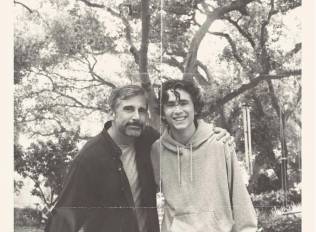
Tag: father and son

  • Evolution of a Beard: My Growth as Reflected Through Facial Hair

    Evolution of a Beard: My Growth as Reflected Through Facial Hair

    My hatred and rage grew alongside my father’s beard. Beards represented mental illness. Beards represented embarrassment. Beards represented my failed family.

    The last time I saw my father without a beard was the night he accused me of being an alien sent to harvest his testicles. It was the summer before I entered eighth grade.

    My father’s mustached face was otherwise smooth. Always had been as far as I knew. I remember kissing his cheeks as a child. Avoiding the scratchy upper lip hair.

    Now, my father’s cheeks were blushed with anger and fear. I lost myself staring into his terrified eyes.

    That night was the culmination of months of odd behavior. Standing outside at my sister’s Girl Scout summer camp, my father screamed accusations at everyone. His family had been replaced by testicle harvesting aliens. The other parents were FBI agents who’d been stalking him at work and recording his thoughts for months.

    I’d always known my dad was a little odd. He had disappeared a few times for no reason. Usually my sister and I would end up staying a few nights at my grandparents’ house. My mom would buy us new toys. My dad would eventually reappear. Things returned to our version of normal. Unknown to me was his diagnosis of schizophrenia.

    This time I knew exactly why my dad disappeared, he was going to the mental hospital; the loony bin. My dad was certifiably crazy and teenage me knew it. Worse, other people knew it. Other teens! Complete strangers. This last image of my father without a beard is seared into my memory.

    My father came home from the hospital with a beard. Well, he came home with three days of unshaven stubble. Still, it was thick, dark, and covered his face. This bearded man no longer looked like my dad. This bearded man no longer acted like my dad.

    The bearded stranger talked to himself out loud in private and public. He cursed and gestured wildly at random times, crossing himself with vigor as he watched Catholic Mass on TV three times a day. We weren’t Catholic. The bearded man spent evenings and weekends shopping for pornographic movies that sat unwatched and unopened in haystack shaped piles in our basement.

    My hatred and rage grew alongside his beard. I hated my father. I hated his beard. By extension, I hated everyone with a beard. Beards represented mental illness. Beards represented embarrassment. Beards represented my failed family. Beards were something crazy people used to hide behind.

    I daydreamed of shaving my father’s beard. Peeling off the stubble to reveal the man he had been prior to having a beard: the father I no longer had.

    At the time I wasn’t able to grow my own beard. That didn’t stop me from making a pact with myself – I would never grow a beard, damn it.

    As you can see in the image accompanying this article, I did not keep my pact.

    As an adult, I didn’t have a beard or a relationship with my father. I became a father myself and vowed to never put my children through what I had gone through: a childhood filled with an empty father.

    I didn’t prevent my father from having a relationship with my children. My mother and father would visit sporadically throughout the year and at holidays. My children were fine interacting with my father. Hell, sometimes I’d catch a glimpse in my children’s eyes of what looked like love toward their grandfather.

    I wasn’t doing so well, though. I treated lingering depression and anxiety with antidepressants, sporadic counseling, and another illness: alcohol use disorder.

    I was failing at life and I frequently drank until I blacked out. I was divorced and only seeing my kids every other weekend. I tried to wash away my bitterness and guilt but instead I found myself on an alcohol-fueled ride to my rock bottom.

    The last time I remember not having a beard was the last time I remember drinking alcohol. I had an appointment with a new counselor. He told me that nothing could improve if I kept drinking and that he wouldn’t work with me if I didn’t stop. Somehow, I heard him. I also heard what he wasn’t saying: things could improve if I stopped drinking.

    I went home and got drunk for the last time that evening.

    It wasn’t easy to stop drinking. At first, every minute of every day was hard. I didn’t have the energy to do anything other than attend AA meetings and counseling. Then, without thinking, I stopped shaving and grew a short beard. At first it brought me comfort in a tangible way: I’d rub on it and scratch it and twist the hairs. After a few weeks it started filling in. And so did my sobriety. My beard grew thicker along with my willpower. I kept the beard and I’ve kept my sobriety.

    At some point I made the first proactive phone call to my father I’d ever made. It wasn’t a magical conversation– we talked about sports and the weather, the same topics we’ve always been able to safely cover during face-to-face conversations over the years. When it was over, I hung up the phone, feeling sick to my stomach. I knew I’d never have the dad I wish I had. I know it’s on me to deal with it. But I wanted to have whatever relationship I could with him.

    I’m four years sober. In these four years I’ve searched my soul to forgive my father. My children love their grandfather. They don’t know the bearded stranger I knew when I was growing up. They’ve never known him without a beard. They only know him as Grandpa!

    I can’t regain my childhood. And I can’t undo what I’ve done to my children. But I can make sure I don’t go back to the dark place of alcohol abuse.

    I kiss my children with a beard. I cuddle my youngest daughter and tickle her with my whiskers. She’s never known me without a beard. My kids see beards differently than I did.

    Today I still have a beard. I keep this beard as a reminder of the importance of staying sober; a reminder of the importance of my family; a reminder of the forgiveness I’ve given others and that I’ve asked for from my loved ones.

    View the original article at thefix.com

  • My "Beautiful Boy": David Sheff on Bringing His Family’s Story to the Big Screen

    My "Beautiful Boy": David Sheff on Bringing His Family’s Story to the Big Screen

    While watching the film, I would look over at Nic sitting next to me and get so emotional. I would start to cry and I feel like I’m about to start crying right now because I came so close to losing him.

    In “The David Sheff Solution,” The Fix interviewed the National Book Award-winning author of Beautiful Boy about his struggles as the father of a child with a substance use disorder. Now David Sheff’s story is about to be vaulted to the next level of national prominence. On Friday, Amazon Studios released the feature film Beautiful Boy, starring Steve Carrell as David Sheff and Timothée Chalamet as Nic Sheff.

    As opposed to being intimidated by this move into the public eye, David Sheff is excited. Since helping his son Nic find the path of long-term recovery, Sheff has dedicated his time and energy to raising awareness and continuing his efforts to reduce –and ultimately remove—the stigma surrounding addiction. Without stigma, Sheff knows from firsthand experience, prevention efforts will improve and treatment will become more accessible. Indeed, Sheff’s ultimate goal in allowing his story to be brought to the big screen is to bring greater compassion and understanding for this disease. Given our similar focus at The Fix, we are thrilled to again speak with David Sheff.

    The Fix: Beautiful Boy is a rare combination of both your most deeply personal work as a human being and your most successful book as an author. Was it hard to decide to expose such a story to the world, particularly in a visual format that lacks the distance of the written word? Was it difficult to let go and give director/writer Felix Van Groeningen the space to tell your story?

    The direct answer is yes. It was hard. Even from the beginning, exposing our family to potential criticism in a public forum was worrying. It has been worrying from the very beginning when I first decided to write about what was happening to my family for The New York Times Magazine. I remember asking a friend of mine to read the manuscript after I first wrote it. She was an editor, and I respected her opinions. I must admit today that her response surprised me. She told me, “You can’t publish this. There is all this stigma against addiction, and your family will be judged harshly.” As you can tell, she really counseled against moving forward.

    At that point, I already had made the commitment. I had talked with everyone involved, including Nic, and we decided to move forward. When it came out, there were no negative consequences at all. In fact, it was the opposite. I heard over and over again from people who had been impacted by addiction. It was all about sharing stories, and people seemed relieved to be able to share. They had kept their experiences quiet because these were their deep, dark secrets. They also had felt that they would be judged. It was so positive that the article and then the book led to the creation of such an open dialogue in a variety of ways from in-person to on the phone to online messages in emails plus on Facebook and Twitter.

    It’s important to note that every word in that book I scrutinized. I wanted to make sure that I said what I wanted to say while also protecting everyone involved. It ends up being really complicated. I felt everybody had suffered enough, and I didn’t want to increase anyone’s suffering. As a writer, I tried to be as meticulous as I knew how to be. The idea of allowing someone else to tell our story was scary in a different way: I knew I would not have that kind of control.

    Before it happened, the idea of doing a movie had never really occurred to me. To begin with, the writing started as a way to get through the night. The writing was a way of expurgating this deep, dark turmoil that I was experiencing. When we were approached about doing a movie, the first guy turned out to be the right guy. We were approached by Jeremy Kleiner, one of the principals at Plan B Entertainment, and he was sincerely moved by both of our books. He cared deeply about this issue because he had been through it with friends while also being deeply affected by the Dad’s perspective and the family story. He felt it made it different from the vast majority of addiction memoirs. The key point he made was that addiction was not portrayed in either of our books in a simplistic or clichéd way. He made the commitment to make a movie that would show the complexity of addiction, the fact that there are no easy answers.

    Although Jeremy was just starting out at this time, we believed in him and in Dede Gardner, his partner at Plan B, along with Brad Pitt, who is the CEO and started the company. It seemed obvious to make the decision to make the movie with them. Since then, they have won Academy-Awards for making 12 Years a Slave and Moonlight, but this was before they experienced such incredible success. When they brought on Felix Van Groeningen, the director of the movie, I was even more convinced. He’s a genius, and I was incredibly impressed and moved by his past films. Like the producers, he was connected and committed to the material. I knew we were in good hands, and I knew they would tell our story in all of its complexity.

    Steve Carrell is an American comic icon. In movies like The Office and The Forty-Year-Old Virgin, he has made us laugh (although he showed dramatic chops in Foxcatcher). What do you think of his portrayal of you in this film?

    There is no doubt that he’s a comic genius, but he’s so much more as well. Steve is an astounding actor, and I knew that long before this movie. Indeed, Nic and I remember so clearly the experience of seeing him in Little Miss Sunshine together. He was heartbreaking in that movie in such a beautiful way, and it was a moving experience for us to see that film together when it first came out in the theaters.

    When I met Steve, he was so sincere, warm, and committed to telling the story right. The other thing I realized was that he connected to the story as a father. It was not the drug experiences that drew him to the story, but the opportunity as a father to play a father desperately trying to help a child. He understood the deep desire as a parent to do anything we can to protect our kids. He expressed how badly he wanted to play that role because of the emotional component of the story.

    I must admit, however, that when I saw the movie, I still couldn’t imagine anyone playing me. It just seemed too weird. It really is disconcerting when you think about it, and, as a writer, I tend to think about things. When I finally saw the movie from beginning to end, I feel like he nailed it. He captured how hard it is and how hard it was for me to go through this period in my life. He captured what it’s like to be a parent of an addicted child, somebody you love more than anything and all you want to do is save them, but you keep running into obstacles like the denial and the horror of addiction. He captured that difficulty of helping someone who is angry and rebellious and lashing out at you as you try to save their life. I lived through that anguish, and that anguish is in every nuance of his performance and his expression and in his acting. I really was blown away and felt that he got it. Before I saw him do it, I honestly doubted whether anyone could do what he has accomplished in this film. You see his optimism and his crushing defeat, then you see him become optimistic again and then his desperation as his son keeps relapsing. The up and down and up and down is so powerful, but even more powerful is the through-line of his love for his son.

    How did you and Nic decide to move forward with the movie project? Did you both feel from the beginning that your book and his book should be turned into a combined film? How did you decide to combine the Beautiful Boy story with Nic’s Tweak, or was this choice made by the filmmakers?

    The choice was completely made by the filmmakers. It was inconceivable at first that they would be able to pull off two such different takes on the same story in a single film. However, I had heard how valuable it was for other parents to read Nic’s book and develop a new perspective on what their addicted son or daughter was going through. At the same time, it was really valuable for a lot of kids to read Beautiful Boy to get a sense of what their parents were going through, both from the perspective of the how much they suffered and the depth of their love. Many kids don’t realize how much a parent’s love is a constant in the process of trying to help their child recover.

    Still, each story had been told in book form with over three-hundred pages dedicated to each story. The idea that somebody could pull it all together in a two-hour movie was hard for me to imagine. It was not at all our choice, and it felt like they were jumping into the deep end of a stormy ocean without a life vest. Also, there was no precedent for it. I can’t think of a movie that was ever based on two different memories; one from the parent’s perspective and the other from the child’s perspective. I wasn’t sure that it could be done.

    However, you really got the emotional journey through the parent and the kid. I knew it was going to be challenging, but, once they made the decision, they never looked back. Over the two years that it took to make the movie, they kept to the course, and I feel they did it masterfully. It was a hard choice to make in the beginning, and it definitely was the decision of the filmmakers.

    As an aside, Nic did amazing in his interview. I was so impressed by the depth of his compassion and the veracity of his gratitude.

    He’s an extraordinary example of recovery in practice. All the time, I hear from people who are so discouraged because they’ve been through years of watching a child’s descent into addiction. I hear it about other family members and friends as well. They just don’t feel like recovery is possible.

    We are so lucky that Nic made it. Any parent is lucky that has a child who makes it. Nic’s drug use was so extreme, and the combination of drugs that he was doing was truly dangerous. He put himself into so many life-threatening situations during those dark days. There were so many times when it could have ended up differently. Tragically—and I feel so deeply for them because I could have been there— so many parents now experience the unforgiving horror of that outcome where they lose a child. Given Nick’s recovery now, we were very lucky.

    My experience seeing Nic go through this process has been incredible. People that go through recovery and come out the other end don’t just survive. Because of all the hard work that needs to be done, because of all the suffering, because of all the self-examination required to get sober and then stay sober, they become some of the most extraordinary people that you’ll ever meet. In fact, John, you are a case in point, and that journey from addiction to recovery, as you know from your own experience, can be inspiring to other people that you meet along the way. People that come out the other side can have the most rewarding and fulfilling lives afterward.

    I hear from so many families that are close to losing hope or have lost hope. Their relationships have been shattered, and they can’t imagine them ever being put back together. My experience with Nic has shown that families that do explode; [families that] feel—amidst the ruins—that it’s almost inconceivable that they will survive it—they do survive it, and they can survive. Recovery is still a possibility. If they do the hard work and give it time, they can be closer than ever. I believe we can say that about our family.

    Nic and David Shef
    Image Credit: Reed Hutchinson for UCLA Friends of Semel

    If this movie could accomplish one goal, what would you want that goal to be? What do you believe can be achieved?

    I feel the biggest impediment moving forward to end addiction, to face this disease in all its difficulty, to prevent people from becoming addicted and to treat people that do become addicted, is the ongoing stigma. Too many people keep their problem hidden because they are judged. People don’t go get treatment because they are hiding the reality of their addiction. When people start to get treatment, if they have the normal challenges of the usual ups and downs, if they relapse, they are judged very harshly. Being judged in such a way is the last thing needed by somebody who is addicted. They already feel terrible about themselves. They are caught in a cycle that’s like a vise, and they don’t want to be doing the terrible things that they do to themselves and to their families.

    I hope the movie can show people that addiction is not about choice. It’s not about a young person going out and doing these things just because they want to have fun and party and get high. It might be about that a little in the beginning, but it quickly shifts. Essentially, it is about pain and suffering and a desperate attempt to find some sense of peace within themselves. Addicted people talk about this hole inside them that they are trying to fill. The hole can be anything from an undiagnosed psychiatric problem like depression or anxiety to untreated childhood abuse and trauma. Whatever it is, I have come to see that it is about a pain that the person is trying to self-medicate.

    If this film can help with anything, I hope it opens the door to greater compassion and understanding for this disease. Without the burden of the stigma, we can move forward and actually help the people that need our help. We need to help people by overcoming stigma by focusing on effective prevention and treatment. People who are addicted are not weak. They are ill, and they deserve our compassion.

    At the Colorado Health Symposium in August, you start your keynote address after watching the film’s trailer by saying, “I’ve only seen that once, and it’s hard to watch.” What parts exactly were so hard to watch? Was it a combination of Nic’s descent into addiction and your inability to stop it? Did you have any PTSD-like reactions to the film, or was it a cathartic experience that freed you from the lingering demons of the past?

    Wow! That’s a good question. I guess the answer is both. It brought it all back, and it’s not like I had forgotten. However, when we get past traumatic experiences in our lives, we do put them in a place that we can live with. I feel like I had done that to some degree, and it made watching the film challenging. The experience of seeing it again opened up the whole thing again, meaning it opened up the old wounds. I just remembered how hard it was and how hard it was to watch Nic suffer. I felt again how hard it was for all of us to survive as a family.

    At the same time, it was amazingly cathartic to process what we had been through as a family. It was another version of writing the book, which had been really cathartic as well. It also was an affirmation of the hard work Nic has done to get sober and to stay sober. It was a reminder of how lucky we are to have come out the other side. While watching the film, I would look over at Nic sitting next to me and get so emotional. I would start to cry and I feel like I’m about to start crying right now because I came so close to losing him. It was a reminder of how close I came to losing him.

    In another sense, it was cathartic because I felt like it mirrored the experience of so many other people. It was a reminder of how many of us are in this together. When Beautiful Boy first came out in 2008, I thought it couldn’t get worse in terms of the number of people that were dying from addiction. The number then was about 36,000, and that doesn’t include people dying from alcohol-related causes. Of course, we know that in 2017, it was 72,000 dying from addiction-related causes alone, twice the original number. Things have gotten so much worse, and that’s why I feel that this movie is coming out at just the right time. So many people are suffering, and I hope this movie can help bring us all together and make us feel that we are not alone.

    You talk about how hard the disease of addiction is on families. Should families see this film together? Should parents take their teenagers? If they do, how should they prepare both themselves and their kids for the film and what should they do afterwards?

    Wow! That’s another good question. I guess what I would say is that every family is different. A reality that many of us would prefer not to face is that every kid is going to encounter drugs as they are growing up. It’s a prevalent reality in the world. Many parents ask me if it’s too early to start talking about drugs with their child if they are a freshman in high school. The clear answer is no. It’s not too early to start talking about drugs to your young, young child. Drugs are pervasive in our culture, and kids are curious by nature. They are confused, and it’s our responsibility to provide them with quality information to help lift that confusion. It’s our responsibility to shed light.

    Still, every family and every parent has to determine what’s appropriate for their own child. When it comes to seeing this film, that decision needs to be made for each family. In general, if your child is mature enough to see explicit and disturbing scenes of drug use, then I think this film could provide an amazing way to start that conversation in a family. What does it mean to use drugs? Why do people use drugs? What are the potential consequences to using drugs? These are crucial questions. Before watching the film, there should be a conversation that provides some education. In other words, a conversation that opens the door to a conversation. The best part of such a conversation is if parents can get their kids to talk.

    It reminds me of this recent work I’ve been doing with Jarvis Masters, a California inmate at San Quentin on death row. I’ve spent a lot of time in the prison, and I recently sat in with a group of inmates in the program as they talked about their experiences and their lives. They are trying to face the consequences of their actions by doing restorative justice. When I was leaving, I happened to be going to talk to a group of teenagers that night. I asked these men: “I’m going to talk to these kids tonight. Is there anything I should tell them? Is there anything anyone would have said to you that would have helped you growing up so you could have made better decisions later on? Maybe you would not have fallen into addiction and fallen into crime?”

    A lot of the men had really interesting things to say. At the end, there was this one guy who has been super quiet the whole time. He said something under his breath, and I couldn’t hear him. I asked him to say what he had said again. He looked up at me and said, “When you talk to these kids tonight, don’t say anything. Just listen to them.”

    I thought that was incredibly powerful, and that’s the message I would give to parents. Try to engage your kids in conversation and really figure out who they are and what’s going on in their lives. Then, it’s super important to continue the conversation after the movie. Keep talking and, more importantly, keep listening.

    Finally, people in early recovery should be careful when deciding whether or not to see this film. Given the explicit drug use and the unvarnished reality of addiction presented in the film, it may not be the best choice so they should talk it through with their counselors, therapists, sponsors or whomever they are working with to maintain their recovery. The research tells us that such scenes of drug use can be triggering, and that’s the last thing we want to do with this movie. Part of the reason the movie is so powerful is because the filmmakers committed to telling the truth, and that truth is that drug use is not glamorous in the slightest, but rather horrifying to watch.

    View the original article at thefix.com

  • Beautiful Boy: An Interview with Nic Sheff

    Beautiful Boy: An Interview with Nic Sheff

    “A really cool expression of the family bond in the film is how the love survives everything that the disease can throw at it. Despite so much trauma, at the very end, you see that that core love never goes away.”The journey from addiction to recovery is a personal one, with details usually confined to family, friends, and maybe a therapist’s office or sobriety fellowship. But what happens when you open the doors to the public, laying bare the trials and triumphs that got you to this point? Since the publication of his father’s award-winning memoir, Beautiful Boy: A Father’s Journey Through His Son’s Addiction, his own memoir, Tweak: Growing Up on Methamphetamines, and his writing for The Fix and other publications, Nic Sheff’s experiences with addiction and his subsequent recovery have played out under the public’s gaze.

    Now, with the Amazon Studios wide release of the feature film Beautiful Boy on October 12th, Nic Sheff is going to experience a whole new level of recognition and fame. Now more than ever, anonymity is a thing of the past, but he remains dedicated to his personal recovery and the principles of a healthy program. With the premiere fast approaching, The Fix is honored that Nic took time to sit down and talk to us.

    The Fix: How did you and your father decide to initiate and move forward with the movie project? Was it agreed upon from the beginning that your book and his book would be turned into a combined film if successful? How did you go about deciding to combine Tweak: Growing Up on Methamphetamines with the Beautiful Boy story, or was this choice made by the filmmakers?

    Nic Sheff: We always thought the best idea was to combine the two books. Right after publication, we met with Jeremy Kleiner, a producer with Plan B Productions, and this is before the company had won two Academy Awards for producing 12 Years a Slave and Moonlight. They were just starting out, but when we sat down with him over dinner, I just felt that he got what we were trying to do with the books. Also, we had a friend in common who had been a heroin addict and had died due to this disease. It gave us an immediate emotional connection.

    You have to realize that there have been so many movies about addiction that show the downward spiral of a person as the drugs overtake their life. Many of these films show these people hitting bottom, then end with them dying or getting into rehab and ending on a hopeful note. Although there have been some great movies like that, our idea was to do something different. We wanted to show the effect the addiction has on the family because my Dad had written about it so amazingly in Beautiful Boy. We wanted to combine the family narrative with the addiction narrative.

    Along with that combination, we wanted to show a process that so many people experience when they first try to get sober — the cycle of relapse caused by the pain of being without the drugs and having to face your feelings. When the pain comes, we reach out to the one thing that we know has kind of made us happy for so long, and we end up relapsing. As soon as we take the drugs again, they immediately take hold, and we can’t stop. I felt that process of relapsing had never been depicted in films. We wanted a movie that shows how hard it is to get out of that cycle. Ultimately, the answer, if there is an answer, is that there is a love that exists within a family, and that love never goes away. The ending of the movie doesn’t tie up the story with a bow, but it does emphasize that that love is still there. It will never go away. I know that is not true in all cases, but it was true in our story. As a result, I thought it was a really powerful way to end the story.


    Nic Sheff
    Image Credit: UCLA Friends of the Semel Institute Open Mind Community Lecture and Film Series

    In an interview with Variety, Timothée Chalamet said about first meeting you, “It was all trepidation on my part — nerves and anxiety — which was immediately settled by [the] extraordinarily warm and kind and intelligent and wise person that Nic is, that is innate to him but also through his experiences and his life.” What was it like for you to meet the actor that would play you and tell your most deeply personal story on film? What do you think stands out about his portrayal of you?

    God, that is so sweet of him to say that about me. He’s such a sweet guy. I must admit that I wasn’t familiar with Timothée’s work when we first met at a coffee shop. As soon as he came in, I saw that he has this incredible energy and passion for his work. Sure, I could tell that he was nervous about meeting me, but he also was just so committed to getting it right. I immediately felt comfortable with him because I knew he was coming to the role with a very open mind. He wanted to make his portrayal of this young person struggling with addiction as honest and as authentic as possible. He was so willing to learn in an active way.

    He asked me a million questions about everything from the emotions I was feeling to the physicality of what it actually looks like to be high on these drugs and what it looks like to be detoxing from these drugs. There’s something really amazing that Timothée does in the movie. It’s something I feel that I’ve not ever seen in a movie about addiction before. Even as he’s in the trenches and high and doing these unconscionable things like breaking into his parents’ house and stealing from his little brother and sister – at the very moments when he’s being volatile and angry and out of control – he conveys this self-awareness that he doesn’t want to be this person and he doesn’t want to be taking these actions. It seems like his body is almost possessed.

    As a performer, Timothée was able to hold those two contradictory elements at once. He really expresses that sense of being trapped in the addiction and the behavior. At the same time, you see him fighting to hold onto who he was before the addiction took over; you can see how much guilt and shame he feels about everything he is doing, even while he is doing it. I thought that was so remarkable because it was exactly how I felt when I was out there. I saw myself doing these behaviors, and I was so horrified at myself, but I couldn’t stop. Indeed, that feeling of powerlessness is so devastating. It’s at the heart of the disease, and to see it captured so well on film I thought was truly remarkable.

    At the Colorado Health Symposium in August, you talk about how watching the movie makes you feel so grateful because it’s such an amazing reminder of the miracle of recovery. Is gratitude the very heart of your recovery?

    Absolutely. Although I know the film wasn’t made for this reason, I felt that the filmmakers gave me such an incredible gift by making this movie. It is such a visceral reminder of everything we went through as a family. It’s such a great help for me because I’m still very much involved in recovery. It’s a big part of my life every single day. In some ways, however, I have moved on. I write for television now, and I am doing things that aren’t necessarily connected to telling my story and writing about addiction. Seeing the movie, seeing my life reflected back to me, it hit home in a way that I hadn’t felt in a long time. I felt again on a very deep level what an incredible miracle it is that I survived and how much came back to me. My family and I have such a close relationship, and it’s beyond anything I ever thought possible. It makes me so grateful.

    Every day, gratitude is such an essential part of my existence. Battling this disease, I have gone through such hell that coming out the other side is something I need to acknowledge on a daily basis. I try to be grateful and to express my gratitude. The amazing thing about being sober is how you learn to appreciate and love the simple moments of life. I am so grateful to be able to go out on a walk with my dogs or go out to dinner with my wife. The little things are so sweet like just watching a movie. Gratitude is a gift of sobriety that I keep close to me.

    Like you, I first tried drugs when I was eleven years old, smoking pot. Although I didn’t develop a problem until high school, I know my eyes were opened to that feeling of escape. It felt like an answer. Did you feel this way as well? Do you believe the movie effectively highlights the real dangers of early drug use?

    Yes, I felt that way exactly when I first smoked pot when I was eleven. I felt this very immediate sense of relief. Up until that point, I had felt so insecure and uncomfortable in my own skin. I just didn’t fit in anywhere. Smoking pot for the first time felt like the first real answer that I had ever found. I kept turning to drugs to cope with everything from success to failure to shyness and everything in between. Thus, when I wasn’t using, I really developed no skills to handle what life threw at me. I kept going back to the drugs because they were the only coping mechanism that I’d ever learned.

    In the movie, I do think we show that relapse is not about having a good time. Most people think addicts relapse because they want to keep the party going. They think we are enamored with this fast-paced life. In my experience, I was just in a tremendous amount of pain, and I kept reaching out to the drugs to try to feel better. I really see that theme well-expressed in the movie. Every time Timothée relapses, it’s because he’s in pain. He doesn’t want to relapse, but he can’t stop himself. He does not know how to break that cycle.

    For example, there’s a scene in the movie where Timothée and Steve are smoking pot together. Timothée is in high school, and he’s convinced his Dad to smoke pot with him. In the scene, you see that the Dad is trying so hard to connect with his son on a personal level. He believes that smoking pot with his son might help connect them. However, for the son, he’s already in his disease. All he can focus on is the drug. In that scene, we see how he keeps bringing the topic back to the drugs, and he wants to hear about the other drugs his Dad is doing or has done. He wants ammunition so he can feel justified about his using, and he wants to be exonerated in the process from his feelings of guilt. He doesn’t care about connecting; he cares about what his disease wants him to care about. He’s so obviously obsessed with the drug. I definitely felt like I hadn’t seen anything like that before.

    Dr. Gabor Maté writes, “The question is not why the addiction, but why the pain.” What does that quote mean to you? Do you agree with him? Is treating the underlying trauma behind the addiction the key to long-term sobriety?

    I think that quote is amazing. It makes me remember my last treatment center. When I got there, they asked, “Why are you here?” I replied, “Because I am an addict, and I can’t stop using meth and heroin.” They said, “That’s not the reason that you’re here. It’s not because of the drugs. It’s because of the feelings that were making you use the drugs.”

    I knew right away how true that was for me. As I said, I was in a lot of pain growing up, and drugs were the one thing that I found that made that feel better. I’m sure it’s different for many people, and I am not an expert in addiction. I am just sharing my own experience. It definitely was super helpful for me to start exploring and treating that underlying pain behind the addiction. Some of it was just chemical. Going on antidepressants helped at first, then I was diagnosed as bipolar. Now I am on lithium for the bipolar disorder. All of that stuff helped to address that pain and break the cycle.

    To me, recovery is like trying to put together this puzzle. There are all these different puzzle pieces. They are not the same for everyone, but for me, those puzzle pieces have been therapy, medication, fellowship, and 12-step. All of these puzzle pieces come together to allow me to stay sober, and they are all really important. However, they are different for everybody. I wish there was one solution that worked for all people, but unfortunately, that’s not the case.

    In Tweak: Growing Up on Methamphetamines, you write, “There is this crazy fear I have of being rejected by anyone – even people I don’t really care about. It’s always better to leave them first, cut all ties, and disappear. They can’t hurt me that way – no one can.” Is this fear at the very core of what drives the escapism of addiction?

    That’s a fascinating question. I think it definitely was a big contributor to the pain that I needed to use the drugs to help relieve. As I’ve gotten more long-term sobriety and had the opportunity to work on myself, I have found that I have developed these amazing friendships with other people. I never before had anything like the friendships I have today. Before I got sober, it was too scary for me to be vulnerable enough to have friends. Having friends means the potential of losing those friends. The lasting friendships that I’ve been able to form mean so much to me. It’s such a gift.

    You have to realize that my disease wants me to be alone. It wants me to be isolated so it can take control. When I was alone, my disease would be talking to me, and it would make me feel like I wasn’t worth anything. Still, it does take courage to have friendships. Without my recovery, I don’t think it would have ever happened. My recovery and those friendships go so well together.

    Worrying does not serve me at all. When I get into that negative headspace, I still have a hard time getting out of it. Luckily, I have friends that I can talk about it with, and they help me get more perspective. They help me take a step back and see again the value of my life. It’s one of the greatest gifts of authentic connection.

    You know from firsthand experience how hard the disease of addiction is on families. Should families see this film together? Should parents take their teenagers? If they do, how should they prepare both themselves and their kids for the film before and what should they do afterward?

    It’s hard for me to be prescriptive about anything. I really only can express things that come from my own experiences. I do believe that having conversations about this subject are really important for a family to consider. I have learned a lot by going around with the film to screenings and talking with people afterward. The main reason I’m doing it is that this film opens the door to such a great opportunity to have conversations about these issues. Watching this film raises awareness by making it easier for people to have honest talks about this disease.

    Even more importantly, it is helping to not only emphasize recovery but also reduce the stigma around addiction that prevents such talk in the first place. From my perspective and beyond my personal stake, I believe the more people that see this film, the better. It will raise conversations that might not have occurred without it.

    It made me proud to be connected to this film after I first saw it, and I realized there is nothing glamorous about the drug use in the movie. There is a scene in the movie where the son relapses. He does drugs with this girl, and it doesn’t look like a lot of fun. Instead of presenting it as fun or wild or on the edge like they do in a lot of movies, you really see how much guilt and shame the son has about it. There is no party period. Right after it happens when he’s alone, he breaks down and starts crying.

    The power of the movie is that it really shows that the reason people use is because of this pain that they are experiencing. Relapsing tends to be a desperate attempt to escape that pain. It also shows the effect that a relapse has on the family. It was painful to watch it on the screen and kind of relive it again.

    Watching the film reminded me of when I first read my Dad’s book. It was so hard to realize and see how much of a negative effect I had on him and my whole family. It was important to me that the film would capture that feeling, and it does it so well. Thus, I believe it would be amazing for families to see this film together. I think it would encourage honest conversation afterward.

    The one warning I would add to that recommendation is that for people in recovery, especially early recovery, it can be really triggering to watch the explicit drug use in the film. There are some very intense scenes of IV drug use that could be triggering. I would encourage people in early recovery not to put themselves in a position where they might be triggered. If they are worried that it might be a possibility, then I would recommend that they choose caution and not take an unnecessary risk.

    In Tweak: Growing Up On Methamphetamines, you write, “Sure, I buried it. I buried it and buried it and turned away from everything light and sweet and delicate and lovely and became so scared and scarred and burdened and fucked up. But that goodness is there, inside – it must be.” Do you believe this movie can help people struggling with addiction find the goodness within themselves and embrace recovery? If so, how?

    Wow! That’s creepy to hear that quote again. I haven’t gone back and read Tweak in such a long time, and hearing it is such a sad reminder of how I was feeling. It amazes me how far my life has come since then, and it makes me feel so grateful.

    This movie exemplifies that gratitude by showing in such a beautiful way how much love there is within a family. You really see the love within our family, and it’s a reflection of the way that families are. I am so impressed by the incredible bond between parents and children, and also between brothers and sisters. A really cool expression of that bond in the film is how the love survives everything that the disease can throw at it. Despite so much trauma, at the very end, you see that that core love never goes away.

    I remember when I was out using, I had this horrible thing happen. My girlfriend OD’d, and I had to call 911 and do CPR. Thankfully, she came out of it, but she had to go to the hospital. Of course, I went with her, and it was such a wake-up call. I decided I had to do something to stop all of this. I called my Dad, and I told him, “Okay, I don’t want to go into rehab, but I want to come home and get clean on my own.”

    My Dad had learned enough at that point to know that wasn’t going to be a good idea, and I wasn’t going to be able to do it on my own. He knew he couldn’t let me come home and put everyone else at risk. He said to me, “No, you can’t come home. I really hope you get help, but I can’t help you unless you’re willing to go into treatment.”

    When I heard that from him, I was devastated. It was devastating to hear that from my father. All I wanted to do was come home. I was angry and hung up the phone, but even at that moment, when he said I couldn’t come home, I also recall this profound awareness of his love for me. I knew he wasn’t drawing that boundary because he didn’t care about me. Even after everything that had happened, I instinctively knew that love was still there. In the movie, the themes include that such deep love never goes away and that forgiveness is always possible. For people struggling with addiction, that’s a powerful message that they need to hear and that needs to be heard.


    Nic and David Sheff
    Image Credit: UCLA Friends of the Semel Institute Open Mind Community Lecture and Film Series

    View the original article at thefix.com