Tag: fear

  • Why using fear to promote COVID-19 vaccination and mask wearing could backfire

    While the pandemic stakes might justify using hard-hitting strategies, the nation’s social and political context right now might cause fear tactics to backfire.

    You probably still remember public service ads that scared you: The cigarette smoker with throat cancer. The victims of a drunk driver. The guy who neglected his cholesterol lying in a morgue with a toe tag.

    With new, highly transmissible variants of SARS-CoV-2 now spreading, some health professionals have started calling for the use of similar fear-based strategies to persuade people to follow social distancing rules and get vaccinated.

    There is compelling evidence that fear can change behavior, and there have been ethical arguments that using fear can be justified, particularly when threats are severe. As public health professors with expertise in history and ethics, we have been open in some situations to using fear in ways that help individuals understand the gravity of a crisis without creating stigma.

    But while the pandemic stakes might justify using hard-hitting strategies, the nation’s social and political context right now might cause it to backfire.

    Fear as a strategy has waxed and waned

    Fear can be a powerful motivator, and it can create strong, lasting memories. Public health officials’ willingness to use it to help change behavior in public health campaigns has waxed and waned for more than a century.

    From the late 19th century into the early 1920s, public health campaigns commonly sought to stir fear. Common tropes included flies menacing babies, immigrants represented as a microbial pestilence at the gates of the country, voluptuous female bodies with barely concealed skeletal faces who threatened to weaken a generation of troops with syphilis. The key theme was using fear to control harm from others.
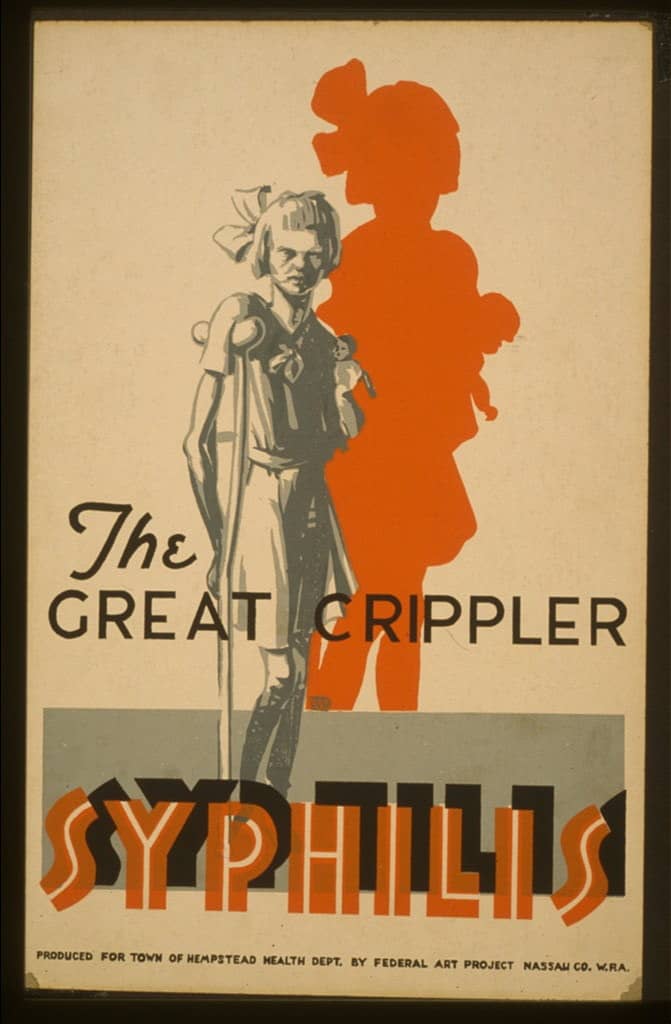
    Why using fear to promote COVID-19 vaccination and mask wearing could backfire
    Library of Congress

    Following World War II, epidemiological data emerged as the foundation of public health, and use of fear fell out of favor. The primary focus at the time was the rise of chronic “lifestyle” diseases, such as heart disease. Early behavioral research concluded fear backfired. An early, influential study, for example, suggested that when people became anxious about behavior, they might tune out or even engage more in dangerous behaviors, like smoking or drinking, to cope with the anxiety stimulated by fear-based messaging.

    But by the 1960s, health officials were trying to change behaviors related to smoking, eating and exercise, and they grappled with the limits of data and logic as tools to help the public. They turned again to scare tactics to try to deliver a gut punch. It was not enough to know that some behaviors were deadly. We had to react emotionally.

    Although there were concerns about using fear to manipulate people, leading ethicists began to argue that it could help people understand what was in their self-interest. A bit of a scare could help cut through the noise created by industries that made fat, sugar and tobacco alluring. It could help make population-level statistics personal.
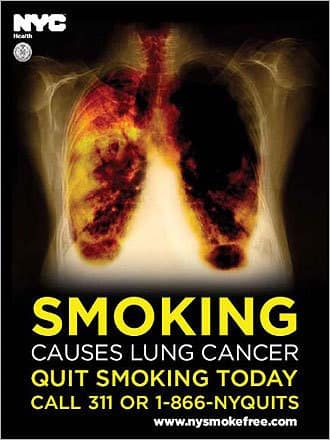
    Why using fear to promote COVID-19 vaccination and mask wearing could backfire
    NYC Health

    Anti-tobacco campaigns were the first to show the devastating toll of smoking. They used graphic images of diseased lungs, of smokers gasping for breath through tracheotomies and eating through tubes, of clogged arteries and failing hearts. Those campaigns worked.

    And then came AIDS. Fear of the disease was hard to untangle from fear of those who suffered the most: gay men, sex workers, drug users, and the black and brown communities. The challenge was to destigmatize, to promote the human rights of those who only stood to be further marginalized if shunned and shamed. When it came to public health campaigns, human rights advocates argued, fear stigmatized and undermined the effort.

    When obesity became a public health crisis, and youth smoking rates and vaping experimentation were sounding alarm bells, public health campaigns once again adopted fear to try to shatter complacency. Obesity campaigns sought to stir parental dread about youth obesity. Evidence of the effectiveness of this fear-based approach mounted.

    Evidence, ethics and politics

    So, why not use fear to drive up vaccination rates and the use of masks, lockdowns and distancing now, at this moment of national fatigue? Why not sear into the national imagination images of makeshift morgues or of people dying alone, intubated in overwhelmed hospitals?

    Before we can answer these questions, we must first ask two others: Would fear be ethically acceptable in the context of COVID-19, and would it work?

    For people in high-risk groups – those who are older or have underlying conditions that put them at high risk for severe illness or death – the evidence on fear-based appeals suggests that hard-hitting campaigns can work. The strongest case for the efficacy of fear-based appeals comes from smoking: Emotional PSAs put out by organizations like the American Cancer Society beginning in the 1960s proved to be a powerful antidote to tobacco sales ads. Anti-tobacco crusaders found in fear a way to appeal to individuals’ self-interests.

    At this political moment, however, there are other considerations.

    Health officials have faced armed protesters outside their offices and homes. Many people seem to have lost the capacity to distinguish truth from falsehood.

    By instilling fear that government will go too far and erode civil liberties, some groups developed an effective political tool for overriding rationality in the face of science, even the evidence-based recommendations supporting face masks as protection against the coronavirus.

    Reliance on fear for public health messaging now could further erode trust in public health officials and scientists at a critical juncture.

    The nation desperately needs a strategy that can help break through pandemic denialism and through the politically charged environment, with its threatening and at times hysterical rhetoric that has created opposition to sound public health measures.

    Even if ethically warranted, fear-based tactics may be dismissed as just one more example of political manipulation and could carry as much risk as benefit.

    Instead, public health officials should boldly urge and, as they have during other crisis periods in the past, emphasize what has been sorely lacking: consistent, credible communication of the science at the national level.

    Amy Lauren Fairchild, Dean and Professor, College of Public Health, The Ohio State University and Ronald Bayer, Professor Sociomedical Sciences, Columbia University

    This article is republished from The Conversation under a Creative Commons license. Read the original article.

  • Return to Sender: What an Unsent Postcard Taught Me About Addiction

    A timely message from my much younger, unsober self.

    Summer, 2020

    The Unsent Postcard

    I have a stack of unwritten postcards, collected from my travels, purchased with the intent of sending them to those back home. In recent months, I have taken to writing out these postcards to friends and family, both to cheer them with sunny images as they shelter in, and to support the United States Postal System.

    Not long ago, I came across a card featuring a hand-colored photograph of a windmill in East Hampton, New York. To my surprise, it was not blank. Tightly scrawled sentences, in rudimentary French, it was meant for a friend in Paris.

    No postage, never mailed.


    17 Septembre, 1991

    Chère Delphine,

    Salut! I am at the beach with my mother. My God! My poor back! I am ready for a big change in my life. We must talk. I’m going to write you a real letter soon.

    Ton Amie, Maria.


    Here I was, standing at the edge of big change, poised to plunge into some grand announcement, too large for the 4” x 6” space given. These words never crossed the Atlantic. Instead, I held them now, between my fingertips, twenty-nine years later.

    What are the chances of this? I thought. Of all these blank cards, only one has writing, and not just any writing, but words that speak to my alcoholic “bottom” — the physical, mental and spiritual low-point of my young life.

    My back hasn’t bothered me for years, thank heaven. I take it for granted. I walk with ease everywhere today. Until this moment, I’d forgotten just how bad things were with my lower lumbar at age twenty-four, that hell year when I couldn’t stand up straight without sciatica shackling my ankles, seizing my spine, and clamping down hard at the cervical vertebrae. This physical agony — an exclamation point to my mental and spiritual state — had literally brought me to my knees.

    I spent weeks in bed self-medicating on whiskey sours and muscle relaxants. Somehow I’d convinced the corner pharmacist to dispense refills beyond the legal limit.

    I‘m skeptical when people make meaning from random events. It feels self-indulgent to interpret every rainbow as a reference to my personal recovery. Yet finding this card, all these years later, didn’t feel like coincidence. It felt intentionally planted to remind me of why I’d sobered up.

    It also felt like something I had to share with others.

    September, 1991

    Watching waves

    In those mellow days following Labor Day, when the water is warmer than the salt air, I was with my mother in a rented bungalow at the tip of Long Island, now emptied of humans. I was twenty-five, unemployed, and reeling from a bad break-up.

    I remember the lunch mom served on or about the day I’d written that postcard: linguine with shrimp and mussels, and flutes of rosé wine. Mom was a faithful clipper of the Wednesday food section of The New York Times. Maybe she’d sourced this seafood pasta recipe there, or maybe she’d been inspired by one of the influencers of Hamptons entertaining at the time: Martha Stewart or The Barefoot Contessa.

    However it came to be, it was a memorable meal presented with panache, from a bare-bones rental kitchen. And it was a meal where my mother enjoyed alcohol as she always did, in moderation. More often than not in my childhood home, there was an appropriate wine, served in stemware, to compliment every dish.

    My mother drank the way Jacques Pépin did on public television, and the way I always wanted to, but never could — with class. At the end of an episode of making something like, say, classic Beef Bourguignon, he would raise his glass of Cabernet Sauvignon in a toast: “Aah-pee Coo-keeeng!” and tilt it lightly to his lips.

    But that’s not the way I drank this glass of blush wine. I downed it.

    Plagued by sciatica, a still larger pain loomed; it had been moving in slowly for years, like a cold front, now dipping as an arctic depression over this lovely lunch.

    I remember craving more flutes of Zinfandel than that one bottle held, but I was checked at two because mom was watching. Two drinks were the limit if you were female, and raised right — and you cared about appearances — which we did. But I couldn’t comply.


    I found myself watching the waves from that deck all afternoon. I watched them crest and crash, one after the other, in rhythmic indifference to my pain. Then it hit me. It felt big. Big like the feeling I get reading an inspirational poem from an anthology with a daffodil or seagull on the cover. Though the feeling was big I, myself, suddenly felt small. And weirdly enough, I was okay with that.

    It was a relief. The waves kept rolling in, oblivious to my situation. It was freeing to see that my pain — sharp and ugly — couldn’t stand up to the beauty of light and dark scattering the water’s surface.

    Scared, self-involved me was no match for the folding waves. For hours I watched them flatten at the shore and return to the sea, gradually eroding the moat I’d dug around myself. Yes, my experience of this landscape could be captured in a bad sonnet in a book with a hokey cover — the kind you’d find in a hospital gift shop.

    It was neither subtle nor original, my “white light” oceanfront awakening, but it was genuine.

    The next day, a masseuse with strong hands and a soft voice got me to open up about my drinking on a massage table in Amagansett. A recovering alcoholic himself, Sean R. is much of the reason I made it to my first Alcoholics Anonymous meeting when I returned to Brooklyn that next week.

    1991–2013

    A Bridge Back to a Good Life, Then Some Slippery Turns

    As the postcard predicted, big change followed. “A.A. is a bridge back to life.” That’s true. I did cross over to a full life with marriage, kids, and a semi-detached house. But it was a life further into Brooklyn, and further from my home group, the A.A. group where I had first gotten sober and stayed that way.

    Yes, I was still not drinking, but I can’t claim I was emotionally sober. Somewhere along the way I stopped going to meetings. Lost touch with my sponsor. Quit working with other recovering alcoholics. You know where this is going. Eventually, I drank.

    It started small: communion wine on Sundays, the occasional “non-alcoholic” beer, and the argument with my dentist. He wanted to give me local anesthesia for minor dental work, but I pushed for hit after hit of nitrous oxide on top of that. I wanted to numb my brain, not just my molar.

    “The idea that somehow, someday he(she/they) will control and enjoy his (her/their) drinking is the great obsession of every abnormal drinker.” — from Alcoholics Anonymous, Chapter 3, ‘More About Alcoholism’

    I went along like this for years, skating on the edge of my sobriety, doing figure-eights on April ice, until seven years ago I found myself sitting in the sun porch of my friend Samantha’s historic, center hall colonial home.

    Our kids were playing together somewhere on the periphery. I always found my way here, to this snug room off the parlor, with floor-to-ceiling bookcases and a loveseat. I’d marked it as my space, where I could step away, sink into the cushions and watch the cardinal at the feeder.

    On this day I was thinking about my marriage. It had been a good run, but after fourteen years, two sons and a poodle, it was over. During the past months, this reality had settled over me like snowfall hitting pavement at the freezing mark, melting first, before catching hold, white landing on grey, gradually building, til nothing remained of the sidewalk below. I was scared as hell now.

    Samantha stood over me with finger sandwiches and two flutes filled with golden bubbles on a silver tray. It had been so long since I’d been to a meeting, so long since I’d said out loud to a roomful of people: “I’m an alcoholic.” So long that I had a new circle of friends that never knew I had a problem and older friends who had forgotten that I didn’t drink.

    In that moment, forgot I didn’t drink.

    Alcohol, catching sunlight, was presented to me on a slender stem, the way it had been twenty-two years earlier at the beach.

    Why not? If ever I deserved a mimosa, it’s now.

    I took a sip.

    Holy shit, what the hell am I doing?

    I ran to the powder room and poured the rest down a sink with a swan head faucet.


    “The alcoholic, at certain times, has no effective mental defense against the first drink. Except in a few rare cases, neither he (she/they) nor any other human being can provide such a defense. His (her/their) defense must come from a Higher Power.” — from Alcoholics Anonymous, Chapter 3, “More About Alcoholism”

    It had happened —I had drunk again. I never thought I would. It had been more than two decades since my last real drunk, and I had good reason never to drink again — actually two very good reasons, their names were Leo and Liam. Sure I could rationalize the Sunday morning communion wine and the occasional hit of laughing gas — after all, I was accountable to no one for my behavior now— but when I let that bubbly pass my teeth and slide down my throat, I recognized that for what it was —a slip.

    I remember the taste of it clearly — that citrus effervescence in my mouth — and I remember my conscious decision to swallow. Like countless alcoholics before me, I had now proven what the Big Book drives home in the conclusion of Chapter 3.

    I had had “no effective mental defense against the first drink.”

    September, 2013

    The Room Above the Fish Store

    Thankfully, at the same moment, I realized my problem when I took that sip of spiked o.j. , I also remembered the solution.

    Alcoholics Anonymous had worked for me, for as long as I had shown up for myself and others. What became obvious to me with this slip was that I’d do well to return to a community of recovering alcoholics if I wanted to get sober again, and stay that way. I needed to plug back into a sober support network.

    So on the heels of my slip in late September, 2013, I climbed a staircase to a room above a fish store filled with retired seniors and flies circling overhead. I’d stepped into an A.A. Big Book meeting, already in progress. They were reading one of the personal stories from the back of the book, round-robin style. Right away I could see myself in ‘The Housewife Who Drank at Home.’ When she described herself as a ‘Jekyll-and-Hyde’ PTA mom, I lost it. That was me. Someone passed me a box of Kleenex. I will never forget that kindness.

    September, 2020

    Today

    Willpower and the passage of time are no guarantees against the first drink. I was humbled by this realization when I slipped.

    I like my life today; some days I love it. I don’t live in unreasonable fear, but I accept this fact: on any ordinary day, my alcoholic mind could observe the oven clock turn five and think: A snifter of eighteen-year-old single malt whiskey, served neat, alongside a bowl of salted cashews, would be a fine idea!

    And today I understand, right down to the jelly marrow of my bones, that this is typical alcoholic wishful thinking.


    I also recognize — and appreciate — other approaches to solving problem drinking, or at least to blunting the devastating effects of alcohol and other addictive substances and habits. Some of these solutions have developed in my lifetime, and some have been there all along.

    I have a friend who threw herself back into her childhood faith in earnest, and another who found help in Buddhist-inspired Refuge Recovery. I am happy for these friends, and for everyone who finds lasting recovery, however and whenever. And for those who have chosen the A.A. path, I am especially gratified to welcome back those like me — humbled humans who have returned to the fellowship later in life.


    On the last day of this month, I’ll have seven years back in the rooms. Once again, Alcoholics Anonymous has been a bridge back to a good life. I’ve got a sunny apartment, two sturdy teens, and an Australian lizard. The ex and I have each other’s back in the co-parenting game. I’ve got a day job where I feel purposeful, and my writing at night, which lights a votive in my soul.

    I was lucky to find my way back to A.A. at forty-seven, and lucky to turn up this picture-postcard now — this four-by-six inch card stock talisman, a reminder of who I was at twenty-five, and who I am now, twenty-nine years later — sandwiched between sunbathers on the Jersey shore and Niagara Falls at night. To me this is no coincidence: this postcard, lost then miraculously recovered, does parallel my own recovery, lost for twenty-two years, then found again in a new group, above an Italian fishmonger.

    And so, my dear friend Delphine, here is the full story, the real letter I promised you, delivered now, almost thirty years later. You are not an alcoholic, but maybe some of this makes sense. I hope so. We must talk soon.


    This piece originally appeared on Medium on September 13, 2020.

    View the original article at thefix.com

  • Forgive and Remember

    Better to face the discomfort than continue to trudge along under a false impression that it’s not dormant inside, oblivious to the ticking of the time bomb that will eventually go off.

    Weekday morning programming kept me company in the background. The crispy and cold bedspread gave me some solace. My parents had just left the apartment and I was curled up like a fetus at the foot of the bed. It had been a while since I entertained the unwelcome visitor. What the hell was he doing here? Everything was going great, or so I believed. Two days with them proved me wrong. What seemed to be progress in acceptance and personal growth was only a by-product of spending a year on the other side of the world. No wonder I wasn’t feeling good and stayed in that day. The illusion of the enlightened and perfect world I’d been living in was shattered. The mourning of this started as a slow downward spiral that quickly turned into a tailspin but felt more like a free fall. I had not wished I hadn’t been born for a couple years now. But it was as if it had never left my side felt stronger than ever. I was drowning and didn’t know which way was up. It seemed that no matter what I did, I’d always come back to this powerlessness. What was the point to keep on trying? “Forget this. Life is too hard. You wouldn’t have to deal with all this if you ended it”, he suggested.

    Awakened unresolved issues were kicking and screaming. This is a very scary place to be, especially in this dangerous company. Running in fear was actually the courageous thing to do. It was time to resort to what saved my life a couple years prior. It was time to go back to basics. I knew a lot of meeting rooms in Miami, but this one was my favorite. There were some faces I recognized and others I didn’t. Most were friendly; mine was not. There was a thick fog of negativity inside my head and it was probably clear in my blank stare. Like a good friend used to say, sometimes we go to give sometimes we go to receive. I was in dire need.

    Some say it’s magic, others call it God, to avoid charged debates most refer to a Higher Power. Whatever you choose to call it, there is Something that definitely moves through those present. I lost count of how many times I heard exactly what I needed in those circles. The first times it was unbelievable how the day’s conversation addressed exactly what was eating away at me. It’s not just me. Others share this surprise as well. Even though it’s happened too many times to keep count, I am still at awe when it happens. It makes me feel special and reminds me that I am not alone. It doesn’t surprise me like it did at the beginning. Don’t get me wrong, I don’t take it for granted. I guess it has to do with worthiness and accepting that I am loved and cared for. I appreciate it deeply and it definitely keeps me coming back.

    As soon as the chairperson started the meeting it was obvious, we’d be talking about forgiveness. There were many nuggets of wisdom as each person shared their experience, strength, and hope. I had not forgiven, or rather accepted parts of my childhood. Spending a year on the Beautiful Island made me believe I was at peace with my past, but crossing the Pacific was a wake up call I needed to escape denial once again. It’s always a rude one, but an awakening, nonetheless. Better to face the discomfort than continue to trudge along under a false impression that it’s not dormant inside oblivious to the ticking of the time bomb that will eventually go off.

    The last person that shared might as well have been the first and only. Her share is the only one I remember from that day and one I will never forget. She helped me see things in a new light. She was molested at a young age by her uncle. Hard to believe but she said it was fairly easy for her to forgive him. She had finally forgiven herself after years of struggle and anguish. Her reasons for this challenge had to do with guilt, shame, and self-image. It was a very moving story. It made me uncomfortable to hear, but honored and grateful at the same time. There are details that escape me, but she closed with a line that changed it all for me and I have shared with many when discussing these issues. She said, “forgive and forget? That’s bullshit! We forgive and remember without pain”.

    View the original article at thefix.com

  • Physicians Fear For Their Families As They Battle Coronavirus With Too Little Armor

    “With emergency rooms and hospitals running at and even over capacity, and as the crisis expands, so does the risk to our healthcare workers. And with a shortage of PPE, that risk is even greater.”

    Originally published 3/29/2020

    Dr. Jessica Kiss’ twin girls cry most mornings when she goes to work. They’re 9, old enough to know she could catch the coronavirus from her patients and get so sick she could die.

    Kiss shares that fear, and worries at least as much about bringing the virus home to her family — especially since she depends on a mask more than a week old to protect her.

    “I have four small children. I’m always thinking of them,” said the 37-year-old California family physician, who has one daughter with asthma. “But there really is no choice. I took an oath as a doctor to do the right thing.”

    Kiss’ concerns are mirrored by dozens of physician parents from around the nation in an impassioned letter to Congress begging that the remainder of the relevant personal protective equipment be released from the Strategic National Stockpile, a federal cache of medical supplies, for those on the front lines. They join a growing chorus of American health care workers who say they’re battling the virus with far too little armor as shortages force them to reuse personal protective equipment, known as PPE, or rely on homemade substitutes. Sometimes they must even go without protection altogether.

    “We are physically bringing home bacteria and viruses,” said Dr. Hala Sabry, an emergency medicine physician outside Los Angeles who founded the Physician Moms Group on Facebook, which has more than 70,000 members. “We need PPE, and we need it now. We actually needed it yesterday.”

    The danger is clear. A March 21 editorial in The Lancet said 3,300 health care workers were infected with the COVID-19 virus in China as of early March. At least 22 died by the end of February.

    The virus has also stricken health care workers in the United States. On March 14, the American College of Emergency Physicians announced that two members — one in Washington state and another in New Jersey — were in critical condition with COVID-19.

    At the private practice outside Los Angeles where Kiss works, three patients have had confirmed cases of COVID-19 since the pandemic began. Tests are pending on 10 others, she said, and they suspect at least 50 more potential cases based on symptoms.

    Ideally, Kiss said, she’d use a fresh, tight-fitting N95 respirator mask each time she examined a patient. But she has had just one mask since March 16, when she got a box of five for her practice from a physician friend. Someone left a box of them on the friend’s porch, she said.

    When she encounters a patient with symptoms resembling COVID-19, Kiss said, she wears a face shield over her mask, wiping it down with medical-grade wipes between treating patients.

    As soon as she gets home from work, she said, she jumps straight into the shower and then launders her scrubs. She knows it could be devastating if she infects her family, even though children generally experience milder symptoms than adults. According to the Centers for Disease Control and Prevention, her daughter’s asthma may put the girl at greater risk of a severe form of the disease.

    Dr. Niran Al-Agba of Bremerton, Washington, said she worries “every single day” about bringing the COVID-19 virus home to her family.

    “I’ve been hugging them a lot,” the 45-year-old pediatrician said in a phone interview, as she cuddled one of her four children on her lap. “It’s the hardest part of what we’re doing. I could lose my husband. I could lose myself. I could lose my children.”

    Al-Agba said she first realized she’d need N95 masks and gowns after hearing about a COVID-19 death about 30 miles away in Kirkland last month. She asked her distributor to order them, but they were sold out. In early March, she found one N95 mask among painting gear in a storage facility. She figured she could reuse the mask if she sprayed it down with a little isopropyl alcohol and also protected herself with gloves, goggles and a jacket instead of a gown. So that’s what she did, visiting symptomatic patients in their cars to reduce the risk of spreading the virus in her office and the need for more protective equipment for other staffers.

    Recently, she began getting donations of such equipment. Someone left two boxes of N95s on her doorstep. Three retired dentists dropped off supplies. Patients brought her dozens of homemade masks. Al-Agba plans to make these supplies last, so she’s continuing to examine patients in cars.

    In the March 19 letter to Congress, about 50 other physicians described similar experiences and fears for their families, with their names excluded to protect them from possible retaliation from employers. Several described having few or no masks or gowns. Two said their health centers stopped testing for COVID-19 because there is not enough protective gear to keep workers safe. One described buying N95 masks from the Home Depot to distribute to colleagues; another spoke of buying safety glasses from a local construction site.

    “Healthcare workers around the country continue to risk exposure — some requiring quarantine and others falling ill,” said the letter. “With emergency rooms and hospitals running at and even over capacity, and as the crisis expands, so does the risk to our healthcare workers. And with a shortage of PPE, that risk is even greater.”

    Besides asking the government to release the entire stockpile of masks and other protective equipment — some of which has already been sent to states — the doctors requested it be replenished with newly manufactured equipment that is steered to health care workers before retail stores.

    They called on the U.S. Government Accountability Office to investigate the distribution of stockpile supplies and recommended ways to ensure they are distributed as efficiently as possible. They said the current system, which requires requests from local, state and territorial authorities, “may create delays that could cause significant harm to the health and welfare of the general public.”

    At this point, Sabry said, the federal government should not be keeping any part of the stockpile for a rainy day.

    “It’s pouring in the United States right now,” she said. “What are they waiting for? How bad does it have to get?”

    Kaiser Health News (KHN) is a national health policy news service. It is an editorially independent program of the Henry J. Kaiser Family Foundation which is not affiliated with Kaiser Permanente.

    View the original article at thefix.com

  • Scared Straight: How My Fear in Early Sobriety Evolved Into Lifesaving Discipline

    Scared Straight: How My Fear in Early Sobriety Evolved Into Lifesaving Discipline

    I was free from myself. And this freedom was a direct result of being completely mortified at having put myself in such a precarious, powerless position. It was the most honest fear I’d ever felt – and the healthiest.

    The date was October 12, 2011. It was my second morning of sobriety, the first that I’d woken up in my bed rather than jail. Two days earlier I’d sideswiped a cab, blind drunk, and kept going. Cops frown upon that.

    For some time, I’d been building toward a last straw scenario – a no-doubter dealbreaker to finally cost me my marriage and (yet another) job. The dead silence with which my spouse departed for work that day spoke volumes, and God knew how I’d keep my suburbs-based job without a license to drive there.

    As it turned out, I still have both – the wife and the job – today, seven-plus years into recovery. And what I’ve realized is that the unprecedented fear I felt that fall morning was key to sparking my long-term sobriety.

    Recently in this space, I wrote a piece about how, for all its faults, AA groupthink can help newcomers develop much-needed discipline, as it encourages a standardized structure recommended for recovery. Meeting, sponsor, stepwork, repeat.

    But for me and for many, there was also a second, more self-sufficient catalyst to recovery: fear. Fear that you’ve already done enough to be doomed; or if you haven’t, you can’t stop yourself from making it worse still; fear to do anything at all because you’ve proven beyond a shadow of a doubt that you can’t trust yourself to do anything, at all. Fear not only of consequences, but of self.

    Sometimes it truly is darkest before the dawn. This seemingly debilitating state can, ironically, lead to lifesaving discipline of a sort we alcoholics and addicts had thought far beyond our grasp.

    Freedom in Fear

    Despite the divorce/firing 1-2 combo I felt certain was coming, that second sober morning I felt free – and not just because I was no longer behind bars.

    Rather, my freedom was twofold. First, what’s done had been done and I couldn’t undo it. So although I was scared shitless of how my marriage and career could both abruptly end, I was free from worrying about whether I’d do something to warrant those outcomes. Been there, drank that.

    More importantly, I was free from myself. And this freedom was a direct result of being completely mortified at having put myself in such a precarious, powerless position. It was the most honest fear I’d ever felt – and in hindsight, the healthiest.

    Starting that day I became deathly afraid of my erratic, addiction-driven actions. All the vows of abstinence inspired by a worsening set of consequences and hangovers had accomplished nothing. The 7am “never agains” had become the 4pm “once agains,” again and again.

    I simply couldn’t trust myself to make decisions, and I knew it. And considering its origin – the brain of a nervous wreck, two-day-sober insane person – my next thought was illogically logical:

    “Then stop making fucking decisions.”

    This, of course, was easier said than done, and in fact sounded suspiciously similar to many former miserably-failed declarations of self-restraint. This time around, the only fresh variable was the agoraphobic, fetal-position-caliber fear permeating my body, with an assist from a stupefying fog familiar to those of us who also suffer from depression.

    I was scared. I was stunned. And I had to be at work in 45 minutes. My uncle gave me a lift. In the car ride over, one thought reverberated in my head:

    “Just get to work, do your job, and come right home.” It was all I could handle that day. It was also the genesis of an invaluable recovery tool: keep it simple.

    From Fear to Powerlessness

    I got to work and back that day, and the next. I managed to walk myself to an AA meeting a half block from home. That weekend I shadowed my miraculously still-there wife like a toddler would his mommy.

    My daily deeds had dwindled to a precious few, and fell into one of two categories: everything I did was either obligatory (work, AA meeting) or subjugated, meaning it was accompanied and determined by someone else (my wife, an in-the-know family member). If that sounds pathetic… well, it is. But it worked.

    This decision-free existence, I’ve come to realize, was a real-world Step 1, whose dual recognitions of powerlessness over inebriating substances and life unmanageability are, I believe, near-universal to recovering alcoholics and addicts regardless their particular method of sobriety.

    What ensued was a lifestyle minimalism in which my days were rigidly pre-planned, and I still had enough of my secret ingredient – fear – to prevent any deviating from this preset course. A typical day looked something like this:

    Wake up, get dressed, coffee, breakfast. Board the first of three buses (New Jersey’s transit system leaves a lot to be desired) for work. Work. Eat lunch – bagged and brought, because the fewer times you walk out of your office, the smaller the chance you’ll walk into a bar.

    Work again. Three buses home. Gym or AA, time and rides permitting.

    During this time I was never on my own in private for more than five minutes if at all possible. Being (amazingly still) married was obviously a key factor here; as someone who spent early sobriety in a self-constructed cage, I still have no idea how anyone gets sober while single – that feat would have meant too much me time to accrue clean time.

    During this period it was crucial that I built a solid sober foundation. For me, that meant making meetings, getting a sponsor, and making an honest start on the 12 steps; I strongly encourage those in other recovery programs to dive into the prescribed action plan for newcomers.

    How to Build a Foundation in Recovery, Quickly

    The point – the universal goal – is building a foundation of recovery as expediently as possible. Because fear, like our once-vivid memories of alcoholism’s harms and humiliations, fades over time. I didn’t realize it, but I was in a race against the clock to develop reliable recovery tools before my stubborn self-will—in the form of the idiotic notion that I was prepared to once again make my own decisions—returned in brute force.

    Luckily, we only need to win early sobriety once. And in this perfect storm of circumstances, I was just scared enough and stiff enough for long enough to eke out a victory. By the time my fear began to waver and wane, I had a few months and a few steps under my belt. I was on my way.

    Inch by inch, the closed door of my life began to creak open. I started to take little excursions by myself, informing my wife precisely where I was going and when I’d return. I dared go out for lunch at work from time to time. I went to the trigger-laden New York City by myself for a doctor’s appointment. And finally I passed the biggest test of all: getting my driver’s license back and, with it, all the potentially disastrous decisions that come with the open road.

    Not surprisingly, none of this success was the result of any grand master plan hatched by a raw, frightened newcomer. This was far more fortune than forethought. Regardless, it’s the results that count – both for me and, I hope, for others just beginning their journey in recovery.

    If you’re reading this as a scared-witless newcomer, take the advice of someone whose experience was accidental but nonetheless useful: Make the decision to stop making decisions. There’s plenty of time to get your life back. Now’s the time to save it.

    View the original article at thefix.com

  • Everything's Fine: How I Recovered from Panic Attacks

    Everything's Fine: How I Recovered from Panic Attacks

    Even when I understand that what I am experiencing is a panic attack, I don’t dare say the words—not even to myself—for fear I will give it more power.

    I am lying back in a leather chair. The windows are open and I can smell the frangipani; its sweet scent drifting in from the garden. An occasional car passes by outside on the street, speeding down the road that intersects the cul-de-sac on which the house sits.

    My bare feet are resting on a soft leather ottoman and I curl my toes and squeeze the tissue in my hand, and look up at the face of the woman sitting in a chair next to me. Marielle is always brightly dressed, wearing large earrings that match a bracelet or necklace, her short blonde hair brushing against her long neck. She exudes kindness and empathy. From the first moment we spoke on the phone, when I called to ask if she could treat my panic disorder, I could feel that she had special gifts.

    Marielle was my last hope. I had been to therapists, talked to doctors, swallowed Xanax like they were vitamins–and still the panic persisted. We had recently moved to Singapore; my husband and two small children and I packed our house in Connecticut and crossed a continent and the vast Pacific to begin our life together in an exotic land. I wasn’t anxious about the move; I wanted to go, longed to break free of the confines of suburban life with its Sunday barbecues and evenings waiting at the train station for my husband to step off the 6:05 from Grand Central.

    Please Don’t Let Me Die Here

    My panic was not about the move; I knew that. Or, I thought that. I didn’t know anything really. For three nights in a row I awoke in a cold sweat, my body tingling as if I had been doused with eucalyptus. For the first few moments I was disoriented, and then the familiar wave of panic would crash against me. I’d reach for my husband; shake him awake.

    “It’s happening again. Help me.”

    The sound of my own voice startled me. Who was that person? The sound didn’t seem to originate from my body, but came drifting in from the corner of the room. The disassociation had begun. That was the worst part: seeing everything from above, watching the scene unfold as if watching a film of one’s life. My biggest fear, the thought that terrified me to my core, was that I would never emerge from this state; that I would never return to my body, that I would spend the rest of my life watching it from afar, startling at the sound of my own voice calling out for help.

    “Please wake up,” I pleaded. “Talk to me, please start talking.”

    I needed to hear his voice. He had been talking me through these episodes for five years, ever since the first time I awoke to the deafening sound of bells and a certainty that I was having a heart attack. Our daughter was a few months old and we had left our home in Johannesburg to enjoy a weekend in the African bush. We had spent the day in the pool, cradling our young girl in the cool water.

    “We have to go back to Joburg. We have to go back to Joburg. Don’t let me die here in the bush. Please don’t let me die here,” I implored over and over, as my husband kneeled on the floor in front of me. He rubbed my knees and tried to smooth my hair. I flinched at his touch, jumped up and paced, sat back down again and rocked, begging to be driven home to Johannesburg.

    Just 24 hours earlier I sat in our doctor’s office and explained that there was something off. My skin was tingling, I was especially nervous. He listened empathetically and said it was natural for new mothers to feel anxious. My husband sat next to me, trying to hide his own concern through a practiced look of confident authority.

    In the house in the bush my husband called our doctor, nodding his head while I rocked on the bed.

    “It’s not a heart attack, you’re having a panic attack,” he said when he hung up.

    “No, I can tell,” I argued. “It’s a heart attack, I’m going to die. Oh, God, I’m going to die and leave Elizabeth and I’m in the bush and we have to go back to Johannesburg.”

    “Everything’s going to be okay. I promise.”

    “You promise? Is everything really okay?”

    “Yes, it’s really okay.”

    “And everything will be okay?”

    “Yes.”

    Our conversation repeated like that until the tingling began to subside and I felt myself begin to drift back into my body. I curled up in the big bed and my husband sat next to me, repeating that everything was going to be okay until darkness closed in on me and I drifted off to sleep.

    ***

    In our temporary flat in Singapore my husband reaches through the night for my hand. He doesn’t open his eyes.

    “Everything’s going to be okay. You are fine. The kids are fine. I’m fine.”

    “You’re sure? The kids are fine?”

    “Yes, they are sleeping. Everything’s fine.”

    “I need to take a Xanax. Where are my Xanax?”

    My husband lets go of my hand, climbs out of bed and walks to the bathroom. He comes back with my pills and a bottle of water.

    “It will take 20 minutes for this to work,” I say before swallowing the pill. “Will you watch TV with me? Can we see if Friends is on? Do they have Friends here?”

    He reaches for the remote control and I sit on the edge of the bed praying that the Xanax takes effect quickly, willing my skin to stop tingling and my brain to reconnect with my body. Nothing on TV is familiar. We wait. Every few minutes I ask again if everything is fine and my husband rubs his eyes and says yes.

    And then the second wave hits, this one stronger than the first. My skin is on fire and my brain floats above. I can’t breathe. It’s not going away. The Xanax isn’t working. I’m going to be like this forever. Who will take care of my children? What if they see me this way? They will be so afraid.

    The thoughts crash against each other and I say them out loud. I listen to this strange sound that is my own voice. My husband tells me to take another Xanax and I do. We wait. I make him repeat over and over that the children are fine, that I am fine, that he is fine. The relief I long for, that I focus on in my mind’s eye eludes me. It is only after the third Xanax, hours and thousands of “everything is fines” later, that my skin softens and I drift back down to my body as I lie on the bed curled up in a fetal position.

    Counting Backwards from Five

    A few days later, I read about Marielle in a magazine. I am beyond exhausted: afraid to sleep, fearful of being alone, terrified that I will have another episode in front of my children. I dial her number and explain the situation. She gives me her address and tells me to come that afternoon.

    “Have you ever been hypnotized before,” she asks as she pours me tea.

    “No, never.” I’ve never really believed in hypnosis, but at this point I’ll try anything.

    We talk for over an hour, and I tell her about my life as I would a new therapist. She listens actively, she looks me directly in the eye; she shakes her head and furls her brow when I describe my most painful memories.

    Then she explains that she is going to try to hypnotize me, but that not everyone can be hypnotized. She tells me that I will always be in control, I will be aware of everything that is happening, and I can stop at any time. She is going to put me under and induce a panic attack, she says. I feel my body tense.

    “I’m afraid,” I say quietly.

    “I know you are afraid, but I’m going to be right here with you, and I’m going to walk you through the panic. And if it becomes too much, you can say stop. If I think it’s too much for you, I will bring you out. Are you ready?”

    I close my eyes and settle in the chair and listen to the sound of her voice]. Marielle speaks slowly and calmly. She tells me to reach back, back into my own mind. I can feel my body relaxing as she starts to count backwards from five. When she gets to one I am in another state. I am completely aware of my surroundings; I can still hear Marielle speaking to me in her tranquil voice. But I am somewhere else.

    She starts to describe my panic. She says very little, but within minutes my skin is tingling and I can feel myself disassociate. The fear rushes in. I call out that I am afraid, that I don’t like the way I feel.

    “You are safe, I am here,” Marielle says soothingly. “Keep going, let yourself feel it. Don’t turn away from what you are feeling. You are in control.”

    I focus on her voice and try to withstand my own discomfort, but after a few minutes I say I want to stop, I need to leave that place. She calmly tells me she is going to count again, and as she moves from one to five, I can feel the panic lifting, feel myself rising back to the surface; to the chair and the frangipani and the sounds of cars outside.

    We sit and talk for another 30 minutes. Marielle tells me I did very well for my first time, but that it may take a few more sessions until I learn to control my panic completely. I drive home feeling as if I’ve had a long, restful nap, and by the end of the day I feel better. Not cured, but better. I return for another session a few days later. This time I am eager to be put under, to experience the panic while wrapped in the warmth and safety of Marielle’s voice. I understand that the more I do this, the less power the panic will have over me.

    The worst part of the attacks is the feeling of helplessness. When I awake in the middle of the night with tingling skin, the panic holds me in its grip and rules with terror. Even when I understand that what I am experiencing is a panic attack, I don’t dare say the words—not even to myself—for fear I will give it more power. Marielle teaches me not to run away and hide, as I want to do, but to turn and face the panic and call it out by name.

    Within weeks I am beginning to feel like my own self again. The overwhelming fear and trepidation is replaced with assuredness and joy. I continue to go for my sessions, until one day Marielle puts me under and the panic tries to find me, but I am bored with it and shoo it away.

    ***

    That was 13 years ago and I’ve not had a full-on panic attack since. Over the years I’ve woken a few times to the familiar tingling and my heart racing. For a split-second I am disoriented, and then I realize that I am awake and panic has come calling. I name it in my head and then quietly chant to myself that I am fine, that everything is fine, until I can feel my body relax and I fall back into slumber.

    At times, the panic tried valiantly to return: through six more moves and a painful divorce it found me in the darkness and tried to grab hold. But it had lost its power, and the terror and feeling of helplessness were replaced with mild annoyance and a sense of control.

    Eventually it gave up and slunk away, defeated.

    Have you ever had a panic attack? How did you get through it?

    View the original article at thefix.com

  • Bingeing on Horror No Longer Works, What Do I Do?

    Bingeing on Horror No Longer Works, What Do I Do?

    This insatiable hunger to feel scared has almost completely jaded me, and now I have no idea what to do with this realization.

    As a kid, I was scared of literally everything; as a teenager I was perpetually living in all forms of fear — of the real world and the imagined — as a result of undiagnosed (and then later, diagnosed but still active) Post Traumatic Stress Disorder after surviving 9/11.

    About two years ago, I started dipping my toes into the murky, red-running waters of scary movies, and then I became straight up obsessed. It was my go-to genre, and I couldn’t get enough; it became my favorite escape as a sober alcoholic, this new world that could pull me out of job stress or just take me away for a while.

    And when I started to “tolerate” these movies, but still enjoy many of them, I decided to test my boundaries and go on a scary “haunted hay ride” (made for adults). I was grossly disappointed. I wasn’t even jumping when everyone else was. It was just a ride through occasional sketchy looking scenes and people in costume assaulting our tractor. I’m from New York City, guys. That’s pretty much how it is to drive in rush hour traffic.

    My worst fear, now, is that over the past year I have become such a horror fan that I actually have become almost entirely desensitized to anything that is supposed to elicit that kind of fear. It’s to the point where not only am I now virtually un-scare-able, but even the jump scares in movies — scenes which are literally designed to assault your senses and that cause everyone else to flinch or scream — don’t even cause me to blink an eye. Or I’ll go see a horror movie with a friend and try to have fun, but…meh. It’s not like I set out to be a stick in the mud, I go in with high hopes. I’m always trying to recapture that initial rush of fear.

    It almost feels as though I have binged on horror so much that it’s stopped “working” and half the time it’s no longer fun, the same exact way it was with alcohol. I still want to use it as an escape, but I just end up disappointed.

    This insatiable hunger to feel scared has almost completely jaded me, and now I have no idea what to do with this realization.

    To back up a bit, it is common for people with a history of trauma to turn to horror in order to drum up that adrenaline rush. It’s kind of like a coping mechanism used in the face of life stressors, or just in general: seek out events or experiences that evoke similar feelings to the original trauma. Often, survivors will engage in this behavior if the trauma hasn’t been worked through all the way. There’s this interesting place where the movie or the scenario is different enough, separate enough, to feel like you’re an objective viewer or participant, yet similar enough to conjure up the feelings you need to work through in some way, to trigger the catharsis that you crave. You feel brave, like you’ve faced or conquered the demons.

    After years of therapy, I was able to work though my trauma and come out as far on the other side as is possible for someone with a condition that can always be woken up by the “right” trigger at the “right” time. It’s the same with my sobriety — with 7 years under my belt at 29 years old, my life and my brain and my body just work differently now because of all the work I put in.

    Which brings us back to this: Have I started bingeing so much on horror that it no longer provides a “fix?” And even beyond that, I’ve stopped enjoying it altogether, and sometimes even get angry at Rotten Tomatoes or IMDb reviews for “lying” to me. I knew I had crossed an arbitrary threshold I had set for “stronger” material when I sought out stuff I said I’d never watch, or would never watch again. I started with the movie that ruined my entire youth, The Exorcist. It was boring. I slept like a baby. Something was not right.

    So here I am, as another Halloween approaches, watching these meta-movies about really bad things happening on Halloween but nobody realizes they’re happening because it’s Halloween. I’m taking friends’ Netflix recommendations for movies I’ve avoided because I know they’re crap, on the off-chance they might not be and that I was too quick to judge (novelty seeking anyone?). It’s the worst. The smell of my own desperation is strong enough to make me gag.

    I then wondered if it was possible that I’d already watched all of the “good ones,” leaving me scraping the bottom of the barrel for the undiscovered. But I don’t think so. Based on IMDb ratings, a lot of them should have held up — including a few new ones in theaters. Then there’s also the issue that I have simply run out of movies. Literally, run out. I’ve seen everything on every “list” of what’s currently out, streaming, rent-able, and every other option: the indies, the lesser-knowns, the big blockbusters of the past, oh, 40 years.

    I just can’t get the same thrill from horror that I did last year. I don’t want to keep pushing to find more extreme movies — I don’t want to actually be disturbed by some underground violent, cruel nonsense. Gore porn is not my thing.

    So, what’s a girl to do?

    For now, I think the only thing left to do is the same thing we all do when we realize we’re feeling a little restless, or bored, or like we need a hit of something to make us feel different. And there’s no universal formula for that; for an alcoholic, it’s whatever we’ve learned works to help us feel settled and peaceful.

    As for finding more ways to get Halloween thrills, chills, and just plain have fun with these movies again—the jury is still out, but there are two things I know.

    One, when I have the thought “I bet if I was high, this would scare me way more” it means I need to take a step back and evaluate what’s going on with me. Why do I feel so disappointed at not getting my “fix” that I even begin to go down that road? Honestly, my life is pretty great right now, and it’s a lot more stress-free than it used to be. I need to tell myself: girlfriend, enjoy your reality, please. You worked hard to get here.

    Two, I need to look at the forest and not the trees—I have conquered horror. And if I’m being honest, every movie or show I’ve watched recently hasn’t been a total stinker. It’s kind of a victory, I suppose, that I actually smile really wide when the rare good scare hits me, even if I don’t jump or scream, and that I feel happy when an entire movie comes together for me, which it still sometimes does. I have to realize that’s kind of a good thing–I went from being scared of everything to understanding that the real world is a lot scarier than the movies—and that is a mixed bag of tricks and treats that I’ll just have to be satisfied with this year.

    View the original article at thefix.com

  • King of the Bums

    King of the Bums

    If you’re an addict like I am, then maybe you have these issues with self-esteem, fear, an enormous desire to be liked, an ego the size of Texas and hatred of anyone or anything you feel inferior to.

    I didn’t stroll into recovery willingly. The first time I ever got sober was definitely not by choice. It was a requirement lovingly handed down to me by the wonderful Florida Department of Corrections. They told me to get sober, piss clean once a week, and attend meetings or go to prison. I never wanted to stop using the first time. I just didn’t want to end up in jail. Sure, I had managed to destroy my life and ruin any meaningful relationship I ever had, but that wasn’t enough motivation to stop me from getting high. The fear of going up-the-road terrified me. The fear of walking into a state penitentiary and walking out a gang member with a face tattoo scared the living hell out of me.

    Growing up, everyone always told me that I was a chameleon. I have the ability to effortlessly blend into any situation no matter the surroundings; it’s in the way I walk, the way I talk, reading someone’s body language and matching it with my own little nuances to make them feel comfortable, picking up on choice words in an individual’s vocabulary and using it myself. Whatever the scene is, I have the script. Needless to say, improvising comes easy for me. It’s no wonder that I became a musician and started performing regularly. The stage and the spotlight are my warm blanket.

    The ability to improvise on the fly and blend in with any situation comes very handy when someone is trying to get high. When it comes to interacting with shady people on the streets and within your local dope-hole, the art of blending in and belonging is vital, not to mention the gift of gab. You got to get in, get it for the right price, and get out.

    The problem is that this particular skill set can become a huge detriment when getting sober. The ability to acclimate to any surrounding can kill you if you’re in a setting that demands complete transparency. If you’re living in a halfway house with about a dozen different personalities, being able to get along is a big deal. Convincing the house manager that you’re making the right choices and not getting high is important. You need to be trusted, you need to blend in, and most important, you need to stay off everyone’s radar. You don’t need a random piss test to ruin the party now do you?

    So here’s where the even bigger problem lies. If you’re an addict/alcoholic like I am, then maybe you have these deep core issues with self-esteem, personal acceptance, a huge amount of fear, thoughts of loneliness, an enormous desire to be liked, an ego the size of Texas and hatred towards anyone or anything you feel inferior to. I’ve heard it put this way and I’m sure you have too: We’re ego-maniacs with an inferiority complex.

    Sounds like we have a little boy/girl deep within us that needs to grow up, doesn’t it? And when we stop putting mood- or mind-altering substances into our body, we’re put on a collision course with that inner child. This child is trapped inside of a full-grown adult trying to figure out how to stay sober because, let’s face it, arrested development is a real thing. The moment we started self-medicating was the moment we stopped growing up.

    When I got to my first residential inpatient treatment center, I was placed smack-dab in the middle of this enormous community of junkies. Some trying to get sober, others trying to avoid jail-time, and others there simply because they had no place to call home. The little boy inside me was terrified. Will I fit in? Is anyone going to like me? Will I be able to stay and graduate in six months?

    Immediately I did what I’ve been doing my whole life: I blended in. I got with the “winners” because that’s what was recommended and I started acting like them. I got into recovery because they were all about recovery. I was familiar with the recovery-lingo already so that wasn’t an issue. I attended groups, I went to meetings, and wouldn’t you know it, I started walking like them and talking just like them. I kept my secrets to myself, I did everything in my power to impress the powers-that-be and I made sure that everyone knew how talented I was. Luckily for me, they had a band there. And guess what? They needed a piano player. This is going to work out just fine. I’ll just join the band, avoid getting into trouble and skate my way to graduation.

    I’ve heard people say in recovery that sometimes you’ve got to fake it until you make it. They say that with the hopes that somewhere along the way, all that faking slowly turns in a real desire to be different. But if you’re used to lying all the time and wearing masks just to be accepted, if you’re used to being that chameleon and reading from a script, all that faking never really turns into anything legit and fruitful for your recovery. You kind of just set yourself up for failure. And that’s exactly what I did.

    I graduated the program, but I enjoyed my time there so much that I decided to stay for another six months. I did that until the treatment center hired me. Can you believe that? They hired me! What a joke.

    I wasn’t ready. I didn’t do the work required to stay sober. I was just “that guy.” “Star Boy” is what my friends called me there. I remember my roommate calling me “The Chosen One.” This is bad. But I got exactly what I wanted, so why the heck am I so miserable? Maybe because I never worked on growing up. I never confronted my inner child and dealt with the real core issues of my addiction. Getting sober is easy. Sobriety in general is simple. It’s the emotional sobriety and uncovering the layers of who I am and learning to love myself that’s paramount. I robbed myself of that journey. I took myself out of the game by choosing to be the coolest guy in rehab.

    Here’s the thing about this treatment center. This isn’t the one you find nestled on the beach with your peer-led-groups, full-body massages, custom fruit smoothies, etc. This is the rehab you go to when you’ve exhausted all other resources. The one you end up in when you can no longer afford the nice treatment centers you see advertised on this site. This is the last house on the left; the one that doesn’t cost a dime. The homeless rehab in the same neighborhood you’ve been getting high in.

    Congratulations, you’re the coolest kid in homeless rehab. Everyone bow down to the king of the bums. You made it.

    It’s no surprise that the day I moved out of the place is the day I got high. I didn’t see it coming… but I saw it coming. You know what I mean.

    It wasn’t long before I found myself knocking on the doors of the same facility to let me back in. I had nowhere else to go and heroin yet again had beaten me to a pulp. I remember getting out of detox and walking up the sidewalk. This guy that works there stopped me while I was walking in and asked me what I was going to do different. It was a rhetorical question because he didn’t wait for my answer. What came next was the single most important piece of advice I ever received. He didn’t say anything I hadn’t heard before but it was the first time I truly heard it and received it. I had beaten myself emotionally with this last relapse so badly that I truly believe my ears finally opened up. I was ready to listen and do something different.

    He told me to forget about who I was. Forget about everything I think I know because I know nothing. All I know how to do is get high. He told me that I don’t know how to get sober. He told me to shut the hell up and listen. He said I had to do this for me and nobody else. He told me that I’m not here to impress anyone or make friends. He reminded me that I suffer from a disease that wants me dead. He told me that I didn’t come to an indigent rehab to play music; I came there to get sober.

    I love him for that. I aspire to be like him one day. I admire him. His tongue is sharp and his recovery is sharper. His words haunt me every day. They keep me in check while I learn how to deal with the little boy deep within my soul.

    Slowly but surely, the masks are coming off. This uncomfortable yet beautiful journey of self-discovery is full of rewards. Today I choose to stay sober and enjoy them as they come my way; never throwing in the towel on the days I don’t hit the mark.

    If nobody told you today that they love you, fuck it, there’s always tomorrow.

    View the original article at thefix.com

  • 5 Things I Wish I Knew When I Hit Rock Bottom

    5 Things I Wish I Knew When I Hit Rock Bottom

    When you’re at your lowest point, it’s easy to feel like there is no hope, like you are completely alone, like your life will never be full again.

    Rock bottom is such a common term in the world of recovery. And while everyone has a rock bottom, no one has the same one. When you’re at your lowest point, it’s easy to feel like there is no hope, like you are completely alone, like your life will never be full again. I certainly felt all those things and more a little over five years ago when I hit my bottom.

    But they say hindsight is 20/20, and in looking back, there are a few things I wish I had been able to reach out and grasp from my bottom. In hopes that they might help someone else, here they are:

    1. There Is Always a Light at the End of the Tunnel

    When I think back to the first few days and weeks following my rock bottom, I remember an all-encompassing feeling of utter hopelessness. I felt there was literally no way life would ever get better, that things would only get worse as time went on. I didn’t think there was any way out of the hole I had found myself in. I was really, truly incapable of envisioning a life in which I was happy without alcohol. I know I’m not alone in those feelings. Those emotions and struggles are true of many people when they hit their lowest of lows. It is called rock bottom for a reason — that reason being that you cannot go any lower. The only direction to go is up. But in the midst of it all, it’s so hard to see that. At rock bottom, I wish I had been able to reach out and grasp that little bit of hope that everything would be OK, rather than fixating on how my life was falling apart at the seams. Seeing that light at the end of the tunnel is something that would have been helpful. But what matters is that the light eventually made its way to me, and when it did, I kept walking toward it. Some days, I still am.

    2. Even in Your Loneliest Moments, You Are Not Alone

    In addition to feeling utterly hopeless early on, I also felt completely, wholly alone — more alone than I have ever felt in my life. I couldn’t imagine that anyone in the world was going through what I was going through. And maybe that’s true, to an extent. But it’s also true that there were people going through similar things; I just hadn’t crossed paths with them yet. I also felt alone in the sense that I was scared to talk to the people closest to me about what I was feeling and thinking. Instead, I kept it all bottled inside, isolating myself even more. It was only when I began to let my guard down that I realized I had had people beside me all along. I had never been alone, I had just convinced myself that was the case.

    3. The People Who Matter Will Remain by Your Side

    As my life was falling apart five and a half years ago, one of my main concerns was what would happen to my relationships. I was so scared of losing the people who I thought were important to me. And the truth is that not all of my relationships would survive the coming weeks and months. There were some friends who I came to find were really just drinking buddies. Those were the ones who slowly faded away. But at my lowest point, the people who really cared about me as a person came forward and made it known. So many of my relationships became stronger in the months following my rock bottom, to the point that I barely noticed the relationships that hadn’t pulled through. When everything is changing without your permission, it’s easy to feel as if it’s for the worst. But just remember that’s not always the case.

    4. People Won’t Judge You as Harshly as You Think They Will

    This was one of my biggest fears at my rock bottom and is what kept me from moving forward in my recovery for some time. I was so terrified that when people found out what had happened in my life, they would pass judgement and jump to conclusions. I was afraid that they would look at me differently or tell me I was overreacting. And sure, some people did. But the majority of people commended me for realizing that my life was spiraling out of control and for taking the steps to better it. Most people were and are beyond supportive of the decision I made five years ago, and I wish I’d known that would be the case when I made that decision. One thing I’ve learned is that people will always surprise you — you just have to give them the opportunity to do so.

    5. Rock Bottom Is an Opportunity to Recreate Your Life

    Before I hit my rock bottom, I thought the life I was living was pretty good. I didn’t realize that I was disappointed in my behavior, unhappy with my physical appearance, frustrated with the way I was becoming a person I didn’t respect. But rock bottom gave me the clarity to see all those things. And while that wasn’t fun at first, it eventually gave me the chance to start doing my life the right way. I got back on track, whether it was with my morals, my workout regimen, my diet, my relationships. Getting sober gave me the time to focus on what I really wanted my life to look like and figure out how to get to that point.

    As I said before, rock bottom is different for everyone. But the common factor is that it’s a point that is the lowest of lows and it can be difficult to image anything getting better. So if you remember one thing in the depths of your rock bottom, just hold onto the fact that it really can only get better — as long as that is what you truly want for yourself.

    View the original article at thefix.com

  • My Life with Phil

    My Life with Phil

    If anyone could relate to loneliness, abandonment, depression, it was Phil. We got each other. 

    If my cat could talk, he’d say “You’re so fucking crazy.” Also, feed me, asshole. And not that gluten and grain-free slimy shit. Meow Mix from the corner bodega, where you’ll often spend seven dollars on an activated charcoal latte paired with a fifty cent Camel Light loosie, which I judge your embarrassing fat ass for. You’re actually insane. I’ll kill you.

    Phil, that’s his name, has tried to kill me before. He’s a very dramatic attention-seeker. Anxious, needy, moody. Damaged goods. I’ve got similar symptoms because, according to several psychiatrists, I’m bipolar II and, according to me, crazy. Phil’s been through a lot, and admittedly, I am partially to blame.

    Oh, and Phil is a pyromaniac. Though I can be and have been terrible, I’m pretty sure I’ve never deserved to die via apartment fire—puking under the bed would’ve been more reasonable— but Phil takes his feline frustrations to the extreme.

    The first time Phil turned the gas stove on, I thought, maybe his back paw had innocently hit the knob on his way up. But that was my brain on drugs. Despite being perpetually overweight, he’s not clumsy. He’s light on his feet; a decent ballerina in a past life. This was intentional. This happened more than once. This was really testing what my problematic as-a-result-of-anxiety-and-amphetamines pulse could handle.

    Redundant scenario: Phil would just LOVE greeting me when I entered my apartment at 7-ish AM by standing perfectly still over a flaming stove burner in taxidermy pose, staring right into my bewildered AKA tweaked-out eyes, and then maniacally meowing with the subtext: I’m seconds from plopping my fat ass on this flame if you don’t get your shit together. I dare you to abandon me for a day or two once more to get as high as Mount Everest and fuck everything at an open 24-hours bathhouse in Chelsea.

    Phil’s penchant for pyromania emerged circa 2013, when I was at my most mentally ill and near-ish-death-ness. But I was growing tired of perspiring out regret, poppers and lube, anyway. And Phil was just offering me tough, traumatic love! Okay, maybe he was just miserable living with mentally fucked, miserable me, and into the idea of both of us dying in a local news-making manner. Maybe Phil was doing us both a favor. End us.

    “Suicide kitty.” That’s what my ex-roommate, Messy Mark*, called him because of Phil’s impressive rabid flying squirrel-like antics. I inherited Phil from messy Mark. Pre-Phil, I hated cats and the only cat I tolerated was the dead one I had to dissect in Anatomy class in high school. But when the formaldehyde wore off and his thighs developed mold, my teacher discarded him and I received a D+ on my report card, which made my hating-on-cats restart. It was a short-lived although intimate relationship. I never even knew his name.

    Phil was already named Phil when Mark brought him home to our janky South Williamsburg apartment in the summer of 2009. Mark had been sober for like, a month, and he told me, with his enchanting albeit decaying-inside eyes, that a cat would keep him sober. I told him I hate cats, they scratch everything, and I knew I’d end up having to take care of the cat, so please God, no. Taking care of Mark was already my pro-bono job. I did my best! Well, the best that I, a party animal (spirit animal: a cat in perma-heat) who proudly has never blacked out, could at the time. (Note: We were in our early twenties and fresh out of college, living it up in a pre-Starbucks/Wholefoods Williamsburg and convincingly adopting the PBR-chugging, Patti Smith-worshipping hipster ways. You know, when kombucha was still a thing.)

    Mark, on the other hand, was the drink-to-blackout type. He was an all American twink-next-door type. Charming, cute, book smart. His book cover was colorful and playful, concealing the tattered pages and its painful Comic Sans font. He’d invite himself to my friends’ house parties, because he had no friends of his own, which should have been a WARNING: DON’T BE ROOMMATES sign, and I’d warn/beg my friends to not fall for this troubled trick, because he wouldn’t remember anything in the morning and then I’d have to clean up his mess, including the sometimes charcoal-latte-colored puke. But alas, Mark’s blue eyes and bubble butt was a fuckable force. He’d also sleep with guys I thought I was dating, but I’d forgive him. I was a battered tabby cat to his primped-and-polished persian. We, oops, hooked up a few times too. This wasn’t something I initiated… initially. I knew there’d be trouble post-orgasms. But when your never-not-wasted roomie wakes you up via aggressive seduction, well, I was too tired to object.

    Anyway, despite my cat concerns, I came home one day to find Phil crazily rolling around on the Ikea carpet in catnip. My fury segued into an “Aw, it’s fine” when Mark looked up at me with a genuine, heart-tugging smile. I was touched! Perhaps that purring Swamp Thing-y thing on the rug would cure Mark, because 12-step meetings sure as shit weren’t enough. And I’d be free and maybe even happy. Ha!

    I was a spineless, clueless enabler. I didn’t understand why Mark couldn’t hold his liquor like a normal early twenty-something millennial. And I didn’t want Mark to die, so I’d do whatever to help. I didn’t want him to ever punch me in the face again when I forced his inebriated ass to look into the mirror at his sadness. I didn’t want to have to drag him through glass after he collapsed into our Ikea cabinet post-bar, as Phil screeched and judged from atop of the fridge. I didn’t want to wake up to a sea of is-this-real-life texts like the time he was in Dunkin’ Donuts and had just pissed his pants after escaping from the ER—apparently he had passed out at the bar the night before and someone normal called 911. This someone also called Mark’s mom, which I realized because of a devastating voicemail, in which she wondered if her son was alive. Not fun. Heartbreaking.

    Phil was damaged goods himself, and, as expected, it’d be me, the professional plant killer, responsible for getting him back on track. He was an army brat, and had two unstable homes before being dropped off at a ASPCA in Virginia, where he lived in a cage for a year. Apparently no one wanted a middle-aged, jittery, ordinary tabby cat. I guess the bloody bald spots from Phil’s habit of biting out his fur and furiously scratching himself like a meth addict weren’t so appealing. (Meanwhile, Mark cruelly took Phil off of his anxiety meds because he’d rather save money for happy hour.) Phil’s coat of fur looked like my shredded, smelly Harley Davidson (reminder: I lived in Williamsburg) thrift t-shirts. He was so death-door-y thin, like me at the time (because, drugs), his meow was/still is so grating and loud. It’s nearly as demonic as the iPhone default alarm. And his moniker at the shelter was “alien kitty” because of his macadamia nut head paired with green, extraterrestrial eyes. Anyway, Mark and his manipulative victim ways convinced his Virginia-based friend—his only other friend—to drive Phil to Brooklyn; a non-refundable gift.

    While Mark did calm down and get sober for a bit post-cat adoption, he didn’t miraculously develop thoughtfulness or anything. He’d attend evening 12-step meetings after his 9-5 job and then go to sober people Chipotle hangouts. HE WAS SO HAPPY! And I’d never ever see him. I’d been replaced. And I think I was subconsciously jealous of his healing. As a freelance writer, I worked from home, so it was just me and Phil. I took care of him. Not like it’s difficult—food, litter, cuddles, oh my!—but this wasn’t my goddamn cat! Mark would lock his bedroom door at night, so I’d allow Phil’s manic ass to sleep with me and claw at my scalp.

    And so, I fell in love with Phil; Mark fell in love with a recovering meth addict. Two months later, Mark casually told me he was moving in with this boyfriend and that I had to find another roommate within two weeks. NBD. But I could keep Phil, because his boyfriend was allegedly allergic to cats. I don’t know why, but I started to ugly cry. (Well, my ex-therapist told me I was, yawn, in love with Mark and I’m scared of intimacy and abandonment etc etc fuck off etc.) It wasn’t until Mark finally “got better” and didn’t need me anymore that I acknowledged and confronted my own issues.

    Just kidding. I’d little-by-little distract the pain with sex, drugs and rock bottoms.

    Another roommate moved in for a year or two, but then we were bought out of the rent stabilized decrepit apartment for 40k. So, Phil and I moved to a shit but rent stabilized studio apartment on the other side of the Williamsburg bridge in Lower East Side—I signed the lease during what I now understand to have been a manic high, believing that I clearly needed to live alone; to take care of just myself, Phil and my plants. I was so psychotically positive! (I blame my psychiatrist for adding another mood stabilizer.) Living alone would inspire me to get a fantastic full time job, and then I’d be able to afford the studio on my own once the 40k ran out!

    Didn’t happen. What did happen was Phil putting up with my unraveling as a result of eternal loneliness with no future, except funerals, in sight. I’m very dark. Phil forgave me, probably, when I’d lock him in the bathroom during a Grindr quickie. He plopped on my chest when I was coming down; he dived off my chest when I convulsed and howled in fetal position because of anxiety/panic attacks. If anyone could relate to loneliness, abandonment, depression, it was Phil. We got each other. Phil’s still with me.

    I haven’t seen my ex-BFF since he left me, but he’ll text me like, every five months, informing me of things like how he now lives in a forest or that his boyfriend he ditched me for died of a drug overdose. Mostly, he brings up memories. “Remember that time when ___?” I never remember. I don’t want to remember. My responses are mostly an emoji or two. I’ve intentionally disconnected. His most recent text to me wasn’t a ‘sup. It was a handful of sexually explicit photos, featuring his dick. Ew. If he was ever my real friend, he would’ve remembered that I’m an ass guy. “Are you high?” was my response. He wrote no. I didn’t even care if he was lying, his top talent. I blocked him. I mourned him years ago. I’m all about protection these days. I’ve got some friends, a long-term boyfriend, and a drug-free, inconsistent zest for life.

    Today, I’m sometimes very happy. I’m sometimes going under those dark, depression waves. The bipolar isn’t going anywhere. Unless I’m traveling outside of America, I barely leave my house.

    And I still have major anxiety. So does Phil, but we’re in this thing together. We’re a lot better, we’ve grown up. He gets me out of bed and gives me a purpose. Feeding him his healthy grain and gluten-free food reminds me to take my meds. We take care of each other! We need each other!

    Meanwhile, this triggers my morbid mind. He’s 73 in cat years. Phil’s cremated remains will be in a jar on my Buddhist altar soon enough. It was ME who was supposed to be rotting in a coffin by now, not Phil! But at least it’s been years since I last truly worried about Phil killing me… killing us. (Just kidding—I remove the stove knobs when I’m not in the apartment because, anxiety.)

    Just a month ago, I was convinced Phil was dying. It’s a gnarly image that involved scattered around my apartment puddles of puke, heavy breathing, and him hiding from me in the litter box. I didn’t want to remember him like this: lethargic and not wanting anything to do with me for two full days. This wasn’t like him. He’s a cuddle monster in the mornings. And here I was, imagining a life without him. My first pet. Would I replace him? Could I? He’s the only one who, through it all, never left me. He’s tried, but only a handful of times. (He attempted to jump out of the window after sitting on a flame, but it wasn’t open wide enough for his fat ass.)

    He’s back to normal-ish for now. I’m trying to appreciate our time together. So many memories. I try to think of only the best memories, but sometimes I’ll look at Phil and I’ll remember Mark, but only for a moment, then I shut that shit down. I’ve let Mark go.

    I couldn’t save Mark. Neither could Phil. But we saved each other.

    If Phil could read this, he’d eject a hairball because of my cheesiness. He’d roll his alien kitty eyes. And if Phil could talk, he’d say “You’re welcome for saving your life, bitch.” And then go back to sleep.

    View the original article at thefix.com