Tag: Features

  • Individual dietary choices can add – or take away – minutes, hours and years of life

    Eating more fruits, vegetables and nuts can make a meaningful impact on a person’s health – and the planet’s too.

    Vegetarian and vegan options have become standard fare in the American diet, from upscale restaurants to fast-food chains. And many people know that the food choices they make affect their own health as well as that of the planet.

    But on a daily basis, it’s hard to know how much individual choices, such as buying mixed greens at the grocery store or ordering chicken wings at a sports bar, might translate to overall personal and environmental health. That’s the gap we hope to fill with our research.

    We are part of a team of researchers with expertise in food sustainability and environmental life cycle assessment, epidemiology and environmental health and nutrition. We are working to gain a deeper understanding beyond the often overly simplistic animal-versus-plant diet debate and to identify environmentally sustainable foods that also promote human health.

    Building on this multi-disciplinary expertise, we combined 15 nutritional health-based dietary risk factors with 18 environmental indicators to evaluate, classify and prioritize more than 5,800 individual foods.

    Ultimately, we wanted to know: Are drastic dietary changes required to improve our individual health and reduce environmental impacts? And does the entire population need to become vegan to make a meaningful difference for human health and that of the planet?

    Putting hard numbers on food choices

    In our new study in the research journal Nature Food, we provide some of the first concrete numbers for the health burden of various food choices. We analyzed the individual foods based on their composition to calculate each food item’s net benefits or impacts.

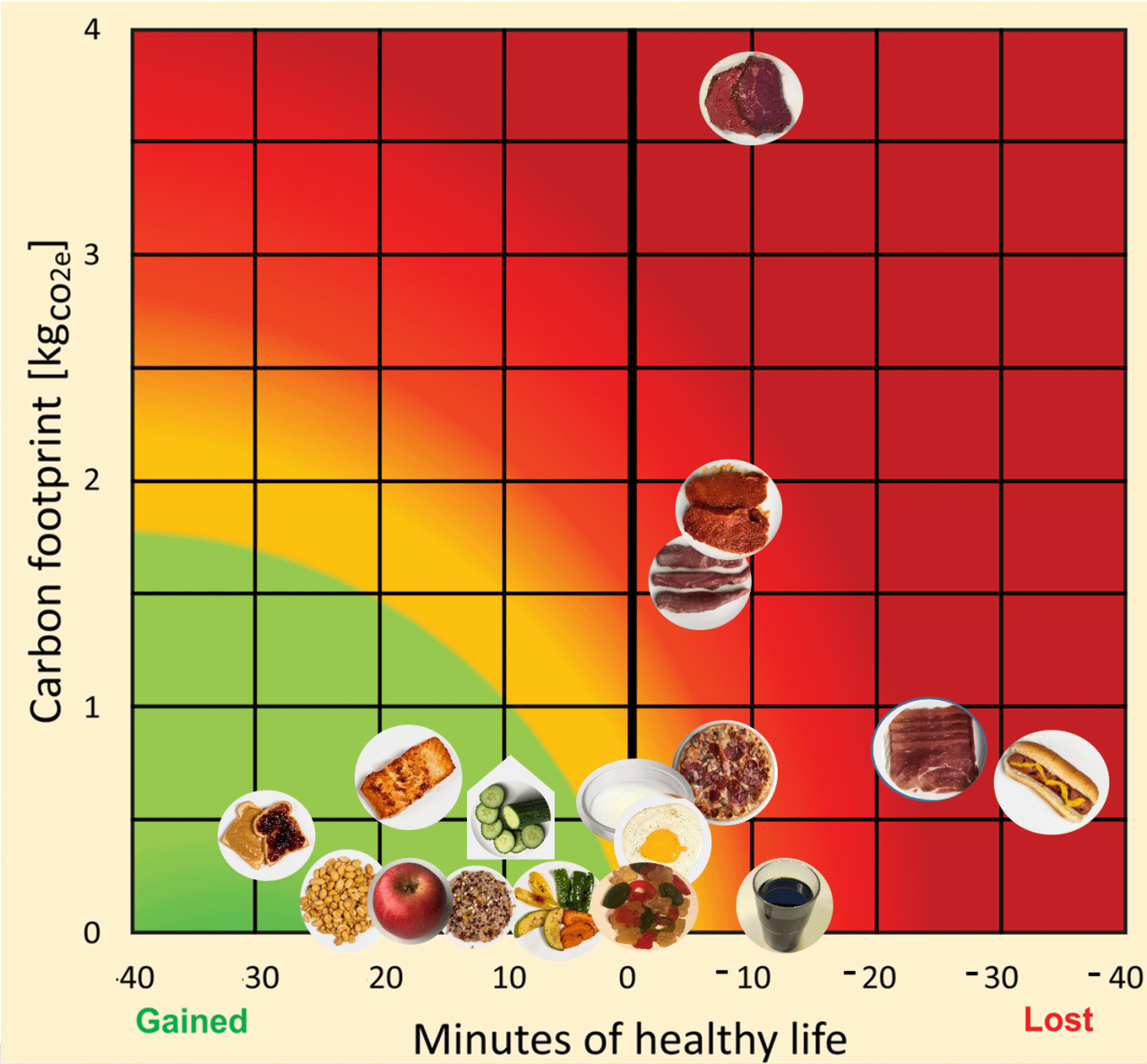
    The Health Nutritional Index that we developed turns this information into minutes of life lost or gained per serving size of each food item consumed. For instance, we found that eating one hot dog costs a person 36 minutes of “healthy” life. In comparison, we found that eating a serving size of 30 grams of nuts and seeds provides a gain of 25 minutes of healthy life – that is, an increase in good-quality and disease-free life expectancy.

    Our study also showed that substituting only 10% of daily caloric intake of beef and processed meats for a diverse mix of whole grains, fruits, vegetables, nuts, legumes and select seafood could reduce, on average, the dietary carbon footprint of a U.S. consumer by one-third and add 48 healthy minutes of life per day. This is a substantial improvement for such a limited dietary change.
    Individual dietary choices can add – or take away – minutes, hours and years of life
    Relative positions of select foods, from apples to hot dogs, are shown on a carbon footprint versus nutritional health map. Foods scoring well, shown in green, have beneficial effects on human health and a low environmental footprint. (Austin Thomason/Michigan Photography and University of Michigan, CC BY-ND)

    How did we crunch the numbers?

    We based our Health Nutritional Index on a large epidemiological study called the Global Burden of Disease, a comprehensive global study and database that was developed with the help of more than 7,000 researchers around the world. The Global Burden of Disease determines the risks and benefits associated with multiple environmental, metabolic and behavioral factors – including 15 dietary risk factors.

    Our team took that population-level epidemiological data and adapted it down to the level of individual foods. Taking into account more than 6,000 risk estimates specific to each age, gender, disease and risk, and the fact that there are about a half-million minutes in a year, we calculated the health burden that comes with consuming one gram’s worth of food for each of the dietary risk factors.

    For example, we found that, on average, 0.45 minutes are lost per gram of any processed meat that a person eats in the U.S. We then multiplied this number by the corresponding food profiles that we previously developed. Going back to the example of a hot dog, the 61 grams of processed meat in a hot dog sandwich results in 27 minutes of healthy life lost due to this amount of processed meat alone. Then, when considering the other risk factors, like the sodium and trans fatty acids inside the hot dog – counterbalanced by the benefit of its polyunsaturated fat and fibers – we arrived at the final value of 36 minutes of healthy life lost per hot dog.

    We repeated this calculation for more than 5,800 foods and mixed dishes. We then compared scores from the health indices with 18 different environmental metrics, including carbon footprint, water use and air pollution-induced human health impacts. Finally, using this health and environmental nexus, we color-coded each food item as green, yellow or red. Like a traffic light, green foods have beneficial effects on health and a low environmental impact and should be increased in the diet, while red foods should be reduced.

    Where do we go from here?

    Our study allowed us to identify certain priority actions that people can take to both improve their health and reduce their environmental footprint.

    When it comes to environmental sustainability, we found striking variations both within and between animal-based and plant-based foods. For the “red” foods, beef has the largest carbon footprint across its entire life cycle – twice as high as pork or lamb and four times that of poultry and dairy. From a health standpoint, eliminating processed meat and reducing overall sodium consumption provides the largest gain in healthy life compared with all other food types.

    Individual dietary choices can add – or take away – minutes, hours and years of life
    Beef consumption had the highest negative environmental impacts, and processed meat had the most important overall adverse health effects. (ID 35528731 © Ikonoklastfotografie | Dreamstime.com)

    Therefore, people might consider eating less of foods that are high in processed meat and beef, followed by pork and lamb. And notably, among plant-based foods, greenhouse-grown vegetables scored poorly on environmental impacts due to the combustion emissions from heating.

    Foods that people might consider increasing are those that have high beneficial effects on health and low environmental impacts. We observed a lot of flexibility among these “green” choices, including whole grains, fruits, vegetables, nuts, legumes and low-environmental impact fish and seafood. These items also offer options for all income levels, tastes and cultures.

    Our study also shows that when it comes to food sustainability, it is not sufficient to only consider the amount of greenhouse gases emitted – the so-called carbon footprint. Water-saving techniques, such as drip irrigation and the reuse of gray water – or domestic wastewater such as that from sinks and showers – can also make important steps toward lowering the water footprint of food production.

    A limitation of our study is that the epidemiological data does not enable us to differentiate within the same food group, such as the health benefits of a watermelon versus an apple. In addition, individual foods always need to be considered within the context of one’s individual diet, considering the maximum level above which foods are not any more beneficial – one cannot live forever by just increasing fruit consumption.

    At the same time, our Health Nutrient Index has the potential to be regularly adapted, incorporating new knowledge and data as they become available. And it can be customized worldwide, as has already been done in Switzerland.

    It was encouraging to see how small, targeted changes could make such a meaningful difference for both health and environmental sustainability – one meal at a time.

    [You’re smart and curious about the world. So are The Conversation’s authors and editors. You can get our highlights each weekend.]

    The Conversation

    Olivier Jolliet, Professor of Environmental Health Sciences, University of Michigan and Katerina S. Stylianou, Research Associate in Environmental Health Sciences, University of Michigan

    This article is republished from The Conversation under a Creative Commons license. Read the original article.
  • Why using fear to promote COVID-19 vaccination and mask wearing could backfire

    While the pandemic stakes might justify using hard-hitting strategies, the nation’s social and political context right now might cause fear tactics to backfire.

    You probably still remember public service ads that scared you: The cigarette smoker with throat cancer. The victims of a drunk driver. The guy who neglected his cholesterol lying in a morgue with a toe tag.

    With new, highly transmissible variants of SARS-CoV-2 now spreading, some health professionals have started calling for the use of similar fear-based strategies to persuade people to follow social distancing rules and get vaccinated.

    There is compelling evidence that fear can change behavior, and there have been ethical arguments that using fear can be justified, particularly when threats are severe. As public health professors with expertise in history and ethics, we have been open in some situations to using fear in ways that help individuals understand the gravity of a crisis without creating stigma.

    But while the pandemic stakes might justify using hard-hitting strategies, the nation’s social and political context right now might cause it to backfire.

    Fear as a strategy has waxed and waned

    Fear can be a powerful motivator, and it can create strong, lasting memories. Public health officials’ willingness to use it to help change behavior in public health campaigns has waxed and waned for more than a century.

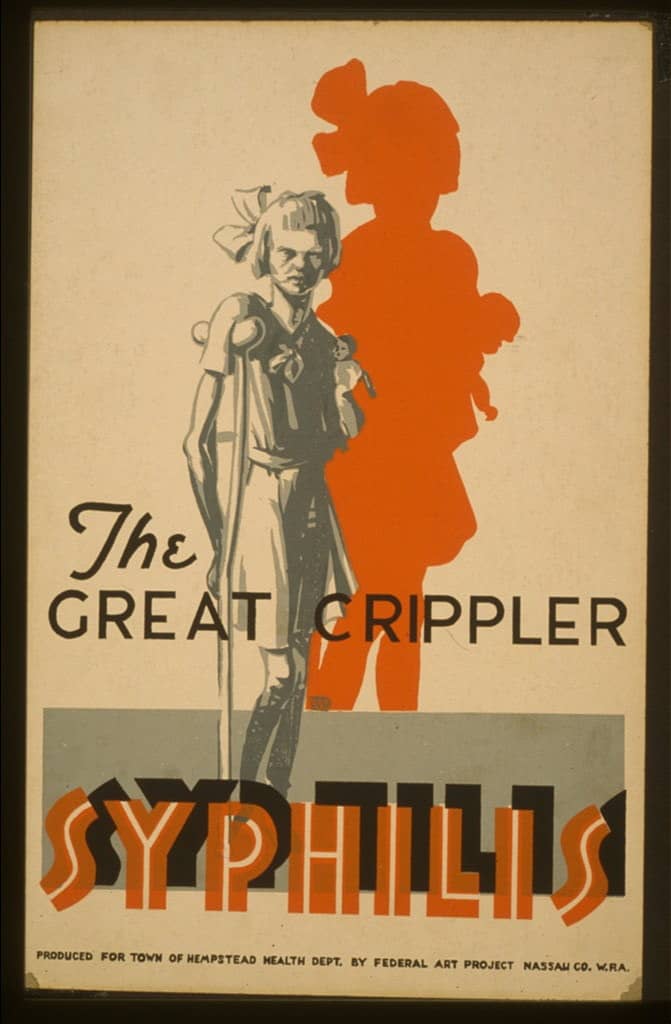
    From the late 19th century into the early 1920s, public health campaigns commonly sought to stir fear. Common tropes included flies menacing babies, immigrants represented as a microbial pestilence at the gates of the country, voluptuous female bodies with barely concealed skeletal faces who threatened to weaken a generation of troops with syphilis. The key theme was using fear to control harm from others.

    Why using fear to promote COVID-19 vaccination and mask wearing could backfire
    Library of Congress

    Following World War II, epidemiological data emerged as the foundation of public health, and use of fear fell out of favor. The primary focus at the time was the rise of chronic “lifestyle” diseases, such as heart disease. Early behavioral research concluded fear backfired. An early, influential study, for example, suggested that when people became anxious about behavior, they might tune out or even engage more in dangerous behaviors, like smoking or drinking, to cope with the anxiety stimulated by fear-based messaging.

    But by the 1960s, health officials were trying to change behaviors related to smoking, eating and exercise, and they grappled with the limits of data and logic as tools to help the public. They turned again to scare tactics to try to deliver a gut punch. It was not enough to know that some behaviors were deadly. We had to react emotionally.

    Although there were concerns about using fear to manipulate people, leading ethicists began to argue that it could help people understand what was in their self-interest. A bit of a scare could help cut through the noise created by industries that made fat, sugar and tobacco alluring. It could help make population-level statistics personal.

    Why using fear to promote COVID-19 vaccination and mask wearing could backfire
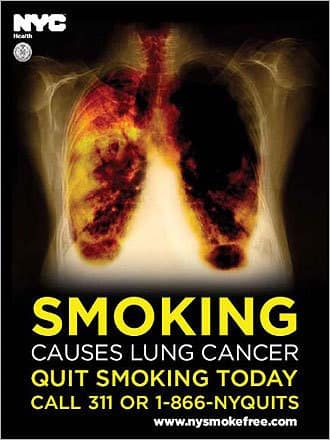
    NYC Health

    Anti-tobacco campaigns were the first to show the devastating toll of smoking. They used graphic images of diseased lungs, of smokers gasping for breath through tracheotomies and eating through tubes, of clogged arteries and failing hearts. Those campaigns worked.

    And then came AIDS. Fear of the disease was hard to untangle from fear of those who suffered the most: gay men, sex workers, drug users, and the black and brown communities. The challenge was to destigmatize, to promote the human rights of those who only stood to be further marginalized if shunned and shamed. When it came to public health campaigns, human rights advocates argued, fear stigmatized and undermined the effort.

    When obesity became a public health crisis, and youth smoking rates and vaping experimentation were sounding alarm bells, public health campaigns once again adopted fear to try to shatter complacency. Obesity campaigns sought to stir parental dread about youth obesity. Evidence of the effectiveness of this fear-based approach mounted.

    Evidence, ethics and politics

    So, why not use fear to drive up vaccination rates and the use of masks, lockdowns and distancing now, at this moment of national fatigue? Why not sear into the national imagination images of makeshift morgues or of people dying alone, intubated in overwhelmed hospitals?

    Before we can answer these questions, we must first ask two others: Would fear be ethically acceptable in the context of COVID-19, and would it work?

    For people in high-risk groups – those who are older or have underlying conditions that put them at high risk for severe illness or death – the evidence on fear-based appeals suggests that hard-hitting campaigns can work. The strongest case for the efficacy of fear-based appeals comes from smoking: Emotional PSAs put out by organizations like the American Cancer Society beginning in the 1960s proved to be a powerful antidote to tobacco sales ads. Anti-tobacco crusaders found in fear a way to appeal to individuals’ self-interests.

    At this political moment, however, there are other considerations.

    Health officials have faced armed protesters outside their offices and homes. Many people seem to have lost the capacity to distinguish truth from falsehood.

    By instilling fear that government will go too far and erode civil liberties, some groups developed an effective political tool for overriding rationality in the face of science, even the evidence-based recommendations supporting face masks as protection against the coronavirus.

    Reliance on fear for public health messaging now could further erode trust in public health officials and scientists at a critical juncture.

    The nation desperately needs a strategy that can help break through pandemic denialism and through the politically charged environment, with its threatening and at times hysterical rhetoric that has created opposition to sound public health measures.

    Even if ethically warranted, fear-based tactics may be dismissed as just one more example of political manipulation and could carry as much risk as benefit.

    Instead, public health officials should boldly urge and, as they have during other crisis periods in the past, emphasize what has been sorely lacking: consistent, credible communication of the science at the national level.

    Amy Lauren Fairchild, Dean and Professor, College of Public Health, The Ohio State University and Ronald Bayer, Professor Sociomedical Sciences, Columbia University

    This article is republished from The Conversation under a Creative Commons license. Read the original article.

  • The ‘Grief Pandemic’ Will Torment Americans for Years

    The optimism generated by vaccines and falling infection rates has blinded many Americans to the deep sorrow and depression of those around them.

    Cassandra Rollins’ daughter was still conscious when the ambulance took her away.

    Shalondra Rollins, 38, was struggling to breathe as covid overwhelmed her lungs. But before the doors closed, she asked for her cellphone, so she could call her family from the hospital.

    It was April 7, 2020 — the last time Rollins would see her daughter or hear her voice.

    The hospital rang an hour later to say she was gone. A chaplain later told Rollins that Shalondra had died on a gurney in the hallway. Rollins was left to break the news to Shalondra’s children, ages 13 and 15.

    More than a year later, Rollins said, the grief is unrelenting.

    Rollins has suffered panic attacks and depression that make it hard to get out of bed. She often startles when the phone rings, fearing that someone else is hurt or dead. If her other daughters don’t pick up when she calls, Rollins phones their neighbors to check on them.

    “You would think that as time passes it would get better,” said Rollins, 57, of Jackson, Mississippi. “Sometimes, it is even harder. … This wound right here, time don’t heal it.”

    With nearly 600,000 in the U.S. lost to covid-19 — now a leading cause of death — researchers estimate that more than 5 million Americans are in mourning, including more than 43,000 children who have lost a parent.

    The pandemic — and the political battles and economic devastation that have accompanied it — have inflicted unique forms of torment on mourners, making it harder to move ahead with their lives than with a typical loss, said sociologist Holly Prigerson, co-director of the Cornell Center for Research on End-of-Life Care.

    The scale and complexity of pandemic-related grief have created a public health burden that could deplete Americans’ physical and mental health for years, leading to more depression, substance misuse, suicidal thinking, sleep disturbances, heart disease, cancer, high blood pressure and impaired immune function.

    “Unequivocally, grief is a public health issue,” said Prigerson, who lost her mother to covid in January. “You could call it the grief pandemic.”

    Like many other mourners, Rollins has struggled with feelings of guilt, regret and helplessness — for the loss of her daughter as well as Rollins’ only son, Tyler, who died by suicide seven months earlier.

    “I was there to see my mom close her eyes and leave this world,” said Rollins, who was first interviewed by KHN a year ago in a story about covid’s disproportionate effects on communities of color. “The hardest part is that my kids died alone. If it weren’t for this covid, I could have been right there with her” in the ambulance and emergency room. “I could have held her hand.”

    The pandemic has prevented many families from gathering and holding funerals, even after deaths caused by conditions other than covid. Prigerson’s research shows that families of patients who die in hospital intensive care units are seven times more likely to develop post-traumatic stress disorder than loved ones of people who die in home hospice.

    The polarized political climate has even pitted some family members against one another, with some insisting that the pandemic is a hoax and that loved ones must have died from influenza, rather than covid. People in grief say they’re angry at relatives, neighbors and fellow Americans who failed to take the coronavirus seriously, or who still don’t appreciate how many people have suffered.

    “People holler about not being able to have a birthday party,” Rollins said. “We couldn’t even have a funeral.”

    Indeed, the optimism generated by vaccines and falling infection rates has blinded many Americans to the deep sorrow and depression of those around them. Some mourners say they will continue wearing their face masks — even in places where mandates have been removed — as a memorial to those lost.

    “People say, ‘I can’t wait until life gets back to normal,’” said Heidi Diaz Goff, 30, of the Los Angeles area, who lost her 72-year-old father to covid. “My life will never be normal again.”

    Many of those grieving say celebrating the end of the pandemic feels not just premature, but insulting to their loved ones’ memories.

    “Grief is invisible in many ways,” said Tashel Bordere, a University of Missouri assistant professor of human development and family science who studies bereavement, particularly in the Black community. “When a loss is invisible and people can’t see it, they may not say ‘I’m sorry for your loss,’ because they don’t know it’s occurred.”

    Communities of color, which have experienced disproportionately higher rates of death and job loss from covid, are now carrying a heavier burden.

    Black children are more likely than white children to lose a parent to covid. Even before the pandemic, the combination of higher infant and maternal mortality rates, a greater incidence of chronic disease and shorter life expectancies made Black people more likely than others to be grieving a close family member at any point in their lives.

    Rollins said everyone she knows has lost someone to covid.

    “You wake up every morning, and it’s another day they’re not here,” Rollins said. “You go to bed at night, and it’s the same thing.”

    A Lifetime of Loss

    Rollins has been battered by hardships and loss since childhood.

    She was the youngest of 11 children raised in the segregated South. Rollins was 5 years old when her older sister Cora, whom she called “Coral,” was stabbed to death at a nightclub, according to news reports. Although Cora’s husband was charged with murder, he was set free after a mistrial.

    Rollins gave birth to Shalondra at age 17, and the two were especially close. “We grew up together,” Rollins said.

    Just a few months after Shalondra was born, Rollins’ older sister Christine was fatally shot during an argument with another woman. Rollins and her mother helped raise two of the children Christine left behind.

    Heartbreak is all too common in the Black community, Bordere said. The accumulated trauma — from violence to chronic illness and racial discrimination — can have a weathering effect, making it harder for people to recover.

    “It’s hard to recover from any one experience, because every day there is another loss,” Bordere said. “Grief impacts our ability to think. It impacts our energy levels. Grief doesn’t just show up in tears. It shows up in fatigue, in working less.”

    Rollins hoped her children would overcome the obstacles of growing up Black in Mississippi. Shalondra earned an associate’s degree in early childhood education and loved her job as an assistant teacher to kids with special needs. Shalondra, who had been a second mother to her younger siblings, also adopted a cousin’s stepdaughter after the child’s mother died, raising the girl alongside her two children.

    Rollins’ son, Tyler, enlisted in the Army after high school, hoping to follow in the footsteps of other men in the family who had military careers.

    Yet the hardest losses of Rollins’ life were still to come. In 2019, Tyler killed himself at age 20, leaving behind a wife and unborn child.

    “When you see two Army men walking up to your door,” Rollins said, “that’s unexplainable.”

    Tyler’s daughter was born the day Shalondra died.

    “They called to tell me the baby was born, and I had to tell them about Shalondra,” Rollins said. “I don’t know how to celebrate.”

    Shalondra’s death from covid changed her daughters’ lives in multiple ways.

    The girls lost their mother, but also the routines that might help mourners adjust to a catastrophic loss. The girls moved in with their grandmother, who lives in their school district. But they have not set foot in a classroom for more than a year, spending their days in virtual school, rather than with friends.

    Shalondra’s death eroded their financial security as well, by taking away her income. Rollins, who worked as a substitute teacher before the pandemic, hasn’t had a job since local schools shut down. She owns her own home and receives unemployment insurance, she said, but money is tight.

    Makalin Odie, 14, said her mother, as a teacher, would have made online learning easier. “It would be very different with my mom here.”

    The girls especially miss their mom on holidays.

    “My mom always loved birthdays,” said Alana Odie, 16. “I know that if my mom were here my 16th birthday would have been really special.”

    Asked what she loved most about her mother, Alana replied, “I miss everything about her.”

    Grief Complicated by Illness

    The trauma also has taken a toll on Alana and Makalin’s health. Both teens have begun taking medications for high blood pressure. Alana has been on diabetes medication since before her mom died.

    Mental and physical health problems are common after a major loss. “The mental health consequences of the pandemic are real,” Prigerson said. “There are going to be all sorts of ripple effects.”

    The stress of losing a loved one to covid increases the risk for prolonged grief disorder, also known as complicated grief, which can lead to serious illness, increase the risk of domestic violence and steer marriages and relationships to fall apart, said Ashton Verdery, an associate professor of sociology and demography at Penn State.

    People who lose a spouse have a roughly 30% higher risk of death over the following year, a phenomenon known as the “the widowhood effect.” Similar risks are seen in people who lose a child or sibling, Verdery said.

    Grief can lead to “broken-heart syndrome,” a temporary condition in which the heart’s main pumping chamber changes shape, affecting its ability to pump blood effectively, Verdery said.

    From final farewells to funerals, the pandemic has robbed mourners of nearly everything that helps people cope with catastrophic loss, while piling on additional insults, said the Rev. Alicia Parker, minister of comfort at New Covenant Church of Philadelphia.

    “It may be harder for them for many years to come,” Parker said. “We don’t know the fallout yet, because we are still in the middle of it.”

    Rollins said she would have liked to arrange a big funeral for Shalondra. Because of restrictions on social gatherings, the family held a small graveside service instead.

    Funerals are important cultural traditions, allowing loved ones to give and receive support for a shared loss, Parker said.

    “When someone dies, people bring food for you, they talk about your loved one, the pastor may come to the house,” Parker said. “People come from out of town. What happens when people can’t come to your home and people can’t support you? Calling on the phone is not the same.”

    While many people are afraid to acknowledge depression, because of the stigma of mental illness, mourners know they can cry and wail at a funeral without being judged, Parker said.

    “What happens in the African American house stays in the house,” Parker said. “There’s a lot of things we don’t talk about or share about.”

    Funerals play an important psychological role in helping mourners process their loss, Bordere said. The ritual helps mourners move from denying that a loved one is gone to accepting “a new normal in which they will continue their life in the physical absence of the cared-about person.” In many cases, death from covid comes suddenly, depriving people of a chance to mentally prepare for loss. While some families were able to talk to loved ones through FaceTime or similar technologies, many others were unable to say goodbye.

    Funerals and burial rites are especially important in the Black community and others that have been marginalized, Bordere said.

    “You spare no expense at a Black funeral,” Bordere said. “The broader culture may have devalued this person, but the funeral validates this person’s worth in a society that constantly tries to dehumanize them.”

    In the early days of the pandemic, funeral directors afraid of spreading the coronavirus did not allow families to provide clothing for their loved ones’ burials, Parker said. So beloved parents and grandparents were buried in whatever they died in, such as undershirts or hospital gowns.

    “They bag them and double-bag them and put them in the ground,” Parker said. “It is an indignity.”

    Coping With Loss

    Every day, something reminds Rollins of her losses.

    April brought the first anniversary of Shalondra’s death. May brought Teacher Appreciation Week.

    Yet Rollins said the memory of her children keeps her going.

    When she begins to cry and thinks she will never stop, one thought pulls her from the darkness: “I know they would want me to be happy. I try to live on that.”

    Subscribe to KHN’s free Morning Briefing.

    View the original article at thefix.com

  • Addiction and Estrangement

    Remarkably, a tense relationship with a sister or brother in adolescence may contribute to substance abuse.

    Addiction can roil relationships with abuse, betrayal, and domestic violence, placing great stress on a family. Typically, parents and siblings who try to help or manage a family member’s addiction find themselves sapped of emotional energy and drained of financial resources. My survey shows as many as 10 percent of respondents suspect that a sibling is hiding an addiction.

    I wonder: Does the addiction produce family problems, or do a dysfunctional family’s issues result in addiction? It sounds like a chicken‑and‑egg question. I suppose at this moment the sequence of events doesn’t really matter to me. What I need is guidance on helping my brother conquer his alcoholism.

    Typically, when it comes to addiction, many experts advise using “tough love” to change behavior—promoting someone’s welfare by enforcing certain constraints on them or requiring them to take responsibility for their actions. The family uses relationships as leverage, threatening to expel the member who is addicted. The message of this model is explicit: “If you don’t shape up, we will cut you off.”

    Tough love relies on solid, established relationships; otherwise, the family member at risk may feel he or she has nothing to lose. My relationship with Scott is tenuous, anything but solid. He has lived without me for decades, and if I try tough love, he could easily revert to our former state of estrangement.

    I wonder if there might be another way.

    Possible Causes of Addiction

    Addiction is a complex phenomenon involving physiological, sociological, and psychological variables, and each user reflects some combination of these factors. In Scott’s case, because alcoholism doesn’t run in our family, I don’t think he has a biological predisposition to drink. I suspect my brother’s drinking results from other origins.

    Current research identifies unexpected influences that also may be at the root of addictive behavior, including emotional trauma, a hostile environment, and a lack of sufficient emotional connections. Addictive behavior may be closely tied to isolation and estrangement. Human beings have a natural and innate need to bond with others and belong to a social circle. When trauma disturbs the ability to attach and connect, a victim often seeks relief from pain through drugs, gambling, pornography, or some other vice.

    Canadian psychologist Dr. Bruce Alexander conducted a controversial study in the 1970s and 1980s that challenged earlier conclusions on the fundamental nature of addiction. Users, his research suggests, may be trying to address the absence of connection in their lives by drinking and/or using drugs. Working with rats, he found that isolated animals had nothing better to do than use drugs; rats placed in a more engaging environment avoided drug use.

    Similar results emerged when veterans of the war in Vietnam returned home. Some 20 percent of American troops were using heroin while in Vietnam, and psychologists feared that hundreds of thousands of soldiers would resume their lives in the United States as junkies. However, a study in the Archives of General Psychiatry reported that 95 percent simply stopped using, without rehab or agonizing withdrawal, when they returned home.

    These studies indicate that addiction is not just about brain chemistry. The environment in which the user lives is a factor. Addiction may, in part, be an adaptation to a lonely, disconnected, or dangerous life. Re‑ markably, a tense relationship with a sister or brother in adolescence may contribute to substance abuse. A 2012 study reported in the Journal of Marriage and Family entitled “Sibling Relationships and Influences in Childhood and Adolescence” found that tense sibling relationships make people more likely to use substances and to be depressed and anxious as teenagers.

    Those who grow up in homes where loving care is inconsistent, unstable, or absent do not develop the crucial neural wiring for emotional resilience, according to Dr. Gabor Maté, author of In the Realm of Hungry Ghosts, who is an expert in childhood development and trauma and has conducted extensive research in a medical practice for the underserved in downtown Vancouver. Children who are not consistently loved in their young lives often develop a sense that the world is an unsafe place and that people cannot be trusted. Maté suggests that emotional trauma and loss may lie at the core of addiction. Addiction and Estrangement

    A loving family fosters resilience in children, immunizing them from whatever challenges the world may bring. Dr. Maté has found high rates of childhood trauma among the addicts with whom he works, leading him to conclude that emotional damage in childhood may drive some people to use drugs to correct their dysregulated brain waves. “When you don’t have love and connection in your life when you are very, very young,” he explains, “then those important brain circuits just don’t develop properly. And under conditions of abuse, things just don’t develop properly and their brains then are susceptible then when they do the drugs.” He explains that drugs make these people with dysregulated brain waves feel normal, and even loved. “As one patient said to me,” he says, “when she did heroin for the first time, ‘it felt like a warm soft hug, just like a mother hugging a baby.’”

    Dr. Maté defines addiction broadly, having seen a wide variety of addicted behaviors among his patients. Substance abuse and pornography, for example, are widely accepted as addictions. For people damaged in childhood, he suggests that shopping, chronic overeating or dieting, incessantly checking the cell phone, amassing wealth or power or ultramarathon medals are ways of coping with pain.

    In a TED Talk, Dr. Maté, who was born to Jewish parents in Budapest just before the Germans occupied Hungary, identifies his own childhood traumas as a source of his addiction: spending thousands of dollars on a collection of classical CDs. He admits to having ignored his family—even neglecting patients in labor—when preoccupied with buying music. His obsessions with work and music, which he characterizes as addictions, have affected his children. “My kids get the same message that they’re not wanted,” he explains. “We pass on the trauma and we pass on the suffering, unconsciously, from one generation to the next. There are many, many ways to fill this emptiness . . . but the emptiness always goes back to what we didn’t get when we were very small.”

    That statement hits home. Though my brother and I didn’t live as Jews in a Nazi‑occupied country, we derivatively experienced the pain our mother suffered after her expulsion from Germany and the murder of her parents. Our mother’s childhood traumas resulted in her depression and absorption in the past and inhibited her ability to nurture her children.

    Still, in the end, it’s impossible to determine precisely the source of an addiction problem. Maybe it doesn’t matter anyway. The real question is, What can I do about it?
     

    Excerpted from BROTHERS, SISTERS, STRANGERS: Sibling Estrangement and the Road to Reconciliation by Fern Schumer Chapman, published by Viking Books, an imprint of Penguin Publishing Group, a division of Penguin Random House, LLC. Copyright © 2021 by Fern Schumer Chapman. Available now.

    View the original article at thefix.com

  • The End

    The End

    With each sip I take, my brain and body scream “you freaking alcoholic,” and I know at that moment I can no longer do this.

    The last drink I have is a flute of champagne.

    It’s New Year’s Eve.

    My husband reserves a special room for us at a nearby hotel. He buys an imperial bottle of Moet, a misplaced purchase for this particular occasion. We’re making a last ditch effort at saving our marriage. A gala’s going on in the ballroom below, where we journey to join the revelers.

    Lights twinkle, streamers hang, and chandeliers glisten.

    I hardly notice.

    The band plays songs that were once my favorites.

    I hardly hear. 

    Hoards of gleeful couples celebrate around us.

    We dance with them, pretending to have a good time.

    But I know the end is creeping near.

    My husband’s been having an affair with a woman half his age. He hasn’t come clean yet, but my gut knows something’s going on. So I bleach my hair a sassier shade of blond, starve myself in hopes of losing the weight I know he hates, turn myself inside out to get him to notice me again.

    But mostly I drink.

    Because of my Catholic upbringing, I have a list of rules I follow.

    My commandments of drinking. I only have three. Ten is too many.

    1) No drinking before 5:00. I watch the clock tick away the minutes. It drives me crazy.

    2) No drinking on Tuesdays or Thursdays. I break this all the time. It’s impossible not to.

    3) No hard liquor. Only wine and beer. I feel safe drinking those.

    Anything else means, well, I’ve become my parents.

    Or even worse, his. I can’t bear to go there.

    One night, when he takes off for a weekend conference, or so he says, I get so stinking drunk after tucking my daughter in for the night, I puke all over our pinewood floor. All over those rich amber boards I spent hours resurfacing with him, splattering my guts out next to our once sexually active and gleaming brass bed.

    Tarnished now from months of disuse.

    The following morning, my five-year-old daughter, with sleep encircling her concerned eyes, stands there staring at me, her bare feet immersed in clumps of yellow. The scrambled eggs I managed to whip up the night before are scattered across our bedroom floor, reeking so bad, I’m certain I’ll start retching again. I look down at the mess I made with little recollection of how it got there, then peer at my daughter, her eyes oozing the compassion of an old soul as she says, “Oh Mommy. Are you sick?” Shame grips every part of my trembling body. Its menacing hands, a vice around my pounding head. I can’t bear to look in her eyes. The fear of not remembering how I’ve gotten here is palpable. Every morsel of its terror is strewn across my barf-laden tongue and I’m certain my daughter knows the secret I’ve kept from myself and others for years.

    You’re an alcoholic. You can’t hide it anymore.

    Every last thread of that warm cloak of denial gets ripped away, and here I am, gazing into the eyes of my five-year old daughter who’s come to yank me out of my misery.

    It takes me two more months to quit.

    Two months of dragging my body, heavy with remorse, out of that tarnished brass bed to send my daughter off to school. Then crawling back into it and staying there, succumbing to the disjointed sleep of depression. Until the bus drops her off hours later, as her little finger, filled with endless kindergarten stories, pokes me awake.

    Each poke like being smacked in the face with my failures as a mother.

    The EndAnd then New Year’s Eve shows up and I dress in a slinky black outfit, a color fitting my descending mood, a dress I buy to win him back. The husband who twelve years before drives hundreds of miles to pursue this wayward woman, wooing me over a dinner I painstakingly prepare, as I allow myself to wonder if he in fact, may be the one. We dine on the roof of the 3rd floor apartment I rent on 23rd and Walnut, in the heart of Philadelphia where I work as a chef, and where I tell him over a bottle of crisp chardonnay that I might be an alcoholic. He laughs, and convinces me I’m not. He knows what alcoholics look like. Growing up with two of them, he assures me I am nothing at all like his parents.

    His mother, a sensuous woman with flaming hair and lips to match, passes out in the car on late afternoons after spending hours carousing with her best friend, a woman he’s grown to despise. Coming home from school, day after day, he finds her slumped on the bench seat of their black Buick sedan, dragging her into the house to make dinner for him and his little brother and sister, watching as she staggers around their kitchen. His father, a noted attorney in his early years, drinks until he can’t see and rarely comes home for supper. He loses his prestigious position in the law firm he fought to get into, and gets half his jaw removed from the mouth cancer he contracts from his unrestrained drinking. He dies at 52, a lonely and miserable man.

    “I know what alcoholics look like,” he says. “You’re not one of them.”

    I grab onto his reassurance and hold it tight.

    And with that we polish off the second bottle of chardonnay, crawl back through the kitchen window and slither onto the black and white checkered tile floor, in a haze of lust and booze, before we creep our way into my tousled and beckoning bed. It takes me another twelve years to hit bottom, to peek into the eyes of the only child I bring into this world, reflecting the shame I’ve carted around most of my life.

    So on New Year’s Eve, we make our way up in the hotel elevator. After crooning Auld Lang Syne with the crowd of other booze-laden partiers still hanging on to the evening’s festivities, as the bitter taste of letting go of something so dear, so close to my heart, seeps into my psyche. A woman who totters next to me still sings the song, with red stilettos dangling from her fingers. Her drunken haze reflects in my eyes as she nearly slides down the elevator wall.

    At that moment, I see myself.

    The realization reluctantly stumbles down the hall with me, knowing that gleaming bottle of Moet waits with open arms in the silver bucket we crammed with ice before leaving the room. Ripping off the foil encasing the lip of the bottle, my husband quickly unfastens the wire cage and pops the cork that hits the ceiling of our fancy room. Surely an omen for what follows. He carefully pours the sparkling wine, usually a favorite of mine, into two leaded flutes huddling atop our nightstand, making sure to divide this liquid gold evenly into the tall, slim goblets that leave rings at night’s end. We lift our glasses and make a toast, to the New Year and to us, though our eyes quickly break the connection, telling a different story.

    As soon as the bubbles hit my lips, from the wine that always evokes such tangible joy and plasters my tongue with memories, I know the gig’s up. It tastes like poison. I force myself to drink more, a distinctly foreign concept, coercing a smile that squirms across my face. I nearly gag as I continue to shove the bubbly liquid down my throat, not wanting to hurt my husband’s feelings, who spent half a week’s pay on this desperate celebration. But with each sip I take, my brain and body scream you freaking alcoholic, and I know at that moment I can no longer do this. When I put down that glass, on this fateful New Year’s Eve, I know I’ll never bring another ounce of liquor to my lips.

    I’m done.

    There’s no turning back.

    And as we tuck ourselves into bed, I keep it to myself. 

    Each kiss that night is loaded with self-loathing and disgust. 

    Those twelve years of knowing squeezes tightly into a fist of shame.

    Little does my husband know, if he climbs on top of me,

    he’ll be making love to death itself. 

    Instead, I turn the other way and cry myself silently to sleep.

    Your days of drinking have finally come to an end.

    And you can’t help but wonder…

    will your marriage follow?


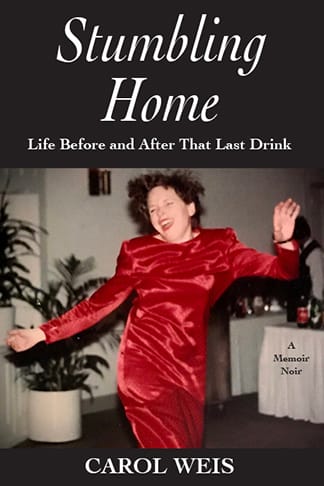
    Excerpted from STUMBLING HOME: Life Before and After That Last Drink by Carol Weis, now available on Amazon.

    View the original article at thefix.com

  • Punk Rock Powers My Recovery Every Day

    Punk Rock Powers My Recovery Every Day

    A music addiction is cheaper than alcohol and drugs. And not only that, it’s healthy, invigorating, fun, and liberating.

    I was a disheveled and bedraggled disaster of a person back in the winter of 2012. I lived for alcohol. If beer was the entrée, crack-cocaine was my digestif. But after an intervention and rehab, I’ve been sober nine years now. I never could’ve done it without music.

    Even though I had spent most of my career working in the music industry as a producer for MTV News, music wasn’t really a significant part of my life during the worst of my drinking days. But when I was a teen and again now, music has been of utmost importance. Now as an adult I realize music is better than sex. 

    It’s better than drugs. And it’s better than alcohol. It’s a natural high. If given a choice between music and drugs, I choose music. Starting with punk.

    A Youth in Revolt

    “Where do you go now when you’re only 15?”
    Rancid, “Roots Radical,” off the 1994 album And Out Come the Wolves

    I’ve always felt like a bit of an outcast. As someone who struggles with the dual diagnosis of addiction and bipolar disorder, in a way, I am. But I’m proud to be an outcast, and my punk rock upbringing only reaffirmed that being different is cool.

    In the spring of 1995, March 9th to be exact — 26 years ago — I experienced my very first punk show. It was Rancid with the Lunachicks at the Metro in Chicago. I still have the ticket stub. I was 15. And in that crowd of about 1,000, I felt like I belonged. I had found my tribe. It was a moment that would transport me on a decades-long excursion, one that finds my punk rock heart still beating now and forever.

    I often think in retrospect that maybe there were signs and signals of my bipolar status as I grew up. I was in fact different from the others. And I was experiencing bouts of depression inside the halls and walls of high school. Freshman and sophomore years in particular I did not fit in. I was the quiet kid who had barely any friends. I didn’t belong to a social clique like everyone else. I was a rebel in disguise. Until I found punk rock. Then I let it all hang out.

    Punk Rock Powers My Recovery Every Day
    “Once a punk, always a punk.”

    Rock ‘n’ Roll High School

    I am a Catholic school refugee. Punk was my escape from the horrific bullying I experienced in high school. Back then, the kids from the suburbs threw keggers. We city kids — I had three or four punk rock friends — were pretty much sober, save for smoking the occasional bowl of weed if we had any. We were definitely overwhelmingly the minority at school as there were probably only five or so of us in a school of 1,400. For the most part, though, we found our own fun at music venues like the Fireside Bowl and the Metro. We went to shows every weekend at the now-defunct Fireside – the CBGB or punk mecca of Chicago that used to host $5 punk and ska shows almost every night.

    The Fireside was dilapidated but charming. It was a rundown bowling alley in a rough neighborhood with a small stage in the corner. You couldn’t actually bowl there and the ceiling felt like it was going to cave in. It was a smoke-filled room with a beer-soaked carpet. Punks sported colorful mohawks, and silver-studded motorcycle jackets. Every show was $5.

    My few friends and I practically lived at the Fireside. We also drove to punk shows all over the city and suburbs of Chicago – from VFW Halls to church basements to punk houses.

    The Fireside has since been fixed up and has become a working bowling alley with no live music. A casualty of my youth. But it was a cathedral of music for me when it was still a working club. After every show, we would cruise Lake Shore Drive blasting The Clash or The Ramones. I felt so comfortable in my own skin during those halcyon days.

    Punk Rock Powers My Recovery Every Day
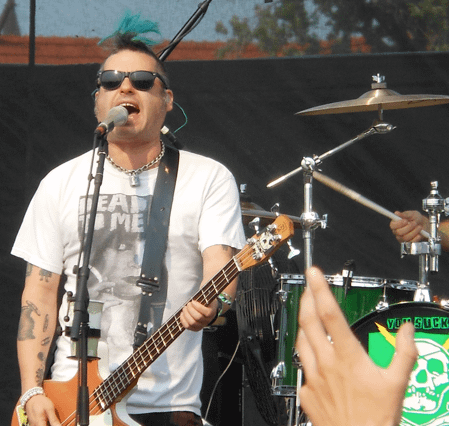
    Fat Mike of NOFX at Riot Fest in Chicago, 2012

    Punk Up the Volume

    Punk isn’t just a style of music, it’s a dynamic idea. It’s about grassroots activism and power to the people. It’s about sticking up for the little guy, empowering the youth, lifting up the poor, and welcoming the ostracized.

    Punk is inherently anti-establishment. Punk values celebrate that which is abnormal. It is also about pointing out hypocrisy in politics and standing up against politicians who wield too much power and influence, and are racist, homophobic, transphobic, and xenophobic.

    Everyone is welcome under the umbrella of punk rock. And if you are a musician, they say all you need to play punk is three chords and a bad attitude. Fast and loud is punk at its core.

    They say “once a punk, always a punk” and it’s true.

    Punk was and still is sacred and liturgical to me. The music mollified my depression and made me feel a sense of belonging. I went wherever punk rock took me. My ethos — developed through the lens of the punk aesthetic — still pulses through my punk rock veins. It is entrenched in every fiber of my being.

    Punk Rock Powers My Recovery Every Day
    Godfather of Punk Iggy Pop at Riot Fest in Chicago, 2015

    A New Day

    Now, whether it’s on Spotify on the subway or on vinyl at home, I listen to music intently two to three hours a day. Music is my TV. It’s not just on in the background; I give it my full, undivided attention.

    I started collecting vinyl about eight years ago right around the time I got sober and I have since amassed more than 100 record albums. There’s a reason why people in audiophile circles refer to vinyl as “black crack.” It’s addictive.

    I’m glad I’m addicted to something abstract, something that is not a substance. A music addiction is cheaper than alcohol and drugs. And not only that, it’s healthy, invigorating, fun, and liberating.

    And while my music taste continues to evolve, I’m still a punk rocker through and through. My love affair with punk may have started 26 years ago, but it soldiers on today, even though I mostly listen to indie rock and jazz these days. I recently started bleaching my hair again, platinum blonde as I had when I was a punker back in high school. It’s fun and it also hides the greys.

    Looking back on my musical self, I knew there was a reason why I can feel the music. Why tiny little flourishes of notes or guitar riffs or drumbeats can make my entire body tingle instantly. Why lyrics speak to me like the Bible and the sound of a needle dropping and popping on a record fills me with anticipation

    Punk is a movement that lives inside me. It surrounds me. It grounds me. Fifteen or 41 years-old, I’m a punk rocker for life. I’d rather be a punk rocker than an active alcoholic. I’m a proud music addict. I get my fix every day. 

    Please enjoy and subscribe to this Spotify playlist I made of old-school punk anthems and new classics. It’s by no means comprehensive, but it’s pretty close.

    View the original article at thefix.com

  • Doctors More Likely to Prescribe Opioids to Covid ‘Long Haulers,’ Raising Addiction Fears

    The study of VA patients makes it “abundantly clear that we are not prepared to meet the needs of 3 million Americans with long covid.”

    Covid survivors are at risk from a separate epidemic of opioid addiction, given the high rate of painkillers being prescribed to these patients, health experts say.

    A new study in Nature found alarmingly high rates of opioid use among covid survivors with lingering symptoms at Veterans Health Administration facilities. About 10% of covid survivors develop “long covid,” struggling with often disabling health problems even six months or longer after a diagnosis.

    For every 1,000 long-covid patients, known as “long haulers,” who were treated at a Veterans Affairs facility, doctors wrote nine more prescriptions for opioids than they otherwise would have, along with 22 additional prescriptions for benzodiazepines, which include Xanax and other addictive pills used to treat anxiety.

    Although previous studies have found many covid survivors experience persistent health problems, the new article is the first to show they’re using more addictive medications, said Dr. Ziyad Al-Aly, the paper’s lead author.

    He’s concerned that even an apparently small increase in the inappropriate use of addictive pain pills will lead to a resurgence of the prescription opioid crisis, given the large number of covid survivors. More than 3 million of the 31 million Americans infected with covid develop long-term symptoms, which can include fatigue, shortness of breath, depression, anxiety and memory problems known as “brain fog.”

    The new study also found many patients have significant muscle and bone pain.

    The frequent use of opioids was surprising, given concerns about their potential for addiction, said Al-Aly, chief of research and education service at the VA St. Louis Health Care System.

    “Physicians now are supposed to shy away from prescribing opioids,” said Al-Aly, who studied more than 73,000 patients in the VA system. When Al-Aly saw the number of opioids prescriptions, he said, he thought to himself, “Is this really happening all over again?”

    Doctors need to act now, before “it’s too late to do something,” Al-Aly said. “We must act now and ensure that people are getting the care they need. We do not want this to balloon into a suicide crisis or another opioid epidemic.”

    As more doctors became aware of their addictive potential, new opioid prescriptions fell, by more than half since 2012. But U.S. doctors still prescribe far more of the drugs — which include OxyContin, Vicodin and codeine — than physicians in other countries, said Dr. Andrew Kolodny, medical director of opioid policy research at Brandeis University.

    Some patients who became addicted to prescription painkillers switched to heroin, either because it was cheaper or because they could no longer obtain opioids from their doctors. Overdose deaths surged in recent years as drug dealers began spiking heroin with a powerful synthetic opioid called fentanyl.

    More than 88,000 Americans died from overdoses during the 12 months ending in August 2020, according to the Centers for Disease Control and Prevention. Health experts now advise doctors to avoid prescribing opioids for long periods.

    The new study “suggests to me that many clinicians still don’t get it,” Kolodny said. “Many clinicians are under the false impression that opioids are appropriate for chronic pain patients.”

    Hospitalized covid patients often receive a lot of medication to control pain and anxiety, especially in intensive care units, said Dr. Greg Martin, president of the Society of Critical Care Medicine. Patients placed on ventilators, for example, are often sedated to make them more comfortable.

    Martin said he’s concerned by the study’s findings, which suggest patients are unnecessarily continuing medications after leaving the hospital.

    “I worry that covid-19 patients, especially those who are severely and critically ill, receive a lot of medications during the hospitalization, and because they have persistent symptoms, the medications are continued after hospital discharge,” Martin said.

    While some covid patients are experiencing muscle and bone pain for the first time, others say the illness has intensified their preexisting pain.

    Rachael Sunshine Burnett has suffered from chronic pain in her back and feet for 20 years, ever since an accident at a warehouse where she once worked. But Burnett, who first was diagnosed with covid in April 2020, said the pain soon became 10 times worse and spread to the area between her shoulders and spine. Although she was already taking long-acting OxyContin twice a day, her doctor prescribed an additional opioid called oxycodone, which relieves pain immediately. She was reinfected with covid in December.

    “It’s been a horrible, horrible year,” said Burnett, 43, of Coxsackie, New York.

    Doctors should recognize that pain can be a part of long covid, Martin said. “We need to find the proper non-narcotic treatment for it, just like we do with other forms of chronic pain,” he said.

    The CDC recommends a number of alternatives to opioids — from physical therapy to biofeedback, over-the-counter anti-inflammatories, antidepressants and anti-seizure drugs that also relieve nerve pain.

    The country also needs an overall strategy to cope with the wave of post-covid complications, Al-Aly said

    “It’s better to be prepared than to be caught off guard years from now, when doctors realize … ‘Oh, we have a resurgence in opioids,’” Al-Aly said.

    Al-Aly noted that his study may not capture the full complexity of post-covid patient needs. Although women make up the majority of long-covid patients in most studies, most patients in the VA system are men.

    The study of VA patients makes it “abundantly clear that we are not prepared to meet the needs of 3 million Americans with long covid,” said Dr. Eric Topol, founder and director of the Scripps Research Translational Institute. “We desperately need an intervention that will effectively treat these individuals.”

    Al-Aly said covid survivors may need care for years.

    “That’s going to be a huge, significant burden on the health care system,” Al-Aly said. “Long covid will reverberate in the health system for years or even decades to come.”
     

    Subscribe to KHN’s free Morning Briefing.

    View the original article at thefix.com

  • New Intergenerational Trauma Workbook Offers Process Strategies for Healing

    New Intergenerational Trauma Workbook Offers Process Strategies for Healing

    By following the clearly outlined steps to healing in the workbook, one can start healing the emotional wounds brought on by unaddressed intergenerational trauma.

    In the Intergenerational Trauma Workbook, Dr. Lynne Friedman-Gell, PhD, and Dr. Joanne Barron, PsyD, apply years of practical clinical experience to foster a healing journey. Available on Amazon, this valuable addition to both the self-help and mental health categories is perfect for a post-pandemic world. With so many people uncovering intergenerational trauma while isolated during the extended quarantines, the co-authors offer a direct approach. The book shows how to confront and ultimately integrate past demons from within the shadowy depths of the human psyche.

    Addressing such a difficult challenge, the Intergenerational Trauma Workbook: Strategies to Support Your Journey of Discovery, Growth, and Healing provides a straightforward and empathetic roadmap that leads to actual healing. Dr. Gell and Dr. Barron explain how unintegrated memories affect a person negatively without the individual being aware of what is happening. Rather than being remembered or recollected, the unintegrated memories become painful symptomology.

    By following the clearly outlined steps to healing in the workbook, finding freedom from what feels like chronic pain of the mind and the body is possible. Yes, the emotional wounds of childhood often fail to integrate into the adult psyche. Never processed or even addressed, they morph into demons. In response, the workbook is all about processing.

    Clearly-Defined Chapters about Processing Intergenerational Trauma

    The workbook is divided into clearly defined chapters that provide a roadmap to recovery from trauma. In the first chapter, the authors focus on “Understanding Intergenerational Trauma,” providing the reader with an orientation to the subject matter while defining key terminology for future lessons. From a multitude of perspectives, they mine the depths of intergenerational trauma. Expressing with a clarity of voice balanced with compassion, they write, “Intergenerational trauma enables a traumatic event to affect not only the person who experiences it but also others to whom the impact is passed down through generations.”

    New Intergenerational Trauma Workbook Offers Process Strategies for HealingThe chapters carefully outline how the workbook is to be used and the psychological underpinnings behind the exercises. Moreover, they use individual stories to demonstrate the ideas being expressed. Thus, moments of identification are fostered where someone using the workbook can see themselves in the examples being presented. Overall, the organization of the workbook is well-designed to help someone face the difficult challenge of dealing with their legacy of intergenerational trauma

    In terms of the chapter organization, the authors make the smart choice to start with the microcosm of the individual and their personal challenges. By beginning with the person’s beliefs and emotions using the workbook, these chapters keep the beginning stages of healing contained. Afterward, a chapter on healing the body leads to expanding the process to others and the healing of external relationships. As a tool to promote actual recovery, the Intergenerational Trauma Workbook is successful because it does not rush the process. It allows for a natural flow of healing at whatever pace fits the needs and personal experiences of the person using the workbook.

    A Strong Addition to Self-Help Shelves in a Time of Trauma Awareness

    In a 2017 interview that I did for The Fix with Dr. Gabor Maté, one of the preeminent addictionologists of our time, he spoke about how the United States suffered from traumaphobia. The rise of the 21st-century divide in our country came about because our social institutions and popular culture avoid discussing trauma. Beyond avoiding, they do everything they can to distract us from the reality of trauma. However, after the pandemic, I don’t believe that these old mechanisms will work anymore.

    Losing their functionality, people will need tools to deal with the intergenerational trauma that has been repressed on both microcosmic and macrocosmic levels for such a long time. The pain from below is rising, and it can no longer be ignored. In need of practical and accessible tools, many people will be relieved first to discover and then use the Intergenerational Trauma Workbook by Dr. Lynne Friedman-Gell and Dr. Joanne Barron. In this resonant work, they will be able to find a way to begin the healing process.

    View the original article at thefix.com

  • Kids Already Coping With Mental Disorders Spiral as Pandemic Topples Vital Support Systems

    When states and communities fail to provide children the services they need to live at home, kids can deteriorate and even wind up in jail.

    A bag of Doritos, that’s all Princess wanted.

    Her mom calls her Princess, but her real name is Lindsey. She’s 17 and lives with her mom, Sandra, a nurse, outside Atlanta. On May 17, 2020, a Sunday, Lindsey decided she didn’t want breakfast; she wanted Doritos. So she left home and walked to Family Dollar, taking her pants off on the way, while her mom followed on foot, talking to the police on her phone as they went.

    Lindsey has autism. It can be hard for her to communicate and navigate social situations. She thrives on routine and gets special help at school. Or got help, before the coronavirus pandemic closed schools and forced tens of millions of children to stay home. Sandra said that’s when their living hell started.

    “It’s like her brain was wired,” she said. “She’d just put on her jacket, and she’s out the door. And I’m chasing her.”

    On May 17, Sandra chased her all the way to Family Dollar. Hours later, Lindsey was in jail, charged with assaulting her mom. (KHN and NPR are not using the family’s last name.)

    Lindsey is one of almost 3 million children in the U.S. who have a serious emotional or behavioral health condition. When the pandemic forced schools and doctors’ offices to close last spring, it also cut children off from the trained teachers and therapists who understand their needs.

    As a result, many, like Lindsey, spiraled into emergency rooms and even police custody. Federal data shows a nationwide surge of kids in mental health crisis during the pandemic — a surge that’s further taxing an already overstretched safety net.

    ‘Take Her’

    Even after schools closed, Lindsey continued to wake up early, get dressed and wait for the bus. When she realized it had stopped coming, Sandra said, her daughter just started walking out of the house, wandering, a few times a week.

    In those situations, Sandra did what many families in crisis report they’ve had to do since the pandemic began: race through the short list of places she could call for help.

    First, her state’s mental health crisis hotline. But they often put Sandra on hold.

    “This is ridiculous,” she said of the wait. “It’s supposed to be a crisis team. But I’m on hold for 40, 50 minutes. And by the time you get on the phone, [the crisis] is done!”

    Then there’s the local hospital’s emergency room, but Sandra said she had taken Lindsey there for previous crises and been told there isn’t much they can do.

    That’s why, on May 17, when Lindsey walked to Family Dollar in just a red T-shirt and underwear to get that bag of Doritos, Sandra called the last option on her list: the police.

    Sandra arrived at the store before the police and paid for the chips. According to Sandra and police records, when an officer approached, Lindsey grew agitated and hit her mom on the back, hard.

    Sandra said she explained to the officer: “‘She’s autistic. You know, I’m OK. I’m a nurse. I just need to take her home and give her her medication.’”

    Lindsey takes a mood stabilizer, but because she left home before breakfast, she hadn’t taken it that morning. The officer asked if Sandra wanted to take her to the nearest hospital.

    The hospital wouldn’t be able to help Lindsey, Sandra said. It hadn’t before. “They already told me, ‘Ma’am, there’s nothing we can do.’ They just check her labs, it’s fine, and they ship her back home. There’s nothing [the hospital] can do,” she recalled telling the officer.

    Sandra asked if the police could drive her daughter home so the teen could take her medication, but the officer said no, they couldn’t. The only other thing they could do, the officer said, was take Lindsey to jail for hitting her mom.

    “I’ve tried everything,” Sandra said, exasperated. She paced the parking lot, feeling hopeless, sad and out of options. Finally, in tears, she told the officers, “Take her.”

    Lindsey does not like to be touched and fought back when authorities tried to handcuff her. Several officers wrestled her to the ground. At that point, Sandra protested and said an officer threatened to arrest her, too, if she didn’t back away. Lindsey was taken to jail, where she spent much of the night until Sandra was able to post bail.

    Clayton County Solicitor-General Charles Brooks denied that Sandra was threatened with arrest and said that while Lindsey’s case is still pending, his office “is working to ensure that the resolution in this matter involves a plan for medication compliance and not punitive action.”

    Sandra isn’t alone in her experience. Multiple families interviewed for this story reported similar experiences of calling in the police when a child was in crisis because caretakers didn’t feel they had any other option.

    ‘The Whole System Is Really Grinding to a Halt’

    Roughly 6% of U.S. children ages 6 through 17 are living with serious emotional or behavioral difficulties, including children with autism, severe anxiety, depression and trauma-related mental health conditions.

    Many of these children depend on schools for access to vital therapies. When schools and doctors’ offices stopped providing in-person services last spring, kids were untethered from the people and supports they rely on.

    “The lack of in-person services is really detrimental,” said Dr. Susan Duffy, a pediatrician and professor of emergency medicine at Brown University.

    Marjorie, a mother in Florida, said her 15-year-old son has suffered during these disruptions. He has attention deficit hyperactivity disorder and oppositional defiant disorder, a condition marked by frequent and persistent hostility. Little things — like being asked to do schoolwork — can send him into a rage, leading to holes punched in walls, broken doors and violent threats. (Marjorie asked that we not use the family’s last name or her son’s first name to protect her son’s privacy and future prospects.)

    The pandemic has shifted both school and her son’s therapy sessions online. But Marjorie said virtual therapy isn’t working because her son doesn’t focus well during sessions and tries to watch TV instead. Lately, she has simply been canceling them.

    “I was paying for appointments and there was no therapeutic value,” Marjorie said.

    The issues cut across socioeconomic lines — affecting families with private insurance, like Marjorie, as well as those who receive coverage through Medicaid, a federal-state program that provides health insurance to low-income people and those with disabilities.

    In the first few months of the pandemic, between March and May, children on Medicaid received 44% fewer outpatient mental health services — including therapy and in-home support — compared to the same time period in 2019, according to the Centers for Medicare & Medicaid Services. That’s even after accounting for increased telehealth appointments.

    And while the nation’s ERs have seen a decline in overall visits, there was a relative increase in mental health visits for kids in 2020 compared with 2019.

    The Centers for Disease Control and Prevention found that, from April to October last year, hospitals across the U.S. saw a 24% increase in the proportion of mental health emergency visits for children ages 5 to 11, and a 31% increase for children ages 12 to 17.

    “Proportionally, the number of mental health visits is far more significant than it has been in the past,” said Duffy. “Not only are we seeing more children, more children are being admitted” to inpatient care.

    That’s because there are fewer outpatient services now available to children, she said, and because the conditions of the children showing up at ERs “are more serious.”

    This crisis is not only making life harder for these kids and their families, but it’s also stressing the entire health care system.

    Child and adolescent psychiatrists working in hospitals around the country said children are increasingly “boarding” in emergency departments for days, waiting for inpatient admission to a regular hospital or psychiatric hospital.

    Before the pandemic, there was already a shortage of inpatient psychiatric beds for children, said Dr. Christopher Bellonci, a child psychiatrist at Judge Baker Children’s Center in Boston. That shortage has only gotten worse as hospitals cut capacity to allow for more physical distancing within psychiatric units.

    “The whole system is really grinding to a halt at a time when we have unprecedented need,” Bellonci said.

    ‘A Signal That the Rest of Your System Doesn’t Work’

    Psychiatrists on the front lines share the frustrations of parents struggling to find help for their children.

    Part of the problem is there have never been enough psychiatrists and therapists trained to work with children, intervening in the early stages of their illness, said Dr. Jennifer Havens, a child psychiatrist at New York University.

    “Tons of people showing up in emergency rooms in bad shape is a signal that the rest of your system doesn’t work,” she said.

    Too often, Havens said, services aren’t available until children are older — and in crisis. “Often for people who don’t have access to services, we wait until they’re too big to be managed.”

    While the pandemic has made life harder for Marjorie and her son in Florida, she said it has always been difficult to find the support and care he needs. Last fall, he needed a psychiatric evaluation, but the nearest specialist who would accept her commercial insurance was 100 miles away, in Alabama.

    “Even when you have the money or you have the insurance, it is still a travesty,” Marjorie said. “You cannot get help for these kids.”

    Parents are frustrated, and so are psychiatrists on the front lines. Dr. C.J. Glawe, who leads the psychiatric crisis department at Nationwide Children’s Hospital in Columbus, Ohio, said that once a child is stabilized after a crisis it can be hard to explain to parents that they may not be able to find follow-up care anywhere near their home.

    “Especially when I can clearly tell you I know exactly what you need, I just can’t give it to you,” Glawe said. “It’s demoralizing.”

    When states and communities fail to provide children the services they need to live at home, kids can deteriorate and even wind up in jail, like Lindsey. At that point, Glawe said, the cost and level of care required will be even higher, whether that’s hospitalization or long stays in residential treatment facilities.

    That’s exactly the scenario Sandra, Lindsey’s mom, is hoping to avoid for her Princess.

    “For me, as a nurse and as a provider, that will be the last thing for my daughter,” she said. “It’s like [state and local leaders] leave it to the school and the parent to deal with, and they don’t care. And that’s the problem. It’s sad because, if I’m not here …”

    Her voice trailed off as tears welled.

    “She didn’t ask to have autism.”

    To help families like Sandra’s and Marjorie’s, advocates said, all levels of government need to invest in creating a mental health system that’s accessible to anyone who needs it.

    But given that many states have seen their revenues drop due to the pandemic, there’s a concern services will instead be cut — at a time when the need has never been greater.


    This story is part of a reporting partnership that includes NPR, Illinois Public Media and Kaiser Health News.

    View the original article at thefix.com

  • In Memoriam: Bob Kaplan

    Bob taught me that when someone reaches out for help, it doesn’t matter what you’re doing or how you’re feeling… You just go!

    I’m going to miss you.

    My sponsor Bob Kaplan passed away last week, on January 1st. He was my sponsor of 22 years, and I loved him terribly.

    Today would have been Bob’s 37th sober birthday. He lived 77 years, the same as my father. Bob was like a father to me, I was certainly closer to him than to my old man.

    ***

    It took me three years of daily 12-step meetings to get 30 sober days in a row. I got 29 days three different times, but I just couldn’t get over the hump, and my eskimo Steve D. had all but had it with me. He and my sponsor at the time literally kicked me out of their 12-step group… And this was no ordinary group, there were legends there like Jack F. and Bob H., true old-time heroes to many in the 12-step community.

    I know what you’re thinking, how can you be kicked out of a 12-step group?

    But it was the most loving thing they could’ve done. They told me I needed to go to the Pacific Group because that’s where the sickest go to get help, but first I should go to AA Central Office and speak to the manager, a man named Harvey P. Harvey reminded me of an army general with a deep raspy voice. He was going to be my new sponsor.

    God bless Harvey’s soul, he took one look at me and marched me into a back office.

    “You’re not for me,” he said. “You’re for Bob.”

    A man who looked old enough to be my father was sitting behind a desk, leaning back in his chair with his feet up and talking on the phone. He held up his finger as if to say, I’ll just be another moment, take a seat.

    Then, out of nowhere, he started screaming at the person on the phone, and then hung up on him.

    Now you have to understand what the last three years had been like for me. I had a sponsor who told me I had to change everything about myself if I wanted to stay sober. And now here was this guy sitting across from me undressing someone the exact same way I would have if I was angry. I was in shock.

    After he hung up the phone, his face all red and a garden hose pumping generously through his forehead, he looked up at me. I spoke quickly before he could say anything.

    “Will you be my sponsor?”

    As excited as I’ve ever seen anyone, he stood up and screamed at the top of his lungs, “Oh yeah!”

    I don’t remember anything else from that day, but I left there with a sense of hope. I could still be me and be sober. I didn’t have to be some goody-good.

    A week later I got really sick and I called Bob in the morning to tell him I was going to the doctor.

    He was afraid I was going to “med seek,” so he told me to skip the doctor and go to the pet store instead and to call him when I got there.

    This is like 22 years ago so I hope I’m remembering this right, but when I called him, he told me to get something called amoxicillin. I grabbed a salesperson to help me and called Bob back when I had the medication.

    He told me to take two pills every four hours until they were gone.

    “You know, Bob, this is fish penicillin. For fish?” I said.

    “Yeah, I know what it is,” he said.

    “Bob, it’s got a skull and crossbones on the packaging and says ‘not for human consumption.’ I’m no genius, but doesn’t skull and crossbones mean poison?”

    “Son, I’ve got 12 and a half years sober,” Bob said. “Take it, don’t take it, I don’t give a shit. But if you want to stay sober, do what I told you to do.”

    Truth be told, I don’t know if I wanted to be sober for good back then, but I loved this guy already. He was nuts, but in the best possible way. I took the fish penicillin, and I got better right away, just like he said I would.

    One day shortly after that, I was so newly sober and so crazy, I drove around and around in a parking garage for 15 minutes, looking for the exit. I was lost and I just started crying. So I called Bob. He got me out of that garage in 60 seconds.

    We would speak every morning and meet up at meetings and then grab something to eat. Sometimes it was just the two of us, but most of the time my 12-step brothers and sisters joined us. Bob sponsored a ton of people, and his sponsees, old friends, and his magnificent wife Signe became our extended family.

    He taught me everything, everything that’s important.

    He taught me that when someone reaches out for help, it doesn’t matter what you’re doing or how you’re feeling… You just go!

    I got that from him!

    He would say, “there’s nothing to get, only to give.”

    I got that from him!

    One day I called Bob while he was at work and asked him to come see a house I wanted to buy. He left work to meet me and check out the house.

    Walking through the house, he says: “You got a lotta fireplaces in this place, kid, how many you got?”

    “Seven.”

    “This house is huge, how many square feet you got here?”

    I answered all his questions, giving him the details of this great house I’d found, speaking with pride and joy, the pride and joy you feel when somebody really gets you. Then he dropped the hammer.

    “Single guy, nine months sober. Do I have this right?” He asked. I nodded.

    “Get in the car, asshole, I’ll show you where you’re living. I can see you can’t be left unattended.”

    I got in his car and left my car behind. I did what I was told, his will was stronger than mine. It always was.

    We drove back to his condo in West Hollywood and he got on the phone with his real estate agent. I can still hear him saying, “Vita, come to my house and show my kid everything in the building… He needs a new place to live and can’t be left unattended.”

    I picked a unit on the same floor as his.

    Every night before bed, he came over in his pajamas, slippers, and bathrobe and hung out for an hour or so screaming at the game on television if we had sports on, and eating those super spicy vegetables in a jar that he loved.

    The four years I lived in Bob’s building I don’t think a day went by where we didn’t see each other. I loved him, and I miss him very much.

    In 2003 I had this crazy idea that I wanted to move to Malibu. The traffic and noise from the city were just too much for me.

    When I told Bob I was going to buy a house in Malibu, he told me to rent for three months before I bought anything to see if I liked it.

    “Bob, how is anybody going to not like living on the beach?” I remember saying to him.

    “You’re an animal, rent for three months and if you like it you can get it.”

    Again, he was right! I hated living on the beach. The wind and the noise, and whether your windows are open or closed, you always wake up in the morning with sand in your bed. (I still can’t figure out how that happens?)

    Instead, I bought a house about a half mile from the ocean with the most gorgeous white-water views. It was everything I loved about Malibu without the hassle of being on the beach.

    Bob was also right about being in a big house as a single guy. I was used to being in a small space and this new place was giant in comparison. I wasn’t comfortable there. It was too much for me, so I turned it into what would become a world-renowned treatment center and bought a two-bedroom cottage down the street that felt much better to me.

    I was not a clinician, I didn’t have any healthcare experience, and I didn’t have an MBA. I had never even been to rehab.

    But what I did have was very good training. Bob lived a life of service and he taught me how to do that — in a joyful way!

    There are very few people who have actually been on a true 12-step call with their sponsor, where they visit someone they’ve never met before in hopes of helping them get sober. I was so lucky to have gotten to do this with Bob.

    Bob and I were sitting at Central Office together when a call came in. He picked up the phone.

    Now, the people who answer the phone at Central Office are supposed to find out where the caller is, then look in the directory and give them directions to the closest meeting.

    That’s not what Bob did.

    He looked at me and said, “Let’s go, Rich!” We got in his car and drove to the caller’s house.

    After we parked, Bob turned off the car and grabbed my arm.

    “I want you to find a chair and go to the corner of the room,” he said, serious as he’s ever been. “You’re not to draw any attention to yourself and you’re not to say a word. Do you understand?”

    “Yes,” I said.

    “I need him focusing on me and what I’m telling him. Not a word, okay?”

    “Okay.”

    I don’t remember exactly what he said but I was 110% present at the time and I hung on every word.

    What I noticed was his command over the room.

    I noticed the empathy.

    I noticed the honesty.

    I learned these things from Bob. Everything that truly matters, I learned from Bob.

    ***

    Today, Bob’s doing just fine. Right now he’s eating breakfast with his wife Signe in heaven. She’s been gone 11 months and he hadn’t been the same since.

    And like any good father, he made certain that we would all be okay too. Mark, William, Big Rich, Fat Rich, and all my other 12-step brothers and sisters will be fine because our sponsor showed us how to live the right way.

    This man taught me everything, and although we’re all going to be okay, the world lost a genuine hero, a great man.

    Thank you, Bob. Make certain you come get me to take me to the other side when it’s time.

    I love you!
     

    In lieu of flowers, please make donations in Bob’s memory to Three Square. Read Bob’s obituary here.

    View the original article at thefix.com