Tag: Features

  • Jodie Sweetin, John Stamos, Mackenzie Phillips and Others Gather for Experience, Strength and Hope Awards

    Jodie Sweetin, John Stamos, Mackenzie Phillips and Others Gather for Experience, Strength and Hope Awards

    Sober celebrities gathered in Los Angeles to express gratitude for their recovery and celebrate this year’s Experience, Strength, and Hope Award-winner, Jodie Sweetin.

    On February 28, 2019, the 10th Annual Experience, Strength and Hope Awards honored actress Jodie Sweetin for her successful journey into recovery. Detailed with painful conviction in her book, unSweetined: A Memoir, Sweetin’s story exemplifies the ESH Awards’ mission to recognize an individual’s honest journey from addiction to recovery, and their dedication and enthusiasm for carrying the “message” to help others with addiction. Hosted by Leonard Buschel, founder of Writers in Treatment and the Reel Recovery Film Festival, the event marked a milestone for the recovery community in Southern California and beyond.

    For ten years, Leonard Buschel’s organization has hosted the high profile get-together in Los Angeles honoring people who spread the word of recovery. Commenting on the success of his efforts, Leonard said, “For the past ten years, it’s been very gratifying honoring these remarkable individuals who’ve taken the time and have had the fortitude to bare their souls writing such compelling memoirs. We mark this 10th anniversary honoring Jodie Sweetin, who went from adored child star to struggling addict, then rising phoenix-like to become an author, devoted mother, and full-time TV and film actress.”


    Leonard Buschel

    The experience of being honored at the ESH Awards resonates with the honorees as well. When asked what it meant to her, Jodie Sweetin smiled and said, “It’s incredible that such an inspirational event has now been happening for an entire decade. It’s powerful not just as a symbol of success outside of the sober community, but also as a celebration of recovery from within. Together, we are stronger, and we have a voice that has an impact and can save lives.”

    Having covered this event as a journalist for The Fix and other news organizations since its inception, I have been impressed by its consistency and overall quality year after year. Before the actual awards presentation, there is a catered reception organized by Ahbra K. Schiff, the Director of Operations and Outreach for Writers in Treatment and the Reel Recovery Film Festival. The reception includes red carpet photographs, networking, food, and lots of nonalcoholic drinks. Every year, there’s a buzzing energy in the room before the show.

    During the reception, I asked Mackenzie Phillips what she thought of the ESH Awards’ decade-long history.

    “It means that we are a vital and important people; we are members of society today. This event is a testament to our staying power, our longevity, and our insistence on surviving and thriving. As it says in the Big Book, we are not a glum lot,” she said.

    The miracle of recovery also is expressed through family. Ben Buschel, Leonard’s son, embraced the path of sobriety several years after his father. As Leonard remarked, the apple doesn’t fall far from the tree. With close to 20 years of sobriety under his belt, Ben said about the event, “After witnessing this celebration of recovery in Los Angeles time and time again, I have come to appreciate that the best parties and the most fun are to be had long after we thought the party was over.”

    Leonard Buschel is well-known for calling the ESH Awards his love letter to Alcoholics Anonymous, and attendees of the show share his appreciation of the program. During the catered reception, Academy Award-nominated actor Bruce Davison expressed how “The Experience, Strength and Hope Awards has expanded the 12-step principle of ‘keep coming back.’ It shows that what works for us in recovery also works for us in all the other areas of our lives.”

    When you think about the nature of recovery, there are very few lightning strikes or earthquakes or flashes of enlightenment. Instead, the process of getting and staying sober is the day-to-day maintenance of a person’s spiritual, mental, and physical condition. In recovery, we learn to take care of ourselves. By turning the ESH Awards into an institution that reflects the best of these efforts, Leonard Buschel pays respect to the hard part of the journey.

    Mackenzie Phillips, a former winner of the Experience, Strength and Hope Award, intimately understands the hard part of the journey. As she mentioned onstage, it took 11 attempts at treatment before she was able to achieve sustained sobriety. She also memorialized the winner of the first annual ESH Award, Christopher Kennedy Lawford. In 2018, Lawford, 63, died after suffering a heart attack at a yoga studio in Vancouver, British Columbia. The internationally-respected author, actor, and activist had been sober for over 30 years.

    Phillips remarked how happy Peter Kennedy Lawford would have been to see all the people in recovery gathered together on this day to honor what matters in our lives. Smiling through tears, she said: “We freely have been given this life, and we are blessed to be able to celebrate together. We come here so we can express our gratitude for the amazing gift of recovery.”

    In her acceptance speech, Jodie Sweetin expanded on this idea. Beyond thriving and expressing gratitude, we also learn how to love and be loved in recovery. Looking directly at her parents from the podium on stage, she said: “When we are using, we don’t get the luxury of being with the people who love us because we are unable to love ourselves. Loving and being loved by your family, your friends, and your community is one of the greatest gifts of recovery.”

    Many other celebrities took part in this year’s event. Ed Begley, Jr. hosted, John Stamos presented the award to Sweetin, and there were special appearances by actors Joanna Cassidy and Tony Denison. At the end of the night, after spoken word and musical performances, comedian Mark Schiff closed the show. By the end of the 10th Annual Experience, Strength and Hope Awards, everyone was ready to go home and climb into bed, relaxed, happy, and with fond memories of the evening.

    View the original article at thefix.com

  • Gaslighting and Mental Health: How the Medical System Failed Me

    Gaslighting and Mental Health: How the Medical System Failed Me

    Medical gaslighting — when a health care provider tells you that your symptoms are all in your head or it’s just stress — can take an enormous toll on your mental health.

    Trigger Warning: The following story mentions a suicide attempt. Proceed with caution. If you feel you are at risk and need help, skip the story and get help now. Options include: Calling the U.S. National Suicide Prevention Hotline at 800-273-TALK (8255), calling 911, and calling a friend or family member to stay with you until emergency medical personnel arrive to help you. 

    It’s the night before my first appointment with a new allergist. I don’t even bother trying to sleep. I’m too nervous. Instead of sleep, I refresh my twitter and Facebook feeds. I take care of the laundry, reveling in one of the few perks that comes with insomnia, like free rein of the apartment laundry room at 3:30 a.m. 

    My husband wakes up for work at 6 a.m. He doesn’t even bother asking if I got any sleep. He knows I’m already afraid, even before I set foot outside our apartment: am I going to come home crying and broken? I don’t expect to be believed anymore by the very doctors I seek out for medical treatment, and I’m never surprised when my complaints of chronic (and still undiagnosed) symptoms are reduced to nothing more than orders to “eat less” and “move more,” or worse yet: “it’s all in your head.”

    I used to blame myself. Maybe the doctors were right. Maybe I was crazy. They are the experts, after all. 

    Journalist and author Maya Dusenbery knows this struggle. The author of Doing Harm: The Truth About Bad Medicine and Lazy Science Leave Women Dismissed, Misdiagnosed, and SickDusenbery interviewed over 200 women with similar experiences to what she refers to as medical gaslighting.

    “I was diagnosed with rheumatoid arthritis several years ago. While I got a diagnosis fairly quickly and easily, it prompted me to learn more about autoimmune diseases in general. I quickly realized how many other autoimmune patients — the majority of whom are women — weren’t nearly so lucky as I was,” she said. “I started paying more attention to how many women I knew seemed to have a story of health care providers who didn’t take their symptoms seriously — who dismissed them as ‘normal’ or ‘just stress’ or even disbelieved them entirely.”

    The result of being dismissed by the medical community for legitimate complaints is that women are labeled “complainers” during their early searches for answers.

    This all sounds so familiar to me that it is both comforting to know I am not alone and utterly depressing that there are so many of us being ignored by the doctors we entrust with our care.

    My own experiences with gender-based medical gaslighting stretches back decades, starting with the pediatrician who dismissed my hesitant admission that I thought I might have an eating disorder. And just a few weeks ago, a dermatologist flat-out told me that the painful, chronic, and recurrent skin lesions I have been experiencing since my daughter was born almost 12 years ago — and that I am quite certain are the result of an undiagnosed autoimmune condition — are nothing more than a reflection of my dermatillomania (skin picking disorder). 

    When I tried to explain yet again that I only dig at the swollen spots to relive the buildup of pressure, he prescribed me Gabapentin, smiled, and told me to make an appointment for a follow-up in six months.

    This Girl Thinks She Has an Eating Disorder

    When I was 15, I sat in my pediatrician’s office in shock, listening to her tell the dietitian in the hallway that I just needed a talk-though on healthy eating and to send me home with some pamphlets on diet and exercise. The doctor had closed the door behind her, of course. But she hadn’t accounted for the paper-thin walls. 

    “This girl thinks she has an eating disorder because she can’t stick to a diet,” I heard my doctor say. I wanted the floor to open up beneath me. Instead, I nodded and smiled when the door opened, forcing my smile bigger as the dietitian gave me my pamphlets. When I got home, I promptly binged and purged, and continued to do so for six more years because I wasn’t taken seriously when I stammered my way through the phrase: “I think I have an eating disorder.”

    A Burden in the Emergency Room

    When I was 21, I attempted suicide before realizing that dead was permanent and scared myself into action. I called my boyfriend at the time for help, but soon I was feeling smaller and more of a burden in the emergency room than I had felt before the suicide attempt. 

    When the nurse asked if I felt like hurting myself again, I lied and said I was fine because I knew that if I said I still felt suicidal, they wouldn’t let me leave. I couldn’t figure out how to explain that “feeling suicidal” didn’t mean I wanted to attempt to harm myself again, but it didn’t matter. The nurse didn’t give a damn, anyway. When I said I was fine, she sighed in obvious relief, but it wasn’t relief that I was actually fine (I wasn’t), it was relief that she wouldn’t have to deal with me anymore. She didn’t say it, but I felt like I was just another messed up college kid to deal with. I was checked off her list of things that mattered, and went home to cry myself to sleep. 

    People Like You Can’t Be Helped

    When I was in my mid-30’s, I sat before a dermatologist who was examining me for that recurring rash and inflammation cycle that results in painful sores and welts coving my entire body. He asked me if I pick at my skin, looking at my arms and face. I nodded, honest, and told him I knew I needed to see a therapist or psychiatrist about anti-anxiety meds to control the compulsions to pick at myself, and asked him how he could help me with my skin.

    “People like you can’t be helped,” was the reply that his nurse later apologized for as I sat on the exam table weeping and broken, once again dismissed by the medical professional I had sought out. 

    Misdiagnosed

    I thought that maybe I’d have better luck with a nurse practitioner.

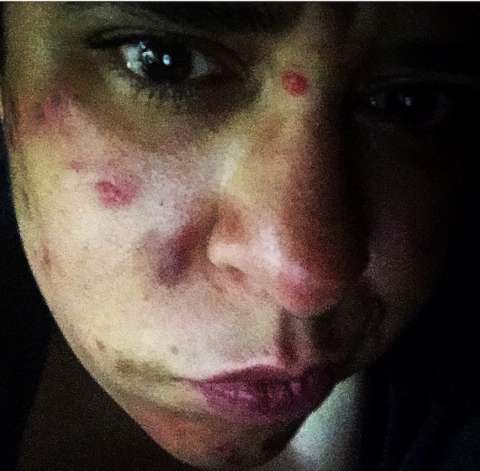
    My appointment coincided with a flare-up of my symptoms. Sitting before her with my daughter at my side, I watched her watch me, taking stock of the bright pink, weepy rash that went from chin to chest and the scabs and new lesions on my arms and legs. There was something very obviously wrong, and I remember thinking how lucky I was that my skin was on fire, my entire body inflamed inside and out for her to see. The fact that children on the street saw it and stopped, stared, and pointed at me before their mothers hurried them away actually had me looking forward to the appointment. I wasn’t crazy: there was (and still is) really something wrong with me. The proof was in the mirror. 

    Instead, she ignored my description of my symptoms, disregarded the pattern in which they appeared, and asked me how often I exercised and what my diet consisted of. She told me I was likely diabetic (I wasn’t), and that all of my health problems would resolve if I ate less and exercised more. 


    The author on the day of her appointment.

    It took two years before I was brave enough to see another doctor -any doctor – after that one. I’m still searching for answers and a doctor who will listen. All I have to show for it are severe anxiety and soaring blood pressure readings at the end of every appointment.

    Medical Gaslighting and Mental Health 

    To Dusenbery, my experience makes sense and fits with the research and stories she shares in her book.

    “I think medical gaslighting can take an enormous toll on your mental health. Even for very privileged women, it can be very difficult to trust yourself and what your body is telling you and push back when an expert with a white coat and an MD is insisting that ‘nothing is wrong,’” she said. “I have to believe that many health care providers simply don’t realize the harm they’re capable of causing by dismissing or disbelieving women’s reports of their symptoms.”

    There are the good ones, of course. The doctors who have believed something is wrong but couldn’t find the answer. These are the doctors who treat their patients with respect and dignity and listen. And then there are the ones like the dermatologist who told me people like me could not be fixed. 

    But I know better now. I am not the one who is broken.

    If you or someone you know may be at risk for suicide, immediately seek help. You are not alone.

    Options include:

    • Calling the U.S. National Suicide Prevention Hotline at 800-273-TALK (8255)
    • Calling 911
    • Calling a friend or family member to stay with you until emergency medical personnel arrive to help you.

    View the original article at thefix.com

  • How Does AA Work? A Review of the Evidence

    How Does AA Work? A Review of the Evidence

    AA is cloaked in misconceptions and mysticism: a society of “former drunks” who tout spirituality as a means to cure the chronic, genetic, and life-threatening disease of alcoholism.

    Alcoholics Anonymous (AA), as an organization, “neither endorses nor opposes any causes.” But AA, as a societal symbol, is very controversial. People have strong opinions about its benefits and its dangers. It’s an organization cloaked in misconceptions and mysticism: an anonymous society of “former drunks” who tout spirituality as a means to cure the chronic, genetic, and life-threatening disease of alcohol use disorder (AUD). There is no denying that many have found support and achieved recovery through involvement in 12-step programs. That has left researchers with the question: what mechanisms are at work behind the scenes?

    Peer Support Groups like AA Increase Oxytocin

    Participation in mutual help programs may increase levels of oxytocin, the feel-good hormone. Nicknamed the “love hormone,” it is released when people bond socially or physically. A neurobiological view of addiction recovery might look at how oxytocin plays on the brains of people in a treatment program. Oxytocin increases when bonding socially with others in AA and there are other neuroplasticity rewards that come from 12-step program participation. Interactions with other members improve the connectivity between the part of the brain that makes decisions and the “craving behavior” part of the brain.

    The oxytocin system is created before age four and its development can be affected by variables such as genetic differences within the receptor itself, or environmental causes like stress or trauma. An underdeveloped oxytocin system is a risk factor for drug addiction. Healthy levels of “oxytocin can reduce the pleasure of drugs and feeling of stress.” Creating opportunities for healthy oxytocin production could benefit people in recovery from addiction.

    Oxytocin also boosts feelings of spirituality, according to Duke University research. The study defined spirituality as “the belief in a meaningful life imbued with a sense of connection to a Higher Power, the world, or both.” Study participants who received a dose of oxytocin prior to meditation reported higher levels of positive emotions and feelings of spirituality. The effects lasted until at least one week after the initial experience.

    Do AA Prayers Reduce Cravings?

    Researchers at the NYU Langone Medical Center used brain imaging to see what, if any, effect praying has on the brains of AA members. They were able to see increased activity in the areas of the brain associated with attention and emotion during prayer which correlated with a reduced craving for alcohol. When exposed to triggers such as passing a bar or experiencing an emotional upset, people who were abstinent from alcohol but not members of AA were significantly less likely to experience the benefits of “abstinence-promoting prayers.” This brain activity seems to also be associated with a “spiritual awakening.”

    A spiritual awakening is not necessarily about the divine; rather, it’s an awareness of needing resources that are beyond the reach of a person’s individual ego. This awareness causes a shift that alters one’s perspective about drinking. There are also physiologic changes that seem to occur with increased spiritual awakening/awareness. In previous research, those who were directed to pray daily for four weeks drank half as much as the study participants who were directed to not pray.

    Research published in the last five years has tried to find ways to measure effectiveness in 12-step programs, in a way that is unbiased and scientific. One such study published in 2014 discovered that spiritual (rather than behavioral) 12-step work was important for later abstinence.

    Spirituality Is Not for Everyone

    Not everyone who enters AA experiences a spiritual awakening. According to a review of 25 years of research, it seems that only a minority of people with severe addiction experience this spiritual Aha! moment. While a sense of spirituality creates changes in the brain that can be measured on an MRI machine, there are other aspects of AA — social, mental, and emotional — that aid recovery for the majority of participants.

    Twelve-step programs can help addiction recovery because of their ability to propagate therapeutic mechanisms similar to the coping tools and behavioral strategies that are utilized in formal treatments. AA has a lot of parallels with cognitive behavioral therapy (CBT). CBT is an evidence-based form of psychotherapy that is effective over just a short period of time. In CBT, patients learn new habits through increasing self-awareness, overcoming fears, taking personal responsibility, and developing shifts in perspective. These are the same underpinnings as the 12 steps.

    Clinical interventions that encourage 12-step participation are more successful than clinical interventions that do not encourage attendance. Meeting attendance, sponsorship, and active involvement have come up in multiple studies as being positively correlated with continued abstinence, highlighting the critical nature of connection to others as part of an effective plan for managing addiction long term.

    12-Step Programs as a Useful Management Tool

    Addiction is a chronic illness with no cure, according to AA literature as well as the medical community, and chronic illnesses require lifelong management. AA can be a good ally in the quest to maintain a healthy lifestyle free of active addiction.

    The International Journal of Nursing Education published a study that sought to learn about the quality of life for those attending AA as opposed to those who are not attending AA. They found a significant difference, with those who attend AA reporting a better quality of life than non-attendees.

    When looking at meeting attendance over long periods of time, abstinence patterns can be predicted. For people who went through inpatient treatment, the pattern shows that meeting attendance is highest during treatment and reduces at a steady pace afterwards. With reduction in attendance there is also a reduction in abstinence from using drugs or alcohol. Findings from many long-term studies suggest that meeting attendance is important in early recovery and for successful long-term recovery. The reasons for this echo other research findings: community matters.

    Dangers Inherent to 12-Step Groups

    The nature of AA and other 12-step programs leaves them to be individually organized and without a central governance. There is no oversight and no quality controls. Abuse, inappropriate behavior, bad advice, and social ostracizing can happen.

    Perhaps most dangerous is when a single solution is pushed on someone for whom a different angle would work better. Individual satisfaction with treatment plays a major role in “subsequent psychiatric severity,” which means that recovery rates are lower for people who are unsatisfied with the addiction treatment they receive. The World Health Organization suggests that to improve treatment outcomes and engagement with treatment, patient satisfaction ought to be a focus when caring for people with substance use disorders.

    AA provides a range of pathways to recovery, but it is not the one-size-fits-all approach it claims to be. It’s particularly challenging for people who also have a diagnosis of (or just struggle with) social anxiety. It’s common for AUD to exist alongside social anxiety. The fear of being negatively appraised can impede progress in recovery. Long-term participation in mutual aid groups such as AA may reduce social anxiety but overcoming that hump in early recovery may require clinical interventions or alternative treatments.

    Did you find recovery in 12-step programs or did you have a negative experience? Let us know in the comments.

    View the original article at thefix.com

  • Pregnant and Scared to Get Treatment: When Conception Meets Addiction

    Pregnant and Scared to Get Treatment: When Conception Meets Addiction

    If one needs proof that addiction is a disease and not a moral failing, look into the eyes of a woman who knows her behavior is harming her baby but still can’t stop.

    With one in three individuals with opioid use disorder passing through the criminal justice system annually, court dockets across the country are overflowing with cases of illegal behavior fueled by addiction. Though such cases wrangle with the complexities of punishing individuals afflicted with what is increasingly seen as a disease that erodes free will, they are the bread and butter of the legal system. However, the recent Pennsylvania Supreme Court case known as In the Interest of L.J.B. adds another level of intricacy to the court’s decision-making process. The question asked in the case—Does drug use during pregnancy constitute child abuse? —is unpleasant to contemplate, but it is one of absolute importance.

    The defendant in the case, a woman referred to as A.A.R., tested positive for illicit opioids, benzodiazepines, and marijuana when she gave birth to her infant, L.J.B., in January 2017. L.J.B. then required 19 days of inpatient treatment for drug withdrawal and was placed in the custody of Children and Youth Services, which alleged that her mother’s drug use during pregnancy was child abuse. On December 28, in a 5-2 decision, Pennsylvania’s Supreme Court ruled in favor of L.J.B.’s mother, stating that Pennsylvania’s child abuse law clearly excludes fetuses in its definition of a child. While the issue may be settled in Pennsylvania, there is little doubt that similar cases will be heard across the country amidst the opioid epidemic.

    Pregnant Women with Opioid Addiction — Overlooked and Undertreated

    The case of L.J.B. and her mother has drawn national attention to women who simultaneously carry a child and the burden of an addiction—a group that has often been overlooked or ignored in the national discussions about the opioid epidemic. Few individuals in our society bear such a stigma as these women. As an addiction psychiatrist, I’ve heard harsher judgment passed on these patients—even from fellow healthcare workers—than on any others. This stigma permeates our medical and legal systems, creating dire consequences not only for these women, but also for their unborn children.

    Pregnancy is unparalleled in its ability to motivate women towards healthier behavior, but approximately four percent of pregnant women still use addictive drugs. When I’m asked to evaluate a woman who is pregnant, I know her disease is severe before I’ve even laid eyes on her. If one needs proof that addiction is a disease and not a moral failing, look into the eyes of a woman who knows her behavior is harming her baby but still can’t stop. There is no better example of the ability of a chemical to overpower the deepest-rooted human instincts.

    A recent report released by the CDC revealed that opioid addiction among women in labor quadrupled from 1999 to 2014, signifying the need for immediate action. Opioid addiction during pregnancy can create many problems for mother and child, including preterm labor, neonatal abstinence syndrome, and even fetal death. Tragically, pregnant women with addictions are less likely to receive prenatal care. Aware of society’s disdain, many don’t want to be stigmatized at the doctor’s office. Some mothers-to-be can’t even find a physician willing to treat them, and others are afraid of being reported to authorities due to laws that have arisen out of prejudice and misinformation.

    Harsh Laws Harm Mother and Child

    Twenty-three states already consider drug use during pregnancy child abuse. In three states, it’s grounds for involuntary civil commitment. Though some people think such laws deter women from using drugs during pregnancy, they don’t. If a woman’s addiction is so severe that it is active during pregnancy, laws that threaten arrest or loss of custody will not bring about remission. They also rarely bring about legal punishment, since the charges are dismissed or the convictions are overturned 85 percent of the time.

    All that these laws do is cause pregnant women with addictions to avoid prenatal care visits or forego them all together. Tennessee discovered this the hard way, when it passed a law in 2014 making drug use during pregnancy punishable by up to a year in prison. The number of pregnant women seeking treatment for addictions fell drastically because they were too afraid of the legal ramifications. Thankfully, the law expired in 2016, but Tennessee’s legislature is now considering passage of a similar bill.

    How to Help Pregnant Women with Addictions and Their Children

    If our actual desire is to help pregnant women with addictions and their children, there are effective actions we can take. We can start with repealing counterproductive laws, and, as funding is being allocated to counter the opioid epidemic, we can earmark portions of it for these patients and create more treatment options for them. Only 19 states have programs specifically targeting the unique needs of pregnant women, and only 17 provide them with priority access to state-funded addiction treatment programs.

    Healthcare providers can help by addressing their own stigma and stepping up to provide treatment to this vulnerable group. These women already face significant barriers to care, so finding a willing and caring healthcare provider shouldn’t be another challenge to overcome. There are also ways to avoid tragic situations like this in the first place. Out of all pregnancies in women with opioid addictions, eighty-six percent are unintended, so ensuring access to affordable and effective family planning services is essential.

    For addicted women with unborn children, an invitation into care is far more effective than any legal threat we can muster. Let’s dispense with negative attitudes and legal barriers that keep these patients from seeking treatment. Ensuring that help is available when needed is the way forward, because the only way to aid an unborn child is to help its mother, regardless of how her actions might make us feel. 

    View the original article at thefix.com

  • Beyond Addiction: Jodie Sweetin on Acting, Social Media, and the Gifts of Sobriety

    Beyond Addiction: Jodie Sweetin on Acting, Social Media, and the Gifts of Sobriety

    Whether it’s daily prayer and meditation, working with sponsees or just staying connected to my sober family, I know that it’s only because of how hard I’ve worked in my recovery that I get to have the life that I have today.

    Jodie Sweetin, 37, is best known for her role as Stephanie Tanner in Full House (1987-1995). During the TV show’s eight-year run, Sweetin appeared in every episode, becoming one of the most famous child actors in the country. Off set, she was a good student, skipping a grade in elementary school and later earning a scholarship to college. However, the transition to a more normal life after her Hollywood childhood proved difficult.

    When Full House came to an end when she was 14, Jodie’s young life skidded off the rails. She started drinking, and the alcohol use opened the door to drugs. Over the next decade, she bounced between the occasional Lifetime movie or comeback attempt and drug abuse, using ecstasy, methamphetamine, and crack. She said in an interview that she struggled with a sense of identity after the show ended and was “looking for other things to, to fix that and kind of fill that void.”

    After sinking deeper into methamphetamine addiction, Jodie realized she was headed towards catastrophe and checked herself into rehab. She got sober in 2008 at age 26. After discovering a path of recovery, she started taking professional classes and became certified as a drug and alcohol counselor.

    While working in the treatment industry in 2009, Jodie published unSweetined, a memoir chronicling her downward spiral into addiction. She also rediscovered her first passion, acting. In 2016 she joined the cast of Fuller House and her career took off once again. Jodie was the third most Googled actress for that calendar year.

    On February 28th, Jodie Sweetin is being honored at the 10th Annual Experience, Strength and Hope Awards presented by Writers In Treatment at the Skirball Cultural Center in Los Angeles. The award recognizes individuals in the entertainment industry who share their honest journey from addiction to recovery. The event, which promises to be “an all-star night of humor and sobriety,” has a few tickets remaining, available here: https://www.brownpapertickets.com/event/3909581.

    Given Jodie’s inspiring journey, The Fix was thrilled and honored to have the chance to interview her.

    The Fix: According to The Panther, the school paper of your alma mater Chapman University, you told students, “I love coming out and sharing my story, because I’ve made it to the other side and it’s continual work, but getting to come to a place where I am happy with my life is amazing.” Would you describe sobriety as a cornerstone of your life? How does being in recovery help?

    Jodie Sweetin: Sobriety is absolutely the cornerstone of my life. It’s always said in the rooms that anything you place before your sobriety will be the things you lose, and I absolutely believe that. Even though my life and my schedule can sometimes be crazy, I still make it a priority to be active in my program. Whether it’s daily prayer and meditation, working with sponsees or just staying connected to my sober family, I know that it’s only because of how hard I’ve worked in my recovery that I get to have the life that I have today. Recovery also helps me deal with the stress and chaos that often comes with getting back a full and busy life in sobriety. Without it, I’d be completely overwhelmed!

    After getting sober in 2008, you worked in the treatment industry, successfully obtaining your CADC as a Certified Alcohol and Drug Counselor. What did you learn about staying sober by working in that industry?

    I loved working in treatment, it was incredibly fulfilling and I’ve always said that I was so lucky to find a second career path that I loved. While my own recovery was always separate from my work in the field, it was because of what I learned on my own journey that I was able to connect with clients. I eventually worked more in the operations side of treatment, running staff and houses, but without a program of my own, I wouldn’t have been as effective in handling the pressure of it all.

    With the final season of Fuller House on the horizon, what do you plan to do next as an actor? If you could wave a magic wand, what would you most want to do?

    I would love to be able to move into some more dramatic work, as it’s something that people haven’t seen me do yet. It’s an exciting time in this industry right now, with so much fantastic work out there, so as much as I’ve loved getting to come back to my Full House family, I think that the opportunity to do something different is out there and I’m looking forward to it!

    You have been very vocal about the negative impact of social media on children. Do you think social media is fueling the national drug crisis? Do young people use drugs and alcohol to escape social media pressures?

    I think social media tells us, particularly young people, that we’re not “enough” and the rates of depression and suicide among youth is most definitely a direct correlation of comparing our insides to other people’s outsides. We see edited, perfect versions of people’s lives that don’t really exist and then feel our lives can’t possibly compare. I’ve always tried to be “real” on my social media. Posting pictures—without makeup or filters—of me at home with kids and living my normal life alongside the more glamorous parts of my job is something I try to balance in my online life. I don’t know that social media is fueling the drug crisis, but I definitely think it’s leading people to feelings of inadequacy that make them feel hollow inside.

    In your 2009 memoir UnSweetined, you wrote candidly about your struggles with alcohol and methamphetamine addiction after Full House went off the air in 1995. Was it difficult to come clean with your public? What was the response like, and did it surprise you?

    It’s always terrifying to be brutally honest about your mistakes. But the beauty that I’ve found in it is that there’s no longer anything I’m afraid of. When you reveal your own secrets, there’s no longer anything hanging over your head and the sense of freedom is enormous. The response has been amazing and I’m constantly receiving messages from people who’ve heard my story or read my book, who say that my courage to speak out has helped them to overcome their own demons. For me, that is a gift. To know that my story has helped someone else is the true essence of sobriety and it reminds me that even though I had to go through pain to get here, it’s worth it if I can help someone else.

    The entertainment industry has a nasty tendency to chew up and spit out many talented young performers. From Dana Plato and River Phoenix to Brad Renfro and Brittany Murphy; examples of these talents lost later in life seem countless. Given such brutal conditions, do you think the entertainment industry needs to install more safeguards to help young actors with the roller coaster ride of their careers? From your personal experience, what could be done to increase the positives and reduce the dangers?

    I think the best defense against the craziness of this business is a solid family life. Unfortunately, many people are not blessed with that foundation, whether in this business or not. The difference is that those of us in the spotlight have our stories and our failures made public, where those living in the rest of the world go through it all relatively unknown. I’ve had an amazing family support system and never blamed my addiction on growing up in the business. I know that I would’ve struggled with addiction whether or not I was a child actor, it just made my story much more public.

    In a 2019 interview with TODAY, you said, “My kids know that I’m sober… They know that I don’t drink.” Since your two daughters, Zoie and Beatrix, are 10 and 8 respectively, drugs and alcohol have yet to enter the picture in their lives. Do you believe the awareness you have provided about your recovery will help them avoid pitfalls in the future?

    I’ve always been incredibly open and honest with my girls. We have a wonderfully communicative relationship and as they get older, I’ll be able to share more of my story. At the end of the day, I can be an example of a sober woman for them, whether they have to go through their own struggles or not. I know that being in recovery has made me a better, more patient and understanding mother and it’s something that I am incredibly grateful I get to use in my life as a mother.

    What does it mean to be honored at 2019’s Experience, Strength and Hope awards? Are you proud to be recognized by Writers in Treatment on the tenth anniversary of this prestigious award?

    I am so honored by this, it’s hard to really imagine. When I got sober, I didn’t do it to get recognition or acclaim. I did it to better my life and find a little bit of hope. To be chosen by Writers in Treatment for such an award is incredibly humbling. I am so proud to be a sober member of recovery and am proud to carry the message of the 12-step community!

    View the original article at thefix.com

  • Lady Gaga Disappoints Fans by Failing to Address Mental Health Triggers in "A Star Is Born"

    Lady Gaga Disappoints Fans by Failing to Address Mental Health Triggers in "A Star Is Born"

    Lady Gaga has worked tirelessly to help people with mental health problems, sharing her own struggles with debilitating depression. So why hasn’t she addressed the very real and dangerous depressive and suicidal triggers in the film?

    Trigger Warning: The following story discusses a completed suicide in a film and links to potentially triggering articles. Proceed with caution. If you feel you are at risk and need help, skip the story and get help now. Options include: Calling the U.S. National Suicide Prevention Hotline at 800-273-TALK (8255), calling 911, and calling a friend or family member to stay with you until emergency medical personnel arrive to help you. 

    (This piece contains spoilers for A Star is Born.)

    Months after its release, the highly-acclaimed A Star is Born is still generating plenty of headline-worthy buzz, most recently with an Oscar nomination for Best Picture.

    It’s an incredible movie with an equally impressive soundtrack; I had every song memorized long before I seeing the movie. But months after seeing A Star is Born on a rare date-night with my husband, I still feel that Lady Gaga—Mother Monster herself—let the entire mental health community down. And while I agree that the Oscar-buzz is well-deserved, I also wonder at the media’s lack of attention to the film’s numerous potential triggers for alcoholism, addiction, depression, and suicide.

    Lady Gaga has made a name for herself as more than just a performer, using her platform to bring awareness to preventative mental health care. She’s spoken publicly about her personal struggles with her own “debilitating mental health spirals,” amassing a following of “Little Monsters” – fans who see themselves in her message. She and her mother, Cynthia Germonatta, created the Born This Way Foundation for a “kinder and braver world.” Germonatta also notably presented to The United Nations General Assembly in 2018 on behalf of the Born This Way Foundation on the topic of mental health, launching the United for Global Mental Health initiative. According to its Twitter page, the initiative’s vision is “a world where everyone, anywhere, can turn to someone who is able to support their mental health when needed.”

    You could say that I’ve been stanning Lady Gaga since before “stanning” was even a word, so I was well aware of her activism before seeing the movie. I was thrilled going into A Star is Born. But my excitement soon gave way to anxiety and sadness. Certain scenes left me dismayed and shaken, stunned that there weren’t safety protocols put into place to warn the very fans she has worked so hard to fight for and protect.

    Never having seen the original film (and not having done any research on the film before seeing it) I still knew going in that A Star is Born wasn’t going to have a happy ending. One friend had posted on Facebook that she was “gutted” as the credits rolled. But even that did not prepare me for the very real and incredibly dangerous depressive and suicidal triggers contained within the film’s ending, most notably Jack’s suicide (and the very brief glimpse of the belt from which he was hanging swinging through the garage windows). That shot alone, while problematic in terms of the little that could be seen and the dangers of suicidal triggers according to The Association for Suicide Prevention (AFSP), I might have been able to shake off. It wasn’t until the moment after Jack’s brother, Bob, was consoling Ally (played by Gaga) following Jack’s suicide, telling her that it was nobody’s fault but Jack’s, that I cracked. 

    I waited, breathless and crying, for Mother Monster to channel herself through the character she was portraying on the big screen, to speak up. She’d done so repeatedly while Jack was still alive and fighting his addiction, assuring him that alcoholism is a disease and that there was no blame to be placed or taken on.

    All she needed to say was that the addiction won; that Jack’s suicide wasn’t any more his fault than his alcoholism had been. 

    But she didn’t. And it broke me. 

    For a brief moment, I thought that maybe I was the only one. Maybe I was overreacting. Maybe I was just being too sensitive. But it wasn’t just me.

    In researching this piece, I discovered that complaints of “viewer distress” in New Zealand had caused the film to be reclassified with a suicide warning note. But why wasn’t a trigger warning for suicide added to the beginning of the film from the get-go? 

    David Shanks, head of the New Zealand film classification board, was quoted in The Guardian after demanding that the film add a warning to protect vulnerable viewers. “For those who have lost someone close to them, a warning gives them a chance to make an informed choice about watching.” 

    Houston-based licensed therapist Bill Prasad notes that for those who haven’t yet seen A Star is Born, it’s best to skip the film if proper resources are not in place. 

    “Triggers can be tricky and dangerous,” said Prasad, who added that those in the early stages of sobriety may also be adversely affected. 

    The AFSP’s fact sheet on suicide statistics, warning signs, and risk factors includes “Exposure to another person’s suicide, or to graphic or sensationalized accounts of suicide” among the many risk factors for triggering those vulnerable to act. A Star is Born triggered for me my own “debilitating mental health spiral.” I withdrew from my friends, both personal and those in my social media circles. I stopped writing. I stopped sleeping at night and started sleeping too much during the day. And when no one was looking, I kept crying. 

    As a writer whose livelihood depends on my ability to create, I lost months of income. As a survivor of my own suicide attempt with a diagnosis of Major Depressive Disorder, I am grateful that I’m not actively suicidal now or when I saw the film. That doesn’t mean, however, that I am not sensitive to associated triggers. Two months later, I’m still trying to find all the pieces and put myself back together. 

    I’m not asking for Hollywood to hold my hand. I know that hard stories need to be told. A Star is Born is a brilliantly acted film and rightfully deserves all the attention it continues to receive. I understand that perhaps it might not have been “realistic” for Ally to snap out of her grief-stricken state and set Jack’s brother right about how dangerous it is to blame the victim, that it’s never okay to even imply that.

    So I waited for Mother Monster herself to set the record straight after the fact. 

    But she didn’t. 

    Lady Gaga didn’t say a word. Not then, and not after, during countless interviews, did she reassure her monsters that depression is an illness beyond the control of the afflicted. Not once did she say that no one should ever blame the suicidal.

    As Prasad reminds us, “If you are struggling after the movie, reach out to someone or get professional help. You don’t have to suffer alone.”

    If you or someone you know may be at risk for suicide, immediately seek help. You are not alone.

    Options include:

    • Calling the U.S. National Suicide Prevention Hotline at 800-273-TALK (8255)
    • Calling 911
    • Calling a friend or family member to stay with you until emergency medical personnel arrive to help you.

    View the original article at thefix.com

  • How To Love Yourself the Way You Love Your Addicted Child

    How To Love Yourself the Way You Love Your Addicted Child

    Our mission in life became to fix our son, get his life on track, keep him safe, and stop the madness. We became addicted to fixing our addict. In the meantime, my life was circling the proverbial drain and it was all my son’s fault… or was it?

    Stories are the cornerstone of living and loving—from oral traditions to New York Times best sellers, tales written by others and those we make up inside our minds. They help us make sense of our existence like nothing else can. Good stories tether us to life and help us transcend into new ways of being.

    There is a story rattling around in my head—a story for myself and perhaps for you. It whispers to me with prompts and questions like: What would I say to you? But then I wonder who you even are. Are you my beloved or a friend I’ve yet to meet? Someone I embrace or a ghost from whom I run? Would we pass each other on the street without a second glance or might we sit and chat over coffee for hours on end? What would I tell you if we were one and the same? No separation, no delineation. Not the stranger or the ally. Not the sober one or the drunk, but rather you, me, we. What would I tell us?

    We’re All Addicted to Something

    Those of us who’ve lived with people who have addictions—oh wait … who am I kidding? We’re all addicted to something. No one is immune. We each have the places we run when we’re feeling vulnerable, scared, or confused. We create our lives so we have our fix of choice within reach at all times. When life feels excessive or news in the broader world is crazed, we grasp at something to ease our rage, sooth our aloneness, and calm the overwhelm. We eat, we shop, we drink, we gamble or easier yet, we try to fix someone else.

    We point a finger away from ourselves and toward them. They are the one with the problem. If only he or she would stop drinking, agree with “the right” viewpoint, pay more attention to me then surely I’d feel better.

    I can’t begin to tell you the number of hours and ways I’ve spent over the last 30 years trying to improve my husband. Lucky guy, the pressure eased for him when our 13-year-old son turned to drugs and alcohol. Together, our mission in life became to fix our son, get his life on track, keep him safe, and stop the madness. We became addicted to fixing our addict.

    We tried inpatient and outpatient treatment, therapeutic boarding school, and a wilderness program. We were all in except, of course, our son, who did his best to skirt the therapy sessions, game the system, and do the bare minimum to figure out how he could get out of our fix and carry on with his agenda. In the meantime, my life was circling the proverbial drain and it was all my son’s fault… or was it?

    Hitting Rock Bottom as a Parent

    They say that true addicts must hit rock bottom before they’ll change, but what’s the rule of thumb for concerned family members? Do we have to hit rock bottom too? It doesn’t really seem fair.

    I recently met a woman who was ensnared in her 40-something-year-old daughter’s cycle. (My son is almost 30 now.) I watched this woman wring her hands and spend precious time trying to figure out how to wire money to her daughter on the other side of the world. I wondered about the difference I felt between us until I realized that that mother hasn’t hit her bottom. Some people never do. They value their child’s life more than their own. That’s what society has told us we should do. Sacrifice for others. Family first. Give to the death.

    When I hit my bottom, I began to wonder if there was another way. What if sacrificing for my son wasn’t the solution? Please don’t get me wrong, I adore my son. In fact, he has been my greatest teacher and I am deeply indebted to his role in my personal journey. I would indeed give my life for him, but I was giving him my living. I was disintegrating into my own form of insanity and it was helping no one. Not him, not my husband, not me. We were each in our own way following addiction into the darkness.

    What if love others as you love yourself looked different than I’d been taught? What if that’s exactly what I was doing? Loving him as I loved myself which turned out to be not very well at the time.

    How to Love Yourself

    I don’t recall if it was the third or fifth or nth incident with the police or treatment when I realized I had a choice. I could go into that dark hole of despair and stay there, or I could find a way to bring myself back into the light. If I could continue to love my son without joining him in the madness, then maybe I could shine a beacon for him when or if he chose to return to a healthier way of living. So in service of myself and family, I chose to light my own candle while continuing to literally light candles and offer prayers of love for all of us.

    I began to develop a journaling practice. I poured my thoughts, fears, worries, and internal and external stories onto the page every day. I wrote and wrote and wrote until I exhausted the dialogue, covered all of the what ifs, and landed at a moment of rest. Then I got up and did it again and again and again. As my practice deepened, so did my sense of peace and ability to be present to others and the world around me. I started to heal. I learned how to draw appropriate boundaries and managed to send love and light to my son even when we were estranged for months at a time. I developed empathy and compassion, regardless of whether I understood or condoned my son’s choices. And somewhere along the way, the chaos quieted. Our legacy gave way to the promise of a brighter ending.

    I remembered that authentic stories untangle us from lies, tether us to truth, and help us transcend into new ways of being.

    May it be so for you and yours.

    View the original article at thefix.com

  • How Fentanyl Hysteria Leads to Harmful and Ineffective Drug Laws

    How Fentanyl Hysteria Leads to Harmful and Ineffective Drug Laws

    We might as well accept reality and direct our efforts towards making drugs less deadly, in the same way that we accept the risks of driving a car, but also try to prevent accidents.

    My only experience with fentanyl was when I was pregnant. I was on a hospital bed writhing in agony when a nurse injected me with the synthetic opioid commonly used for pain management in laboring women. The drug calmed me and I soon gave birth to a healthy baby girl.

    That was before fentanyl moved from the hospitals to the streets, tainting the illicit drug supply and ratcheting up an already alarming death toll from overdose.

    Since then, deaths from synthetic opioids (mostly fentanyl) have begun a steep climb, jumping 540% in the past three years alone. More than half of the opioids in the U.S. are now laced with fentanyl and the fear surrounding the drug is palpable. Some people claim you can overdose on the drug just from touching it. As a result of this hysteria, many first responders are afraid to respond to overdoses for fear of coming into contact with fentanyl. Meanwhile, states are scrambling to pass laws responding to the ever-changing landscape of fentanyl and its many derivatives.

    Alice Bell, who works to reduce overdose deaths through Prevention Point Pittsburgh, a syringe exchange program, says that there are reasons to be concerned about fentanyl. In Allegheny County, Pennsylvania, where her program operates, the opioid was involved in 20% of deaths in 2014. In 2016 the number tripled to 63% and today fentanyl is present in 74% of drug-related overdose deaths.

    “Fentanyl is much stronger than heroin and other opiates,” Bell explains. “It is easy to get a high dose without realizing it… Because it is fast acting there is a smaller window before people [overdose].”

    What Is Fentanyl and How Is It Dangerous?

    Fentanyl, a synthetic opioid created to mimic the effects of natural opioids (which are derived from opium poppy plants), was first introduced in 1959 as an anesthetic and pain reliever for surgery and cancer patients. It wasn’t until 2014 that unregulated forms of fentanyl began arriving in the U.S. from China. Because these analogues are cheap to buy and highly potent, they’re often mixed into supplies of other illicit drugs, such as heroin, cocaine, or pills. People buying or selling drugs on the streets may have no idea whether the product contains fentanyl, or how strong it is. This lack of knowledge has contributed to skyrocketing rates of overdose deaths across the country.

    As Bell explains, because illicit fentanyl is mixed into other drugs in unregulated environments, it is hard to mix it uniformly. Thus, one person might get a very strong dose while another might get a weaker dose, even though both samples came from the same supply. Bell likens it to “mixing pancake batter and getting chunks.”

    But although Bell acknowledges the dangers of a fentanyl-laced drug supply, she also emphasizes that much of the panic surrounding fentanyl and its effects is misleading—including false rumors about Narcan-resistant fentanyl or people overdosing just from touching the substance.

    Dan Ciccarone, a professor at the University of California, San Francisco who has spent the last four years studying fentanyl, agrees that while there are reasons to be concerned, responding to the challenge with policies rooted in fear and misinformation only makes matters worse. He points out that the problem is not so much fentanyl itself, but the fact that it’s being added to other drugs in unknown amounts.

    “We have to take some of the hysteria and the irrationally out of it,” he says. “If we say the problem is heroin and heroin contaminants, [we] treat the problem differently than if [we] say it’s a new drug and it’s killing our teenagers.”

    How to address the fentanyl-related overdoses is a question vexing many policymakers. In the past few years, state legislatures have spun off in wildly different directions. Some have attempted to curb overdoses through the introduction of 911 Good Samaritan laws and expanding availability of naloxone, syringe exchange programs, and treatment options for people who use drugs problematically. Some have implemented diversion programs and sentencing reforms designed to keep people who struggle with addiction out of jail and to connect them to programs that address the root cause of addiction. Others are enacting ever-harsher penalties for crimes involving fentanyl. In fact, many states are doing all of these things at once, oblivious, it seems, to the fact that some of these new policies contradict or even cancel each other out.

    Opioid Confusion and Contradictory Drug Policies

    In 2017, Louisiana passed a bill that reduced prison sentences for drug possession convictions. But the same law created a new mandatory minimum sentence for illegally possessing opioid painkillers (such as fentanyl). Maryland likewise enacted legislation in 2016 to reduce penalties for drug users and sellers, but the very next year created a new penalty for drugs containing fentanyl that extends prison sentences up to 10 years. In 2017, North Carolina cracked down on synthetic fentanyl and created a task force to reform opioid sentencing laws in literally the same bill. On the federal level, the passage of The First Step Act, which reduces mandatory minimum and three-strike laws, came on the heels of the former Attorney General’s declaration to relentlessly prosecute every case involving any amount of fentanyl.

    In essence, many governments are passing laws that lessen penalties for opioid-related crimes, while simultaneously enacting laws that further criminalize fentanyl (an opioid).

    For Michael Collins, Director of the Office of National Affairs at the Drug Policy Alliance, the confusion stems from a desire to respond and a lack of knowledge about the most effective way to do so.

    “Policymakers feel pressure to do something,” he explains. “In the absence of public health measures that they are familiar with, legislators will dust off their Drug War playbook and go towards punitive measures…certainly there is no evidence that those penalties will decrease overdose deaths.”

    Collins’ explanation echoes my own experience as a lobbyist advocating against drug-induced homicide laws in North Carolina. Like many states, North Carolina is responding to increases in fentanyl-related deaths by introducing legislation that would allow prosecutors to charge people with murder if they distribute a drug that leads to an overdose. It’s a typical punish-first response that not only is proven ineffective at reducing overdose deaths, but could potentially increase overdose deaths by negating the state’s 911 Good Samaritan law, which was enacted in 2013 to encourage people to call 911 to report an overdose. If lawmakers agree that fear of being charged with possession of drugs is enough to deter someone from calling 911, surely they see that fear of being charged with murder would even further discourage life-saving medical calls.

    But, as I discovered, it is hard to reason with a politician, a prosecutor, or a law enforcement official who is under intense pressure from their community to “do something.” Of course to address the problem of people selling drugs that lead to overdose, we need to tackle the underlying factors that lead people to sell drugs in the first place, such as the need to support a personal drug habit or lack of economic alternatives. But proposing solutions such as more drug treatment centers, jobs programs for low-income neighborhoods, greater investment in vocational education…all these are high-cost, long-term solutions. And officials are being pressured to find answers now.

    Increasing penalties against drug dealers is quick, relatively simple, and the cost is picked up by local court systems, not by the politicians who passed the law. Better yet, harsher penalties sound like a solution that satisfies the public’s need for accountability.

    Incarceration and Stricter Laws Cause More Crime and Deaths

    The problem with using the criminal justice system to address complex issues like drug use is that we imagine the system to be far more effective than it actually is. We probably wouldn’t celebrate laws that incarcerate more people if we realized that locking up one drug dealer merely causes another to take his place. We probably wouldn’t be so anxious to pour billions of dollars into law enforcement efforts to disrupt drug supplies if we realized that U.S. illicit drug market is estimated at $100 billion annually, while law enforcement only seize between $440 and $770 million in drug money per year—around 0.5% of the total value. We might not swallow the $1 trillion price tag of the War on Drugs if we realized that after all this money spent and all the families disrupted from incarceration due to nonviolent crimes, drugs are now cheaper, more plentiful, and more deadly than ever before.

    To effectively lower the demand for drugs or decrease overdose deaths, we need to think outside the box.

    Alice Bell explains, “If you want to encourage people to avoid more dangerous drugs, you have to allow people access to less dangerous drugs.”

    That is certainly not a solution that politicians want to hear. It doesn’t “sound good.” But it would do far more to reduce overdose deaths than all our efforts to slap people with longer prison sentences. We need to help politicians confront their fear of drugs and to understand that drugs always have been and always will be a part of our communities. We might as well accept reality and direct our efforts towards making drugs less deadly, in the same way that we accept the risks of driving a car, but also try to prevent accidents. Most people age out of addiction—if they live long enough to do so. There is no reason that taking a hit of a mood-altering substance should be akin to Russian Roulette.

    Conservative economist Milton Friedman once said, “Only a crisis—actual or perceived—produces real change. When that crisis occurs, the actions that are taken depend on the ideas that are lying around. That, I believe, is our basic function: to develop alternatives to existing policies, to keep them alive and available until the politically impossible becomes the politically inevitable.”

    Fentanyl may be that catalytic crisis needed to produce change. In that case, we should work to turn tragedy into opportunity.

    View the original article at thefix.com

  • How Addiction Stigma Prevents People from Getting Help

    How Addiction Stigma Prevents People from Getting Help

    The doctor believed that people with addictions are sneaky and dishonest, and maybe this is why. My treatment has repeatedly been delayed or denied because I’ve been honest. Do other people have to lie to get medical care?

    My name is Sara and I am 28 years old. I grew up in a two-parent household with a loving family, had excellent grades in high school, and graduated from college. I currently work full time. I love children, nature, animals, family, and my many friends.

    Self-Medicating with Opioids

    I have also struggled with depression, anxiety, and OCD since I was in my early teens. At age 18, my life was changed forever when I was prescribed an opiate painkiller after the removal of my wisdom teeth. I discovered, with that one prescription, that opioids made me feel normal. And yet, opioids are what put me through a roller coaster of hell for the next eight years. They also introduced me to my good friend “Heroin.”

    From early on in my addiction, I wanted help but was too ashamed to ask for it. I also figured I could beat this thing myself, but I couldn’t. I needed help. My parents encouraged me to contact a rehab facility, which I did immediately. The nurse who did the intake was very kind and said I could come the next day to be admitted for detox, but she first needed to get approval from the insurance company.

    I, and my family, were so relieved that I would begin a journey of recovery. This is when I experienced the stigma of addiction for the first time. The nurse from the rehab center called me back and said that my insurance company would not approve me to go to detox and rehab because I had not yet been incarcerated.

    Several months later, I was finally approved for rehab, but only after I possessed a misdemeanor charge.

    “Sneaky Drug Addicts”: Doctors Perpetuate Stigma

    After detox, rehab, and a six-month stay at a sober living facility, I came home and began looking for work. I found a job quickly, but I needed paperwork completed for a physical. Although the job did not require a drug test and there was nothing on the form requesting drug testing, my primary care provider refused to give me a physical or sign the form unless I agreed to a drug test. It didn’t matter that I was in recovery and was also attending outpatient rehab which routinely drug-tested me.

    Even now, with two years in recovery from addiction, I still experience prejudice and stigma in health care settings. Recently a bout of severe food poisoning and dehydration sent me to the emergency room. There, I was accused of going through withdrawal. I provided the nurse with the list of my medications, which included Vivitrol—an opioid blocker. I was also honest and told her that I used marijuana occasionally to help with anxiety. After I was sent for testing in Radiology, the doctor told my mother that he was quite sure that I was going through withdrawal and that he wanted a urine screen. My mother told him that she was sure I wasn’t going through withdrawal because I had always been upfront and honest with her when I relapsed in the past.

    “Well, you know how sneaky drug addicts can be,” the doctor said.

    When I returned and the doctor told me his suspicions, I agreed to the urine test but told him that I expected an apology after he got the results and I only tested positive for marijuana. I watched as two nurses outside the room laughed and looked toward my room. I knew they were laughing at me—the drug addict.

    Half an hour later, the doctor walked in and said, “Well, I guess you were right, you aren’t going through withdrawal. We only found a small trace of marijuana in your system. But, you understand why I had to test you, don’t you?”

    He never did apologize to me.

    In Recovery and Denied Therapy

    Part of my recovery is getting a monthly injection of Vivitrol which is an opioid blocker that also helps reduce my cravings. The provider that gives me the Vivitrol requires that I also go to a counselor, which I was more than willing to do. But at my intake interview at the local mental health agency, I was honest about my occasional marijuana use for anxiety and as a result I was denied counseling services. I even appealed it to the medical director, but that didn’t help. It didn’t matter to them that the anxiety, depression, and OCD—which is relieved by the marijuana—may have been partly responsible for my addiction to opioids in the first place.

    That ER doctor held the belief that people with addictions are sneaky and dishonest, and maybe this is why. My treatment has repeatedly been delayed or denied because I’ve been honest. Do other people have to lie to get medical care? If someone is sent to a counselor for emotional eating, are they refused counseling if they have given up everything but potato chips? And even if the providers believe smoking marijuana is a condition of addiction, wouldn’t that be all the more reason to offer me care and a provider? To this day, I have been unable to find a counselor who will take me.

    My wish is that every person who has substance use disorder is treated with respect and compassion. When you are addicted, you already beat yourself up every day. Every time you look in the mirror, you see an addict. We certainly don’t need to be reminded by the people that chose a sacred profession and took an oath to help people that we aren’t worth it. That only puts us deeper in the depths of destruction rather than building us up for a path to recovery.

    Healing: Compassionate Health Care Providers

    My experience isn’t unusual, but I have also encountered many health care workers who were compassionate. Those were the people who gave me a reason to keep fighting for my life. There was a nurse in the emergency department (the one time I was there to get help for withdrawal after I had relapsed) who gave me a big hug when I was leaving and said, “Don’t give up. Keep trying. You are worth it.” And then I watched as she hugged my mother as she sobbed on her shoulder.

    “I know it’s scary, Mom, but she will get through this. The good thing is, she wants to get help,” she said.

    Another nurse told me how proud she was at how far I’ve come and not to take other people’s biases to heart. And then there was my Health Home Nurse — she just works her magic and does whatever’s needed to help you stay in recovery. She is nothing short of amazing and I owe my life to her. Those are the people who make me want to continue my recovery and the ones I will be thankful to for the rest of my life.

    I am Sara. I am a survivor who is recovering from substance use disorder. I could be your daughter, your niece, your granddaughter, your next door neighbor, or your co-workers daughter. I am worthy of being treated with respect and compassion just as much as every human being struggling with this disease is worth it. With the right kind of support, people can and do recover.

    Note: My mother, who has worked in the healthcare industry for over 30 years, has been frustrated witnessing firsthand the stigma I’ve faced when trying to obtain care and services. She’s often had to advocate on my behalf. She currently volunteers with an organization called Truth Pharm, which works with local providers to reduce stigma in healthcare settings. She asked if I would be willing to share my story, and that’s why I wrote this.

    View the original article at thefix.com

  • My Recovery Journey: From Trauma and Abuse to Understanding and Forgiveness

    My Recovery Journey: From Trauma and Abuse to Understanding and Forgiveness

    It’s no surprise to me that even with seven years of therapy I still chose an abusive addict as a partner. What else had I known, growing up the way I did?

    I always wanted to be a writer. I started writing in the fifth grade and wrote many short stories. I lacked imagination (or maybe it was too vivid, I’m not sure), and so I took my inspiration from stories already written. Most of what I wrote as a child was straight out of Judy Blume books. I couldn’t have picked characters more different from my own family.

    In Blume’s books, even the most challenging issues were always solved with a hug and a huge dose of love and encouragement. I would share these stories I “wrote” with my class and not only was it obvious I’d stolen the plots from Blume’s books, but nobody was fooled that my home life resembled these Leave It To Beaver-esque families.

    The black and blues on my little body had a way of telling a different story.

    A Concerned Teacher

    After about the fourth or fifth story, trying to pass off some fictional family as my own, my teacher—who’d taught my two older brothers before me—asked me to stay after class. He asked if everything at home was okay. He knew my brothers were hellions, the products of an abusive father and a drink-at-home mom.

    Unlike my brothers, though, I was a good girl. I had never once acted out—until that day. I had learned how to stay out of the way of my father’s explosive trigger hand. I was also a master at avoiding my mother after her third glass of “candy.”

    I felt cornered. I had to get out of there.

    I looked at my teacher square in the eyes and said, “You have no fucking clue what’s going on in my home. Stay the fuck away from me!” I flipped over a few chairs and desks before I grabbed my knapsack and ran out of his classroom. I was kind of half-crying, half-raging. I had never become unglued before. I was always the one my parents could count on to be polite and obedient, no matter what.

    My oldest brother was waiting for me outside school. He noticed I was on the verge of hyperventilating.

    “What happened?” Marco* asked.

    “Mr. Brendel asked if things were okay at home. I don’t know why he thought that. I have never been anything but what everyone expects me to be. What’s happening??”

    “I’ll take care of it,” Marco told me.

    And he did. I was never in trouble over the incident, and two days later Mr. Brendel apologized and we never discussed it again. Marco told me grownups weren’t stupid, and they knew things weren’t as peachy at home as they were in my fairytale stories. And then he said something that scared me: “Adults are going to want to help you. Accept their help. At some point I won’t be able to protect you.”

    My Brother’s Advice

    “What do you mean? You’ll always be here to protect me.” I fought back tears.

    “I won’t, Sarah. One day you’ll have to make your own decisions, and all I can do is guide you to make the best ones—for you and nobody else. I’ll be here as long as I can, but the sooner you can be independent, the better. One day you’ll wake up and see how fucked up things are at home. Don’t fear that day. Welcome it and get help.”

    I continued as the dutiful little girl living in my bubble and writing stories about people who bore no resemblance to my family. But when I turned 16, I decided I didn’t want to live at home after I graduated. Both my brothers were already out of the house.

    I looked into having myself emancipated. I even talked with a lawyer. While my brothers were tired of carrying the weight of responsibility, I was ready to be an adult, living on my own.

    My godmother and aunt convinced me to defer college for a year. Instead, they recommended therapy. I was reminded of the conversation I’d had with Marco outside my elementary school years earlier, so I took their advice.

    I graduated from high school and got a job in a photocopy shop. I paid for therapy and, by working six days a week, I saved enough for first and last month’s rent and a security deposit on a future apartment.

    I moved out of my parents’ house when I was 17, but it wasn’t exactly how I’d planned. I got this bug up my ass to do an intervention on my mother, but I had no idea what I was doing. It blew up in my face with my mother kicking me out of the house. Talk about an epic fail.

    But it was the first time I realized how protective of one’s addiction someone can be.

    I was estranged from both of my brothers and my parents. It felt right. I was (and still am) eternally grateful to my oldest brother for taking care of me growing up, but he’d started drinking heavily—like our mom. And the other one had graduated to bigger and badder drugs. He discovered cocaine.

    PTSD and an Abusive Relationship

    While in therapy, I was diagnosed with PTSD and a panic disorder. As my brother promised, just because I pushed all that shit away didn’t mean it never happened. As my mom used to say all the time, “You push it down here, it comes up there,” meaning you can run from something for only so long. I had to deal with the dysfunction I grew up in, and I had to work really hard to keep myself from repeating their mistakes.

    Sometimes echoes of that dysfunction showed up in my life despite my best efforts. My boyfriend at the time started using coke and became abusive. How had I chosen someone who was a perverse combination of both my parents? I was trying to figure out a way to leave without him coming for me. With his continued coke use, he was paranoid and controlling. I hadn’t communicated to him or anyone else my intention to leave but somehow, he knew.

    I was taking a creative writing class, and the first assignment was to write an essay using five descriptions to portray a person or an event. The professor gave us just one bit of instruction: “Show, don’t tell.” The next time I was in my boyfriend’s car, leaving Manhattan for his place in Brooklyn, I paid close attention.

    The tires slicked against the wet pavement; it had rained while we were in the midtown Manhattan movie theatre. Focused on the road in front of him, his left hand was on the steering wheel. He tilted his head slightly to meet the outstretched fingers on his right hand, so he could twist his newly forming dreadlocs. He turned his still tilted head very slowly to look at me. His forehead wrinkled, and his eyes like big beads of brown glass, narrowed. He peered at me from over his wireframe glasses. He said, “Mookie, I have loved you my entire life. Even before I knew you, I loved you. The thought of you no longer being in my life scares me. I can never let that happen. Besides, nobody will ever love you like I do: not your parents and definitely not your brothers.” He didn’t look at me long enough to see my reaction. He was like a dog who sensed fear and he was prepared to act on it. Now, with his eyes back on the road, his voice lacked emotion. “Mookie, I can make life for you as sweet as honey or as bitter as unsweetened cocoa. It’s all in your power.”

    After I finished reading my essay aloud, I looked around the classroom. The instructor and other students all had very large eyes. One student said, “Um, Sarah, that scared the shit out of me. You are planning on leaving him, aren’t you?”

    I wanted to leave, but I didn’t realize just how serious he was about preventing me from going. As his coke use escalated, he became more violent and things ended very badly. A few years ago, I finally admitted to people how bad things had gotten between us. My very first published piece is a personal essay about the last violent moments we were together. Trigger warning!

    It’s no surprise to me that even with seven years of therapy I still chose an abusive addict as a partner. What else had I known growing up the way I did? Both my parents died without any reconciliation between us. My mother, who never stopped drinking and smoked four packs of cigarettes a day, died suddenly of a stroke when I was 27. My father died eight years later of cancer. I never had the chance to reconcile with my mother, so I tried very hard to correct this with my father. But it takes two people, and he wasn’t willing.

    Understanding and Forgiveness

    Although I hadn’t consciously chosen an addict for a partner, I understand why I did. People have asked me whether I blame my mother, brothers, and my ex-boyfriend. Much as I want to, I can’t. There are many misconceptions about growing up in a home with an addict or an alcoholic, and while it might seem my brothers embody all those misconceptions, I also know for a fact that nobody chooses to become an addict and that many times it’s the result of trying to escape the realities of one’s surroundings. I believe my mother drank because she married a mean and abusive person who prevented her from realizing her dream of being a writer. Given the environment I grew up in and the likelihood of an inherited gene, I could easily have become an alcoholic. Because I had relatives who intervened and I started therapy early on, I believe I was spared and that I must forgive rather than blame. This includes my ex-boyfriend, who saw his father get drunk every Friday night and beat the crap out of his mother.

    As I evolved, I became better at taking care of myself and 18 years ago, I married a really wonderful man who is the antithesis of my ex-boyfriend. He’s the only person outside of my therapist who knows my entire story.

    I also tried to reconcile with both my brothers. Marco quit drinking 15 years ago, so I thought there was hope. But I quickly discovered he was white-knuckling it. I think he’s still angry about losing his childhood so he could be our full-time caregiver. My other brother quit using cocaine after he overdosed, but he still drinks heavily.

    They both know I’ll be here when they’re ready.

    View the original article at thefix.com