Tag: Features

  • How Climate Change Affects Mental Health and Addiction

    How Climate Change Affects Mental Health and Addiction

    In the context of climate change, mental health and addiction services must be an integral part of the preparation for catastrophic events such as Hurricane Michael.

    The Florida Panhandle is a place of beauty and humility, with coastal towns graced by blue waters and white-sand beaches and a population of mixed income Floridians, natives and others who relocated for the promised sunshine. While southern Florida draws more affluent retirees, the Panhandle is known for its working-class residents. On a smaller scale, the area that encompasses Bay County’s towns of Lynn Haven, Springfield, Parker, Callaway, Panama City, Panama City Beach, and Mexico Beach is known as the Redneck Riviera, though the vacation brochures call it the Emerald Coast. Either way, the Panhandle is sought after for its easy-going, tropicalia-infused, Gulf-centered “Salt Life”— to quote a popular Bay County bumper sticker.

    But in the weeks since Michael, the category 4 Hurricane that hit the region in October 2018, this area has been in dire need of emergency and long-term recovery services, including treatment for mental trauma incurred by the devastation of homes, schools, workplaces, and communities; and if this trauma is not treated now, it can linger for years, causing further suffering for hurricane survivors.

    Climate Change and Hurricanes

    It is easy to link the ferocity and frequency of recent hurricane activity to climate change. A few days before Michael touched down, the UN’s Intergovernmental Panel on Climate Change (IPCC) released a shocking report that predicts dire circumstances, including intensified poverty and drought conditions — if we stay on course — with temperatures increasing 2.7 degrees Fahrenheit by 2040.

    Generally, hurricane activity can be connected to climate change because “warmer water provides more energy that feeds them. Hurricanes and other extreme storms will also be wetter, for a simple reason: Warmer air holds more moisture. And, storm surges from hurricanes will be worse, for a simple reason that has nothing to do with the storms themselves: Sea levels are rising.”

    These churning warm Gulf waters produced Hurricane Michael, one of the most severe hurricanes to hit the Florida Panhandle in over 100 years, and while Florida is known for a climate denial culture backed by GOP Governor Rick Scott, many Floridians want to prevent catastrophic temperature and sea level increases. They see the changes firsthand, making their living by fishing, boating, and other recreational opportunities on the coastline.

    In the days following Michael, people in the Panhandle, and more specifically in hard-hit places like Bay County, spent their days putting up tarps, searching for food, water, gas, and other essentials, and cleaning up their homes, lots, and neighbors’ yards. Many people who were already receiving mental health medications and counseling services had these services interrupted as businesses and government offices were impacted by the hurricane. These kinds of service and medication disruptions are harmful to treatment outcomes as the logistical stress and anxiety produced by the hurricane aftermath exacerbates pre-existing mental conditions. Old cases go untreated while new cases emerge and grow.

    In Search of Social Services

    Even without post-hurricane difficulties, the Florida Panhandle lacks sufficient mental health resources. In 2017, Florida was identified as the U.S. state that spends the least on mental health services, at $36.05/ person. This is less than one-third the national average, according to the Florida Policy Institute.

    The Florida Department of Children and Families concurs that Florida has 784,558 adults and 330,989 children with serious mental illnesses; 1 in 2 Floridians will experience mental illness in their lifetimes. Additionally, Florida has the third highest “mentally ill, homeless, and uninsured” population in the U.S. Hurricanes cause an increase in homelessness, and as a result, displaced residents not only are in search of shelters but medical assistance as well.

    A post-hurricane Guardian article highlights Bay County’s large residential hotel on Panama City’s US HWY 98, right near the college and the Hathaway Bridge which housed many Panama City residents, including families with newborns, who survived Hurricane Michael and now live in “squalor.” According to the Guardian: “Rain flooded the upper level and dripped down to the first floor. The place looks absolutely shattered, with tarps strung from the second-floor balcony providing some shade. Rooms reek with the pungent smell of wet clothes and perspiration; windows are missing from many.”

    In that St. Andrews neighborhood so close to the bay water, hotel residents can’t even enjoy the hotel courtyard, as it is: “…filled with sticky tar paper from the roof, shattered lumber, empty drink cans and bed linens blown outside by Michael.”

    These same conditions can be seen all across the hurricane-affected region, including Bay County. People’s precarious living arrangements, in a housing market notorious for price-gouging and landlord and rental company greed and corruption, become more unsettled in the aftermath of hurricanes.

    In addition to housing, people need drug and mental health treatment. “Some people were running out of their prescription medications,” said Diane McClure, a Kaiser South Sacramento RN and member of the California Nurses Association, a progressive labor union. “Pharmacies opened for a few hours for patients to refill their prescriptions. Mental health patients without their medications can end up disoriented or lost, perhaps not know what they are doing.”

    Delivering recovery services to people with addiction and mental health issues in post-hurricane conditions presents distinct challenges, according to Gerard Lawson, past president of the American Counseling Association. Lawson’s areas of expertise include trauma and disaster mental health, and crisis preparedness and response.

    One scenario involves people who are receiving methadone treatment daily or according to a schedule. Clinics and pharmacies may not be available during a crisis. “It’s a challenge to find out how to keep this person going,” Lawson told The Fix by phone. “I think there’s more understanding when a person with diabetes appears in a shelter and needs insulin.”

    Another scenario involves people who are still active in their addiction. Disaster shelters are not treatment centers, and that means people can come and go in search of their drug of choice, possibly bringing it back to the shelter to use. “There’s a possibility for disruption whether they find their substance of choice or not [once they’re] back in the shelter,” Lawson said. 

    But sometimes this kind of situation can actually open the door to recovery. “I call this the ‘Come to Jesus’ moment,” Lawson said. In other words, disasters can pave the way for new life insights. “With support, people can come through weather disasters to arrive in a better place to progress to long-term recovery.”

    Poverty and Climate Chaos

    The nation saw southern coastal poverty meet disastrous hurricane weather when Hurricane Katrina surprised everyone on August 29, 2005. Thirteen years later, mental health studies on Katrina survivors indicate what they needed for full community recovery; resources they did not receive. As a result, people endured horrific situations and suffered immensely, and we learned that certain populations have unique needs before, during, and after storms. Even the government cannot deny that wealth protects people from the worst aspects of climate change. The recently released Fourth National Climate Assessment, Volume 2 acknowledges that low-income people: “… have lower capacity to prepare for and cope with extreme weather and climate-related events and are expected to experience greater impacts.”

    In the year after Katrina, studies showed a dramatic increase in mental health issues: “392 low-income parents they studied reported symptoms consistent with post-traumatic stress disorder (PTSD).” A (2012) Princeton University study of low-income New Orleans mothers confirmed these earlier results. Home damage especially was “associated with the risk of chronic, long-term PTSS alone or in combination with psychological distress.” 

    And recovery from this kind of trauma takes years. Five years post-Katrina, “On average, people were not back to baseline mental health and they were showing pretty high levels of post-traumatic stress symptoms. There aren’t many studies that trace people for this long, but the very few that there are suggest faster recovery than what we’re finding here. I think the lesson for treatment of mental health conditions is don’t think it’s over after a year. It isn’t.”

    Climate Change’s Mental Health Challenge

    Studies show that years later, communities still struggle with problems generated in times of crisis like Florence’s and Michael’s aftermath. Housing and job insecurity are mental health stressors: how can we expect people to recover if they face homelessness or hunger?

    Mental health services and addiction treatment must be prioritized in the context of climate change. Continuity of care is crucial in the most crisis-ridden moments, as well as new outreach services for people experiencing mental health problems due to disastrous weather events. As we witnessed from Hurricane Katrina’s aftermath, without an on-the-ground commitment to health, employment, and housing services, pre-existing mental conditions can be exacerbated due to stress, and new mental health challenges can emerge.

    Has your mental health or recovery been affected by a natural disaster or weather event? Tell us in the comments.

    View the original article at thefix.com

  • 4 Helpful Tips for Managing Finances in Recovery

    4 Helpful Tips for Managing Finances in Recovery

    When it came to deal with my finances in recovery, I knew I needed to stop living the way I was living, knew I needed to regain control, but I battled my pride when it came to asking for help.

    About three years ago, I was drowning in student loan and credit card debt, making nearly minimum wage — yet I found that I kept spending money. I often felt like I had no control over the financial aspect of my life, like I was just along for the ride and couldn’t make any positive changes.

    In retrospect, the way I was feeling was similar to the way I felt at the end of my drinking: I knew I needed to stop living the way I was living, knew I needed to regain control, but I battled my pride when it came to asking for help. With drinking, I had to hit my rock bottom before I could even think about climbing out. But having learned that the hard way, I knew I didn’t want to reach bottom in my financial situation. So eventually I stopped making excuses, scheduled a meeting with a financial advisor, and made a plan.

    And today, I’m so glad I did. While my finances aren’t perfect by any means, they’re much better than they were a few years ago. And many of the tools I used to get to this point are similar to ones I’ve used to sustain my recovery. 

    Hints for Handling Your Finances in Recovery

    1. Meet with someone who can hold you accountable. Just like in recovery, it’s important to have people in your life who are aware of what is going on and who can help you figure out a plan to get a handle on it. For me, this meant putting my pride aside, walking into the bank, and meeting with a financial advisor. I was completely honest with her in every aspect of my financial situation, leaving out no detail. I thought revealing so much would be scary and intimidating and upsetting, but instead I felt something else entirely: relief. I no longer felt as if this was a battle I was fighting on my own. I had someone in my corner working with me to come up with a plan. She was invested in my success and wanted the best for me. We met monthly for nearly a year. Each month I reported the progress I’d made with my debt and it felt so rewarding to see those numbers slowly decrease. I honestly think this was the most helpful step I took in getting a handle on my finances. No matter how nervous you may be to fully confront all of your debt and financial wreckage, just do it. There is a huge sense of relief when you put everything on the table and come up with a plan of attack.
    1. Really, really consider why you are spending money. After getting sober, I missed the thrill and adrenaline rush of drinking. I missed being impulsive and adventurous. So in a way, I replaced that feeling by spending money. My purchases were never outright crazy, but I definitely bought things I didn’t need and spent money I didn’t have in order to get a rush of sorts. It made me happy and excited to know I had purchases coming in the mail, or to know I could walk in a store, grab a pile of clothes, and pay for it with a piece of plastic. What I didn’t plan for, however, was the guilt that followed such purchases. Just like when I was drinking, I knew I was making bad decisions but I made them anyway. Today, I’m more aware of my emotions when spending money. In no way does that mean I always make the smartest financial decisions, because I don’t. But like anything else, it’s a process. Where I am today is worlds better than where I was a few short years ago, and it’s because of taking the time to become aware of my spending.
    1. Write it all down. In certain recovery programs, you’re encouraged to journal about your emotions and progress. This is because putting things to paper has a way of making them feel more manageable. The same goes for finances. No matter how much you may dread going through all your credit card and loan statements, just suck it up and do it. Make a spreadsheet of what you owe and when, then track your payments as you make them. As you watch the numbers decrease each month, there will be a sense of accomplishment that you just don’t get when the numbers aren’t right in front of you. Putting it all on paper also provides a sense of control, as you know you are doing what you can to improve your habits and ultimately, your life.
    1. Take on the manageable parts first. I’m the type of person who gets frustrated if I don’t see progress quickly when trying something new. That’s why the beginning of sobriety was so hard — I was doing the work, but I still felt like the process was so slow and that I wasn’t moving forward. I wanted tangible changes. Unfortunately, that’s not how it works with recovery. But when it comes to finances, you’re in luck. When you write down all your debts, pay attention to the small ones. Make a goal to pay those off first. While the overall amount to pay off may not be as significant as your other debts, you’ll be able to check it off the list and feel as if you are making progress after you’ve laid out a plan. It provides a little thrill to be able to make the final payment on something and see the number turn to zero. It restores a sense of control and responsibility, which raises your self-esteem.

    When it comes to finances in recovery, the most important aspect is the willingness to be honest and open with both yourself and others who are in a position to help you. Like in recovery, you may have to overcome feelings of shame and guilt in order to ask for help, but when you do, it pays off, literally and figuratively.

    Do you have a great money tip to add to this list? Please share in the comments.

    View the original article at thefix.com

  • "Dopesick Nation" Shows Reality of Treatment Professionals Who Struggle with Addiction

    "Dopesick Nation" Shows Reality of Treatment Professionals Who Struggle with Addiction

    Dopesick Nation explores addiction treatment and the thin line between interventionist and client, recovery and relapse.

    Note: This piece contains spoilers for Dopesick Nation

    As a former social worker in recovery from addiction, I was initially skeptical of the VICELAND Series Dopesick Nation because I thought it would follow the familiar formula of A&E’s Intervention and TLC’s Addicted. I was wrong. Dopesick Nation is different from these other shows for many reasons, but it’s especially good at illuminating the unique difficulties of being a recovering addict while also working with and helping other people struggling with addiction. Dopesick Nation explores the thin line between interventionist and client, recovery and relapse. This is a common struggle, as 37 to 57% of professionals in the addiction field are in recovery themselves. Due to stigma, there is sparse data on how often people working in this field relapse, but I found a preliminary study that found 14.7% of addiction treatment professionals relapse over their career lifespan. I can relate: I’ve relapsed twice while working in the field.

    Let me start by saying that I commend all people working in addiction and recovery treatment. While I have mixed feelings about Intervention and Addicted, I have deep respect for the interventionists who have made it their mission to help people with addiction while also navigating the daily struggles of their own recovery. The traditional interventionists of Addicted and Intervention appear so stable; each of their stories follow a typical trajectory from drug addict to helper. On the opening montage of Addicted, interventionist Kristina Wandzilak says: “By the time I was 15, I was addicted to drugs and alcohol. I robbed homes, I sold my body, I dug in dumpsters to pay for my habit. Today I am an interventionist…”

    Yes, Wandzilak and the other interventionists’ stories are all inspiring to people like me in recovery, but the reality is that many of us relate more to Dopesick Nation’s leads, Allie and Frankie. Both are candid about the difficulty of working in the field and later Frankie is open about his relapse. But we’ll come back to that.

    Addiction Treatment on TV: Intervention, Addicted, and Dopesick Nation

    One of the first stark differences between these shows is the more relatable, down-to-earth way that Allie and Frankie approach their clients. From my experience as a social worker with eight years of experience in the field, I know that the first step is building rapport and earning the trust of vulnerable people who are skeptical of helping professionals. Allie wears yoga pants and hoop earrings, Frankie is covered in tattoos and wears a backwards black hat and a t-shirt with the logo of his nonprofit, “FUCK HEROIN FOUNDATION.”

    This may seem surface level, but first impressions matter. Trust should be earned, not expected. I had a client who refused to open the door to staff for weeks, in part because she felt social workers were elitist and unrelatable. When she finally let me in, she said, “You’re not one of those preppy ass bitches.” My boss joked that all the staff should get tattoos, a lip ring, and blue hair like me even though technically it was against dress code policy.

    In Addicted and Intervention, the interventions are staged in the carefully controlled environments of beige hotel conference rooms. Wearing business casual clothes, neatly ironed polos and chinos, the interventionists sit on comfy chairs in a U-shaped circle, then conduct a carefully orchestrated, seemingly scripted intervention.

    In Dopesick Nation, Allie and Frankie meet their clients where they are, which is a foundation for building a helping relationship. The show takes place in sunny, touristy Florida, where glimmering sandy beaches are dotted with tourists in Hawaiian shirts playing shuffleboard next to the swirling tides of the turquoise ocean. But Allie and Frankie don’t meet on the beach. Instead, they talk to clients on park benches, and curbsides in bad neighborhoods, braving torrential downpours and scorching heat. This method of “meeting people where they are at” is supported by years of social science research and was a cornerstone of my work as part of an outreach team to help people with severe mental illness and addiction. We left our office bubble, braving blizzards and arctic cold, because we knew clients were more likely to go to detox or another facility after a course of meetings in their homes.

    Fast forward to Frankie admitting he’s relapsed and is taking Suboxone, a medication to deal with opioid cravings. Wringing his hands, itching his sweat-glazed skin, Frankie tells his sponsor Gary: “90 to 95% of my day helping other people find their recovery. Sometimes I’m not taking care of my own recovery. And how am I gonna help other people get something that I don’t have? A lot of people rely on me, that pressure weighs on me.”

    Gary encourages Frankie to go to detox. “When you’re working in treatment, you’re around sickness all day long and you’re absorbing it… You need to work a righteous program.”

    Treatment Professionals Who Relapse

    I want to tell Gary that even though Suboxone is sometimes shunned by the recovery community, many studies support its efficacy. Suboxone is a valid form of recovery. I want to reach across the screen, hug Frankie and tell him he deserves the same care and compassion that he gives to clients, that it’s okay to take a break from the field to take care of himself. I want to tell him that I admire him even more because he let his guard down and was honest. I want to tell him that more of us relapse than he may realize and assure him that he is not a hypocrite for relapsing and taking Suboxone. I want to tell him my story.

    Three years ago, I was working at a day center with people who had struggled with homelessness and addiction. I remember one day when a client who was an IV heroin and meth user told me about his struggles to get clean. My years of experience taught me the art of self-disclosure, specifically if and when it was appropriate to disclose to clients that I too was in recovery. Since I’d known him seven months and even been trusted to store his dead cat’s ashes (a story for another day), I told him about my addiction as though it was in the past tense, although it was very much in the present tense. Steeped in denial, I told myself that my nighttime and weekend benders wouldn’t bleed into daytime. Looking back, I feel ashamed, but I know that denial is also a powerful drug. For a while, I thought I juggled my work life and secret life well. I thrived at my job, until, surprise— the benders bled into my work days.

    One day this client told me he was worried about me. He’d noticed my weight loss, blue circles under my darkened eyes, and change in personality. That’s when I knew I needed help. It was time to take a break from being a social worker. I went to detox for five days, then resigned and decided to move home. Like Frankie in Dopesick Nation, I realized that I couldn’t take care of others until I took care of myself.

    Eighteen months later, I miss social work and helping people. I hope to one day return to the profession, but in the meantime I’m using writing as a means to fight the stigma of addiction and shame of relapse. The reality is that relapse rates vary between 50 to 90%, and even treatment professionals are not immune to the realities of addiction. My hope is that one day more helping professionals like me can come out about their relapses and be commended for our honesty.

    What are your thoughts on Dopesick Nation and Frankie and Allie? How should people who work in addiction treatment make sure they’re taking care of their own recovery? Let us know in the comments.

    View the original article at thefix.com

  • My Journey from Heroin to Prison

    My Journey from Heroin to Prison

    As soon as I was out of prison, it took one argument with a girlfriend for me to go running right back into the arms of the one that always made me feel better: heroin.

    I have been a man of many realities. I’ve been a son, a student, a friend, a lover, a brother and finally a drug dealer. Well, at least, I thought that was my final phase. But then I shot heroin for the first time and I entered a new world. I felt warmth comparable to a mother’s embrace. It was something in my life I no longer received. It was a feeling I craved desperately, setting me on a course of destruction and pain that I tried to blot out with even more heroin. And every time I came to, the pain seemed to get worse.

    I didn’t start off as a heroin user. I found my niche in high school selling weed. But when I was forced out on my own, I knew I needed a better source of income. So, I started selling the Adderal and Atavan that I was prescribed. In that life, it really was only a matter of time before I started abusing the drugs I was selling. To support my growing habit, I started selling cocaine. It was fast and easy money from an older crowd. I didn’t plan on using it myself; my biological mother was addicted to crack cocaine and I was afraid of following in her footsteps.

    But there came a day when I gave in to temptation. Coke took me to another level. After cocaine it was Percocet and then, eventually, at the prompting of the girl I loved, I tried heroin. As I pushed the plunger, I felt all of the pain in my life fade away as the warmth of the dope enveloped me. It was a night of warmth and sex. When I woke up in the morning, all I felt was sadness that the feeling was over. Reality came crashing over me and all of the feelings that I had so desperately tried to bury came rushing back to me. It was a toxic mix of guilt and anger and disappointment. Pain.

    I never liked dealing with my feelings, and heroin helped me to avoid them. But I tried to avoid them too much. Two nights before Christmas 2009, I overdosed for the first time. The life I had been living took its toll on me, mentally and physically. I was alone and the pain of losing my family and my friends to my addiction became too much for me to handle. All I wanted was to keep running from it. I ended up using too much heroin to blur out the pain.

    I didn’t want to die but I just didn’t know how to live.

    When I opened my eyes, it was like a dream. Ambulance lights flashing, people overhead asking questions. All of the voices seemed as if they were under water. Christmas morning, when I came to in the hospital, my family was there at my bedside. I hadn’t seen my brothers and sisters in a long time because my mom wanted me to stay away. She wasn’t my biological mom, of course. The woman that gave birth to me was too in love with crack to be a mother to me. She abandoned me when I was five. But my mom, she took me in and looked after me until I was 14. Then she kicked me out too. 

    When I woke up in the hospital bed and saw her face and the looks on my siblings’ faces, I broke down. At that point in my life, I thought I had forgotten how to cry. But I cried because they cried. I cried because I realized my siblings were seeing their hero at his worst. I cried because I felt bad for all the things I did to my mom. I always wanted to make my adopted parents proud. I felt like I owed them my successes because they gave me a second chance at a decent life. I had to show them it wasn’t for nothing. But looking into my mom’s eyes that morning, all I saw was the pain and disappointment I had caused her.

    When I was released from the hospital, I was too ashamed and embarrassed to show my face to my brothers and sisters. I didn’t want to deal with the pain of what I had done. Instead, I crawled backed into bed with my new love, heroin, who kept my emotions nonexistent as long as I stayed with her. I turned away from my family and searched for a new one – a family that would accept me without me having to change my destructive behavior. I found that sense of belonging with the Latin Kings.

    My “Original Gangster” – the Latin King member who took me under his wing – showed me a side of gang life that I hadn’t ever expected. He told me the Nation was dedicated to uplifting the Latin community from poverty, oppression, and abuse. He showed me broken families, homeless people and how my life would be if I continued on the path I was on. He was a man who didn’t owe me a thing but tried to show me a better way. At least, that’s what I thought at the time. And I wanted what he had: respect, power, and the ability to make a difference in the lives of the people who looked up to him. I had no direction and nothing going for me so I agreed to be a part of his world, with no consideration of what that really meant.

    I began living a lie. I pretended to be clean, but anyone who stayed around me long enough could see that I was on drugs. My OG would ask me occasionally if I was using and I would always make up a story. He never pushed me any further on it. But the other Kings knew. They didn’t care, though, as long as I did what they asked of me. Some of them even supplied me with drugs to make sure I was ready for a “mission.” In our world, a mission involved shooting at the opposition or robbing someone.

    In my heart, though, I was never a gangster. I never wanted to hurt people. The things I did on my missions made me feel like I was a losing a part of myself. My life became an endless cycle: wake up, get high, complete my mission, get high, be with my girlfriend, get high, black out, wake up, repeat. Then one day I was given a mission that no amount of drugs could ever convince me to do.

    I had sworn loyalty to my gang but when they told me to kill my OG for being a suspected police informant, I couldn’t do it. Three members of my gang beat me unconscious for violating their order. When I came to, I was in the hospital with a concussion and my phone was ringing. My OG’s wife was crying on the other end. He was dead. My heart sank and hardened at once. I detached myself from the machines and left against medical advice. I needed to get back to heroin. It was my love, and at that point, it also became my life.

    Supporting my habit got harder. I was using too much to be able to sell and still have enough left for myself. So, I found a new profession as a male escort. It was during that time that I was raped by one of my drug dealers. I was unable to live with myself after that happened. For the first time, I intentionally overdosed and ended up on a friend’s front porch. He brought me back to life. Throughout the night, he talked to me about life. He told me “life is good, good is life.” I eventually had those words tattooed on my forearms to serve as a reminder. He not only gave me a second chance at life but also a new outlook. From that day forward, I tried to fight my addiction.

    It wasn’t easy and I didn’t manage it very well. I tried my first stint at rehab at 17. That lasted two weeks. Soon after rehab, I caught my first case for armed robbery. Strangely, when they put me in the cop car, I was relieved. My first night in jail put me in a bad place mentally. All the pain I was running from was suffocating me. I had the phrase “life is good, good is life” in my mind but, at that moment, I had no idea what was actually good in my life. All I knew is that I wanted to live.

    I served three years and change on my first sentence. I was in the best shape of my life, both physically and mentally, and I thought I had everything figured out. But nothing had really changed for me. As soon as I was out, it took one argument with a girlfriend for me to go running right back into the arms of the one that always made me feel better: heroin. I wasn’t out of prison four hours before I had a needle in my arm.

    Seven months later, I caught my second case and that’s what I’m serving now. Since going back to prison this time, I’ve worked hard to better myself, gain an education and become someone. But I still carry around the fear that I might not be strong enough to stay clean and make something of myself when I get out. In the past, that fear would have stopped me from even trying. But during this sentence, I’ve learned that the only way for me to succeed is to have the courage to fail and pick myself back up without having to turn to my old love for support. I used to believe I was nothing and that meant my life would amount to nothing. But I don’t believe that anymore. I believe that I have the tools I need to succeed. And that gives me hope that, maybe this time, everything will be different.

    View the original article at thefix.com

  • The Other Side of the Opioid Epidemic: Chronic Pain Patients

    The Other Side of the Opioid Epidemic: Chronic Pain Patients

    “It is borderline genocide,” said DeLuca, 37. “You are allowing [chronic pain patients] to go home and essentially suffer until they kill themselves.”

    Last year, Lauren DeLuca went to the emergency room in the middle of the night, violently ill and in pain with a pancreatic attack. Despite the fact that she was passing out and vomiting profusely, DeLuca said that she received little help.

    “I was essentially turned away,” she told The Fix. “Everywhere [I went] I was being accused of lying, accused of making it up.”

    Over the next three weeks, DeLuca lost 20 pounds, unable to eat because of her pain and vomiting. Doctors, she said, were too paralyzed by the fear of overprescribing powerful opioid pain relievers to help her. Eventually, DeLuca’s arteries and organs were permanently damaged by her inability to eat, halting her plans to start a family, and leaving her with lifelong health issues. Even after all that, she had issues accessing the opioid pain relief that would make her life bearable.

    “I’m a continuous level 10 pain. If you don’t medicate me, I’m screaming,” she said.

    Frustrated and desperate, DeLuca founded the Chronic Illness Advocacy and Awareness Group, first as a Facebook community and later as an advocacy organization that aims to help chronic pain patients who feel that new opioid regulations put their lives at stake.

    “It is borderline genocide,” said DeLuca, 37, who lives in Massachusetts. “You are allowing them to go home and essentially suffer until they kill themselves.”

    Good Intentions, Dangerous Consequences

    The negative effects of opioids are widely known. Overzealous and irresponsible prescribing practices, sometimes by doctors receiving kick-backs from drug companies, are blamed for causing the opioid epidemic that has claimed more than 70,000 American lives last year alone. In an effort to reduce the number of people dying from drug overdoses, policymakers have targeted prescription opioids, issuing guidelines for prescribers and in some cases, regulating the number of pills and the dosage that can be issued to patients.

    As a result, the total number of opioid prescriptions issued in America peaked in 2012 and has fallen steadily since. While policymakers praise this as a win in the fight against opioids, chronic pain patients and some medical professionals argue that the regulations have placed a burden on people who need opioids to function.

    “The restrictive prescribing laws are misguided and have unintended consequences,” said Lynn R. Webster, MD, a vice president of scientific affairs for PRA Health Sciences, past president of the American Academy of Pain Medicine and the author of The Painful Truth: What Chronic Pain Is Really Like and Why It Matters to Each of Us.

    It’s true, Webster said, that opioids were being over-prescribed, particularly for acute (short-term) pain. Limits on prescriptions for acute pain make sense for most patients (although not all, he said), but doctors are also being pressured through laws, recommendations, and insurance policies to taper chronic pain patients off opioid regimens that have been working for them for years.

    “This is despite being compliant and not showing any signs of drug-related problems,” Webster said.

    In 2016, the Centers for Disease Control and Prevention issued guidelines urging prescribers to “carefully justify a decision” to put a patient on a dose of opioids higher than 90 milligrams per day. While the CDC said it consulted experts, pain advocates say that this is a relatively arbitrary number that is devastating for patients like Krista Battrick of Washington state.

    Battrick, 50, suffers from chronic nerve pain caused by complications from a dental implant. She has been on opioids for 16 years and was able to use them to keep her pain at about a 1 on scale of 10. However, following the CDC recommendations, her doctor informed her he would no longer be prescribing opioids. Battrick struggled to find a new pain doctor who would take her given her high dosage. After three months, she finally found a new doctor, but he insisted on tapering her opioid dose so quickly that she experienced withdrawal symptoms.

    “I am now in pain every single day,” she said, explaining that her new normal is pain at about a 4 or 5, with breakthrough pain that occasionally keeps her confined to bed. “I am angry because I feel like the decision to make these ‘guidelines’ were made by people who have never experienced chronic pain and have never talked to anyone who has experienced chronic pain.”

    Battrick isn’t the only one who is upset. Richard Lawhern, co-founder of the Alliance for the Treatment of Intractable Pain, became involved in the chronic pain community when he started caring for his wife, who has chronic facial pain. He says that backroom deals and biased anti-opioid reviews made between governing bodies, especially the CDC, led to what he calls a “draconian reduction” in the number of opioids being prescribed. In part because of what he calls “these distortions,” Lawhern has filed a formal complaint with the the Office of Inspector General (OIG) for the United States Department of Health and Human Services (HHS), accusing the CDC of fraud in forming and issuing the 2016 opioid prescription guidelines.

    The Root of The Issue

    Pain patient advocates say that these policies stem from a fundamental misunderstanding about prescription opioids and opioid overdose deaths. They argue that the rate of opioid prescriptions being written was never causally tied to the rate of opioid-related drug overdoses. But despite the lack of research, Lawhern said that the medical community — and then policymakers — began to treat this premise as fact.

    “That point of view was never based on fact or data,” he said. “Yet it was accepted at face value by people in the medical profession who felt it to be intuitively right.”

    The data, he said, show no cause and effect relationship between opioid overdose deaths and overprescribing, but the CDC has turned a blind eye.

    “When you plot the rate of opioid prescribing against the rate of overdose deaths from all causes, what you get is a shotgun pattern with no trend lines,” Lawhern said. “There is no cause and effect relationship there, but the CDC has actively resisted doing the analysis and validating that reality.”

    Webster agrees. “The media and policymakers clearly don’t understand that the drug problem is not from prescription opioids,” he said, pointing out that while prescription rates have dropped dramatically, overdose rates are at an all-time high.

    “It is naive to think that limiting access to prescription opioids will stop abusers from abusing,” he said. “They will just go to the street, where the more dangerous drugs exist, to get what they want.”

    As chronic pain patients have more trouble accessing the medications that let them live their lives, DeLuca sees more lashing out at addiction patients, blaming the behaviors of “some junkies” for affecting their ability to get pain relief. DeLuca said that she tries to stay out of the blame game.

    “We shouldn’t be demonizing substance abuse either. They are human beings suffering as well, and they need treatment,” DeLuca said. “But everyone in the pain community feels we have been betrayed: that policymakers feel that people with substance abuse disorders deserve a life and we pain patients don’t.”

    The Spiral of Restricting Pain Relief

    Many pain patients now feel that they need to prove that they are worthy of pain medication, that they’re not making up symptoms to score a high.

    Dina Stander, 56, is a lucky pain patient in that she has found a primary care doctor who helps her navigate her hereditary spine and joint condition and the pain it brings. Even still, she recently received push-back from the doctor when she asked for a refill on pain medication that she keeps on hand for emergencies.

    “I had to remind him that I do not usually ask for pain meds. The last time was two years ago. …I do not abuse pain meds,” said Stander, who lives in Massachusetts. “Only then did his eyebrow settle; he remembered I am not a risk to his paperwork status with the DEA I guess.”

    This skepticism is part of the reason that Stander doesn’t use opioids for day-to-day management of her condition.

    “What used to be a simple request is now an interrogation,” she said. “If I was to go back on an opioid pain regimen, I would have to pee in a cup every month and contend with the stares and stigma from desk staff when I went to pick up scrips, or suspicion and scrutiny at the pharmacy.”

    Pain patients get judged in part because of a widespread misconception that they could get relief from alternative treatments rather than opioids, if only they’d try.

    “If you’re on a long-term opioid plan, the alternatives have been tried and failed,” DeLuca said.

    Although policymakers and members of the public wouldn’t assume they have the knowledge to dictate how medical professionals treat other illnesses, they have no problem doing so when it comes to chronic pain.

    “Chronic pain is a serious disease and, for many, it can be as malignant as cancer. But it is treated as if were a trivial problem, largely fabricated, so people can get drugs,” Webster said. “There appears to be little compassion for people in pain.”

    In the most severe cases, access to opioids for pain relief can be a matter of life and death. DeLuca said that just this week she has had three chronic pain patients message her on Facebook expressing suicidal ideation. Nearly every source interviewed for this story emphasized the risk of suicide for pain patients who lose access to opioids.

    “Some people who will not be able to find pain relief due to the new policies will just give up, and unfortunately, some will commit suicide,” Webster said. “This is not hyperbole.”

    Meeting in the Middle

    Just as addiction and recovery communities feel overwhelmed trying to solve the overdose crisis, pain patients can be jaded about whether their need will be heard and responded to by the medical community, especially in an environment where prescription limits get widespread praise.

    However, DeLuca says there are practical actions that could make a difference. The CDC says that its guidelines that recommend limiting dosage at 90 milligrams are “not intended for patients who are in active cancer treatment, palliative care, or end-of-life care.” However, palliative care — ongoing care for life-limiting illnesses — is defined differently in each state. DeLuca and her advocacy group would like to see the United States adopt the World Health Organization’s definition of palliative care, and use that to identify patients who should be exceptions to the restrictive guidelines.

    Webster says that policymakers need to remember that restricting opioid prescriptions — particularly for the sickest patients — is not the solution to the opioid epidemic.

    “The country has a drug crisis, not just an opioid crisis,” he said. “Most of the harm from opioids are from the opioids being smuggled into the country from China and Mexico, but nearly all the government’s interventions are based on limiting access to pain medication for people in pain. This is terribly misguided. It doesn’t address the major drug problem. What policymakers have failed to recognize is that there are unintended consequences when the most hurting amongst us cannot find relief. This is the bigger tragedy.”

    View the original article at thefix.com

  • Hunger of the Soul: Sensitivity, Intelligence, and Addiction

    Hunger of the Soul: Sensitivity, Intelligence, and Addiction

    Peck observed that it is our sensitive/creative nature and intelligence that make us more susceptible to alcohol, drugs, and other addictions.

    Being human means having attachments. On some level, we’re all addicted to something. We’ve been addicts for ages. Coming to terms with this truth means we’re changing our perception of what being an addict means.

    But where does addiction start?

    First, let’s go back, way back, into our ancestor’s DNA to figure out how and why these addictions started.

    Alcohol has a long-standing role in history. Even in prehistory, too –humans were imbibing alcohol long before we invented writing. Consuming substances has promoted the development of language, the arts, and religion throughout history. And it wasn’t just humans who found pleasure in mind-altered states. Even animals learned about the effects of ethanol from overly ripe or rotting fruit. Primates could have been the first alcoholics; and this makes modern human preadapted to consume spirits. 

    Anthropologists Roger Sullivan claims we are disposed to drug-consumption as a survival strategy: “Stimulant alkaloids like nicotine and cocaine could have been exploited by our human ancestors to help them endure harsh environmental conditions,” Sullivan says. So we sought out plants with potent alkaloid content in order to live another day. Not out of pleasure. At least, not yet.

    Scientists cite brain evolution as the cause for addiction. The synaptic link for addiction gets set up rather easily. It’s as if the brain—specifically the prefrontal cortex—appears to be designed for addiction. “Increased dopamine flow cultivates more and more synapses in the orbitofrontal (lower/prefrontal) cortex, and in the nearby ventral striatum—synapses that represent all the details, value, and importance of the thing you crave.” The brain’s desire for dopamine guides behavior and action towards the pursuit of good feelings and creates a circuit. This goal-pursuit circuit is flexible. It learns quickly. We’re ready to try new rewards, and pursue them even if they’re not as noble as anticipated, even in the face of shame and guilt. The goal-pursuit circuit is a bit too flexible, actually.

    But what happens when addiction becomes a part of our identity that goes beyond the physical body or choice? What happens when addiction is embedded in the soul?

    Some say addiction starts before the body is formed, that it’s embedded in the DNA of our parents when their sperm and egg joined. As the fetus develops, something else happens between mother and baby. Women worry about health risks while pregnant, but they should also consider their mental health. The baby’s well-being depends on balanced emotional state. In vitro, the baby experiences the world –more specifically, through the umbilical cord. If the mother is wrought with anxiety, depression, or codependency issues, the baby becomes the recipient of those emotions. And later, they can play out in a series of unexplained fears and habits. 

    Addiction isn’t just genetic, it’s imprinted on our souls, believe it or not. We can heal through understanding the past and use that to empower our future.

    Psychiatrist M. Scott Peck has his own theory about the soul, trauma, and addiction. Separating from source (god, or universal love) is traumatic. It drives us to reconnect without understanding why or how. We don’t have a map to show us how to get there or a plan for how to start the process. But we’re forever searching.

    When we become addicted, what we’re really aiming for is to reconnect to the source. Without that awareness, we seek out other avenues that bring us close to a feeling of euphoria and transcendence. Nothing can substitute re-merging with source.

    During a lecture he gave in 1991, “Addiction: The Sacred Disease,” Dr. Peck explained his thesis:

    “At birth, humans become separated from Source, from God. We are all aware of our separation, but some of us are more sensitive to it than others. We sensitive souls feel an emptiness, a longing, what many of us refer to as “a hole in my soul.” We sense that something is missing but don’t know what it is. We long for relief from the aching void inside … but we’re confused about what will ease our existential dis-ease.”

    When we become aware of this missing piece, our natural inclination is to fill the void, the one that only a higher power can embody. Since awareness or awakening hasn’t come into our consciousness yet, we seek ways to ease that longing. And many times, those behaviors can become toxic, even addictive. 

    Peck says that compulsive/addictive people, as a group, are more sensitive, more intelligent and more creative than the general population. He observed that it is our sensitive/intelligent/creative nature that makes us more susceptible to alcohol, drugs, and other addictions.

    It is a deeply spiritual hunger — a longing to go home, back to Source. Addiction is a soul disease where the spirit wars with the flesh.

    Once we begin to understand this, we can open channels into healing and destroy stigmas around what it means to be an addict.

    Substance abuse is a buzzword on the lips of so many people today. It’s such a common phenomenon that it’s no surprise to learn there are thousands who are secretly addicted. It’s like a cult of the addicted. And no one is shying away from the subject matter either. People talk candidly about substance use disorders and write books about their struggles. 

    Being open about addiction allows us to see who we truly are. Whether we believe it’s through genetics or epigenetics, the fact remains: we have not shied away from addictive behavior during our time on planet Earth. So if anything, it looks like it’s our destiny. The birth of human comes with trauma and that alone is enough to push us into cravings.

    View the original article at thefix.com

  • One Simple Decision: Gratitude and Sorrow

    One Simple Decision: Gratitude and Sorrow

    My sobriety cost too much; I have always believed this and now, after 15 consecutive years, I am sure that I always will believe this.

    It’s eight o’clock in the morning and I am sitting at the desk in my office. I’m not at work officially yet, won’t be for another hour or so. Then the race will start. Kara had asked me if I wanted to go to a meeting this morning, to pick up my 15 year coin. I didn’t.

    She said, “The day can look however you want. I have a babysitter, so if you want to go out after work and celebrate, then we can do that…or nothing.”

    I said that I thought that this year I just wanted it to be a day, just to be a day like any other day. Sometimes I really want the celebration, but this year, this is what I wanted to do. I wanted to come in here and sit and think and spend some time alone. So, I woke up early, my daughter’s warm, tiny body next to me through the night sleeping heavily after a late evening of trick-or-treating excitement, costumes, candy, and other children running wildly through the streets. Kara, still exhausted, is next to her, a new puppy sleeping soundly at her shoulder. There is a cat at her feet curled up contentedly as all cats sleep. Last night we went to bed laughing about this — the animals, our child, about the busy place that our bed has become. I pointed out that nine years ago this would have been an absolute dream come true.

    Kara said, “Nine years ago this couldn’t have even been imagined!” and we laughed together at our own amazement.

    Today is the 15th anniversary of my sobriety. It is a date that is perpetually entwined with gratitude and sorrow. This is a date that I will always celebrate and mourn. My sobriety cost too much; I have always believed this and now, after 15 consecutive years, I am sure that I always will believe this.

    Sobriety always comes at a cost. I’ve been around enough 12-step rooms and other sober support communities to know this.

    It is veritably impossible to hear a person’s recovery story without being very often stunned and amazed by the levels of grief and despair that their recovery has cost. The cost of my own sobriety was lives. I still shake my head 15 years later even as I write those words. It just doesn’t seem possible still. I can just never make it better. Not ever.

    I am Sysiphus, eternally condemned to pushing a boulder to the top of this mountain.

    But it is also great, which is an odd dissonance. It’s a perpetual mourning, but also an absolute celebration, and discovery, and adventure.

    I work with people daily in very early recovery. They sit in my office and cry and are angry and are desperate and scared. They sit across from me and I see myself. It would be impossible not to. The words they use, the language they use, is a close memory hermetically sealed forever in my mind. I listen to them and I hear myself. I feel sad for them, and grateful that for me that the chaos has ended. It has finally ended. I remember how it felt to have the heavy fog of eternal delusion lift and what it felt like to start to see for what felt like the first time ever. And I am so grateful for the utter simplicity of today’s problems.

    But again, I question the cost.

    One simple decision.

    One very simple, very wrong, decision.

    And some poor soul never gets to see their child again, their parent again, someone they love ever again, and there is no way to ever make that better. That can never be made better again.

    After taking Story trick-or-treating last night, she climbs excitedly into her car seat and asks for her bounty, her new treasures, her bucket of goods scored on a lively Hallows Eve. Kara tells her that she doesn’t want Story to eat all of that candy and make herself sick. Story insists that she won’t. We relent and let her have her reserve. On the way home we are absolutely charged. What a great night! We tell Story what a good kid she was and how much we appreciated her saying “thank-you” to all of the people that gave her candy. And because I never want her to forget it, I remind her of all of the great things we did leading up to this night. I ask her to join in with me, and we laugh about corn mazes and hot apple cider. We talk about apple picking and candy corn. We revel in her having been read the entire first Harry Potter book not once, but twice! We remember carving pumpkins and roasting pumpkin seeds.

    Occasionally, Story asks if she can turn the light on in the van so that she can carefully pick her next treat. Kara says she can do it as long as she does it quickly, and I can hear the crinkling of tiny brown wrappers behind me and I am filled to the brim with love and joy and just Life!

    And then I wonder…

    Was this what it was like for them?

    Fifteen years later this is what I have to offer not just my own victims, but the world. This is what I owe:

    My boundless gratitude.

    My eternal apologies.

    My diligence and determination.

    My thankfulness.

    My joy.

    My promise.

    My sobriety.

    Thank you to everyone, friends, and families, my victims, just everyone, who has made this incredibly magical, and far too meaningful journey possible. Thank you all. And please don’t drink and drive. Please. Just don’t.

    Peace.

    View the original article at thefix.com

  • Homelessness and Mental Health: On the Front Lines

    Homelessness and Mental Health: On the Front Lines

    Officers Armond and Dodson, whose personal histories uniquely qualify them for this outreach effort, have personally gotten 49 people off the streets and into drug and alcohol treatment.

    As someone with an extensive rap sheet, it was strange for me to be voluntarily climbing in the back seat of a police vehicle with two officers sitting up front. Twenty-five years sober, and I still don’t recognize my own life at times. For example, I work for my son’s non-profit, an organization that gives out quality tennis shoes to those in need. Who would have ever thought that this could be me? Certainly not me.

    The seed for Hav A Sole was planted in the early nineties when I was getting sober. Rikki and I were living in a women and children’s shelter as I was on welfare and could barely make ends meet. Becky, a former shelter resident, offered to buy Rikki new shoes because his had huge holes in the soles. I was not someone who accepted handouts but, leveled by circumstances and my son’s needs, I relinquished my pride and said “Yes!” Becky bought Rikki two pairs of shoes that very same day. I never forgot her kindness, and neither would my son, though it would take another 30 years for that one act of kindness to inspire Hav A Sole, an organization that has given out more than 13,000 pairs of shoes to those in need.

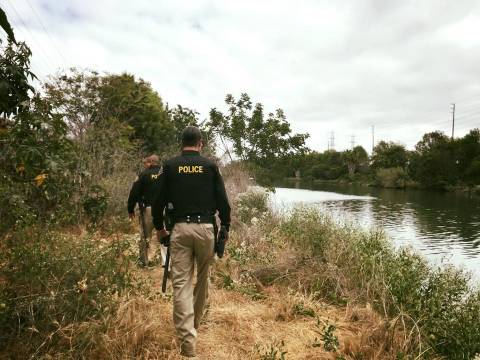
    On this particular day as I sit in the police car, Rikki and I have joined forces with the Quality of Life Division of Long Beach Police Department, and the officers are taking us to local homeless encampments. I was sitting in the back seat with two other volunteers while Rikki followed behind in his SUV filled with Nikes.

    I leaned up to the diamond-shaped divider, watching Officer Dodson’s mustache in the rear-view mirror as he talked.

    “Three years ago, a lot of complaints were coming in from residents who wanted the police to address the growing homeless situation,” he said. “When I saw the position for The Quality of Life posted I decided to apply for it. Up until then no one in the department knew I had once lived on the streets myself, but seeing how I had, it made me uniquely qualified for the job.” He shrugged. “But, it was a new concept and without a protocol in place, my commander told me to go out there and figure out what the police department could do to alleviate some of the challenges the homeless faced.”

    “What did you do then?” I asked.

    “At first, I would walk up and down the riverbed trying to engage people in conversations. But seeing how everyone is afraid of the police no one wanted to talk to me. So, I started bringing bottles of water and other items to pass out as a peace offering and it worked. Over time, people came out of the bushes and I got to know them on a first name basis and hear some of their stories.”

    Officer Dodson made a hard right and pulled down a narrow asphalt road with the river on one side and a dirt embankment with bushes, tents, and piles of trash on the other. Suddenly, a long haired, bearded man appeared out of nowhere and waved. Officer Dodson stopped the car and we all got out. Within minutes, men and women were climbing up the embankment, greeting the officers like old friends. I watched as both officers caught up with everyone and passed out everything from water, socks, snacks, and even Zantac for indigestion.


    Officers on the riverbed (image via author)

    At one point, I was introduced to Doug, a dark haired, good looking guy who told us his story: “I used to be a cop a long time ago,” he said, “but after a bout of depression and drugs, I lost everything and live on the streets now.” He stared into the distance as if he was recalling another time. “Someday I’m going to get out of here and get my life back on track.”

    As Doug walked away with his water and new pair of black Nikes, I was struck, once again, with the realization that homelessness can happen to anyone.

    After passing out several pairs of shoes, it was time to move on. I crawled in the back seat and started my own interrogation of sorts based on my own experience.

    I leaned forward and asked, “So, Officer Armond, what makes you want to do this kind of job?”

    “I suppose one of the reasons came from losing my teen age daughter, Ashlee, in an alcohol-involved car accident a few years ago. That changed my perception on a whole lot of things.”

    “Oh. I’m so sorry…” I didn’t know what else to say.

    Officer Armond talked about how Ashlee went missing and how he was waiting for her to get home while his colleagues were out there looking for her. Twenty-four hours later, and no sign of her, he went to search himself. As he retraced the way she might have driven home that night, he saw skid marks leading towards a downed chain link fence. Officer Armond crawled over the broken fence, and discovered his daughter’s car had plunged into the riverbed below.

    With a somber tone, he said, “Part of me felt responsible as a police officer. I felt like I should have been able to help her. But I was drinking back then and felt incredible guilt. So, in many ways, helping the people out here who are struggling gives me a reason to go on.”

    I found myself deeply moved by his tragic story, and it was becoming clear how these two officers’ life experiences made them uniquely qualified for a difficult job.


    Officer Dodson hands out water (image via author)

    As we drove towards the beach, Officer Dodson continued, “What we discovered is a lot of these people out here have substance abuse issues. Over time, as we started to build trust with them, many began asking us for help. That’s when I thought to myself, ‘Great, now we’ll actually be able to do some good out here.’ But when I started cold calling treatment centers, the people in charge were suspicious and couldn’t understand why a police officer was trying to help a homeless person. After explaining the Quality of Life’s mission, their next question was: did the person have insurance or money to pay for treatment? Honestly, I couldn’t believe it. We had someone who was desperate enough to ask the police for assistance and we were unable to provide it.”

    I scooted closer, “So what did you do after that?”

    “Persistence. In the last six months, the community has stepped up. We now have ten scholarship beds donated by Social Model Recovery. Redgate Hospital will detox people if needed and we have other treatment centers that help us out as well. But our work doesn’t just stop there. We also facilitate a meeting with a social worker to start the paperwork for housing so they have a place to live when they get out. If they complete their treatment and have any old warrants or cases pending, we’ll even go to court on their behalf.”

    Officer Dodson went on to describe Ronnie, a man who had been in and out of prison for most of his life. When the officers first met him in the park, Ronnie told them that he had two boys and wanted to prove to them he could turn his life around. The officers immediately found a bed and got him into treatment. Six months later, Ronnie is still sober and working at the Salvation Army.

    After the Hav A Sole team distributed shoes at the beach, we drove to a park. While we were there, a woman in her late twenties, with obvious mental health issues, told the officers she wanted to get help. Within five minutes, the health department arrived to take her to a local resource center where they would further assess her needs.

    I later learned that Armond and Dodson have personally gotten 49 people off the streets and into drug and alcohol treatment. As a counselor myself for nearly two decades, it was clear that they were not only doing front line interventions, but had also created a multi-disciplinary approach in assisting individuals living on the streets.

    At a time when so many of our homeless are suffering from addiction and mental health-related issues, we need to bring our compassion and our resources to the street. Rikki and I and the Hav A Sole team were honored to ride along with Officer Armond and Officer Dodson who go above and beyond the call of duty, protecting and serving the homeless who are part of our communities.


    L-R: Elizabeth Kelley Erickson, Officer Dodson, Wendy Adamson, Officer Armond, Rikki Mendias and Dash Penland of Have A Sol, and Greg Moul (volunteer)

    View the original article at thefix.com

  • Munchausen by Proxy: Mental Illness or Child Abuse?

    Munchausen by Proxy: Mental Illness or Child Abuse?

    Feldman has seen horrific cases of Munchausen by proxy, from mothers injecting their children with bacteria to cause infection to parents suffocating their infants. But most perpetrators are not motivated by a desire to see their child in pain.

    “That Bitch is dead!”

    The post would have been alarming on anyone’s Facebook page, but it was especially jarring when it appeared on the page of Dee Dee Blanchard, a single mom who was the full-time caregiver to Gypsy Rose, a teen with a host of medical issues ranging from muscular dystrophy to cancer.

    An even more alarming post — which talked about slashing Dee Dee’s throat and raping Gypsy — appeared soon after. Friends were horrified when they went to the Blanchard’s home and discovered that both women were missing, but all three of Gypsy’s wheelchairs, which she needed to get around, were still there. When police found Dee Dee’s body in her bedroom with multiple stab wounds, friends and neighbors became certain that Dee Dee and Gypsy had been targeted by a random and sadistic killer.

    The truth, it turned out, was much more complex. A few days after Dee Dee’s body was found, Gypsy Rose walked into a court — no wheelchair needed — to face charges that she planned her mother’s brutal murder. Encouraging her boyfriend to kill her mother was, she would later say, the only way that she could escape years of medical abuse.

    It soon became clear that Gypsy Rose was, for the most part, a perfectly healthy young woman (not a teen — her mom had changed her birth certificate and lied to Gypsy about her age). Dee Dee had fabricated much of Gypsy’s medical history, feigning her daughter’s illnesses in a pattern of behavior known as Munchausen syndrome by proxy. Dee Dee’s deceptions were so thorough that even Gypsy didn’t realize their extent. In fact, it wasn’t until her attorney told her that there was no medical record of her having cancer that she realized her mother had made that up too.

    “It shocked me,” Gypsy Rose said in a documentary that recently aired on Investigation Discovery. “I don’t have cancer? So what other illnesses don’t I have?”

    Since the well-publicized murder in 2015, the story of the Blanchards has captivated the attention of the media and the public. Although the case was extreme both in the extent of Dee Dee’s abuse and its ultimate violent ending, cases of Munchausen by proxy are not as rare as you might expect. Here’s the truth about this complex and disturbing phenomenon.

    What is Munchausen by proxy?

    Munchausen by proxy (MBP) occurs when a person in a position of control feigns, exaggerates or induces an illness in a child, vulnerable adult, or pet to gain emotional gratification or attention.

    “Munchausen syndrome by proxy is limited only by knowledge, creativity and motivation of the perpetrator,” said Dr. Marc D. Feldman, a clinical professor of Psychiatry and adjunct professor of Psychology at the University of Alabama and author of the book Dying to Be Ill: True Stories of Medical Deception.

    In 95 percent of cases the perpetrator is the child’s mother, and in the remaining cases the perpetrator is almost always a female relative or caregiver, Feldman said. Although the condition may seem far-fetched, it can occur in up to 1 percent of the population and is likely under-diagnosed.

    In the American Psychiatric Association’s Diagnostic and Statistical Manual of Mental Disorders (DSM-V), Munchausen syndrome by proxy is listed as a type of factitious disorder imposed on another (FDIA). FDIA is described as a psychiatric disorder in which individuals persistently falsify illness in another even when there is little or nothing tangible for them to gain from the behavior. But Feldman cautions against thinking of Munchausen by proxy as an illness.

    “People assume it’s a mental illness, but I tend not to view it as that, but as a form of abuse,” Feldman said. “The moment you consider it a mental illness, the perpetrator can argue that they’re the victim of a mental disorder and ask for a much lighter sentence or no sentence at all. This is a form of abuse like any other.”

    What causes a mother to hurt her child?

    In the nearly 30 years he’s worked with individuals affected by MBP, Feldman has seen horrific cases, from mothers injecting their children with bacteria to cause infection to parents suffocating their infants. But most perpetrators are not motivated by a desire to see their child in pain.

    “There are some perpetrators who are sadistic and enjoy the act of harming their children,” Feldman said. “[But] for most they are after the reaction: the sympathy, care and concern… all the emotions received as the result of having a terribly ill child.”

    Perpetrators like Dee Dee Blanchard, who may be fairly ordinary in their normal life, get emotional gratification by being painted as a loving and selfless caregiver. In Blanchard’s case, she also received financial benefits tied to Gypsy’s perceived illnesses including free trips, additional child support and even a home from Habitat for Humanity. Perpetrators don’t usually kill their victims, since they prefer the ongoing attention from their communities.

    Why don’t doctors intervene?

    One of the most mind-boggling aspects of the Gypsy Rose case is that Gypsy received actual medical treatment — including surgery — for conditions that Dee Dee had fabricated. Munchausen by proxy can be hard to spot, and Feldman said that doctors are cautious about questioning a parent whose child appears to be in medical distress. In addition, many perpetrators have some medical training, so they know how to make their case look compelling.

    These delays can lead to continued abuse: in most cases, there is a year and a half between when doctors first suspect MBP and when it is actually diagnosed.

    “That’s a hefty period of time, and speaks to the reticence of doctors to make the diagnosis,” he said.

    Feldman said that doctors tend to think they need a smoking gun before alerting police or social services to their suspicions. But in most states doctors are mandated reporters of child abuse, and just having a hunch should be enough to compel them to act.

    “The doctor doesn’t have to be a detective, they just have to have a suspicion.”

    Can Munchausen by proxy be treated?

    It is extremely rare for a perpetrator of MBP to be rehabilitated because there is usually deep denial about the behavior, Feldman said. In one case he worked on a mother was confronted with a video showing her suffocating her infant by putting her hands over the baby’s mouth and nose.

    “She said ‘I’m just tickling his mouth,’” Feldman recalled. “Perpetrators come up with bizarre explanations to explain away their actions.”

    In the face of such strong denial, it’s nearly impossible to establish a therapeutic rapport with the perpetrator in order to make progress in treating the condition, Feldman said. These issues are compounded when the perpetrator is jailed and has limited access to mental health care.

    Feldman has seen one case in which the mother was rehabilitated. That woman claimed that her child had seizure disorders and that her other children had died in infancy from the condition. When Munchausen by proxy was discovered, the child was removed from the mom’s custody. Ten years later the woman had another baby. In the interim she had undergone psychotherapy and Feldman was able to recommend that the whole family be reunited.

    “They’re doing beautifully together,” he said.

    What’s it like to be a victim of Munchausen by proxy?

    Most victims of MBP are young children or infants. Although the behavior and abuse usually occur in early childhood, there are lifelong effects, Feldman said. Many victims develop PTSD and can have trouble distinguishing reality. In some cases, victims develop Munchausen syndrome, which manifests in them making themselves sick.

    “They’re trying to master the trauma by doing it to themselves,” Feldman said.

    Gypsy Rose said that realizing her mother had made up all of her medical conditions was disorienting.

    “I was happy to know I was perfectly healthy, but at the same time it hurt because it’s like my whole world had been tossed up,” she told Investigation Discovery. “I realized that my mother wasn’t who I thought she was. I have a lot of complicated emotions for my mother.”

    After the murder, as the truth about the extent of Dee Dee’s abuse came out, many people were sympathetic toward Gypsy. In 2016, she pled guilty to second-degree murder and received a ten-year prison sentence for planning her mother’s killing.

    Gypsy’s ex-boyfriend, Nicholas Godejohn, was found guilty of first-degree murder last week. Godejohn was the one who actually killed Dee Dee, stabbing her multiple times. However, his attorney argued that he was manipulated by Gypsy and couldn’t fully understand the consequences of his actions because of his autism and intellectual delay. At Godejohn’s trial, the defense called Gypsy as a witness. When Gypsy was asked who spearheaded the murder plans, she answered: “I did, I talked him into it.”

    Despite this, Godejohn now faces a mandatory sentence of life in prison without the possibility of parole. Gypsy, on the other hand, will be eligible for parole in 2024 when she is 32. In the meantime, she is reportedly “thriving” in prison, according to her stepmom, Kristy Blanchard.

    “Despite everything, she still tells me that she’s happier now than with her mom,” Blanchard said. “And that if she had a choice to either be in jail, or back with her mom, she would rather be in jail.”

    “She feels freer in prison than she did in own home with her mother,” Feldman said. “That’s a really telling comment that speaks to the extent of the abuse.”


    Other notable cases of Munchausen by proxy:

    “Mommy Blogger” Lacey Spears

    Marybeth Tinning

    Blanca Montano

    Hope Ybarra

    View the original article at thefix.com

  • 5 Myths About Leaving 12-Step Fellowships

    5 Myths About Leaving 12-Step Fellowships

    We have a responsibility to do whatever we can — even if that means pointing someone to an alternative (non-12-step) pathway of recovery.

    I’ve lost count of the number of conversations I’ve had with people who are frightened to leave 12-step fellowships. They contact me because they heard that I left Alcoholics Anonymous and Narcotics Anonymous over a year ago, and want to see if it’s true that I’m okay — that is, stayed sober.

    It’s true: I left 12-step fellowships in March 2017, and not only have I stayed sober, but my resilience, independence, and emotional well-being have grown exponentially. I’d even say that my sobriety has evolved more over the last year than the five years I spent in AA.

    What saddens me the most about these conversations — which echo my own fears of leaving — is that some members of 12-step groups believe sobriety is contingent upon their membership in AA or NA. So deep-rooted is this conditioning that they believe that if they stop attending meetings, they will return to using alcohol or drugs. Well-rehearsed 12-step myths say that without a program a person will become a “dry drunk,” or that they lack gratitude. Yet another surefire way of keeping people in the program is to tell them that leaving means they are unwilling to help newcomers.

    My experience, along with that of many others who have left 12-step fellowships, is that these beliefs are dogmatic conditioning. I will never tire of debunking these myths.

    Last month, a woman who spent over 20 years in a fellowship contacted me because she was tired of attending, fearful about leaving, and concerned that people mistakenly thought the length of her sobriety meant that she had the secret to long-term recovery. Such was her sense of responsibility that she blamed herself for the unfortunate fate of some people in the program. I’m saddened that someone in long-term recovery felt so confused and frightened about leaving.

    Today, my recovery represents independence. I now understand recovery as a knowing of myself and reclaiming my instincts. After six years in recovery, I’d like to think that I can make decisions based on what is right for me, rather than on the judgments of others if if I go against the grain. But this isn’t the reality for many who attend 12-step groups and they believe they have no control over their own sobriety other than showing up at meetings and working the program.

    These are just a few examples of the reasons many people have contacted me to discuss these very real fears and they’re always the same. Here is what I have to say about some of these common myths:

    • How will I help newcomers if I leave?

    First off, newcomers don’t always show up in meetings. They need someone to tell them that a meeting exists before they know to walk through that door. Second, there are a million ways to share a message of recovery: writing about your journey; giving peer support at a recovery center; sharing your experience in a treatment center or prison; offering help to someone who is struggling; or telling your friends, family, and doctor that they can refer someone who needs help to you. By leading a fulfilling life in recovery, you’re providing a real example to others that healthy and happy recovery is possible. I’d argue that all of these examples of helping a newcomer are equally, if not more, powerful than sharing your story and your telephone number in a meeting.

    • If I leave, I’ll relapse..

    This most pervasive myth of all has proven false for me and for hundreds of people I know who have left 12-step meetings. We feel a sense of freedom from breaking free of the dogmatic messaging and have taken back our power by choosing a pathway that is right for us.

    If someone wants to use drugs, they will find a way to do so whether they attend meetings or not. I don’t use substances because I choose not to, and because I care enough about myself to stop harming my body and preventing my ability to lead a fulfilling life. I no longer believe that I have a monster living inside of me, or a disease doing pushups in the parking lot waiting for me to mess up. Those are simply myths designed to keep me surrendering my will to an illusory bearded man who lives in a church basement, listening to people’s sad stories.

    • AA is the only way to recover.

    This statement is simply untrue. There are many effective pathways to recovery. In fact, a leading study shows that tens of millions of Americans have successfully resolved an alcohol or drug problem through a variety of traditional and nontraditional means. Specifically, 53.9 percent reported “assisted pathway use” that consisted of mutual-aid groups (45.1 percent), treatment (27.6 percent), and emerging recovery support services (21.8 percent). 95.8 percent of those who used mutual-aid groups attended 12-step mutual aid meetings. However, just under half of those who did not report using an assisted pathway recovered without the use of formal treatment and recovery supports.

    Another study comparing 12-step groups to alternative mutual aid groups found that LifeRing, SMART, and Women for Sobriety were just as effective as 12-step groups. Study author Dr. Sarah Zenmore and her team reported that “findings for high levels of participation, satisfaction, and cohesion among members of the mutual help alternatives suggest promise for these groups in addressing addiction problems.”

    • If you don’t feel suited to a 12-step program, you’re incapable of being honest with yourself.

    We’ve all heard of that paragraph in AA’s Big Book, “Rarely have we seen a person fail who has thoroughly followed our path. Those who do not recover are people who cannot or will not completely give themselves to this simple program, usually men and women who are constitutionally incapable of being honest with themselves.” Really?! What about atheists who feel uncomfortable at the idea of handing over their life to God? I’d argue that it is being honest with yourself to acknowledge that the 12-step program doesn’t align with your values and beliefs.

    It is harmful to suggest that you are the problem if AA doesn’t work for you. If the 12 steps are so powerful, how come their success rate varies wildly from 20 percent to only 60 percent? Shaming isn’t the answer to long-term recovery — that only deepens an already desperately low self-esteem. Supporting someone as they find the right pathway is a far more compassionate, helpful approach. When so many people are dying from substance use disorder, there is no room for shame. We have a responsibility to do whatever we can — even if that means pointing someone to alternative pathways of recovery — so that we have a fighting chance at saving some lives.

    • My desire to leave is my disease talking.

    You don’t have a monster with a different voice living inside you. Yes, our behavior changes when we use drugs, and yes, drugs override our ability to make rational choices. We also have a desire to avoid painful realities — that’s what got most of us in the habit of using drugs in the first place. But attributing your realization that something isn’t right for you to a walking, talking disease is utter nonsense. I decided to leave because I was sick and tired of entering church basements in a cloud of cigarette smoke to hang out with people eating candy, drinking tar-like coffee, talking through people’s shares, and listening to the same old story on repeat. There was a time that community was helpful, but a point came where I wanted to go out and live my life. After all, this program was designed to be a bridge to living normally.

    View the original article at thefix.com