Tag: Features

  • Married to a Normie: Relationship Rules

    Married to a Normie: Relationship Rules

    Even though it’s a positive change, adjusting to marriage with a newly sober spouse is a challenge. Some situations are a little tricky to navigate.

    After being with my husband for 15 years, it might seem like there would be few suprises left. We have the kind of relationship that includes conversations like, “Hey, Harmony, will you cut off this skin tag on my back?” followed by, “Um, no; I’ll make you a doctor’s appointment.” And later, “Does this look infected to you?”

    Robbie is what people in recovery like to call a “normie.” When it comes to alcohol, he can take it or leave it. He can just have one beer, and he doesn’t obsess over when he’ll have the next one. He likes to have fun, and he doesn’t really care if that fun involves alcohol. By the time I entered recovery, he rarely drank anymore; I was always the one drinking, and one of us had to stay sober enough to drive.

    The suprise here is that I am the alcoholic and he is the normie, because everyone who knows us assumed it was the other way around.

    My husband and I built the foundation of our relationship on having as much fun as possible. (Read: we partied a lot.) We’ve been to New Orleans, our closest major city, many times over the years, visiting for Mardi Gras, romantic getaways, concerts, plays, art events, and stuff with our kids. In true alcoholic form, I remember very little of any of it.

    Since I entered recovery, our relationship has shifted considerably. He is exactly the same as he’s always been, but everything about me is changing — how I react to things, what I do and say, how I view and enjoy my life, and how I relate to my husband. All these changes bring up a lot of questions and discussions, obviously, like if we go to New Orleans, will my husband drink? How much? Will I be able to handle it?

    Recently, he scored amazing tickets to an NFL game in the New Orleans Superdome. When he asked me to go, I panicked: I’ve got under two years of sobriety under my belt, and we’ve never been to any major city without alcohol. In fact, the last time we went down there, I started with a hand grenade on Bourbon Street and ended with what I believe to be absinthe. None of this was my husband’s fault — we were just there having fun — but his version of “fun” is a lot less dangerous than mine. When I start drinking, I drink to forget.

    Neither of us knew how severe my issues were when we met and fell in love. We got married, had a bunch of kids, and BAM! I was in so deep I almost didn’t find my way out. But that’s the beauty of true partnership; Robbie supports me fully in everything I do, and he wants nothing more than to see me happy and healthy. Even so, adjusting to the evolution is a challenge, and even though it is a very positive change for our family, there are still times when it can be a little tricky to navigate.

    So, what does my sobriety mean for us as a couple? What are the rules of marriage when one person is an addict and the other is not?

    What to do with the alcohol. The issue of what is and is not allowed in the house is a big one. I’m a stay-at-home mom, which means I’m the one staring at the liquor cabinet at 5 p.m. while our children complain about dinner. For us, getting the alcohol out of the house and keeping it out was vital to maintaining my sobriety. I can’t even have Oreos in the house, lest I eat them all, so for now, it’s better this way.

    However, I do know many couples who still have alcohol at home and the alcoholic partner isn’t bothered by it. It really boils down to triggers. I, for example, am triggered every damn day when I’m home alone with the kids. If I have alcohol around me and no other adults as backup, I would have a very hard time resisting. Robbie understands that and it’s not a problem for us. Also, we didn’t have to throw any of it out because I drank every last drop of it myself before sobering up.

    Prescription medication. Because I’m the mom, I’ve always been in charge of the meds. Uh, I wasn’t exactly responsible — and it was very hard to admit that, both to myself and to my husband. So for a while, and at different points since then, he’s had to take over administering the medication so I don’t eat the entire bottle like candy. He’s been willing to do that because he knows it’s an easy way to help me on my journey to wellness.

    What about the chocolate? One of the biggest problems I’ve had in recovery is my insane sweet tooth. Every time my husband or the kids bring home candy, cupcakes, Lucky Charms, or cake, I generally eat it all before they have a chance to even taste it. Robbie started hiding his stash of cookies from me, which naturally I found, and to be honest we’ve had more spats over the junk food than anything else.

    Am I always going to be the designated driver? GOD NO. I’m not stable enough to drive around a bunch of drunks. This is why there is Uber.

    Football season is huge in our house, and as I mentioned above, we went to an NFL game where everyone was drinking. And it was tough — but as long as I’m honest with him about my struggles, he is happy to help. It’s the honesty part that gets me: being willing to admit that I am powerless over alcohol.

    On the morning of the game, I got up early to attend a meeting, and prepared before we left to avoid getting too hungry, tired, or thirsty. It was literally the most fun I’ve ever had at a football game, ever — and that includes when I was drinking.

    Parties! We go to them. We might have to leave earlier than we’d like. I hope that gets better, but I’m proud of myself for going.

    Meetings. We have three children under the age of 10, and my husband is rarely home before 8 p.m. Finagling our schedules to allow for me to make it to meetings is probably one of the biggest issues we face, and sometimes I get resentful when I really need to go but have to wait until another time. He learned pretty quickly that when I go, I’m much easier to live with, so he does everything he can to accommodate me. Smart man.

    Sex. That’s a topic for a whole other essay. Suffice it to say, it’s been an adjustment.

    I can honestly say, for the first time in a very long while, that I’m truly the person that Robbie fell in love with all those years ago, and his patience with me as I fumble my way through recovery has completely renewed the love I have for him. Marriage in recovery is a beautiful, beautiful thing.

    View the original article at thefix.com

  • She Recovers Brings High End Feminist Recovery to Los Angeles

    She Recovers Brings High End Feminist Recovery to Los Angeles

    I could say a hundred things about every incredible woman I encountered over the weekend and it would not hold a candle to the inspiration I felt. The only catch? The price of admission.

    One year ago, Harvey Weinstein and men like him were purged from their high positions in industry jobs due to allegations of sexual assault, misconduct and worse. Across the nation, dominoes fell while survivors locked arms and commiserated. Crooked Rehabs and their rapey cult leaders were dethroned or taken to prison along with Bill Cosby—their paternal halos were tossed back into the stream that raged forward without them. Me Too and Time’s Up have gained momentum as women insist on equity and diversity in every corner of our lives whether it’s work, rehab or the Olympics.

    On Friday, September 14th, hundreds of women redefined recovery for themselves with a fresh, feminist lens at She Recovers, a conference held at The Beverly Hills Hilton. She Recovers was founded in 2011 by Dr. Dawn Nickels, a warm, honey-haired overly credentialed sober badass from Victoria, Canada who has accumulated decades of 12-step recovery and one prescription drug relapse after she lost her mother to Leukemia. With years in AA, Dr. Nickels saw a missing piece of the Big Book that excluded women. She wanted to offer an alternative for women who long for that missing piece.

    She Recovers is branded around the idea that we are all struggling to recover from something—not only drugs and alcohol. This expanded view of recovery has the potential to reach women who have survived sexual assault, abuse, cancer, heartache, self-harm, homelessness, eating disorders and all kinds of suffering. The weekend was dedicated to healing. The only catch? The price of admission.

    I received a few emails from Dr. Nickels confirming the schedule of events and I was really excited to attend. Not only did the line-up include comedians and authors I’ve long loved like Cheryl Strayed, Janet Mock, Amy Dresner, Sarah Blondin, Tara Mohr, Mackenzie Phillips, Laurie Dhue and others, but there were several workshop panels offered with helpful, vital topics like “Changing our Relationship with Food” (Shelly-Anne McKay), and “Money as Power” (Allison Kylstad), “Standing our Ground” (Darlene Lancer), and even “Finding Forgiveness” (Ester Nicholson). The mind, body, spirit approach to recovery was factored into the weekend to include fitness classes like Yoga by Taryn Strong, Pilates, meditation, and an early morning run.

    I drove to the Beverly Hills Hilton and arrived after registration opened at around 3:30 p.m. After getting off the elevator, I stepped into a conference room that was turned into a temporary mini-marketplace. Tables and fashion racks displayed oceans of lotions, soaps and mood lifting supplements, dark chocolate and yoga pants. Postcards and stickers offered the promise of energy shifts and emotional well-being. I figured if I was going to focus on recovery all weekend, I wanted a mental lubricant in the form of a dopamine supplement. I was being marketed to like a mofo and the rhetorical trope was tailored to fit. The buy message on tap was this:

    You are perimenopausal and you are raging. Your sleep is shit and your relationships are strained. You are horny. You are prickly. Take the gummies and no one gets hurt.

    I snatched the vegan, non-GMO dopamine-enhanced gummy bears and pocketed the chocolate for later.

    Around the corner, a half-dozen aggressively kind, smiling women sat behind long plastic registration tables handing out laminated passes. They directed me to where the opening reception was held.

    The Beverly Hills Hilton is a fancy place. And She Recovers attracts fancy women.

    According to their website and other sources, the bulk of paying attendees are the wealthy, white feminist elite ages 30-69 with a household income of 80K and over. Registration costs $500, not including the rooms or the parking.

    I asked Dr. Nickels how she planned to engage younger women, women of color, other-abled and the LGBTQ community. She replied, “The thing that we are most proud of related to LA is that we awarded 40 scholarships. We have been attracting WOC and members of the LGBTQ to our community – especially LGB – but we recognize much more needs to be done. We also need to work harder to include other-abled women to join us. We were very fortunate to have already made close connections with some amazing WOC and thus our program exhibited much more diversity than we had been able to do in NYC. Janet Mock is a powerhouse – and we loved having her – but despite efforts to do so, we didn’t have any success making direct contact with influencers in the trans community in LA to ensure that the trans community knew about our event.”

    Given the steep cost of the weekend and the fact that registration for the conference was sold out, I wondered if presenters were paid or not, so I asked around. Those who answered requested anonymity.

    Some presenters were not offered payment, but their registration fees were waived. The speakers and presenters who were not paid were happy to be asked but some were disappointed they were not offered the opportunity to have a book signing. Two of the speakers were paid high fees (between 16 and 20K) to speak. Those who were not paid used the weekend to promote their materials and businesses; they also wanted to share their experiences and connect to other women in recovery. So, who gets a seat at the table? Follow the money and you can see that She Recovers prioritizes celebrity.

    This is where AA (and other 12-step programs) and She Recovers part company: AA has no red carpet; AA doesn’t cost money to attend and speakers are not paid at meetings. AA is an anonymous program that does not acknowledge celebrity or participate in the cult of personality—at least not as outlined in the traditions. While it has its own shortcomings, AA welcomes everyone.

    Outside on the grass, several women stood in small clusters by a table of pastel colored macaroons. One of them was Shelly-Anne McKay, a delightful woman from Sasquatch Canada who led the panel on our relationship with food. Another woman told us she had just arrived from France. Others chimed in from the Bay Area, Washington and Oregon. When I asked the group what they were recovering from, the ones that replied stared up at the cerulean late afternoon sky and said, “Everything.”

    I asked Shelly-Anne McKay what brought her here. She replied: “I love the She Recovers philosophy that every woman’s path to recovery may be unique. Not everyone finds solace in AA.”

    I should tell you now I’m 23 years sober in AA and have studied the Big Book (the basic text of Alcoholics Anonymous). It was written by and about men. The language is old-timey and urges men to check their overinflated egos, to give up “golf fever” and to dive into service instead. The narrative of the shattered, broken self is a theme that is relieved by the belief in a higher power. The one chapter to women, “To Wives,” is heteronormative and sexist, designed to pacify neglected women and encourage them not to make waves.

    She Recovers was designed for wave-makers.

    Back in the ballroom, the first keynote speaker was wave-maker Cheryl Strayed. Interestingly, Strayed is not in AA and does not consider herself an addict (to my knowledge). But before she spoke, Paula Williams took the stage.

    I was concerned for Williams the same way I am for any person with no public speaking experience who collapses under the pressure of adrenaline and stage fright. She seemed mortified to be center stage and she spoke to that. In that moment of terror, I fell in love with her rawness. Williams constructed an art installation — definitely my favorite thing in the mini-marketplace room — called “Shame Booth” (also the name of her podcast) where a person could sit alone inside a vintage phone booth and confess their secrets into a silent ear piece and then leave. Segments of their voices are recorded here: Shamebooth Audio. The only piece of that secret they took home was a new pair of strangely oversized white briefs with the big red words “No Shame” on the butt. And yes, I got my granny panties.

    Cheryl Strayed brought the house down with her seasoned message that illuminated the question: how do we do the thing we cannot do? Her personal stories contained humility, resilience and heart. I’m very familiar with her content because I teach her memoir and essay collection “Dear Sugar” to my nonfiction students at UCLA extension. The crowd was enthralled as Strayed discussed the suffering she endured due to her mother’s illness, the aftermath of her grief, and the hopefulness she offered as a reprieve to that grief. She answered questions that were not really questions for a long time. At some point while listening to her, I realized that — whether we were addicts or not — the room vibrated with undeniable hopefulness and willingness to carry that which we thought we could not carry; but in the end we find that we can, we have — and we will.

    I could say a hundred things about every incredible woman I encountered over the weekend from Friday evening until Sunday afternoon and it would not hold a candle to the inspiration I felt. I only wished there had been some scheduled time for us to all connect and mingle in one place away from the speaker/workshop/formal dinner format. The schedule was jam-packed and felt a bit rushed. The highlight for me was Saturday night: The Gala Dinner.

    I never know what to wear to formal events, so I brought a couple of options. I decided that nothing says Formal Gala like clear stripper heels with red rhinestone hearts in the middle and shiny black Bad Sandy (from Grease) pants. A petite brunette with tattoos on her arms was looking around. She looked as lost and overwhelmed and alone as I felt so I asked her if she wanted to find a place to sit with me.

    The dinner honored celebrated change-makers and wave-makers who dared to break the silence of addiction and alcoholism like Betty Ford and the woman who started a movement to disrupt sexual violence, Me Too activist Tarana Burke, but the speaker who got a standing ovation (which seemed to befuddle her) was My Fair Junkie author and comic Amy Dresner.

    The opulent ballroom fell silent as Dresner walked up to the podium wearing a vintage Indian jumpsuit with billowing legs. She did a funny dance and squatted.

    “I was attempting 70’s super model but I’m way more Genie, don’t you think?”

    After explaining how neuroscience proves we can burn new pathways of stability in our minds by taking consistent, disciplined action, she said, “If you’re waiting to take the action, you’ll be waiting forever.”

    Dresner’s journey of addiction to recovery was a beacon of inspiration and the best part of the weekend. Her talk embodied all that She Recovers hoped to convey because her story contained universal, gritty humor and you can’t package that. Her message was the very thing I craved the whole weekend. She told us the worst thing that ever happened to her was definitely the best thing that ever happened to her, but she could only see that after experiencing jail and street sweeping. The room erupted in laughter.

    Dresner ended by telling us that after getting three years sober for like the 14th time, she asked her dad, “Are you ashamed of me? When you talk to your friends do you feel ashamed?”

    “My friends wish their kid was as unbreakable as you,” he said.

    Then, looking out at the 500 wet faces, she told us: “Remember, that’s what all of you are: unbreakable.”

    And dropped the mic.

    View the original article at thefix.com

  • National Prison Strikers Demand More Drug and Mental Health Treatment

    National Prison Strikers Demand More Drug and Mental Health Treatment

    Effective drug and mental health therapy requires sincerity and trust. But prison is not a trustworthy environment for inmates. For example, all “therapeutic” prison spaces are recorded.

    Improved drug and mental health services were demands of the 2018 National Prison Strike in the U.S. and Nova Scotia. Just ask Isa, age 50, who is held in the federal prison system in Georgia. Why was better rehabilitative programming among the prisoner demands? Because confinement mixed with authoritarian corrections culture and dollar-driven bureaucratic mandates present almost insurmountable conditions for people seeking recovery from substance use disorder or mental health conditions.

    Isa explains:

    “Rehabilitation is used as behavior modification program where they (prison authorities) want to mold the inmate into being a better inmate against the greater good,” Isa told The Fix. “It’s a control mechanism in every facility.”

    Prisoners’ rehabilitative programming looks good on paper, he said, but is less so in practice. Why? Effective drug and mental health treatment requires sincerity and trust, according to Isa. Prisoners can and do see the lack of both. “They are not stupid,” he said. 

    While the notion of rehab in prison appears noble, below the surface we find that there’s a fundamental structural “conflict of interest” between prison administration and prisoner rehabilitation. According to Isa, prison is not a trustworthy environment for inmates. The simple fact of inmates divulging information to staff about their lives can be as problematic as the fact that all “therapeutic” prison spaces are recorded. For example: you would probably not talk in a support group about the fact that your whole family does opioids because you don’t want to risk putting them on law enforcement’s radar.

    Another example of the structural silencing of prisoners is that Isa participated “morally” (meaning in a less proactive fashion) in the 19-day 2018 prisoner strike due in part to fear of retribution. It’s no exaggeration to note that authorities in the federal prison system have a history of retribution against organized resistance.

    Speaking of relevant U.S. prison history, September 9, 1971 was the day the Attica prison riots began in upstate New York to honor fallen prison activist George Jackson, who perished in San Quentin after a battle with prison officials. On that day, Attica prisoners took control, leading to a four-day stand-off with authorities that saw 42 staff taken hostage. In the end, 33 prisoners and 10 officers and prison employees died as a result of the Attica authorities’ armed assault.

    In 2018, 47 years later, this infamous prisoner rights anniversary is recognized as the official end of the National Prison Strike that involved at least 10 states in work and pay stoppages as well as hunger and medical strikes at facilities in U.S. detention centers and locations in Nova Scotia. The inclusion of Nova Scotia speaks to the far-reaching appeal of striking for North American prisoners: inmates shared similar demands across national boundaries.

    Prisoner strike demand numbers 7 and 8 on the list of ten are crucial: “No imprisoned human shall be denied access to rehabilitation programs at their place of detention because of their label as a violent offender” and “State prisons must be funded specifically to offer more rehabilitation services.”

    The demand to provide prisoners with mental health services, including drug rehabilitation, is pervasive throughout the prison system and prison reform movements globally. In fact, the word “rehabilitation” has become such a prison industry buzzword as to have all but lost its legitimacy; unfortunately, we lack a better way to describe the improved facilities that prisoners and their supporters are fighting for.

    Anyone familiar with current prison conditions will laugh at the notion that today’s prisons are aspiring progressive rehab centers. In Live from Death Row and other works, author and political prisoner Mumia Abu-Jamal describes these current penal conditions as variations on a theme of death sentences, including the physically and sexually abusive climate, austere conditions and filth of the facilities, the low quality of food, water, and medical services, and the lack of cultural and educational opportunities for the incarcerated.

    Now for the fight. 

    Rehabilitation automatically leads to discussions of drug use and abuse. Some drug use is recreational, but some people use drugs in order to self-medicate, to treat mental or other conditions. Therefore, we end up with a lot of prisoners who directly or indirectly require drug rehabilitation. If charges are drug-related, generally, incarcerated individuals have a better chance of qualifying for in-house or court-ordered outpatient rehab programs.

    But unfortunately, budget cuts and a lack of commitment to prisoners’ well-being have led to understaffed or nonexistent programs. Sometimes, you’re lucky if you’re able to attend a weekly Narcotics Anonymous (NA) or Alcoholic Anonymous (AA) meeting.

    It seems like there are at least three levels of needs here.

    The first is the need for specific programs targeting immediate and more emergency-based drug abuse issues. These kinds of programs would mean that a person entering with a drug addiction or mental health issue would immediately receive relevant services. Columbia University’s National Center on Addiction and Substance Abuse estimates that 90 percent of addicted inmates do not receive substance abuse treatment.

    The second level would be something like general wraparound services to incorporate mental health into a larger healthcare paradigm. Inmates who do not use drugs would have an opportunity to get support at this level. These rehabilitation services, like counseling, educational events and support groups, may be voluntary, but they would be well-funded enough to attract inmates and encourage sustained involvement.

    The third level would restructure the entire prison facility so that it becomes a rehabilitative atmosphere instead of a simple list of programs tacked onto a bulletin board with a signup sheet. Much easier said than done. This is the most utopian category because it requires a fundamental restructuring of mental health and wellness concepts. Prison abolitionism argues for the eradication of modern prisons because they are inherently unhealthy. It is virtually impossible to rehabilitate an atmosphere that is predicated on the social engineering, racism, sexism and the maximization of profit in a punitive climate marked by what some equate to slave labor conditions. Where the profit motive begins, quality rehabilitative programming in the federal prison system tends to end, according to Isa.

    Demands 7 and 8 relate to the first two levels described above.

    According to the Center for Prisoner Health and Human Rights, “Approximately half of prison and jail inmates meet DSM-IV criteria for substance abuse or dependence, and significant percentages of state and federal prisoners committed the act they are incarcerated for while under the influence of drugs.”

    At arrest, almost three quarters of arrestees have drugs in their system — especially marijuana and cocaine. In 2000- 2013, we saw the increase of opioids and methamphetamines. Considering that currently only 11 percent of inmates receive any form of drug rehab, any improvements in this area are welcome. At present, many inmates don’t even get the prescribed medication needed to overcome addictions or treat mental illnesses; increasing the availability of prescribed drugs would be an automatic improvement in any facility.

    Let’s take a look at the recidivism rates for jailed inmates: “… in the two weeks after release, inmates are 12 times more likely to die — and 129 times more likely to die of an overdose — than the general population.” If drug use rates are that high, then crimes associated with drug use are also more likely to occur just after release.

    Providing methadone or Suboxone to opioid-addicted inmates before release, and then “connecting them with providers in the community who can continue to prescribe the medication when they leave” considerably increases the inmates’ survival chances and also decreases the likelihood of crimes related to drug use on the street.

    A good sense of the rehab climate can be found in our state and federal facilities. The Federal Bureau of Prisons offers Drug Abuse Education classes to inmates. It also offers nonresidential, residential, and community-based treatment programs. While this list seems comprehensive, as it allows for variation inside as well as community-based treatment, we must consider that overcrowding, staff shortages, and limited funding impair inmates’ access to existing services.

    It’s these obstacles and others that led prisoners to strike this month.

    In all, such obstacles function as contradictions that render “prison rehabilitation” an oxymoron. The prison structure provides such a specific type of authoritarian environment; these conditions of confinement cannot structurally provide necessary skills and training. Sure, inmates can be taught life or job skills, or learn about themselves and their own addictions so they can function better. However, confinement itself is viewed by prison abolitionists as inhumane and therefore a non-rehabilitative climate. We are expecting inmates to learn and retain information about their own health in a place where their main focus is frequently just on daily survival. Inmates are expected to “recover” in structures designed to maximize their status as incarcerated people who are subject to the whim of prison authorities.

    As an example, Isa explained that the prison warden had effectively dismantled the mental health services for prisoners. How? He moved prisoners receiving mental health services to new locations throughout the detention facility. As a result, their mental health issues worsened as their housing changed. They suffered more. “A lot of these prisoners cycled back in and out of segregation, including solitary confinement,” Isa said.

    When we compare prison reformers’ vision of rehabilitation with the prison abolitionist credo that if prisons reformed people they wouldn’t be prisons, we see that they meet in the middle when it comes to drug and mental health issues. Rehabilitation is a marketing concept that redirects fundamentally critical views on prison conditions towards new programs and therapeutic services. That these services are delivered in a hostile environment, where inmates cannot be expected to trust therapy and health staff, is one problem. Another problem is that outside staff unfamiliar with the overall facility operations do not have an obligation to their patient/prisoners once the prisoners complete a program.

    Working with what is available in conditions of aggression and scarcity, one would expect all available avenues to be on the table. Two that loom large are to ensure continuity of care and the safekeeping of inmates. However, given the fundamental conflicts of interests involved, prisoners’ health and safety get short shrift time and time again.

    So much for rehabilitation?

    View the original article at thefix.com

  • Using Love as a Drug

    Using Love as a Drug

    I used drugs and alcohol to control my feelings and gave up on relationships early on since people are harder to control than substances. As I felt the other person pull away, my urge to control increased.

    Recently I was sitting in a meeting with a little over two years sober, feeling completely insane. For a few months, my moods vacillated between elation and utter sadness, complete faith and deadbeat nihilism, raging excitement and total fear. I was leaning into the program of AA more than ever. I was attending meetings every day, sticking to my spiritual practice, sponsoring two women, and regularly checking in with my sponsor. Even so, I wasn’t able to find any middle ground. The emotional chaos raging inside me was very reminiscent of active addiction. I felt so twisted I asked myself: Am I even sober?

    I googled the word “sober” and found a source that defined it as “being unaffected by alcoholism.” Fuck! I’M NEVER GOING TO BE SOBER, I thought. Over two years without any mind-altering substance in my body and serenity felt that far out of reach.

    You hear about people feeling messed up and hitting bottoms all the time in sobriety. But there’s a flip side to that: you can feel just as good in sobriety as you did in active addiction when the drugs and alcohol were actually working. At its best, it’s what the Big Book calls “being rocketed into a fourth dimension.” In my experience, the highs in sobriety get higher and so do the bottoms. Even so, feelings can come as quite a shock in early sobriety since they’re no longer being regulated or masked with drugs or alcohol.

    They say that for real alcoholics, the problems really begin once the drink is removed. My obsession to drink and do drugs was removed through working the 12 steps in AA (a few times) and the idea of picking up a drink or drug rarely, if ever, crossed my mind. This in itself is the ultimate miracle.

    But alcoholism is a beast that will show up in many forms. Once the obsession is lifted, the addict/alcoholic mind will quickly move on to other things: coffee, cigarettes, shopping, gambling, sex, eating disorders, social media, take your pick. In my case, it shifted towards arguably the greatest drug of all time: love.

    “Love” can mean different things to different people and our understanding of love has been shaped by what we saw growing up and our past experiences. As a point of reference, I use renowned spiritual teacher and physician David R. Hawkins’ Map of the Scale of Consciousness, which categorizes every level of consciousness a person can experience into levels of falsehood and levels of truth. Shame is the lowest energy field in falsehood where one feels hateful towards themselves and views a Higher Power as despising, and Enlightenment is the highest in truth where one feels completely attuned and at one with a Higher Power.

    Based on this structure, I propose that love is an energy field in an array of consciousness that we can fall in and out of at any moment. In Hawkins’ scale, Love is sandwiched right above Reason and below Joy. So here, we see that love is literally beyond reason. According to Hawkins, it is here that a person experiences feelings of reverence and revelation before transcending into Joy where one views themselves as complete. Perhaps this helps explain why our culture is so fixated and obsessed with the idea that another person can “complete” us.

    The process of revelation may come to an addict easily since, for many of us, any human connection at all in early sobriety is unprecedented and revolutionary. For years I used drugs and alcohol to connect with people around me. As I continued to develop a sense of belonging with others in sobriety, and saw it was possible that I could feel emotions of such a loving nature, I felt as if I had been “rocketed” into that fourth dimension the Big Book referred to.

    In his excellent book Unsubscribe: Opt Out of Delusion, Tune in to Truth, recovered addict and Dharma teacher Josh Korda explains that feelings of attraction and infatuation create a neural surge of dopamine, the neurotransmitter that is related to our rewards state and motivation. The same neurotransmitter that floods your brain after two drinks, that thing that makes you go “Ahhhh.”

    As an addict, I was bound to chase that high. I was driven by an obsession of the mind and a phenomenon of craving. All I wanted was to feel that rush. Even a text message would send the dopamine levels up. It wasn’t long before this relationship dictated my every move, just like drugs and alcohol did. It was no different than when I chased one high to the next in active addiction, doing everything in my power to find relief and a sense of control. (For the sake of disclosure and to spare the theory of sex addiction, there was no sex involved.)

    Without realizing it, I’d become hooked. And with every high, there comes a crash.

    During the crashes, I found myself resorting to some lower-level behaviors I had not seen in a while. My behavior was extremely erratic, I couldn’t stay focused, and I was irritable unless my craving was satisfied. My addiction found its way into other areas of my life and unmanageability and insanity crept in once again.

    Once someone becomes addicted, they lose their free will and will do anything in their control to satisfy the craving. Referring back to Hawkins’ Map of Consciousness, the addict falls into another state entirely: Desire. Often confused with Love, Desire is actually one of the states of falsehood, along with Guilt, Shame, Fear, and Hatred. Desire itself can never truly be satisfied, because it’s based in an illusion. One wants what they can’t have. It is here that nothing is good enough, everything fails to hit the mark, and any other place and time is better than the present moment. This conjures the state of restlessness, irritability, and discontentedness. This internalized state eventually turns so wretched that drugs and alcohol appear to be the solution again. My alcoholic mind took all its evil twists and turns so that once I exhausted all other alternatives, I “all of a sudden” had the thought, A line of coke and a shot would make all of this go away.

    That is the insanity of drug addiction and alcoholism.

    Naturally, there is an impermanence to all things and all states; a simple fact of life I could never easily accept and consistently fought against. Feelings ebb and flow, usually without any sense or rationale behind them. Relationships are not guaranteed. As an addict who is obsessed with control and wants to feel good all the time, these truths are not easy pills to swallow. I used drugs and alcohol to control my feelings and gave up on relationships early on since people are harder to control than substances. As I felt the other person pull away, my urge to control increased.

    I tried to take control of my feelings back. I had no desire to pick up a drink or drug at the time, but my addiction manifested in my anorexia, chain smoking, excessive running, drinking too much caffeine. Meanwhile, I still attempted to control the course of the relationship. Even my participation in AA was extremely alcoholic in that I was using the tools to fix the way I felt, rather than simply living with it. (Yes, it is possible to do the 12 steps like a drug.)

    It was suggested to me that I was perhaps a love addict, to which I countered: Am I love addict or am I simply an addict who now participates in relationships? I did attempt to dive back into the 12 steps yet again, but this time in the area of relationships, so I could just figure it out and then just not be that way anymore. It didn’t work.

    One thing I’ve learned in recovery is that this is all super normal, human stuff. People meet other people, develop feelings and feel the adrenaline and dopamine rush of a crush and the heady feelings in the beginning of a relationship. Everyone experiences rejection and break-ups. However, my experience as an addict is that I did not thoroughly develop in these areas because I was never truly there for them. My emotional growth was stunted when I began to use drugs and alcohol, and sobriety is a big catching up game in terms of emotional intelligence. It’s how I cope with these normal life experiences that matters and what I found was that I was still living alcoholically, even without drugs or alcohol in my system.

    Is all of this to say that addicts should shy away from connecting with others, initiating new relationships, and striving for new, unadulterated levels of intimacy? Am I doomed in every relationship because I’m an addict and alcoholic? Absolutely not.

    One of the greatest things about recovery is its wide invitation to exist on this plane with other people, to feel things the way humans should. These developments can take years to even out. In recovery, we get to challenge our false belief systems and stumble around with everyone else learning how to care about each other effectively. Relationships are where we see our character defects in action, where we experience life, where we ultimately grow in the process. The longer I stay sober, the greater my capacity to connect with others and to be honest becomes. And it all boils down to this: There is no way to grow spiritually in isolation.

    All I needed to remember was one of the simplest things I heard when I first got sober: The unmanageability would cease as soon as I relinquished control. Just as it did with drinking and doing drugs.

    I was back at step one and had to get honest. With truth and reality can come a lot of pain and suffering, but it’s not the truth that causes it. It’s the extent to which and for how long someone lives in a false reality that perpetuates suffering. Not only was I driven by the same obsession of the mind and phenomenon of craving that drove me in active addiction, I was also driven by the false belief that people, places, and things are on this planet for me to prove my worthiness and to validate my experience.

    The old ideas and beliefs that drive us in our relationships were constructed by years and years of living in falsehood. Now, in active recovery, we chip away at those old ideas and free ourselves from those false beliefs.

    View the original article at thefix.com

  • How Do You Define "Recovery"?

    How Do You Define "Recovery"?

    Our time would be better spent trying to help people recover in whatever way is most effective for them rather than pushing and shaming everyone into one particular recovery pathway.

    I’ve lost count of the number of times I’ve heard someone say that a person might be sober, but that they’re not in recovery, or describe them as a “dry drunk,” because the person doesn’t attend some defined program of recovery. I find that attitude divisive, dogmatic, and unhelpful, particularly because it shames others to believe in only one gold standard of recovery. This simply isn’t true. And it’s harmful; we have too many people dying of substance use disorder. Our time would be better spent trying to help people recover in whatever way is most effective for them rather than pushing and shaming everyone into one particular recovery pathway.

    This kind of mindset originates from 12-step fellowships — where members often believe that these programs, combined with abstinence, are the only effective way to recover — and from the outdated professional definition of recovery provided by organizations like the American Society of Addiction Medicine (ASAM). However, with the emergence of recovery science, this outlook is beginning to change. Leading researchers are painting a much broader, more inclusive picture of recovery. Instead of accepting dogmatic perspectives, we can now turn to science, which shows us how people recover, the impact of the language we use, the complexities we face as people in recovery such as trauma and co-occurring disorders, and offers more cohesive definition of recovery.

    In 2005, according to ASAM: “A patient is in ‘a state of recovery’ when he or she has reached a state of physical and psychological health such that his/her abstinence from dependence-producing drugs in complete and comfortable.” Over the years, this definition has evolved. Other thought and policy leaders in addiction recovery have also updated their definitions, including the Betty Ford Institute (2006), William L. White (2007), the UK Drug Policy Commission (2008), the Scottish government (2008), the Substance Abuse and Mental Health Services Administration (SAMHSA, 2011), researchers John Francis Kelly and Bettina Hoeppner (2014), and the Recovery Research Institute (2017).

    One of the most popular definitions, and one I’ve favored as a writer in this field, is SAMHSA’s: “Recovery from mental disorders and substance use disorders is a process of change through which individuals improve their health and wellness, live a self-directed life, and strive to reach their full potential.” What I like particularly is that SAMHSA doesn’t define how someone should recover and they have no opinion on abstinence or the use of medication in the process of recovery.

    Cognizant of the varying definitions and the lack of general consensus among experts in the field, recovery scientists and professionals from across the country came together to formulate a new concept. The Recovery Science Research Collaborative (RSRC) met in December 2017, evaluated various definitions of recovery, and reviewed essential components of recovery in order to more clearly define the process.

    I spoke with Robert Ashford, one of the recovery scientists in the collaborative, about the process of formulating a new definition.

    The Fix: What would you say were the main limitations of previous definitions that led to your aim to define a new concept of recovery?

    Robert: We were hoping to bring together our understanding of recovery with the real-world empirical and practical evidence. Our desire for inclusivity was due to the high prevalence of co-occurring disorders (mental health and substance use disorder (SUD)) and the lack of inclusion of non-prominent recovery pathways (e.g. medication alongside abstinence modalities). We wanted to give the individual autonomy in self-directing their recovery process, both with and without clinical and other professional or peer recovery supports.

    In reaching a consensus for a new definition, what were the main components that were critical to include?

    It was a direct reflection of previous work describing the contention in recovery definitions, both real and perceived, by those in different “recovery” camps and between mental health and substance use disorder. Personally, I don’t believe recovery is reserved for the most severe and symptomatic individuals. If we conceptualize recovery as a series of interpersonal growth stages over time and in different settings or contexts, then recovery is a broad phenomenon that can apply to a range of issues. Our definition allows this to exist as a self-directed and intentional process that frames recovery as different in approach, style, and intensity depending on the range of diagnosis. Perhaps a good way to frame this, within the context of a continuum of SUD, is that recovery is also possible along a continuum that is proportional to the severity and type of SUD (mild, moderate, or severe), with most not needing to ascend along that continuum completely.

    Our definition: “Recovery is an individualized, intentional, dynamic, and relational process involving sustained efforts to improve wellness.”

    One of the main disputes within the recovery community is the belief that “true” recovery means complete abstinence. How did this belief factor into your discussions? And what would you consider to be the challenges of such a point of view?

    I think the field at large stands to benefit, at least from an empirical perspective, because not having the focus solely on abstinence allows us to capture, estimate, and perhaps even predict, recovery in different pathologies, different severities, and at different life stages. This recovery typology is only possible with an inclusive definition in mind. The advocacy community also stands to benefit. Inclusive definitions allow the size of the population, or the prevalence of recovery, to increase — which is a good talking point and a strong policy lever for behavioral health. There is a potential for the “watering down” of recovery for the most severe of cases and for those traditionally following an abstinence modality, but this potential is moderated in my mind through the potential benefits.

    At the end of the day, abstinence shouldn’t be excluded from the idea of recovery, but it should be situated where it best fits — as a potential outcome for a person who needs it. The definition of recovery can expand without diminishing those who are in abstinence-based recovery, and the expansion doesn’t negate anyone. If anything, not doing it negates the reality of millions of people seeking wellness.

    View the original article at thefix.com

  • Beautiful Boy: An Interview with Nic Sheff

    Beautiful Boy: An Interview with Nic Sheff

    “A really cool expression of the family bond in the film is how the love survives everything that the disease can throw at it. Despite so much trauma, at the very end, you see that that core love never goes away.”The journey from addiction to recovery is a personal one, with details usually confined to family, friends, and maybe a therapist’s office or sobriety fellowship. But what happens when you open the doors to the public, laying bare the trials and triumphs that got you to this point? Since the publication of his father’s award-winning memoir, Beautiful Boy: A Father’s Journey Through His Son’s Addiction, his own memoir, Tweak: Growing Up on Methamphetamines, and his writing for The Fix and other publications, Nic Sheff’s experiences with addiction and his subsequent recovery have played out under the public’s gaze.

    Now, with the Amazon Studios wide release of the feature film Beautiful Boy on October 12th, Nic Sheff is going to experience a whole new level of recognition and fame. Now more than ever, anonymity is a thing of the past, but he remains dedicated to his personal recovery and the principles of a healthy program. With the premiere fast approaching, The Fix is honored that Nic took time to sit down and talk to us.

    The Fix: How did you and your father decide to initiate and move forward with the movie project? Was it agreed upon from the beginning that your book and his book would be turned into a combined film if successful? How did you go about deciding to combine Tweak: Growing Up on Methamphetamines with the Beautiful Boy story, or was this choice made by the filmmakers?

    Nic Sheff: We always thought the best idea was to combine the two books. Right after publication, we met with Jeremy Kleiner, a producer with Plan B Productions, and this is before the company had won two Academy Awards for producing 12 Years a Slave and Moonlight. They were just starting out, but when we sat down with him over dinner, I just felt that he got what we were trying to do with the books. Also, we had a friend in common who had been a heroin addict and had died due to this disease. It gave us an immediate emotional connection.

    You have to realize that there have been so many movies about addiction that show the downward spiral of a person as the drugs overtake their life. Many of these films show these people hitting bottom, then end with them dying or getting into rehab and ending on a hopeful note. Although there have been some great movies like that, our idea was to do something different. We wanted to show the effect the addiction has on the family because my Dad had written about it so amazingly in Beautiful Boy. We wanted to combine the family narrative with the addiction narrative.

    Along with that combination, we wanted to show a process that so many people experience when they first try to get sober — the cycle of relapse caused by the pain of being without the drugs and having to face your feelings. When the pain comes, we reach out to the one thing that we know has kind of made us happy for so long, and we end up relapsing. As soon as we take the drugs again, they immediately take hold, and we can’t stop. I felt that process of relapsing had never been depicted in films. We wanted a movie that shows how hard it is to get out of that cycle. Ultimately, the answer, if there is an answer, is that there is a love that exists within a family, and that love never goes away. The ending of the movie doesn’t tie up the story with a bow, but it does emphasize that that love is still there. It will never go away. I know that is not true in all cases, but it was true in our story. As a result, I thought it was a really powerful way to end the story.


    Nic Sheff
    Image Credit: UCLA Friends of the Semel Institute Open Mind Community Lecture and Film Series

    In an interview with Variety, Timothée Chalamet said about first meeting you, “It was all trepidation on my part — nerves and anxiety — which was immediately settled by [the] extraordinarily warm and kind and intelligent and wise person that Nic is, that is innate to him but also through his experiences and his life.” What was it like for you to meet the actor that would play you and tell your most deeply personal story on film? What do you think stands out about his portrayal of you?

    God, that is so sweet of him to say that about me. He’s such a sweet guy. I must admit that I wasn’t familiar with Timothée’s work when we first met at a coffee shop. As soon as he came in, I saw that he has this incredible energy and passion for his work. Sure, I could tell that he was nervous about meeting me, but he also was just so committed to getting it right. I immediately felt comfortable with him because I knew he was coming to the role with a very open mind. He wanted to make his portrayal of this young person struggling with addiction as honest and as authentic as possible. He was so willing to learn in an active way.

    He asked me a million questions about everything from the emotions I was feeling to the physicality of what it actually looks like to be high on these drugs and what it looks like to be detoxing from these drugs. There’s something really amazing that Timothée does in the movie. It’s something I feel that I’ve not ever seen in a movie about addiction before. Even as he’s in the trenches and high and doing these unconscionable things like breaking into his parents’ house and stealing from his little brother and sister – at the very moments when he’s being volatile and angry and out of control – he conveys this self-awareness that he doesn’t want to be this person and he doesn’t want to be taking these actions. It seems like his body is almost possessed.

    As a performer, Timothée was able to hold those two contradictory elements at once. He really expresses that sense of being trapped in the addiction and the behavior. At the same time, you see him fighting to hold onto who he was before the addiction took over; you can see how much guilt and shame he feels about everything he is doing, even while he is doing it. I thought that was so remarkable because it was exactly how I felt when I was out there. I saw myself doing these behaviors, and I was so horrified at myself, but I couldn’t stop. Indeed, that feeling of powerlessness is so devastating. It’s at the heart of the disease, and to see it captured so well on film I thought was truly remarkable.

    At the Colorado Health Symposium in August, you talk about how watching the movie makes you feel so grateful because it’s such an amazing reminder of the miracle of recovery. Is gratitude the very heart of your recovery?

    Absolutely. Although I know the film wasn’t made for this reason, I felt that the filmmakers gave me such an incredible gift by making this movie. It is such a visceral reminder of everything we went through as a family. It’s such a great help for me because I’m still very much involved in recovery. It’s a big part of my life every single day. In some ways, however, I have moved on. I write for television now, and I am doing things that aren’t necessarily connected to telling my story and writing about addiction. Seeing the movie, seeing my life reflected back to me, it hit home in a way that I hadn’t felt in a long time. I felt again on a very deep level what an incredible miracle it is that I survived and how much came back to me. My family and I have such a close relationship, and it’s beyond anything I ever thought possible. It makes me so grateful.

    Every day, gratitude is such an essential part of my existence. Battling this disease, I have gone through such hell that coming out the other side is something I need to acknowledge on a daily basis. I try to be grateful and to express my gratitude. The amazing thing about being sober is how you learn to appreciate and love the simple moments of life. I am so grateful to be able to go out on a walk with my dogs or go out to dinner with my wife. The little things are so sweet like just watching a movie. Gratitude is a gift of sobriety that I keep close to me.

    Like you, I first tried drugs when I was eleven years old, smoking pot. Although I didn’t develop a problem until high school, I know my eyes were opened to that feeling of escape. It felt like an answer. Did you feel this way as well? Do you believe the movie effectively highlights the real dangers of early drug use?

    Yes, I felt that way exactly when I first smoked pot when I was eleven. I felt this very immediate sense of relief. Up until that point, I had felt so insecure and uncomfortable in my own skin. I just didn’t fit in anywhere. Smoking pot for the first time felt like the first real answer that I had ever found. I kept turning to drugs to cope with everything from success to failure to shyness and everything in between. Thus, when I wasn’t using, I really developed no skills to handle what life threw at me. I kept going back to the drugs because they were the only coping mechanism that I’d ever learned.

    In the movie, I do think we show that relapse is not about having a good time. Most people think addicts relapse because they want to keep the party going. They think we are enamored with this fast-paced life. In my experience, I was just in a tremendous amount of pain, and I kept reaching out to the drugs to try to feel better. I really see that theme well-expressed in the movie. Every time Timothée relapses, it’s because he’s in pain. He doesn’t want to relapse, but he can’t stop himself. He does not know how to break that cycle.

    For example, there’s a scene in the movie where Timothée and Steve are smoking pot together. Timothée is in high school, and he’s convinced his Dad to smoke pot with him. In the scene, you see that the Dad is trying so hard to connect with his son on a personal level. He believes that smoking pot with his son might help connect them. However, for the son, he’s already in his disease. All he can focus on is the drug. In that scene, we see how he keeps bringing the topic back to the drugs, and he wants to hear about the other drugs his Dad is doing or has done. He wants ammunition so he can feel justified about his using, and he wants to be exonerated in the process from his feelings of guilt. He doesn’t care about connecting; he cares about what his disease wants him to care about. He’s so obviously obsessed with the drug. I definitely felt like I hadn’t seen anything like that before.

    Dr. Gabor Maté writes, “The question is not why the addiction, but why the pain.” What does that quote mean to you? Do you agree with him? Is treating the underlying trauma behind the addiction the key to long-term sobriety?

    I think that quote is amazing. It makes me remember my last treatment center. When I got there, they asked, “Why are you here?” I replied, “Because I am an addict, and I can’t stop using meth and heroin.” They said, “That’s not the reason that you’re here. It’s not because of the drugs. It’s because of the feelings that were making you use the drugs.”

    I knew right away how true that was for me. As I said, I was in a lot of pain growing up, and drugs were the one thing that I found that made that feel better. I’m sure it’s different for many people, and I am not an expert in addiction. I am just sharing my own experience. It definitely was super helpful for me to start exploring and treating that underlying pain behind the addiction. Some of it was just chemical. Going on antidepressants helped at first, then I was diagnosed as bipolar. Now I am on lithium for the bipolar disorder. All of that stuff helped to address that pain and break the cycle.

    To me, recovery is like trying to put together this puzzle. There are all these different puzzle pieces. They are not the same for everyone, but for me, those puzzle pieces have been therapy, medication, fellowship, and 12-step. All of these puzzle pieces come together to allow me to stay sober, and they are all really important. However, they are different for everybody. I wish there was one solution that worked for all people, but unfortunately, that’s not the case.

    In Tweak: Growing Up on Methamphetamines, you write, “There is this crazy fear I have of being rejected by anyone – even people I don’t really care about. It’s always better to leave them first, cut all ties, and disappear. They can’t hurt me that way – no one can.” Is this fear at the very core of what drives the escapism of addiction?

    That’s a fascinating question. I think it definitely was a big contributor to the pain that I needed to use the drugs to help relieve. As I’ve gotten more long-term sobriety and had the opportunity to work on myself, I have found that I have developed these amazing friendships with other people. I never before had anything like the friendships I have today. Before I got sober, it was too scary for me to be vulnerable enough to have friends. Having friends means the potential of losing those friends. The lasting friendships that I’ve been able to form mean so much to me. It’s such a gift.

    You have to realize that my disease wants me to be alone. It wants me to be isolated so it can take control. When I was alone, my disease would be talking to me, and it would make me feel like I wasn’t worth anything. Still, it does take courage to have friendships. Without my recovery, I don’t think it would have ever happened. My recovery and those friendships go so well together.

    Worrying does not serve me at all. When I get into that negative headspace, I still have a hard time getting out of it. Luckily, I have friends that I can talk about it with, and they help me get more perspective. They help me take a step back and see again the value of my life. It’s one of the greatest gifts of authentic connection.

    You know from firsthand experience how hard the disease of addiction is on families. Should families see this film together? Should parents take their teenagers? If they do, how should they prepare both themselves and their kids for the film before and what should they do afterward?

    It’s hard for me to be prescriptive about anything. I really only can express things that come from my own experiences. I do believe that having conversations about this subject are really important for a family to consider. I have learned a lot by going around with the film to screenings and talking with people afterward. The main reason I’m doing it is that this film opens the door to such a great opportunity to have conversations about these issues. Watching this film raises awareness by making it easier for people to have honest talks about this disease.

    Even more importantly, it is helping to not only emphasize recovery but also reduce the stigma around addiction that prevents such talk in the first place. From my perspective and beyond my personal stake, I believe the more people that see this film, the better. It will raise conversations that might not have occurred without it.

    It made me proud to be connected to this film after I first saw it, and I realized there is nothing glamorous about the drug use in the movie. There is a scene in the movie where the son relapses. He does drugs with this girl, and it doesn’t look like a lot of fun. Instead of presenting it as fun or wild or on the edge like they do in a lot of movies, you really see how much guilt and shame the son has about it. There is no party period. Right after it happens when he’s alone, he breaks down and starts crying.

    The power of the movie is that it really shows that the reason people use is because of this pain that they are experiencing. Relapsing tends to be a desperate attempt to escape that pain. It also shows the effect that a relapse has on the family. It was painful to watch it on the screen and kind of relive it again.

    Watching the film reminded me of when I first read my Dad’s book. It was so hard to realize and see how much of a negative effect I had on him and my whole family. It was important to me that the film would capture that feeling, and it does it so well. Thus, I believe it would be amazing for families to see this film together. I think it would encourage honest conversation afterward.

    The one warning I would add to that recommendation is that for people in recovery, especially early recovery, it can be really triggering to watch the explicit drug use in the film. There are some very intense scenes of IV drug use that could be triggering. I would encourage people in early recovery not to put themselves in a position where they might be triggered. If they are worried that it might be a possibility, then I would recommend that they choose caution and not take an unnecessary risk.

    In Tweak: Growing Up On Methamphetamines, you write, “Sure, I buried it. I buried it and buried it and turned away from everything light and sweet and delicate and lovely and became so scared and scarred and burdened and fucked up. But that goodness is there, inside – it must be.” Do you believe this movie can help people struggling with addiction find the goodness within themselves and embrace recovery? If so, how?

    Wow! That’s creepy to hear that quote again. I haven’t gone back and read Tweak in such a long time, and hearing it is such a sad reminder of how I was feeling. It amazes me how far my life has come since then, and it makes me feel so grateful.

    This movie exemplifies that gratitude by showing in such a beautiful way how much love there is within a family. You really see the love within our family, and it’s a reflection of the way that families are. I am so impressed by the incredible bond between parents and children, and also between brothers and sisters. A really cool expression of that bond in the film is how the love survives everything that the disease can throw at it. Despite so much trauma, at the very end, you see that that core love never goes away.

    I remember when I was out using, I had this horrible thing happen. My girlfriend OD’d, and I had to call 911 and do CPR. Thankfully, she came out of it, but she had to go to the hospital. Of course, I went with her, and it was such a wake-up call. I decided I had to do something to stop all of this. I called my Dad, and I told him, “Okay, I don’t want to go into rehab, but I want to come home and get clean on my own.”

    My Dad had learned enough at that point to know that wasn’t going to be a good idea, and I wasn’t going to be able to do it on my own. He knew he couldn’t let me come home and put everyone else at risk. He said to me, “No, you can’t come home. I really hope you get help, but I can’t help you unless you’re willing to go into treatment.”

    When I heard that from him, I was devastated. It was devastating to hear that from my father. All I wanted to do was come home. I was angry and hung up the phone, but even at that moment, when he said I couldn’t come home, I also recall this profound awareness of his love for me. I knew he wasn’t drawing that boundary because he didn’t care about me. Even after everything that had happened, I instinctively knew that love was still there. In the movie, the themes include that such deep love never goes away and that forgiveness is always possible. For people struggling with addiction, that’s a powerful message that they need to hear and that needs to be heard.


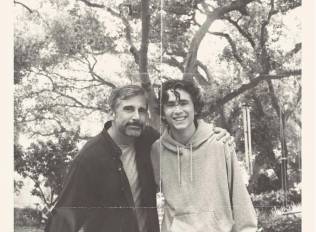
    Nic and David Sheff
    Image Credit: UCLA Friends of the Semel Institute Open Mind Community Lecture and Film Series

    View the original article at thefix.com

  • King of the Bums

    King of the Bums

    If you’re an addict like I am, then maybe you have these issues with self-esteem, fear, an enormous desire to be liked, an ego the size of Texas and hatred of anyone or anything you feel inferior to.

    I didn’t stroll into recovery willingly. The first time I ever got sober was definitely not by choice. It was a requirement lovingly handed down to me by the wonderful Florida Department of Corrections. They told me to get sober, piss clean once a week, and attend meetings or go to prison. I never wanted to stop using the first time. I just didn’t want to end up in jail. Sure, I had managed to destroy my life and ruin any meaningful relationship I ever had, but that wasn’t enough motivation to stop me from getting high. The fear of going up-the-road terrified me. The fear of walking into a state penitentiary and walking out a gang member with a face tattoo scared the living hell out of me.

    Growing up, everyone always told me that I was a chameleon. I have the ability to effortlessly blend into any situation no matter the surroundings; it’s in the way I walk, the way I talk, reading someone’s body language and matching it with my own little nuances to make them feel comfortable, picking up on choice words in an individual’s vocabulary and using it myself. Whatever the scene is, I have the script. Needless to say, improvising comes easy for me. It’s no wonder that I became a musician and started performing regularly. The stage and the spotlight are my warm blanket.

    The ability to improvise on the fly and blend in with any situation comes very handy when someone is trying to get high. When it comes to interacting with shady people on the streets and within your local dope-hole, the art of blending in and belonging is vital, not to mention the gift of gab. You got to get in, get it for the right price, and get out.

    The problem is that this particular skill set can become a huge detriment when getting sober. The ability to acclimate to any surrounding can kill you if you’re in a setting that demands complete transparency. If you’re living in a halfway house with about a dozen different personalities, being able to get along is a big deal. Convincing the house manager that you’re making the right choices and not getting high is important. You need to be trusted, you need to blend in, and most important, you need to stay off everyone’s radar. You don’t need a random piss test to ruin the party now do you?

    So here’s where the even bigger problem lies. If you’re an addict/alcoholic like I am, then maybe you have these deep core issues with self-esteem, personal acceptance, a huge amount of fear, thoughts of loneliness, an enormous desire to be liked, an ego the size of Texas and hatred towards anyone or anything you feel inferior to. I’ve heard it put this way and I’m sure you have too: We’re ego-maniacs with an inferiority complex.

    Sounds like we have a little boy/girl deep within us that needs to grow up, doesn’t it? And when we stop putting mood- or mind-altering substances into our body, we’re put on a collision course with that inner child. This child is trapped inside of a full-grown adult trying to figure out how to stay sober because, let’s face it, arrested development is a real thing. The moment we started self-medicating was the moment we stopped growing up.

    When I got to my first residential inpatient treatment center, I was placed smack-dab in the middle of this enormous community of junkies. Some trying to get sober, others trying to avoid jail-time, and others there simply because they had no place to call home. The little boy inside me was terrified. Will I fit in? Is anyone going to like me? Will I be able to stay and graduate in six months?

    Immediately I did what I’ve been doing my whole life: I blended in. I got with the “winners” because that’s what was recommended and I started acting like them. I got into recovery because they were all about recovery. I was familiar with the recovery-lingo already so that wasn’t an issue. I attended groups, I went to meetings, and wouldn’t you know it, I started walking like them and talking just like them. I kept my secrets to myself, I did everything in my power to impress the powers-that-be and I made sure that everyone knew how talented I was. Luckily for me, they had a band there. And guess what? They needed a piano player. This is going to work out just fine. I’ll just join the band, avoid getting into trouble and skate my way to graduation.

    I’ve heard people say in recovery that sometimes you’ve got to fake it until you make it. They say that with the hopes that somewhere along the way, all that faking slowly turns in a real desire to be different. But if you’re used to lying all the time and wearing masks just to be accepted, if you’re used to being that chameleon and reading from a script, all that faking never really turns into anything legit and fruitful for your recovery. You kind of just set yourself up for failure. And that’s exactly what I did.

    I graduated the program, but I enjoyed my time there so much that I decided to stay for another six months. I did that until the treatment center hired me. Can you believe that? They hired me! What a joke.

    I wasn’t ready. I didn’t do the work required to stay sober. I was just “that guy.” “Star Boy” is what my friends called me there. I remember my roommate calling me “The Chosen One.” This is bad. But I got exactly what I wanted, so why the heck am I so miserable? Maybe because I never worked on growing up. I never confronted my inner child and dealt with the real core issues of my addiction. Getting sober is easy. Sobriety in general is simple. It’s the emotional sobriety and uncovering the layers of who I am and learning to love myself that’s paramount. I robbed myself of that journey. I took myself out of the game by choosing to be the coolest guy in rehab.

    Here’s the thing about this treatment center. This isn’t the one you find nestled on the beach with your peer-led-groups, full-body massages, custom fruit smoothies, etc. This is the rehab you go to when you’ve exhausted all other resources. The one you end up in when you can no longer afford the nice treatment centers you see advertised on this site. This is the last house on the left; the one that doesn’t cost a dime. The homeless rehab in the same neighborhood you’ve been getting high in.

    Congratulations, you’re the coolest kid in homeless rehab. Everyone bow down to the king of the bums. You made it.

    It’s no surprise that the day I moved out of the place is the day I got high. I didn’t see it coming… but I saw it coming. You know what I mean.

    It wasn’t long before I found myself knocking on the doors of the same facility to let me back in. I had nowhere else to go and heroin yet again had beaten me to a pulp. I remember getting out of detox and walking up the sidewalk. This guy that works there stopped me while I was walking in and asked me what I was going to do different. It was a rhetorical question because he didn’t wait for my answer. What came next was the single most important piece of advice I ever received. He didn’t say anything I hadn’t heard before but it was the first time I truly heard it and received it. I had beaten myself emotionally with this last relapse so badly that I truly believe my ears finally opened up. I was ready to listen and do something different.

    He told me to forget about who I was. Forget about everything I think I know because I know nothing. All I know how to do is get high. He told me that I don’t know how to get sober. He told me to shut the hell up and listen. He said I had to do this for me and nobody else. He told me that I’m not here to impress anyone or make friends. He reminded me that I suffer from a disease that wants me dead. He told me that I didn’t come to an indigent rehab to play music; I came there to get sober.

    I love him for that. I aspire to be like him one day. I admire him. His tongue is sharp and his recovery is sharper. His words haunt me every day. They keep me in check while I learn how to deal with the little boy deep within my soul.

    Slowly but surely, the masks are coming off. This uncomfortable yet beautiful journey of self-discovery is full of rewards. Today I choose to stay sober and enjoy them as they come my way; never throwing in the towel on the days I don’t hit the mark.

    If nobody told you today that they love you, fuck it, there’s always tomorrow.

    View the original article at thefix.com

  • 7 Reasons Why I Thought AA Wasn't for "Someone Like Me"

    7 Reasons Why I Thought AA Wasn't for "Someone Like Me"

    By the end, as we stood in a circle holding hands, I thought: “This is a cult, right? This has to be a cult.”

    I remember the first meeting of Alcoholics Anonymous that I ever attended, about three years ago. I’ll be honest — I wasn’t the friendliest face at that meeting. I had a ready criticism for just about everything that anyone said.

    By the end, as we stood in a circle holding hands, I thought: “This is a cult, right? This has to be a cult.”

    I asked the newcomer liaison — who I was convinced was just a recruiter for this undercover religious operation — how I could know whether or not I was an alcoholic, and if I really needed AA.

    One thing she said in particular stood out: “Sometimes you aren’t ready, you know? Some folks go and do more ‘research’ and then a couple years later we see them in the rooms again.”

    In hindsight, I have to chuckle. Of all of the advice she gave me, the only part I seem to have listened to was the part that justified drinking more. (I’d later learn that this is the exact kind of “selective hearing” that alcoholics are known for.)

    I didn’t know it at the time, but her comment would foreshadow my journey to the letter. A few years later, after another catastrophic relapse, I remembered her words: If it was meant to be, I would be back.

    “Sam, you could’ve died,” my therapist told me when I described my latest binge. That’s when I knew my “research” was over. It was time to go back.

    I sat in the back row (another typical newbie move, I’d later learn), and just as the Serenity Prayer was being read, I saw the same woman from before — the one who predicted, whether intentionally or not, that I would be in those rooms again.

    “I know you, right?” she said to me after the meeting.

    “Yeah,” I replied, smiling. “And you’re a big reason why I came back. Because I knew I could.”

    I didn’t know what to expect, but that didn’t matter; I was just grateful to have a place to go where I didn’t feel so crazy.

    As time went on, I quickly realized that the reasons I believed that AA wasn’t for me weren’t just misguided, they were completely wrong. While I wish I’d had these realizations sooner, I’m grateful now for the fellowship I found when I was finally able to open my heart and mind.

    So what, exactly, held me back the first time around? These are seven of the big reasons why I thought AA wasn’t for me — and what ultimately changed my mind.

    1. I’m not Christian (or even religious).

    Despite being told that your higher power in AA could be virtually anything, the “God” language was so off-putting that I couldn’t get past it at first. What I didn’t know was that AA is home to people with all sorts of beliefs, including atheists and agnostics (for whom a whole chapter in the Big Book is actually written).

    But why would someone who wasn’t religious opt for a program that talks about a higher power?

    The short answer? To get outside of ourselves. Part of what makes addiction so tricky is that we often get stuck in our own heads, leading us to miss the forest for the trees. A focus on some compassionate, loving force outside of ourselves allows us to take a step back from the addictive obsessing and see the big picture at work.

    That “God” can be your own inner wisdom or spirit (you know, the tiny voice or gut feeling that says: “I shouldn’t be doing this”). It can refer to your fellowship (e.g. Group Of Drunks) and community, or it can even be the stars or your ancestors.

    Whatever your higher power is, it exists to anchor you in the present moment, when your own thoughts are derailing you (part of what fuels cravings, I’ve found, is the mental obsession that goes along with them). Projecting your focus outside yourself can be a powerful tool in recovery.

    2. Alcohol wasn’t my biggest problem.

    I always thought of my alcohol abuse as a symptom of a problem rather than an issue in its own right. As someone with obsessive-compulsive disorder (OCD) and a trauma history (C-PTSD), I figured that if I got my mental illness under control, my drinking would somehow become normal again; that it would, in essence, “work itself out.”

    As irrational as it sounds, I really believed that if I just “stayed mentally healthy” for the rest of my life, alcohol wouldn’t be a problem.

    It should be a lot easier to sober up than to be perfectly happy and healthy 100% of the time, but the alcoholic mind doesn’t care about what’s actually possible — it just cares about drinking again.

    I’ve learned with time that my alcoholism is very much a compulsive behavior. And once compulsions are activated, they’re only made worse when you engage with them. As a person with OCD, and therefore lots of compulsions, I know this better than anyone.

    A lot of alcoholics look at every other issue in their lives as The Real Problem, while their drinking isn’t much more than an inconvenient and temporary side effect. But more often than not, the only “phase” we’re really talking about here is denial.

    3. I figured I could manage on my own.

    Here’s the thing: Whether or not you can manage sobriety on your own, why should you? If there’s an entire community of people, ready and able to support you, why deprive yourself of that resource?

    These days, I ignore the voice in my head that says, “You don’t need this.” It’s irrelevant either way; I don’t need to muscle through this and there’s no good reason to.

    This fellowship is a gift I can give to myself — the gift of unconditional acceptance, and an opportunity for continued personal growth in a supportive community.

    4. I thought I was too young and “inexperienced.”

    My drinking didn’t really take off until I was 21 years old. Yet by the time I was 24, I was at my first AA meeting. Was it possible to become an alcoholic in three years? I didn’t think so. I hadn’t racked up any DUIs and I wasn’t drinking vodka every morning, so what did I need AA for?

    But my definition of alcoholism has evolved a lot since then.  Alcoholism, to me, is a spectrum of experiences defined by two things: (1) psychological dependence on alcohol and (2) strong urges to drink (which we call “cravings”).

    Drinking had become a coping strategy (one that often failed me) to deal with issues in my life. And rather than choosing to drink and choosing to stop — which is usually, on some level, premeditated and deliberate — I had the urge to drink, and that urge often had me behaving in ways that ran counter to what I planned or wanted, assuming I had a plan at all.

    Sometimes I drank only to resolve the urge itself — an urge which could involve unbearable levels of anxiety, agitation, obsessing, and impulsiveness.

    It took just a few years for my drinking to reach this level of unmanageability. And when it led me to be hospitalized twice in my early twenties, I realized that if I continued I would die before I ever considered myself “experienced” or “old enough.”

    You are never too young or inexperienced to get sober. If there are signs that your drinking has become dangerous, you don’t need to wait to get support — and you shouldn’t.

    5. I’m queer and transgender.

    One of the biggest reasons why I rejected AA was because I felt, as someone who was both transgender and gay, that I would feel like an outsider. And while I can’t speak for every meeting in existence, I’ve been fortunate to find meetings where I could show up as my authentic self.

    Living in the Bay Area, I’m privileged to now have access to meetings that are specifically for the LGBTQ+ community, though I regularly attend all kinds of meetings and have found them to be fulfilling in their own way. My sponsor is queer, too, which is incredibly empowering.

    Many people I’ve known in other parts of the country have been able to connect with their local LGBTQ+ community center (either city or statewide) to get recommendations on which recovery spaces would be best for them.

    Some LGBTQ+ centers even have AA meetings specifically on-site for the community.

    The best way to find out is to call around. You don’t know what’s out there, and recovery is always worth the effort.

    6. I take psychiatric medications.

    As someone who takes medication for my mental health conditions, I was scared that people in AA would look down on me or believe I wasn’t really sober.

    In particular, I rely on Adderall to manage my ADHD. I take it exactly as prescribed without any trouble. If I don’t take it, it’s difficult for me to keep up at my job because my concentration issues make my life incredibly unmanageable.

    But Adderall is a stimulant and has a reputation as a drug of abuse. I worried that I would be pressured to stop taking it.

    Instead, I’ve been given the exact opposite advice in AA. I’ve been told repeatedly that if my psychiatric medications contribute to my mental wellness, they are an essential and indispensable part of my recovery.

    With mental health conditions frequently co-occurring with substance abuse, you’re likely to find a lot of people in AA who rely on these medications to maintain balance in their lives. So don’t be discouraged: you aren’t alone.

    7. My history didn’t seem “bad enough.”

    Sometimes I’d listen to a speaker talk about getting drunk at age 12, growing up in the foster system, or getting their second DUI, and I’d think to myself, “Why am I even here? My story is nothing like theirs.”

    But as I attended more and more meetings, I began to see the similarities, rather than focusing so much on the differences. I realized that even the most extraordinary stories had some kind of wisdom to offer me, as long as I gave myself permission to be fully present.

    As I heard a speaker say last month, “Bottom is when you stop digging.” Recovery begins when you’re open to it, not when you’ve passed some magical threshold of having “suffered enough.”

    Your story is enough, exactly as it is in this moment. You don’t need to have the most tragic backstory, the biggest relapse, or the most catastrophic “bottom” moment.

    You don’t have to earn a seat at the table. As I learned this last year, that seat will be there for you when you’re ready, no matter how many times you fall down or slip up.

    View the original article at thefix.com

  • There Was Light A Mile Deep: Interview with Poet William Brewer

    There Was Light A Mile Deep: Interview with Poet William Brewer

    Someone contacted me when the book came out, who had very recently lost a parent to heroin. She said to me, and I’ve held on to this, “The poems gave me a feeling that I had a place to go.”

    The West Virginian landscape exists as one of the great splendors of North America, but beneath the canopies of spruce and maple and folded inside the canyons smolders a public health crisis whose effect has verged on apocalyptic for some communities, both spiritually and literally. Peddled by big pharma, opioids found special traction, furthering the hardships inherited from a history of economic injustice. Like new gears spinning a rusted machine.

    These conditions have sown a very human consequence, which looks out from the porch of William Brewer’s debut book of poems, I Know Your Kind, with lines like: “[I] have placed my lips against the shadow / of his mouth, screamed air into his chest, / watched it rise like an empire then fall.”

    Born and raised in West Virginia, the poet left Appalachia to pursue higher education, but his craft was drawn back towards the hills of his youth, rendering the anguish and ghosts that multiplied rapidly there in the mid-aughts when the state ranked as having the highest overdose rate in the country (it still does).

    With delirious imagery, Brewer uses natural subjects such as flies and logging to express deep emotions, at the same time accessing the past in order to help explain the unbelievable present. His poems have been published in The New Yorker, The Nation, American Poetry Review, and his chapbook Oxyana was selected by the Poetry Society of America for their 30 and Under chapbook fellowship.

    Then, last year Ada Limon selected I Know Your Kind as a winner of the National Poetry Series. A practice in empathy, the book illustrates not only the spirit of a place struggling to stand, but a cross-section of the epidemic timeline on a local level when the national media was just starting to grasp what was happening. Before the big policy responses. Despite all the graves already in the ground.

    Interviewed by The Fix, Brewer hikes into these “terrible truths” and cracks open the question of what drives someone to give themself to an artificial comfort, underlining that rural living can marginalize culturally and politically.

    Estimates place the number of people recovering in the United States around 25 million, and close to the same amount experiencing active substance use disorder. More than ever, there is a need for a strong literature to reflect this population, how we lived and how we want to live. I Know Your Kind stimulates our thinking about the prismatic possibilities of a modern addiction poetry.

    Note: This is sometimes a sad conversation, about suffering caused by substance use disorder. Seek out another interview if you’re unbraced.

    The Fix: Your book opens with the poem “Oxyana, West Virginia,” which establishes the setting of I Know Your Kind as a place where both splendor and suffering co-occur. Can you talk more about the relationship between the people and the land?

    William Brewer: Oceana is a small town in southern West Virginia, a blast site of the opioid epidemic. The nickname Oxyana refers to Oxycontin, the drug that took over. This poem takes the notion of a single place and applies it to multiple regions of the state to create a condensed fictional stage, to build out a landscape. Throughout the book, when I talk about one place, I’m talking about the whole state, because the problem is everywhere. The whole state is a kind of Oxyana.

    Now, with the idea of splendor and suffering, I think the word you used was co-occur—that’s absolutely right in West Virginia. It’s an immensely beautiful state, but it’s a state of contrasts. The ancient hills are beautiful, but that ancientness meant coal, which meant prosperity, but only for a very few until the mid-20th century. Coal, for much of its history, has meant a very hard way of living that has benefited very few. So the thing that gave West Virginia its prosperity is also the thing that has caused most of its destruction environmentally, economically, and to the physical well-being of its citizens.

    Now that the coal industry has died away, people are left in drained away communities, isolated from the outside world by the mountains and rivers, which also prevent jobs like manufacturing from coming in. The landscape becomes a beautiful prison.

    You often manipulate the symbol of light, twisting away from classic associations, or at least complicating them. For example, in “Overdose Psalm,” a tree is cut down and the line goes “Snow committing its slow occupancy, / filling the column like words, the light / saying in so few of them, like all terrible / truths, something here did not survive.” Besides being very very sad, it’s so resonant. How does light function in your book?

    In IKYK, I’m interested in exploring the power opiates have to mimic a kind of divine energy. They aren’t like psychedelics, which connect you to the feeling of a greater universe. Or amphetamines, which accelerate our reality. This is something simple: an optimism, a brightness, a luminosity, therefore light will function in the mind of the speaker as positivity, but for the reader the function is more sinister. Here, our feelings about beauty (which light is often in service of) become less straightforward than they seem.

    Writing has to look carefully at the way certain chemicals make people feel.

    We must recognize the ways substances make you feel fulfilled.

    Yes. And in the case of West Virginia, you have a largely poor, often isolated populace that is, in many respects, ignored by the rest of the country. When the outside world does engage with WV, it’s often through joke and insult. “Trash,” “Hillbilly,” “Did you marry your cousin?” “I’m surprised you wear shoes.” In her essay “The Fog Zone,” Leslie Jamison gets it right: “West Virginia is like a developing nation in the middle of America. It has so many resources and it has been screwed over again and again: locals used for labor; land used for riches; other people taking the profits.” With all that in mind, it’s suddenly a lot easier to understand how big unfulfillment can be as an idea, and how deep unfulfillment can function like a kind of pain. Through that pain comes the chemicals.

    What about the power dynamic between other parts of the U.S. and West Virginia? In your poem “Oxyana, West Virginia” you have those lines about river beds being wine glasses for the Roosevelts. It seems to me this dynamic could compound with the marginalization of the state, worsening the epidemic, distancing external aid.

    You’re absolutely right. That Jamison quote again. This is a place that gave everything to America during its rapid rise through the last century, and then when it was finished America turned its back on them. This was and continues to be a form of erasure. When people are told they don’t matter or feel like they don’t exist—that’s going to worsen a problem like the epidemic. The drug problem has been going on for over 10 years, but it’s only just now garnered attention. That’s in part because a lot of people—a lot—still don’t know WV is its own state. A few months back I was seated at a dinner beside an Ivy League graduate who kept referring to my home as Virginia, even after I corrected them multiple times.

    Yeah, that’s a completely different state.

    And when your country doesn’t know you exist, it’s like your suffering doesn’t exist. Then it’s like, who are they to tell you how you handle your suffering?

    All of this leads to the larger point, the key point about the book. IKYK is not about the opioid epidemic, and it’s not about WV, it’s about how these two subjects are bound together through a continuation of history. The history of WV is the history of massive industry making gargantuan profits off the lives of WV citizens. Timber, minerals, oil, coal, gas, and now: pharmaceuticals. They pumped 780 million pills into a state of 1.8 million people. By doing that, those companies, that industry, made a conscious choice: The lives of West Virginians aren’t as important to us as money; this is a population we can afford to kill.

    Leads me to think of “Daedalus in Oxyana.” There’s a line… “I gave my body to the mountain whole. For my body, the clinic gave out petals inked with curses.”

    I want to hear more of how you funneled real life places and people into this book. What was your research process like?

    The research was living and seeing the issue grow. The research arrived. But I don’t necessarily like that word, “research,” because it suggests I went looking for it. It’s more that the problem appeared. Things snowballed very quickly. Sometimes I didn’t realize it, other times I did. In conjunction, at one point someone came to my fiancée and me and told us they were a heroin addict and they were terrified. I got angry, thinking they got themselves into the mess and didn’t care about anyone else. Ten minutes later I realized this reaction was repulsive. I wrote the person off at their most vulnerable. A flip switched, and I realized this was something deeper I wanted to sit with and look at. That meeting between personal interrogation and social observation is how the book came to be.

    I like how the initial motivation for this book was a reaction to the stigma you had fallen into initially. You were like, “Wow, this is the way I think, so I’m going to do some work and examine it.”

    The disease of addiction has taken a toll on my family throughout my life and my parents’ lives, so I’ve seen how people come to reckon with it. I thought I had developed sophisticated responses, but in that moment those responses failed when presented with this new problem. I’d seen what alcoholism can do, and how as a culture we accept it as a problem. But we were turning away from opiate abuse and denying its reality, and I felt I needed to resist that turning away.

    I think it’s stunning for someone who hasn’t experienced addiction himself, how you put words to those unique feelings and moments. There’s a line from “Resolution,” “…I stood in the yard // and decided that sometimes / you have to tell yourself / you’re the first person // to look out over / the silent highway / at the abandoned billboard // lit up by the moon / and think it’s selling a new / and honest life.”

    There are details about the way of life that can accompany opioid use disorder, which echo the conversations I’ve had with people. “Leaving the Pain Clinic,” you write “…and though the door’s the same, / somehow the exit, like the worst wounds, is greater / than the entrance was. I throw it open for all to see / how daylight, so tall, has imagination. It has heart. It loves.” Like, how did these lines come to be in such striking detail?

    For me, the writing of a poem is an impulsive act. But there’s a lot of gestation and thinking that goes on behind the scenes, before I write—a lot of thinking. And there’s living that goes into them, too. When I was in college I had an accident that required some heavy surgery and a long rehab period. Opioids were a big part of that period, I was on them for a long time. The power of those drugs, what they could do, has remained vivid in my mind, and always will. That passage about daylight comes from that.

    In regard to the former passage: I’ve dealt with serious depression my whole life. Depression and substance abuse are often bedfellows. What depression can unleash in someone—hopelessness, dependency, fear, recklessness towards how we feel about our lives, suicidal impulses—can certainly be unleashed by substance use disorders, too, with the volume turned up to 11. To be clear, I do not mean in any way to suggest that depression and substance abuse are the same thing. Rather, what I mean to articulate is that I brought every bit of myself to every poem. This is not just a matter of aesthetics. It’s me doing my best to extend myself out, to say, “Dear Person X, the possibility that your pain may feel even remotely similar to my pain is why I’m trying to do my absolute best to recognize you in hopes that you may feel less alone, but even more importantly, so that you may feel loved. Loved.”

    I come from a spoken word community that preaches sticking to your own story. Personally, I think your book is an important addition to literature, both generally and in the addiction/recovery sub-genre. But throughout it you often speak through the persona of someone with substance disorder. I worry other poets will take this as license to do the same, without possessing the knowledge or respect you have for the subject. What are some potential hazards here?

    First, thank you for saying that. I appreciate it greatly and don’t take it lightly.

    While you come from a spoken word community, my literary life is rooted in fiction. The literary texts we had in my house were Herman Melville, Mary Shelley, Jane Austen, Nathaniel Hawthorne. They sat on a single shelf at the top of the stairs. I can still see them. Likewise, at school, literature = fiction. I read maybe two poems in high school, so my life in books began, and in many ways persists, through fiction, and so because of that, the root of my literary practice has always been—to use Roth’s (for better or worse) definition of fiction writing—“the crafting of consciousness,” with the understanding that this requires immense care, thought, patience, and humility. Do as much work as you can to get it right, and then do more. IKYK is very much a book that attempts to synthesize this quality of fiction, in addition to its immense capacity for world building and social examination, with poetry’s sense of deeply distilled emotional and psychological textures, its power to challenge language, and its unique ability to find unexpected connections. 

    As for other poets taking my work as license, I’m not sure what to say about that. It would seem to me that the potential for bad poetry, and bad poems about this subject, was there long before any of my poems came into the world. At the same time, for as long as that potential for faulty work has existed, there’s been a concurrent tradition of very valuable work being done in persona, poems by Bidart and Ai being just two gleaming examples (not to mention what has been done in fiction). So, maybe we could reframe the thinking in more positive terms, i.e. maybe this book can stand as an example of what persona can do? What the poem can do?

    What eats at me is how there aren’t a lot of poets writing about their personal experiences with substance recovery, at the level where they’re prominent within the poetry industry or community. Are these poets dead from overdoses? Did their time go towards using instead of writing? Or maybe they’re not writing openly because of stigma? Can you speak on the importance of us all lifting up and listening closer to people who have personal experience with these issues?

    I’m not sure about this, though it’s a wise question, one of huge importance. I don’t know of a clear answer. But it seems like the work you do in your day to day is connected to this and is very valuable. That’s something to be optimistic about. People have reached out and told me how they have brought my poems or the book into spaces like meetings, support groups, halfway houses, and that has been very humbling to hear. Just getting poems into spaces where maybe they’ve never been before—maybe that’s part of how we turn it around? As for the importance of lifting people up and listening closely—it is the most important thing. At the same time, the responsibility to write about this problem, which is now a national problem, shouldn’t rest solely on those suffering, should it?

    What do you hope your book accomplishes?

    Someone contacted me when the book came out, who had very recently lost a parent to heroin. She said to me, and I’ve held on to this, “The poems gave me a feeling that I had a place to go.” This was the greatest response I could have received. I hope that on a larger level, the book can extend the realities of the epidemic in WV to people who maybe had no idea what was going on, or didn’t believe it, or didn’t think it mattered—i.e. didn’t think the lives of West Virginians mattered.

    To graft onto that statement, I think the book is educational for people who don’t understand West Virginia, and how the opioid epidemic has taken root so deeply in this specific place.

    I surely hope so. That’s one of the book’s largest aims.

    I also want to add, while it’s a needed pursuit to write a place for pain to feel seen, it’s also necessary to create sites for recovering peoples to draw strength, hope, and triumph. What are some lines in your book that are doing this work?

    I think strength is an impulse that runs through much of the book—books about WV are inherently about strength. I think “Resolution” is a poem that leans toward a sense of hope or even triumph, even if it may be the first of a few failed attempts toward a larger triumph. Overall, though, I don’t think hope or triumph are large elements in the book, again this is because it’s a book about a specific situation in a specific place, and when I was writing it and editing it, things didn’t seem very hopeful or triumphant. I turned my book in to my editor in the fall of 2016. At that time, it felt like a situation that no one much cared about. The New Yorker hadn’t yet run its large profile about the state, the Charleston Gazette-Mail hadn’t yet run its now Pulitzer Prize-winning expose that gained national attention, Netflix’s Heroin(e) hadn’t yet been released, etc. etc. That said, I agree wholeheartedly that these sites and books are necessary, and I’m confident that they are coming, especially as our relationship to this epidemic, and our ability to help those afflicted by it, changes. So, while some of those elements may not be as present in my book, I don’t believe every book can or should do everything. Moreover, this subject, and its impact on our country, is vast. Perhaps, when it’s all said and done—if it’s ever all said and done—this book will be seen as one part of the larger record and discussion.

    Last question. What’s next for you? Anything that involves substance use disorder?

    I’m working on a novel that looks at the larger social, political, and economic networks that can be at play in making something like the opioid epidemic thrive in a place like West Virginia. I’m also working on a second book of poems about paranoia, suicide, and the idea of inherited death. And let me say thank you for taking the time to talk to me, your generosity toward the work, and for everything you do.

    More poems by William Brewer:

    “In the New World,” Southern Indiana Poetry Review

    “Oxyana, WV: Exit Song,” Diode Poetry

    Other interviews in this series about poetry and addiction:

    Lineages of Addiction: Interview with torrin a. greathouse, a Trans Poet in Recovery

    Addiction and Queerness in Poet Sam Sax’s ‘madness’

    Kaveh Akbar Maps Unprecedented Experience in “Portrait of the Alcoholic”

    View the original article at thefix.com

  • The Most Important Person in the Room

    The Most Important Person in the Room

    There’s no need to worry about my career, or lack of intimate relationships, or future, or even quitting nicotine. I’m taking it easy, I’m in my first year of sobriety.

    Every time I relapse I forget I am not God.

    I am no longer able to allow the darkness to bloom into the grand external circumstances I once did; when it does, while the bigger picture slowly darkens, there’s a life constantly poised to begin.

    I think that continuous sobriety is boring; I must, based on the evidence of my own life, of my own lies.

    Imagine this: You are playing soccer. You’re on defense, almost as far away from the goal as you can get but you take the ball from the other team, all the way through their offensive and then defensive line with intense speed. You’re in front of the goal now, with a wide open shot. You flub the kick. The ball rolls just a foot. The goalie grabs it. It was all for nothing. This is how I played soccer. 

    Imagine the beginning of the semester: You love beginnings and showing what you are capable of, so you get A’s and read everything for the first month or two. Then you lose interest, get bored maybe, stop paying attention. You let your grades dip until it gets scary, until a note gets sent home. And then you have to work your ass off to get back to maybe a B+ final grade. If you really pull it off you might get an A-. That is what kind of student I was. 

    It seems like I need others and myself to know that I am capable, but also that I can’t be counted on. I want you to know that I can win, but I won’t. I don’t want to be expected to. It’s been almost ten years since my first attempt at recovery. I’ve never been sober long enough to date, to move, to make any major life changes within the constraints of the program’s suggestions.

    I’m addicted to each part of the cycle – the descent into not giving a fuck, the bloody climb from the pyre of my own making. As I get too close or move too fast towards what I want, the part of me that knows I am not worthy of it, the part that’s sure I don’t want the responsibility of a better life screws me. There’s a lot of fragmentation.

    When we—and by “we” I mean my perception of you and the culture-at-large—when we look at a chronic relapser, our tendency is to look at the drug as the thing they can’t let go of – and it is, mostly. For those of us who know what the other side can hold and yet continue to throw the ships of ourselves against the rocks, chasing siren songs, the guilt and shame only add fuel to the orgiastic pull of destruction. 

    Shame is our primary emotion and perhaps our greatest addiction.

    I recall every slide toward rock bottom I created, every flail out, the night spent hurling my body into the door of the drunk tank with piss-soaked pants, finally settling down to bite off each fingernail and howl. And I remember what comes after; being so broken I would allow help, would allow others to love me; how my father would prove he cared by letting me use a lawyer from his firm for my DUI case, how a nice lady from a meeting paid my October rent, how friends brought me to look for a job. 

    I get a new boyfriend, a new job, everything working out until I find myself moving down the mountain too fast, and, turning the tips of my skis inward to slow down, I fall.

    And when I come back to recovery, it’s the same. Just a few people to believe that this time’s different. The climb feels like springtime, that’s why I make sure to do one at least every spring. In fact, looking back over the data, a bottom out in winter followed by a good 4-6 month sober stretch is my usual.

    I won’t take AA seriously until I have nothing else left and nobody left to talk to. Or at least, that’s how it used to be. Now it’s more of an internal emptiness, as the fear mounts that I may not get another shot to take the ball all the way up the field. Until I start to feel better, until my life starts to get bigger, until I’m in front of the goal again. I choke, over and over and over, and I climb back out, over and over and over. I raise my hand: “I have two days back,” and I get the applause, again and again. I’m the most important person in the room.

    There’s a sense that I will always be on the verge, never quite crossing the line into success. I want more, or do I? The cycle is a familiar distraction.

    There’s no need to worry about my career, or lack of intimate relationships, or future, or even quitting nicotine. I’m taking it easy, I’m in my first year of sobriety. And there’s always new people.

    I almost believe it. 

    This is the place where I used to blame my abusive mother, and believe me, I would really like to. She loved nothing more than to break me so that she could comfort my brokenness. But I’m an adult now. Once I was a victim, now I am a volunteer; now I have internalized my abuser. I have some of her weapons, and some I have added. I do it when I talk to myself, when I won’t get out of bed, when I couldn’t finish this article for a month.

    And at the same time I have a picture of three-year-old me, my inner child, and ten-year-old me, my outer child, on my refrigerator. I talk to them, too. I tell them they are good enough, worthy of love and happiness and all the things the rest of the world seems able to allow themselves to have. I hope that one day we’ll all believe it. 

    What if life on the other side of a year of continuous sobriety isn’t beyond my wildest dreams? No need to worry about that, I’ll probably never get there. My promise is an unopened present, though I have shaken the box more than a few times. Now, it’s possibly rotting.

    How do I change? When does my sobriety and not my ego, not my love of a pattern repeating, become the most important person in the room? Will this time be different? Every time is. Will it be different in the way that I need it to be? I don’t know. 

    If the first step is honesty, these words are my only hope. These are the thoughts I keep in the shadows, the patterns with which I choose to keep myself trapped, the self-victimization through which I am still waiting to awaken, still waiting to let down my golden hair for some knucklehead prince to save me.

    What if I could climb past the first plateau of growth in recovery and keep climbing? What if I could continue to work on sobriety on the days I don’t feel like I need it? What if I could stop wanting to be something and start working on becoming it? 

    Every time I come back, I remember that I am not God. That I don’t have to do it on my own, that nobody really cares if I’m happy besides me.

    I would say wish me luck, but I’ve had so much of that. Wish me consistency over time. Wish me willingness. I am tossed by the waves yet I do not sink; I have proven that. Wish me, to stay.

    View the original article at thefix.com