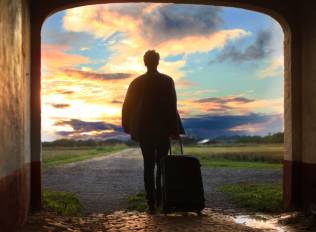
Tag: Features

  • The Blessings of Going Back

    The Blessings of Going Back

    “Pulling a geographic? Come to Jackson Hole! Great public transportation, decent jobs, and a beautiful environment to be miserable in.”

    It can be a scary thing to go back to the place you hit your “bottom.” It can also be extremely rewarding with unexpected miracles and blessings. I hit my bottom in Jackson Hole, Wyoming and I highly recommend it as a destination location as far as bottoms go. I don’t think that’s a “thing” but perhaps some travel site can advertise that: “Pulling a geographic? Come to Jackson Hole! Great public transportation, decent jobs, and a beautiful environment to be miserable in.”

    I’m not trying to make light of it. It’s awful hitting a bottom but if I had to choose between Jackson and somewhere else, I’d probably choose Jackson. Not that I was miserable – at first. Geographics are great at first. The despair takes a nap. New places, new faces – no problems. I picked up some hobbies, some new friends and a couple guys. One of the guys was a ski instructor at the resort. He was maybe 10 or 20 years older than me which was fine because I was also “dating” someone 10 to 20 years younger than me. Age is just a construct, anyhow, and more is better and pass the bottle.

    We hit the slopes in the morning and then took a break for lunch at the Four Seasons where I ordered a glass of wine, of course. He paused, considered for a moment and then ordered one for himself. After lunch, we went back to skiing which is kind of amazing for an alcoholic but after a few hours, we celebrated a terrific day by returning to the Four Seasons for “Apres Ski” and had a few more glasses. That was the last I saw of him.

    Nine months later, I moved back to New York and ended up in “the rooms.” Then, when I was about a year sober, I had to go back to Jackson for some work. I was scared because I had drunk so much and that was how I did Jackson. That’s how Jackson worked. Could I do it differently? Most of my friendships were based around drinking and so were most of my activities. Why go river rafting, if you’re not going to party? It was all about the beer, the booze, the alcohol. 

    My sponsor and fellows in the program told me that it would be okay to go back and that what I would do is go to meetings, make phone calls, and take it one day at a time. So that’s what I did. There was a daily meeting in town square and, though nervous, I showed up and said I’m visiting. There were a lot of other people visiting, as well as locals, and it was a very welcoming environment. After the meeting, someone tapped my shoulder. It was the ski instructor. I was happy to see him, not because I was attracted to him or wanted to be with him, but because it was nice to see someone who had been out there with me now in the rooms taking the same journey. He told me he had been sober for a while and it was on our date at the Four Seasons that he’d slipped. He stayed out for a few months and came back about the same time that I started coming to meetings. It felt like such a blessing to run into him there. I was so glad he was healthy and sober. So glad that I was, as well, and that we didn’t get lost down that tragic highway.

    Another hidden blessing was that one of my coworkers was also trying to get sober. He didn’t have the gift of desperation, as they say, he had the gift of a DWI and a court mandating him to go. He was super talented and super likeable and had the common alcoholic tendency to turn into a total asshole and then go MIA when he drank which would be really bad for the project we were working on together. Selfishly, I needed him to stay sober. He was on the fence as to whether he was an alcoholic or not, but we went to a meeting together and when we had to go to Salt Lake City for work, I brought him to a meeting there too. He stayed sober through the job and guess what? So. Did. I. If I hadn’t been so focused on his sobriety, would I have stayed sober? Would I have searched out a meeting just for myself? Can’t say for sure. But what I can say is that he was another unexpected angel on that trip and from what I understand, he’s still sober.

    Seeing Jackson through newly sober eyes was like putting on a “new pair of glasses” as Chuck C. says in his book by the same name. When I was there before, it was all about me, me, me. What can I get? I need that! And what’s in it for me? For instance, whenever I went to the brew pub, I was not present with the people I was with; my focus was on drinking and looking for guys and male attention. It was all about trying to fill that “God-shaped hole.” But sober, I was a worker among workers drinking my Arnold Palmer, enjoying my colleagues’ company, enjoying the moment and enjoying just BEING SOBER. That was the biggest gift of all.

    It’s eight years later and I’m still sober and, as I write this, I realize that I miss that time in my life. I miss the humility and gratitude of early sobriety. I’m back to thinking a lot about myself and my plans. And what I can get. And I’m feeling kinda not awesome. I’ve also heard that around eight years is when people go out again, or slip. They get busy and stop going to meetings. I can definitely be too busy. Busy with I want, I want, I want. I think I get high on trying to make things happen. It’s my ego. But I know that when I have the gift of surrender and humility, IT FEELS SO GOOD. But I can’t seem to will the surrender. I can just be willing, and show up to meetings, do service, and deepen my understanding of my higher power regardless of how I feel. And as I reach out to the newcomer, I am re-acquainted with the early blessings, the blessings they give me and the ones I get to share in return. And for that I am grateful.

    View the original article at thefix.com

  • "I: The Series" Exposes the Underside of Trauma and Healing

    "I: The Series" Exposes the Underside of Trauma and Healing

    We Q&A with filmmaker Mary Beth Eversole on trauma, the inspirations for her new series, and the challenges of making an indie film.

    Mary Beth Eversole is the creator and executive producer of I: The Series, in pre-production. The short film series explores the damage of trauma—from ordinary events to major catastrophes—and its impact on individuals as they learn how to heal. Episode 1 takes us into the mind of MB, a traumatized person dealing with an eating disorder, body dysmorphia, and PTSD from multiple traumas. Using “the magic of mirrors, lighting, prosthetics, and CGI editing, we watch as MB’s nightmare comes to life right before her eyes.”

    The Fix recently had the pleasure of discussing this project with Eversole. 

    The Fix: What spurred you to pursue filmmaking?

    Mary Beth Eversole: I am an actress, voice over (VO) artist, musician, and content creator. I have acted and taught and performed music since I was very young. Voiceover came after I had a traumatic car accident that ended my operatic and musical theater singing career. I had to re-evaluate how I would still have my voice be heard as an artist. It was a very troubled time for me that included PTSD and depression.

    One of my student’s parents suggested I try voiceover work and got me an audition at iHeart Radio in Northern Colorado. The producer signed me as a contracted VO artist that day! From there, I continued to do plays and began to study the art of acting in film, which is different from acting on stage. I love the pace of it, the fact that I could play several different characters within the span of a short time frame, and that I met so many amazing creatives and collaborators. As I booked more on-camera and voiceover work, I began to learn a lot about the behind-the-scenes work and what goes into making a film or TV show happen. I realized that my voice could continue to be heard through filmmaking, not only in characters that others wrote for me, but also in what I wrote for others and myself.

    I have had a very traumatized life. I have battled anorexia, body dysmorphia, drug use, depression and PTSD. I have been hospitalized, worked through a treatment plan, been in continuous therapy, experienced 12-step programs, and done a lot of healing through music, film, theater, and other healing forces. People tell me my life story is inspiring to them and that I should share it. I realized a few years ago that it was through filmmaking that I would be able to do that and inspire others to know they are not alone and they can heal.

    Describe some challenges that you encountered at the start.

    I will say I encounter challenges all along the route during the process of making a film or TV series as I think most filmmakers do. Many of the challenges have always come from funding or lack thereof. As an indie filmmaker, funding is usually scarce unless you know someone with deep pockets or have an in with a studio, which most indie filmmakers do not.

    The same challenges are popping up again for “I”, the film series I am currently working on. We need $65,000 in order to film and edit the first episode of “I”. Why? Because we are paying our crew what they should be paid and the film involves many prosthetics and computer generated imagery (CGI) effects, both expensive ticket items for a film. If we were a full feature film being created by a studio with the same storyline, it would cost upwards of $455k and that is on the super low end. Other feature films that have had similar amounts of prosthetics and CGI with studio backing have been around the $15 million range. Therefore, in the grand scheme, $65,000 is not much, but to a small indie film like us, it is a huge mountain to climb.

    While we are doing great at building our crowd, it has been more challenging to find those funds. Currently we are running a crowdfunding campaign on Indiegogo at www.ithemovie.org and we would love to have more people head there to make donations. The cool thing about crowdfunding is the donations do not have to be huge. While it will help us to get a few $1,000-$10,000 donors, the majority of the donations will come from people who donate $15-$100. Social media and direct message shares are also super helpful to get the word out and find more backers. If we do not reach our goal through Indiegogo, we will be applying for grants, but those are very competitive and the likelihood of us getting much funding that way is very slim.

    How did you arrive at the idea for the “I” film series?

    “I” was originally just one short film, based on my personal life experience with trauma and how it led to anorexia, body dysmorphia, depression, and PTSD. My traumas include growing up with a parent with an undiagnosed mental disorder, boyfriend emotional abuse as a teen, two sexual assaults, being diagnosed with 7 major food allergies and at least 15 other food sensitivities that put me in the hospital multiple times and led to organ failure, and two major hit and run car accidents, one that ended my music career as I knew it. I have had more trauma, but those were the major ones that resulted in the mental disorders I still deal with.

    I was watching the Netflix film To The Bone and I realized that this was the first time a dramatic film or TV show had gone this in depth with what actually happens with someone suffering from an eating disorder and body dysmorphia. I also realized this film, along with others about the same subject, still only focused on the external symptoms, what people see on the outside. While the film went into the thought process of an eating disordered person a bit through actions and dialogue, it still only skirted it. Furthermore, I realized it did not talk much about what led to the eating disorder.

    When the film was done, I had an overwhelming urge to write down my experience in script form, and to give a true inside account of what happens in my head when that “critical voice”—or as I call it ED—takes over my ability to function as a human being. The script was there, all there, instantly.

    I wrote it down. [Then] I read it, and read it again, and I realized this was how I was going to inspire others to seek help, heal, and how I might possibly be able to prevent these mental disorders caused by trauma from happening in the first place. From there I showed it to a good friend and director, Brad Etter, because I knew he needed to be the one to direct it. His eye for cinematography is beautiful and I knew he would instantly understand what I was going for. He said yes immediately. After that, we began cobbling together the crew heads to come up with ideas for how we could get this film made and what it would cost.

    All along the way, we have had doors opening and people who I never thought I could get to come on to this project attach themselves to it. In fact, it was Lori Alan, celebrity voiceover artist, actress, and the beautiful voice of episode 1 for this film series, who suggested I consider turning it into a series. I decided that instead of making it a series about just my life, I wanted to make each episode about a different trauma and set of repercussions and healing forces based on true stories from what our fan base shared on our social media pages.

    Which film or films have inspired you and why?

    The films that came out this past year and addressed true life events and movements in a dramatic way, like Three Billboards Outside Ebbing, Missouri and To The Bone, as well as TV shows like Chicago Med and Law & Order: SVU that take headlines and dramatically interpret them, have influenced me. My film is based on true stories, but told through dramatic film, which gives us the liberty to construct the inside of the mind and interpret how it is seen through the eye of the traumatized person artistically while still getting the story and the message across.

    My director, Brad Etter, and my director of photography, Terrence Magee, are both using inspiration for the look of the film from the Guillermo del Torro films The Shape of Water, Pan’s Labyrinth, and Crimson Peak.

    What surprised you the most in the filmmaking process?

    First, how hard it is to fund a film. It truly is very hard! However, I think what has surprised me the most with this project has been the outpouring of support I have received from the people who are now crew, core team members for our campaign, and just fans of what I am trying to do by bringing awareness to trauma and how we heal from it, working to break the stigma surrounding these issues. I have received countless messages from friends and family saying “keep going, what you are doing is amazing.” I have received more specific messages from friends and colleagues who are or were in the social work and psychology fields that have given me advice, as well as words of encouragement saying they have been looking for a project to do this for a long time. We even have interest already from two health clinics who want us to share this series in their clinic when it is made!

    Find more info at Indiegogo and connect on Facebook, Instagram, and Twitter

    (This interview was condensed and edited for clarity.)

    View the original article at thefix.com

  • Shame, Alcoholism, Stigma, and Suicide

    Shame, Alcoholism, Stigma, and Suicide

    In addiction treatment circles, conventional wisdom suggests we have to let people hit rock bottom before we can help them. But what happens if rock bottom is dying from suicide?

    Historical records as far back as ancient Athens have the underpinnings of the stigmatization of suicide. In 360 BCE, Plato wrote that those who died by suicide “shall be buried alone, and none shall be laid by their side; they shall be buried ingloriously in the borders of the twelve portions the land, in such places as are uncultivated and nameless, and no column or inscription shall mark the place of their interment.” Fast-forward a couple millennia and suicide is still criminalized in many places around the world. In the Western Judeo-Christian tradition, suicide has long been considered the ultimate sin, to such an extent that even the body of a person who died by suicide was legally brutalized and dehumanized. This long history of shaming and penalizing suicide has created deeply seated (mis)beliefs that are engrained in cultural norms. Suicidal ideation is stigmatized, and those who experience such thoughts often suffer in silence.

    Alcoholism (both alcohol use disorder and alcohol dependence) is also highly stigmatized. Past research has found that public attitudes are very poor towards people with substance use disorders (SUD). Across the globe, around 70% of the public believe alcoholics were likely to be violent to others. As recently as 2014, research has found 30% of people think recovery from SUDs is impossible and almost 80% of people would not want to work alongside someone who had or has a substance use disorder.

    Alcohol dependence and alcohol use disorder (AUD) are high on the list of risk factors for suicide. Mood disorders, such as depression, anxiety, and bipolar disorder, are even higher risk factors. What is particularly concerning is that mood disorders frequently go hand in hand with AUDs. Alcohol causes depression, and it can be hard to distinguish whether the alcohol or the depression came first because they feed each other. In his book Alcohol Explained, author William Porter explains, “hangovers cause depression whether you are mentally ill or not…the real cause of it is the chemical imbalance in the brain and body. ”

    People who have alcohol dependence are 60 to 120 times more likely to attempt suicide than people who are not intoxicated and individuals who die as a result of a suicide often have high BAC levels. Alcoholism is positively correlated with an increased risk of suicide and “is a factor in about 30% of all completed suicides.” A 2015 meta-analysis on AUD and suicide found that, across the board, “AUD significantly increases the risk [of] suicidal ideation, suicide attempt, and completed suicide.”

    Suicide attempts with self-inflicted gunshots have an 85% fatality rate. If someone does survive a suicide attempt, over 90 percent of the time they will not die from suicide. That margin of survival gets smaller with alcohol dependence. Being intoxicated increases the likelihood that someone will attempt suicide and use more lethal methods, such as a firearm.

    When a suicide attempt survivor encounters medical professionals, half of the time they will be interacting with someone who has “unfavorable attitudes towards patients presenting with self-harm.” (These statistics have cultural and regional variations.) When a patient with AUD encounters medical professionals, they are also likely to be met with negative perceptions. Myths about AUD and alcohol dependency are pervasive and not even nurses are immune to such prejudice.

    So what improves professional perceptions and treatment outcomes? Education. Training works to dispel myths and reinforce the fact that SUDs are diagnosable conditions that require as much care and attention as any other potentially fatal ailment. Perhaps increased understanding of these conditions and experiences could fuel progress for treating addictions and preventing suicide. Doctors are sometimes at a loss for what to do with alcoholic patients; interestingly, the physicians who had more confidence in their abilities in this area were associated with worse outcomes. Meanwhile, there has been little progress in treatment availability outside of basic peer support groups such as Alcoholics Anonymous.

    Peer support groups do help a lot of people get and stay sober and to live happier and healthier lives: 12-step proponents credit the steps and meetings for saving their lives; many say they were suicidal and that after getting sober they no longer had those thoughts. But while suicidal ideation may go away for some people who receive treatment, it doesn’t work like that for everyone.

    People who are abstinent from drugs and alcohol still die from suicide. In the case of post-traumatic stress disorder, quitting drinking can exacerbate feelings of hopelessness and despair. Continuing to drink may reduce the severity of the symptoms in the very short term, but ultimately “a diagnosis of co-occurring PTSD and alcohol use disorder [is] more detrimental than a diagnosis of PTSD or alcohol use disorder alone.”

    Suicide is a leading cause of death across the world and ranks as the 10th most common cause of death in the United States. For every completed suicide, there are an estimated 25 attempts.

    It’s clear that we must do something to reduce the number of lives lost by suicide. Raising awareness of the relationship between alcohol-dependence and suicide attempts is an important part of the equation. Medical professionals, social workers, law enforcement, employers, and others who are frequently the first point of contact need better training to improve attitudes and fine tune skill sets for taking appropriate action. The public also needs to be armed with information that they can use to help their family and friends who may be at risk for suicide, and in particular what to do if that person has a co-occurring SUD.

    Despite evidence to the contrary (particularly in the case of comorbidity with another mental illness) conventional wisdom in addiction treatment suggests that we have to let people fall to rock bottom before we can help them. But what happens if rock bottom is dying from suicide? It’s true that we can’t force health onto another person, but we also can’t help them if they’re no longer alive. For many people, prior trauma and mental health issues come before addiction. More evidence-based intervention and prevention programs are needed if we hope to make any headway in fighting this epidemic.

    Until that happens, opportunities do exist to help prevent suicide. After Logic released his Grammy winning song titled “1-800-273-8255” (the phone number for the National Suicide Prevention Lifeline), calls to the Lifeline increased exponentially. There is nothing quite like hearing another human voice offering support and comfort. There is also a growing number of online crisis support services which provide help through live chat and email. These, unlike many crisis phone numbers, are not limited by location. Texting a crisis hotline such as the US Crisis Text Line at 741741 is also an option and can be done with just basic SMS, no data needed.

    If you or someone you know is in immediate danger, call your local emergency number. Find your country’s equivalent to 911 on this wiki page or through The Lifeline Foundation. Find a list of additional suicide prevention resources worldwide on this page.

    View the original article at thefix.com

  • True North and the Geographical Cure

    True North and the Geographical Cure

    What it was like then: misery that had me researching the methods and means of suicide in the middle of the night on my cell phone, back turned to my husband, who was fast asleep, and to my children, asleep between us.

    The geographical cure: false hope that a change in circumstance might transform us. Always seductive, isn’t it? But as I have learned from Alcoholics Anonymous, a change in external position on the map doesn’t reset the compass and point us to true north because we always meet up with the self we are, no matter where we are, by chance, by collision, by invitation. Bill Wilson writes in AA’s Big Book, “We meet these conditions every day. An alcoholic who cannot meet them, still has an alcoholic mind: there is something the matter with his spiritual status. His only chance for sobriety would be some place like the Greenland Ice Cap, and even there an Eskimo might turn up with a bottle of scotch and ruin everything! Ask any woman who has sent her husband to distant places on the theory he would escape the alcohol problem.”

    Each time I believed a vacation, a temporary reprieve from present conditions, would be the cure, the fix I needed: Jamaica, Mexico, Greece, Romania, Italy, France, Wisconsin, California, etc., etc.? Each time I was sent off to “recover” from my eating disorder, self-injury, alcoholism, and bipolar depression, to distant, inpatient programs: Arizona, Maryland, Texas, and Pittsburgh? I’d get on a plane, 30 pounds underweight, spend a month or two bullshitting my way to well, not starving, eating thousands of calories (but only because I was forced), not drinking (but only because no access to booze), not cutting (but only because no access to sharps), and claiming to feel mostly content (Ha!) with my restored (Too BIG!) body, but not too content because such rapid reversal of position would seem disingenuous to doctors and therapists (I know I still have so much work to do but gosh, I am optimistic this time!).

    Each time, I returned home and within weeks was back to restricting, purging, over-exercising, drinking, cutting, and lying. Nothing had changed at home (that is, within myself), so I kept traveling an insane circular route though a dark, abandoned, haunted house.

    Samuel Johnson, in his 1750 essay, “The Rambler,” might as well have been giving the lead for a 12-step meeting when he wrote, “The general remedy of those, who are uneasy without knowing the cause, is change of place; they are willing to imagine that their pain is the consequence of some local inconvenience, and endeavor to fly from it, as children from their shadows; always hoping for more satisfactory delight from every new scene, and always returning home with disappointments and complaints.” 

    Eventually, with honesty and a commitment to working my program, I found my way home. I did not disappear nor die, though for many years I tried to do just that. Difficult to remember that life from here: my now eight years stable life, my now divorced and independent life with a teaching job in Georgia; my own home with HoneyBea, my rescue dog; and purpose restored.

    But also from exactly here: on an artist’s residency in Ireland, where I have just had morning tea with writers and painters and composers around a kitchen table — warm scones with butter and blackcurrant jam; where the night before, we gathered around a long, candle-lit dining table for fish, roasted potatoes, carrots, broccoli, and coconut custard topped with a purple-black pansy, and afterwards, in the drawing room where we shared our paintings, writing, and music; where Bernadette, at 93, stood before us in her long red dress, her cane left by her chair, and recited, from memory, poems from her latest, and sixth book—“think of when/ the end will come/and then”; where I believe that I, too, might live to 93, still creating more and forward; where, prefacing my reading, draft pages from a book-in-progress, I told my new friends, “I am not supposed to be here. I was given up for dead. And yet.”

    At dinner, on the very first night of my stay, I noticed a fellow artist who had declined the kind offers of wine, and then the raspberry trifle spiked with sherry. So I said to him, as we were cleaning up dishes in the kitchen, “I don’t drink either,” because I am always searching for my tribe when I am not at home.

    “Are you a friend of Bill W.?” he asked.

    The next night he took me to the local 12-step meeting in the town of Cootehill and I was asked, for the next meeting, to give the “Lead,” which, in 12-step terms, means recounting in ten minutes’ time the story of what my life was like when I was drinking, what happened—the transformation to sobriety—and what my life was like now that I was free.

    “It’s easy to get lost,” I said. “Easier to stay lost so far from home. This meeting is an anchor—while you might be strangers, you know me and I know you.” As I was talking about my desperate drinking days, giving the drunkalog, it was as if I was telling the story of another Kerry—that is, the story of a fear-full woman, intent on wrecking herself in despair’s ditch, and who would be dead by 40 by active or passive suicide.

    What was my life like then? Locked in a room under 24/7 video surveillance with a thin mattress on the floor, eating bland spaghetti with a plastic spoon, though not really eating since I’d stopped that, too (a spoon and in isolation because I kept sawing my wrists with the tines of a fork in the hospital cafeteria). I kept trying to disappear and doctors kept locking me away. “We need to stop you from killing yourself,” they said. What it was like then: misery that had me researching the methods and means of suicide in the middle of the night on my cell phone, back turned to my husband, who was fast asleep, and to my children, who were curled up and asleep between us both. Plans, plans, plans. Misery that dogged me. What it was like then: impossible to ever be inside joy, to be part of the living, the loving, the longing for now and tomorrow and more of this life, and so I ruminated over the plans, plans, plans.

    And so, my recounting of that Kerry at the meeting in Cootehill? She seemed a remote wraith, no longer dogging me, with her doomsday threats: “Just wait. You’ll fall again.” What she now says? “Thank you for saving me.” I honor her and have compassion for her: she didn’t know how to love herself, how to use her voice, how to take risks in this world.

    But, too, what it is like now: years after my last dive into bipolar’s dark well and seven years sober, my thoughts can still wander off path and I can get momentarily lost, particularly when traveling away from home, alone, in distant places where I might not know anyone, might wonder if the geographical cure could work: maybe I can have a Guinness in Ireland? So I look for my tribe and go to meetings when far from home. In recovery, you seek fellowship no matter where you are. Because you are always HERE, NOW: one day at a time, even in the Irish countryside.

    But, too, what it is like now: I am in right alignment to myself, which means often at an odd angle to the universe, which means sometimes wobbly on that off-kilter axis, but mostly truly good. Such a simple word: good. An alleged root of “good” is the Indo-Eurpoean “ghedh”—to unite, to fit. I am united with myself and fit into my own part of this world. That is, with my ragtag tribe of survivors who know what it was like, what happened, and what it is like now—but a “Now” that only is possible if I remained committed to honesty, open-mindedness, and willingness to find fellowship at home and abroad.

    View the original article at thefix.com

  • An End to the Parent-Child Role Reversal: Taking Care of Me

    An End to the Parent-Child Role Reversal: Taking Care of Me

    When my dad drank, he folded in on himself and quietly disappeared. When this happened, I’d wait patiently for his return while dreaming up myriad ways to make his life better.

    There was a little more than a week to go before my wedding day. Left on my to-do list was an array of tasks:

    • Pick up the marriage license.
    • Finalize the seating chart.
    • Tell my dad he wouldn’t be walking me down the aisle.

    I called him on a Sunday afternoon, and he responded the following Thursday. After awkwardly discussing the weather, I said, “Dad, I need to talk to you about the wedding.”

    As I waited for him to say something, I pictured him gently resting his cigarette in an ashtray on the kitchen table, leaning back in a chair and adjusting his thin-rimmed glasses away from the tip of his nose. Finally, he cleared his throat and let out a long and careful, “Okaay.”

    “Listen, I want you to know this isn’t because I’m angry.” I paused. “It’s just I’ve thought about it and…I’ve decided it wouldn’t be appropriate for you to walk me down the aisle.”

    “Mmm hmm,” he grunted.

    “I mean…I wanna hear whatever you have to say,” I told him. “Do you want to ask me anything? Do you want to talk about it?” I waited. I wanted to know what he was thinking, and I thought he’d do so with words, but instead, he chose silence.

    “Do you have anything at all to say about this?” I asked.

    “Nope,” he snapped. “I got nuthin to say.”

    *

    If you ask my mother, my father didn’t come to the hospital the day I was born. It’s not that he didn’t know my mom was in labor, or that I arrived earlier than expected, it was because he didn’t believe I was his. And, knowing my father, he probably assured my mother he’d be there, in the delivery room, and then decided not to come and didn’t think to tell her.

    But despite his absence, which I was dull to as a newborn, as a kid I possessed an untempered affinity for my father. When my parents divorced when I was four years old, they agreed he would keep the house and my mother and I would move a 30-minute drive away, back to her hometown of East Falls, Philadelphia. On the day we left, I sat on my parents’ bed with my Raggedy Ann doll and watched my mother dump her side of their dresser into a suitcase, whining to the back of her head, “I don wanna leave daddy. I wanna stay wit daddy.”

    As I was growing up, my dad was drunk more often than I realized. I watched him stumble and bump into walls, and walked in on him passed out, chin on chest at the kitchen table. I sat and listened to his drunken, swear-laced ramblings about his bastard father, the assholes at work and the overall unfairness of life, but I never considered my dad an alcoholic because he didn’t behave like the ones I knew. Unlike my mom and stepdad whose drinking guaranteed violence, when my dad drank, he folded in on himself and quietly disappeared. When this happened, I’d wait patiently for his return while dreaming up myriad ways to make his life better.

    At some point, this dysfunctional pattern led to a complete role reversal: my father regressed into the helpless child, and I became the dutiful parent.

    When he was drunk and while I still believed in Santa Claus, we slipped effortlessly into our roles, but when I became a teenager who needed more than my father could give, the cracks in our relationship began to show.

    During my junior year of high school, I got a job as a telemarketer selling frozen beef. One night after a shift, I headed outside to the parking lot, expecting my dad’s truck to be idling by the curb, but he wasn’t there.

    I waited about 10 minutes before I left the parking lot to use the payphone across the street. I called home collect at least a dozen times and each time the operator came back with the same disappointing response, “No one’s home,” she said. “Do you want me to try again?”

    After an hour of pacing in the dark, I embraced my only option and started walking. By car, the drive home would’ve taken 20 minutes, but on foot, it took me over two hours. At 11 pm, I arrived home to find I couldn’t open the front door because my father had jammed a kitchen chair under the handle. When he finally let me in, he refused to believe that I’d walked for two hours.

    “Where the fuck were you?” He screamed.

    “Where was I?” I punched back. “Where the hell were you?”

    “I was in the parking lot, and you weren’t there,” he lied.

    “What are you talking about? I waited an hour, and I called a million times,” I yelled.

    “Who were you with?” He took a long drag from his cigarette.

    “What do you mean who was I with?” I roared. “I walked home alone, two hours down Germantown Pike like a freakin’ prostitute.”

    “No, you didn’t.”

    “I didn’t?” I asked in disbelief. “Look at me: I’m soaked with sweat. Look at my feet!” I pointed at the dirt filled cuts and raw blisters my sandals left behind. Halfway through my journey, when the pain became unbearable, I ripped them off and walked the rest of the way barefoot. The black layer of grime and dried blood coating my feet was all the proof I thought my father needed. But he was drunk, and he’d already made up his mind.

    “You’re a fuckin liar.” He slurred as he looked at my feet.

    *

    My father’s greatest disappearing act occurred when I was in my freshman year of college. After months of chat room flirting, my stepmother packed up her car and drove to Florida to be with her Internet lover. On the day she left, my father called and left a message on my dorm room answering machine.

    “She left me for a guy living in a trailer park! She’s telling everyone I beat her,” he wailed. “You’re all that matters to me now; it’s just you and me, kiddo.”

    That weekend I drove home to be with my father. When I walked through the front door I found him drunk at the kitchen table, smoking a cigarette and staring blankly at the white wall in front of him. I sat and watched him cry, promising him that the pain he felt was temporary and that my stepmother was a complete fool for leaving him. Driving to a Friendly’s restaurant for dinner one night, I sat in the passenger seat and watched my father get lost on a route that he’d driven a thousand times before. Seeing him hurting so profoundly cut me wide open. And although I didn’t have the tools to fix it, I knew he needed me, and I was going to be there for him even if it meant losing myself along the way.

    Back at school, worrying about my father edged out my sanity. I worried about him driving drunk, I worried about him feeling alone, and I lost sleep over the fear of him taking his own life. I became so consumed with him that I barely noticed the cloud of depression that stopped me from brushing my teeth or the bursts of anxiety that stole my sleep. But still, I answered my father’s every phone call, I walked with him through the grief, and I did my best to coach him back to life.

    And then one day, he stopped calling and just disappeared.

    Fearing the worst, I stalked his phone. I called and left messages on his voice mail until the mailbox was full. After a week of torture, I reached his co-worker.

    “Oh yeah, your dad’s fine,” he told me calmly. “He’s on vacation with your stepmom in Florida.”

    *

    To my shock and surprise, my father showed up on my wedding day, and from the sidelines he watched me walk down the aisle. Since then, almost seven years have passed, and I can honestly say I don’t regret my decision because it reflected the truth about my relationship with my father: he’s always been the petulant child while I’ve played the role of the ill-prepared adult. For years, I took care of him, catering to his every emotional need while he couldn’t bother to be concerned with mine.

    On my wedding day, I retired from that role and did what was right for me.

    View the original article at thefix.com

  • I'm Sorry Daddy, I Won't Be at Your Funeral

    I'm Sorry Daddy, I Won't Be at Your Funeral

    I used to think my relationship with my father was unique, different: complicated on its best day and toxic, disruptive, and unbearable on its worst. I know now it’s not unique.

    I have always known—well maybe not always, but for a very long time—that I would most likely not be attending my father’s funeral. I made that choice in my mind and in my heart a long time ago. Not due to lack of love, but for personal preservation. For my own health. For my own happiness. For my sanity. For my spirit. He didn’t need to be sick for me to envision the day that he would pass; after all if I have learned anything in my 49 years of this journey, it is that we are all dying. And we should not assume it is going to be when we are old.

    My dad was diagnosed with stage 4 cancer a few months back and it had spread to various parts of his body—the prognosis wasn’t good. I really don’t know all the details; most of my family members didn’t speak to me about it, and I take responsibility for not asking. For the ones who stayed silent to protect me and my heart, I am forever grateful. And for those who didn’t whisper a word because they thought I was a self-centered, disrespectful, heartless, unkind, unforgiving, uncaring, cold-hearted, and insensitive daughter, I understand those perceptions too; that is part of my internal struggle and at times exactly how I feel about myself.

    I used to think my relationship with my father was unique, different: complicated on its best day and toxic, disruptive, and unbearable on its worst. I know now it’s not unique. There are many people who for a variety of reasons have infrequent contact (or like me, no contact at all) with one or both of their parents.

    I am what is known as an ACOA: Adult Child of an Alcoholic.

    My parents divorced when I was nine years old, and the oddest thing is I have no memory whatsoever of anything happy or any special moment with my father before that time. None.

    The only memory I have of my daddy from my childhood before age nine is the drunken fighting. The chaos, the yelling, the screaming, the violence; my little brother and me not being picked up from the babysitter’s when it closed because he was out at the bar, and other memories of having to flee the house in the middle of the night. I have no recollection of any Christmas mornings opening gifts under the tree; a birthday party or vacation; a family dinner. No memory whatsoever, although we did all of those things. I know there were happy times, I have seen pictures of our family. My beautiful mom, my little brother, me, and our daddy in slightly cracked, old, seventies pictures looking like a perfect family.

    But after years of therapy, I have learned and continue to learn so much, not only about being the child of an alcoholic but about trauma. I believe that things that terrify you—make you feel unsafe, frightened, scared—far outweigh any good.

    My permanent estrangement from my dad came much later. I am filled with many happy memories after my parents’ divorce: weekend visits, camping, fishing, four-wheel driving in his big truck, snowmobiling, and mostly big family get togethers with all of my aunts, uncles, and cousins. Some would ask if I had forgiven my father for the past, and the honest answer is that I never looked at it in those terms. I didn’t need to forgive my father, I didn’t blame him or hate him; I felt nothing but love for him. Sure, the drinking continued throughout my teenage years, but I ignored the things that bothered me. It wasn’t that bad.

    As I grew into a young adult, got married, and had children of my own, the dynamic changed. Or maybe it was exactly the same, only I saw things through a different lens. I now had two little boys of my own who were witnessing, analyzing, and interpreting, just as I did when I was a little girl. There was no violence or anything of that nature, but wounds don’t always leave broken bones and bruises. The drama-filled drunken theatrics continued and so our relationship was off and on. Off. On.

    For me, the point of no contact with my father came when my younger brother became another alcoholic branch in our family tree. While I was trying to survive a war zone of 911 calls, hospital stays, psychiatrists, psychologists, seven rehab stays, several suicide attempts, denial, blame, and absolute destruction, the drunken late night calls from my father became too much. I never told him how they hurt me, like spraying gasoline on an inferno. I just simply hung up the phone. And eventually the calls stopped.

    That was more than 12 years ago. As in my early childhood, the bad eventually overpowered any good.

    Since I was a little girl, my perception was that alcohol was responsible for everything bad that happened in my life. And I did not come to this realization easily or lightly. Long before I was married, long before I had children of my own, there was my mom. My dad. My brother. And eventually a baby sister. The ones I loved more than anyone else in the whole world. I wish with all of my heart I could have changed some of these dynamics in my family and, God knows, I gave it my best shot. But I know now that task was not mine; it’s just my overdeveloped sense of responsibility coming from an alcoholic home.

    Sadly, my brother lost his battle with alcohol addiction and mental illness in March 2012 by taking his own life. My brother’s drinking affected all of our lives in a negative way. I would have welcomed the chance to sit face to face with my own father if he wanted to and tell him that I understood, and that he should hold no blame where my brother is concerned. We were all in way over our heads. And that I love him, and my brother did too. I wish I had done things differently back then, as I made many mistakes myself. 

    My father and I do not need to work out out differences, we are are out of time. But we could both say sorry for hurting each other, it wasn’t intentional. My brother’s death could have brought our family closer together; he would have wanted that. 

    Perhaps for my dad, the point of no return was when I did the unthinkable. I wrote a memoir of my journey with my brother in the hope of helping other families to see the effects of childhood trauma, to not make the same mistakes, to take a different path, and to change.

    But the truth is my father and I were estranged long before the mention of a book. So, it would not be fair to put our estrangement solely on my shoulders. I only take responsibility for my part.

    After a few months, Dad’s cancer had spread, and I heard that he was hospitalized. I knew he didn’t have much time so, to look after my own thoughts and feelings, I made an appointment with my therapist. I have worked very hard to be a better and healthier version of myself—I take my own recovery very seriously. And I do mean recovery; although I don’t drink, I too had to “recover.”

    As my therapist and I talked for that hour, I accepted what was to come, and what I was sure of: I wasn’t going to cry when he died. Not because there was a lack of love, but I had mourned the loss of my father a long time ago.

    Less than a week later, I woke up early on February 5th, put on my robe, poured myself a coffee, and turned on my iPhone. As I scrolled through Facebook I saw a post, something about heaven got another angel. My father had passed away.

    A whirlwind of pictures flashed though my mind.

    I had completely misjudged my reaction: my eyes instantly filled with tears. I was wrong. I did cry. And cried. And cried. I was overwhelmed with emotion: this is all so messed up; it is not how families are supposed to be. It is not what I would want and totally against who I am.

    I spent the next two evenings crying myself to sleep as I knew it was official—I wasn’t going to the funeral.

    I won’t stay away out of anger, spite, or stubbornness. Whether someone else thinks I am right or wrong, what is best for me is being steadfast and confident in my knowledge that I am the daughter, not the parent. If it had been my instinct to run to my father’s side when he was sick, I would have done that when he was healthy. In my life, I do not react anymore out of pity or guilt, misinterpreting those sentiments as love. I did that most of my life, and I lost my own identity in the process. 

    I will stay away from the funeral, not because I didn’t love my dad, but because I did. We all must live with the consequences of our choices and I am no different from him. I would never disrespect his wife, his other children, his friends, or even some of my own family by being there. I would never want to cause them pain with my presence and I am sorry for their loss.

    My father’s drinking affected my life in a negative way, but that doesn’t mean he wasn’t a good person. He was loved by many, had lots of friends, other children who accepted him for who he was, and he continued a relationship and was married to his third wife for almost 27 years. Most likely, the funeral home will be filled with a couple hundred people. All of this is true.

    My absence just means that on this journey of life, the relationship between him and me wasn’t good for me. It wasn’t healthy and what I needed. And I am allowed to decide.

    It’s days later. While still crying, I am imagining all of those people at the funeral tomorrow wondering why I’m not there; judging and whispering that I am self-centered, disrespectful, heartless, unkind, unforgiving, uncaring, and cold-hearted.

    I have been plagued with the haunting visions of my father leaving his little farmhouse for the last time, knowing he was going to the hospital to die. Looking to the right at the garden where the children had Easter egg hunts, to the left at the creek where we used to snowmobile together in the cold Alberta winters. Perhaps as he got closer to the car, he looked to the right and the garage where we all used to sit in front of the campfire as a family that included my brother, my sister and her daughter, and my husband and me with our sons. Happy. A simpler time, years before all of this fell apart. And then I realized, maybe that isn’t what my dad saw; maybe it’s what I see.

    As I crawled into bed, my feelings of guilt had begun to subside, no more visions of my frail father lying in a hospital room hoping his daughter would arrive. I would have no reason to believe he ever thought that—and I know that is just my heart playing with my head.

    I do wish things were different, and I am sorry that I won’t be at my father’s funeral.

    What anyone thinks of that really has nothing to do with me.

    Sometimes it is hard for the outside world to understand. But for your own survival you need to think of your own needs over and above someone else’s. That is not selfish or callous (I have learned this too). It’s necessary. 

    My tears will eventually subside; they always do. But for tonight, if you don’t mind, I am going to shed tears for the little girl whose Daddy didn’t call.


    Jodee Prouse is a mom, wife, sister, friend and author of the memoir, The Sun is Gone: A Sister Lost in Secrets, Shame, and Addiction, and How I Broke Free. She is an outspoken advocate to eliminate the shame and stigma surrounding addiction and mental illness and empowering women through their journey of life and family crisis. Visit jodeeprouse.com to learn more.

    View the original article at thefix.com

  • 6 Tools That Empowered Me to Quit My Lifelong Eating Disorder

    6 Tools That Empowered Me to Quit My Lifelong Eating Disorder

    There are no simple answers or all-encompassing solutions for the complex state of being that is abstinence from compulsive overeating.

    I wouldn’t wish an eating disorder on anyone else, not even on those who bullied me about my weight as a child and adult. Growing up both depriving myself of food regularly and being fat was a dual hell for me, and I’ll never forget the many days walking by the school cafeteria and feeling so hungry, inhaling the aromas, having had no breakfast and no lunch to look forward to eating myself. From the time I went on my first diet at 11 years old, I woke up every morning on a diet for decades; it just didn’t always last through the day. People want to label fat people as lazy or foolish, with no concept of the complexity that actually goes into the eating disorders behind changes in size.

    Psychology Today reports that eating disorders are the most dangerous of all psychological disorders, and they bring so much pain along with the physical dangers. However, today I am happily in recovery from my compulsive overeating disorder, and I work to stay that way every day, often relying on the practices that empowered me to quit the eating disorder that plagued me since early childhood. Today, I am walking the road of recovery with the help of these tools.

    1. Radical Journaling

    Writing in my journal has been a passion of mine since I started a “Little House on the Prairie” diary as a kid. It brings me such joy to express my feelings on paper. In addition to keeping a diary for fun, I engage in what I call radical journaling. I’ve made a commitment to myself to write at least three pages every day, and within those specific three or more pages, I write about the deepest thoughts and feelings I’m having that day. These may include thoughts I have about my old tendency to self-destruct or how I feel about the future. I just try to get out the innermost feelings I have. Getting them out on paper helps me to make sense of things and no longer feel that I’m repressing the pain or longings of the day. That’s especially important for me since repressing my feelings can be a trigger for my old behavior.

    2. Being Kind to Myself

    Compassion for others has always come easy for me, but I was always extremely hard on myself. The simple notion of being kind to myself was a difficult concept to put into practice. I’d spent so much time berating myself for all the times I’d binged and hurt myself. For my own recovery, I had to learn to be kind and extend compassion to myself. And you know what? When I looked back and delved into the origins of my eating disorder in therapy, it was impossible not to have compassion for my younger self and understand how I’d waged a hard battle against my eating disorder before I had the tools to truly recover.

    Professionals agree that finding compassion for oneself is a strong tool for recovery. Carla Korn, LMFT, who specializes in treating those with eating disorders and body image issues, advises, “Have compassion for yourself. Disordered eating develops as a way to help a person cope with uncomfortable feeling and emotions. The eating disorder probably helped you to function when you didn’t know a better way to do so.”

    3. Maintaining My Motivation

    At the start of my recovery from disordered eating, I was very enthusiastic. I was on a sort of beginner’s high and couldn’t wait to see my progress. That’s how I’d also started every diet of my life, too. I soon remembered that it’s impossible to sustain that level of enthusiasm over the long haul. It’s just not practical. Human nature is such that motivation ebbs and flows. So, to stick with my recovery, I had to figure out ways to maintain my motivation.

    4. Eating Regularly

    Eating may seem like a darn weird tool for staying abstinent from compulsive overeating, but eating regularly is definitely among the more important things I do for my health and recovery each day. By making sure I eat regularly and don’t skip a lot of meals, I avoid getting too hungry, which triggers me to eat far more than I need.

    Stacey Rosenfeld, Ph.D., CGP, CEDS, and author of Does Every Woman Have an Eating Disorder? Challenging Our Nation’s Fixation with Food and Weight, cautions that it is important to eat regular meals and snacks to avoid getting too hungry. Feeling hungry and deprived can trigger eating disorder behaviors.

    5. Surrounding Myself with Support

    I have a team of people who are there to offer me support, which is a huge blessing. If I’m in crisis, or just need someone to be there for me, I know I can turn to a dear friend who coaches me, a therapist, other friends and loved ones, and support groups.

    A variety of support groups are available for compulsive overeating and other eating disorders. Overeaters Anonymous is probably the largest group with meetings all over the country, including online, telephone, and face-to-face meetings. The Overeaters Anonymous website allows you to easily search for a meeting that works for your schedule. Other support groups include Compulsive Eaters Anonymous and SMART recovery groups. If you don’t know where to start, you can contact the helpline at the National Eating Disorders Association at 1-800-931-2237.

    6. Making Choices Before Temptation Comes

    If I wait to see how I’m going to feel about eating an entire chocolate cake before I am sitting alone in a room with a delectable vegan chocolate cake, I’m probably going to want to scarf it down as quickly as possible at the earliest opportunity. However, if I carefully assess the situation and make a decision about eating the cake beforehand, I am able to pause before the desire to binge and whatever else may be fueling the temptation at the moment take over.

    Making advance decisions on how to fill the empty feeling and raw pain that fueled the addictive behavior is crucial to my ongoing recovery. Before I am at an event with that chocolate cake or even if I’m going to have it all to myself, I decide exactly how much I am going to eat and why. That doesn’t mean I won’t eat other, healthier foods at the event if I’m still hungry, but I won’t binge on any of my trigger foods. I know what moderation means to me and I choose that before I’m in the heat of the moment when I may be unable to make any rational decisions.

    Finally, I’ve found that there are no simple answers or all-encompassing solutions for the complex state of being that is abstinence from compulsive overeating. However, I do know that not one penny spent on the hugely profitable diet industry got me any closer to releasing the pounds than I was before and that relying on these tools has seen me through some difficult times of my recovery. I believe there is hope for anyone.

    View the original article at thefix.com

  • So You Want to Write About Addicts

    So You Want to Write About Addicts

    At its best, addict lit satiates our quintessential human yearning for stories that may lead to salvation. We want warm fuzzies. We want sweet, sweet, redemption.

    We started each morning of residential treatment with burned muffins, a house meeting, and introductions.

    “My name is Tom and I’m a junkie here on vacation. My goal today is to lay in the sun and sample the delicious food in this all-inclusive resort.”

    Tom’s sarcasm made orange juice squirt out of my nose. Humor was an elixir for the boredom of early sobriety and monotony of the rehab center’s strict daily schedule.

    Our addiction counselor corrected Tom: “You need to take this more seriously. I need you to redo that and tell us your real goal for today.”

    The story that society tells about addiction is one of tragedy. When we talk about addicts, we talk about pain, drama, and heartbreak. Of course, addiction is all of these things, but it’s also a rich, multi-faceted story with humor and joy. When we let addiction define the entirety of a human being’s existence, we flatten people to one-dimensional caricatures.

    The story that society tells about my favorite tragic hero Kurt Cobain is a prime example; his sense of humor gets buried beneath his pain. The media glosses over parts of his personality, like how he wore pajamas on his wedding day and a puffy-sleeved, yellow dress to a heavy metal show on MTV. “The show is called Head Banger’s Ball, so I thought I’d wear a gown,” Cobain deadpanned. “But nobody got me a corsage.”

    Two weeks after Nirvana released Nevermind, they pranked the famous British show Top of the Pops. Wearing sunglasses and a smirk, Cobain infuriated producers and the audience when he dramatically sang “Smells Like Teen Spirit,” in a mopey style that evoked Morrissey from The Smiths.

    If you want to write about addiction, remember that two seemingly contradictory things can be true at the same time. Addicts can be both funny and tragic. Another example: Cobain’s original name for In Utero was I Hate Myself and Want To Die, but the record company opposed the title, fearing that fans wouldn’t understand the dark humor.

    While I love satire, I also understand why we don’t want to minimize the seriousness of addiction. Addicts suffer. Addicts bleed. Addicts, like Cobain, die too young.

    *

    I know a thing or two about almost dying.

    I recently discovered an old home movie of my ex Sam* and me. In the video, we were strung out like Christmas lights. Watching it made me feel like a voyeur in my own life.

    Thick tongued, I slur, “Let’s jaaammmm,” to my musician boyfriend. He pushes a tuft of blonde hair out of my face. My unruly David Bowie mullet always gets in the way.

    Sam’s strumming his acoustic guitar and singing “Needle and The Hay” by Elliot Smith, a classic junkie song.

    I’m taking the cure/ So I can be quiet whenever I want.

    He hands me a bass guitar, but I can’t hold it. My limbs go limp. Thunk. The maple-neck, cherry wood bass crashes to the floor.

    So leave me alone/ You ought to be proud that I’m getting good marks.

    The bass doesn’t break, but I do. I try to pick it up, but my body slumps into a question mark. I look like a bobble head doll, with glassy blue-green eyes. Doll eyes blinking open and shut. Opiate eyes. Open and shut. Haunting thing.

    Sam stops singing. “Are you okay? Tessa, did you take Klonopin this morning?”

    Shut. When my eyes roll in the back of my head, he grabs my shoulders and commands, “Wake up! Wake up!”

    “I’m fiiiinnnneeee,” I mumble as my pale skin turns blue.

    I wouldn’t be fine for years.

    *

    When I heard there was going to be an opioid overdose memorial, I was skeptical. When I saw that Showtime was releasing a new docuseries about the epidemic called The Trade, I was skeptical. When Andrew Sullivan christened a non-addict “Poet Laurette of the opioid epidemic,” in a New York Magazine essay, I was skeptical. But not surprised. Never surprised.

    I’m skeptical because I’ve been devouring books, essays, documentaries, and movies about the opioid epidemic for years, charting their predictable rhetoric, cliché story arcs, and stigmatizing portrayal of addicts: addicts as cautionary tales, signal fires, propellers for drama. We’re afraid to color outside these lines, to show the ways in which addicts contain multitudes.

    I wear skepticism like a shell. It feels safer than being vulnerable. My skepticism asks questions like: who has the right to tell the addict’s story? How can a writer dip their plume into the well of an addict’s pain without having been there herself? How can we do justice to addicts and the addiction story?

    If you want to write about addicts, you first need to familiarize yourself with the formula and conventions of the “addict lit” genre. The territory has been well-charted in recent books like Leslie Jamison’s The Recovering.

    Human beings are intrigued by conflict and drama. We are all complicit. I am, too. Even though I’ve been clean for multiple years and know that I shouldn’t be gawking, I do. Even though I feel like they exploit people’s pain for entertainment, I still watch shows like Intervention and Celebrity Rehab with Doctor Drew. These shows jolt us out of the doldrums of our own lives or, if we are addicts ourselves, they reassure us that we are not alone.

    We watch from a safe distance, with the luxury of returning to the comfort of our own cocoons. At its best, addict lit satiates our quintessential human yearning for stories that may lead to salvation. We want warm fuzzies. We want sweet, sweet, redemption.

    *

    If you want to write a story about the opioid epidemic, you must imagine how addicts hunger for stories that represent us, encourage empathy, and feel believable. We long for stories to be our anchors and buoys to keep us afloat. Unfortunately, some stories sink. We must study those too, as a lesson of what not to do.

    The Prescribed to Death Memorial is a dehumanizing failure. It features a wall of 22,000 faces carved on pills to pay tribute to those who overdosed in 2017. If I died of an overdose, I wouldn’t want my face carved on a pill.

    I’ve spent my whole life being carved out. Instead, I’d like to know what it feels like to be whole.

    When I heard about the docuseries The Trade, I quickly signed up for a free trial of Showtime and checked its Metacritic score: 84.

    Steve Greene of Indie Wire praises the series. The Trade “doesn’t purport to be a corrective or some magic key to unlocking the problem. But as a means for empathy and a way to understanding the human cost at each step of an international heroin trade, it does far more than hollow words and shallow promises.”

    Each episode shifts between three main story arcs: a Mexican drug cartel, law enforcement, and addicts and their families. It is technically well-made, with sharp cinematography and juxtapositions like masked members of the cartel guarding poppy fields in Mexico as children play in the street; a grieving mother and father at a memorial rally in Ohio flying signs that say, “Hope Not Dope.”

    But the series was predictable and flat. The addict’s story arc of The Trade is a simple five-part dramatic structure. In the exposition, we see white middle-class young adults are prescribed painkillers for a sports injury or surgery. As their physical dependence grows, they need more and more to manage their pain. At the climax, they switch to heroin because it’s cheaper and sometimes easier to find than painkillers. They fall deep into the well of addiction.

    Then they go to rehab or they don’t. Cut. End scene.

    Paste film critic Amy Glynn says it was “dangerous from a watchability perspective…Junkies don’t make good television because they are really, really damned boring. They are painfully uninteresting, because heroin turns most people into zombie reptiles who are deeply depressed and deeply depressing.”

    At first, I was taken aback by this quote. But Glynn has a point. If you want to write about the opioid epidemic, you might want to do more than rely on pain porn. The poetry of a needle plunging into the crook of a junkie’s arm, crimson swirling into the plunger. Junkies drifting through public streets like zombies.

    Glynn redeems herself: “Someone needs to start telling the rest of the story. Like now.”

    *

    If you want to write a story about addicts, you need to realize that it’s still a stigmatized condition. My friend had to leave a grief group because other parents said her son’s overdose death was his fault and not as sad as a child who died of cancer. It’s as though grief was some sort of competition of suffering and pain. But an entire super bowl stadium could be filled with dead bodies like her son. There were 64,000 overdose deaths in the US in 2016.

    If you want to write a story about addicts, you need to know that life-saving medication-assisted-treatments like Suboxone and methadone are still expensive and difficult to access. Unfortunately, many treatment centers are “abstinence-only,” meaning they don’t allow their patients to take Suboxone or methadone. For a more in-depth plunge into the world of harm reduction, read Tracey Helton, Tessie Castillo, or Maia Szalavitz.

    *

    In addition to these dire facts, we have to deal with our stories being appropriated and exploited. Enter the poet William Brewer, who has never used opioids or struggled with addiction himself. Brewer inhabits the voice of addicts in his poetry book, I Know Your Kind. The title derives from a Cormac McCarthy quote, but it’s very clear to me that Brewer doesn’t “know my kind.”

    I don’t want to be harsh on Brewer. Being from the polite Midwest where we’re supposed to avoid confrontation, I almost deleted this part. But Brewer’s words feel like a chisel mining people’s pain. I also feel it’s my responsibility as a recovering addict and writer to call it like I see it.

    Brewer writes lines like: “Tom’s hand on the table looked like warm bread. I crushed it with a hammer, then walked him to the E.R. to score pills” and “Who can stand another night stealing fistfuls of pills from our cancer-sick neighbors?”

    In a world where artists and writers are constantly being called out for cultural appropriation, I was surprised that nobody called Brewer out for appropriating the addict’s story for his own artistic gain. Brewer’s sole connection to the epidemic is that he was born and raised in Virginia, the state with the highest overdose death rate in the nation. In an interview with Virginia Public Radio, Brewer said when he visited over the holidays, he inquired about whereabouts of former classmates. “People replied, ‘They’re on the pills. We don’t really see them anymore.’”

    If you want to write about an addict, you should avoid infantilizing and dehumanizing addicts, along with the trope that addicts are all “lost and forsaken.” Some of the strongest, most courageous people I know are addicts. Active drug users like The People’s Harm Reduction Alliance in Seattle established needle exchanges, distributed the overdose reversal drug, naloxone, and are fighting to open supervised safe injection sites.

    *

    If you want to write a story about addiction, realize that most addicts struggle with whether or not they should publicly share this part of their identity. For a long time, I didn’t think I’d ever write about my addictions to alcohol, opiates, and benzos. I didn’t have the courage. Here in the Midwest, we keep the laundry to ourselves. We don’t air it out. When I wrote about my first struggle with alcoholism in 2011, my family warned me that it could impact my future job opportunities and dating. I knew they were just looking out for my “best interests.” But I insisted: my privacy, my mistakes, my choice. I hoped that sharing my addiction and vulnerability might be therapeutic for me and maybe even help others.

    If you ‘re going to write a story about addiction, realize how it’s affected by different identities. For example, I’m extremely lucky, because I have supportive friends and family. When I was broke and had nothing, they offered me food, shelter, and support. Also related to my privilege as a white, middle-class woman is that I don’t have a criminal record. Yes, my hospital records bother me, but they are protected by confidentiality laws.

    In a way, writing about my addiction felt like making these private records a public matter. I was hesitant. Brewer was also reluctant to write about the opioid epidemic, for different reasons. He said, “West Virginia is very rarely looked at in a positive light. And so here again is a situation where something really quite terrible is going on, but it became so clear that this thing wasn’t going to go away and was starting to seep into my daily life.”

    *

    Heroin doesn’t seep into most people’s daily lives. Heroin is a tsunami. Heroin drowns.

    *

    There may be value in writing beyond our own experience, as Brewer did. Representation is important and if we all followed the advice to only “write what we know,” things could get bland and boring. Artistic expression would suffer. But it’s a tightrope. It’s a practice in tremendous empathy, wanting to diversify representation, while also being respectful and staying in your lane.

    *

    If you want to write about addicts, you’d benefit from also depicting the humor of early recovery, a story that often falls outside the margins. When I was digging through my own videos and journals, I was of course humiliated by some of my own narcissism and self pity. But I was also surprised and heartened by the unexpected joys like my friendship with Tom at my first rehab.

    On my first day, I noticed him in the smoking tent, wearing bright red Converse, a beret, and long sleeves to hide his track marks. I noticed the way his brown eyes brimmed with both kindness and sadness as he deadpanned in meetings.

    “You guys are like The Wonder Twins of rehab,” staff said. Despite our 20-year age difference, we were inseparable.

    Tom bummed me Parliament menthols and lent me one of his ear buds, so we could listen to The Replacements, The Pixies or The Velvet Underground together. On weekends, we went to record stores, ate pizza, and he read my shitty poetry. We made beaded lizards and built crooked birdhouses bedazzled with feathers and glitter.

    One day in group, we had to watch a 1987 film called, The Cat Who Drank and Used Too Much.

    “Was I just daydreaming, or did you just say we are watching a movie starring a cat?” Tom asked.

    “Yes, it’s made for kids. Lost and Found Ministries recommended it as a good way for parents to explain addiction to their kids.”

    “Drunken cats, who knew?” I said.

    I later learned that the film was praised as an “audience favorite about a beer drinking, drug addicted cat,” when it was screened at the Oddball Film Festival in San Francisco.

    Our story begins in any town USA, a sleepy suburban neighborhood lined with rosebushes and plush green lawns. Cue sappy flute and piano elevator music with too much treble.

    The film opens as Pat the Cat is getting into a red car for his morning commute. We see Pat drinking alcohol from a pitcher and beginning to experiment with other things. A cigarette here, some prescription pills, a bit of coke there (powdered sugar).

    “He’d try anything, it was never enough. Then it was too much.” Pat crashes his car and almost loses everything, but then decides to go to rehab!

    “I’m not trying to be catty, but Pat seems to be pretty well-off to me,” Tom said.

    At the end of the movie, Pat has a cupcake to celebrate his sobriety. Ah, it seemed like only a few weeks!

    “If only it were that easy!” I said.

    “Sure, his life isn’t purr-fect, but it’s pretty close!”

    *

    What I’m trying to say is: If you want to write a story about an addict, we might not be perfect, but we can do better. Starting now.

    If you want to read stories about heroin or the opioid epidemic, I recommend starting with nonfiction. There is power in reading about people’s lived experiences.

    Of course there are also excellent and illuminating fictional books about the opioid/ heroin addiction. Check out this list by Kevin Pickard.

    View the original article at thefix.com

  • Using Marijuana to Treat Opioid Addiction

    Using Marijuana to Treat Opioid Addiction

    When I’m on marijuana, the thought of injecting toxic drugs into my body seems totally unhealthy and unappealing.

    If you believe that medication-assisted treatment (MAT) for opioid use disorder (OUD) is wrong because it’s “just substituting one drug for another,” then you’re really not going to like this article. It’s not about one of the three major forms of MAT approved for opioid addiction: buprenorphine, methadone, or naltrexone. It’s about another medication, which does not cause a physical dependency, nor does it contribute to the 175 drug overdose deaths that take place each day in the United States. It has fewer harmful side effects than most other medications, and has even been correlated with a reduction in opioid overdose rates. Nonetheless, it is more controversial than MAT and, in most states, less accessible. In fact, Pennsylvania is the only state that has approved its use for OUD—and only as of May 17, 2018. In New Jersey, it was recently approved to treat chronic pain due to opioid use disorder.

    The medication I’m describing is, of course, marijuana.

    Abstinence-based thinking has dominated the recovery discussion for quite some time. Since Alcoholics Anonymous began in the 1930s, the general public has associated addiction recovery with a discontinuation of all euphoric substances. Historically, that thinking has also extended to medication-assisted treatment, even though MAT is specifically designed not to produce a euphoric high when used as prescribed by people with an already existing opioid tolerance. The bias against MAT is finally beginning to lift; there is now even a 12-step fellowship for people using medications like methadone or buprenorphine. But marijuana, which is definitely capable of producing euphoria, is still under fire as an addiction treatment.

    In addition to the ingrained abstinence-only rule, another reason that most states don’t approve the use of marijuana for OUD is that there is little to no research backing its efficacy. Even in Pennsylvania, the recent addition of OUD to the list of conditions treatable by marijuana is temporary. Depending in part on the results of research performed by several universities throughout the state, OUD could lose its medical marijuana status in the future. And other states that have tried to add it have failed, including Maine, Vermont, New Hampshire, and New Mexico. It’s not that any research has shown marijuana doesn’t work for OUD. There simply has not been much—if any—full-scale research completed that says it does.

    But street wisdom tells a different story. Jessica Gelay, the policy manager for the Drug Policy Alliance’s New Mexico office, has been fighting to get OUD added as a medical marijuana qualifying condition in New Mexico since 2016. Although she recognizes that research on the topic is far from robust, she believes cannabis has a real potential to help minimize opioid use and the dangers associated with it.

    “Medical cannabis can not only help people get rest [when they’re in withdrawal],” says Gelay, “it can also help reduce nausea, get an appetite, reduce anxiety and cravings…it helps people reduce the craving voice. It helps people gain perspective.” I can relate to Gelay’s sentiment, because that’s exactly what marijuana does for me.

    I am five years into recovery from heroin addiction. I don’t claim the past five years have been completely opioid free, but I no longer meet the criteria for an active opioid use disorder. Total abstinence does not define my recovery. I take one of the approved drugs for OUD, buprenorphine, but as someone who also struggles with post-traumatic stress disorder (PTSD) as the result of physical and sexual assault, I experience emotional triggers that buprenorphine doesn’t address, leaving me vulnerable to my old way of self-medicating: heroin. But what does help me through these potentially risky episodes? Marijuana. For me, ingesting marijuana (which I buy legally from my local pot shop in Seattle, Washington) erases my cravings for heroin. It puts me in touch with a part of my emotional core that gets shut down when I am triggered. When I’m on marijuana, the thought of injecting toxic drugs into my body seems totally unhealthy and unappealing—probably the way it seems to someone who doesn’t have an opioid use disorder. It’s not a cure-all, but it stops me from relapsing.

    High Sobriety is a rehabilitation program based out of Philadelphia that provides cannabis-based recovery for addiction, with a focus on addiction to opiates. Founder Joe Schrank, who is also a clinical social worker, says that treatment should be about treating people where they are, and for people with chronic pain or a history of serious drug use, that can often mean providing them a safer alternative—one that Shrank, who does not personally use marijuana, says is not only effective, but even somewhat enjoyable.

    “[Cannabis forms] a great therapeutic alliance from the get-go. Like, we’re here with compassion, we’re not here to punish you, we want to make this as comfortable as we possibly can, and the doctor says you can have this [marijuana]. I think it’s better than the message of ‘you’re a drug addict and you’re a piece of shit and you’re going to puke,’” says Schrank.

    People have been using this method on the streets for years, something I observed during my time in both active addiction and recovery. Anecdotally, marijuana’s efficacy as a withdrawal and recovery aid is said to be attributed to its pain-relieving properties, which help with the aches and pains of coming off an opioid, as well as adding the psychological balm of the high. The difference between opiated versus non-opiated perception is stark, to say the least. The ability to soften the blow of that transition helps some users acclimate to life without opioids. Even if the marijuana use doesn’t remain transitional—if someone who was formerly addicted to heroin continues to use marijuana for the rest of his or her life instead—the risk of fatal overdose, hepatitis C or HIV transmission through drug use, and a host of other complications still go down to zero. Take it from someone who has walked the tenuous line of addiction: that’s a big win.

    Marijuana may also be able to help people get off of opioid-based maintenance medications. Although there is no generalized medical reason why a person should discontinue methadone or buprenorphine, many people decide that they wish to taper off. Sometimes this is due to stigma; friends or family members who insist, wrongly, that people on MAT are not truly sober. Too often, it’s a decision necessitated by finances.

    For Stephanie Bertrand, detoxing from buprenorphine is a way for her to fully end the chapter of her life that included opioid addiction and dependency. Bertrand is a buprenorphine and medical marijuana patient living in Ontario, Canada. She is prescribed buprenorphine/naloxone, which she is currently tapering from, and 60mg monthly of marijuana by the same doctor. She says that marijuana serves a dual purpose in her recovery. It was initially prescribed as an alternative to benzodiazepines, a type of anxiety medicine that can be dangerous, even fatal, when combined with opioids like buprenorphine. The anxiety relief helps her stay sober, she says, because she’d been self-medicating the anxiety during her active addiction. She now also uses a strain that is high in cannabidiol (CBD), the chemical responsible for many of cannabis’ pain relieving properties, to help with the aches and discomfort that come along with her buprenorphine taper. She says the marijuana has gotten her through four 2mg dose drops, and she has four more to go.

    Bertrand would not have the same experience if she were living in the United States. MAT programs in the States tend to disallow marijuana use, even in states where it has been legalized. But studies tell us this shouldn’t really be a concern. Two separate studies, one published in 2002 and the other in 2003, found that MAT patients who used cannabis did not show poorer outcomes than patients who abstained. Although this reasoning alone doesn’t mean marijuana helps with recovery, these findings set the groundwork for future research.

    Do the experiences of people like me and Bertrand represent a viable treatment plan for opioid use disorder? It will likely be a few years before we have the official data. Until then, it’s high time we stop demonizing people in opioid recovery who choose to live a meaningful life that includes marijuana.

    View the original article at thefix.com

  • When You're Too Depressed to "Reach Out"

    When You're Too Depressed to "Reach Out"

    How is it that we’ve all been conditioned to place the burden of action on the one with the mental condition that literally robs us of the ability to act?

    Kate Spade. And now Anthony Bourdain. I’m afraid for the next headline. I’m sad for those we lose daily who will never be mourned by millions of fans the world over. 

    I’m not going to say the word right now. It’s been said too much already in the past few days. It’s going to be said many more in the days to come, and at least one of those times, I’ll be the one using it in a story, but right here and right now? I’m not using it. What I will do is start a conversation that is long overdue. 

    Just the other night, I saw a headline in which medical experts were warning the general public about the contagion effect I’ve written about before. If you are in a stable place mentally and interested in learning more, this article is a good place to start.

    Right now, though, we are reeling from another loss. Those of us who have been in the deepest pits of depression and have had to claw our way back up are hurting because every loss reminds us, even briefly, of how much emotional energy it takes to simply exist when depression lies to us, telling us that we are worthless, lazy, that we always mess everything up, and that the people we love would be better off without us. 

    Please don’t listen to that voice. Depression is an asshole never to be trusted. 

    This is normally when I’d tell you to reach out and I’d provide the standard resources, hotlines, and links, but this is a conversation and not a PSA, so we’re trying something different.

    I’m not going to tell you to reach out. I know I never do it for myself — I just can’t — when I’m in a deep depression. Telling a depressed person to reach out—especially if they are in the deepest of depressive bouts—is like telling a blind person to try to see harder. 

    Think about that. How is it that we’ve all been conditioned to place the burden of action on the one with the mental condition that literally robs us of the ability to act? If it takes a village to raise a child, it takes a tribe of people who get it to keep tabs on each other, because we all know this is so much harder when we try to go it alone.

    This means we all need to start paying attention. We need to watch and listen closely to what those in our personal and social media circles are saying, and sometimes to what they are not. 

    When people say there were no warning signs after the world has lost another beautiful soul, that’s not always accurate. Sometimes they didn’t see the warning signs or recognize them for what they were. It’s not someone’s fault for missing a sign they didn’t recognize, but we can learn as we go if we actually follow through with this plan and start watching each other’s backs. Depressed people are good at pretending we are fine because EVERYBODY’S FINE, DAMMIT. 

    But even as we put on the brave front while hoping like hell that no one can see through the act, we also hope someone is paying close enough attention to us to see what’s really going on; we’re hoping that person will be brave enough to call us on our bullshit. 

    That doesn’t always happen though, so we stop expecting people to notice at all. We keep on pretending. 

    We are programmed to say “fine” when asked how we are doing by strangers and friends and family alike. Maybe some people mean it when they say it, but we don’t when depression is hitting us hard. It’s just easier to go along with the accepted script. 

    I’m not going to tell you to reach out, but I hope like hell that you do. I am going to tell you that you are beautiful and loved and ask how I can support you until the fog finally lifts. And I hope you will do the same for me the next time I fall back into the fog. Ask me if I have seen my psychiatrist lately and if I am taking my anxiety and depression meds as recommended, because sometimes my ADHD means I forget.

    Let’s stop putting all the responsibility on the depressed person by telling them to reach out and instead take some of that up to share and lighten the load. Let’s start reaching in for each other. It’s time to start reaching in. 

    If you or someone you know may be at risk for suicide, immediately seek help. You are not alone.

    Options include:

    • Calling the U.S. National Suicide Prevention Hotline at 800-273-TALK (8255)
    • Calling 911
    • Calling a friend or family member to stay with you until emergency medical personnel arrive to help you.

    View the original article at thefix.com