Tag: fentanyl-related deaths

  • Prince's Cousin Reflects On Late Singer's Overdose Prior To His Death

    Prince's Cousin Reflects On Late Singer's Overdose Prior To His Death

    “Somebody should be held accountable and I hope to make sure that happens someday.”

    A week before his death, Prince reportedly overdosed on a plane ride and was subsequently revived with the help of Narcan. The icon’s death would go on to overshadow the near-fatal overdose that preceded it, but now his cousin Charles Smith is discussing the incident on a recent episode of E! True Hollywood Stories that focuses on the Purple Rain singer.

    On April 15, 2016, the singer reportedly stopped breathing mid-flight, forcing the plane to make an emergency landing in Moline, Illinois, so that first responders could revive him. Shortly after the singer was revived, he returned home and it was business as usual. 

    “Somebody was hiding something,” Smith said in the episode. “Prince is back to being Prince again and they take him back home. He should’ve never left that hospital.”

    Six days later, the 57-year-old musician was found dead of a suspected overdose. A toxicology report revealed that he had exceedingly high concentrations of fentanyl in his blood. 

    In 2018, after a two-year investigation, Carver County officials announced that no one would be held accountable for Prince’s overdose death. 

    Carver County Attorney Mark Metz said that Prince had taken counterfeit Vicodin which was laced with fentanyl. The singer reportedly had no idea the pills were counterfeit. Investigators were unable to find “sufficient evidence” that someone had provided him with the fake pills

    Smith expressed disdain for the lack of accountability for the late singer’s death.

    Who’s Accountable For His Death?

    “I knew this was going to be the result,” Smith said in response to the announcement. “Somebody should be held accountable and I hope to make sure that happens someday.”

    A federal lawsuit was brought against Dr. Michael T. Schulenberg, who had treated the singer twice in the week after his near-fatal overdose. The doctor stood accused of prescribing Percocet to Prince’s bodyguard though the Percocet was actually for the singer.

    Meanwhile the singer’s family filed suit against Schulenberg, Walgreens (who filled the prescription) and other individuals from Trinity Medical Center who they claimed “failed to appropriately evaluate, diagnose, treat and counsel Prince for his recognisable opioid addiction.”

    “We understand this situation has been difficult on everyone close to Mr. Nelson and his fans across the globe,” a lawyer representing Schulenberg said in 2018. “Be that as it may, Dr. Schulenberg stands behind the care that Mr. Nelson received. We intend to defend this case.”

    Schulenberg ultimately wound up settling for $30,000 with the feds. The wrongful death lawsuit is ongoing. 

    Moving Forward

    Smith has become an activist in the wake of his cousin’s death. During a January 2019 appearance at the third annual Opioid Awareness Day in St. Paul, Minnesota, Smith spoke about the opioid epidemic’s far reach. 

    “We’re losing legends, we’re losing potential legends and that’s a shame,” Smith said, according to The Star Tribune. “Prince had everything, everything you can ever want, and it touched him.”


    View the original article at thefix.com

  • Orange County Sheriffs Seize 18 Pounds Of Fentanyl In Single Bust

    Orange County Sheriffs Seize 18 Pounds Of Fentanyl In Single Bust

    More than 100 pounds of fentanyl have been seized in the OC this year. 

    Sheriffs’ deputies in Orange County, California reported the seizure of 18 pounds of fentanyl, amounting to nearly half of the total amount of fentanyl that OC authorities seized in 2018.

    The bust, which had a reported street value of $1.25 million, was reported by media sources to be enough fentanyl to create “four million lethal doses.”

    Fentanyl-Related Deaths In Orange County Surge

    Though a win for law enforcement, the seizure also underscored the threat posed by fentanyl to Orange County, which has seen a substantial increase in the number of overdose deaths related to the potent synthetic opioid over the last five years.

    According to the Orange County Register, investigators confiscated the fentanyl on October 16, as well as a loaded semi-automatic handgun, five pounds of heroin, a half-pound of methamphetamine, and $71,000 in cash.

    Sheriffs’ deputies also arrested Rudolph Garcia, 60, who was booked on suspicion of possessing fentanyl, heroin and methamphetamine, as well as being a felon in possession of a firearm. He was held on $2 million bail.

    OC Sheriffs Have Seized More Than 100 Pounds Of Fentanyl In 2019

    Los Angeles CBS affiliate KCBS quoted the Orange Country sheriff’s department’s figures regarding fentanyl seizures over the last four years, which have risen from less than a pound in 2016 to 44 pounds in 2018. The October 16 bust raised the total amount seized in 2019 to more than 100 pounds.

    “[The October 16 seizure] was enough fentanyl in one seizure to kill the entire county’s 3.2 million residents three times over,” said Orange County Sheriff Don Barnes. “It’s very dangerous [and] it’s not getting better. It’s getting worse. And I think as a county, as a state and as a country, we have to get out ahead of this.”

    Fentanyl-related overdose deaths have risen sharply in the state of California over the last half-decade, and Orange County is no exception. In March 2019, the Orange County Register quoted the county coroner’s report from 2018, which found that the number of fentanyl-related deaths increased 164% between 2014 and 2016 before jumping another 54% between 2016 and 2017 alone.

    And according to a Facebook post from the Orange County Sheriff’s Department, those numbers skyrocketed between 2017 and 2018, which saw a 149% increase in fentanyl overdose deaths.

    The social media post also noted that the Orange County Crime Lab reported a 101% increase in the presence of fentanyl in various drugs confiscated throughout the county, with 225 drugs found to contain fentanyl in June 2019—again, a staggering increase of 91% from statistics reported in June 2018.

    “The threat this extremely potent drug poses to our community is increasing exponentially, not subsiding,” said Barnes in a statement.

    View the original article at thefix.com

  • Accidental Opioid Deaths Among Babies, Toddlers Rise

    Accidental Opioid Deaths Among Babies, Toddlers Rise

    Opioid overdoses among children increased more than 268% between 1999 and 2016.

    There is a second, often overlooked group of victims of the opioid crisis: babies and toddlers who are dying of accidental opioid overdoses. 

    Fentanyl Exposure

    One of the most jarring cases is that of 13-month-old Liam Savoy Oneill, who was found dead in September beside his father, Patrick Savoy Oneill, 29. Patrick was unresponsive, and later died at the hospital. The pair was found by Liam’s mother, Emily Guillory. 

    Authorities believe that Patrick overdosed, and Liam was exposed to fentanyl that was left around, according to Fox 10.

    “The officers who arrived at the scene located narcotics and narcotics paraphernalia in the bedroom, near where both of them were discovered,” said Santa Rosa Police Department Lt. Dan Marincik. ”It’s something you wouldn’t wish anybody to experience, it was tough on our officers, and I can only imagine what the family is going through,”

    Guillory said that Patrick had been attending NA meetings, and that he never would have intentionally harmed Liam. 

    A 268% Increase In Accidental Overdoses Among Children

    It’s difficult to know exactly how many children are dying of opioid overdoses, but research published last year found that opioid overdoses among children increased more than 268% between 1999 and 2016.

    Most of the deaths were among teens ages 15-19, but the authors noted, “time trends revealed a steady linear increase among children aged 0 to 4 years and those aged 5 to 9 years.”

    Last Christmas, an 18-month-old in Michigan died after ingesting an “extraordinary” amount of fentanyl. Authorities said that the girl’s parents were packaging the drug in their home, and she accidentally ingested it.

    “The nation is experiencing an opioid epidemic. However, to see an infant experience such a tragic death on Christmas morning as a result of ingesting a large quantity of her parents’ fentanyl is truly gut-wrenching,” Eric Smith, Macomb County prosecutor, said in a news release reported by The Washington Post

    Most of the reports of baby and toddler deaths involve a child getting into drugs that had been left around their home. Usually the exposure is accidental—but sometimes, it’s intentional. Last month, a Maine mother was charged in connection with the death of her one-year-old daughter. 

    Kimberly Nelligan, 33, admitted that she had rubbed what she believed to be heroin on the girl’s gums in order to help her sleep, according to The Bangor News. Nelligan said she had done the same with her two older children, but in this case the drugs contained fentanyl, and her daughter was found unresponsive in her crib. 

    View the original article at thefix.com

  • Heroin Is Being Replaced With Fentanyl Across East Coast, Midwest

    Heroin Is Being Replaced With Fentanyl Across East Coast, Midwest

    The surge of fentanyl availability in these parts of the country is putting long-time heroin users at risk for overdose. 

    In some places in the United States, heroin is becoming scarce or has even disappeared entirely.

    Throughout the East Coast and in parts of the Midwest—where heroin fueled addiction, overdose, medical injury and death—availability of the drug is receding. Instead, the New York Times reports, it is the deadly drug fentanyl that is within reach.

    Fentanyl is a powerful synthetic opioid, said to be able to cause overdose and death with just a small amount. In medical settings, fentanyl is used only for the most intractable and unbearable pain, such as late stage cancer. Fentanyl is cheaper to produce than heroin, while giving more bang for the buck.

    For those who use it, knowingly or unknowingly, fentanyl is “more addictive than heroin,” reports the Philadelphia Inquirer. Many who use fentanyl find that afterward, heroin alone is not strong enough to stop all their withdrawal symptoms and cravings. 

    Looking at a concentrated area, the U.S. Drug Enforcement Administration (DEA) released a 2017 report on Pennsylvania. The report stated that in Philadelphia, fentanyl was found in 84% of 1,217 fatal overdoses in 2018, and in 67% of the state’s 5,456 overdose deaths in 2017.

    The surge of fentanyl availability has affected long-time heroin users who have been able to manage their drug use so that it does not kill them, the Times reports.

    Along the East Coast and in the Midwest, people with long-term heroin addiction who have turned to fentanyl are dying of overdoses, unable to manage the potency and unpredictability of fentanyl exposure.

    Narcan (naloxone), the opioid overdose-reversing drug, works by blocking opioid receptors in the brain. Narcan can last for 30 to 90 minutes in the body.

    Fentanyl lasts for hours in the body. For some people overdosing on fentanyl, multiple doses of Narcan are required over a period of time, and it still may not be enough to save the person’s life.

    Researchers are working on a naloxone-based antidote that might be able to sustain prolonged results in the body, even blocking the effects of a fentanyl overdose for hours.

    A study presented at a meeting of The American Chemical Society by the Allegheny Health Network Research Institute and the Edgewood Chemical Biological Center showed promising results in lab animals. 

    View the original article at thefix.com

  • Officer’s Fatal Overdose Prompts Question About Drug Screenings For Cops

    Officer’s Fatal Overdose Prompts Question About Drug Screenings For Cops

    The fatal overdose of an officer in Maine have many wondering how his drug use went undetected by the department.

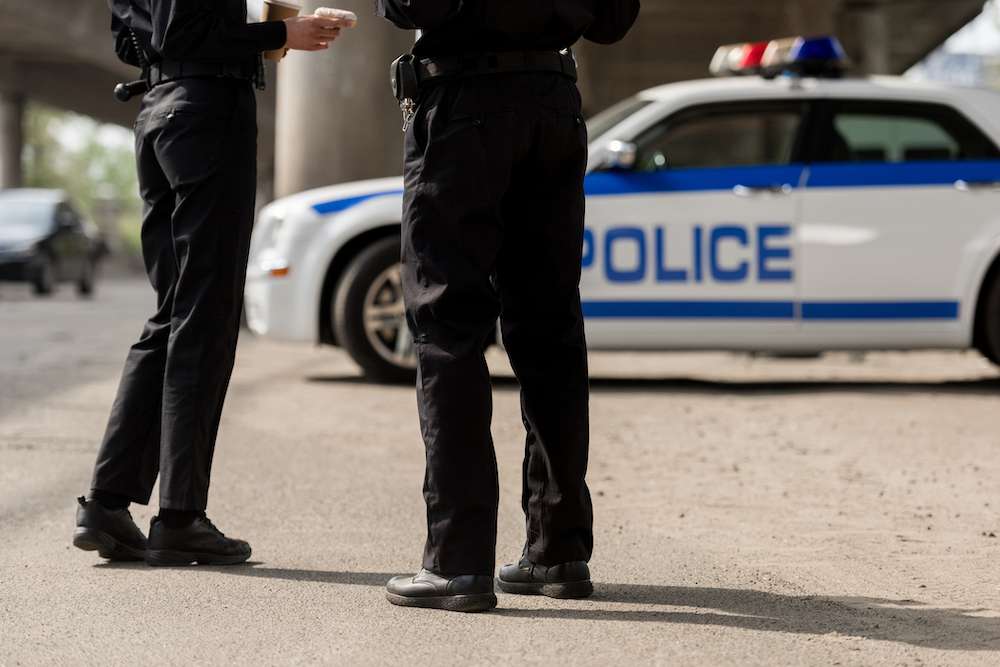
    The fentanyl overdose death of a police officer in Maine has sparked inquiry into the drug testing policies of police departments across the state. How could Nicholas Meserve’s drug problem have gone undetected?

    The 34-year-old Lewiston police officer died of acute fentanyl intoxication on February 8, according to the state medical examiner.

    “I was kind of shocked,” said John Rogers, director of the Maine Criminal Justice Academy. “I’d never seen that in my time here as a director, where you have an officer who dies of an overdose because he has a drug problem.”

    A report by the Portland Press Herald revealed that universal drug-testing policies are not the standard, but an exception in Maine.

    Only one town, Baileyville, does pre-employment drug testing, testing with probable cause and random testing. Only two others, Houlton Police and the Penobscot County Sheriff’s Office also conduct pre-employment drug screenings.

    In Portland, prospective police officers must complete a questionnaire on past drug use as part of the department’s rigorous hiring process. They must also undergo psychological testing and a polygraph exam. Any red flags raised in the process are investigated further, said acting Portland Police Chief Vern Malloch.

    Malloch gives a detailed overview of the Portland Police Department’s policy regarding officers’ behavior. Once they are hired, they are subject to performance reviews. Their patterns of behavior are monitored with data to detect any irregularities.

    And if there is a problem, officers have the option to seek help with an employee assistance program or a peer support system. Malloch says the department has helped officers get help for their depression and alcoholism.

    “The last thing we want to do is discourage employees from coming forward because (they think) it will cost them their job,” said Malloch. “We want employees to come forward so we can address it adequately and get the person well so they can return to being a productive officer.”

    Typically, alcohol abuse is the “more common” issue among police, says John Rogers. Between 2008-2016, the Maine Criminal Justice Academy board saw 25 cases of drug-involved criminal conduct or past actions by police or corrections officers, the Press Herald reported. In that same period, the board saw 69 alcohol cases, many of them for operating under the influence.

    As a result of Meserve’s untimely death, Lewiston Police Chief Brian T. O’Malley said the city is working with the police unions to establish a drug-testing policy so that another officer with a drug problem may not go undetected.

    As the Press Herald reports, Lewiston does offer an employee assistance program and peer support team for officers in need. They also track each officer’s use of force, how much sick time is used, job performance evaluations and complaints from the public.

    Meserve’s record made no indication that he was struggling with drug use, O’Malley said.

    View the original article at thefix.com

  • Dramatic Rise In Fentanyl Deaths Marks Third Wave Of Opioid Crisis

    Dramatic Rise In Fentanyl Deaths Marks Third Wave Of Opioid Crisis

    From 2011 to 2016, Black Americans experienced the sharpest rise in fentanyl-related deaths with a 141% increase.

    Fentanyl overdose rates have been rising at very sharp rates among minorities, including African Americans and Hispanic Americans, according to new data compiled by the Centers for Disease Control and Prevention (CDC). 

    The data looked at fentanyl overdose rates between 2011 and 2016. Researchers found that the fentanyl overdose rate for African Americans rose the fastest out of any ethnic group—increasing, on average, 141% each year.

    Hispanic Americans also showed a dramatic increase of 118% each year. Non-Hispanic whites saw their rates of fentanyl overdoses increase 61% each year, on average. 

    African Americans and Hispanic Americans still have lower overdose rates overall—5.6 and 2.5 deaths per 100,000 respectively. Whites, by comparison, continue to have the highest fentanyl overdose rates at 7.7 deaths per 100,000.

    However, lead study author, Merianne Rose Spencer, said it’s important to note that the overdose rate for Black Americans is rising at more than double the rate of white Americans, according to The Washington Post

    Overall, the data showed shocking increases in fentanyl overdoses in all demographics. 

    “Beginning in the fourth quarter of 2013, the number of deaths increased every quarter. From 2013 through 2014, the death rate more than doubled, nearly doubled again from 2014 through 2015, and more than doubled again from 2015 through 2016,” report authors wrote. 

    The CDC’s mortality statistics branch’s chief, Robert Anderson, said that the severity of the fentanyl overdose crisis is clear. “We’re seeing it across the board,” he said.

    The rate of overdose accelerated in 2014, when, according to Ohio Senator Rob Portman, fentanyl “came on with a vengeance.” “We were making progress, starting to get this stuff in the right direction, and the fentanyl just overwhelmed the systems,” he said this week. 

    Although the recently released data didn’t cover 2017 or 2018, there are indications that the pace of increase of overdoses has slowed in the last two years. Preliminary numbers show that 70,424 died by August of 2018, compared with 72,287 deaths by November of 2017. 

    Anderson said the numbers suggest that the rate has plateaued, but is not yet truly reversing. “We would look at that and say that’s pretty flat. We’d be reluctant to call it a real decline,” he said.

    Still, Portman said that the numbers show a step in the right direction, particularly after a long period of dramatic increases. 

    “It is a very significant story that for the first time in eight years we’re not seeing an increase in overdose deaths,” he said. “We feel like it’s still unacceptably high, but we’re cautiously optimistic that we’ve finally turned the corner after eight years.”

    View the original article at thefix.com