Tag: fighting addiction

  • Michael Bloomberg To Spend $50 Million to Fight Addiction

    Michael Bloomberg To Spend $50 Million to Fight Addiction

    Michael Bloomberg wrote about his intentions to fight the opioid epidemic in the 10 states hit hardest by it in a recent op-ed. 

    Former New York City mayor and billionaire Michael Bloomberg announced that he will spend $50 million to fight the opioid epidemic, focusing on 10 states that are hardest-hit by drug overdoses. 

    “The opioid epidemic is a national health crisis of historic proportion. Yet the federal government is still not tackling it with the urgency it requires,” Bloomberg wrote in an op-ed for USA Today.  “What’s truly needed is a comprehensive strategy that includes the policy changes necessary to stem the epidemic and overcome barriers to treatment. We are not waiting around for the federal government to provide that strategy.”

    Grants will be made through Bloomberg Philanthropies, beginning with a three-year grant to Pennsylvania, which is expected to be about $10 million, according to The Washington Post. Pennsylvania has an overdose rate of about twice the national average but also has an innovative approach to fighting drug addiction, including an Opioid Command Center that meets weekly. The Bloomberg grant will help support that and similar programs aimed at reducing the overdose death rate. 

    “States have already been leading in ways Washington hasn’t, and foundations can offer resources and expertise that can help them accelerate their work now,” Bloomberg wrote. 

    Pennsylvania Gov. Tom Wolf said that his state was chosen because they’re already doing good work in fighting the opioid epidemic but still have lots of problems to confront. 

    “I think Bloomberg Philanthropies was looking for a commonwealth or a state that was actually doing something,” Wolf told The Washington Post. “What I would hope is we can use the $10 million as a really generous add-on to the kinds of things we’re already doing.”

    Bloomberg hopes to fund initiatives that can be replicated and help solve the overdose epidemic nationally. 

    “What we think we can do with $50 million is show the way in these 10 states,” Bloomberg said. “If they do things that we think make sense, then we will help fund it.”

    It was not immediately clear which other states would benefit from Bloomberg’s grant money. However, the philanthropist hopes that the funds will make a difference to families across the nation.

    “The pain, suffering, and death from opioid abuse is truly a national emergency. In just the time it took to read this commentary, another child has been removed from his or her parents’ care because of a parent’s opioid use,” he wrote. “Solving this crisis will not be easy. But states have a chance to show the federal government that bolder actions can save lives. And with so many communities crying out for leadership, there is no time to waste.”
    View the original article at thefix.com

  • Black Hawk Down Hero Fights For Veterans With Addiction

    Black Hawk Down Hero Fights For Veterans With Addiction

    The retired hero discusses the turning point that led him to become an advocate for veterans with addiction in a recent interview. 

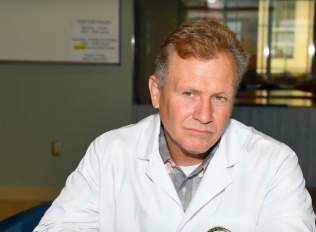
    Heroes come in many forms, and now a soldier who fought in the battle documented forever in its namesake movie—Black Hawk Down—is finding himself a different kind of hero than he once was. After serving the country as a soldier, he now helps veterans with opioid addiction.

    The famous battle began Oct 3, 1993 when then—U.S Army Master Sergeant Norm Hooten went in as Delta force team leader for the assault force in Mogadishu, Somalia. Hooten and his team flew in to Somalia to capture command members fighting for a warlord.

    “It ended up being a lot more than we thought it was going to be,” Hooten recalled in KOMO News.

    Horrifically, as the American team left the completed mission, one of the helicopters—a Blackhawk—was brought down in enemy fire. Hooten and his team returned to find and rescue the downed copter, spending 18 hours of battle fighting toward the site, and then bringing home the dead soldiers. In the end, 18 American soldiers were killed. Hooten’s squadron was hit particularly hard with more than half wounded.

    “Not only were we rushing to get there,” Hooten said. “Every other hostile militiaman in that city was doing the same thing. We were going to go in and recover every person that went in if it took us forever to do so.”

    Twenty years later, one of Hooten’s team members died. He lost his life not to enemy soldiers, but to opioid addiction. “I used to think of it [drug addiction] as a choice,” Hooten admits. “But it’s really not a choice. It’s truly a disease.”

    Hooten was grief-stricken and enraged in a new way.” It was a different feeling losing a dear friend to a drug overdose than one in combat,” Hooten said. “Both are tragic but one is a little more acceptable than the other as far as I’m concerned.”

    Hooten felt a later-in-life call to service, and at age 55 he received his doctorate of pharmacy. He is now a clinical pharmacist at the Orlando Veteran’s Association, working to support and save veterans with addiction.

    A staggering statistic that moved Hooten to action: opioid abuse has killed more Americans than the Iraq, Afghanistan and Vietnam wars combined. Due to PTSD and pain resulting from injuries, veterans are prescribed opioids and more at risk for opioid addiction.

    This past Veteran’s Day, vets had a rally pushing for more access to legal cannabis for the treatment of pain through the Department of Veterans Affairs.  “Use cannabis, die less,” Mike Krawitz, a 56-year-old disabled U.S. Air Force veteran told Marijuana.com.

    If you are a veteran or a service member in crisis, there are resources to help. Please call the Veterans Crisis Line at 1-800-273-8255 and Press 1.

    View the original article at thefix.com