Tag: fighting stigma

  • “Crack Pie” Is No More

    “Crack Pie” Is No More

    The restaurant industry is moving away from describing food as “crack.”

    Crack Pie is no more. Milk Bar’s buttery, gooey signature dessert Bar is taking on a new name: Milk Bar Pie.

    The change is part of a larger shift in the restaurant industry toward abandoning the use of the word “crack” to describe delicious food.

    Milk Bar founder and James Beard award-winning chef Christina Tosi explained the decision to her team in a statement. “Our mission, after all, is to spread joy and inspire celebration. The name Crack Pie falls short of this mission.”

    Gastropub chain HopCat made a similar decision last December, when it decided to drop the name “crack fries”—referring to beer-battered french fries in cracked pepper seasoning. The menu item’s new name was announced in January—Cosmik Fries.

    “When we came up with it 11 years ago, it was tongue-in-cheek, and we didn’t put a lot of reflection into it,” said HopCat spokesman Chris Knape. “Times change, we’ve changed and we decided to make a change.”

    As far as we know, this issue was first raised by The Fix contributor Dean Dauphinais in his 2015 blog post “Why Do People Think Crack Cocaine Is Funny?

    “Why crack has been singled out as the go-to drug when trying to be witty is completely lost on me,” Dauphinais wrote.

    A recent Washington Post article also questions the idea of “so good it’s like crack.”

    “The callousness with which people throw around the word ‘crack’ isn’t the same with other drugs,” writes Maura Judkis. “We don’t call any desserts ‘opioid pie,’ even though those drugs… are highly addictive, too.”

    San Francisco Chronicle food critic Soleil Ho listed “crack” and “addictive” among her “Words you’ll never see me use in restaurant reviews”—an article published in February.

    “No matter how delicious something might be, its effect on me is nothing close to what crack does to people and their families,” wrote Ho. She doesn’t fail to mention Milk Bar’s “Crack Pie” and how Tosi has been playfully referred to as a “crack dealer.”

    “Addictive” is another word thrown around when describing food so good that you can’t put it down. “I’ve used this before in a few contexts, and I realized after talking to friends and colleagues who struggle with real-world addiction that it’s a word that I need to ease out of my food writing,” Ho says.

    While stuff like this may not appeal to old-school folks who aren’t down with the PC police, HopCat spokesman Knape says it’s less about being politically correct and more about recognizing a serious issue that should be treated as such.

    “It’s not a reflection of us wanting to be politically correct as much as wanting to present an image to the world that’s inclusive and recognizes that what may have been funny 11 years ago never really was,” he said.
    View the original article at thefix.com

  • "Wear Your Meds" Buttons Help Fight Stigma Against Mental Health

    "Wear Your Meds" Buttons Help Fight Stigma Against Mental Health

    Creator Laura Weiss hopes her pinback buttons can spark conversations and break down the stigma surrounding mental illness.

    When Lauren Weiss took control of her mental health and began taking medication for bipolar disorder, she knew that she wanted to be an advocate for mental illness. Weiss studies advertising at Miami Ad School in New York City, so it was natural that she searched for a quick, engaging visual cue to open conversations about her condition. 

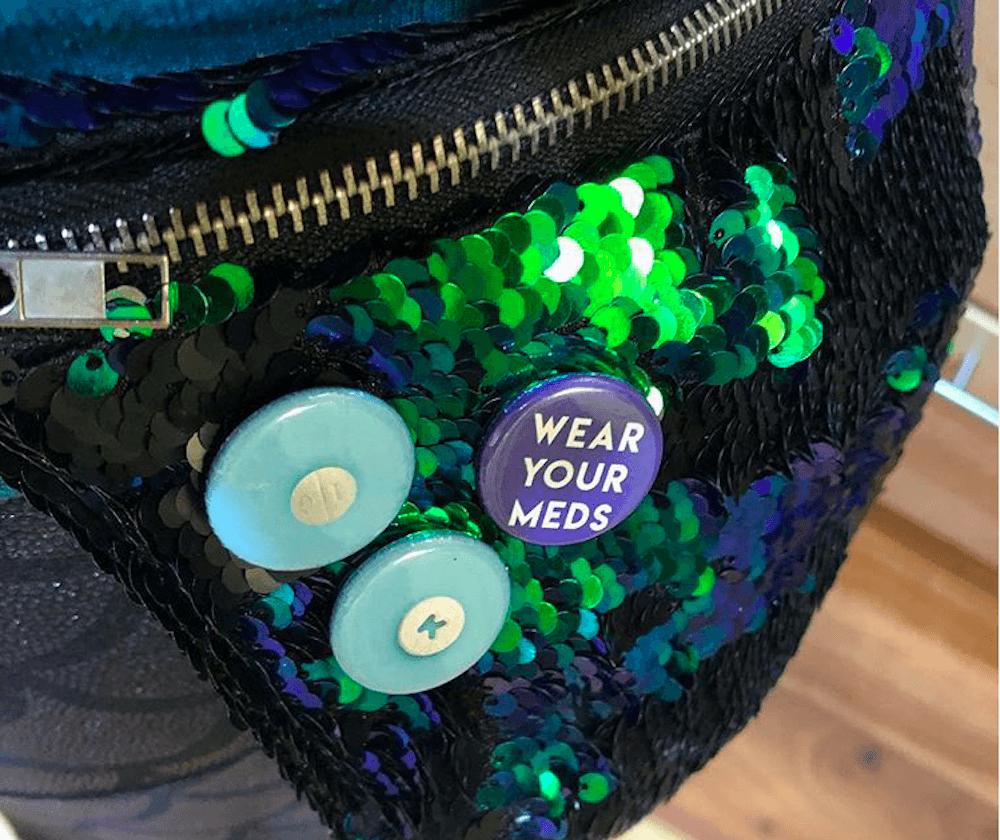
    Weiss designed pinback buttons depicting common psychiatric medications, like Xanax and lithium. Another button proclaims “Wear Your Meds,” summing up the mission of her project. Weiss told Fast Company that the buttons, which started as a class project, are a way to spark a conversation around mental health. 

    “[It’s a] symbol that represents the story you want to tell, and a gateway into your personal story,” she said. “I know that not everybody wants to be an activist about mental health. With something like the buttons, I think it’s a little more accessible for people who maybe are open to sharing their story, but don’t want to be shouting about it on the streets. They can have this button, and it’s an easy way for people to see it and maybe ask about it.”

    Weiss said that she doesn’t expect everyone to be comfortable broadcasting what medications they are on. Some people have said to her that they are afraid they would be fired or otherwise discriminated against if they were open about their mental health condition and the medications that they are taking. 

    However, she said the buttons allow people who are interested in sharing their story to help break down stigma. 

    “People like me who are talking about this from a position of privilege, in a community where we can feel safe talking about it, are the people who ultimately have to do the heavy lifting and have to do the work around this in order for that stigma to start to be lifted for people in communities that don’t feel comfortable talking about it right now,” she said. 

    Weiss is now selling the buttons online, with proceeds to benefit the National Alliance on Mental Illness. 

    “When you ‘wear your heart on your sleeve,’ it means you’re being honest, open, and vulnerable. When you wear your meds on your sleeve, you’re doing the same,” her website reads. 

    Weiss’ buttons depict 14 different pills commonly used for treating mental health conditions: Zoloft, Lithium, Adderall, Ativan, Klonopin, Desyrel, Lexapro, Lamictal, Effexor, Cymbalta, Celexa, Wellbutrin, Xanax, and Prozac.

    View the original article at thefix.com

  • Fentanyl Brunch Joke Lands Restaurant In Hot Water

    Fentanyl Brunch Joke Lands Restaurant In Hot Water

    An Ohio pub issued a public apology after parodying Cap’n Crunch with a joke menu item called “Oops! All Fentanyl.”

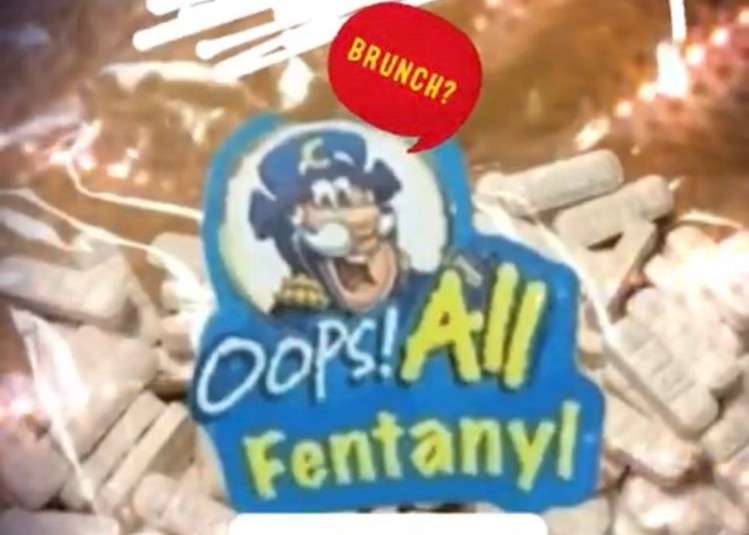
    Some jokes are best untold, as one restaurant and pub in Lakewood, Ohio is learning after a bungled social media post. On their Instagram account, the restaurant Yuzu posted a photo of a bag of fentanyl labeled “Oops! All Fentanyl” and “New brunch special? Sat & Sun.”

    The “joke” was likely referring to how many opioid drugs being sold have been unexpectedly cut with fentanyl, which has led to accidental fatal overdoses. Many Instagram users who saw it were not amused.

    “Screenshot from Yuzu Lakewood’s IG story. Not at all cool,” one person responded. “Making a joke of the opioid crisis is never funny ever.”

    The establishment’s owner, Dave Bumba, seemed to ignore the controversy his social media account created for about three days before finally responding on Facebook.

    “First, it’s never our intention to cause any malicious offense, and for that I do genuinely apologize for,” Bumba wrote in the post. “There’s a generational gap of humor; our target demo is 21 to 34. I’m aged out of our demo myself. Younger generations have developed a different sense of humor that more abstract, surreal, and darker than previous generations.”

    Bumba stopped short of calling the backlash a result of political correctness, instead turning into a meta-analysis of what’s a relatable coping mechanism versus what’s actually offensive.

    “It would be easy for me to blame this simply on an overly-politically-correct culture. A loud subset of people have been trained to seek out a reason to be offended. And while this might exist on some level, seeing some of the constructive criticism also made me think retrospectively about our social media content choices,” he posted. “Just because something exists and is perceived to be liked by enough of a subset of our demographic, does that make it the socially right choice to be relatable content?”

    Users considered the statement a non-apology, calling Bumba out on using a generational gap as cover.

    “Rather than sincerely apologizing for your offensive posts (which personally are not clever or funny and were in very poor taste), you backpeddle and still try to place blame on those you offended by implying they aren’t young or hip enough to get the joke,” wrote a user.

    Fentanyl has accelerated the number of deaths in the opioid crisis, hitting areas like Arizona especially hard. There, deaths from fentanyl overdoses have tripled between 2015 and 2017, mostly due to users believing they had a weaker opioid, like oxycodone, in hand.

    Street fentanyl is often disguised as legitimate prescription opioids, but these bootlegged pills are often made in primitive conditions with no quality control. And it only takes a little bit of fentanyl to send users into overdose.

    Users, including those of the targeted millennial demographic, have commented explaining why the joke wasn’t funny. Yuzu hasn’t posted anything further.

    View the original article at thefix.com

  • #MyFavoriteMeds Hashtag Fights Psychiatric Medication Stigma

    #MyFavoriteMeds Hashtag Fights Psychiatric Medication Stigma

    People who rely on medication to keep their mental health in check sometimes experience judgment from others, but this social media movement is trying to change that.

    People who take pills for their mental health sometimes are chastised for pumping themselves full of unnatural chemicals in a last-ditch effort to hold themselves together.

    In truth, the pills can save those who take them. It’s yet another facet of mental health stigma that needs fighting, and the Instagram hashtag #MyFavoriteMeds is doing its part by giving users the opportunity to reflect on the positive impact these medications have had on their lives.

    The hashtag was started by Jen Gotch, who hosts a podcast about mental health called Jen Gotch is OK… Sometimes, after she posted a photo of a pill sitting in her open palm. Fellow podcaster Georgia Hardstark, who co-hosts My Favorite Murder, followed suit and posted a photo of her own hand full of the mental health pills she takes. 

    “Good morning from my crew. (Effexor & Wellbutrin) Inspired by @jengotch,” Hardstark captioned her post. “Show me yours, hashtag #myfavoritemeds (credit to @graceisgold). #hardstarking”

    Fans of the MFM podcast picked up on the hashtag and the movement took off. With the hashtag taking over in an online public space, Gotch and Hardstark hope to make others who also rely on such drugs feel safe to speak about it. Otherwise, those who really need these medications may hesitate to seek out a prescription because they feel ashamed and alone.

    “Taking medication for mental health has always been a normal thing amongst my family and friends, so I sometimes forget that it’s a taboo subject for so many people,” Hardstark told Bustle. “As soon as I saw Jen Gotch’s post showing her medication it hit me what a simple but powerful message it was to just say ‘I need a little help and I’m not ashamed of it.’”

    The “little help” the medications provide isn’t the whole solution, but it can be a critical component of some mental health treatment plans.

    “Medication is not a cure all. It’s important to have a holistic approach to your personal and mental wellness,” said Gotch. “But for those of us that suffer and are committed to doing everything we can to feel good, it is a vital part of the equation. Treating your mental illness is a major responsibility that should be approached with self awareness, emotional intelligence, knowledge, and qualified professional help.”

    The #MyFavoriteMeds hashtaggers want to push the message that medications aren’t a last ditch, desperate attempt to treat mental health issues by a weak person but an equally viable treatment used in tandem with therapies and lifestyle changes.

    “I think it’s important to let people know that having your shit together isn’t an easy thing, and attempting to make your life better through pharmaceuticals is something that demonstrates self-care, not weakness,” Hardstark shared. “I’ve read so many of the posts from the hashtag and it just fills me with hope, which is hard to come by these days.”

    Lately, many high-profile people with platforms have spoken out about their own struggles to fight the stigma that surrounds mental health. Ellen DeGeneres recently spoke about her fight with depression on the podcast Armchair Expert. Comedian Pete Davidson also has been candid about his own issues, and rapper Lil Xan publicly shared that he was going to rehab.

    View the original article at thefix.com

  • Elizabeth Vargas On Going Public With Alcoholism And Anxiety

    Elizabeth Vargas On Going Public With Alcoholism And Anxiety

    “If I’ve helped one person, I feel really great, but I hear from people daily. That makes me feel like it was worth it to be as brutally honest as I was.”

    In 2014, former 20/20 anchor Elizabeth Vargas went public in a series of interviews, sharing her struggles with alcoholism and anxiety. Now she is opening up about the life-changing events that followed her decision to be transparent with her battle.

    After the release of her memoir on addiction and anxiety in 2016, Between Breaths: A Memoir of Panic and Addiction, Vargas interviewed with The Fix.

    “Every person battling addiction is going through hell,” she said. “There’s still a lot of judgment. People say, ‘You chose to do that.’ But why would anybody choose to destroy themselves and the lives of everybody precious to them?”

    Telling People magazine that putting her story out in the world was “one of the hardest and most rewarding things I’ve done,” Vargas—now the host of a new A&E series Cults and Extreme Belief—reflected on the changes in her life since the publication of her memoir.

    “If I’ve helped one person, I feel really great, but I hear from people daily,” she told People. “That makes me feel like it was worth it to be as brutally honest as I was.”

    Vargas was so inspired by the positive public response to her story that she now travels the country, speaking out about alcoholism and anxiety. Her hope is to minimize the stigma surrounding those issues, in direct contrast with her feelings during the worst years.

    “I felt very alone when I was in the grip of the disease,” she said to People.

    Elizabeth Vargas suffered with anxiety from the time she was very small, which worsened as she entered her early forties and after the birth of her son.

    In her interview with The Fix, Vargas noted that in research with Diane Sawyer for a 20/20 special, they learned that 63% of women with alcoholism also battle anxiety, and women who struggle with anxiety are at two times the risk of relapse.

    Vargas told AARP that her anxiety got so bad that she had experienced an anxiety attack on live television. Unable to pinpoint exactly what the turning point was from alcoholism to sobriety, Vargas now credits meditation, gratitude and her experiences in rehab and therapy, along with the active involvement of her parents and sibling, for her enduring sobriety.

    Vargas told CKTV 5 News, “I feel grateful that I could take what was a painful part of my life and make something good out of it.”

    View the original article at thefix.com