Tag: Florida

  • Couple Accused Of Running Mobile Home Drug Drive-Through

    Couple Accused Of Running Mobile Home Drug Drive-Through

    A string of overdose cases led authorities back to a mobile home with a makeshift drug-dealing drive through.

    Authorities busted a drug-dealing couple in Florida who were found running a drive-through service for illicit drugs out of the kitchen window of their mobile home. The drive-through experience was complete with signs directing traffic flow and open/closed signs.

    William Parrish Jr., 32, and McKenzee Dobbs, 20, reportedly put together the whole system, according to Ocala Police, to prevent their business from drawing unwanted attention from customers constantly entering and exiting their abode. But several overdoses in the area, presumably by their products, were what finally brought the long arm of the law to their door.

    “We were seeing some overdose incidents that were happening in this particular area, specifically at this particular location,” said Capt. Steven Cuppy of the Ocala Police. “There [were] some heroin sales that were going on there. Subsequently, through the investigation, we were able to determine that product was laced with fentanyl.”

    Parrish has been charged with driving under the influence, keeping a dwelling used to sell drugs, possession of drugs with intent to sell and resisting arrest without violence. Dobbs was slapped with keeping a dwelling used to sell drugs, possession of drugs with intent to sell, possession of fentanyl and possession of fentanyl with intent to sell.

    Parrish’s father, William Parrish Sr., claimed his son was trying to get his life back on track and was visiting a methadone clinic. “He’s been trying to get himself straightened out,” Parrish Sr. said.

    Parrish Sr. maintains that the reports of the overdoses are “a lie.”

    This isn’t the first time dealers have tried to use the convenience of a drive-through to do business. Last year, a pair of Burger King employees were caught using the fast food chain’s drive-through to deal cannabis.

    Customers in the know would speak to the drive-through in code, asking if “nasty boy” was working and, if so, if they could have their “fries extra crispy.”

    This was the cue for Garrett Norris, 20, and Meagan Dearborn, 19, to slip a little bit of marijuana in with the order and collect the payment at the second window. The pair were caught in a police sting, though Dearborn later claimed that she simply handed over the food and never knew what was stashed inside.

    View the original article at thefix.com

  • Smoking Pot Can Disqualify You From Cannabis Jobs

    Smoking Pot Can Disqualify You From Cannabis Jobs

    “Sometimes you can get by with a low-level, misdemeanor possession charge, but not always,” said one medical marijuana job recruiter.

    Medical marijuana is creating about 25,000 new jobs in Florida, but smoking cannabis disqualifies many people from working in the industry, according to a report by The Orlando Sentinel

    “We get hundreds of applications for every job opening we have, and maybe only 10% of those are qualified and meet the legal requirements,” said Michelle Terrell, spokesman for Curaleaf, a Massachusetts-based company that opened a dispensary in south Orlando in August. 

    In Florida, state law requires that marijuana workers have a clean criminal background check with no felonies. Drug-related offenses, including smoking marijuana, can derail applicants, said James Yagielo, founder of HempStaff, a Miami-based medical marijuana recruiting firm.

    “Sometimes you can get by with a low-level, misdemeanor possession charge, but not always,” Yagielo said.

    Because of this, he advises people not to mention their illicit drug use in an interview, even if they feel that their experience with marijuana helps explain their qualifications. 

    “For a lot of people at the entry level, they say they want to get into this industry because of a passion for cannabis,” he said. “We usually tell them they should avoid bringing up any illegal activity regarding cannabis in an interview.”

    Because of the more intense screening process, the marijuana industry pays slightly more than other service industry jobs in Florida, with entry-level wages between $11 and $15 an hour. This makes the industry appealing to many people who aren’t intimidated by the requirements. The industry already created nearly 3,000 jobs during 2017 and is expected to grow to 25,000 jobs by 2022.

    “We need customer-experience specialists, we need drivers and we’ll be expanding our phone operations,” said Scott Klenet, a spokesperson for Knox Medical, a cannabis dispensary that is “aggressively hiring.” 

    “And what we find is that people come from all walks of life,” Klenet added. 

    Catie Callahan, 34, gave up a management job at a national grocery chain to open the new Orlando Curaleaf dispensary. She said that she sees cannabis as a business opportunity that she did not want to pass up.

    “I took a class on medical marijuana regulations last year, and I’ve been keeping my eyes open for an opportunity,” she said. 

    She considered the way that working in medical marijuana would impact her career and ultimately decided that the benefits outweighed the risks. 

    “There is a stigma, but I’m not worried about leaving this business and not being able to get a job because I worked in medical marijuana.”

    View the original article at thefix.com
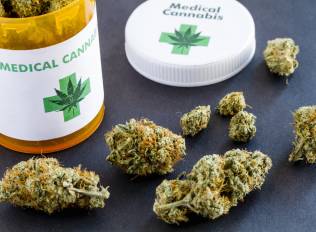
  • Wells Fargo Closes Political Candidate’s Bank Account Over Marijuana

    Wells Fargo Closes Political Candidate’s Bank Account Over Marijuana

    The bank reportedly decided to terminate the account after being told the candidate’s campaign would accept donations from MMJ-related entities.

    Florida political candidate Nikki Fried claims that Wells Fargo Bank recently terminated her bank account because of her stance on marijuana

    On Monday (August 20), Fried’s campaign shared the details of what transpired.

    According to the Washington Post, Wells Fargo asked if Fried, who is running for Florida agriculture commissioner, would accept donations from the medical marijuana industry.

    When the campaign replied that it would accept donations “from lobbyists for the medical marijuana industry, as well as from executives, employees and corporations in the medical marijuana industry,” the bank decided to terminate Fried’s account, citing its “responsibility to oversee and manage banking risks.”

    According to the campaign, the decision had to do with the candidate’s “relationship to the medical marijuana industry.”

    Wells Fargo’s decision once again sheds light on the complicated relationship between the legal marijuana industry and financial institutions.

    A rep for Wells Fargo stated that it is the bank’s policy “not to knowingly bank or provide services to marijuana businesses or for activities related to those businesses, based on federal laws under which the sale and use of marijuana is illegal even if state laws differ.”

    Businesses operating in states where marijuana is legal in some form must contend with the fact that marijuana remains illegal under federal law. In fact, by the federal government’s definition, cannabis is as dangerous as heroin—defined as “drugs with no currently accepted medical use and a high potential for abuse.”

    As Federal Reserve Chairman Jerome Powell stated, the disparity between state and federal marijuana laws “puts federally chartered banks in a very difficult situation.”

    As a result of many banks’ reluctance to deal with legal marijuana businesses, many must operate as cash-only, making them a target for robberies.

    However, new data shows that the tide might be turning. In June, Forbes reported that the number of banks and credit unions that are willing to work with marijuana businesses has been “steadily climbing.”

    The data came from a report from the U.S. Treasury Department’s Financial Crimes Enforcement Network (FinCEN).

    Fried criticized Wells Fargo’s decision to terminate her campaign’s account. “Wells Fargo’s actions against my campaign are emblematic of what is wrong with our government and politics today,” she said in a Monday press conference.

    View the original article at thefix.com

  • 5 Tips for Parents Dealing With Teen Substance Abuse

    5 Tips for Parents Dealing With Teen Substance Abuse

    Catching substance abuse early can help guide a teen back on track and potentially avoid years of physical, emotional, financial and legal repercussions.

    Teen substance abuse is serious. According a survey conducted by the National Institute on Drug Abuse (NIDA), more than 7,800 people in the US begin using illicit drugs every day and more than half are under the age of 18. Finding out a teen is using drugs can be a scary and stressful experience for a parent. 

    The good news is that there’s help! Safe Landing in Miami, Florida is a treatment center that focuses exclusively on adolescent addiction treatment. This is a great option for families seeking help for substance abuse. This facility offers client-centered care using evidence-based methods including behavioral therapy techniques, mindfulness training and other life skills that are crucial to teens developing a healthy sense of self. 

    Searching for credible substance abuse resources can be overwhelming. The first thing to do is to take a step back and analyze what is going on. To help cut through the confusion, we have put together a list of tips to guide you through the process of getting your child help.

    1. Don’t assume it’s just a phase. 

    Safe Landing understands that most adults who face substance abuse disorders started using drugs or alcohol as teens. While some adults will excuse teen substance abuse as “experimentation” it is important to remember that nobody sets out to become an alcoholic or an addict. Often, addiction begins as social or “fun” and can escalate quickly based on mental and emotional health and other factors. Sure, teens will go through many phases as they mature. However, unlike other short-term stages in your teen’s development, using drugs can have permanent consequences.

    Catching substance abuse early can help guide a teen back on track and potentially avoid years of physical, emotional, financial and legal repercussions. Treatment at Safe Landing recognizes the importance of this and focuses on getting teens sober and teaching them how to stay that way. Safe Landing blends treatment and education through virtual schooling, in-class instruction for core subjects, GED, SAT, ACT and college prep and career coaching. Life skills training includes developing crisis management skills, healthy nutrition and fitness routines, financial accountability, time management and effective communication.

    2. Empathy is vital—for your child and yourself. You’re not to blame, but your job is to find a solution. 

    When you first discover your child is using drugs or alcohol, you will probably be angry. This is a perfectly natural reaction, but try not to lash out because this may push them deeper into self-destructive behavior. Remember, just because you have lost trust in them doesn’t mean they have lost trust in you. Keeping the lines of communication open with your kid during this difficult time is crucial. You are not responsible for your teen’s bad decisions, but your job as a parent is to help them learn to solve problems.

    Often, you are only seeing the symptoms—things like changes in hairstyle, dress, broken curfews and trouble at school—not the deeper problems. Teens struggle with an array of complex issues that can manifest as substance abuse. Difficult emotions, peer pressures, family dynamics and underlying mental health issues can all reinforce self-destructive coping mechanisms. Finding professional help for the underlying causes of your teen’s drug abuse is the first step in the healing process. 

    3. Be on the same page with your co-parent and follow through.

    You probably already know that parenting is one of the hardest jobs in the world. This can be even more difficult if you are doing it alone or at odds with your child’s other parent. When it comes to dealing with a crisis, it is crucial to be in close communication with your co-parent and present a united front to your child. If you decide to send your child to rehab, both parents should make the decision together and follow through with the required steps.

    Having a treatment professional mediate the process can be useful in situations where emotions are running high. With this in mind, the admissions department at Safe Landing can work with the entire family to make sure everybody understands the options. Finding the right program is important for recovery, Safe Landing offers several options including inpatient care, a Partial Hospitalization Program (PHP) and an Intensive Outpatient Program (PHP).

    4. Get support for yourself.

    Dealing with a child who is struggling with substance abuse is stressful. It is important that you find support for yourself so you can manage the added pressure and cope effectively. Safe Landing can provide resources for the whole family, including family therapy that includes your child and referrals for support groups or counselors for yourself. There’s no shame is getting help, for you and for your child. Finding extra support during a troubled time can help you be at your best for your family.

    5. Be prepared to support your child in long-term lifestyle changes.

    The goal of treatment is to facilitate a lasting change in your child. Be prepared for your home life to adjust accordingly. There may need to be more structured boundaries in the home, a new style of communication, a different schedule or transportation to meetings or counseling sessions provided. These things can all help your child develop a firm foundation in recovery. You may need to continue in family therapy or an outside support group beyond the initial treatment. The team at Safe Landing can support you and your child every step of the treatment process. Having professionals who are trained to deal with teen substance abuse can help you make informed decisions that are best for your family.

    Even great parents have kids who struggle with substance abuse. Unfortunately, for some teens, anti-drug messages are not enough and rather than resisting the lure of drugs, they gravitate toward them. Ultimately, each teen makes the decision to use or not to use. As a parent, if you discover drugs or paraphernalia in your home, you may wonder where you can turn for help.Fortunately, there are specialized programs like Safe Landing in Miami designed to work with families to support recovery and a successful future for everyone.

    Reach Safe Landing by phone at (888) 982-6244 or by email at info@safelandingrecovery.com. Find Safe Landing on Facebook and YouTube.

    View the original article at thefix.com