Tag: gambling addiction

  • Japan Wants To Use Facial Recognition To Fight Gambling Addiction

    Japan Wants To Use Facial Recognition To Fight Gambling Addiction

    If approved, the project could launch as soon as 2021.

    Gambling venues in Japan have been asked by government officials to implement facial recognition systems in order to restrict access to their facilities by those suffering from gambling dependency.

    The move will attempt to address concerns over a possible increase in gambling addiction with the launch of a long-gestating casino resort project, which was approved in 2018.

    The proposal offers a multi-pronged strategy, including increased treatment and support for those who suffer from gambling dependency, and assistance from the gambling industry itself and the National Police Agency to enforce stricter regulation of illegal gambling. The government is currently seeking public opinion on their plan, and if approved, will launch in 2021, which will coincide with the construction of casino resorts.

    As the Nikkei Asian Review reported, concerns over gambling addiction held up legislation approving the establishment of casino resorts for nearly two decades. A 2017 survey by the country’s Ministry of Health Labor and Welfare suggested that gambling addiction impacted 3.6% of Japan’s adult population – an estimated 3.2 million people – which is considerably higher that rates in countries like France, where it stands at 1.2%, and the United States, where statistics suggest that approximately 1% of adults meet the criteria for gambling dependency. 

    But with the July 20, 2018 passage of the legalization bill, the government has sought to ally fears through programs like the facial recognition systems. These would be installed in racetracks and pachinko parlors across the country, and would identify people with gambling addiction whose families have requested that they be restricted from entering such places. The request system will reportedly be introduced in pachinko parlors by March of 2020.

    In addition to the facial recognition and request systems, the government has proposed additional measures for 2020, including a limit on the number of tickets that identified gambling addicts may purchase online for horse and boat racing, as well as the installation of consultation offices on and treatment and support centers for gambling addiction in all major cities and prefectures.

    The government has also schedule a public survey on issues tangential to gambling addiction, including its relationship to poverty, abuse, suicide and debt.

    Prior to those efforts, the government’s Welfare Ministry has reached out to the gambling industry itself to develop guidelines for advertising that will not, as the Japan Times stated, “fuel people’s desire to gamble.” The Education Ministry will increase education in the nation’s schools about gambling dependency, while the National Police Agency will instruct its regional police departments to enforce tighter restrictions on illegal gambling.

    According to Gambling Insider, the government has submitted its proposal to the public, which will be able to weigh on the strategies until March 27, 2019. If it gains public approval for its plan, the government will finalize its policy by the end of April 2019 and begin implementing facial recognition systems in 2021.

    View the original article at thefix.com

  • Scientists Used Gambling Monkeys To Try To Figure Out Addiction

    Scientists Used Gambling Monkeys To Try To Figure Out Addiction

    The experiment’s goal was to understand which regions of the brain wield influence over decision-making.

    The behavior of a pair of monkeys with a taste for juice—and gambling—may suggest that risky decisions, from high stakes betting to criminal behavior, is less of a personality trait and more an issue of brain circuitry.

    Scientists conducted an experiment in which the monkeys were taught to play a computer game that rewarded them with juice, the amount of which varied depending on the risk level of their decision.

    When the scientists found that a region of the brain involved with eye movements became activated when the monkeys took greater risks, they temporarily deactivated the region—and found that the test subjects made far less rash decisions.

    The research suggests that risk preference is not fixed but adaptable, and by understanding the brain function involved in those decisions, help could be provided for individuals who have “decision-making disorders” like substance or gambling dependency.

    The research, conducted by scientists from Johns Hopkins University and published in the September 2018 edition of Current Biology, sought to determine whether risk-taking was a personality trait—in short, “that some people are risk takers and others are not,” said study co-author and Johns Hopkins associate professor Veit Stuphorn. 

    The scientists devised a computer game in which the test subjects—two rhesus macaques—were offered two choices: one, which provided a guaranteed but small amount of juice, and the other, which might bring a more substantial amount of juice, or none at all. To indicate their choice, the monkey would move their eyes in each round.

    What the scientists found was that the monkeys consistently chose the bigger but less safe option, even in the face of getting consistent but smaller amounts of juice instead of none at all.

    They also discovered that the supplementary eye field (SEF)—a region in the frontal lobe of primates’ cerebral cortex that is involved in eye movement, and possibly in the eye’s role in decision-making—became very active when the monkeys earned a larger reward.

    But as NPR noted, the activity didn’t prove that it correlated with the monkeys’ behavior, so the scientists temporarily deactivated that area of the brain through cooling. Once inactive, the monkeys made safer bets by choosing the smaller but consistent option for juice.

    The study findings do not conclusively determine that the SEF is responsible for high-risk decision-making; rather, it suggests that making risky decisions is not a set and permanent aspect of an individual’s personality.

    The brain might alter those choices based on a number of factors, including the level of reward. It’s also possible that other regions of the brain may be complicit in making high-risk choices. 

    Understanding which regions of the brain wield influence over decision-making could have far-ranging implications in the treatment of conditions that involve rash choices.

    “One would be to help people who have decision-making disorders, whether that’s problem gambling or addiction, or other things like that,” said Michael Platt, the James S. Riepe University Professor of neuroscience, marketing and psychology at the University of Pennsylvania. “We might be able to develop more effective therapies.”

    View the original article at thefix.com

  • Legal Sports Betting in West Virginia Raises Concerns Among Advocates

    Legal Sports Betting in West Virginia Raises Concerns Among Advocates

    “Gambling addiction is a bigger issue than people realize in this state,” said one recovery advocate.

    The March 2018 passage of a sports betting bill in West Virginia has many residents and lawmakers excited over the prospect of a 10% tax on gross gaming revenue, but for recovery advocates across the state, the bill has escalated concerns about the dangers of gambling dependency.

    A feature in The Dominion Post, a commercial daily newspaper in Morgantown, West Virginia, highlighted concerns from mental health advocates and educators, who want the public to understand that gambling dependency carries a set of risks like any other addictive behavior, and can lead to financial and personal problems.

    The feature also detailed various forms of assistance, including a West Virginia-based helpline and support groups, as tools for those struggling with gambling dependency.

    The West Virginia Sports Lottery Wagering Act was fast-tracked through the state House and Senate and passed on March 9, 2018 without the signature of Governor Jim Justice, who eschewed public calls to veto the bill.

    The passage of the bill allows the state’s five gaming facilities to provide access to sports betting; the facilities paid $100,000 each for the right to allow betting, and according to Legal Sports Report, were expected to generate at least $5 million in total first-year tax revenue.

    The measure, which was actively opposed by the National Basketball Association and Major League Baseball, made West Virginia the sixth state in the nation to pass a sports betting bill, after Nevada, Delaware, Mississippi, Pennsylvania and Rhode Island.

    For health and dependency advocates, the passage is also cause for alarm. “Gambling addiction is a bigger issue than people realize in this state,” said Sheila Morgan, director of communications and marketing for the Gamblers Help Network of West Virginia, to The Dominion Post.

    The network, which was established in 2000, provides no-cost assistance to those who believe that their gambling may have reached problematic levels. Network agents assess callers and can schedule a free appointment with a dependency counselor; future appointments are at cost, but those with financial hardships can be covered by the Help Network itself.

    The Dominion Post noted that the network has received more than 2,000 calls alone from Monongalia County, where the newspaper is located.

    Network clients are also encouraged to find and attend support group meetings, which have shown promise in providing help to those with gambling dependency.

    “The treatment of choice for addiction is group therapy,” said Robert Edmundson, clinical social worker and associate professor at West Virginia University. “Only in groups can you really be with other people who you can relate with and identify with.”

    Mental health professionals like Edmundson take a close look at an individual’s behavior when assessing the possibility of a gambling problem.

    “People will often gamble money they don’t have,” he noted. “The cornerstone and behavior that crosses all addiction is loss of control. You’re no longer in charge, it is.”

    Moran said that the Gamblers Help Network is currently focusing its efforts on reaching young people and, in particular, college students, for which gambling can be an issue.

    Earlier this year, LendEDU surveyed 886 Americans that can legally bet and are above the age of 21. The main focus of this survey was to determine the impact legalized sports wagering has on bettors. You can view the full report here: https://lendedu.com/blog/money-behind-legal-sports-betting/

    View the original article at thefix.com

  • Former "Good Morning America” Anchor Details Gambling Addiction

    Former "Good Morning America” Anchor Details Gambling Addiction

    The former weatherman wrote about his secret gambling addiction in his new book, “You Bet Your Life.”

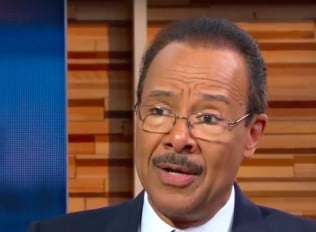
    Erstwhile weatherman and Good Morning America host Spencer Christian pulled back the curtain on his struggles with gambling addiction—and his brush with the FBI, a close call that still wasn’t enough to break the habit. 

    The long-time TV personality struggled mightily with his costly gambling habit, moving around so much money he attracted the attention of federal agents at one point. 

    “Before every gambling trip I’d go to three or four banks where I had accounts and take cash out and then I’d go off and when I’d come back, I’d have all this cash to redeposit, and that fit the pattern of someone covering up drug money or whatever,” the 70-year-old said in a GMA interview last week.

    That sparked interest from the FBI, who thought it fit the pattern of illicit activity. But after investigating, the feds realized he wasn’t doing anything illegal.

    “‘We found no criminal activity, you didn’t break any laws,’” Christian remembered an FBI agent telling him. “He said, ‘You obviously have a real gambling problem, and for your own good you need to seek some help.’ That was a scary moment and it was a huge wake-up call.”

    But that wasn’t the thing that actually got him to turn things around. Instead, it was his family.

    Even though he was able to keep his addiction from interfering with his on-air life, it wreaked havoc at home. It was his daughter who eventually took him to task for it, he recounted.

    “She said, ‘Dad, you know I admire you and I love you, and I think the world of you, but you’ve got this problem and I’m going to bring grandchildren into your life,’” Christian remembered. “‘Do you want your grandchildren to know their grandfather as a gambler? Is this the legacy you want to leave, is this the way you want to be defined?’ And it just hit me like a ton of bricks.’”

    That was the moment of clarity for him, the spark that prompted him to turn things around. Now, he’s in recovery, working for San Francisco’s ABC affiliate, and touting his new book, You Bet Your Life.

    Before parting ways with GMA, Christian was the show’s weatherman, occasional reporter and guest anchor from 1986 to 1998. 

    “It’s never too late to change the direction of your life,” Christian said. “We all have problems. Even those of us who seem to be living the perfect life have problems.”

    View the original article at thefix.com