Tag: gaming addiction

  • "Pokemon Go" CEO Pushes For Safety Over Profits To Fight Gaming Addiction

    "Pokemon Go" CEO Pushes For Safety Over Profits To Fight Gaming Addiction

    “If you’re being led by profit and the dollar sign, and you don’t have other goals, the outcome may not be great.”

    The chief executive officer of Niantic, the software development company behind the popular mobile games “Pokemon Go” and “Harry Potter: Wizards Unite,” told CNBC that gaming manufacturers need to focus as much attention on safeguarding users against compulsive or addictive game play as they do on their profit margins.

    Integrating Reality Into Gaming

    Speaking in London at One Young World, a UK-based global solution forum, John Hanke said that his company’s games require players to interact with the real world during game play, and encouraged other manufacturers to adopt similar measures.

    “I think it’s a great example of how you can design technology that leads into positive impacts,” he said.

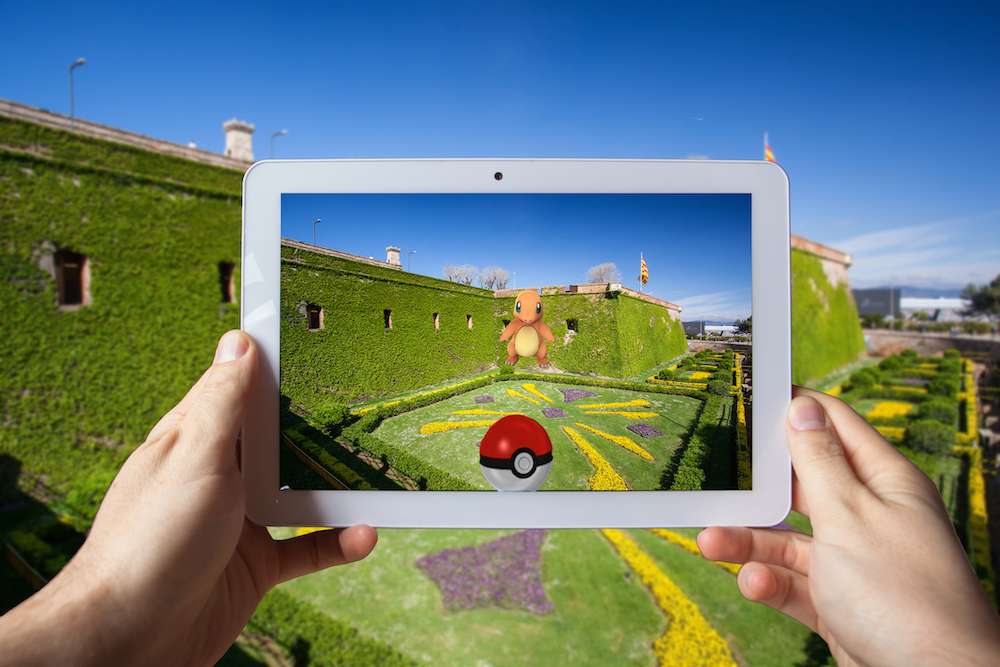
    Both “Harry Potter: Wizards Unite” and “Pokemon Go”—which, as of September, was the second highest-earning mobile game in the world—use augmented reality and location data based on the player’s actual geographical location as part of game play. As players move around the real world, their game avatars follow a similar path on the game’s map.

    But as CNBC noted, the games’ rise in popularity also raised issues of “gaming disorder,” which was identified as a health condition by the World Health Organization in 2016. Exactly how many people can be diagnosed as exhibiting the signs of gaming disorder is a subject for debate, with some sources claiming that 10% to 15% of gamers currently qualify as suffering from gaming disorders, while others urge caution and further research.

    Playing In Small Doses

    Hanke told CNBC that Niantic’s games actually discourage compulsive game play through the company’s core tenets: promoting community exploration, incorporating exercise into game play and encouraging interaction with the real world.

    “I would really look at our games as an alternative to traditional video games, because they’re designed to be played in small doses as you’re moving around outside, and they’re meant to be played together with people in real life,” he said.

    Hanke also urged other companies to consider similar measures for their product in addition to the monetary rewards. “Technology is not inherently evil, but if you’re being led by profit and the dollar sign, and you don’t have other goals, the outcome may not be great,” he noted.

    Finding The Balance

    Niantic’s gaming principles have not only determined how their games are played, but which games the company releases.

    “In a game like ‘Pokemon Go,’ there are hundreds of features you could build, and many would not fulfill one of those three objectives,” said Hanke. “It’s about finding that balance between purpose and profit and pursuing both in the context of a private company.”

    “It’s not easy—it’s a constant challenge—but I do think it’s possible to combine those things.”

    View the original article at thefix.com

  • Video Games: A South Korean National Pastime…Or Addiction?

    Video Games: A South Korean National Pastime…Or Addiction?

    The digitized nation grapples with the good and bad of competitive computer gaming.

    South Korea’s $13 billion competitive gaming industry doesn’t like the World Health Organization’s addition of “gaming disorder” to its 2022 revision of the International Classification of Diseases. Mental health experts in the country say a nuanced examination of the hobby is long overdue.

    The nation has seen some gripping examples of gaming addiction. A grandmother watched as her grandson locked himself away in his room to play games, not even stopping his gaming at his grandfather’s funeral.

    Some in the country have died for their hobby, neglecting their need to sleep and eat until they collapse. Gaming even led one couple to neglect their baby daughter until she died of malnutrition. They were put away for negligent homicide.

    The South Korean government is taking the issue seriously, putting together a panel of experts to detangle the whole thing. Much to the chagrin of the nation’s massive gaming industry, the panel is looking into whether to add gaming disorder to the 2025 edition of the Korean Standard Classification of Diseases.

    There’s big money at stake, considering that South Korea exported $6 billion in video games in 2017. That’s more than 10 times more than what K-pop brought in.

    “It’ll be a disaster,” says Kim Jung-tae, a professor of game studies at Dongyang University. “The entire ecosystem of the game industry could collapse.”

    A Witch Hunt Or Real Issue?

    Kim is on a task force formed to combat the classification of gaming as a disorder. He calls the whole thing a “witch hunt” by those who stand to profit from addiction research and treatment, spurred by concerned parents looking for a scapegoat for what’s become of their kids.

    “It’s part of a phobia of new media,” Kim said. “Games, like air, are already a part of our lives.”

    Those on Kim’s side believe that the gaming industry stands to lose $9 billion and 8,700 jobs if the classification of gaming as a disorder goes through. However, mental health advocates say that the gaming industry and its fans have nothing to worry about.

    “Alcoholics don’t blame the company that makes the liquor,” said Roh Sung-won, an addiction specialist. “You don’t stop manufacturing cars because there are automobile accidents.”

    Playing For 3 Days Straight

    He recalls the owner of an internet cafe calling his hospital on behalf of a man who had been playing games for over 72 hours straight. But opponents of the classification say that such people aren’t suffering from gaming disorder, but are gaming because of some other underlying mental health issues.

    South Korea is far from the only nation grappling with compulsive gaming issues. Epic Games, the American creators of the immensely popular game Fortnite, is facing a class-action lawsuit from a Montreal-based firm for purposely putting out a game built to be addictive to teenagers.

    View the original article at thefix.com

  • South Korea Grapples With Line Between Pro-Gaming and Gaming Addiction

    South Korea Grapples With Line Between Pro-Gaming and Gaming Addiction

    Where is the line between professional gamer and person with with gaming disorder?

    South Korea, a country where e-sports flourishes, is grappling with a difficult question now that gaming disorder has become officially recognized by the World Health Organization: Is professional gaming actually gaming disorder?

    The answer, they’ve determined, is… not really. The WHO has a pretty narrow definition of gaming disorder, where video gaming takes over a person’s life to a point they neglect their family, friends, and job in favor of playing for an extended period of time.

    Pro Gamers Practice Self-Discipline 

    Representatives for professional gaming leagues say that the way in which pro-gamers play is quite the opposite of this.

    “Addiction is akin to social isolation. People who are addicted often display lack of interest in the world other than their obsession,” said Kim Jong-seong, a senior manager at the Korea e-Sports Association. “But esports is the opposite — it’s about bringing individual gamers out into the world to teamwork, connect with the mass and possibly gain fame.”

    The key difference, he argues, is in the self-discipline practiced by South Korean career gamers.

    “Furthermore, professional esports is systematic. For example, if the players spend 12 hours training, they would have specific hours for solo play training, group play training, with regular nutrition intake hours and workouts in between.”

    Not only that, but these gamers aren’t neglecting their professional life and financial responsibilities–they’re taking care of them by playing. Expert and sponsored League of Legends players in the country took in an average of 175.6 million won ($145,000 USD) last year. These surveyed gamers are also younger than the average salaryman at an average age of 20.8 years old. The oldest surveyed was 26, while the youngest was just 17.

    Can the Quest to Go Pro Lead to Gaming Addiction?

    But there is concern for those who toil away at these games to try and go pro but just can’t hack it. These players dedicate themselves to their game of choice at a young age, and experts worry that these youngsters could become addicted to gaming in the process.

    “Some scholars point to individuals’ innately impulsive nature as what causes substance addiction, but in the case of behavioral addiction like video game addiction, we don’t have enough evidence yet and socio-psychological factors might play a larger role,” said Prof. Ahn Woo-young, who researches psychology at Seoul National University.

    Examples of such socio-psychological effects include the availability of gaming in South Korea’s multitudes of internet cafes as well as children having to occupy themselves with digital entertainment waiting for their parents to return from busy work lives.

    Pathologizing Gamers

    “A rising number of young people around the world are becoming more passionate about games,” said Arnold Hur, the co-president of esports company Generation Gaming. “However, instead of embracing this trend, many societies have chosen to ignore or even stifle this growing interest. In doing so, passionate gamers are often at risk of becoming marginalized — perhaps even to the extent of being labeled as having a ‘gaming disorder.’”

    View the original article at thefix.com

  • What Tech Addiction Treatment Looks Like

    What Tech Addiction Treatment Looks Like

    Though the treatment has been described as intense, patients with gaming disorder say it has allowed them to regain control over their lives. 

    About 90 minutes south of Amsterdam, Jan Willem Poot helps treat young people who have gaming and other technology addictions at the Yes We Can clinic, one of the few facilities dedicated to helping youth overcome tech addictions. 

    “It is safe here,” Poot told The Guardian.  

    Poot, who is in recovery himself, recognized the need to provide treatment for gaming addiction, especially with few other options around. His patients come for a 10-week intensive treatment, with the option for four weeks of aftercare. They’re not allowed any tech devices, or any contact with the families during the first five weeks. 

    Although it is intense, patients like Tom, 17, say that the treatment at the Yes We Can clinic has allowed them to regain control over their lives. 

    “I changed through the course of the program, slowly but surely,” Tom said. “At first I was super anxious and I could not talk to anyone, but slowly I started to open up and became comfortable. I started to face my avoidant behavior and understand why I do it. I started to open up about my past and figure things out.”

    Tom, like any person with addiction, still copes with residual effects of his condition even now that he is in recovery. 

    “I still have a hard time. Life is not easy but I have learned to cope through the suffering and tough times,” he said. 

    Another patient at the clinic, Victor, 24, said that although people may be skeptical about gaming addiction, it was very real to him. 

    “It was helpful having treatment with other addicts. I recognized a lot of stories,” he said. “One time I heard a story from a guy who was an alcoholic, and without mentioning the word alcohol everything was my story. By seeing that it also helped me see that addiction is a wide and broad subject to talk about.”

    Poot said that more and more people are seeking treatment for gaming and other tech addictions. Last year he treated 90 people for gaming addiction, up from just 30 in 2016. Halfway through 2019, 55 people have come through the program. Poot says that with screens everywhere, it’s easy for technology to become an unhealthy coping mechanism. 

    “They have found a way to feel better just by being in the online world because it is escapism,” he said. 

    He’s even seeing more people come in for treatment for social media addiction, especially teenage girls. 

    “That has a lot to do with personality disorder, where they are so insecure they need confirmation by sending 20-30 selfies or Instagram posts a day—they need the likes to get confirmation that they are still attractive or liked,” he explained. 

    View the original article at thefix.com

  • Is "Pathological Gaming" A Disease Or Symptom?

    Is "Pathological Gaming" A Disease Or Symptom?

    For a new study, researchers wanted to find out if pathological gaming was a “red flag” for deeper mental issues.

    A study recently published in the Journal of Youth and Adolescence could suggest that what has come to be known as “pathological gaming” may simply be a symptom of a larger problem with social pressures and stress.

    The study, conducted in Seoul, South Korea, surveyed 477 boys and 491 girls about their gaming behaviors along with their communications with parents, social support systems, academic stress, and self control.

    Something Deeper?

    The researchers wanted to find out if gaming was really the problem, or if something deeper was to blame, according to PsyPost.

    “One of the questions we’ve been asking is whether games are really the problem, or if other factors such as family environment or social environment led to problems and overdoing games was merely a symptom of those problems,” said Stetson University professor of psychology and study author, Christopher J. Ferguson. “Should we be thinking of pathological gaming as its own diagnosis or more of a red flag that the person is experiencing other mental health issues?”

    The results showed that a lack of self control was better correlated with pathological gaming than the actual number of hours spent playing games. At the same time, academic stress was a predictor for lower levels of self-control, and overprotective parents mixed with lower levels of parental communication tended to predict academic stress.

    Getting Classified

    The World Health Organization named gaming disorder as a mental illness in its 11th version of the International Classification of Diseases (ICD-11) in mid-2018. Symptoms include “impaired control over gaming, increasing priority given to gaming over other activities to the extent that gaming takes precedence over other interests and daily activities, and continuation or escalation of gaming despite the occurrence of negative consequences.”

    This kind of compulsive gaming is a particular problem in South Korea, which is described by Ferguson as a culture with a “particular pressure socially to succeed academically.” If this pressure results in pathological gaming, it would make sense that South Korea would therefore have a larger problem than others with gaming disorder.

    Ferguson readily admits that the results of the study are limited on a global scale by the fact that it was only conducted in Seoul. However, this is not the first bit of research that the professor has done on the subject of video games. He also co-authored a book titled Moral Combat: Why the War on Violent Video Games Is Wrong, released in March 2017.

    “For instance, within U.S. samples I’ve worked with, evidence suggests pathological gaming results from other mental disorders such as ADHD, but does not cause them in return,” Ferguson said. “Our data suggests we have to be cautious in blaming technology for behavior problems—often the picture is much more complicated than that.”

    View the original article at thefix.com

  • When Does Hardcore Video Gaming Become An Addiction?

    When Does Hardcore Video Gaming Become An Addiction?

    Experts weigh in on the World Health Organization’s decision to add gaming disorder to its International Classification of Diseases.

    Many gamers know the feeling of playing for too long into the night and being just useless the next day, but that’s now something that could be indicative of gaming disorder as defined by the World Health Organization’s International Classification of Diseases.

    The WHO officially recognized gaming disorder last year, defining it as “impaired control over gaming.” The diagnosis is applicable to gamers who put their video gaming time ahead of everything else in their life, including work, study or relationships.

    Is It Really An Addiction?

    Many experts, including Dr. Kenneth Woog, were unsure if gaming should really be considered addictive.

    “In 2002, a lot of people [were] laughing at it and scoffing at it, saying it was ridiculous,” said Dr. Woog, who now treats gaming addiction. “But after doing my research in 2003 and 2004, I was pretty much convinced. I’d seen a few more clients and after I surveyed mental health professionals across the United States, I became convinced that it could be a real thing.”

    People may be slow to accept gaming as addictive because there isn’t a chemical component acting on the brains of gamers, suggests Dr. Alok Kanojia. The purely mental nature of video game addiction also means that a hard approach that includes abstinence is often not necessary.

    “I think sobriety for gamers involves understanding why do you play the game?” said Dr. Kanojia. “To understand the drives behind the game, and to try to replace those drives with healthy alternatives.”

    Personal Experience

    Dr. Woog and Dr. Kanojia, who play video games themselves, say that there are a lot of benefits to playing video games. In particular, social games like Fortnite are replacing the malls of yesteryear as a space where children can socialize. Dr. Kanojia says that he tries to help his patients find a healthy balance between video games and life, a lesson he himself had to learn as a university student.

    “I basically had less than a 2.0 GPA after two years of college because I was just playing a bunch of video games every night,” Dr. Kanojia recounted. “I was on academic probation, really trying to figure out what was going on and didn’t understand why some days I would wake up and be able to go to class and then other days not.”

    He took a break from school to study yoga and meditation in India.

    “I started to study myself, and figure out how games interact with me, what is it about the game that I really like, why can’t I wake up in the morning?” he revealed.

    Unfortunately, video game addiction isn’t being taken seriously enough in the United States, where proper diagnosis and treatment for gaming disorder is hard to find.

    View the original article at thefix.com

  • Candy Crush Exec Doesn't Think Players Are Addicted To The Game

    Candy Crush Exec Doesn't Think Players Are Addicted To The Game

    The Candy Crush exec was questioned about the excessive amounts of money and time players spend on the best-selling phone game.

    The mobile game Candy Crush is still going strong, according to a top executive at the maker of the game, King. 

    The Guardian reports that King executive Alex Dale told a committee researching “immersive and addictive technologies” that he does not think there is an “addiction problem” for those who play the game. 

    Nearly 500,000 Players Spend 6 Or More Hours Playing Each Day

    Dale says that the game has 270 million players. Of those, 9.2 million, or 3.4%, play for three or more hours daily. He also noted that 0.16%, or 432,000 players, spend six or more hours playing each day. The average player, however, spends 38 minutes per day playing.

    According to Dale, these numbers are impacted by those playing the game who have “plenty of time on their hands.”

    “Excessive time, it is very difficult to know what excessive is,” he said, according to The Guardian. “We have a fair number of people in their 60s, 70s and 80s playing Candy Crush. We do want people to play more. There are going to be people that like to play our games a lot.”

    Dale told the committee that in 2018, one player spent $2,600 in one day on a currency aspect of the game that can allow players to move through it faster. However, he said it should not be assumed the player has a problem since he spent the money on a game currency during a “sale” and used the currency over seven months. The same person spent an additional $1,060 on the game.

    “That sounds, and is, a large amount of money,” Dale said. “There was a sale on at the time so they were making a rational decision. It is down to player choice if that is what they want to do.”

    Telling Players How Much They Spend Deemed “Too Intrusive”

    In the past, Dale said, if players spent more than $250 in a week they would be notified via email, but some players felt this was too intrusive and said they would not spend the money if they couldn’t afford to.

    According to The Guardian, Committee Chair Damian Collins implied that King was not confronting the possibility of people having a problem with playing the game.

    “What I’m not getting is any sense that you feel you have a responsibility as a company to identify people that are addicted,” he said. “You are only happy for them to refer themselves to you if they think they have a problem.”

    Dale says King will again look into the idea of communicating with players about spending, but that it hadn’t gone well in the past. 

    “We will look at the whole area again but we have done it before and they didn’t like it,” he said. “We have customer support available in 24 languages. Among 270 million players we have between two and three contacts a month from people concerned about having spent too much money or time on the game.”

    View the original article at thefix.com

  • Lack of Gaming Addiction Treatment Options Raises Concern

    Lack of Gaming Addiction Treatment Options Raises Concern

    Getting treatment for gaming addiction is an expensive, arduous task in the US.

    Even with the World Health Organization classifying video game addiction as a mental disorder, there is still much debate as to whether an addiction to video games should still be a considered a serious concern or not.

    Gaming Disorder Cannot Be Diagnosed In The US

    A report on NPR explains that therapists are very concerned about technology addiction among adolescents, and that it’s hard to find the right treatment for it in the United States.

    NPR focused on a treatment facility in Minnesota, where Dr. Shalene Kennedy claims that 75% of the adolescents they work with are using too much technology. Even with the World Health Organization declaring video game addiction a mental disorder earlier this year, an individual can’t be officially diagnosed with having a gaming or technology addiction in the U.S. 

    Finding gaming addiction treatment for adolescents can be particularly difficult in the U.S. Trish Vanni, a pastor from Minnesota, tried to get her son into treatment for gaming addiction, and she said it was “a wasteland of help, an absolute wasteland. It was so frustrating. He couldn’t even leave the house, couldn’t hold a job, couldn’t be responsible for his rent and to his roommates.”

    Some Experts Believe Gaming Addiction To Be An Underlying Symptom Of A Mental Health Issue

    Some experts believe that video game addiction can be an underlying symptom of depression or anxiety or even another addiction. Vanni says her friends would assuage her concerns by noting that her son “could be addicted to drugs.” Vanni soldiered on looking for treatment as his addiction became more “acute.”

    Trying to find treatment across the country, there were only a few retreats that met her son’s needs but they came at a high cost, with treatment plans costing tens of thousands of dollars.

    Finally, she was able to connect her son with Julian Sheats, a man from St. Paul who overcame a gaming habit. Sheats and Vanni’s son work the 12-step program, and Sheats feels if gaming addiction could be properly diagnosed in the U.S., it would make it a lot easier for people to get help for it.

    “It’s not something you have to be confused about or feel like an outsider about,” Sheats explains. “Rather, you just have a medical condition just as much as if you had rheumatoid arthritis, I think would relieve a lot of the stress of these young individuals.”

    View the original article at thefix.com

  • Researchers Create Psych Test For Gaming Addiction

    Researchers Create Psych Test For Gaming Addiction

    The test allows users to compare their results with others to see how their gaming habits line up to the greater population.

    Now that video game addiction is a recognized mental disorder, a new test aims to help people determine if they suffer from it.

    Last month, the World Health Organization (WHO) officially recognized video game addiction as a mental disorder. Now, academic researchers from the UK, Germany, China and Australia have banded together to create a test to help people determine if they have it. 

    Like many types of addiction, simply engaging in gaming is not in itself a mental disorder. However, gaming addiction does become a mental disorder of a person plays so excessively that they begin to experience detrimental effects on other aspects of their life for a time span of more than a year.

    The researchers have publicly released the test online in the form of a five to 10 minute quiz. In its current form the quiz rates its takers on a scale with a maximum score of 20, with a higher score indicating a greater tendency towards gaming addiction.

    However, there is no definitive score that defines addiction, with the test instead comparing your results with everyone else’s to allow you to see how your gaming habits line up to the greater population. The test also determines your personal motivations for gaming, be it to kill time, compete with others, or to cope with negative emotions.

    Of 550 gamers tested in the UK and China, 36 of them meet the WHO’s criteria for video gaming addiction, defined as “impaired control over gaming” as well as gaming taking “precedence over other interests and daily activities” with a continued pattern of such behavior even after repeated negative consequences.

    At the end of May, the WHO announced that gaming addiction would be officially recognized in their newest revision of the International Statistical Classification of Diseases and Related Health Problems (ICD-11), which is due at the beginning of the year 2022. The move gained a lot of attention from critics, including video gaming media outlets.

    The Entertainment Software Association blasted the move, stating that it “recklessly trivializes real mental health issues like depression and social anxiety disorder.”

    The announcement also drew ire from heath experts.

    “It’s really a junk diagnosis,” said Christopher J. Ferguson, PhD, a mental health provider who co-wrote a journal article saying that the WHO’s diagnosis provided “little clarity… regarding diagnostic criteria and appropriate symptoms.”

    View the original article at thefix.com

  • Prince Harry: Fortnite Is Addictive & Irresponsible

    Prince Harry: Fortnite Is Addictive & Irresponsible

    The royal soon-to-be parent feels the video game has an alarmingly strong grip on kids these days… and perhaps should be banned.

    Prince Harry spoke out against Fortnite, one of the most popular video games among kids today, during a talk with mental health experts in London. He even floated the idea that the game itself should be banned.

    “That game shouldn’t be allowed. Where is the benefit of having it in your household?” he pondered. “It’s created to addict, an addiction to keep you in front of a computer for as long as possible. It’s so irresponsible.”

    He added that not taking immediate action would be a mistake.

    “It’s like waiting for the damage to be done and kids turning up on your doorsteps and families being broken down,” Prince Harry said.

    He feels sympathy for the parents dealing with something they might not understand.

    “Parents have got their hands up – they don’t know what to do about it,” he remarked. “It’s like waiting for the damage to be done.”

    Fortnite, developed by North Carolina-based company Epic Games, boasts 45 million players worldwide. Players battle each other on a large map, battle-royale style.

    The game itself is free but players can purchase costumes and dances for their characters, reportedly earning Epic more than $300 million a month.

    Prince Harry’s concern doesn’t grow from nothing. Some doctors are reportedly seeing a link between excessive gaming and the health of their young patients. Additionally, about 200 divorce cases in the UK from January to September of 2018 mentioned excessive gaming, including Fortnite, as a cause.

    Fans and some experts are not convinced. Andrew Reid, a Scottish university researcher, says that calling games like Fortnite “addictive” needlessly stigmatizes all players and that there are positive social aspects to going online. E-sports director Sujoy Roy says believes panicked parents should take responsibility instead of pointing fingers.

    “Fortnite isn’t the first hit game to have had a bad press and it won’t be the last. It’s really popular with younger gamers and, of course, parents should keep a close eye on what their kids are playing and doing online,” said Roy. “But, like many games, Fortnite is a really fun and sociable way to spend free time and, like everything, should be enjoyed responsibly.”

    Prince Harry’s criticisms didn’t stop at video gaming. He also blasted social media for being “more addictive than drugs and alcohol.”

    View the original article at thefix.com