Tag: gaming use disorder

  • "Pokemon Go" CEO Pushes For Safety Over Profits To Fight Gaming Addiction

    "Pokemon Go" CEO Pushes For Safety Over Profits To Fight Gaming Addiction

    “If you’re being led by profit and the dollar sign, and you don’t have other goals, the outcome may not be great.”

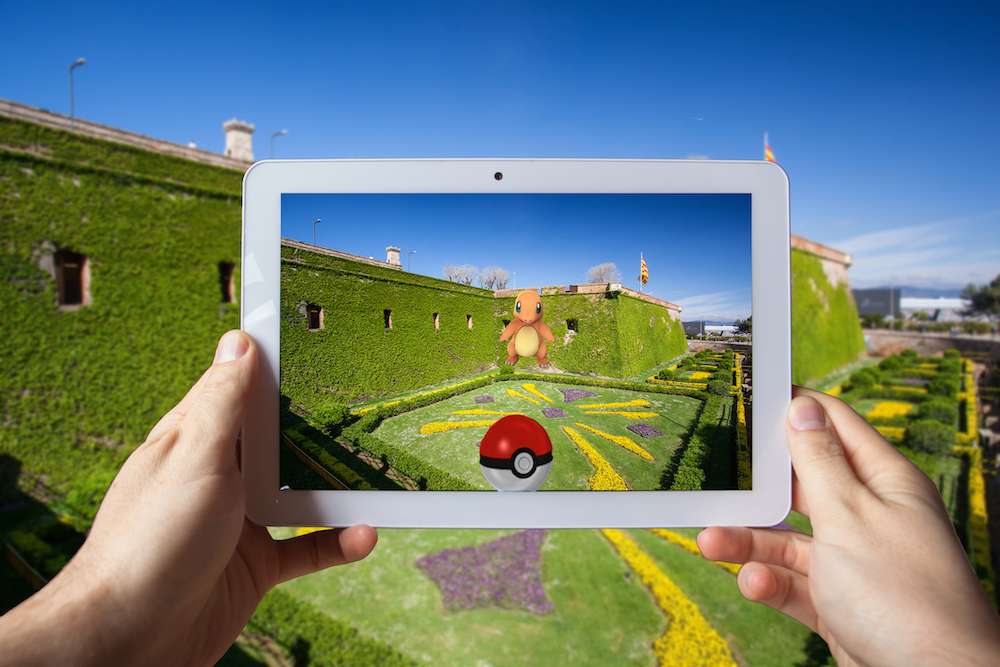
    The chief executive officer of Niantic, the software development company behind the popular mobile games “Pokemon Go” and “Harry Potter: Wizards Unite,” told CNBC that gaming manufacturers need to focus as much attention on safeguarding users against compulsive or addictive game play as they do on their profit margins.

    Integrating Reality Into Gaming

    Speaking in London at One Young World, a UK-based global solution forum, John Hanke said that his company’s games require players to interact with the real world during game play, and encouraged other manufacturers to adopt similar measures.

    “I think it’s a great example of how you can design technology that leads into positive impacts,” he said.

    Both “Harry Potter: Wizards Unite” and “Pokemon Go”—which, as of September, was the second highest-earning mobile game in the world—use augmented reality and location data based on the player’s actual geographical location as part of game play. As players move around the real world, their game avatars follow a similar path on the game’s map.

    But as CNBC noted, the games’ rise in popularity also raised issues of “gaming disorder,” which was identified as a health condition by the World Health Organization in 2016. Exactly how many people can be diagnosed as exhibiting the signs of gaming disorder is a subject for debate, with some sources claiming that 10% to 15% of gamers currently qualify as suffering from gaming disorders, while others urge caution and further research.

    Playing In Small Doses

    Hanke told CNBC that Niantic’s games actually discourage compulsive game play through the company’s core tenets: promoting community exploration, incorporating exercise into game play and encouraging interaction with the real world.

    “I would really look at our games as an alternative to traditional video games, because they’re designed to be played in small doses as you’re moving around outside, and they’re meant to be played together with people in real life,” he said.

    Hanke also urged other companies to consider similar measures for their product in addition to the monetary rewards. “Technology is not inherently evil, but if you’re being led by profit and the dollar sign, and you don’t have other goals, the outcome may not be great,” he noted.

    Finding The Balance

    Niantic’s gaming principles have not only determined how their games are played, but which games the company releases.

    “In a game like ‘Pokemon Go,’ there are hundreds of features you could build, and many would not fulfill one of those three objectives,” said Hanke. “It’s about finding that balance between purpose and profit and pursuing both in the context of a private company.”

    “It’s not easy—it’s a constant challenge—but I do think it’s possible to combine those things.”

    View the original article at thefix.com

  • Is "Pathological Gaming" A Disease Or Symptom?

    Is "Pathological Gaming" A Disease Or Symptom?

    For a new study, researchers wanted to find out if pathological gaming was a “red flag” for deeper mental issues.

    A study recently published in the Journal of Youth and Adolescence could suggest that what has come to be known as “pathological gaming” may simply be a symptom of a larger problem with social pressures and stress.

    The study, conducted in Seoul, South Korea, surveyed 477 boys and 491 girls about their gaming behaviors along with their communications with parents, social support systems, academic stress, and self control.

    Something Deeper?

    The researchers wanted to find out if gaming was really the problem, or if something deeper was to blame, according to PsyPost.

    “One of the questions we’ve been asking is whether games are really the problem, or if other factors such as family environment or social environment led to problems and overdoing games was merely a symptom of those problems,” said Stetson University professor of psychology and study author, Christopher J. Ferguson. “Should we be thinking of pathological gaming as its own diagnosis or more of a red flag that the person is experiencing other mental health issues?”

    The results showed that a lack of self control was better correlated with pathological gaming than the actual number of hours spent playing games. At the same time, academic stress was a predictor for lower levels of self-control, and overprotective parents mixed with lower levels of parental communication tended to predict academic stress.

    Getting Classified

    The World Health Organization named gaming disorder as a mental illness in its 11th version of the International Classification of Diseases (ICD-11) in mid-2018. Symptoms include “impaired control over gaming, increasing priority given to gaming over other activities to the extent that gaming takes precedence over other interests and daily activities, and continuation or escalation of gaming despite the occurrence of negative consequences.”

    This kind of compulsive gaming is a particular problem in South Korea, which is described by Ferguson as a culture with a “particular pressure socially to succeed academically.” If this pressure results in pathological gaming, it would make sense that South Korea would therefore have a larger problem than others with gaming disorder.

    Ferguson readily admits that the results of the study are limited on a global scale by the fact that it was only conducted in Seoul. However, this is not the first bit of research that the professor has done on the subject of video games. He also co-authored a book titled Moral Combat: Why the War on Violent Video Games Is Wrong, released in March 2017.

    “For instance, within U.S. samples I’ve worked with, evidence suggests pathological gaming results from other mental disorders such as ADHD, but does not cause them in return,” Ferguson said. “Our data suggests we have to be cautious in blaming technology for behavior problems—often the picture is much more complicated than that.”

    View the original article at thefix.com

  • When Does Hardcore Video Gaming Become An Addiction?

    When Does Hardcore Video Gaming Become An Addiction?

    Experts weigh in on the World Health Organization’s decision to add gaming disorder to its International Classification of Diseases.

    Many gamers know the feeling of playing for too long into the night and being just useless the next day, but that’s now something that could be indicative of gaming disorder as defined by the World Health Organization’s International Classification of Diseases.

    The WHO officially recognized gaming disorder last year, defining it as “impaired control over gaming.” The diagnosis is applicable to gamers who put their video gaming time ahead of everything else in their life, including work, study or relationships.

    Is It Really An Addiction?

    Many experts, including Dr. Kenneth Woog, were unsure if gaming should really be considered addictive.

    “In 2002, a lot of people [were] laughing at it and scoffing at it, saying it was ridiculous,” said Dr. Woog, who now treats gaming addiction. “But after doing my research in 2003 and 2004, I was pretty much convinced. I’d seen a few more clients and after I surveyed mental health professionals across the United States, I became convinced that it could be a real thing.”

    People may be slow to accept gaming as addictive because there isn’t a chemical component acting on the brains of gamers, suggests Dr. Alok Kanojia. The purely mental nature of video game addiction also means that a hard approach that includes abstinence is often not necessary.

    “I think sobriety for gamers involves understanding why do you play the game?” said Dr. Kanojia. “To understand the drives behind the game, and to try to replace those drives with healthy alternatives.”

    Personal Experience

    Dr. Woog and Dr. Kanojia, who play video games themselves, say that there are a lot of benefits to playing video games. In particular, social games like Fortnite are replacing the malls of yesteryear as a space where children can socialize. Dr. Kanojia says that he tries to help his patients find a healthy balance between video games and life, a lesson he himself had to learn as a university student.

    “I basically had less than a 2.0 GPA after two years of college because I was just playing a bunch of video games every night,” Dr. Kanojia recounted. “I was on academic probation, really trying to figure out what was going on and didn’t understand why some days I would wake up and be able to go to class and then other days not.”

    He took a break from school to study yoga and meditation in India.

    “I started to study myself, and figure out how games interact with me, what is it about the game that I really like, why can’t I wake up in the morning?” he revealed.

    Unfortunately, video game addiction isn’t being taken seriously enough in the United States, where proper diagnosis and treatment for gaming disorder is hard to find.

    View the original article at thefix.com

  • Candy Crush Exec Doesn't Think Players Are Addicted To The Game

    Candy Crush Exec Doesn't Think Players Are Addicted To The Game

    The Candy Crush exec was questioned about the excessive amounts of money and time players spend on the best-selling phone game.

    The mobile game Candy Crush is still going strong, according to a top executive at the maker of the game, King. 

    The Guardian reports that King executive Alex Dale told a committee researching “immersive and addictive technologies” that he does not think there is an “addiction problem” for those who play the game. 

    Nearly 500,000 Players Spend 6 Or More Hours Playing Each Day

    Dale says that the game has 270 million players. Of those, 9.2 million, or 3.4%, play for three or more hours daily. He also noted that 0.16%, or 432,000 players, spend six or more hours playing each day. The average player, however, spends 38 minutes per day playing.

    According to Dale, these numbers are impacted by those playing the game who have “plenty of time on their hands.”

    “Excessive time, it is very difficult to know what excessive is,” he said, according to The Guardian. “We have a fair number of people in their 60s, 70s and 80s playing Candy Crush. We do want people to play more. There are going to be people that like to play our games a lot.”

    Dale told the committee that in 2018, one player spent $2,600 in one day on a currency aspect of the game that can allow players to move through it faster. However, he said it should not be assumed the player has a problem since he spent the money on a game currency during a “sale” and used the currency over seven months. The same person spent an additional $1,060 on the game.

    “That sounds, and is, a large amount of money,” Dale said. “There was a sale on at the time so they were making a rational decision. It is down to player choice if that is what they want to do.”

    Telling Players How Much They Spend Deemed “Too Intrusive”

    In the past, Dale said, if players spent more than $250 in a week they would be notified via email, but some players felt this was too intrusive and said they would not spend the money if they couldn’t afford to.

    According to The Guardian, Committee Chair Damian Collins implied that King was not confronting the possibility of people having a problem with playing the game.

    “What I’m not getting is any sense that you feel you have a responsibility as a company to identify people that are addicted,” he said. “You are only happy for them to refer themselves to you if they think they have a problem.”

    Dale says King will again look into the idea of communicating with players about spending, but that it hadn’t gone well in the past. 

    “We will look at the whole area again but we have done it before and they didn’t like it,” he said. “We have customer support available in 24 languages. Among 270 million players we have between two and three contacts a month from people concerned about having spent too much money or time on the game.”

    View the original article at thefix.com

  • Lack of Gaming Addiction Treatment Options Raises Concern

    Lack of Gaming Addiction Treatment Options Raises Concern

    Getting treatment for gaming addiction is an expensive, arduous task in the US.

    Even with the World Health Organization classifying video game addiction as a mental disorder, there is still much debate as to whether an addiction to video games should still be a considered a serious concern or not.

    Gaming Disorder Cannot Be Diagnosed In The US

    A report on NPR explains that therapists are very concerned about technology addiction among adolescents, and that it’s hard to find the right treatment for it in the United States.

    NPR focused on a treatment facility in Minnesota, where Dr. Shalene Kennedy claims that 75% of the adolescents they work with are using too much technology. Even with the World Health Organization declaring video game addiction a mental disorder earlier this year, an individual can’t be officially diagnosed with having a gaming or technology addiction in the U.S. 

    Finding gaming addiction treatment for adolescents can be particularly difficult in the U.S. Trish Vanni, a pastor from Minnesota, tried to get her son into treatment for gaming addiction, and she said it was “a wasteland of help, an absolute wasteland. It was so frustrating. He couldn’t even leave the house, couldn’t hold a job, couldn’t be responsible for his rent and to his roommates.”

    Some Experts Believe Gaming Addiction To Be An Underlying Symptom Of A Mental Health Issue

    Some experts believe that video game addiction can be an underlying symptom of depression or anxiety or even another addiction. Vanni says her friends would assuage her concerns by noting that her son “could be addicted to drugs.” Vanni soldiered on looking for treatment as his addiction became more “acute.”

    Trying to find treatment across the country, there were only a few retreats that met her son’s needs but they came at a high cost, with treatment plans costing tens of thousands of dollars.

    Finally, she was able to connect her son with Julian Sheats, a man from St. Paul who overcame a gaming habit. Sheats and Vanni’s son work the 12-step program, and Sheats feels if gaming addiction could be properly diagnosed in the U.S., it would make it a lot easier for people to get help for it.

    “It’s not something you have to be confused about or feel like an outsider about,” Sheats explains. “Rather, you just have a medical condition just as much as if you had rheumatoid arthritis, I think would relieve a lot of the stress of these young individuals.”

    View the original article at thefix.com