Tag: illicit drug use

  • All Adults Should Be Asked About Illicit Drug Use, Task Force Finds

    All Adults Should Be Asked About Illicit Drug Use, Task Force Finds

    According to the task force, 10% of American adults have used illegal drugs in the past month.

    All adult patients in the U.S. should be asked about their illicit drug use, according to recommendations released this week by the U.S. Preventive Services Task Force. 

    “Illicit drug use can have a devastating impact on individuals and families,” task force co-vice chair Karina Davidson said in a statement with the release of the recommendation, which is available here. “Clinicians can help by screening their adult patients and connecting people who use illicit drugs to the care they need to get better.”

    According to the task force, 10% of American adults have used illegal drugs in the past month. If doctors ask about this and know about their patients’ drug use, they will be better able to deliver care and connect their patients with evidence-based treatments for drug use and abuse.

    Dr. Gary LeRoy, president-elect of the American Academy of Family Physicians, told The Los Angeles Times that he has been screening patients for drug use for 10 years in his Dayton, Ohio practice.

    “All of us should be keenly aware that on average, one in 10 of our patients are doing drugs—whether we ask them or not—and we’re not going to cause someone to use illicit drugs because we ask the question,” he said. “When you create an atmosphere of trust where you have safe conversations, they appreciate that you ask.”

    LeRoy said that asking all patients about their drug use—of so-called street drugs and misuse of prescription medications—can help doctors get to know their patients better.

    “They say, ‘Oh, I had no idea I already had these people in my practice,’” he said. “When I started asking these questions and providing the service, they came out of the woodwork.”

    The task force considered recommending screenings for everyone in 2008, but opted not to. That has changed at least in part because there are now more proven ways to treat drug addiction, said UCLA internal medicine specialist and task force co-chair Dr. Carol Mangione.

    Treatment & Prevention

    Mangione said, “We don’t want to screen for something unless we know there’s an effective treatment. If you don’t have a treatment that’s effective for people who screen positive, you haven’t really helped.”

    Today, people who talk to their doctor about illicit drug use can be connected with help that is proven to be efficient.

    The recommendation only concerns adults ages 18 and older, but the task force said that doctors should consider asking teens about illicit drug use too.

    “We want to help prevent illicit drug use in teens, so we’re calling for more research on the benefits of screening,” Mangione said in a statement. “Clinicians should continue to use their professional judgement to determine what’s best for their teen patients.”
    View the original article at thefix.com

  • Fingerprint Test Can Identify Drug Use With Striking Accuracy

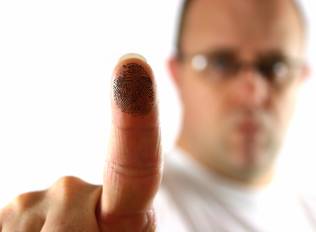
    Fingerprint Test Can Identify Drug Use With Striking Accuracy

    The testing device is already being used in some morgues and at treatment centers in the UK to detect drug use.

    Drug testing is important, whether to determine how someone died or to show that someone was under the influence of drugs while behind the wheel.

    However, current drug-testing methods that use samples of blood, saliva or hair are slow, invasive and expensive. Now, a fingerprint drug-testing system has been proven to detect the presence of drugs in sweat with up to 99% accuracy. 

    A study, published in the Journal of Analytical Toxicology, found that the Reader 1000, manufactured by U.K. firm Intelligent Fingerprinting, can detect cannabis, amphetamines, opiates, and cocaine, the substance that make up the majority of illicit drug use.

    The device works by analyzing sweat from the fingerprints of people who are alive or dead. The sweat contains metabolites that show that the body was clearing certain illicit substances. Using the device speeds up the process of drug testing. 

    “This new research highlights how our [device] can screen rapidly for drug use in individuals using a fingerprint sample with a sample collection time of only five seconds, and a total analysis time of ten minutes,” David Russell, an Emeritus Professor at the University of East Anglia, who is co-author of the research and founder of the manufacturer, told The Daily Mail.

    For the study, researchers used the Reader 1000 on 75 dead bodies, as well as testing those individuals with traditional blood and urine drug screenings.

    Comparing the readings, researchers found that the Reader 1000 was up to 99% effective at detecting cannabis, 95% for cocaine, 96% for opiates and 93% for amphetamines.

    “We matched the coroners’ drug test results obtained using our fingerprint drug screen with a second sample tested in laboratory conditions, achieving excellent correlation in terms of accuracy,” Russell explained.

    The research proved the concept of analyzing sweat collected through fingerprints, Intelligent Fingerprinting argued.

    “This important research demonstrates how there is sufficient sweat present in a subject’s fingerprint, regardless of whether the person is alive or dead, to enable our fingertip-based drug screening system to detect the presence of four major drugs of abuse at the same time,” Intelligent Fingerprinting’s Dr Paul Yates said in a news release.

    The device is already being used in some morgues and at treatment centers in the UK to detect drug use. Testing is underway to make it available at prisons and in other law enforcement settings. Although the device was able to detect the presence of opioids and other drugs, its ability to measure the amount of the substances was not studied.

    View the original article at thefix.com