Tag: Joe Walsh

  • Ringo Starr And Joe Walsh Discuss Long-Term Recovery, Becoming Sober

    Ringo Starr And Joe Walsh Discuss Long-Term Recovery, Becoming Sober

    The rock star brothers-in-law got candid about addiction, recovery, and Tom Petty in a recent Rolling Stone interview.

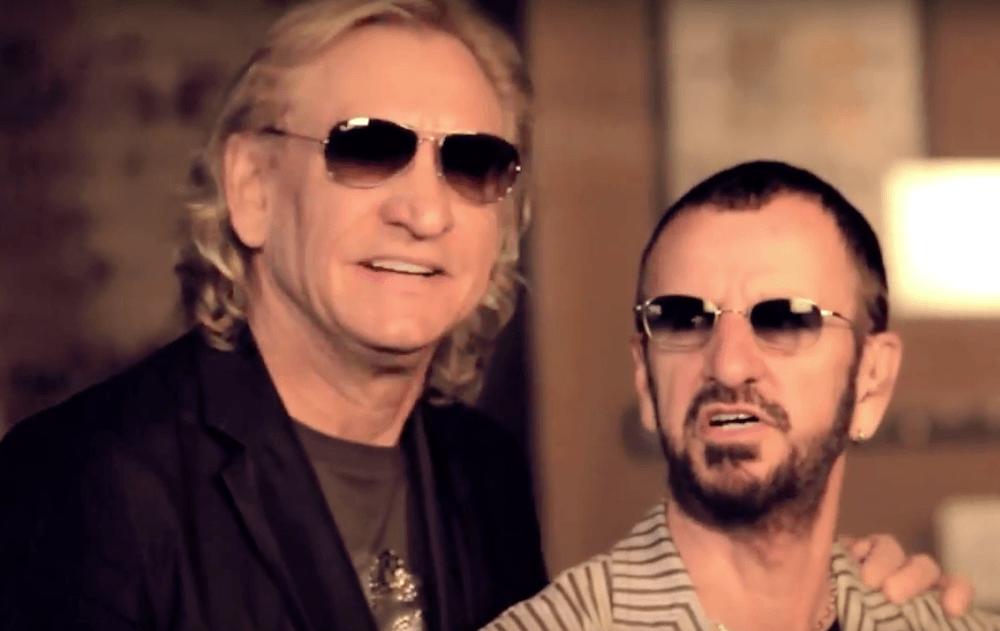
    Ringo Starr and Joe Walsh are not only rock legends, but they have also both been in recovery for many years. Now they are both speaking about their journeys to sobriety, and how they helped each other get there.

    Eagles guitarist Walsh received a humanitarian award for his work in the recovery community at the 74th annual gala for Facing Addiction with NCADD last October. His friend and former Beatles drummer, Starr, presented him with the award.

    When Walsh went to rehab in 1995, he wasn’t sure if he’d ever play guitar again. Eventually, Starr brought him back to music and became a sober buddy. (Starr is also Walsh’s brother-in-law.)

    “I got sober because of a fellowship of men and women who were sober alcoholics,” Walsh told Rolling Stone. “After a couple years, I talked about [my sobriety] with other alcoholics and tried to help them. The only person who can get somebody else sober is somebody who’s been there and done that. I realized that I do more good showing people that there’s life after addiction.”

    When Starr got sober, he put together Ringo Starr & His All-Starr Band, which included Walsh on guitar. Starr, too, was afraid that he wouldn’t be able to play once he got sober.

    “I thought I don’t know how you do anything if you’re not drunk,” he said. “I couldn’t play sober, but I also couldn’t play as a drunk. So when I did end up in this rehab, it was like a light went on and said you’re a musician, you play good.”

    Rolling Stone asked Walsh about the opioid crisis, given that a lot of musicians his age have been taking painkillers to deal with the rigors of performing.

    “I don’t think America’s aware of how bad it is out there,” Walsh replied. “I’m talking about addiction across the board. Opiate addiction, it’s killing young kids by the hundreds—by the thousands.

    “The problem is if you hurt physically, you can get prescription pills for that,” Walsh continued. “The problem is that after that pain is gone, whatever substance you used very subtly convinces you that you can’t do anything without it and then you have to deal with that. And people don’t know that.”

    Starr then reflected on a fellow musician who succumbed to opioid abuse, Tom Petty, who died in 2017 at the age of 66.

    “The discussion is very difficult, because we did as much as anybody did and we’re still here and we’re sober… I don’t know why Tom’s gone and I’m here. It’s unanswerable.”

    View the original article at thefix.com

  • Steven Tyler, Jason Isbell & Other Sober Musicians Share Their Stories

    Steven Tyler, Jason Isbell & Other Sober Musicians Share Their Stories

    A group of famous sober musicians discussed their past addictions and getting sober for a new GQ profile.

    Famous musicians aren’t known for being a sober bunch, and yet many successful musicians are in recovery. Recently a group of sober musicians spoke with GQ about how they are surviving and thriving in recovery.

    Joe Walsh, 71, guitarist for The Eagles, said that even after decades of Alcoholics Anonymous he still lives day by day.  

    “I have 25 years of sobriety,” he said. “But the important thing is, I haven’t had a drink today.”

    Aerosmith’s frontman Steven Tyler, 70, said that his experience with drugs started with marijuana

    “I grew up in the woods listening to the wind. It was just the silence and Mother Nature, no one around—it was an awful lot of magic there,” he said. When I started smoking weed, in ’65, ’66, it kind of enhanced those magic feelings.”

    Walsh said he turned to drugs to help him ease symptoms of obsessive-compulsive disorder and Asperger’s. The relief was instant, he said.

    “I felt like Superman onstage, and I played that way. I thought cocaine and alcohol was the combination, and it was just a kid trying to feel better. And I chased that initial solution to my problems for 30 years or so,” he said. 

    Tyler said that living the rockstar lifestyle made drugs feel like a natural part of life. 

    “You have a shot of Jack Daniel’s and you play Madison Square Garden and you get offstage and you go clubbing with Jimmy Page—come on,” he said. “After two encores in Madison Square Garden, you don’t go and play shuffleboard. Or Yahtzee, you know? You go and rock the fuck out. You’ve done something that you never thought you could, and you actually think that you are a super-being.”

    Over time, however, the drug use came to interfere with the art, Tyler said. 

    “It absolutely works for a while. But then things go wrong. You become addicted, it’s something you do all the time, and suddenly it starts influencing your greatness,” he said. 

    Still, Tyler was afraid that getting sober would affect his work. 

    “I thought I would lose my creativity,” he said. 

    Singer-songwriter Jason Isbell, 39, said that before he got sober he told himself he was afraid he would lose his art. However, he realized afterward that he was making excuses. 

    “Now I know what was really scaring me was just the thought of getting sober,” he said. “The addiction in your brain, that’s a tricky son of a bitch. It had me convinced for a long time that I wasn’t going to enjoy my life, that nobody was going to enjoy being around me if I wasn’t raising hell all the time.”

    View the original article at thefix.com

  • Joe Walsh, Ringo Starr Take Stage At Recovery Gala

    Joe Walsh, Ringo Starr Take Stage At Recovery Gala

    “My higher power became vodka and cocaine. Nobody wanted to work with me…I turned into this godless, hateful thing,” Walsh said in his speech.

    Eagles guitarist Joe Walsh and his wife Marjorie were honored this month for their work in advancing the cause of addiction recovery.

    The rock ’n’ roll couple, whose recovery advocacy spans more than 20 years, were presented with the Adele C. Smithers Humanitarian Award by friend and former Beatle Ringo Starr at the 74th annual gala for Facing Addiction with NCADD on Oct. 8.

    “I was one of those really nice pass out/black-out drunks,” Ringo Starr said before presenting the award, next to his wife Barbara Bach Starkey. “I came to one night, out of a black-out the next day, and I’d done a lot of damage. I was about to lose the love of my life, Barbara, and everything else.” That’s when Starr finally got help.

    While receiving the award, Marjorie Bach Walsh, who is Barbara’s sister, addressed her own recovery. “My son who is here this evening, and who does incredible work for addiction, had suffered for a long time before this woman got sober. And for that, Christian, I am beyond sorry. My life is a living amends to you,” she said.

    Joe Walsh has been sober for 25 years. As a kid growing up in the 1950s, he felt different, and thus isolated, from other children. “In my late teenage years I tried to play guitar in front of some people and I couldn’t do it. I hyperventilated. I started shaking. I started crying.”

    But after a “couple of beers” he was able to play. “That planted the seed. I thought alcohol was a winner.” This gave him the courage to make music, and early on he attributed his success to alcohol.

    “My higher power became vodka and cocaine.” But his substance use reached a tipping point. “I burned all the bridges. Nobody wanted to work with me. I was angry… I turned into this godless, hateful thing.”

    He turned to Alcoholics Anonymous, where he met some old-timers. “Gradually they showed me that I’m not a unique individual, one-of-a-kind person. I’m just an alcoholic, and for the first time in my life I felt like I was somewhere where I belonged.”

    “I don’t know why I’m alive. I should not be alive. I hadn’t planned on living this long, I don’t know what to do,” Walsh said to laughter.

    “I decided to drop my anonymity because most of the world knew I was a mess anyway, and go public, and speak out and try and help other alcoholics because that’s what we do.”

    View the original article at thefix.com