Tag: juul controversy

  • Former Juul Exec Accuses Company Of Selling Contaminated Vape Liquid Refills

    Former Juul Exec Accuses Company Of Selling Contaminated Vape Liquid Refills

    According to the suit, 250,000 tainted contaminated vape liquid refills, which contained a million vape pods, were shipped to retailers last March.

    A lawsuit filed by Siddharth Breja, Juul’s former senior vice president of global finance, alleges that the e-cigarette company knowingly sold contaminated vape liquid refills to customers and that he was fired when he expressed concern about the harm this could cause to the public.

    Contaminated Vape Liquid Refills

    According to the suit, 250,000 tainted “Mint Refill Kits,” which contained a million individual vape pods, were shipped to retailers in March 2019. When Juul discovered the issue, the company decided not to issue a recall or warn customers of the potential danger.

    March was around the time that cases of mysterious lung injuries that seemed to be connected to vaping began to appear across the US. So far, the data suggests that the majority of these cases are connected to black market THC oil products rather than nicotine-based products such as the ones sold by Juul.

    However, the timing for the industry-dominant company couldn’t be worse. It was also around the time that reports of young people having seizures after using Juul products cropped up.

    “Half Our Customers Are Drunk And Vaping Like Mo-Fo’s”

    According to Breja, the actions (or lack thereof) by Juul were taken out of greed in a toxic work environment that was all about profits. He says that when he expressed concern about the company selling expired or nearly expired products, ex-CEO Kevin Burns did not show much respect or compassion for his customers.

    “Half our customers are drunk and vaping like mo-fo’s,” Burns stated according to the suit, “who the f**k is going to notice the quality of our pods.”

    Burns, who stepped down in September, is also accused of frequently berating his employees, such as when the company’s decision to remove their fruity flavors from retail shelves led to a supply shortage.

    Juul released a statement on Wednesday (Sept. 25) saying that it will not fight a federal ban on flavored vaping products and that it will stop advertising its products immediately. In addition, CEO Kevin Burns is stepping down and will be replaced by K.C. Crosthwaite, former chief growth officer at Altria Group Inc.

    In the statement, the company said that it has already taken steps to combat underage use of its products:

    “JUUL Labs has strongly advocated for Tobacco 21 (T21) laws, stopped the sale of non-tobacco and non-menthol-based flavored JUULpods to all of its traditional retail store partners, enhanced its online age verification, discontinued its U.S.-based Facebook and Instagram accounts and works to remove inappropriate social media content generated by others on those platforms. The company also intensified efforts to combat illegal and potentially dangerous counterfeit and compatible products. Most recently, JUUL Labs started deploying technology at retail stores that automatically restricts the sale of JUUL products until a government-issued ID is electronically scanned to verify age and ID validity, exceeding the standards in place for other tobacco products and alcohol.”

    “You need to have an IQ of 5 to know that when customers don’t find mango they buy mint,” he said to the supply-chain team.

    Breja is suing Juul for wrongful termination and retaliating against whistleblowing, among other charges. The suit was filed on Tuesday in the US District Court for the Northern District of California.

    A Juul spokesperson provided a statement denying the allegations to Ars Technica.

    “Mr. Breja’s claims are baseless,” it reads. “He was terminated in March 2019 because he failed to demonstrate the leadership qualities needed in his role. The allegations concerning safety issues with Juul products are equally meritless, and we already investigated the underlying manufacturing issue and determined the product met all applicable specifications.”
    View the original article at thefix.com

  • Vaping Illnesses Ensnarl Pax Labs, Juul's Former Sister Company

    Vaping Illnesses Ensnarl Pax Labs, Juul's Former Sister Company

    With the government warning all Americans to immediately stop vaping cannabis products, the future of Pax is uncertain. 

    As consumers and health officials around the country try to figure out what, exactly, is harming vape users and leading to a growing number of vape-related deaths, Pax Labs, a former sister company of the vaping giant Juul, is coming under scrutiny. 

    Juul and Pax Labs were once under the same company, but they parted ways in 2017, USA Today reported. Since then, Juul has sold nicotine-based vaping products, while Pax Labs has produced vapes and empty cartridges that are primarily used to vape cannabis products. 

    Black Market Cannabis Oil

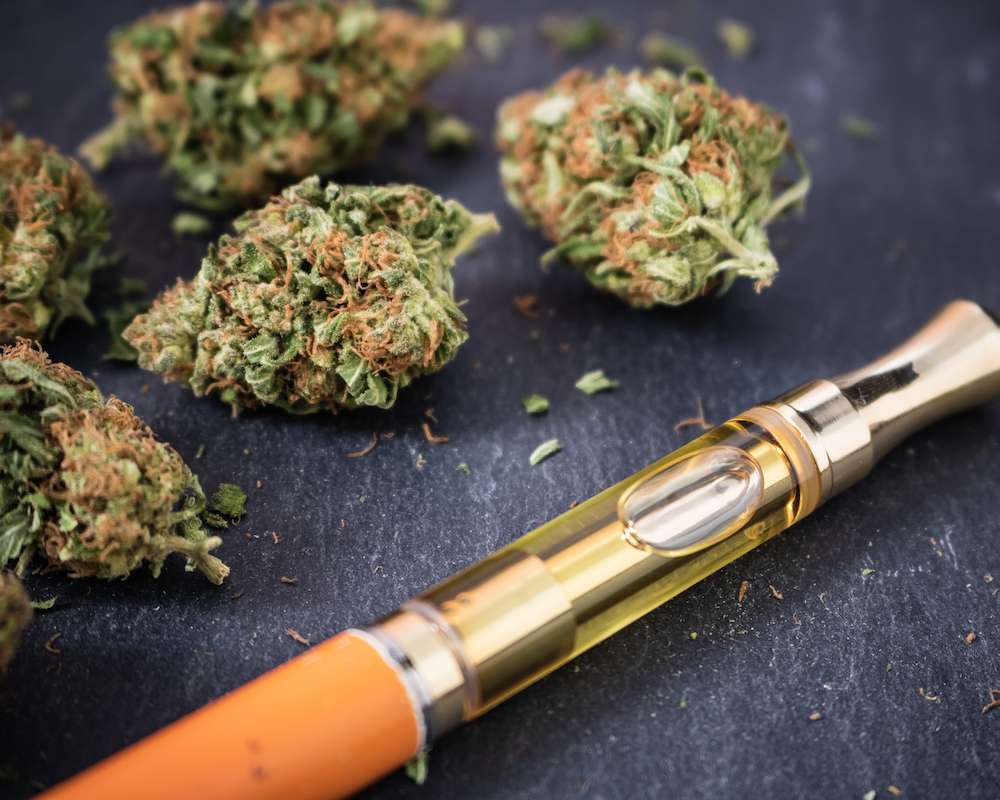
    While Pax cartridges are supposed to be filled through approved partner companies—who presumably have an above board safety record—some people refill the cartridges with their own cannabis oil or black-market cannabis products. This is concerning, since the majority of cases of vape-related illness have occurred after a person vaped cannabis. 

    Pax has been clear that its products are not directly related to the injuries, according to a September statement from the company.

    “No PAX products have been involved in any of these cases,” the statement said. “While the cause is yet to be determined, none of the brand partners who fill and distribute our pods use Vitamin E acetate in PAX formulations, and all pods are subject to rigorous state regulatory compliance and testing. We select our partners with careful diligence.”

    A New Leader Steps In

    However, in late September Pax’s CEO suddenly left the company. A new leader, Lisa Sergi, came in and established a health advisory board at Pax. 

    “Amid growing concern about the risks—and prevalence—of illicit cannabis, our top priority at PAX remains consumer safety,” the company said in a statement released on Sept. 25. 

    The company is hoping to salvage its financial future. Less than six months ago, Pax received $420 million in new funding, and the company was valued at $1.7 billion. Now, with the government warning all Americans to immediately stop vaping cannabis products, the future of the company is uncertain. 

    “There is great risk for Pax right now. The problem is that we don’t really know yet—the science isn’t there—what is causing all these illnesses,” said University of Michigan’s Marianne Udow-Phillips, who researches health policy.

    Stanford University otologist-neurotologist Robert Jackler said it would be difficult for Pax to know for sure that its products haven’t been tied to vape-related illnesses, or even deaths.

    “We don’t know whether Pax pods are injuring people,” he said.

    Others agree. Last month former FDA commissioner Scott Gottlieb tweeted, “These tragic illnesses are focusing legislative attention on nicotine e-cigs. At what point do they also instigate efforts to reign in dangerous THC and a proliferation of unregulated cannabis vape products, especially national brands of CBD vape hardware?”

    View the original article at thefix.com

  • Juul Suspends Advertising, CEO Steps Down

    Juul Suspends Advertising, CEO Steps Down

    Juul’s new CEO says the company is at a crossroads. 

    The vaping company Juul Labs will suspend all advertising in the United States, accept a ban on flavored e-cigarette products and make other major changes amid public outcry and health concerns about the use of electronic cigarettes, particularly among teens. 

    It’s Over For Flavored Vaping Products

    Juul released a statement on Wednesday (Sept. 25) saying that it will not fight a federal ban on flavored vaping products and that it will stop advertising its products immediately. In addition, CEO Kevin Burns is stepping down and will be replaced by KC Crosthwaite, former chief growth officer at Altria Group Inc.

    Altria, which owns Philip Morris USA, is one of the biggest tobacco companies in the nation. Altria has a 35% stake in Juul, which it bought for $12.8 billion last December. 

    In his first statement as CEO, Crosthwaite said that Juul is at a crossroads. 

    “I have long believed in a future where adult smokers overwhelmingly choose alternative products like JUUL. That has been this company’s mission since it was founded, and it has taken great strides in that direction,” he said. “Unfortunately, today that future is at risk due to unacceptable levels of youth usage and eroding public confidence in our industry. Against that backdrop, we must strive to work with regulators, policymakers and other stakeholders, and earn the trust of the societies in which we operate. That includes inviting an open dialogue, listening to others and being responsive to their concerns.”

    No More Ads

    Effective immediately, the company will be “suspending all broadcast, print and digital product advertising in the U.S.” and “Refraining from lobbying the Administration on its draft guidance and committing to fully support and comply with the final policy when effective” the statement said.

    In the statement, the company said that it has already taken steps to combat underage use of its products. 

    “JUUL Labs has strongly advocated for Tobacco 21 (T21) laws, stopped the sale of non-tobacco and non-menthol-based flavored JUULpods to all of its traditional retail store partners, enhanced its online age verification, discontinued its U.S.-based Facebook and Instagram accounts and works to remove inappropriate social media content generated by others on those platforms,” the statement said. “The company also intensified efforts to combat illegal and potentially dangerous counterfeit and compatible products. Most recently, JUUL Labs started deploying technology at retail stores that automatically restricts the sale of JUUL products until a government-issued ID is electronically scanned to verify age and ID validity, exceeding the standards in place for other tobacco products and alcohol.”

    View the original article at thefix.com

  • Juul's Popularity On Instagram Explored In New Study

    Juul's Popularity On Instagram Explored In New Study

    Researchers uncovered nearly 15,000 Instagram posts related to Juul, all of which were posted over a three-month period in 2018.

    Thousands of posts about the e-cigarette brand Juul appeared on Instagram in just a three-month period in 2018, and more than half were focused on cultures or lifestyles related to young people.

    Those are among the findings in a new study in the online journal Tobacco Control, which, as UPI noted, also included posts comprised of content that promoted means of purchasing Juul-related products at a reduced cost.

    Spokesperson: Juul Is Cutting Back On Digital Marketing

    A spokesperson for Juul said that the company itself only issued eight posts on Instagram during that three-month period, and has actively sought to reduce digital marketing and social media listings, which medical specialists have claimed can contribute to the appeal of such products among young people.

    The study—conducted by researchers from the non-profit public health organization Truth Initiative, as well as New York University, the University of Chicago and Johns Hopkins University Bloomberg School of Public Health—looked at discussions of Juul and its products on social media by using hashtag-based keyword queries to collect posts about the e-cigarette brand.

    They uncovered nearly 15,000 Instagram posts related to Juul, all of which were posted between March and May of 2018. More than half of the posts (55%) contained what UPI described as “youth-related content”—memes, cartoon images and celebrity references, and using Juul products at home, school or other places that were likely to be frequented by teenagers.

    Another 57% of the posts also mentioned or specifically highlighted using Juul with family or friends during social activities, while approximately one in 10 also mentioned the addictive properties of nicotine, albeit in a “fun light,” as UPI said.

    Juul Deactivates Facebook, Instagram

    Lindsay Andrews, a spokesperson for Juul Labs, said that six of the company’s eight Instagram posts in the time period covered in the study were testimonials from former adult smokers.

    Andrews also said that in November 2018, the company deleted its Facebook and Instagram accounts, removed thousands of social media listings by third parties—including more than 25,000 individual Instagram posts—and limited its Twitter usage to non-promotional items like press releases. 

    But some health specialists remain skeptical of these efforts. Dr. Len Horovitz, a pulmonary specialist at Lenox Hill Hospital in New York City said, “Every young person has Instagram, and that’s how they share information. The actual industry doesn’t have to do anything but let the people using the device share their insights, and advice and encouragement.”

    Study senior researcher Elizabeth Hair, who is also the senior vice president of Truth Initiative’s Schroeder Institute, said that stricter regulation on social media could help to stem the tide of posts she and her co-authors uncovered.

    “If we can stop the promotional pieces of it, I think that will help stem a lot of it,” she said. “A lot of this content was from companies that were selling the product and had these promotional aspects to it.”

    View the original article at thefix.com