Tag: kelly burch

  • Cost Hampers Depression Treatment, Even For Insured

    Cost Hampers Depression Treatment, Even For Insured

    Of the 9 million commercially insured people with depression, 2 million—or about 22%—are not getting treatment.

    The cost of getting healthcare keeps many people with depression from seeking treatment, even if they are commercially insured, according to a new survey published by the Blue Cross Blue Shield Association. 

    The survey found that 9 million commercially insured Americans have been diagnosed with major depressive disorder (for comparison, the Anxiety and Depression Association of America estimates that more than 16 million Americans have major depression). Of the 9 million commercially insured people, 2 million, or about 22%, are not getting treatment. 

    Cost is likely a barrier to treatment, the survey said. 

    Fifty-six percent of Americans believe that there are not enough options for treating depression, the survey found. 

    “It’s important for patients to be able to find the right balance of treatments that work best for them, whether that’s therapy, prescription antidepressants or a combination,” said Dr. Vincent G. Nelson, vice president of medical affairs at the Blue Cross Blue Shield Association.

    Depression diagnoses have increased among younger people, rising 66% among teens and 47% among millennials. Young people were more likely to think that there are not enough options for treating depression. 

    “As more Americans, especially millennials and adolescents, are diagnosed with major depression each year, it’s increasingly important that there’s continued research and resources allocated towards new ways to treat depression,” Nelson said. “The more options there are, the greater the likelihood is that we can find the right course of treatment for each person suffering from major depression.”

    Another survey released last week found similar increases in depression among millennials. Young people are especially at risk for depression because they are undergoing so many changes, said Ran Zilca, the chief data scientist at Happify Health, which administered that survey.

    “Young adulthood is a transitional time when we’re often just entering the workforce, figuring out who we are and what we want to do with our lives, which can be very challenging and, for some, can cause very negative psychological reactions while not having yet developed the skills to combat those feelings,” Zilca said. “While this analysis doesn’t tell us if the causes are internal or external to their employment, we know from prior Happify research that younger adults tend to be more stressed and worried about job-related matters than older workers.” 

    Acacia Parks, chief scientist at Happify Health, said that having too many options can also put pressure on millennials. 

    “They have access to so much information via the Internet—a universe where the possibilities are endless—which can be both exciting and overwhelming,” Parks said. 

    View the original article at thefix.com

  • "Nashville Flipped" Star Troy Shafer Died Of Drug Overdose

    "Nashville Flipped" Star Troy Shafer Died Of Drug Overdose

    Shafer died on April 28 at the age of 38.

    Troy Dean Shafer, star of the home renovation show Nashville Flipped, died of a drug overdose, according to toxicology reports released this week following Shafer’s death in April. 

    Shafer died “due to combined drug toxicity,” the Erie County (Pennsylvania) Coroner’s Office said, according to People. The office did not say which drugs were found in his system. 

    Shafer died on April 28 at the age of 38. His brother, Tim, told TMZ that Shafer died in his sleep and that the death was unexpected since he did not have any medical conditions that the family knew about. 

    Shafer starred in Nashville Flipped alongside his wife, Becky. On the DIY Network show, the duo flipped old houses around Nashville and completed custom renovations for homeowners. 

    At the time of Shafer’s death the DIY Network expressed its condolences. 

    “The DIY Network family is sorry to hear about the passing of Troy Dean Shafer, a dedicated, driven entrepreneur and restoration expert who was admired by everyone who worked on the series Nashville Flipped,” the network said at the time. “We continue to extend our deepest condolences to Troy’s family and friends during this difficult time.” 

    Shafer initially moved to Nashville to pursue his music career, but when that didn’t pan out he fell back on his construction skills. Nashville Flipped launched in 2016, with a second season the following year. 

    “I continue to find myself so incredibly grateful for the opportunity provided to me (and my incredible team),” Shafer wrote in a 2016 Instagram post, according to People

    During the time that Shafer was filming Nashville Flipped, Tennessee was grappling with an ever-worsening opioid crisis

    “People taking a Percocet from a friend or relative are not thinking, ‘One day I might end up on heroin.’ We need to make people aware these are connected,” Dr. David Reagan, chief medical officer of the Tennessee Department of Health, told The Tennessean in April 2016.

    Since then the state has cracked down on opioid prescribing in an effort to reduce overdose rates. Still, the state’s mental health court system has struggled to keep up with the demand, according to The Tennessean. In part, that is because the state had cut funding for mental health care. 

    “As soon as TennCare went away, the numbers skyrocketed,” retired Judge Dan Eisenstein told the newspaper. “Mental health court wasn’t set up to handle the numbers we were seeing.”

    View the original article at thefix.com

  • Robin Williams’ Son Opens Up About Grieving, Suicide For New Campaign

    Robin Williams’ Son Opens Up About Grieving, Suicide For New Campaign

    The legendary entertainer’s son opened up about focusing on his own healing since losing his father as part of an awareness campaign.

    Robin Williams’ oldest son, Zak Williams, is speaking out about his grief and moving on after suicide as part of a campaign to support people who have had a loved one take their own life. 

    Williams, 36, appears on the Instagram page for FacesOfFortitude

    “There’s no education in place to tell you how to deal with this,” Williams said in the first post. “To balance how to grieve privately with your family and then also to have to grieve publicly. While it was nice to be heard, I was spending time on the outer layer instead of on the inside. It wasn’t just the survivor network for me, it was the whole world.”

    Robin Williams took his own life in August 2014 at the age of 63. In addition to Zak, Williams left behind two other children, Cody and Zelda, who are younger than Zak. 

    In another post, Zak talked about how he has had to focus on his own healing over the past few years. 

    “I started to feel bad for myself, I was seeking solace and healing through my grieving,” he said. “Once I took out all the inputs and elements of self medications, it all became really raw. It was super painful. I had to stop thinking big and expansive to heal everyone and look inward. I found a lot in there. I realized I wasn’t broken. There was a lot of strength I didn’t know was in there.”

    This isn’t the first time that Williams has spoken about his father’s death and their relationship. He told a biographer that is was difficult to watch his father’s well-being fade, according to Vanity Fair

    “It was really difficult to see someone suffering so silently,” he said. “But I think that there were a series of things that stacked, that led to an environment that he felt was one of pain, internal anguish, and one that he couldn’t get out of. And the challenge in engaging with him when he was in that mindset was that he could be soothed, but it’s really hard when you then go back into an environment of isolation. Isolation is not good for Dad and people like him. It’s actually terrible.”

    Williams also told the biographer that his father carried a lot of guilt about ending his marriage to the mother of his children, despite the fact that the kids told him he needed to move on. 

    “He couldn’t hear it. He could never hear it. And he wasn’t able to accept it,” Williams said. “He was firm in his conviction that he was letting us down. And that was sad because we all loved him so much and just wanted him to be happy.”

    Today, Williams serves on the board of Bring Change to Mind, an organization started by actress Glenn Close to reduce the stigma around mental illness. 

    View the original article at thefix.com

  • Doctor Calls For Caution In Reducing Opioids

    Doctor Calls For Caution In Reducing Opioids

    For some patients who have been doing well on opioids long-term, it makes sense to “leave well enough alone,” the doctor said. 

    Today, much of the medical community is focused on reducing opioid prescriptions after decades of overprescribing, but one doctor is an outspoken critic of weaning patients who are doing well on long-term or high-dose opioid prescriptions. 

    Dr. Stefan Kertesz, a primary care physician who focuses on addiction medicine and works with the homeless population, told STAT News that he is challenging the idea that even people who are doing well on opioids need to have their medications reduced or replaced. 

    “I think I’m particularly provoked by situations where harm is done in the name of helping,” said Kertesz, who is also a professor at the University of Alabama at Birmingham School of Medicine. “What really gets me is when responsible parties say we will protect you, and then they call upon us to harm people.”

    In particular, Kertesz takes issue with the CDC’s 2016 opioids prescription guidelines. The guidelines were interpreted very strictly, and have led to many pain patients—even those who have not abused their medications—seeing their care regimen change. 

    For some patients who have been doing well on opioids long-term, it makes sense to “leave well enough alone,” Kertesz said. 

    He believes that the general recommendation to be careful when prescribing opioids is sound advice. However, when the recommendations are taken as a mandate, problems can arise, he said in a written response to the guideline. 

    “This is a guideline like no other… its guidance will affect the immediate well-being of millions of Americans with chronic pain,” Kertesz wrote.

    In another written response he said, “Most of us wish to see an evolution toward fewer opioid starts and fewer patients at high doses,” but doctors need to be able to leave some patients on opioids as clinically necessary without feeling like they are putting their careers at risk. 

    Kertesz encouraged the CDC to clarify that the guidelines were recommendations only, not policy proclamations. 

    “It is imperative that healthcare professionals and administrators realize that the Guideline does not endorse mandated involuntary dose reduction or discontinuation,” he wrote in one letter that he co-authored. “Patients have endured not only unnecessary suffering, but some have turned to suicide or illicit substance use.”

    Now, Kertesz is hoping to secure funding to study suicides caused by reduction in pain medications. 

    “You have three things that are potentially simultaneously associated with harm: Pain itself. Opioid dependence, the dependence itself. And the event, however we wish to interpret it clinically—as resurgent pain or untreated opioid dependence—in patients who are having opioids taken away,” he explained. 

    Despite his dedication to speaking out against uniform opioid reductions, Kertesz sometimes still feels nervous about standing against the mainstream medical community.  

    “Every single bit of it involves ambivalence and driving myself crazy,” he said. “Like, am I making a mistake? Am I going to blow up my career?”

    View the original article at thefix.com

  • Majority Of Post-Op Patients Managed Pain Without Opioids, Study Finds

    Majority Of Post-Op Patients Managed Pain Without Opioids, Study Finds

    The study’s lead author believes that keeping people from taking opioids for the first time could help mitigate the opioid epidemic. 

    Patients who have undergone surgery may not always need opioid painkillers to manage post-operative pain, according to a new study. 

    The research, which is pending publication in the Journal of the American College of Surgeons, found that a majority of patients were able to manage their pain using a regimen of over-the-counter pills.

    For the study, researchers selected patients who were undergoing one of six surgical procedures. These patients were given the option to use acetaminophen (Tylenol) and ibuprofen (Advil) to control their pain. They were instructed to take an alternating dose of these over-the-counter medications every three hours. 

    The patients were also given a “rescue” opioid prescription to use in case they experienced breakthrough pain and needed more relief. However, 52% of patients did not use the opioids, and 98% used 10 opioid pills or fewer. People who used the opioids needed, on average, four pills. 

    “Patients reported minimal or no opioid use after implementation of an opioid-sparing pathway, and still reported high satisfaction and pain control,” study authors wrote. “These results demonstrate the effectiveness and acceptability of major reduction and even elimination of opioids after discharge from minor surgical procedures.” 

    Lead study author Michael Englesbe, a professor of surgery at the University of Michigan, told Medical Xpress that keeping people from taking opioids for the first time could help mitigate the opioid epidemic. 

    “We think a fundamental root cause of the opioid epidemic is opioid-naïve patients getting exposed to opioids and then really struggling to stop taking them postoperatively, and then moving on to chronic opioid use, abuse, addiction, and overdose,” he said. 

    The study proves that many patients can manage pain effectively without opioids. Englesbe will now expand the research to study an additional 12 types of surgical procedures. Demonstrating that patients can manage pain without opioids could change how prescriptions are handled, he said. 

    “Our overall goal is to have half the operations done in the state of Michigan without patients needing opioids and still getting excellent pain care,” he said. “There are alternatives to opioids for surgical pain that work well and we should be using them more.”

    However, he said that this involves talking openly to patients, and realizing that in some cases opioids are needed to effectively manage pain. 

    “Just not giving opioids is not the answer—we have to give the best pain care,” he said. “From the beginning, everyone was on the same page with talking to patients about their pain and letting them know that operations hurt.”

    View the original article at thefix.com

  • USPS, FedEx Remain Easiest Way To Ship Fentanyl Into US

    USPS, FedEx Remain Easiest Way To Ship Fentanyl Into US

    “The sheer logistical nature of trying to pick out which packages contain opioids makes it much more challenging,” said a Customs and Border Protection official.

    A recent federal court case involving 43 members of a methamphetamine distribution network with ties to the Sinaloa Cartel again highlighted the relative ease with which the United States Postal Service (USPS) and private carriers like FedEx can be used to deliver powerful synthetic opioids into the United States.

    The case involved a San Diego-based network that shipped methamphetamine and the “club drug” gamma-hydroxybutyrate (GHB) to locations throughout the U.S. using the postal service and FedEx. 

    Coverage in Quartz detailed how increases in express shipping, combined with a lack of sufficient staffing at the U.S. Customs and Border Protection (CBP) agency and carriers like the UPS allow such transactions to take place. 

    Former FBI agent Dennis Franks said that the current method of stopping drugs from entering the country through the mail is like “putting your finger in a dike, but there’s just not enough fingers to put in all the holes.”

    The 43 defendants in the federal case used the USPS and fraudulent FedEx accounts to mail drugs to sub-distributors. The FedEx accounts were “billed to and paid for” by large corporations in the belief that the companies would not notice smaller shipment costs.

    A joint task force involving the Drug Enforcement Administration, Internal Revenue Service, U.S. Attorney’s Offices, sheriff’s and police departments, the United States Postal Inspection Service and Federal Bureau of Prisons collaborated to file indictments against 43 members of the network on May 21.

    Despite efforts like these, the practice of importing drugs through the USPS and private carriers remains a serious problem for state and federal law enforcement.

    According to congressional testimony from the union that represents CBP officers, the agency needs more than double the number of inspectors currently on duty at mail sorting facilities to keep up with the volume of packages to “ensure successful interdiction.” 

    In the past five years, express shipments have increased by nearly 50%, while international mail shipments have risen more than 200%. But at shipping and receiving hubs like the one maintained by FedEx in Memphis, Tennessee, there were only 15 CBP officers working on the overnight shift to process 86 million shipments in 2018.

    “The sheer logistical nature of trying to pick out which packages contain opioids makes it much more challenging,” said Robert E. Perez, an acting executive assistant commissioner for CBP. “It’s unlike anything we’ve encountered.”

    Policy changes incurred by the change in government administrations, as well as the necessity of a warrant to search any package sent via the USPS, also contribute to the overwhelming issues that confront law enforcement with mail shipments. 

    And as Franks noted, the cartels and related networks have their own means of assuring that their deliveries go unchallenged.

    “Don’t think that these cartels don’t have their own ‘intelligence services,’” he told Quartz. “Friends, family members working on the inside. So they’re going to know how many agents or officers are assigned to which FedEx facility, when they’re working, and when they’re not.”

    View the original article at thefix.com

  • Connecting With The Police Helped Her Get Sober

    Connecting With The Police Helped Her Get Sober

    Sending a single text message helped one woman living with addiction get the help she needed to start her sober journey.

    When Shannon McCarty realized that she wanted to start living life—and not just try to escape it by using meth and heroin—she knew that she could turn to a police officer who had slipped her a card and said to call when she was ready for help. 

    So, McCarty mustered the courage to send the following text to Officer Inci Yarkut, a member of the Community Outreach and Enforcement Team with the Everett, Washington Police Department, according to NPR.

    “Hello Inci, I tried to send you a message a few weeks ago I’m not sure if you got it … I was hoping to set up a time to meet with you for your help on the stuff we had talked about. I don’t want to go to jail or have a record as I am just the lost, depressed, hurt woman who has made a few poor choices, basically trying to end my life because I can’t take pain and hurt anymore … I have lost a lot over the last three years including my will, it seems. I don’t want to be this judged person anymore. I just need some help and I am not usually one to ask for help, but I want to be me again. I am sorry and thank you for listening, and I hope to hear from you soon. Thank you for your time. Shannon.”

    That message set things in motion, and today McCarty has been sober for 10 months. Along the way Yarkut has helped her navigate sobriety, connecting McCarty with community resources like a local bus pass. 

    Yarkut said that success stories like McCarty’s show that community policing can have a big impact on helping people stay sober. Since the Community Outreach and Enforcement Team was founded in 2016, it has helped the department connect with people struggling with substance abuse, rather than just arresting them. 

    “The idea behind our team was to really focus on that outreach piece because just continually putting people in jail, putting people in jail, putting people in jail and having them come out and repeat that cycle of their drug use, that’s not doing anything for them,” Yarkut said. 

    The interaction between Yarkut and McCarty shows how a different approach to policing addiction can work. Yarkut first met McCarty when someone called the police because McCarty was shooting up in a car. But instead of arresting her, Yarkut opened a door. 

    “I explained who I was and what my role in the police department was,” Yarkut said. ”[I] said, ‘Hey, if there’s something that we can do for you—because I think there are things that we can do for you, that we can help you—give me a call.”

    Today, McCarty is a far cry from the skinny and pale woman who Yarkut met that first night. 

    “She looks healthy,” Yarkut said. “She has a big old smile on her face. You can just see in her face what a changed person she is, and it’s pretty awesome.”

    View the original article at thefix.com

  • Handbag Maker Celebrates 3 Years Of Helping Employees Stay Sober

    Handbag Maker Celebrates 3 Years Of Helping Employees Stay Sober

    All of the proceeds from the bags that the nonprofit company sells are used to pay employees’ salary and benefits.

    For three years, every employee at Unshattered, a non-profit bag maker in Poughkeepsie, New York, has stayed clean and sober. 

    Although that may not be remarkable at some workplaces, it’s amazing considering that all of the women who work at Unshattered are in the early stages of recovery. 

    “You picture devastation and addiction. That was their lives,” Kelly Lyndgaard, who founded the organization, told Chronogram in January. “They’ve chosen to get well, chosen to do the hard work to get back on their feet.”

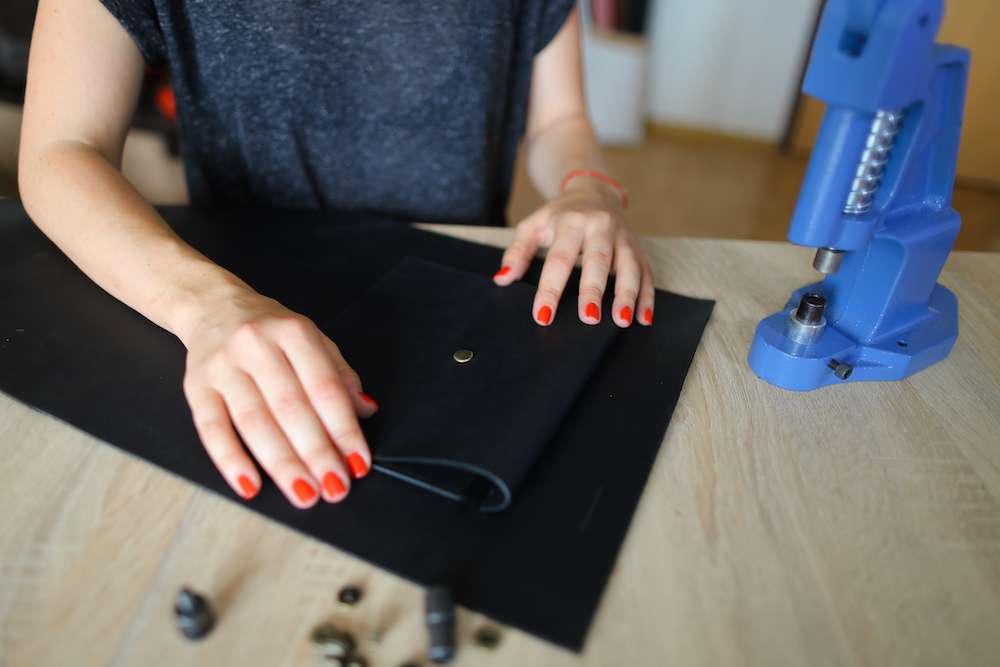
    Unshattered provides women in recovery with job training and a career path that leads to a full-time job, with benefits. Using up-cycled materials like old army uniforms or car upholstery, the women make handbags and other totes. The idea is simple, but life-changing. This week, the organization is celebrating three years of 100% sobriety for all employees, according to the Daily Freeman

    Dea Tobias has been with the organization since November 2017. She connected with Unshattered after completing rehab at Hoving Home, a treatment center that partners with the organization. Since then, she’s been sober and finds purpose in making beautiful bags and connecting with other women who have overcome addiction. 

    “It’s about women like myself, my beautiful handbags and learning to live,” she said. 

    Having a steady job allowed her to stay clean after her stay in rehab ended. “I didn’t know what my next step was but I knew that going back to doing the things that I used to do wouldn’t work,” she said. 

    Instead of returning to the streets, Tobias was able to secure a full-time job at Unshattered. “It’s truly amazing here,” she said. “I’m around the ladies that know my struggle. They know what I’ve been through and they relate.”

    When a woman has completed a recovery program, she can apply for a 10-week internship at Unshattered, learning skills like design and sewing. When the internship is up, the woman can decide if she is ready for full-time employment, Lyndgaard said. 

    “It’s not about me deciding whether or not I want to hire you. It’s: are you willing to do the work that it takes to create employment for yourself and drive enough value in revenue to the team?” she said. 

    All of the proceeds from the bags that Unshattered sells are used to pay employees’ salary and benefits. Administrative costs are covered through fundraising, Lyndgaard said. 

    The president of Hoving Home, Beth Greco, said that Unshattered has provided a continuum of care for women in early recovery. 

    “[Recovering women] can finish our program, but there has to be a next step,” she said. “What Unshattered has done is given us a very viable next step for some of the women.”

    View the original article at thefix.com

  • Fishermen Reel In $1 Million In Cocaine

    Fishermen Reel In $1 Million In Cocaine

    “We trolled past it. Every time we passed it we caught a fish,” one of the fishermen said.

    A pair of South Carolina fishermen had the catch of a lifetime on Sunday when they reeled in a bundle of cocaine worth about $1 million. 

    “We trolled past it. Every time we passed it we caught a fish,” one of the men told WCSC. In fact, a school of mahi-mahi, a popular catch with the fishermen, were swimming around the bundle.

    Before they packed up their rods and reels for the day, the duo decided to see what was in the package. They managed to snag the floating debris and pull it toward their boat. 

    When they saw the drugs inside, they contacted the Coast Guard. The agency alerted the North Charleston Police Department, which had officers meet the fishermen back at their marina. The police officers estimated that the bundle contained 30 to 50 kilos of cocaine, estimated to be worth $750,000 to $1 million, according to Coast Guard Lt. j.g. Phillip VanderWeit. 

    VanderWeit said that the boat was about 70 miles southeast of Charleston, an area where such a significant drug find is not common. 

    “It definitely doesn’t happen off the Charleston coast every day,” he said. “It’s a bit more common further south, whether in the Caribbean or the south Pacific.”

    Authorities will investigate the origins of the drugs. 

    In January, a fisherman in the Florida Keys also found a bale of cocaine, although that catch only had an estimated worth of $500,000, according to authorities. In that case, the drugs were floating beneath the dock when the man returned from a day of fishing. 

    In December 2017, the Coast Guard rescued a sea turtle that had become ensnared in more than 1,800 pounds of cocaine, worth about $53 million. 

    “After a period of lengthy questioning, it was determined the turtle did not have any useful information. We released him on his own recognizance after he agreed not to return to these waters again. #turtlesmuggler,” the agency tweeted at the time

    They then followed up with a more serious tweet about the prevalence of cocaine coming into the United States. 

    “In all seriousness, we love our sea creatures and do everything we can to help them when we see them in distressed situations. Additionally, during this patrol nearly seven tons of illicit narcotics with a street value over $135 million was confiscated.”

    View the original article at thefix.com

  • Colorado To Allow Doctors To Recommend Pot Instead of Opioids

    Colorado To Allow Doctors To Recommend Pot Instead of Opioids

    Proponents of the new law say that it will help further reduce the number of opioid prescriptions in the state. 

    Doctors in Colorado will soon be able to recommend medical marijuana to patients for any condition that doctors might traditionally have prescribed an opioid painkiller for, opening the way for patients with conditions ranging from chronic pain to dental procedures to be able to access medical pot. 

    The bill was passed with bipartisan support and signed into law by Colorado Gov. Jared Polis. It will take effect August 2. 

    Proponents of the new law say that it will help further reduce the number of opioid prescriptions in the state. 

    “Adding a condition for which a physician could recommend medical marijuana instead of an opioid is a safer pain management tool that will be useful for both our doctors and patients,” said Ashley Weber, executive director of Colorado NORML.

    Currently, doctors can only recommend medical cannabis for certain conditions, including cancer and glaucoma, although the state also allows recreational cannabis use. Under the new law, any patients 18 or older who would be eligible for an opioid prescription can receive medical cannabis instead. 

    Opponents of the measure, including Colorado physician Stephanie Stewart, said that marijuana is less understood and less tightly controlled than opioids. 

    “Our real concern is that a patient would go to a physician with a condition that has a medical treatment with evidence behind it, and then instead of that treatment, they would be recommended marijuana instead,” she said. “This will substitute marijuana for an FDA-approved medication—something that’s unregulated for something that’s highly regulated.”

    In February, Illinois launched a similar program designed to move patients from opioids to medical cannabis. Although Illinois also has a medical marijuana program, it is very restrictive.

    Illinois’ initiative—the Opioid Alternative Pilot Program—allows people who would otherwise be given an opioid painkiller to access medical cannabis without going through the state’s medical marijuana program. 

    “We’re optimistic the program will benefit many Illinois residents and offer them an alternative for managing their pain,” Conny Meuller-Moody, the program’s director, told Rolling Stone at the time. 

    Illinois doctor David Yablonsky said that the program would give doctors more leeway to help patients avoid potentially-dangerous opioids. 

    “At least we’ll have an opportunity now as physicians to work with patients to try this instead of these dangerous and potent narcotics, you know opioids,” he said. “I hope it saves lives and that people come in and have a healthy alternative.”

    View the original article at thefix.com