Tag: lgbtq

  • Gloria Harrison: True Recovery Is the Healing of the Human Spirit

    Although Gloria experienced trauma, violence, and institutionalized oppression, she never gave up hope. Now, in recovery, she is a counselor and staunch recovery advocate. 

    True recovery is the healing of the human spirit.
    It is a profound recognition that we not only have the right to live
    but the right to be happy, to experience the joy of life.
    Recovery is possible if only you believe in your own self-worth.

    -Gloria Harrison

    Although the dream of achieving recovery from substance use disorders is difficult today for people outside of the Caucasian, straight, male normative bubble, there is no question that progress has been made. If you want to know how difficult it was to get help and compassionate support in the past, you just have to ask Gloria Harrison. Her story is a stark reminder of how far we have come and how far we still must go.

    As a young gay African American girl growing up in a Queens household overrun with drug abuse and childhood trauma, it is not surprising that she ended up becoming an addict who spent years homeless on the streets of New York. However, when you hear Gloria’s story, what is shocking is the brutality of the reactions she received when she reached out for help. At every turn, as a girl and a young woman, she was knocked down, put behind bars in prisons, and sent to terribly oppressive institutions.

    Gloria’s story is heartbreaking while also being an inspiration. Although she spent so much time downtrodden and beaten, she never gave up hope; her dream of recovery allowed her to transcend the bars of historical oppression.

    Today, as an active member of Voices of Community Activists & Leaders (VOCAL-NY), she fights to help people who experience what she suffered in the past. She is also a Certified Recovery Specialist in New York, and despite four of her twenty clients dying from drug overdoses during the COVID-19 pandemic, she continues to show up and give back, working with the Harlem United Harm Reduction Coalition and, as a Hepatitis C survivor, with Frosted (the Foundation for Research on Sexually Transmitted Diseases).

    Before delving into Gloria’s powerful and heartbreaking story, I must admit that it was not easy for me to decide to write this article. As a white Jewish male in long-term recovery, I was not sure that I was the proper person to recount her story for The Fix. Gloria’s passion and driving desire to have her story told, however, shifted my perspective.

    From my years in recovery, where I have worked a spiritual program, I know that sometimes when doors open for you, it is your role to walk through them with courage and faith.

    A Cold Childhood of Rejection and Confusion

    Like any child, Gloria dreamed of being born into the loving arms of a healthy family. However, in the 1950s in Queens, when you were born into a broken family where heavy responsibilities and constant loss embittered her mother, the arms were more than a little overwhelmed. The landscape of Gloria’s birth was cold and bleak.

    She does not believe that her family was self-destructive by nature. As she tells me, “We didn’t come into this world with intentions of trying to kill ourselves.” However, addiction and alcoholism plagued so many people living in the projects. It was the dark secret of their lives that was kept hidden and never discussed. Over many decades, more family members succumbed to the disease than survived. Although some managed to struggle onward, addiction became the tenor of the shadows that were their lives.

    Gloria’s mother had a temper and a judgmental streak. However, she was not an alcoholic or an addict. Gloria does remember the stories her mother told her of a difficult childhood. Here was a woman who overcame a terrifying case of polio as a teenager to become a singer. Despite these victories, her life became shrouded in the darkness of disappointment and despair.
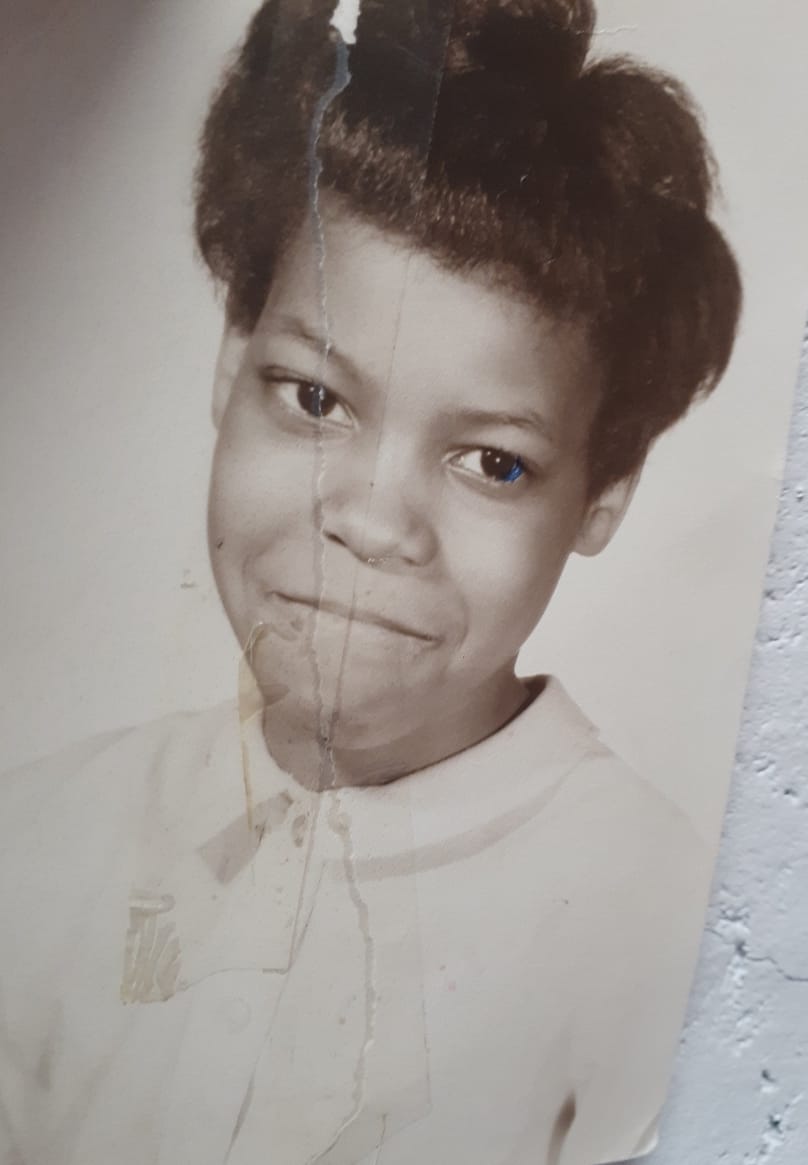
    Gloria Harrison: True Recovery Is the Healing of the Human Spirit

    In 1963, as a pre-teen, Gloria dreamed of going to the March on Washington with Martin Luther King, Jr., and the leaders of the Civil Rights Movement. Her mother even bought her a red beanie like the militant tam worn by the Black Panthers. Proudly wearing this sign of her awakening, Gloria went from house to house in Astoria, Queens, asking for donations to help her get to Washington, D.C. for the march. She raised $25 in change and proudly brought it home to show her mother.

    Excited, she did not realize it was the beginning of a long line of slaps in the face. Her mother refused to let her little girl go on her own to such an event. She was protective of her child. However, Gloria’s mom promised to open a bank account for her and deposit the money. Gloria could use it when she got older for the next march or a future demonstration. Gloria never got to turn this dream into a reality because her life quickly went from bad to worse.

    At thirteen, Gloria found herself in a mish-mash of confusing feelings and responsibilities. She knew she liked girls more than boys from a very early age, not just as friends. Awakening to her true self, Gloria felt worried and overwhelmed. If she was gay, how would anyone in her life ever love her or accept her?

    The pressure of this realization demanded an escape, mainly after her mother started to suspect that something was off with her daughter. At one point, she accused her daughter of being a “dirty lesbo” and threw a kitchen knife at her. Gloria didn’t know what to do. She tried to run away but realized she had nowhere to go. The only easy escape she could find was the common escape in her family: Drugs seemed the only option left on the table.

    The High Price of Addiction = The Shattering of Family Life

    In the mid-sixties, Gloria had nowhere to turn as a young gay African American teen. There were no counselors in her rundown public high school, and the usual suspects overwhelmed the teachers. Although the hippies were fighting the war in Vietnam on television, they did not reach out to troubled kids in the projects. Heck, most of them never left Manhattan, except for a day at the Brooklyn Zoo or Prospect Park. The Stonewall Riots of 1969 were far away, and Gay Rights was not part of almost anyone’s lexicon. Gloria had no options.

    What she did have was an aunt that shot heroin in her house with her drug-dealing boyfriend. She remembers when she first saw a bag of heroin, and she believed her cousin who told her the white powder was sugar. Sugar was expensive, and her mom seldom gave it to her brothers and sisters. Why was it in the living room in a little baggie?

    Later, she saw the white powder surrounded by used needles and cotton balls, and bloody rags. She quickly learned the truth, and she loved what the drug did to her aunt and the others. It was like it took all their cares away and made them super happy. Given such a recognition, Gloria’s initial interest sunk into a deeper fascination.

    At 14, she started shooting heroin with her aunt, and that first hit was like utter magic. It enveloped her in a warm bubble where nothing mattered, and everything was fine. Within weeks, Gloria was hanging out in shooting galleries with a devil may care attitude. As she told me, “I have always been a loner even when I was using drugs, and I always walked alone. I never associated with people who used drugs, except to get more for myself.”

    Consequences of the Escape = Institutions, Jails, and Homelessness

    Realizing that her daughter was doing drugs, Gloria’s mother decided to send her away. Gloria believes the drugs were a secondary cause. At her core, her mother could not understand Gloria’s sexuality. She hoped to find a program that would get her clean and turn her straight.

    It is essential to understand that nobody else in Gloria’s family was sent away to an institution for doing drugs. Nobody else’s addiction became a reason for institutionalization. Still, Gloria knows her mother loved her. After all, she has become her mother’s number one contact with life outside of her nursing home today.

    Also, Gloria sometimes wonders if the choice to send her away saved her life. Later, she still spent years homeless on the streets of Queens, Manhattan, the Bronx, and Brooklyn. Of the five boroughs of New York City, only Staten Island was spared her presence in the later depths of her addiction. However, being an addict as a teenager, the dangers are even more deadly.

    When her mother sent her away at fourteen, Gloria ended up in a string of the most hardcore institutions in the state of New York. She spent the first two years in the draconian cells of the Rockefeller Program. Referred to in a study in The Journal of Social History as “The Attila The Hun Law,” these ultra-punitive measures took freedom away from and punished even the youngest offenders. Gloria barely remembers the details of what happened.

    After two years in the Rockefeller Program, she was released and immediately relapsed. Quickly arrested, she was sent to Rikers Island long before her eighteenth birthday and put on Methadone. Although the year and a half at Rikers Island was bad, it was nothing compared to Albany, where they placed her in isolation for two months. The only time she saw another human face was when she was given her Methadone in the morning. During mealtimes, she was fed through a slot in her cell.

    Gloria says she went close to going insane. She cannot recall all the details of what happened next, but she does know that she spent an additional two in Raybrook. A state hospital built to house tuberculosis patients; it closed its doors in the early 1960s. In 1971, the state opened this dank facility as a “drug addiction treatment facility” for female inmates. Gloria does remember getting lots of Methadone, but she does not recall even a day of treatment.

    Losing Hope and Sinking into Homeless Drug Addiction in the Big Apple

    After Raybrook, she ended up in the Bedford Hills prison for a couple of years. By now, she was in her twenties, and her addiction kept her separate from her family. Gloria had lost hope of a reconciliation that would only came many years later.

    When she was released from Bedford Hills in 1982, nobody paid attention to her anymore. She became one more invisible homeless drug addict on the streets of the Big Apple. Being gay did not matter; being black did not matter, even being a woman did not matter; what mattered was that she was strung out with no money and no help and nothing to spare.

    Although she found a woman to love, and they protected each other when not scrambling to get high, she felt she had nothing. She bounced around from park bench to homeless shelter to street corners for ten years. There was trauma and violence, and extreme abuse. Although Gloria acknowledges that it happened, she will not talk about it.

    Later, after they found the path of recovery, her partner relapsed after being together for fifteen years. She went back to using, and Gloria stayed sober. It happens all the time. The question is, how did Gloria get sober in the first place?

    Embracing Education Led to Freedom from Addiction and Homelessness

    In the early 1990s, after a decade addicted on the streets, Gloria had had enough. Through the NEW (Non-traditional Employment for Women) Program in NYC, she discovered a way out. For the first time, it felt like people believed in her. Supported by the program, she took on a joint apprenticeship at the New York District College for Carpenters. Ever since she was a child, Gloria had been good with her hands.

    In the program, Gloria thrived, learning welding, sheet rocking, floor tiling, carpentry, and window installation. Later, she is proud to say that she helped repair some historical churches in Manhattan while also being part of a crew that built a skyscraper on Roosevelt Island and revamped La Guardia Airport. For a long time, work was the heart of this woman’s salvation.

    With a smile, Gloria says, “I loved that work. Those days were very exciting, and I realized that I could succeed in life at a higher level despite having a drug problem and once being a drug addict. Oh, how I wish I was out there now, working hard. There’s nothing better than tearing down old buildings and putting up something new.”

    Beyond dedicating herself to work, Gloria also focused on her recovery. She also managed to reconnect with her mother. Addiction was still commonplace in the projects, and too many family members had succumbed to the disease. She could not return to that world. Instead, Gloria chose to focus on her recovery, finding meaning in 12-Step meetings and a new family.

    Talking about her recovery without violating the traditions of the program, Gloria explains, “I didn’t want to take any chances, so I made sure I had two sponsors. Before making a choice, I studied each one. I saw how they carried themselves in the meetings and the people they chose to spend time with. I made sure they were walking the walk so that I could learn from them. Since I was very particular, I didn’t take chances. I knew the stakes were high. Thus, I often stayed to myself, keeping the focus on my recovery.”

    From Forging a Life to Embracing a Path of Recovery 24/7

    As she got older and the decades passed, Gloria embraced a 24/7 path of recovery. No longer able to do hard physical labor, she became a drug counselor. In that role, she advocates for harm reduction, needle exchange, prison reform, and decriminalization. Given her experience, she knew people would listen to her voice. Gloria did more than just get treatment after learning that she had caught Hepatitis C in the 1980s when she was sharing needles. She got certified in HCV and HIV counseling, helping others to learn how to help themselves.

    Today, Gloria Harrison is very active with VOCAL-NY. As highlighted on the organization’s website, “Since 1999, VOCAL-NY has been building power to end AIDS, the drug war, mass incarceration & homelessness.” Working hard for causes she believes in, Gloria constantly sends out petitions and pamphlets, educating people about how to vote against the stigma against addicts, injustices in the homeless population, and the horror of mass incarceration. One day at a time, she hopes to help change the country for the better.

    However, Gloria also knows that the path to recovery is easier today for facing all the “absurd barriers” that she faced as a young girl. Back in the day, being a woman and being gay, and being black were all barriers to recovery. Today, the tenor of the recovery industry has changed as the tenor of the country slowly changes as well. Every night, Gloria Harrison pictures young girls in trouble today like herself way back when. She prays for these troubled souls, hoping their path to recovery and healing will be easier than she experienced.

    A Final Word from Gloria

    (When Gloria communicates via text, she wants to make sure she is heard.)

    GOOD MORNING, FRIEND. I HOPE YOU ARE WELL-RESTED. I AM GRATEFUL. I LOVE THE STORY.

    I NEED TO MAKE SOMETHING CLEAR. MY MOTHER HAD A MENTAL AND PHYSICAL ILLNESS. SHE HAD POLIO AT THE AGE OF FOURTEEN BUT THAT DIDN’T STOP HER. SHE WENT THROUGH SO MUCH, AND I LOVE THE GROUND SHE WALKS ON. I BELIEVE THAT SHE WAS ASHAMED OF MY LIFESTYLE, BUT, AT THE SAME TIME, SHE LOVED ME. SHE GAVE ME HER STRENGTH & DETERMINATION. SHE GAVE ME HER NAME. SHE RAISED HER LIFE UP OVER HER DISABILITIES. SHE BECAME A STAR IN THE SKY FOR ALL AROUND HER.

    BEING THAT MY MOTHER WASN’T EDUCATED OR FINISHED SCHOOL, SHE DIDN’T KNOW ABOUT THE ROCKEFELLER PROGRAM. SHE ONLY WANTED TO SAVE HER TRUSTED SERVANT AND RESCUE HER BELOVED CHILD. SHE NEEDS ME NOW AND I AM ABLE TO HELP BECAUSE I WAS ABLE TO TURN MY LIFE AROUND COMPLETELY. SHE TRUSTS ME TODAY TO WATCH OVER HER WELLBEING, AND I FEEL BLESSED TO BE HER BELOVED CHILD AND TRUSTED SERVANT AGAIN. AS YOU HAVE MENTIONED TO ME, THE PATH OF RECOVERY IS THE PATH OF REDEMPTION.

    Postscript: A big thank from both Gloria and John to Ahbra Schiff for making this happen.

    View the original article at thefix.com

  • Social Media Algorithms as Triggers: Wish-ing for a Meth Pipe

    Social Media Algorithms as Triggers: Wish-ing for a Meth Pipe

    Imagine if Spencer’s Gifts from the mall in the 80’s smoked crack, got skyrocketed into the future, and became a Black Mirror episode. 

    Working in the digital world, publishing online, and playing the whole social media gig, there are certain things you have to make peace with as a sober person like myself. For instance:

    Every day, Facebook will ask if I want to stroll down a memory lane of old updates, many of which feature me with a red bloated face and a pinched hammered look in every picture. Hard pass, FB! But thanks for asking! Ditto I have learned to live with my Instagram feed being filled with people I follow but might not really know (or like, for that matter) as they endlessly post about White Claw or rosé all day

    Is It Possible for Targeted Advertising to Go Too Far?

    Then there are the ads and accounts for weed enthusiasts, microbrews, and wine tours that follow you on Twitter based on a few tweets that happen to have the words booze or weed in them, regardless of context. Oh social media, you’re so delightful. But is it possible for the algorithms and targeted advertising to get out of control and maybe cross a line? Can a company be so far off base with their social media ads that people in recovery can even feel triggered? In the case of the disaster that is Wish.com’s Facebook marketing strategy, I would emphatically say yes.

    Listen, with a decade plus of sobriety, I try to accept the things I cannot change and the many problematic aspects of Facebook fall squarely in that category. Name something about the social media platform that is awful and troublesome and I will totally agree with you. Yet I still use the damn thing, mainly because as a writer it’s super useful. Also, I’m an addict and maybe mildly hooked on the instant approval I receive every time I post something funny. Regardless, I’ve leaned into its ridiculousness so it takes a lot to make me notice how insane it can be.

    That is, until a few months ago. I was scrolling endlessly, as one does, and stumbled upon a Wish.com ad for bullets. Not bullets for guns, but bullets as in the little plastic canisters that hold your cocaine. For people who didn’t share my affinity for that substance or other sniffable powders, bullets were a handy, very 90’s way to keep your blow on you and do it without going to the bathroom to cut lines on the back of gay bar toilets, as glamourous as that all sounds. 

    Bullets, Meth Pipes, Sex Toys, and Poppers

    The ad featured the bullets in a variety of colors and they were only a dollar! What a bargain! I naturally took a screenshot of the ad and turned it into one of those aforementioned hilarious posts. Mainly, it was just so jaw-droppingly blunt that I felt like it needed to be laughed at and shared. Like, really? This is where we are, Facebook? Ads for the new Mindy Kaling movie and Dove Bars alongside cocaine bullets? I mean, talk about spot-on algorithms, but good lord. Obviously, I’m an open book (to a fault sometimes) and I have shared bluntly on Facebook about my drug use. Therefore, I get the ads appropriate to what I talk about. Still, this one felt a little too on the nose, as it were. 

    Thankfully, I have been sober for a long time, so it didn’t trigger me. But the sheer wildness of the ad was hard to get out of my head.

    A couple of weeks later, a friend posted a Wish ad for meth pipes, poppers, and sex toys. A former meth addict and gay man himself, his post expressed amazement at the brazenness of the items and basically called out Wish.com for providing all the tools for a relapse on his timeline. The comments from other sober folks echoed his shock, expressing disgust and anger over such garbage thrown carelessly in someone’s ad feed. 

    Yes, of course, you can block Wish. Yes, you can report them and take them out of your timeline. However, you don’t get a choice in the beginning. These ads just show up on your page uninvited, regardless of what’s happening in your life and in your recovery. 

    Days after that post, another gay male friend in recovery shared a similar status about Wish and their ads. Obviously, I was far from alone in my reaction to the inappropriateness of the ads. In fact, there are entire Facebook groups devoted to how insane Wish.com is. Oh, it’s not just drug paraphernalia. It’s everything from magnetic weight loss bracelets to weird teeth-whitening lasers. Oh and don’t even fall down the rabbit hole of all their wacky apparel and sexy underwear like this writer did if you at all value your time. It’s like if Spencer’s Gifts from the mall in the 80’s smoked crack, got skyrocketed into the future, and became a Black Mirror episode. 

    How Well Do You Really Know Me, Facebook?

    Of course, for Wish, none of these ads are personal. They have a whole bunch of crap and they want to sell it to you. Wish doesn’t know I had an epic drug problem nor does it care. Again, I get it. While vast and certainly random af, Wish’s inventory is not the problem. What seems more problematic is that a platform like Facebook has zero regulation or even a thought process about what’s being advertised to the people who use their service. You’d think in a country with an exploding meth epidemic, ads for glass pipes would be off limits, algorithms be damned. Their refusal to address this seems odd, since Facebook takes great pride in how accurately it can read our minds, suggesting who we should be friends with, what pages we should like, and what we should buy. So the fact that someone like me, who very much lives and breathes sobriety out loud on social media, can still get these kinds of ads proves maybe they don’t know us all that well at all. 

    Besides, shouldn’t we draw a line somewhere prohibiting certain things from being advertised? Meth accessories might be a good place to start that line.

    Also not fantastic is what seems to be the blatant targeting of these kind of products to gay men. In a community with a higher rate of addiction, death, and mental illness, it blows my mind that alcohol companies still sponsor pride festivals, travel companies shill drug-soaked vacation packages, and social media platforms suggest products used in practices that are literally killing the population they’re targeting. 

    This is an advertising hat trick as old as the game itself: market to the folks who use it the most. But like cigarettes or alcohol billboards plastered all over economically depressed neighborhoods, it feels like a cheap shot to push this stuff to gay men who innocently log on to Facebook. 

    Yet at the end of the day, it’s a drinking and using man’s world so I’m sure very little can be done. If I am in a good spot emotionally in my sobriety, I can go to bars, walk down grocery store wine aisles, and even look at meth pipe ads. But what about people new to recovery, fresh off their last run? Or someone in a vulnerable place and craving their drug? There’s a reason they tell us to stay away from bars or other using-associated cues in early sobriety. 

    Maybe if enough of us block, report, and unfollow, something will happen. Or is that too much to Wish for? 

    View the original article at thefix.com

  • Embracing Pride and the LGBT+ Community in Recovery

    Embracing Pride and the LGBT+ Community in Recovery

    “The sense of having two selves was the root of my addiction, especially in the beginning. It was exhausting to play a role I didn’t want.”

    Ten years ago, I was both terrified and ecstatic to go to my first ever LGBT Pride Parade. I knew that I was attracted to both men and women, but I had always kept this hidden. Being raised in the Catholic Church and in a conservative town, I was told it was a sin to act upon “homosexual desires.” To smooth out the edges of my mental tug of war, I took pulls of vodka and chased it with cherry Sprite.

    Broadway was bursting with vibrant seas of color and glitter. Rainbow flags replaced American flags, much to the dismay of the town bigots. A float rolled by with drag queens dressed like Beyoncé and Dolly Parton, hair teased as big as their ta-tas. Then I heard the roar of Harley Davidsons as a throng of denim-clad lesbians cruised by with signs that said, “DYKES ON BIKES.” Next, another group chanted: “hey-hey, ho-ho, homophobia has got to go!”

    I know this all sounds like a stereotypical version of Pride, but this was truly how it appeared to me as a newbie. Over time, I began to peel apart the layers and examine the nuances within the community. Pride showed me the power of embracing and celebrating your identity, even when it is associated with stigma, discrimination, and stereotypes. I realized that Pride gave me kindling for my desire to fight stigma, even long before I was in recovery.

    *

    As author of My Fair Junkie and Fix Contributor Amy Dresner wrote in (Re) Claiming Language: “I think the addiction/recovery movement needs to model itself on the gay rights movement and be vocal, out there, shameless and visible: parades, glitter, boas. Bring it all on.”

    After admiring Dresner’s writing for years on The Fix, then her memoir, I finally had the courage to message her. She sent me a kind response and we had an amazing actual phone conversation! Okay, I swear that my fan-girling has a point. She also spoke with me in more depth about the parallels between our communities: the stigma, the struggle with health issues like HIV, Hepatitis C, and losing friends to overdoses or suicides. Amy can speak to these similarities since she has experience with the LGBT+ community in L.A. “Even though I’m straight, I often attend and speak at LBGT meetings. I like the vibe there. They feel more real and more celebratory. They get my humor and irreverence. I feel like I can be more open about my crystal meth use and being promiscuous without them judging me, because they’ve been there too,” she said. We also share an immediate kinship with each other over burrowing our way from the trenches to light.

    *

    My first small-town Pride parade only lasted fifteen glorious minutes. After all, my city, Fargo, was famous for the Coen brother’s cult classic film and being the highest binge drinking city in the country, not LGBT rights. I wandered to a beer garden for another Pride event. A girl with hot pink hair asked for my signature for a human rights petition. I signed and wanted to flirt with her, but I realized that I didn’t know how. At the line in the bathroom, a woman noticed that I was shaking with anxiety and offered me a little blue pill she said was Xanax.

    “This will help chill you out,” She said. It worked. She led me down the street to the only gay bar, where scantily clad men grinded to Katy Perry under pulsing neon lights. Later that night, I drunkenly wrote in my journal: “we’re here, we’re queer. We’re junkies and drunkies.” I also realized that alcohol and pills were the easiest way for me to “break bread,” in the LGBT community. They were magical potions that could teleport me from being an outsider to an insider, give me the courage to flirt with women, to numb the shame. I’m not alone. For many, Pride and being part of the queer community is synonymous with drinking and drug use.

    Charlie* is a 24-year-old graduate student who is bisexual and is ambiguously trans. They are from a school district in Minnesota with the one of the highest suicide rates in the country. At their high-school, gay and “gay-coded” students were bullied, peed on, and called faggots. Charlie said, “For myself, the intersections of addiction and LGBT identity are so complex. It’s so ingrained in our daily lives, in our community lives. Our history. We weren’t given the social or political power to have public space. So, bars and underground clubs were our space…so addiction can sometimes become a learned behavior. For me, it was alcohol. I used it to suppress my identity.”

    According to a 2015 study by the Substance Abuse and Mental Health Service Administration (SAMHSA), 30 percent of LGBT people struggle with some form of addiction compared to 9 percent of the heterosexual population. Bisexual women and trans people face the highest risk of drug use and abuse.

    I spoke with a 30 something freelance writer from the Midwest named Morgan, who said she had known she was “next-level” gay long before she even knew the word. “The sense of having two selves was the root of my addiction, especially in the beginning. It was exhausting to play a role I didn’t want. I think it was originally a combination of easing the pain of not being able to love the people I loved openly and resentment toward the society I felt excluded me. There was an ease and confidence about being my true self when I was drunk though.”

    Charlie said they have managed their drinking without the help of outside groups, but if they did need one they would prefer an LGBT-oriented recovery group. Meanwhile, Morgan lives in an area that does not have LGBT meetings. Morgan said she felt very uncomfortable at her first 12-step meeting and definitely didn’t feel comfortable disclosing that she is lesbian, because her home is near the birthplace of the notoriously bigoted Westboro Baptist Church. Her first meeting “was full of a Confederate-flag wearing, chain smoking old school crowd that didn’t have much experience with LGBTQI people.”

    What about people who want to connect with other queer folks in recovery, but live in a rural area or don’t connect with 12-step meetings? I spoke with Tracy Murphy, who is lesbian and founded a blog called LGBTeetotaler, which aims to “create community and visibility for queer and trans people in all forms of recovery.” Murphy is an inspiring example of the power of connection through the internet, which she said is “life-changing.”

    “Many times, when I’m dealing with cis hetero members of my recovery community, I end up feeling like I’m doing education while I’m also just trying to process an experience I’ve had… Having a group of queers to reach out to takes away that layer of education and emotional labor. We’re free to discuss and process without having to also explain why or how an experience is difficult,” Murphy said.

    *

    Talking to Murphy and Dresner inspired me to reflect upon my nearly ten years in and out of the recovery community- as an alcoholic/ addict in recovery and then as a social worker. Throughout those years, I’ve noticed a universal theme that weaves us addicts together. We all felt like misfits, outsiders. Like many others, I first went to meetings flashing my outsider identity like a badge of honor. I was surprised to discover the very thing that made us feel like misfits and lone wolves is often what connects us most in recovery. There’s a glorious alchemy that happens when a bunch of misfits unite for a shared goal of recovery.

    But sometimes, the alchemy doesn’t happen. I’ve heard this to be true especially among people in the LGBT community.

    Since Morgan didn’t feel comfortable in the AA group, she stopped going and eventually relapsed. Desperate to get sober and with no other options in her small-town, she decided to give it another try. She was happy to befriend another lesbian in the group, but surprised when the woman advised Morgan to keep the “personal information under wraps.” By that, she meant not to come out to the group.

    Morgan said, “It felt like going backwards to be in the closet after 15 years of being openly gay everywhere and that contributed to the feeling that maybe this program wasn’t going to work for me. It feels strange to do that and to fear judgement in a group that is all about acceptance and guidance and love… I have a feeling that I will eventually come out at least in the women’s group…My gut tells me I can’t have true recovery if I’m not being my true self.”

    How can mainstream 12-step meetings and groups be more inclusive of LGBT people? While this could be an entire book in and of itself, I wanted to ask others to see what they thought.

    Murphy said: “I think that some of the easiest and most effective ways for the recovery community to be more inclusive of LGBTQ+ folks are to really be aware of language and not make assumptions about the people they are addressing. For me, personally, I immediately get the message that I am not someone’s intended audience when the message being presented assumes that all women are feminine and attracted to men. Heteronormativity is ingrained in every part of mainstream society and, for people who want to make sure they are being inclusive of queer and trans folks, making sure that they’re not assuming people are heterosexual or cisgender is a huge step in the right direction.”

    While I think that Murphy has valuable advice, she has had very different experiences; she has not been interested in attending AA and was able to get sober with the support of an online community called Hip Sobriety.

    Josh* is a trans man from the Midwest who has gone to several rehabs, jails, and attended AA off and on for 20 years. He said that it’s hard to change an old institution like AA, but pointed out that they released the brochure: “AA and the Gay and Lesbian Alcoholic” in 1989. This omits others on the LGBT spectrum, but he said: “As for being included as an LGBT person, I don’t want to be treated any differently, just respected. Greeting goes a long way for me. Having people smile, shake hands, introduce themselves. Sounds simple but that’s where it all starts.”

    *

    I won’t be able to attend Pride this year. Ironically, I will be in a Catholic Church at my godson’s baptism. I will be thinking of my friends in Minneapolis and across the country as they march through the streets on floats, gathering signatures, and celebrating. But most of all, I will be thinking of the invisible misfits of the LGBT community- the ones struggling with addiction, the ones passed out before the dance even starts, the ones who are in rehab or detox.

    I will be sending the brightest beams your way, knowing that one day you will finally be seen and embraced the way that I have been.

    View the original article at thefix.com

  • Lineages of Addiction: Interview with torrin a. greathouse, a Trans Poet in Recovery

    Lineages of Addiction: Interview with torrin a. greathouse, a Trans Poet in Recovery

    “I always compare myself now to a night when I was drinking and I looked in the mirror. I saw a lie, wearing a suit and full beard, and…I tried to kill myself.”

    A point on a map is the product of two dimensions, the x and the y, or longitude and latitude. For example, a liquor store or your plug’s house is located at the intersection of two streets. For example, one street might trace back to your childhood home. Or maybe trace to a moonless night in a park, your peers starting to circle up. Maybe one of your streets crisscrosses the inertia of a fist. Or the colored lights in a club filling your eyes like cups. Etcetera. Etcetera.

    Everything, including us, our identities and our addictions, exist at the intersections of other things. The human landscape is a network, and this interview series has sought to delve into the complexities by dialoguing with poets who write from personal experience, and by giving purposeful attention to how substance misuse can overlap with marginalized lives and histories.

    This new installment welcomes torrin a. greathouse, a trans woman in recovery from both bipolar disorder and substances, and who self-describes as a cripple punk (more on that below).

    Despite only being 23 years old, she’s already well into a strong career, having landed publishing credits on Poets.org and Submittable’s journal, Frontier, and garnering a shoutout from poetry star Kaveh Akbar in The Paris Review. torrin’s forthcoming chapbook called boy/girl/ghost is a winner of The Atlas Review poetry contest, and this past year she published her debut Therǝ is a Case That I Ɐm on Damaged Goods Press.

    torrin has an inclination towards bravery in the way she does the work of transforming pain. It’s an exemplary case of someone using poetry to chew through toughness, to make sustenance out of issues that would otherwise choke us or rot and become pestilent. Even when her poems seem to conclude in a surrender, it feels like torrin achieves a type of mastery over the monster by at least naming it. Furthermore, displaying an energetic craft, she reaches for sophistication in form and concept, hewing down the opaqueness of personal uncertainties into sculptural elegance. Through processing her own story, she asks us to think about how the causes of addiction can be much deeper than the individual suffering.

    During the interview, we discuss how different lineages of addiction alternately rob and empower torrin, while we take a close look at some of her poems. We talk about soundtracks to gender transition. And more. Throughout our conversation she is candid about her struggles, and the violences that happened within her family while growing up in the Pacific Northwest. Before you read, it should be emphasized that the content traverses a number of sensitive topics, including suicidality, domestic abuse, and of course, substance misuse.

    The Fix: Can you tell me about some of your experiences, where transness intersected with addiction?

    torrin a. greathouse: Like many things that bring people into states of addiction, it became a method of coping. To be drunk or high allowed me to feel outside my body. And also, drugs allow you to disconnect not just from the physical body, but from life.

    An experience that is common among trans communities, is not necessarily being able to survive in the same ways as other people; having to turn to alternate forms of income creation like sex work. I was doing certain types of sex work that were not always conducive to my emotional wellness. I used alcoholism to cope with that as well.

    More often than not, conversation about coping focuses more on dealing with emotional or mental stressors, like trauma, for example. But there are also physicalities that people seek displacement from. Which makes me think about body dysphoria.

    You can’t feel dysphoric about your body if you can’t feel your body, was a point that I hit. I always compare myself now to a night when I was drinking and I looked in the mirror. I saw a lie, wearing a suit and full beard, and…I tried to kill myself. I think of myself now, in comparison to that moment.

    Wow. That’s so real. I know it’s such a tender subject and I value your sharing. A common characteristic of personal histories with addiction is that substance use “works” until it doesn’t. Sounds like you are describing one of those pivotal moments.

    I’m interested in recovery spaces, and I don’t know what your experience is with treatment or peer support, but I don’t hear as many stories from trans folk, or even queer folk.

    I wish going into rooms was easier. I’m lucky in a sense, that when I got sober, it was because of a DUI. I was in a collision, driving drunk, and went to jail, and then the court mandated I attend a peer support group. Had it not been court-mandated, I don’t think I could have managed to keep going, because those spaces are harder for folks that aren’t a specific subset of culture, primarily straight and middle-aged and male. Trying to get my pronouns used was pretty much impossible. Eventually I gave up and stopped presenting as trans.

    There are peer support groups meant for queer folks, but again, unfortunately, this ends up being cis-gay, middle-aged men. I’ve faced a lot of transphobia in those rooms as well. Luckily, there are new spaces opening up, like one in Long Beach, specifically for trans folk.

    My recovery consists of—and poet Kaveh Akbar also talks about this in the other interview—we can allow something else to subsume the addictive part of you. For both he and I, poetry has become that thing. We throw the same addictive energy at something healthier.

    Ok, now let’s talk poetry! Where are you at right now in terms of writing about addiction?

    Right now I’m in a double-headed mode in how I want to talk about the intersections of addiction. A big interest for me is the idea of alcoholism as lineage, as familiar bloodline and form of inheritance. My father was a drunk. My grandfather and grandmother on my mother’s side are drunks. My father’s father was a drunk. I’m thinking about how addiction ties into cyclical abuse; how leaning into it allows a lineage of violence to continue.

    And then the other direction I’m looking in is the ways in which queerness, transness, and addiction intersect with the prison industrial complex. Those violences. My father growing up was a prison guard, and so the familial abuses I faced were intrinsically linked to this other separate system of violence I wouldn’t experience personally until much later in my life.

    This is stuff you are tackling in an upcoming release? Like a collection?

    I’m working on a full-length manuscript. Also, a pet project tentatively titled Cell, meant to observe the different definitions of the word. Cell as a space, a physical confinement, a unit of memory, a telephone network, a part of the human body.

    I think of your poem, “Burning Haibun.” There’s the line about cells, how when alcohol is used to disinfect a cut, the scarring is worsened and made thicker, which you liken metaphorically to a blackout. It’s a brilliant poem, and I’d love to usher it into our conversation.

    Utilizing the form of the haibun, which is traditionally just a prose poem followed by a haiku, I began working from this moment when my mother accused me of throwing alcohol and gasoline on my emotions.

    The poem was a process of peeling off layers of trauma, the night of my DUI, and the night my father tried to kill himself by driving through a telephone pole. Then, I started writing about the ways addiction is not just a lineage I carry from my parents, but also a prevalent condition in queer communities because of the ways we are forced to survive.

    The first erasure narrows down to thinking about how I’ve been indicted by my father’s blood. I’m told being an addict makes me like him. “Once I just watched the wound accuse me of my blood. My father’s possessing the body. How each drink too is not mine, or I claim guilt.”

    But the bottom of the first two stanzas calls out my separate lineage. “My father hidden in an erasure of me. Each drink mine, my faggot blood.” So even if this is a lineage I carry from him, it is something my own, and it is something that belongs to another lineage, of queer addicts that have been a part of my life, some who have helped me in recovery.

    If I understand what you said correctly, by acknowledging the different threads of lineages that twist together, you deny your father from being the main contributor to your addiction. There is no single lineage.

    This poem allows me to access an identity as an addict and an addict in recovery that doesn’t make me like my father. My addiction doesn’t make me him.

    It’s interesting to think of lineage as biological, but also behavioral, which you are talking about, like the nurture from your parents, but more specifically, queer culture passed down between communities and generations.

    Tracing a lineage that is not genetic is inherent to queerness. Creating found family. Many queer and trans folks don’t have access to a genetic source of lineage, a family that supports and cares for them.

    I think this is a good time to talk about your poem “Inheritance.” What are some of the things happening inside that poem?

    This past year was the first time I was able to access mental healthcare, and I was diagnosed with a rapid cycling form of bipolar disorder. “Inheritance” is part of a series that, once again, recontextualizes experiences of lineage. Actions my mother and grandmother have taken. Actions I took. Because bipolar tends to be inherited from the mother’s side, she denied any family history. So this poem is responding, “Yes. Yes. There is a history of broken objects, shards, and of alcohol being a method of coping with the disorder.”

    Your opening lines are about your mother buying plates marketed as unbreakable. Within the poem, does the denial of breakability or the aspiration towards unbreakability become not only a symptom of mental illness, but also a path to it?

    No one seeks out something unbreakable unless they know they break the things around them. This poem is very much about my family’s denial of mental illness. In the poem I shattered one of these unbreakable plates by throwing it at my brother’s head while in a manic rage. I remember all the things my mother broke when I was a child, throwing them at my father. My grandmother smashing wine glasses. I tried to introduce this litany of evidence, but never put the reader inside the moment of breaking.

    That’s interesting, because I sensed this distance during my first read. I felt like I was looking at a pile of shattered memory, piecing together what happened. I felt removed. It’s almost paradoxical, but does your embracing of breakability and mental illness give you the best chance at being as unfractured as you can be?

    This poem ends, “My mother and I both know the slow ballet a glass shard makes beneath the skin.” Despite denial, all of this breaking is in our blood. For me, it’s interesting to be in a dual state of recovery, because recovery is also a term used in the treatment of bipolar disorder. Living with the disorder, when I’m manic, I feel invincible. Often times, also, addicts in the height of their addiction feel superhuman. So to turn away from these two modes of invincibility, you have to embrace or open yourself up to being broken.

    Wow, there are so many things I want to talk to you about haha. But let’s touch upon “wind-chime aria [for four hands].” I’m curious about the musical component, and about how the wind-chimes act as a vehicle. What is the music of this poem?

    I come from a pretty musical family, sharing music, singing songs together. It’s also as simple as the opening line, “My mother has always loved windchimes.” The house I grew up in, in Portland, was surrounded by windchimes. Music connects so much to memory in this poem, the spirit of Mozart, and the parental trauma in his experience.

    If this poem was a song, what would it be?

    Probably performed by Tori Amos. High energy, but creepy feeling. Maybe “Cornflake Girl.” I adore that song. This poem is from my forthcoming chapbook, called boy/girl/ghost, and written during a time when I was leaning into a feminine energy, after coming out as a trans woman, and needing to claim a softness that I hadn’t been previously allowed. Tori Amos was part of a soundtrack to that period of my life. There’s a line in my poem, “he became wind or light bulbs / began bursting on their own becoming a confetti of blades…” Even this violence is trying to find its own softness.

    The last thing I want to talk to you about…your bio includes the label cripple punk, and I know the term cripple holds political significance for the disability justice movement. Do you think mental health and substance use disorder have a place within this movement?

    I identify as a cripple punk specifically because I’m physically disabled. I have a spinal deformity. As a teenager, I hurt all the time and didn’t know why, and this began my abuse of painkillers. One of the hardest things about being clean and sober, I have no pain management anymore. Describing myself as a cripple punk is a sharpening of my identity, a fuck you to people who look at me and can’t imagine someone as both young and needing a cane.

    I’m only one individual and cannot speak for the entire community. As someone who is both mentally ill and physically disabled, I know both require a similar sort of activism and space. At the same time, many spaces where mental health is allowed to take on the same texture as physical disability, physical disability gets so erased. The conversation becomes dominated.

    So solely for the purpose of creating space for physical disability, I don’t personally like to see the picture overlap too much, but at the same time it becomes important to talk about the comorbidities, and intersectionality. So it’s a tough question. I think there needs to be room for both.

    Again, thank you so much for sharing about all the experiences and intersections that inform your writing. What’s on the horizon for you?

    My chapbook boy/girl/ghost is coming out through The Atlas Review chapbook series. Then also the chapbook Cell, which I plan on spending the upcoming month writing. Also just finishing up my undergraduate degree and surviving.


    This interview was condensed and edited for clarity.

    More poems by torrin a. greathouse

    Erwin Schrödinger Speaks on Dead Fathers, The Rising Phoenix 

    Haunting with Alcoholic, Riverbed, and Handcuffed Magician, Nat.Brut

    Other interviews in this series about poetry, addiction, and intersectionality:

    Addiction and Queerness in Poet Sam Sax’s ‘madness’

    Kaveh Akbar Maps Unprecedented Experience in “Portrait of the Alcoholic”

    View the original article at thefix.com