Tag: lindsey weedston

  • Model Jessica Hart Speaks On Why She Embraced Sobriety

    Model Jessica Hart Speaks On Why She Embraced Sobriety

    “I wanted to look after myself. ‘My body is a temple’ is a saying I once would have laughed at, but I wanted to respect this vessel that is taking me through life,” Hart said.

    Australian model Jessica Hart recently celebrated her one-year sober anniversary, and to commemorate the occasion she wrote an essay for Harper’s BAZAAR about why she decided to quit drinking and treat her body like a temple.

    “One morning, when I was in my early thirties, I finally pulled the plug,” she wrote. “I just woke up one morning and said, This is it. I wanted to look after myself. ‘My body is a temple’ is a saying I once would have laughed at, but I wanted to respect this vessel that is taking me through life. I’d put it through so much and it was time to give back.”

    Though Hart says she never got to the point where she had to drink daily, she held the philosophy of “go hard or go home” when it came to consuming alcohol. She took pride in the fact that she could “drink most people under the table and come home as the sun was rising.”

    Thinking About The Future

    Now, at age 33, she worries about hurting herself, her career and her future with too much partying, and admires the people in her life who are sober and happy.

    “I looked at friends who live sober lives and have great families and successful businesses. I often thought, I want that. That other path—the one I was on—was simply unfulfilling.”

    Hart started her modeling career at age 14, one year after she first started drinking. She left school to fully devote herself to her work at age 15, traveling the world until she purchased a home in New York a few years later. She signed on with Victoria’s Secret in 2009 and has appeared on the covers of several of the most famous fashion magazines, including BAZAAR

    Unlike some models and celebrities, Hart’s life and career have been relatively free of drama in spite of her heavy drinking. She suffered a broken ankle and some nerve damage due to a serious cut on her foot in 2012, leading to a temporary hiatus from modeling. However, she was back for the Victoria’s Secret Fashion Show a few months later.

    Hart also broke her wrist two weeks into her self-imposed sobriety, but that ended up helping.

    “With a broken wrist for the summer, I had to cancel any travel plans and stay home, chill and heal,” she said. “The universe was telling me it was on my side.”

    She also attended AA meetings and The Landmark Forum, a personal development course, to help her transition into sobriety. Additionally, she learned to meditate and practices the skill when she feels anxious. To others looking to go sober, she recommends taking small steps.

    “I would encourage you to take small steps and see how they connect to make a huge impact on who you truly are. Once you put to the universe that you’re going to do this for yourself, the universe gives back. I promise you that.”

    View the original article at thefix.com

  • Megan Rapinoe, World Cup Winner, Pays Tribute To Brother In Recovery

    Megan Rapinoe, World Cup Winner, Pays Tribute To Brother In Recovery

    Rapinoe’s brother is now 18 months sober.

    Professional soccer midfielder and newly crowned World Cup winner Megan Rapinoe gave a shoutout to her brother for his birthday during a post-win interview with Fox Soccer.

    Her brother, Brian, has struggled with addiction for much of his life to the point of experiencing legal troubles, including a total of 16 years in prison.

    “Just one thing: Happy birthday, Brian. I love you so much,” Megan said at the end of the brief interview just before blowing a kiss to the camera.

    The Road To Re-Entry

    Brian is currently spending the end of his latest prison sentence in a rehabilitation program that allows inmates with addiction disorders to spend their last 12 months working on themselves and taking classes as they prepare to re-enter society.

    Due to the fact that he is still technically serving his sentence, he could not travel to France to witness his sister’s victory in person.

    However, according to a profile by ESPN, Brian had been watching the tournament in the common room at the San Diego Male Community Reentry Program with his recovery buddies.

    “He sat on a couch in his red USA jersey, watching on a 60-inch flat-screen, and felt ‘f—ing great,’” reported Gwendolyn Oxenham. “He had accomplished a major goal for himself: to get out of prison in time to watch his kid sister play in her third World Cup.”

    Brian’s Story

    Brian’s struggles with substance use began at age 12 and his trouble with the law began at 15 when he brought meth to school. He later ran with white supremacist gangs, a not-uncommon result of being in and out of the prison system, though he now rejects and regrets that part of his past.

    Before that, Brian was the treasured big brother who taught Megan (and their sisters) how to play soccer, setting up cones in a field across from their church.

    “And it wasn’t like he drilled them. He let them do it their own way,” their mother Denise Rapinoe told ESPN. “It was just the cutest thing, and we remember it so clearly.”

    Now 18 months sober, Brian is the one looking to Megan for inspiration. At age 38, he says he has finally turned a corner and is looking for ways that he can use his experience to participate in early intervention programs for at-risk teens.

    “I want to make a difference,” he said. “I want to be like Megan.”

    Megan and Brian have kept in contact via letters and texts over the years and remain very important to each other. Two months before Megan’s latest World Cup win, they had a long talk about racial prejudice and police brutality. The soccer star is incredibly happy about her brother’s progress.

    “It would be such a shame if he left this world with nothing but prison sentences behind him,” she said. “To be able to have him out, and to play for him, and to have him healthy, with this different perspective that he has now: This is like the best thing ever.”

    View the original article at thefix.com

  • Kratom For Pain And Addiction Treatment: Is It Safe?

    Kratom For Pain And Addiction Treatment: Is It Safe?

    A new study explored the side effects and deaths linked to kratom.

    A recent study by a team at Binghamton University in New York found the drug kratom to be a threat to public health. The researchers looked at cases reported to the National Poison Data System—the data warehouse for the 55 poison control centers in the U.S.—and found 2,312 “kratom exposures” that led to toxicity.

    Of those, 935 cases involved just kratom, and negative symptoms reported included agitation, rapid heartbeat, vomiting, hallucinations, and coma.

    What Is Kratom?

    Kratom is a drug derived from the leaves of the Southeast Asian tree of the same name. The substance appears to interact with the opioid receptors in the brain, resulting in some pain relief properties similar to opioid drugs like heroin or OxyContin. It can also produce some stimulant and psychotropic effects.

    Kratom is still legal in the U.S. and has been increasingly marketed as a supplement that can relieve pain and even treat opioid addiction. 

    This marketing has led the U.S. Food and Drug Administration (FDA) to send official warnings to companies making these claims. Though it is legal, the FDA has not approved kratom for any treatment and considers the substance to be potentially dangerous.

    Toxicity Cases

    According to the Binghamton University study, four of the toxicity cases reported to the National Poison Data System resulted in deaths that were primarily caused by the kratom. This was potentially due to the fact that the drug acts like an opioid, the researchers say, therefore making it possible to experience dangerous overdose symptoms such as respiratory arrest.

    “Although it is not as strong as some other prescription opioids, kratom does still act as an opioid in the body,” said William Eggleston, clinical assistant professor of pharmacy practice at Binghamton. “In larger doses, it can cause slowed breathing and sedation, meaning that patients can develop the same toxicity they would if using another opioid product. It is also reported to cause seizures and liver toxicity.”

    Of the reported cases, 6.1% included seizures, 4.8% included hallucinations, 2.3% involved coma, and 0.6% involved cardiac or respiratory arrest. The study concluded that “kratom is not reasonably expected to be safe and poses a public health threat due to its availability as an herbal supplement.”

    Eggleston believes that kratom could be involved in treating opioid use disorder in the future, but his team concluded that more research is needed and it is not currently safe for use as an herbal supplement.

    View the original article at thefix.com

  • FDA Issues Warnings To Two Kratom Companies Over False Claims

    FDA Issues Warnings To Two Kratom Companies Over False Claims

    This is not the first time the FDA has had to issue warnings to companies about their sale and marketing of kratom.

    The U.S. Food and Drug Administration is cracking down on companies that sell the herbal supplement, kratom, with claims that it treats conditions it has not been proven to treat, including opioid addiction and withdrawal.

    In an official news release, the FDA named Cali Botanicals of Folsom, California, and Kratom NC of Wilmington, North Carolina, as the companies it warned “for illegally selling unapproved, misbranded kratom-containing drug products with unproven claims about their ability to treat or cure opioid addiction and withdrawal symptoms.”

    According to the National Institute on Drug Abuse (NIDA), kratom is the name of a tropical tree found in Southeast Asia. The leaves of the kratom tree contain a substance that has “psychotropic (mind-altering) effects” and is not currently illegal in the U.S.

    However, the FDA notes that kratom “is not legally marketed in the United States as a drug or dietary supplement” and claims that the substance may have “opioid properties” that could be addictive.

    The FDA Doubles Down On Its Warnings

    This is not the first time the FDA has had to issue warnings to companies about their sale and marketing of kratom, and it sounds like they’re fed up with being ignored.

    “We have issued numerous warnings about the serious risks associated with the use of kratom, including warnings about the contamination of kratom products with high rates of salmonella that put people using kratom products at risk, and resulted in numerous illnesses and recalls,” says Acting FDA Commissioner Ned Sharpless, MD. “Despite our warnings, companies continue to sell this dangerous product and make deceptive medical claims that are not backed by science or any reliable scientific evidence.”

    It’s not uncommon for herbal supplements and other products to be sold with false claims of treating addiction and withdrawal to opioids as the epidemic rages on in the U.S. The FDA is concerned that companies like Cali Botanicals and Kratom NC are taking advantage of desperate people, especially as there continues to be a lack of addiction treatment resources in many parts of the U.S.

    A study published in early 2019 found that only 6% of treatment centers carried all of the three approved medications for treating opioid addiction.

    The FDA has given the named companies 15 working days to respond, and further warned that “failure to correct violations may result in law enforcement action such as seizure or injunction.”

    “Selling these unapproved products with claims that they can treat opioid addiction and withdrawal and other serious medical conditions is a violation of the Federal Food, Drug, and Cosmetic Act,” the agency stated.

    View the original article at thefix.com

  • Ohio County Overdose Wave Leaves At Least 3 Dead

    Ohio County Overdose Wave Leaves At Least 3 Dead

    Officials were alarmed when 23 emergency calls involving suspected overdose cases were received in the county in under 24 hours.

    Police officers in Hamilton County reported an unusual spike in overdose cases last weekend that was likely due to a batch of methamphetamine mixed with fentanyl that was sold as ecstasy pills.

    As many as 10 of the overdose cases resulted in death, though the coroner’s office has yet to confirm if overdose was the root cause in all the area deaths that occurred since June 19.

    Regardless, officials were alarmed when 23 emergency calls involving suspected overdose cases were received in the county in under 24 hours. Overall, they fielded 54 calls from early Friday to early Monday.

    On Saturday, the Hamilton County Heroin Coalition sent out an alert to the local populace due to the high number of overdoses. Newtown Police Chief Tom Synan, a co-chair of the Heroin Coalition, believes that the root cause is the highly potent opioid fentanyl.

    “Late in May, Tom Fallon, investigative commander for the heroin task force, said investigators learned that a drug supplier was mixing fentanyl with meth and then adding red, yellow or blue food coloring and pressing the mixture into a pill form to be sold as ecstasy,” reports The Cincinnati Enquirer. “The task force has also found other fake pressed-pills sold on the street as pain pills in recent months that were tainted with fentanyl.”

    Fallon also noted that there’s been a similar problem with crack cocaine being mixed with fentanyl. This has been an increasing issue across the country as drug sellers learn that adding small amounts of the opioid to a batch of drugs can seriously enhance the effects.

    However, since fentanyl is up to 100 times more potent than morphine, just a tiny bit too much can result in a dangerous overdose. Mixing drugs also always increases that risk.

    This problem has led experts to name fentanyl as the key driver in a “third wave” of the U.S. opioid epidemic. A recent report by the Centers for Disease Control and Prevention (CDC) found that deaths involving the drug have doubled every year since 2013.

    Ohio has seen a surge in these kinds of overdoses since April, particularly on the weekends. Because individuals who are addicted to opioids generally can’t wait until the weekend, this tells authorities like Synan that many of the victims are not addicted to this type of drug.

    In fact, those who have not built up a tolerance to opioids are especially vulnerable to fatal overdose if they take fentanyl, which is why fentanyl is only prescribed to individuals who are already opioid-tolerant.

    View the original article at thefix.com

  • Halsey Gets Candid About Bipolar Disorder, Sobriety

    Halsey Gets Candid About Bipolar Disorder, Sobriety

    “I’ve been committed twice since [I became] Halsey, and no one’s known about it,” the singer revealed in a recent Rolling Stone interview.

    Singer Halsey revealed that she has been admitted to a psychiatric hospital twice since becoming famous in a recent interview with Rolling Stone. She had been able to successfully hide both stays from the public but decided to open up about her experiences and how her mental illness affects her songwriting.

    “Halsey says that the album she’s currently working on is ‘the first I’ve ever written manic,’” writes Alex Morris. “Her ferocious writing process has been the same. ‘She’ll be like, “OK, I’m gonna go smoke a cigarette,” and literally when she comes back the song is done,’ marvels producer Benny Blanco.”

    Her upcoming third studio album, set to be released sometime this year, will be “hip-hop, rock, country, f*****g everything — because it’s so manic. It’s soooooo manic. It’s literally just, like, whatever the f**k I felt like making; there was no reason I couldn’t make it,” says Halsey.

    According to the Depression and Bipolar Support Alliance, bipolar disorder affects 2.6% of the adult U.S. population. There’s also quite a long list of celebrities with the disorder, including Demi Lovato, Sinead O’Connor, and Mariah Carey.

    Halsey was diagnosed with bipolar disorder when she was 17, shortly after a suicide attempt that resulted in her first stay in a psychiatric hospital. Thankfully, the visit was successful, and Halsey’s musical career launched not long after. Since then, she’s taken an active role in managing her mental health.

    “I’ve been committed twice since [I became] Halsey, and no one’s known about it,” she said in the interview. “But I’m not ashamed of talking about it now. It’s been my choice. I’ve said [to my manager], ‘Hey, I’m not going to do anything bad right now, but I’m getting to the point where I’m scared I might, so I need to go figure this out.’ It’s still happening in my body. I just know when to get in front of it.”

    In a 2018 interview with Elle, she even talked about embracing her disorder because it helps her to feel and experience deep empathy.

    “The thing about having bipolar disorder, for me, is that I’m really empathetic,” she said. “I feel everything around me so much. I feel when I walk past a homeless person, and I feel when my friend breaks up with someone, or I feel when my mom and my dad get into a fight and my mom’s f****n’ crying over dishes in the sink.”

    Halsey also revealed that she’s given up drugs and alcohol due to the fact that she has so many responsibilities and people who rely on her, including employees with children. “I just can’t be out getting f***ed up all the time,” she says.

    View the original article at thefix.com

  • Florence Welch Discusses Sobriety And Anxiety While Touring

    Florence Welch Discusses Sobriety And Anxiety While Touring

    “Most of the things in my life have got exponentially better from not drinking, but it’s lonely being sober on big tours,” Welch revealed. 

    Florence Welch, frontwoman of the indie rock band Florence + The Machine, recently opened up about the loneliness of touring while sober and the anxiety that comes at the beginning of every tour. Though it’s not easy on her, Welch says that it’s the fans that get her through it and eventually get her to enjoy the shows.

    “Most of the things in my life have got exponentially better from not drinking, but it’s lonely being sober on big tours,” she said in an interview with ES Magazine. “But really it’s the people at the shows that save me.”

    Welch has been open about her issues with alcohol use, as well as her depression and anxiety, for years. In a 2018 interview with The Guardian, she spoke on how she used alcohol in order to cope with the stress of touring.

    “That’s when the drinking and the partying exploded as a way to hide from it,” she explained. “The partying was about me not wanting to deal with the fact that my life had changed, not wanting to come down.”

    However, by her 10th year as a high-profile singer, Welch had decided that she didn’t want to go down that path anymore. Like an increasing number of people, she decided to go sober even though she didn’t necessarily have a severe addiction. Thankfully, she found that becoming sober from both drugs and alcohol has significantly reduced her overall anxiety.

    “I think I’ve probably had it low-level, and sometimes extreme, for as long as I can remember,” she told ES. “Stopping drinking and taking drugs has had a hugely helpful effect.”

    Welch, a self-described introvert, said that she feels like she’s “going into shock” during the initial days of any tour — an experience that keeps her up at night and drives her to call her manager to say “I just can’t do this. This is the last one.” Thankfully, she soon gets into the flow and by the end, she “can’t wait to go back and play.”

    Mental illness and substance use disorders often overlap. According to the Anxiety and Depression Association of America, “it isn’t unusual for people with social anxiety disorder – or other anxiety disorders – to drink excessively to cope with symptoms or try to escape them.”

    Approximately 20% of individuals suffering from social anxiety disorder also struggle with an alcohol use disorder, compared to 6.2% in the general population.

    View the original article at thefix.com

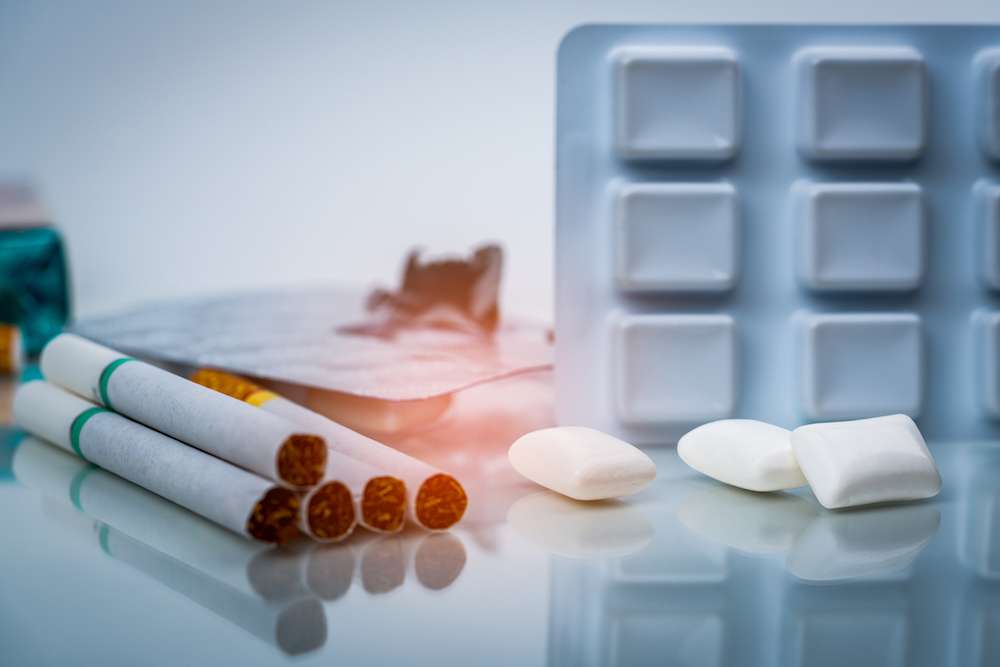
  • Michigan Offering Free Nicotine Patches And Gum Through September

    Michigan Offering Free Nicotine Patches And Gum Through September

    Michigan residents can receive eight weeks’ worth of free nicotine gum, patches or lozenges by making a call to a tobacco quitline.

    Michigan’s Department of Health and Human Services (MDHHS) is handing out free quitting aids to individuals who are looking to quit smoking tobacco products through September 30 of this year.

    Any Michigan resident can get eight weeks’ worth of free nicotine gum, patches or lozenges simply by calling the Michigan Tobacco Quitline at 800-QUIT-NOW, reports MLive.

    The offer is part of an effort to reduce smoking-related illness throughout the state alongside the Tips From Former Smokers campaign by the Centers for Disease Control and Prevention (CDC). The Tips campaign shares stories from those living with illnesses caused by cigarette smoke—either primary or second-hand—to help inspire current smokers to quit.

    “CDC’s Tips campaign reminds people of the harmful effects of smoking and connects them with important resources like the Michigan Tobacco Quitline,” said MDHHS chief medical executive and chief deputy director for health Dr. Joneigh Khaldun. “MDHHS is committed to helping Michiganders quit tobacco products and reduce their risk of tobacco-related illnesses like cancer and heart disease.”

    The Tobacco Quitline, meanwhile, is open 24/7 and is available in English, Arabic and Spanish. In addition to free quitting aids, callers can get online coaching or advice via text messages.

    According to the MDHHS website, tobacco “kills more people in our state than AIDS, alcohol, auto accidents, drug overdoses, murders, and suicides combined.” The CDC estimates that, although the number of people who smoke tobacco has decreased in recent years, it’s still responsible for one in five deaths in the entire United States. This makes it “the leading cause of preventable disease and death” in the country.

    Currently, 34.3 million U.S. adults smoke tobacco cigarettes, and over 16 million live with smoking-related illnesses. The number of smokers has declined from nearly 21% of the adult population in 2005 to 14% in 2017. Much of this decline can likely be attributed to aggressive anti-smoking and tobacco education campaigns across the U.S. as the federal and state governments fight to reduce this stubborn health crisis.

    The U.S. Department of Health and Human Services has a list of major national campaigns, including Tips from Former Smokers by the CDC as well as FDA campaigns such as Every Try Counts for those who have attempted to quit multiple times and This Free Life, which is geared toward LGBTQ+ smokers.

    “Think about all the progress we’ve made. We’ve simply come too far to set ourselves back by using tobacco,” reads the This Free Life website. “This Free Life helps LGBT young adults achieve their best by encouraging them to live tobacco-free.”

    View the original article at thefix.com

  • Thousands Of Cases Under Review After Judge Accused Of "Severe Alcoholism"

    Thousands Of Cases Under Review After Judge Accused Of "Severe Alcoholism"

    More than 2,700 cases may be affected by this turn of events.

    A guardianship petition filed by a retired judge’s daughter and mother alleges that said judge was addicted to alcohol and worked while under the influence on multiple occasions, throwing as many as 2,700 court cases into question.

    According to the American Bar Association Journal, Ohio’s public defender is planning to review many of the cases overseen by former Judge William Marshall of Scioto County, particularly those that resulted in prison time or court supervision.

    Marshall was on the bench in Ohio for 15 years and was first hospitalized for his addiction disorder in 2013. He retired in 2018 just before he was given a six-month suspension by the Ohio Supreme Court’s Board of Professional Conduct after they found he had improperly inserted himself into a speeding ticket case involving his own daughter.

    Earlier this year, both Marshall’s daughter and mother filed for guardianship over the former judge, claiming that advanced alcoholism had left him unable to care for himself. Ohio Public Defender Tim Young will be among those reviewing his cases to determine if any decisions should be reversed due to Marshall possibly being under the influence during the trial.

    “If you’re a severe alcoholic, you’re going to work under the influence… and that means you are ruling on people’s cases,” said Young according to The Cincinnati Enquirer. “It also makes you open to manipulation to those who know and perhaps your cases aren’t being handled fairly because of the fear of being outed. A fair justice system relies on so many things, but nothing more important than a fair arbitrator—the judge.”

    Marshall was the subject of another investigation by The Enquirer which lasted for over a year, the results of which were posted in early 2019. In the report, Marshall was linked to an alleged Ohio sex-trafficking ring that is currently being investigated by the Ohio Bureau of Criminal Investigation. Marshall denied all allegations, but three women named him as the judge who was associated with the lawyer responsible for the operation.

    Reviewing so many cases is going to be a huge undertaking for the public defender’s office, which will be doing so with the help of a Case Western University professor and his students. However, Scioto County Prosecutor Shane Tieman believes that few of Marshall’s cases will be found to be problematic.

    “But they are going to be sorely disappointed with this expense of resources,” Tieman said. “I don’t think there are going to be that many if any cases that have problems. Everything is written down, recorded on video and on audio.”

    View the original article at thefix.com

  • HBO’s "Euphoria" Tackles Teen Addiction, Depression

    HBO’s "Euphoria" Tackles Teen Addiction, Depression

    Early reviews of the show’s series premiere praise it for speaking directly to Generation Z and for its “unflinching” examination of addiction and mental illness.

    A new HBO drama titled Euphoria premiered on Sunday which takes on the issues of sex and drug use among teens. Creator Sam Levinson, who wrote and directed Assassination Nation, adapted Euphoria from an Israeli series and was inspired by his own history with drugs.

    “I was a drug addict for many years and I’ve been clean for many years now,” he said in an interview with Entertainment Weekly.

    “I was just trying to capture that kind of heightened sense of emotion, when you’re young and how relationships feel. Relationships have such a pull and people have such a pull, and the world feels like it’s just constantly sort of bearing down on you and that anxiety and those sort of mood swings that I think are inherent to being young, in general then, but are even more so when you struggle with anxiety and depression and addiction.”

    The issue of mixing teens with high amounts of sex and drug use has people talking, with some concerned that parents will “freak out” about it. However, Levinson hopes that honestly approaching these issues will help bridge what he sees as a growing gap between generations.

    “I hope that it at least opens up a dialogue between the two because it’s hard being a teenager,” he said. “It’s difficult, especially too if you’re struggling with addiction and battling those things. Hopefully it’ll open up those means of communication.”

    Early reviews of the show’s series premiere praise it for speaking directly to Generation Z and for its “unflinching” approach to topics people would rather not think about. According to Gretchen Smail of Bustle, actress Zendaya plays a 17-year-old girl who is so deep in depression and anxiety that her only relief comes from getting so high that “her heart stops.”

    According to a 2018 report by the World Health Organization, half of all mental illnesses begin by age 14 but “most cases are undetected and untreated.” Depression is also cited in the report as one of the primary causes of illness and disability among people age 10 to 19.

    Prior to the series premiere, Zendaya posted a warning on her Instagram account about the graphic and heavy nature of Euphoria’s content.

    “Just a reminder before tonight’s premiere, that Euphoria is for mature audiences,” she wrote. “It’s a raw and honest portrayal of addiction, anxiety and the difficulties of navigating life today. There are scenes that are graphic, hard to watch and can be triggering. Please only watch if you feel you can handle it.”

    View the original article at thefix.com