Tag: living with anxiety

  • Jesse Eisenberg Talks Childhood Anxiety

    Jesse Eisenberg Talks Childhood Anxiety

    Eisenberg described how the anticipation of being bullied caused him to feel extremely anxious growing up. 

    Actor Jesse Eisenberg struggled with anxiety as a child, making it difficult for him to relax around other children, he said in a conversation with Dr. Harold S. Koplewicz, president of the Child Mind Institute.

    The conversation was titled “Great Minds Think Unalike 2.0” and was a part of Advertising Week, a gathering of media professionals. Eisenberg, who has his Zombieland sequel coming out on October 18, said that he anticipated being bullied as a child, putting him on edge around other children.

    “I kept one tissue for crying and one for bleeding,” he told Koplewicz. “I was prepared for battle, but nothing ever happened, which was almost worse.”

    Acting Offered Eisenberg A Safe Space

    He also described how acting has been cathartic by providing a controlled space to experience emotion.

    “Acting is a very visceral experience,” he said. “It is a cathartic way to have an emotional experience that is safe and contextualized. [It’s] different form real-life experiences [like] when I ran out of middle school hysterically crying due to my anxiety.”

    The Academy Award-nominated actor, who says his anxiety surfaces “just in the morning, afternoon and evening,” said that if his younger self had witnessed the increasing discussion of mental health awareness that we are seeing today, it would have provided him some sense of relief. “If 12-year-old me was able to see something like this, it would show me that life ebbs and flows. It helps destigmatize something that is incorrectly stigmatized,” he said.

    Being Mindful Around His Son

    Speaking about his two-year-old son, Eisenberg said he tries not to project his anxiety around him. “To me, there’s nothing better for one’s mental health than to worry about things that are real, and when you have a child, you can only worry about something that’s real,” he said.

    “I resist all of the temptations I have to make [my son] neurotic because I know it’s not helpful. I know that what might feel good in the moment of consoling a kid who appears nervous may be detrimental in the long term,” he added.

    In 2017, Eisenberg shared a video for the Child Mind Institute’s #MyYoungerSelf series, in which he shared what he would tell his younger self about dealing with anxiety and nervousness.

    “I think I would probably tell myself two things. One is that it’s not the worst thing in the world to have those feelings. Even though it might feel like the worst thing in the world… actually having that anxiety might be indicative of other beneficial positive characteristics like sensitivity to the world or an empathy or maybe a kind of interesting or unusual perception of life that could benefit you over the long term,” he said.

    He said the second thing he would tell his younger self is to get involved with charitable work sooner than later.

    “I worked with people with terminal illnesses and volunteered at a domestic violence shelter, and you realize very quickly that other people have bigger problems than you and it puts your life in perspective in a healthy way. And it also gets you out of your own bad, cyclical thinking patterns. And of course, more importantly, it’s helping somebody else.”

    View the original article at thefix.com

  • How Tattoos Have Empowered Those With Mental Health Issues

    How Tattoos Have Empowered Those With Mental Health Issues

    In recent years, tattoos have come to serve as a reminder to keep fighting for people with mental health issues.

    Tattoos aren’t just an art form, they’re also a form of personal expression for many who get them. And as a report in Well + Good explains, for some people, tattoos are an important part of maintaining mental health as well.

    When one woman, Annie Jacobson, got a tattoo on her arm that reads “Be Here Now,” she was looking back on a time when her anxiety caused a mental meltdown.

    “Almost exactly a year prior to getting the tattoo, my anxiety had reached an all-time high, and it had spiraled out of control in a way that my therapist could no longer give me the help I needed.”

    Jacobson did eventually recover, but when she finally got the tattoo, “I knew it wasn’t over – my struggle will never be over – but I wanted a way to remember how much had changed in a year. I wanted something to look at to remind me to be present and live in the moment.”

    Demi & Selena

    As this report explains, people getting tattoos as mental health reminders has become more popular in recent years. Demi Lovato, who has been very open about her mental health struggles, has the words “stay” and “strong” tattooed on her wrists.

    Recently, Selena Gomez also got semicolon tattoos with Tommy Dorman and Alisha Boe from 13 Reasons Why. The semicolon tattoo represents empowerment for those with mental health and addiction issues.

    As one mental health professional explains, “For the person who chooses to get a tattoo, many times it’s a much deeper process of reflection. What’s the point of getting a tattoo, what purpose will this serve, what’s the symbolism – a tattoo serves something deeper for that individual involved. For example, a star might mean something deeper, like a life lost.”

    A tattoo artist in Brooklyn named Joice Wang is also offering free tattoos to help people cover up their self-harm scars, as long as they donate money to a mental health charity. As Wang says, “This way I’m able to tackle two issues: funding the necessary resources for people who are going through anything traumatic or need assistance in any way, and also covering up scars.”

    View the original article at thefix.com

  • Ed Sheeran Talks Anxiety: "It Creeps Up On You"

    Ed Sheeran Talks Anxiety: "It Creeps Up On You"

    Sheeran detailed his experience wih social anxiety in a recent interview.

    In a new interview with Breakfast Club radio host Charlamagne Tha God, pop singer/songwriter Ed Sheeran revealed that he had recently married his childhood friend Cherry Seaborn.

    “I wake up every day with Cherry and I’m like why the f*ck are you with me? You could be with whoever you wanted and you’ve chosen me.
    “I’m saying all the things that I think are wrong with me and you still want to be with me and I find that amazing,” the 28-year-old said.

    In the wide-ranging, candid interview Sheeran also opened up about living with anxiety and how it has impacted his professional and personal life.

    Sheeran confessed that he struggles with social anxiety. “It creeps up on you. I’ve been working on it for eight years and I closed off from reality.”

    Circle Of Trust

    He told Charlamagne how he has trimmed his social circle down to just a handful of his closest friends to feel safe.

    “Whether it’s getting rid of our phone or only looking at emails twice a day,” Sheeran says. “Or cutting down my friendship group to the bare minimum just so I can trust everyone. I let people in from a, ‘Let’s hang out place.’ There is letting in and then there is letting in.

    “I have social anxiety. I don’t like large groups of people, which is ironic given I play shows to thousands of people…I have no problem with talking to people. But it’s when people film me and stare at me. It makes me feel like I’m not human,” he said.

    The Grammy winner said that after the chart-topping popularity of his hit single “Shape Of You” living a private life became nearly impossible and he made the decision to move to the country in an effort to retreat from the spotlight that followed him while he lived in central London. 

    “I lost the ability to go to a supermarket and buy a loaf of bread about three years ago. People around here treat me pretty normally, but in London it’s different,” Sheeran explained.

    While Sheeran lives with daily anxiety, he also knows he’s very lucky to have his career and a great significant other in his privileged life. “I don’t mean to be complain-y, because I have a very cool life and job, but if I can avoid it [the scrutiny] I will.”

    View the original article at thefix.com

  • Gina Rodriguez Stepped Away From "Jane The Virgin" To Focus On Mental Health

    Gina Rodriguez Stepped Away From "Jane The Virgin" To Focus On Mental Health

    Rodriguez said she had to advocate for herself to protect her mental health.

    Actress Gina Rodriguez recently expanded on her experience with depression and anxiety, and how she was finally able to advocate for her own mental health by stepping away from filming Jane the Virgin.

    During a conversation with NBC News’s Kate Snow at The Kennedy Forum in Chicago, Rodriguez was prompted to speak about her personal battles when Snow’s husband Chris Bro shared his experience of losing his father to suicide.

    “I think I started dealing with depression around 16,” said Rodriguez. “I started dealing with the idea of—that same concept that I think your husband was talking about—(that) everything is going to be better when I’m gone. Life will be easier, all the woes will be away, all the problems. Then I wouldn’t have to fail or succeed, right? Then all this surmounting pressure would go away. It would just go away.”

    Snow remembered her father-in-law in a June 2018 essay on Today.com. “It’s been almost eight years now, but it’s still fresh. Not just for me, but my entire extended family.”

    Rodriguez said that after suffering a panic attack while filming the final season of Jane the Virgin, she had to take time away from set. She said it was the first time she was able to advocate for herself to protect her mental health. “There was a point where I couldn’t push through every single time anymore. It came to a point, this last season was the first season where I had to stop production. I just had a really tumultuous season and I was unafraid for the first time to be like, ‘I can’t.’”

    Growing up like many of us do, with no outlet to express our feelings or struggles, Rodriguez said she is now learning how to express herself in this way, and says she is hoping to pass on this important lesson to young people through speaking up about it herself. “It has to be a part of the conversation I have with these young girls,” she said. “I can’t just tell them to go out and make their dreams come true and then to ignore everything else.”

    The actress—who is the voice of Carmen Sandiego in the new Netflix animated series—revealed in 2017 that she is struggling just like anybody else with depression and anxiety.

    As part of artist Anton Soggiu’s #TenSecondPortraits project, Rodriguez posed for the camera for a 10-second shot. She wrote in the caption, “I suffer from anxiety. And watching this clip I could see how anxious I was, but I empathize with myself. I wanted to protect her and tell her it’s okay to be anxious, there is nothing different or strange about having anxiety and I will prevail.”

    View the original article at thefix.com

  • Experts Discuss Anxiety & "Angst" Doc Featuring Michael Phelps

    Experts Discuss Anxiety & "Angst" Doc Featuring Michael Phelps

    Angst takes a close look at how young people in America are dealing with anxiety.

    A new documentary, Angst, focuses on the number one mental health crisis in America today—anxiety—and the filmmakers behind it recently took part in a panel discussing the film after a viewing last month.

    The documentary was shown to an audience of just under 200 people at The Health Museum, a museum of health and medical science in Houston, Texas, in conjunction with The Hackett Center for Medical Health and Okay to Say.

    A panel of speakers discussed the film afterward, including Marcy Melvin, a professional counselor and director of program implementation for child and family policy of Texas’ Meadows Mental Health Policy Institute, and Anna Lee Carothers, a former UT chapter president of the National Alliance on Mental Illness (NAMI).

    Angst examines how young people in America are dealing with anxiety. Their worries ranged from the banal to life-changing events that sparked severe, life-altering anxiety.

    The sensitive documentary is currently only being screened by request in community settings, although according to the Angst website the filmmakers “hope to make the film available online as well.” 

    Olympic swimmer Michael Phelps discusses his anxiety in the film. The famed Olympian speaks with an anxious boy toward the end of the documentary. Phelps said to the young man, “I just didn’t like who I was. If something was bothering me that would start to come up, and I would start feeling angry or depressed or upset, I would almost ignore it.”

    “I would shove it even further down, so I wouldn’t have to deal with it, so I would never have to talk about it,” he says. “I finally got to a point where it was my tipping point, where I just blew up. I just couldn’t take it any longer.”

    The film’s producer, Karin Gornick, spoke at the panel discussion. “I’m a filmmaker, but more importantly, a parent. My son was struggling with severe anxiety and it wasn’t until I started opening up to some friends that I was led to help,” she said. “When we found out how treatable anxiety was, I thought, ‘Wow. We can really capture this so other parents don’t feel like they are alone and know to reach out.’”

    Melvin shared, “I love how they explained the science behind what happens with anxiety; sometimes feelings can sound like an abstract thing, but anxiety really lies in the brain.”

    The list of currently planned screenings for Angst can be found here.

    View the original article at thefix.com

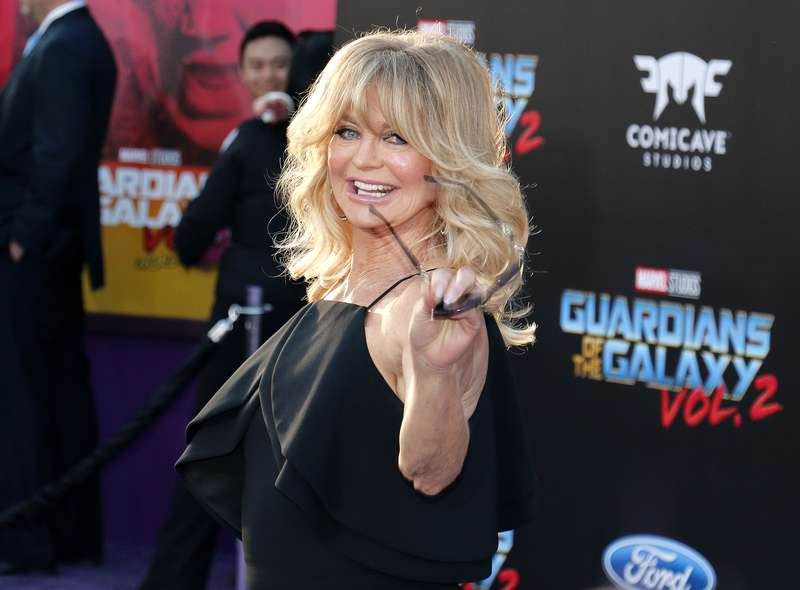
  • Goldie Hawn: Meditation Helped Me With Anxiety Attacks

    Goldie Hawn: Meditation Helped Me With Anxiety Attacks

    The actress opened up about the anxiety she’s faced since childhood and her goal of helping others conquer it.

    It’s a story that is becoming more familiar as mental health becomes a national conversation: actress Goldie Hawn might be an Academy award-winning actress, but she once struggled with anxiety.

    Hawn told her story at The Child Mind Institute‘s 5th Annual Change Maker Awards, where she won her Activist Award.

    “I lived with anxiety as a little girl,” said Hawn. “I thought the Russians were going to bomb us. I thought I could die without ever kissing a boy. I suffered anxiety every time I heard a siren.”

    Even as she spent more time in the spotlight, she would begin to have anxiety attacks. “The next thing I know I’m doing a TV show and I was having nonspecific anxiety attacks,” she explained. “I didn’t know why I was feeling anxious or what was wrong with me, when I would go into public and feeling like I could vomit. I didn’t know why I wanted to sit on a couch while I was supposedly becoming something that everyone was so excited for me.”

    Hawn soon realized she needed to take action.

    “I suffered for about a year…[then] I took charge and saw a doctor,” she told the audience. “But that was the time when I was 21 and I realized that I had a mind, that I was going to fix that mind and I was going to make sure I knew and understood everything that was happening and why it was happening.”

    Eventually, she found her key to happiness: meditation.

    “I went for meditation because it was the thing to do, and when I did, it was like I can’t ever explain to you—it was the most joyful experience I’ve ever had,” revealed Hawn. “I felt like I returned back to my deepest part, to my heart, to my joy. It just hit this seed of joy that I always had as a young girl. Because all I ever wanted to be was happy. That was my goal.”

    Hawn founded the MindUp program to help children deal with mental health issues through meditation, hopefully providing them with the tools that helped her find happiness.

    She felt concern because of the statistics that suggest suicide is the second-leading cause of death for people ages 10 to 24.

    View the original article at thefix.com