Tag: long-term recovery

  • The Five Pillars of Recovery from Trauma and Addiction

    Believe in yourself. Tell yourself that you deserve happiness, joy, success, and a life free from the pain of trauma and addiction. You are worth your recovery.

    In my forty-five years, I enjoyed twelve years of quasi-normal childhood, which ended abruptly when I was raped. I spent the next ten years in a dangerous dance with addiction, suicide attempts, and more trauma. But then I reached a turning point, and my past twenty-three years have been spent healing and learning what works for me in building long-term recovery.

    There is no standard set of blueprints for long-term recovery, as everyone is different, but I have identified five pillars that have enabled me to build on a strong foundation of recovery. My daily choice not to use substances forms that foundation, and these rock-solid pillars stabilize that recovery into an impenetrable structure. These five pillars are not unique, and they do require work, but once built, they will stabilize your recovery fortress.

    1. Maintain rigorous honesty. In addiction, our lives were built upon lies and false narratives we told ourselves and others. But recovery demands honesty—only when we can admit the truth can we begin to heal. I had to get honest with myself about my addiction. I had to own it and then take a brutally honest assessment of my life. We cannot build a sustainable recovery on a false narrative. When we lie, we enable sickness, secrets, shame, and suffering.

    Dishonesty makes us vulnerable in all the wrong ways, but honesty conjures the true vulnerability we require to discover authenticity. Start practicing honesty in all your interactions—beginning with yourself. This must be the first pillar because without honesty, the rest will crumble. Anything created in a lie is chaos, and anything created in chaos will end in chaos.

    2. Expose your secrets. You cannot soak in the joy of today if your soul is still filled with yesterday’s garbage. Take out that trash. For me, this meant diving deep and pulling forth all the trauma, pain, and sorrow that I had packed tightly away. I thought this was for my benefit—why bring up old stuff? But in fact my secrets were keeping me sick. They were smoldering under this new foundation I was building in recovery, threating to burn it all down.

    Secrets require silence to thrive, and they allow shame to fester inside of us. Shame is an emotional cancer that, if left untreated, will destroy our recovery. I began by slowly exposing my secrets in my journal. At first, it was the only safe space for me. As I began to trust others in recovery, I began to share those secrets, and the smoldering was extinguished by their compassion and understanding. Begin exposing your own secrets. What thoughts and memories are you afraid to give voice to? Those are the secrets that will keep you sick if you do not get them out.

    3. Let go. All those secrets take up a tremendous amount of space in our mind, body, and soul. We must find ways to process that pain into something productive, useful, and healing. You must unleash this pain so it no longer occupies your mind, body, and soul. When you do this, you make room for hope, light, love, and compassion.

    Writing is my release. But when physical emotional energy rises in me, I need more intense physical activity to push the energy out of my body. I use a spin bike and weightlifting, but you might run, walk, or practice yoga—any activity that gets your heart rate up and helps you sweat, which I think of as negative energy flowing out. When I do this, I am calmer, I am kinder, and I am more the person I want to be. Meditation is another way for me to simply let go and sit with myself when my thoughts are plaguing me or I feel stuck emotionally. I often use mediational apps, guided mediations, or music to help me meditate. When you find what works for you, do it daily. Recovery is like a muscle; when it is flexed, it remains strong.

    4. Remember you aren’t alone. Connection is core to feeling hopeful. By interacting with other trauma survivors and others in recovery, you become part of a group of people with similar experiences who have learned how to survive. Being able to share those pieces of your past with others is incredibly powerful. Seek out support groups in your area, attend meetings, reconnect with healthy people from your past, and pursue activities you enjoy to help you meet like-minded people. Create the circle of people you want in your life—the ones who will hold you accountable yet provide you with unconditional support and love, without judgment.

    In our addiction, we push these people away. We run from them because they act like mirrors to our dishonesty. In recovery, these people become the ones we turn to when things get hard. Even one such person in your life—a family member, friend, sponsor, or trusted colleague—can make a difference. Surround yourself with those who seek to build you up.

    5. Know you matter. In order to grow, heal, and build upon your recovery foundation, you have to believe you are worth it, that you deserve joy and love. At some point in your recovery, you will have to rely on yourself to get through a rough patch. When this happened to me, I had to really dig down and get to know myself. I had to strip away all the false narratives I used to define myself, all the ways I presented myself to the world and to myself. Who was I? What did I love about myself, and what brought me enough joy to feel worthiness?

    I now know what I need to feel calm, to feel beautiful, and to feel deserving of this amazing life of recovery. I matter, and my life in recovery matters so much. It is this core truth that makes me fight for my recovery, my sanity, my marriage, and my job, because they are all worth it. I am worth the fight, and so are you. Believe in yourself. Tell yourself that you deserve happiness, joy, success, and a life free from the pain of trauma and addiction. You are worth your recovery. It is the foundation on which you build your new life.

    Building any structure requires hard work, and recovery is no different. While we each require different tools and plans to create them, these five pillars will sustain our recovery from trauma and addiction.


    Jennifer Storm’s Awakening Blackout Girl: A Survivor’s Guide for Healing from Addiction and Sexual Trauma is now available at Amazon and elsewhere.

    View the original article at thefix.com

  • Danny Trejo Talks Long-Term Recovery: I Surround Myself With People Who Are Sober

    Danny Trejo Talks Long-Term Recovery: I Surround Myself With People Who Are Sober

    The prolific actor discussed sobriety, prison and AA in Variety’s recovery issue. 

    Danny Trejo was 24 years old when he began his recovery journey. Now at 75, the prolific Machete actor and restaurant owner has more than 50 years of sobriety under his belt, something he got candid about for Variety‘s first issue dedicated to recovery.

    The Trejo’s Tacos owner is a proud member of Alcoholics Anonymous – a program he believes kept him out of jail and alive.

    “They tell you if you leave [Alcoholics Anonymous or Narcotics Anonymous], you will die, go insane or go to jail,” Trejo said. “And I proved that right. Every time I left, I went to jail.”

    Decades ago, while Trejo was serving time at San Quentin, he reached a turning point when a speaker (and former inmate) named Johnny Harris returned to share his story of recovery.

    “What Do You Have To Lose?”

    “That guy saved my life,” Trejo revealed. “He said, ‘Why don’t you join us? Before you do anything, just join us. Give it a try. What do you have to lose?’ It was kind of like an awakening. So when I got out of the joint, I went back to meetings.”

    So Trejo buckled down and did the work. He attended meetings and kept himself busy with various gigs, including working as a drug counselor. Then, 16 years into his recovery, Trejo’s life would take another life-changing turn when he got hired as an extra in the 1985 movie Runaway Train – the movie would mark the beginning of a long, successful Hollywood career. 

    “Everything good that has happened to me has happened as a direct result of helping someone else — everything,” Trejo said. “That’s the way I live my life.”

    And Trejo practices what he preaches. He has been a passionate recovery advocate who is vocal about the benefits of sobriety and the work it takes to maintain it.

    It’s All About Your Support System

    “I honestly believe this sobriety and being clean depends on your support system,” Trejo explained to Variety. “You’ve got this system of people around you that want you to stay clean and sober. If I’m driving down the street and I’m with somebody clean and sober and I say, ‘God, man, I sure could go for a joint right now or a beer,’ this guy will say, ‘Hey, wait a minute. … Let’s go to a meeting.’ … I surround myself with people that are clean and sober.”

    Trejo, who has appeared in nearly 400 film and TV projects, maintains his sobriety by attending meetings and keeping in mind where he was in his life when he was using.  

    “When I think about drugs … I think about having to shower with 50 men in prison. I don’t want to do that anymore. I don’t want somebody saying, ‘Hey, bend over and spread ’em.’ That’s what drugs mean to me.” Trejo said.

    View the original article at thefix.com

  • Jamie Lee Curtis Talks Sharing Drugs With Dad, AA In Variety's Recovery Issue

    Jamie Lee Curtis Talks Sharing Drugs With Dad, AA In Variety's Recovery Issue

    “I am a very careful sober person. When I work, if there are no recovery meetings available, I make them.”

    The legendary Halloween actress detailed how she became addicted to painkillers and what led her to get help with Variety magazine for its first-ever recovery issue. 

    Like so many people with opioid addiction, Curtis’s dependency on painkillers began when she was given Vicodin after a routine cosmetic surgery for pain.

    “They gave me Vicodin as a painkiller for something that wasn’t really painful,” Curtis said. Her experience is all-too-common. The overprescription of opioids for post-operative pain is one of the driving factors behind the opioid epidemic. Nowadays, opioid prescribing guidelines and legislation are working to correct the course of the epidemic.

    Curtis also discussed how addiction impacted her family, including her father, actor Tony Curtis. 

    Sharing Drugs With Dad

    “I knew my dad had an issue because I had an issue and he and I shared drugs. There was a period of time where I was the only child that was talking to him. I had six siblings. I have five. My brother, Nicholas, died of a heroin overdose when he was 21 years old. But I shared drugs with my dad. I did cocaine and freebased once with my dad. But that was the only time I did that, and I did that with him. He did end up getting sober for a short period of time and was very active in recovery for about three years. It didn’t last that long. But he found recovery for a minute.”

    Similar to her father, Curtis was high-functioning in her addiction. 

    “I never did it when I worked. I never took drugs before 5 p.m. I never, ever took painkillers at 10 in the morning. It was that sort of late afternoon and early evening — I like to refer to it as the warm-bath feeling of an opiate. It’s like the way you naturally feel when your body is cool, and you step into a warm bath, and you sink into it. That’s the feeling for me, what an opiate gave me, and I chased that feeling for a long time.”

    Curtis described the moment her facade slipped in 1998. A friend witnessed her taking five Vicodin with a sip of wine in her kitchen and confronted her. “I heard this voice: ‘You know, Jamie, I see you. I see you with your little pills, and you think you’re so fabulous and so great, but the truth is you’re dead. You’re a dead woman.’”

    This stern warning didn’t deter her from using and neither would a later confrontation with her sister Kelly about stealing her pain pills. She finally decided to get help a couple months later after reading an article about recovery in Esquire.

    Her First AA Meeting

    Going to AA for the first time can be intimidating but there’s an added set of worries when you’re a Hollywood superstar trying to privately deal with addiction. 

    “I was terrified. I was just terrified that someone in the recovery community was going to betray my trust. But it is my experience that that doesn’t really happen and that my fear was unfounded. There is no guarantee in the world that someone won’t betray your confidence. There are also ways for people to get recovery help privately. There are ways for people to understand that public figures need privacy in order to be able to disclose and talk about this shameful secret that has dogged and plagued them their whole lives. 

    Now, Curtis is 21 years sober, something she doesn’t take for granted. She holds recovery meetings in her trailers when she’s working, if none are available.

    “I am a very careful sober person. When I work, if there are no recovery meetings available, I make them. I put a sign up by the catering truck saying, ‘Recovery meeting in my trailer.’ When I was in Charleston making Halloween, I was in a coffee shop near where I was living, and I met somebody in recovery, who told me, ‘Oh, those two ladies out on the patio are sober too. There’s a women’s meeting near here.’ I went out and introduced myself to the ladies, and a day later I was at a women’s gathering 100 yards from where I was living. Literally 100 yards. When I was making The Tailor of Panama with Pierce Brosnan and John Boorman, I was swimming in the Gatun Dam, but on my day off, I found a recovery meeting that only spoke Spanish, didn’t speak a word of English. I didn’t understand a word anybody said, but I went and sat down and met people, shook hands and talked.”

    View the original article at thefix.com

  • Harm Reduction Educator Who Trained Thousands To Use Narcan Loses Addiction Battle

    Harm Reduction Educator Who Trained Thousands To Use Narcan Loses Addiction Battle

    Kevin Donovan died on September 28 at the age of 40.

    The Syracuse harm reduction community is mourning the loss of advocate and educator Kevin Donovan, who died in late September of an apparent overdose.

    According to his obituary, “He lost his battle with addiction following a long-term recovery.”

    Donovan trained many in his community how to administer Narcan, a brand of naloxone, the opioid overdose-reversing drug.

    Saving Lives

    Will Murtaugh, executive director of ACR Health, said that more than 500 people that were trained by Donovan used their Narcan training. “That means, 500 people’s lives were reversed,” he said, according to WRVO.

    ACR Health is a community health center with a syringe exchange and a Drug User Health Hub which offers a range of prevention and sexual health services to people of all ages. Donovan was also the founder and director of Healing Hearts Collaborative, an opioid overdose prevention program.

    Kevin’s work was informed by his own experience in recovery. “To remove the stigma of the disease, he openly shared his struggles with addiction to educate others of treatment options, and he was a staunch advocate for the use of Narcan,” read his obituary.

    Colleagues Speak Out

    According to Murtaugh, Kevin did not seek help at his time of need despite having a supportive community around him.

    “We’re all hurting a little bit, because he knows we were here for him and he could’ve come to us anytime and got that support,” he said. “This is a typical overdose. We’ve had many of them. People end up using alone, and they die alone, because they don’t have those supports around them that they need. We try, and Kevin did too, to educate everyone. Do not use alone. Do a test shot. Make sure that there is Narcan in the house.”

    ACR Health lost two other staff members in 2016 and 2017.

    The center supports having supervised injection facilities, also known as overdose prevention facilities, to give people a place to use under medical supervision where they can access treatment if they feel ready.

    Safe Consumption Sites

    A federal judge recently ruled that such facilities would not violate federal law, which the current administration tried to argue against in court. An organization in Philadelphia was on the other side of the legal fight. It now has the green light to move forward with plans to establish what would be the first overdose prevention site in the United States.

    In May, Donovan was featured by WRVO for giving the Narcan training that saved a woman’s life. The woman became unresponsive inside a local business and staff members responded by administering Narcan. She was revived by the time EMT arrived.

    “What made me really happy was their willingness to share their story, and to say, this is a positive thing we want to do for our community,” said Donovan at the time. “That’s a life. The stigma is so bad, sometimes this stuff happens, and people don’t want to share it, or want anything to do with it in the public vision.”

    Kevin Donovan died on September 28 at the age of 40. He is survived by his son Rowan, his parents, brother and extended family.

    View the original article at thefix.com

  • Darryl Strawberry Encourages Fan To Stay Sober

    Darryl Strawberry Encourages Fan To Stay Sober

    The former baseball star has been sober since 2003. 

    A fan approached former Mets right-fielder Darryl Strawberry in a sports bar Saturday to share that they had been sober for a year, according to a Page Six source. Strawberry, who is also in recovery, encouraged the fan, saying: “Always remember to do it for yourself.”

    Darryl Strawberry enjoyed a long and decorated baseball career, helping get the Mets to the World Series in 1986 and being voted to the All-Star game eight times in a row. However, both his career and personal life were hampered by multiple addictions that led to legal troubles. He also had an extended battle with colon cancer throughout the 1990s.

    Now 57, Strawberry has been outspoken about his addiction issues. He was suspended from playing baseball three times for using cocaine and had a hard time in recovery, repeatedly relapsing and breaking his probation until he was sentenced to 22 months in prison in 2002.

    “Drug addiction is very powerful,” Strawberry said, according to AL.com. “Drugs have been around sports forever and players have done them forever. I wasn’t the first one… there were a lot of other players who did them too. We were high-profile and there was more recognition on us because of the fall of who we were—such great talents at such a young age.”

    In 2017, a book detailing the life of the former slugger—Don’t Give Up On Me: Shedding Light on Addiction with Darryl Strawberrywas released.

    According to Sports Illustrated, the text reveals that Strawberry also struggled with sex addiction, sometimes having sex between innings during his baseball games.

    “I would go between innings, and stuff like that and run back and have a little party going on,” he said while promoting the book on The Dr. Oz Show. “You know, I thought it was pretty cool. That was just the addiction, the drive.”

    Today, Strawberry has embraced his faith and serves as a minister when he’s not touring the U.S. to speak on the issue of addiction disorders. He also runs a foundation for autistic children, The Darryl Strawberry Foundation, with his wife, Tracy. The two met at a drug recovery convention and married in 2006.

    Plus, he opened the Darryl Strawberry Recovery Center in St. Cloud, Florida in 2014. The former Yankee defended shortstop Alex Rodriguez, who was being accused of steroid abuse, by pointing out that steroids can be addictive.

    “You can get addicted to steroids just like any other drug,” Strawberry said. “A drug is a drug, and it’s unfortunate drugs have been around sports forever. Look at some of the great players in the Hall of Fame. Who are they kidding? In their time and era, they did drugs. Greenies and amphetamines are drugs, too.”

    View the original article at thefix.com

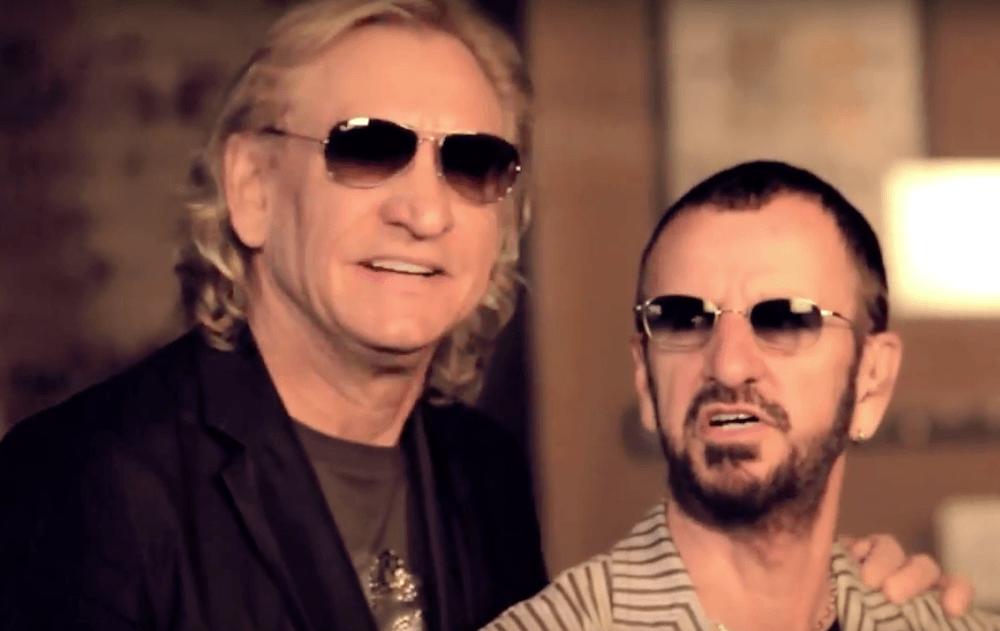
  • Ringo Starr And Joe Walsh Discuss Long-Term Recovery, Becoming Sober

    Ringo Starr And Joe Walsh Discuss Long-Term Recovery, Becoming Sober

    The rock star brothers-in-law got candid about addiction, recovery, and Tom Petty in a recent Rolling Stone interview.

    Ringo Starr and Joe Walsh are not only rock legends, but they have also both been in recovery for many years. Now they are both speaking about their journeys to sobriety, and how they helped each other get there.

    Eagles guitarist Walsh received a humanitarian award for his work in the recovery community at the 74th annual gala for Facing Addiction with NCADD last October. His friend and former Beatles drummer, Starr, presented him with the award.

    When Walsh went to rehab in 1995, he wasn’t sure if he’d ever play guitar again. Eventually, Starr brought him back to music and became a sober buddy. (Starr is also Walsh’s brother-in-law.)

    “I got sober because of a fellowship of men and women who were sober alcoholics,” Walsh told Rolling Stone. “After a couple years, I talked about [my sobriety] with other alcoholics and tried to help them. The only person who can get somebody else sober is somebody who’s been there and done that. I realized that I do more good showing people that there’s life after addiction.”

    When Starr got sober, he put together Ringo Starr & His All-Starr Band, which included Walsh on guitar. Starr, too, was afraid that he wouldn’t be able to play once he got sober.

    “I thought I don’t know how you do anything if you’re not drunk,” he said. “I couldn’t play sober, but I also couldn’t play as a drunk. So when I did end up in this rehab, it was like a light went on and said you’re a musician, you play good.”

    Rolling Stone asked Walsh about the opioid crisis, given that a lot of musicians his age have been taking painkillers to deal with the rigors of performing.

    “I don’t think America’s aware of how bad it is out there,” Walsh replied. “I’m talking about addiction across the board. Opiate addiction, it’s killing young kids by the hundreds—by the thousands.

    “The problem is if you hurt physically, you can get prescription pills for that,” Walsh continued. “The problem is that after that pain is gone, whatever substance you used very subtly convinces you that you can’t do anything without it and then you have to deal with that. And people don’t know that.”

    Starr then reflected on a fellow musician who succumbed to opioid abuse, Tom Petty, who died in 2017 at the age of 66.

    “The discussion is very difficult, because we did as much as anybody did and we’re still here and we’re sober… I don’t know why Tom’s gone and I’m here. It’s unanswerable.”

    View the original article at thefix.com

  • Dax Shepard Starts His Day Thinking About Addiction

    Dax Shepard Starts His Day Thinking About Addiction

    “You’ve got to acknowledge you are an addict every day, first thing, right when you wake up,” the actor said on a recent episode of his podcast. 

    For 12 years, actor Dax Shepard started his day by taking time to acknowledge that he is an addict. 

    “You’ve got to acknowledge you are an addict every day, first thing, right when you wake up, you write a page,” Shepard told Gwyneth Paltrow on his Armchair Expert podcast. “It doesn’t even have to be about being an addict. It’s just this physical activity there to remind myself, ‘I have a thing that I’ll never not have.’”

    The daily ritual cemented the Parenthood star’s recovery. 

    “I wrote a page in my journal every single morning because I had this thought that if I can’t commit 20 minutes to remember I’m an addict each morning, I’m going to end up blowing nine hours a day as an addict. I have to be able to say, minimally this is your commitment.”

    Shepard, who is going on his 15th year of sobriety, said he has only recently relaxed the ritual. 

    “In general, I’m embarrassed to admit this. For the very first 12 years of sobriety, I didn’t miss a single day, not one. I get crazy superstitious about it.”

    Even though he has achieved long-term sobriety, Shepard said that he continues to grow in his confidence and self-love. 

    “At a certain point, you’re like, ‘F**k it.’ I’m going to be who I am, I’m not going to look in the mirror and be so critical of everything, and I’m not going to rehash every mistake I’ve ever made in my life and flagellate myself for it. I really did feel when I turned 40 I could feel a real shift,” said the actor, who is 44. “I was like, ‘I’m not going to do that anymore.’ Because I was ruled by my insecurities, and like by the idea that I was unlovable, and I kept just trying to prove that out.”

    Instead of fixating on his insecurities, Shepard now focuses on building his relationship with his wife, actress Kristen Bell, who has been supportive of his sobriety. Bell went on Instagram last year to celebrate the work that her husband puts into his recovery—both morning and night. 

    “I know how much you loved using. I know how much it got in your way. And I know, because I saw, how hard you worked to live without it,” she wrote when Shepard celebrated 14 years sober.

    “I will forever be in awe of your dedication, and the level of fierce moral inventory you perform on yourself, like an emotional surgery, every single night.”

    View the original article at thefix.com

  • Everclear's Art Alexakis, Nearly 30 Years Sober, Talks Addiction & Recovery

    Everclear's Art Alexakis, Nearly 30 Years Sober, Talks Addiction & Recovery

    “I spent most of my teens trying new drugs, and learning how to lie about them. My priorities in my teens and early 20s were drugs, alcohol and sex,” Alexakis revealed.

    The lead singer of the band Everclear, Art Alexakis, has been sober since June 15, 1989, which is one of his proudest accomplishments.

    As My Horry News reports, Alexakis spoke about his long-term recovery at an addiction and recovery event at Horry-Georgetown Technical College.

    For Alexakis, June 15 is a remarkable date because it was the date his older brother died of an overdose in 1974. On the same date in 1984, Alexakis himself almost died from an overdose. And finally, on the same date, he was ready to clean up his life in 1989.

    Alexakis told the audience, “People like to tell me their war stories and ask, ‘What was your drug of choice?’ I tell them, ‘Whatddaya got?’”

    In addition to the trauma of losing his brother, Alexakis also confessed that he was sexually abused when he was eight years old. He smoked his first joint when he was 9, and took LSD at a concert at 11.

    Then Alexakis discovered that a local ice cream man was a heroin dealer, and Alexakis’s brother helped him sell drugs as well.

    “I spent most of my teens trying new drugs, and learning how to lie about them,” Alexakis continued. “My priorities in my teens and early 20s were drugs, alcohol and sex.”

    One night, Alexakis suffered a near fatal overdose after injecting cocaine. His heart stopped, and thankfully a next-door neighbor who was an EMT saved his life with a defibrillator.

    Six months later, Alexakis stopped the drugs, but he kept drinking heavily. Finally, a record store clerk called him out by saying, “You know, you have a problem,” and offered to take him to a meeting.

    After going on a bender, Alexakis decided he was ready to get sober. He went to two meetings in a day, which cemented his desire to get sober.

    Before hitting the road in early recovery, where temptation is everywhere, Alexakis would hit up meetings to prepare himself.

    “It’s all about choices,” Alexakis added. “Don’t put yourself in places you don’t want to be. If you can’t make good choices in those places, don’t go to those places. You have to find that desire to be clean and sober and to be in recovery.” 

    Without getting sober, Alexakis says, “I’d be dead. It’s not even a maybe. I’d have been dead.”

    View the original article at thefix.com

  • Bradley Cooper’s "A Star Is Born" Role Hits Close To Home For Sober Actor

    Bradley Cooper’s "A Star Is Born" Role Hits Close To Home For Sober Actor

    “Anytime you’re trying to tell the truth you need to go to places and use things that have happened to you, or you’ve read about or experienced.”

    As someone in long-term recovery, Bradley Cooper’s role of heavy-drinking musician Jackson Maine in A Star Is Born is one that isn’t too far off from the star’s own experiences in the past, he tells Variety

    “Anytime you’re trying to tell the truth you need to go to places and use things that have happened to you, or you’ve read about or experienced,” Cooper said. “And that’s all part of the beauty of turning whatever things you’ve gone through into a story. I find that to be very cathartic. I remember learning that in grad school, our teacher said all the insecurities, all the dark stuff you get to use that and that’s really the truth.”

    The film, which hit theaters Oct. 5, has generated a lot of buzz and is being slotted as an award winner, with Forbes calling it the “movie to beat” at the Oscars. Cooper directed the film and co-starred alongside pop star Lady Gaga. 

    Cooper first spoke publicly about his substance use battles and recovery in 2012, stating he had gotten sober at age 29 after his use of alcohol began affecting his work.

    “I was so concerned [with] what you thought of me, how I was coming across, how I would survive the day,” Cooper said at the time. “I always felt like an outsider. I realized I wasn’t going to live up to my potential, and that scared the hell out of me.

    In 2016, Cooper spoke to Barbara Walters about his recovery, crediting his recovery for his success in his career and his relationships.  

    “I would never be sitting here with you, no way, no chance [if I hadn’t gotten sober,]” he told Walters. “I wouldn’t have been able to have access to myself or other people, or even been able to take in other people, if I hadn’t changed my life. I never would have been able to have the relationships that I do. I never would have been able to take care of my father the way I did when he was sick. So many things.”

    As of Oct. 8, A Star Is Born had earned $44 million in North America and $57 million worldwide. Cooper tells Variety that his biggest hope is that viewers forget they are watching Bradley Cooper and Lady Gaga and instead get caught up in the story.

    “I hope you just see the characters, that’s the point. From the opening that was one of the key things in structuring the movie and shooting it. I really want to make sure that you forgot it’s me and that you forgot it’s her right away, otherwise the story won’t work.”

    View the original article at thefix.com

  • Re-Balancing Act: How to Restore Marital Equilibrium in Recovery

    Re-Balancing Act: How to Restore Marital Equilibrium in Recovery

    Was I really at an AA meeting as I claimed, or was this the night that I—and all hope for our marriage—would vanish anew?

    For my wife Patricia and me, it’s been a long road to even. Ish.

    My wife said “I do” in April 2007 to a man who, despite depression and anxiety issues, did not suffer from addiction. The honeymoon period didn’t last long: By 2009, I was a full-blown alcoholic. A year later I became unemployed and, as substances other than alcohol steepened my spiral, unemployable.

    After a semi-successful rehab stint in early 2011, I began stringing together sober weeks instead of days, disappearing once a fortnight while my wife waited hopelessly. Finally, with one of Patty’s feet firmly out the door, I started my current and only stretch of significant sobriety in October 2011.

    We’d been wed just 4½ years, and the rollercoaster marriage dynamic was about to take its third sharp turn. Patty had gone from a warm wife to a cold caretaker – from a blushing bride to blushing with anger and embarrassment as her husband descended into addiction and all its indignities. She was fed up and worn down.

    And now she would be asked to transition yet again, to cede the necessary high ground she’d claimed so that someday, hopefully, we could once again stand on even footing.

    Our journey together has been imperfect, but has taught us both about how addiction warps the dynamics of a marriage – and how that damage can be repaired in recovery. For couples committed to staying together in addiction’s aftermath, let’s explore likely marital dynamics at three stages of single-spouse alcoholism: active addiction, fledgling sobriety and long-term recovery.

    Active Addiction

    Ironically, perhaps the least complicated dynamic any marriage can have is when one partner is mired in active addiction. One spouse has lost all credibility and the capability to make mutually beneficial contributions, while the other has, onerously, had the scales of responsibility tilt completely into her lap – or, more accurately, fall on her head. The addict has been stripped of all rightful respect and authority; he is a nuptial nonentity, because adulthood is a prerequisite for marital influence.

    Simply put, my wife signed up for a husband and got a child instead.

    The logistical stress my wife shouldered—scraping by on one income, coming home to a drunk husband in a smoke-filled apartment, the transparent excuses and laughable lies—should be familiar to most spouses of alcoholics.

    Throughout this stage, the marital power dynamic is non-negotiated and unsustainable. It is also deeply scarring, for both parties. My guilt and shame, her resentment and disappointment. My elaborate schemes and emphatic denials, her eroding ability to give me the benefit of the doubt. For us both, a creeping sense of confusion, hopelessness and doom.

    All of this creates a silo effect. The deeper my bottom fell, the higher the wall between us rose. For the marriage to once again become… well, a marriage—a union of two equal halves—the walls would need to crumble. But they had to crack first.

    And then, after one last humiliation comprised of a drunken hit-and-run and handcuffs, I was finally done.

    A marriage stumbling on a high wire now had a chance to regain some balance. But for couples, one spouse’s early recovery can shake like an earthquake, causing seismic shifts to a power dynamic that, though broken, proves nonetheless stubborn.

    Fledgling Sobriety

    However simple (albeit awful) the marital dynamic during active alcoholism, the relationship during nascent sobriety becomes, conversely, exceedingly complex. This timeframe is crucial to the marriage’s long-term survival, as both parties simultaneously try to heal fresh wounds, regain some semblance of normalcy and find a workable path forward together.

    For Patty and me, my fledgling sobriety was, at the same time, emergency and opportunity. This might not have been my last chance at recovery, but it was likely our marriage’s last chance at enduring.

    In those vital first months, the power dynamic shifted dramatically, despite my wife’s understandable reluctance to budge an inch lest I take several yards. After being on the receiving end of years of lying about our actions and whereabouts, our spouses struggle to believe we’ll come home at all, let alone come home sober. Was I really at an AA meeting as I claimed, or was this the night that I—and all hope for our marriage—would vanish anew? The PTSD of a waiting wife, burned too many times to trust, is an excruciatingly slow-mending injury.

    That injury is soon joined by insult. Because my wife watched as perfect strangers did something her most fervent efforts could not: get and keep her husband sober.

    She felt suspicious, and scornful… and guilty for feeling either. Her downsized role in my recovery seemed unfair given the years wasted playing lead actor in a conjugal tragedy.

    For alcoholics, swallowing pride is a life-and-death prospect pounded into our heads by program literature, AA meetings and sponsors. For their spouses, though, this ego deflation is just as necessary to the survival of their marriage, and generally comes without guidance or reassurances. Considering this, my wife’s humility-driven leap of faith was far more impressive than my own.

    And throughout this, she was forced to cede more and more marital power to a man who, mere months ago, deserved all the trust afforded an asylum patient. I was gaining friends, gaining confidence and, sometimes, even gaining the moral high ground.

    When your spouse has been so wrong for so long, the first time he’s right is jarring. Somewhere in my wife’s psyche was the understandable yet unhealthy notion that the one-sided wreckage of our past absolved her of all future wrongdoing. Fights ensued as I argued for the respect I was earning while she clung to a righteousness never requested but reluctantly relinquished. Unilateral disarmament—intramarital or otherwise—is counterintuitive and, given my history, potentially unwise.

    The harsh truth was that the marriage had to become big enough for two adults again, and the only way that could happen was for one partner to make room. This is patently unfair and, I believe, a key reason many marriages end in early recovery. That my wife and I navigated this turbulent period is among the most gratifying achievements in each of our lives.

    Long-term Recovery

    Our road became considerably less rocky when my wife, for the first time, became more certain than not that her husband’s sober foundation was solid enough to support a future. For us, that unspoken sigh of relief came about 18 months into my recovery, though this timeframe can vary widely.

    For couples, an invaluable asset ushered in by long-term recovery is the ability to openly address not only each individual’s feelings, but the likely influencers behind those feelings – especially those concerning the disparate, often difficult-to-pinpoint damage one spouse’s alcoholism inflicted upon both partners’ psyches. My wife and I each have our own semi-healed, often subconscious wounds that, still frequently, reopen in the form of a visceral repulsion, reflexive resentment or other knee-jerk reaction.

    At times, then, there remains residual weirdness between us. But the reassurance of my reliable recovery provides safe harbor to explore these issues as our marriage’s power dynamic draws ever closer to even.

    Many of these mini-problems are a blend of individual personalities and lingering, addiction-related trauma. My wife and I both have foibles that, we agree, are part intrinsic and part PTSD; fully parsing the two is impossible, even when examining ourselves rather than each other.

    An example: My wife is markedly introverted, and I certainly know her better than anyone. But even for her closest comrade—me—praise and positive acknowledgement come sporadically at best. At least some of this, she admits, is not simply her quiet nature but rather a prolonged hangover from years of my alcoholic drinking. Perhaps seven years is too little time for proactive cheerleading; check back with us in another seven.

    There are also times when my 12-step recovery delivers on its promise of making me, as the saying goes, “weller than well.” For my wife, who’s been consistently well enough her whole life—insomuch as she’s never sideswiped a taxi blind drunk and then tried to outrun a cop car—sometimes this growth is mildly threatening, especially in terms of our still-tightening power dynamic. Her character defects were never so dangerous that they required emergency repair. Still, as my demeanor has become less volatile, there has been a softening of her own character. Whether this is her absorbing some of my progress or simply letting her guard down another notch is anyone’s guess – including hers.

    No matter the progress, we will both always be damaged, however minimally, by my addiction – a permanent weight that makes truly equal marital balance unlikely, if not impossible. We will always be better at forgiving than forgetting, and the inability to accomplish the latter carries a weight that tips scales, slightly but surely.

    We have, we believe, as much balance as possible considering where we were and where we are now. For couples with a spouse in long-term recovery, appreciation for that tremendous leap forward in fortune can more than make up for the inherent inequality addiction inflicts on a marriage – a gap that shrinks substantially but never completely closes.

    View the original article at thefix.com