Tag: loss

  • The ‘Grief Pandemic’ Will Torment Americans for Years

    The optimism generated by vaccines and falling infection rates has blinded many Americans to the deep sorrow and depression of those around them.

    Cassandra Rollins’ daughter was still conscious when the ambulance took her away.

    Shalondra Rollins, 38, was struggling to breathe as covid overwhelmed her lungs. But before the doors closed, she asked for her cellphone, so she could call her family from the hospital.

    It was April 7, 2020 — the last time Rollins would see her daughter or hear her voice.

    The hospital rang an hour later to say she was gone. A chaplain later told Rollins that Shalondra had died on a gurney in the hallway. Rollins was left to break the news to Shalondra’s children, ages 13 and 15.

    More than a year later, Rollins said, the grief is unrelenting.

    Rollins has suffered panic attacks and depression that make it hard to get out of bed. She often startles when the phone rings, fearing that someone else is hurt or dead. If her other daughters don’t pick up when she calls, Rollins phones their neighbors to check on them.

    “You would think that as time passes it would get better,” said Rollins, 57, of Jackson, Mississippi. “Sometimes, it is even harder. … This wound right here, time don’t heal it.”

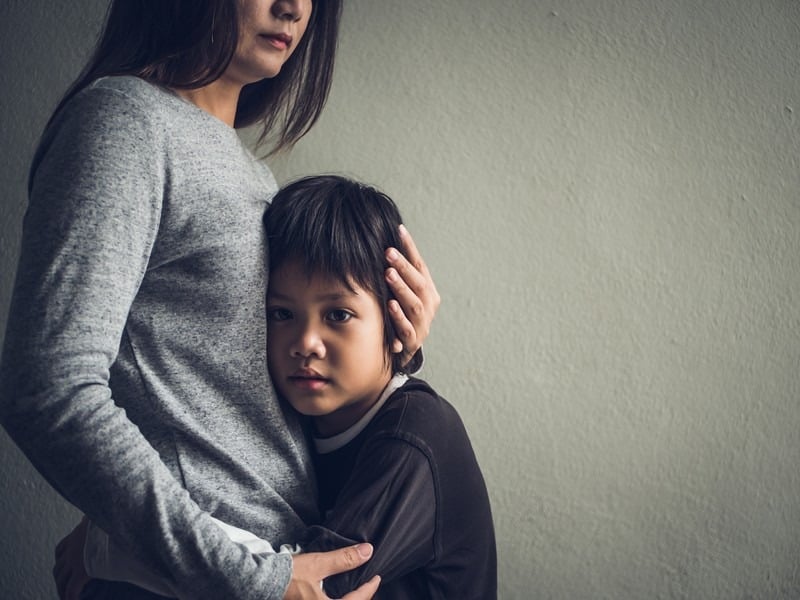
    With nearly 600,000 in the U.S. lost to covid-19 — now a leading cause of death — researchers estimate that more than 5 million Americans are in mourning, including more than 43,000 children who have lost a parent.

    The pandemic — and the political battles and economic devastation that have accompanied it — have inflicted unique forms of torment on mourners, making it harder to move ahead with their lives than with a typical loss, said sociologist Holly Prigerson, co-director of the Cornell Center for Research on End-of-Life Care.

    The scale and complexity of pandemic-related grief have created a public health burden that could deplete Americans’ physical and mental health for years, leading to more depression, substance misuse, suicidal thinking, sleep disturbances, heart disease, cancer, high blood pressure and impaired immune function.

    “Unequivocally, grief is a public health issue,” said Prigerson, who lost her mother to covid in January. “You could call it the grief pandemic.”

    Like many other mourners, Rollins has struggled with feelings of guilt, regret and helplessness — for the loss of her daughter as well as Rollins’ only son, Tyler, who died by suicide seven months earlier.

    “I was there to see my mom close her eyes and leave this world,” said Rollins, who was first interviewed by KHN a year ago in a story about covid’s disproportionate effects on communities of color. “The hardest part is that my kids died alone. If it weren’t for this covid, I could have been right there with her” in the ambulance and emergency room. “I could have held her hand.”

    The pandemic has prevented many families from gathering and holding funerals, even after deaths caused by conditions other than covid. Prigerson’s research shows that families of patients who die in hospital intensive care units are seven times more likely to develop post-traumatic stress disorder than loved ones of people who die in home hospice.

    The polarized political climate has even pitted some family members against one another, with some insisting that the pandemic is a hoax and that loved ones must have died from influenza, rather than covid. People in grief say they’re angry at relatives, neighbors and fellow Americans who failed to take the coronavirus seriously, or who still don’t appreciate how many people have suffered.

    “People holler about not being able to have a birthday party,” Rollins said. “We couldn’t even have a funeral.”

    Indeed, the optimism generated by vaccines and falling infection rates has blinded many Americans to the deep sorrow and depression of those around them. Some mourners say they will continue wearing their face masks — even in places where mandates have been removed — as a memorial to those lost.

    “People say, ‘I can’t wait until life gets back to normal,’” said Heidi Diaz Goff, 30, of the Los Angeles area, who lost her 72-year-old father to covid. “My life will never be normal again.”

    Many of those grieving say celebrating the end of the pandemic feels not just premature, but insulting to their loved ones’ memories.

    “Grief is invisible in many ways,” said Tashel Bordere, a University of Missouri assistant professor of human development and family science who studies bereavement, particularly in the Black community. “When a loss is invisible and people can’t see it, they may not say ‘I’m sorry for your loss,’ because they don’t know it’s occurred.”

    Communities of color, which have experienced disproportionately higher rates of death and job loss from covid, are now carrying a heavier burden.

    Black children are more likely than white children to lose a parent to covid. Even before the pandemic, the combination of higher infant and maternal mortality rates, a greater incidence of chronic disease and shorter life expectancies made Black people more likely than others to be grieving a close family member at any point in their lives.

    Rollins said everyone she knows has lost someone to covid.

    “You wake up every morning, and it’s another day they’re not here,” Rollins said. “You go to bed at night, and it’s the same thing.”

    A Lifetime of Loss

    Rollins has been battered by hardships and loss since childhood.

    She was the youngest of 11 children raised in the segregated South. Rollins was 5 years old when her older sister Cora, whom she called “Coral,” was stabbed to death at a nightclub, according to news reports. Although Cora’s husband was charged with murder, he was set free after a mistrial.

    Rollins gave birth to Shalondra at age 17, and the two were especially close. “We grew up together,” Rollins said.

    Just a few months after Shalondra was born, Rollins’ older sister Christine was fatally shot during an argument with another woman. Rollins and her mother helped raise two of the children Christine left behind.

    Heartbreak is all too common in the Black community, Bordere said. The accumulated trauma — from violence to chronic illness and racial discrimination — can have a weathering effect, making it harder for people to recover.

    “It’s hard to recover from any one experience, because every day there is another loss,” Bordere said. “Grief impacts our ability to think. It impacts our energy levels. Grief doesn’t just show up in tears. It shows up in fatigue, in working less.”

    Rollins hoped her children would overcome the obstacles of growing up Black in Mississippi. Shalondra earned an associate’s degree in early childhood education and loved her job as an assistant teacher to kids with special needs. Shalondra, who had been a second mother to her younger siblings, also adopted a cousin’s stepdaughter after the child’s mother died, raising the girl alongside her two children.

    Rollins’ son, Tyler, enlisted in the Army after high school, hoping to follow in the footsteps of other men in the family who had military careers.

    Yet the hardest losses of Rollins’ life were still to come. In 2019, Tyler killed himself at age 20, leaving behind a wife and unborn child.

    “When you see two Army men walking up to your door,” Rollins said, “that’s unexplainable.”

    Tyler’s daughter was born the day Shalondra died.

    “They called to tell me the baby was born, and I had to tell them about Shalondra,” Rollins said. “I don’t know how to celebrate.”

    Shalondra’s death from covid changed her daughters’ lives in multiple ways.

    The girls lost their mother, but also the routines that might help mourners adjust to a catastrophic loss. The girls moved in with their grandmother, who lives in their school district. But they have not set foot in a classroom for more than a year, spending their days in virtual school, rather than with friends.

    Shalondra’s death eroded their financial security as well, by taking away her income. Rollins, who worked as a substitute teacher before the pandemic, hasn’t had a job since local schools shut down. She owns her own home and receives unemployment insurance, she said, but money is tight.

    Makalin Odie, 14, said her mother, as a teacher, would have made online learning easier. “It would be very different with my mom here.”

    The girls especially miss their mom on holidays.

    “My mom always loved birthdays,” said Alana Odie, 16. “I know that if my mom were here my 16th birthday would have been really special.”

    Asked what she loved most about her mother, Alana replied, “I miss everything about her.”

    Grief Complicated by Illness

    The trauma also has taken a toll on Alana and Makalin’s health. Both teens have begun taking medications for high blood pressure. Alana has been on diabetes medication since before her mom died.

    Mental and physical health problems are common after a major loss. “The mental health consequences of the pandemic are real,” Prigerson said. “There are going to be all sorts of ripple effects.”

    The stress of losing a loved one to covid increases the risk for prolonged grief disorder, also known as complicated grief, which can lead to serious illness, increase the risk of domestic violence and steer marriages and relationships to fall apart, said Ashton Verdery, an associate professor of sociology and demography at Penn State.

    People who lose a spouse have a roughly 30% higher risk of death over the following year, a phenomenon known as the “the widowhood effect.” Similar risks are seen in people who lose a child or sibling, Verdery said.

    Grief can lead to “broken-heart syndrome,” a temporary condition in which the heart’s main pumping chamber changes shape, affecting its ability to pump blood effectively, Verdery said.

    From final farewells to funerals, the pandemic has robbed mourners of nearly everything that helps people cope with catastrophic loss, while piling on additional insults, said the Rev. Alicia Parker, minister of comfort at New Covenant Church of Philadelphia.

    “It may be harder for them for many years to come,” Parker said. “We don’t know the fallout yet, because we are still in the middle of it.”

    Rollins said she would have liked to arrange a big funeral for Shalondra. Because of restrictions on social gatherings, the family held a small graveside service instead.

    Funerals are important cultural traditions, allowing loved ones to give and receive support for a shared loss, Parker said.

    “When someone dies, people bring food for you, they talk about your loved one, the pastor may come to the house,” Parker said. “People come from out of town. What happens when people can’t come to your home and people can’t support you? Calling on the phone is not the same.”

    While many people are afraid to acknowledge depression, because of the stigma of mental illness, mourners know they can cry and wail at a funeral without being judged, Parker said.

    “What happens in the African American house stays in the house,” Parker said. “There’s a lot of things we don’t talk about or share about.”

    Funerals play an important psychological role in helping mourners process their loss, Bordere said. The ritual helps mourners move from denying that a loved one is gone to accepting “a new normal in which they will continue their life in the physical absence of the cared-about person.” In many cases, death from covid comes suddenly, depriving people of a chance to mentally prepare for loss. While some families were able to talk to loved ones through FaceTime or similar technologies, many others were unable to say goodbye.

    Funerals and burial rites are especially important in the Black community and others that have been marginalized, Bordere said.

    “You spare no expense at a Black funeral,” Bordere said. “The broader culture may have devalued this person, but the funeral validates this person’s worth in a society that constantly tries to dehumanize them.”

    In the early days of the pandemic, funeral directors afraid of spreading the coronavirus did not allow families to provide clothing for their loved ones’ burials, Parker said. So beloved parents and grandparents were buried in whatever they died in, such as undershirts or hospital gowns.

    “They bag them and double-bag them and put them in the ground,” Parker said. “It is an indignity.”

    Coping With Loss

    Every day, something reminds Rollins of her losses.

    April brought the first anniversary of Shalondra’s death. May brought Teacher Appreciation Week.

    Yet Rollins said the memory of her children keeps her going.

    When she begins to cry and thinks she will never stop, one thought pulls her from the darkness: “I know they would want me to be happy. I try to live on that.”

    Subscribe to KHN’s free Morning Briefing.

    View the original article at thefix.com

  • The End

    The End

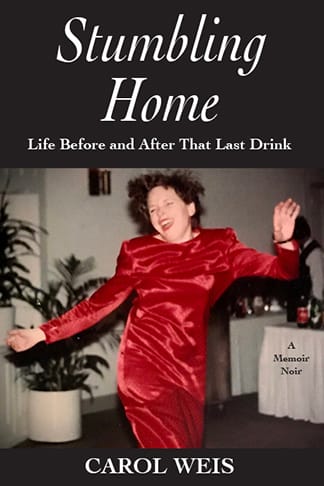
    With each sip I take, my brain and body scream “you freaking alcoholic,” and I know at that moment I can no longer do this.

    The last drink I have is a flute of champagne.

    It’s New Year’s Eve.

    My husband reserves a special room for us at a nearby hotel. He buys an imperial bottle of Moet, a misplaced purchase for this particular occasion. We’re making a last ditch effort at saving our marriage. A gala’s going on in the ballroom below, where we journey to join the revelers.

    Lights twinkle, streamers hang, and chandeliers glisten.

    I hardly notice.

    The band plays songs that were once my favorites.

    I hardly hear. 

    Hoards of gleeful couples celebrate around us.

    We dance with them, pretending to have a good time.

    But I know the end is creeping near.

    My husband’s been having an affair with a woman half his age. He hasn’t come clean yet, but my gut knows something’s going on. So I bleach my hair a sassier shade of blond, starve myself in hopes of losing the weight I know he hates, turn myself inside out to get him to notice me again.

    But mostly I drink.

    Because of my Catholic upbringing, I have a list of rules I follow.

    My commandments of drinking. I only have three. Ten is too many.

    1) No drinking before 5:00. I watch the clock tick away the minutes. It drives me crazy.

    2) No drinking on Tuesdays or Thursdays. I break this all the time. It’s impossible not to.

    3) No hard liquor. Only wine and beer. I feel safe drinking those.

    Anything else means, well, I’ve become my parents.

    Or even worse, his. I can’t bear to go there.

    One night, when he takes off for a weekend conference, or so he says, I get so stinking drunk after tucking my daughter in for the night, I puke all over our pinewood floor. All over those rich amber boards I spent hours resurfacing with him, splattering my guts out next to our once sexually active and gleaming brass bed.

    Tarnished now from months of disuse.

    The following morning, my five-year-old daughter, with sleep encircling her concerned eyes, stands there staring at me, her bare feet immersed in clumps of yellow. The scrambled eggs I managed to whip up the night before are scattered across our bedroom floor, reeking so bad, I’m certain I’ll start retching again. I look down at the mess I made with little recollection of how it got there, then peer at my daughter, her eyes oozing the compassion of an old soul as she says, “Oh Mommy. Are you sick?” Shame grips every part of my trembling body. Its menacing hands, a vice around my pounding head. I can’t bear to look in her eyes. The fear of not remembering how I’ve gotten here is palpable. Every morsel of its terror is strewn across my barf-laden tongue and I’m certain my daughter knows the secret I’ve kept from myself and others for years.

    You’re an alcoholic. You can’t hide it anymore.

    Every last thread of that warm cloak of denial gets ripped away, and here I am, gazing into the eyes of my five-year old daughter who’s come to yank me out of my misery.

    It takes me two more months to quit.

    Two months of dragging my body, heavy with remorse, out of that tarnished brass bed to send my daughter off to school. Then crawling back into it and staying there, succumbing to the disjointed sleep of depression. Until the bus drops her off hours later, as her little finger, filled with endless kindergarten stories, pokes me awake.

    Each poke like being smacked in the face with my failures as a mother.

    The EndAnd then New Year’s Eve shows up and I dress in a slinky black outfit, a color fitting my descending mood, a dress I buy to win him back. The husband who twelve years before drives hundreds of miles to pursue this wayward woman, wooing me over a dinner I painstakingly prepare, as I allow myself to wonder if he in fact, may be the one. We dine on the roof of the 3rd floor apartment I rent on 23rd and Walnut, in the heart of Philadelphia where I work as a chef, and where I tell him over a bottle of crisp chardonnay that I might be an alcoholic. He laughs, and convinces me I’m not. He knows what alcoholics look like. Growing up with two of them, he assures me I am nothing at all like his parents.

    His mother, a sensuous woman with flaming hair and lips to match, passes out in the car on late afternoons after spending hours carousing with her best friend, a woman he’s grown to despise. Coming home from school, day after day, he finds her slumped on the bench seat of their black Buick sedan, dragging her into the house to make dinner for him and his little brother and sister, watching as she staggers around their kitchen. His father, a noted attorney in his early years, drinks until he can’t see and rarely comes home for supper. He loses his prestigious position in the law firm he fought to get into, and gets half his jaw removed from the mouth cancer he contracts from his unrestrained drinking. He dies at 52, a lonely and miserable man.

    “I know what alcoholics look like,” he says. “You’re not one of them.”

    I grab onto his reassurance and hold it tight.

    And with that we polish off the second bottle of chardonnay, crawl back through the kitchen window and slither onto the black and white checkered tile floor, in a haze of lust and booze, before we creep our way into my tousled and beckoning bed. It takes me another twelve years to hit bottom, to peek into the eyes of the only child I bring into this world, reflecting the shame I’ve carted around most of my life.

    So on New Year’s Eve, we make our way up in the hotel elevator. After crooning Auld Lang Syne with the crowd of other booze-laden partiers still hanging on to the evening’s festivities, as the bitter taste of letting go of something so dear, so close to my heart, seeps into my psyche. A woman who totters next to me still sings the song, with red stilettos dangling from her fingers. Her drunken haze reflects in my eyes as she nearly slides down the elevator wall.

    At that moment, I see myself.

    The realization reluctantly stumbles down the hall with me, knowing that gleaming bottle of Moet waits with open arms in the silver bucket we crammed with ice before leaving the room. Ripping off the foil encasing the lip of the bottle, my husband quickly unfastens the wire cage and pops the cork that hits the ceiling of our fancy room. Surely an omen for what follows. He carefully pours the sparkling wine, usually a favorite of mine, into two leaded flutes huddling atop our nightstand, making sure to divide this liquid gold evenly into the tall, slim goblets that leave rings at night’s end. We lift our glasses and make a toast, to the New Year and to us, though our eyes quickly break the connection, telling a different story.

    As soon as the bubbles hit my lips, from the wine that always evokes such tangible joy and plasters my tongue with memories, I know the gig’s up. It tastes like poison. I force myself to drink more, a distinctly foreign concept, coercing a smile that squirms across my face. I nearly gag as I continue to shove the bubbly liquid down my throat, not wanting to hurt my husband’s feelings, who spent half a week’s pay on this desperate celebration. But with each sip I take, my brain and body scream you freaking alcoholic, and I know at that moment I can no longer do this. When I put down that glass, on this fateful New Year’s Eve, I know I’ll never bring another ounce of liquor to my lips.

    I’m done.

    There’s no turning back.

    And as we tuck ourselves into bed, I keep it to myself. 

    Each kiss that night is loaded with self-loathing and disgust. 

    Those twelve years of knowing squeezes tightly into a fist of shame.

    Little does my husband know, if he climbs on top of me,

    he’ll be making love to death itself. 

    Instead, I turn the other way and cry myself silently to sleep.

    Your days of drinking have finally come to an end.

    And you can’t help but wonder…

    will your marriage follow?


    Excerpted from STUMBLING HOME: Life Before and After That Last Drink by Carol Weis, now available on Amazon.

    View the original article at thefix.com

  • My Daughter / Myself

    I would spend a decade trying to reconcile two feelings: complete hatred for the stranger who was living in my daughter’s body and total surrender to my love for her.

    (The following is an excerpt from a longer work.)

    The following summer, Oscar developed such serious health problems that we had to put him down. In July, Angel came over to say goodbye to him. Then Carter and I walked him to the vet and held him down while he received his injection. Annie couldn’t bear to be there. As we were sobbing over his dying body, unable to leave, the aide gently suggested that we needed to let go of him. We left the building and Carter and I held onto each other all the way home. Annie stayed in her room and I tried, unsuccessfully, to reach her.

    “Annie,” I said, knocking on her door, “please let me in. I know how you feel; we’re all sad to lose Oscar. I just want to hug you and tell you it’ll be okay. Please don’t isolate yourself like this. Come out and get something to eat with me and Carter.”

    “Mom, I couldn’t eat a thing right now. I just want to go to sleep. I’ll see you in the morning.”

    I couldn’t eat anything, either. We were both stunned by the absence of our much-beloved dog and, not surprisingly, we lost our appetites. Even bulimics can lose their appetites, at least for a while, when they’re sad.

    Another letting go served to uproot us as Angel and I sold our large house a month later. We all seemed to scatter like the four winds afterwards. Caroline had moved to California and Carter was living with a friend in D.C. I moved into a condominium near my high school, and Annie moved into a friend’s apartment.

    Her first year of living independently seemed uneventful at first. Frequently visiting her in the apartment she shared, I took her furniture from her old bedroom so she would feel at home in her new digs. But there were signs that she was changing. She had never had many boyfriends in high school. Then one Sunday morning I arrived to find a friend of hers on the sofa, clearly feeling at home. Later I learned he was a bartender at a watering hole and drug hotspot in Adams Morgan. Well, she was on her own. And by now she was twenty-one; I felt I didn’t have much leverage.

    In the spring, though two courses short of her graduation requirements at George Mason University, Annie was allowed to walk with her class, cap and gown and all.

    Angel, his wife and I all dressed up for our second child’s college graduation in the spring of 2001, and we all viewed this ceremony as a symbol of hope that Annie was willing and anxious to embrace her adulthood and take on more responsibilities, like other young people.

    “Hey, Mom, I want you to meet my friend Shelly. She got me through statistics sophomore year.”

    “Hi, Shelly, nice to meet you. Thanks for helping Annie. Is your family here today?”

    “No. They had to work. No big deal for them anyway.”

    “Oh. Well I think it’s a big deal, so congratulations from me! It was nice to meet you, Shelly, and good luck.”

    Annie’s graduation distracted us from being curious about what she was doing in the evenings. Again, she went to a lot of trouble to cover up behavior that she knew would alarm us and might threaten an intervention.

    Just like her mother.

    At the end of the summer, she asked if she could move into my basement. Her roommate was buying a condo, she said, and their lease was up anyway. Later on, when I watched in horror as the tragedy unfolded in my own house, I wondered about the truth of that. I thought maybe the roommate saw where Annie was going and asked her to leave. No matter. She was in my house now.

    The circle was about to close.

    Then a shocking discovery—a bowl of homemade methamphetamine on top of my dryer! I had been wondering about the stuff she’d left in my basement laundry room. I read the label: muriatic acid. I looked it up on my computer. So that’s what she used it for!

    I moved the bowl up to the kitchen and put it next to the sink, where recessed lighting bore down on it. She couldn’t miss it when she came in the front door. I thought I’d be ready for the confrontation.

    At 4:30 in the morning, she exploded into my bedroom while Gene and I were sleeping. I’m glad he was with me that night.

    “How dare you mess with my things downstairs! Don’t you ever touch my stuff again, you fucking bitch!” she roared. I thought I was dreaming when I saw her there, animal-like, with wild, blood-shot eyes.

    Gene held onto me as I sobbed into my pillow. “Oh God, this isn’t happening, Gene, please tell me this isn’t happening!”

    A half hour later, pulling myself together, I went downstairs to make coffee. I still had to go to work.

    Annie stomped upstairs from the basement with a garbage bag full of her clothes and brushed by me without a word or a look. After she slammed the door behind her, I ran to the kitchen window and saw her get into her car.

    My daughter went from crystal meth, to cocaine, to heroin, as though it were a smorgasbord of terrible choices. Despite four rehabs and family love, her addictive disease continued. There were periods of remission, but they were short-lived. My daughter lived in one pigsty after another, her boyfriends all drug addicts. I would spend a decade trying to reconcile two feelings: complete hatred for the stranger who was living in my daughter’s body and total surrender to my love for her.

    Because of our superficial differences, I didn’t realize right away how alike we were.

    We’ve both suffered from depression since we were young. The adults in our lives didn’t always acknowledge our screams. We turned to substance abuse for relief: food, cigarettes, and drugs. I added alcohol to my list, but I’m not aware that she ever drank alcoholically. My daughter moved on to heroin.

    At least I cleaned up well.

    Though Annie was no longer living with me at that point, I tried to continue embracing her, accepting her, so she’d know she was still loved. But I couldn’t yet distinguish between helping and enabling.

    I did unwise, misguided, things: I gave her money; I paid her debts; I shielded her from jail when she broke the law.

    “Are you sure you don’t want us to contact the authorities about this, Mrs. Rabasa?” the rep asked me when she stole my identity to get a credit card.

    “Oh no,” terrified of her going to jail, “I’ll handle it.”

    And I did, badly.

    This was enabling at its worst. Convinced her addiction came from me, that guilt crippled me and my judgment.

    Placing a safety net beneath her only served to ease my anxiety. It did nothing to teach her the consequences of her behavior. I kept getting in her way.

    It felt like I was in the twilight zone whenever I visited her. My daughter was buried somewhere deep inside, but the addict was in charge. One body, split down the middle: my daughter, Annalise; and a hard-core drug addict. A surreal nightmare.

    Her apartment smelled of incense and dirty laundry. The soles of her shoes flopped until she could get some duct tape around them. She didn’t offer me anything to eat because there was no food in the refrigerator.

    Nothing.

    Twice while I was there she ran to the bathroom to vomit.

    Heroin. Dope sick.

    Annie was hijacked by a cruel disease—cruel because it robs you of yourself while you’re still alive. While destroying your mind, it keeps your body alive long enough to do a lot of damage before it actually kills you. For many drug addicts, it’s an agonizingly slow death.

    It was like looking at a movie of my life in reverse, erasing all the good fortune that brought me to where I was, leaving only the pain and ugliness—and hopelessness—of a wasted life. How I might have ended up.

    For better or worse, my life had been unfolding as many do with addictive personalities. But to see the same disease taking over the life of my child—to see that mirror up close in front of me—was threatening to be my undoing.

    Trying to hold it together, I was imploding. Like all addicts and families of addicts, survival can be reached from many places, but often from the bottom.

    Mine was waiting for me.
    Excerpted from Stepping Stones: A Memoir of Addiction, Loss, and Transformation, to be released on June 16 by She Writes Press. It is the sequel to the award-winning debut memoir, A Mother’s Story: Angie Doesn’t Live Here Anymore (Maggie C. Romero), available on Amazon and where other books are sold.

    View the original article at thefix.com

  • Their First Day of School Was My Last Day of Drinking

    Their First Day of School Was My Last Day of Drinking

    That day was the last time I bought into the lies that one drink will somehow not send me on that downward spiral to insanity and destruction of everything I love and care about.

    The kids were still sleeping when I woke up early just to start drinking. The wine was hidden in its usual spot, my closet, and I stood in there at 6 a.m. to choke down whatever I had left. Not because I wanted to, but at that point in my alcoholism my poor body depended on those swigs simply to function normally. I downed enough to stop the shakes, the sick feeling creeping all over my body, the ringing in my ears. Today was the first day of school and a big one at that. My youngest was starting kindergarten.

    Spenser

    He and I had quite a history. I was standing at a nurse’s station in a detox center when I found out I was pregnant with him. I had no idea. And now here we were, my baby with his little backpack, the youngest of four kids, heading to his first day of school. What the hell have I been doing all this time? The grip of addiction was still strangling me and all I could hope was that I’d get better sometime soon. I was so tired.

    The Secret

    I took a quick shower, skipping out on washing my hair. I didn’t have the time or the energy to fix it today. After I got dressed, my husband was already in the kitchen. Coffee was brewing, and silence filled the room. He knew about the closet, knew what I had done. I had looked into those broken eyes countless times, and this morning’s overwhelming feelings of self disgust were the same as all the times before. Graciously he hugged me without saying a word. And we stood there holding each other, like soldiers witnessing a gruesome battle, carrying on a conversation without uttering a single word until I finally let go to wake up the other kids.

    “I’ll start putting your bags in the car,” he said.

    “Okay.”

    And the sad secret being kept from the kids remained intact.

    Shelby

    It was her senior year of high school. My first-born baby girl had seen it all, from happy times in sobriety to life with a mom in rehab for the sixth time. Shelby was done with hearing apologies, but old enough by now to know I didn’t want to drink. She knew I tried, but she wanted her mother. I had one more year before she was gone and I felt every tick of the clock counting down as I wasted yet another day stuck in the fear and shame of it all. How many times had I failed her, and what if I did it again? She’d get her own ride to school, she’d hear the news, but would she forgive me one more time?

    Rebecca

    She had woken herself up for her first day of fifth grade, her last year in elementary school. I couldn’t help but think back to preschool days, her bright blonde hair and toothy grin. But like many memories, flashes of alcoholic moments clouded over the good times and I forced myself to think about something else. She was only four years old when she watched me get handcuffed out of the car and led away for my first DUI. I desperately needed to make new memories, not just for her but for me, too. All of my thoughts were killing me.

    Stella

    Since Spenser had snuck into our bed the night before, I only had one child left to wake up. Stella was still sleeping. She’d been waiting for this day — the beginning of third grade — for two weeks, excited to get back and see her friends again. I sat on the edge of her bottom bunk, reaching for her wavy brown hair. She rolled over and stretched, asking if it was morning. I realized this was it. I wouldn’t be back here for a while, wouldn’t be tucking her in tonight. Desperately wishing I could push rewind for the hundredth time, I just stood up and headed downstairs, feeling sad and scared and awful.

    Eventually the backpacks we ready and the lunches packed. I took one last look around my house, swallowing the waves of tears ready to spill out of my eyes and ruin the picture of normalcy I was trying to paint for my kids. We got in the car, my husband driving, and headed to the school a couple blocks away.

    A Long Good-bye

    “Focus on the kids,” is what I kept telling myself. “God, just get me through this without crying.”

    Hallway after hallway, at every turn was a flood of smiling parents with their best-dressed kids. The excitement was bubbling around me like Christmas morning. I, however, was in a private hell. Physically already feeling the effects of my maintenance wine consumption wearing off, I was dizzy, fluctuating between hot and cold. I thought I looked different than every other mom, so I kept my head down with a fake smile plastered on my face. I was an outsider, uncomfortable and out of place. We went room by room, starting at fifth grade, then third, and finally kindergarten. Each time I walked my precious child in and hugged and kissed them, holding back everything I wanted to say but couldn’t. I left parts of my heart, then grabbed my husband’s hand as we forced our way through crowds and out the door so I could breathe again.

    At 3 o’clock, school would get out, but I’d be gone. My kids wouldn’t see me again until weeks later during visitation day at my seventh treatment center for drug and alcohol addiction. My bed had been reserved since the previous Friday. I’d begged both my husband and the rehab facility to let me wait so that I could do what I just described: take my kids to school for their first day of school, walk Spenser to his first day of kindergarten.

    A Grateful Last Day

    That was August 22, 2016 and I haven’t picked up a drink since that morning. There was no hard bottom circumstance like other times I tried to quit, just sick and tired of being sick and tired. I couldn’t do it anymore. I knew what was left for me: death. I’d been carrying it around with me for months like a dark cloud, convinced the impending death wouldn’t be easy enough to be mine. More than likely it would be one of these precious kids because I always found a reason to drive after I drank.

    But that was the last time my body needed alcohol pumping through my bloodstream just to operate normally. It was the last time I needed to sneak away and find my liquid problem solver and stress reliever, my life-buffer that told me I needed a drink to cope. And it was the last time I bought into the lies that one drink will somehow not send me on that downward spiral to insanity and destruction of everything I love and care about.

    First day, last day, same day. Sometimes a thousand failures lead up to that one success, but that one is all you ever needed. True freedom is accepting it happened the way it was supposed to; taking what you have and making a purpose out of it. I was tired of being sick, and sick of being beaten down by this disease. Sick of always having shame take me out, sick of drinking to escape the self-hatred of not being able to stop drinking. 

    In sobriety, our last day is our first. Sometimes we show up in hallways of institutions and sometimes in closed rooms, feeling uncomfortable and out of place. But once we lift our heads and open our minds, hope comes sneaking in. It’s that moment where recovery is possible — for anyone, even a mother like me.

    View the original article at thefix.com

  • 11 Ways to Heal a Broken Heart in Recovery

    11 Ways to Heal a Broken Heart in Recovery

    When your broken heart goes into cardiac arrest and your old “coping mechanisms” are more likely to lead you to flatline than recovery, try these 11 resuscitative tips and heal yourself.

    Heartbreak. At 14 or 54, we’ve all been there, but today we push through the pain, one-day-at-a-time, cold brew sober. And here’s what’s helping me now, because, despite what still feels like an endless volley of water balloons hitting concrete beneath my breastbone, the fibrillation is in my mind, not my chest cavity, and that scrappy muscle thumps on, still propping me upright each morning to face my new reality.

    1. Find that God of Your Understanding and Glom On

    When I reached Step 3 with my sponsor, I got an assignment: flesh out your concept of a higher power, in writing. Lisa M. wanted detail, a God I could see and talk to, and grab by the elbow. And because I’m neither original nor progressive, I came up with a male God in human form — a cross between Santa Claus and Mr. T. to be exact. With a twinkle in his eye and a glint off his gold tooth, my HP is jolly and generous, strong and sexy, and funny as hell.

    And at this moment, when I’m finding myself on the sucky side of one-sided love, it’s not bad to have a real hunk who loves me for an HP. After an especially vicious salvo, when the heartbreak balloons start to leak out the eye sockets, I can HALT, remember the in-breath, and picture HP (and yes, predictably, I’m looking heavenward). Funny, his response is always the same: with bronzed torso and silver beard, forearms flexed and crossed over a white undershirt, the big man in the sky stares down at me, then starts nodding reassuringly. Suddenly, he flashes that easy smile and I know I’m good.

    2. Slam the Slogans

    H.A.L.T., Easy Does It, Turn It Over, Just for Today, Live and Let Live, This Too Shall Pass, When One Door Shuts Another Opens, Fear Is the Absence of Faith, The Elevator Is Broken – You’ll Have to Use the Steps. I’ve become something of a short-order chef when it comes to using a few well-chosen words to support my sobriety. Day and night, I sling slogans, flip affirmations, and call out quotes from famous dead people. I’ve scotched them to the inside of my kitchen cabinets, along with the 3rd, 6th, 7th and 11th step prayers. They are the comfort food my soul craves now. “Success is moving from failure to failure with no lack of enthusiasm.” – Winston Churchill. “If you want to be loved, love and do loving things.” – Ben Franklin. Words that nourish, as I’m waiting for the kettle to boil. Having well-chosen words highly visible in the kitchen (or as a screensaver) can be a real lifesaver!

    3. Phone Therapy

    And here’s a slogan I’m slamming hard today: “We drank alone, but we don’t stay sober alone.” The old timers carried quarters, and I make sure I leave home with my phone fully-charged. I listen to a morning meditation walking to the train, text three newcomers on the platform, compose a longer text to my sponsor in transit, then dial my best sober gal pal as I push through the turnstile on the final leg to work. I send silly GIFs to lift spirits, including mine, and add a trail of emoji butterflies, praying hands, and peace signs. By 8:00 a.m., the lonely in me already feels not so alone.

    4. Explore Podcasts

    Recovery Radio Network, Joe and Charlie, and the Alcoholics Anonymous Radio Show are three in my queue. On my lunch hour or driving upstate, I take 30-60 minutes to laugh, cry, and identify…

    5. Make a Gratitude List

    My first sober Christmas, going through a divorce with two kids still believing in Santa, the above-mentioned sober gal pal suggested I find ten things for which I was grateful, save them to my phone, and recite them like a mantra through the Twelve Days of Christmas. I did:

    1. My sobriety
    2. My sons
    3. AA program of recovery
    4. AA fellowship
    5. Food in my stomach
    6. Roof over my head
    7. Colombian coffee
    8. My dog
    9. My extended family
    10. God (HP has since moved up to the #1 slot)

    It worked. I said no to nog that first Yuletide, and made merry for my sons instead. And counting off my blessings still works today, when I’m a shallow-breathing shell just going through the motions.

    6. Make an Extended Gratitude List

    When the restless, irritable and discontent in me keeps spilling the glass half-full and this positive punch list isn’t getting me over the hump, I pour out ten more things to celebrate, like: my pre-war bathtub, which holds upwards of 60 gallons of bubble bath and the fact that I live within easy walking distance of two subway lines so I can always get into the city on weekends.

    7. Make Meetings

    Meeting Makers Make It,” “Get Sober Feet,” “Carry the Body, the Mind Will Follow.” These three slogans in particular encouraged me as a newcomer, and I’m calling upon them now, in cardiac arrest, when my heart needs serious heartening. So I’m hitting my home group, and getting hugs from retirees with double-digit sobriety who pass fresh Kleenex and envelop in equanimous smiles. I’m also checking out other meetings across town, then going out for…

    8. Fellowship Afterwards

    I’ve started tucking my Boggle into my handbag when I head out to my Friday night meeting. At the secretary’s report, I pull out the box, shake it, and invite anyone interested to a nearby diner for passable pie a la mode and a few rounds of a three-minute word game. Sometimes it’s Yahtzee. We roll the dice and down bottomless cups of bad coffee. Last week someone brought cards, and I lost badly at hearts (ha!). It’s good, wholesome fun, and by the time I hit my pillow, I’ve significantly pared down the number of waking hours I could have spent obsessing over-ahem-HIM.

    9. Self-Care

    Self-care is somewhat self-defined. These days, after I’ve covered the basics—eat, sleep, bathe—I’m noodling what more I can do to support my mental, physical, and spiritual self. Prone to self-pity and self-indulgence just now, self-care is really urgent-care. So I ask: am I under-meditating and over-caffeinating? Am I speeding up at speed bumps? Am I four months behind in balancing my bank statement? Am I using money to buy what money can’t buy and damn the consequences? Am I treating every Monday like Cyber Monday and abusing the free delivery feature of Amazon Prime? Have I forgotten yoga and found red velvet cake in Costco’s freezer? Are my spot checks spotty lately because I just don’t want to cop to this alcoholic acting out, and instead keep blunting the full force of feeling??? Yes to all of the above. And this leads me back to Step 2: turn to top management for a takeover.

    Working Steps 2 and 3 is probably the most caring thing I’m doing for myself today: seeing the unmanageable, then seeing the way out. And also forgiving myself for these self-indulgent splurges. So what that I’ve added three pounds to my midline and three pairs of silver sandals to my shoe rack? The rent is paid, and my latchkey kids still let themselves in after school and seem content to eat my crockpot soup and call this home.

    10. Get on your Hobby Horse

    When was the last time you read “Chapter 6: Getting Active” in Living Sober, that handy paperback that’s not just for newcomers? This month I’ve been making good use of subsection 6B: “Activity not related to A.A.”

    The anonymous authors suggest “trying a new hobby” or “revisiting an old pastime, except you-know-what” (Yea, Amstel Light). Fat chance I’ll pick up cabinetmaking, leathercraft or macramé, but I am baking granola and simmering bone broths.

    I’m also revisiting my adolescence with amateur YouTube ballet routines by hammy-thighed figure skaters and dancing to Heavy D. music videos late into a Saturday night. I’m choosing happy music over sad, and tuning in to The Messiah, not Blue Christmas.

    I’m even considering “Starting on long neglected chores” like editing my nearly obsolete recipe binder, now that I’ve found Pinterest. And while I can’t claim to be going out of my way “Volunteering to do some useful service,” I am trying to be more useful on my job. And just as helping a newcomer find a meeting helps me, helping a kid graph algebraic equations makes me feel purposeful (when otherwise I feel like a mess).

    11. Become a card-carrying member of the “No Matter What Club”

    For God’s sake, whatever skillful or unskillful actions you end up taking during this time of triage, please don’t drink over him or her. They are not worth it. (And I’d put money down—money that I don’t have—on a bet that they’d agree with me.)

    Voila! My top eleven tips to help you over the hump of heartbreak! Take what you like and leave the rest.

    Have you had your heart broken in recovery? How did you heal? Let us know in the comments.

    View the original article at thefix.com

  • Let’s Get Real: How To Handle the Tough Stuff in Recovery Without Using

    Let’s Get Real: How To Handle the Tough Stuff in Recovery Without Using

    Of course, people had good reason to think that I couldn’t handle upsetting news. Every time a hardship, breakup, or something unsettling happened, I wound up in the psych ward, detox, ER, or a bloody, tear-filled mess.

    When I was drinking, I was the girl who took pulls of rail vodka right from the bottle. I took it straight, no chaser. Others looked at me with a mixture of surprise and disgust. Girls were supposed to mix their vodka with fruit juice or soda. Girls weren’t supposed to out-drink the men or keep straight razors in their wallet for chopping up fat lines. Fellow drunks patted me on the back. I was one of them. I embraced my heavy drinking as a point of pride, wore it like a badge of honor.

    But the point of this isn’t to share my war stories or act like I was the most bad ass alcoholic or junkie to ever haunt the planet. Rather, I want to share how I still prefer to apply the “straight, no chaser” motto to other areas of my life. I prefer when loved ones are straightforward, blunt, and honest with me about tough stuff and hardship rather than trying to gloss over the truth or protect me from pain. Even though I have been in recovery for years, some of my loved ones have continued to worry that I will relapse upon hearing bad or heartbreaking news, as though I was some sort of wounded dove with the word “fragile” stamped on my forehead.

    Of course, they had good reason to think that I couldn’t handle upsetting news. Every time a hardship, breakup, or something unsettling in my life happened, I wound up in the psych ward, detox, ER, or a bloody, tear-filled mess. I categorized people as either “normies” or “addicts and crazies” because it was easier than embracing the messy complexity of human beings. In my mind I was broken. Normal people went to the gym, spa, or the mall when they were troubled. But those options didn’t work quickly enough to soothe my mercurial temperament and smooth my edges. I labeled myself as a crazy addict, so I went straight to the liquor store or to the organic grocery store (ironically this was where my dealers were, standing outside with signs reading: “needs money, anything helps”).

    If you’re someone who struggles with addiction, you understand this self-destructive pattern. It’s hard to deal with “life on life’s terms,” as they say in the program. When stressful life events happen, we often turn to our familiar coping mechanisms. In fact, the National Institute of Drug Abuse found that up to 60 percent of people relapse within their first year of recovery. 

    There is a constellation of reasons that people relapse. Studies have found that being exposed to stresses that originally caused someone to excessively drink or use drugs is a major trigger for relapse. Another study found that patients with alcohol and opioid dependence were most likely to relapse when they had a family history of substance use and high number of relapses, used maladaptive coping strategies, and also had “undesirable life events.”

    I can relate as I had my share of undesirable life events this past year. Even though I’ve been clean for a few years, I still felt a massive urge to use after hearing about the death of my god-daughter and, on a less serious note, a heartbreaking romantic let-down.

    These events were handled very differently. The morning after my god-daughter died, my mom called and told me the tragic news. She wanted to make sure I heard it from her directly rather than passively finding out about the death on social media. Although this was devastating news, I appreciated that she was direct and real with me.

    What really triggered my cravings was ambiguity and a romantic disappointment. Although we broke up a few years ago after I relapsed, I still consider my ex one of my best friends. We text every single day and I even stayed with him for five days when I was visiting Portland in December. He let me sleep in his bed while he slept on the couch. Wrapping myself in his blankets, I was comforted by his familiar smell of Camel cigarettes and Old Spice. Although the visit was platonic, there were moments when I felt a possible rekindling of our romantic relationship.

    He paid for all my meals, opened doors to restaurants, and even took me to the Oregon Museum of Mental Health in Salem where I researched an essay. Okay, maybe going to a museum of mental health isn’t exactly a hot date, but the fact that he was willing to take me felt positive. He also talked about taking a road trip together in his new BMW coupe, laughing at how when we had been together he drove a Buick and we barely made ends meet. I reminded myself that my intention for this visit was to make amends in person for spinning him in my addictive chaotic orbit and leaving him in the wreckage of our relationship. Yet I still got my hopes up that we would get back together and I wrote him a long letter proclaiming my feelings for him.

    He never responded. He faded away from me, and his texts became infrequent and vague. He said that he was busy and stressed with work. Finally, he admitted to our mutual friend that he had a girlfriend but was afraid to tell me because I was “constantly on the verge of suicide” and he was worried about relapse.

    I was crushed, but at the same time I sort of understood his perspective. He knew the story of my old self. I had shown him in the past that I couldn’t handle such rejection or disappointment.

    So how do we deal with the tough stuff in recovery? Amanda Decker, a Licensed Addiction Counselor (LAC) and Licensed Professional Counselor (LPC) in Fargo, North Dakota, explained: “There will be growing pains throughout the ebb and flow of recovery. It’s hard knowing how to deal with life without drugs or alcohol but it’s helpful to remember that perspective shifts over time. It also helps to develop hobbies and interests. When people in recovery can embrace these things, drugs and alcohol become white noise in the background.”

    Decker suggested developing a “pre-emptive” relapse prevention plan by thinking about how to handle life stressors without alcohol or drugs. If we are in the position of telling difficult or uncomfortable news to a family member or friend who is in recovery, Decker advises: “As an addiction counselor, I’ve had to tell my group about a fellow group member who has overdosed. The first thing I did was to be direct and be present with my group members who were struggling in that moment. There will be a lot of grief and sadness that we have to learn to cope with.”

    The truth is that hardship, tragedy, and disappointment are parts of life that we have to learn how to come to terms with in recovery. We have to start embracing and seeing the shades of wellness and addiction rather than labeling things “normal” or “crazy.” It’s hard to tell a different story about ourselves, it’s even harder to break the story that others have about us. But I have faith in myself and I have faith in you, my fellow humans in recovery. For we are resilient, brave survivors, not fragile wounded doves.

    View the original article at thefix.com

  • Do AA's Promises Come True?

    Do AA's Promises Come True?

    After completing the 12 steps, a long-time member of AA shares his experience of the 9th step promises.

    Russell Brand recently released his own creative interpretation of AA’s Twelve Steps. As a recovering alcoholic myself (since 12/30/1983), I admire how he captures the essence of the program, while still more or less respecting its tradition of anonymity. I’ve decided to respond to Brand’s piece by writing a bit about the Twelve Promises—which are less known outside of AA than the Twelve Steps or Twelve Traditions. We call these the Ninth Step Promises, because they’re linked with the Ninth Step on page 83 of the Big Book. They’re the pot of gold awaiting us—trite as that might seem—and we read them aloud at the ends of meetings. On the eve of 34 years of continuous sobriety, I’m in a good position to comment on these Promises . . . Do they actually come true?

    1. If we are painstaking about this phase of our development, we will be amazed before we are halfway through.

    I sobered up in my home town of Columbia, Missouri. I followed suggestions, and spent much of my first year on working with a sponsor. I was poorer then than I’d ever been, living in a halfway house, but it was a happy time. Working on the Eighth and Ninth Steps, I acknowledged the harm I’d done to others, and prepared to make amends. The first one I owed was to Jerry, my former employer, co-owner of a traditional pool hall that still serves the finest cheeseburgers I’ve ever eaten. I’d worked there for two years, during my heaviest drinking. Because of my increasingly disheveled behavior, Jerry had let me go, and we hadn’t spoken since. I still owed him a considerable debt, mostly for booze and food. After writing down all of this, to the best of my recollection, I called Jerry for an appointment. One afternoon, in early 1984, we sat down together over coffee in the back of Booche’s. I took a deep breath, then began to lay my cards on the table. I explained what I thought I owed, apologized for my dishonesty, and asked how I could make restitution. There was a long silence. Something within him—caution or suspicion—visibly melted at my offer. Then he shook his head.

    “I don’t want your money,” he said.

    “I know,” I said. “But I’d like to pay my debt.”

    Jerry left for a moment, and went and spoke quietly with a co-owner in the front. After a minute, he returned and said firmly: “Just your business. We just want your business, Mike.”

    I nodded. Jerry had made his decision. We looked each other straight in the eye and shook on it. And I still eat at Booche’s when I’m back in Missouri, and have through all these years. Jerry and I are still friends to this day. And each amend since then has only brought relief and freedom.

    1. We are going to know a new freedom and a new happiness.

    Early recovery is a little like those movies in which an angel or alien falls to earth, then falls in love with it. Sensations are intense, especially the strange, new feeling of belonging in the rooms. As a result of “our common bond,” AA is like Switzerland: it’s the one place where the differences between people don’t pertain. Some use the word “God”; some don’t. Meetings veer from tears to sidesplitting laughter. There’s a characteristic zaniness (not unlike Russell Brand’s), along with immediate connection. AA is virtually everywhere, and I usually take in a meeting whenever I’m away. As soon as I am settled in my seat, the self’s deceptions drift away like dandelion floaties—along with whatever weight I carried with me into the room.

    1. We will not regret the past nor wish to shut the door on it.

    Many of us call ourselves “grateful alcoholics”—which might not be an easy concept to grasp unless you are one. We’re grateful for life itself, for sobriety’s staggering, unexpected gifts, and for every step of the path that has led us here. Shutting the door on the past is not what we’re about. For one thing, it’s our experience, strength, and hope—rather than wisdom or knowledge—that makes us valuable to newcomers.

    1. We will comprehend the word serenity, and we will know peace.

    AA is a plan for creating integration out of disintegration. Serenity is simply a by-product. I didn’t know this when I came in, and frankly, I couldn’t have cared less. I just wanted the pain to stop. But once I was actually sober—and trying to face the character issues I’d chronically masked with alcohol—I craved it. I said the Serenity Prayer to myself 50 times a day. Sometimes I still do. The Fourth Promise doesn’t claim we will have peace; only that we will know it.

    1. No matter how far down the scale we have gone, we will see how our experience can benefit others.

    Straight out of treatment in Missouri, I lucked into finding a solid, hard-core sponsor. I did most of my step work sitting in Gene’s Chevy pickup, and everything went as well as could be hoped. But when I got to my Fourth Step inventories, I couldn’t figure out why he seemed so unimpressed with my writing. I was a creative writing major, after all!

    But an AA sponsor is not a writing professor, and a sponsor is also nothing like the judges and shrinks and counselors I’d been bullshitting for years. Gene scanned my first inventory with a leathery grimace, then abruptly turned and spat a long stream of tobacco juice through the open window.

    At first, it cut me to the quick how easily he saw through me. That night I thought: fine. I’ll show you, and I’ll show AA! I wrote out my darkest secrets (except for one, which I’d carry for 30 years), in rough list form. A couple of days later, at our regular meeting, I showed him my list. By then, my anger had given way to anxiety, and I expected the worst. I sat in silence and tried not to watch as he was reading.

    Gene showed no emotion. Not one flicker. After a minute, he rolled down the window, spat, and then drawled: “that it?” Then he just smiled through his ravaged face. Suddenly, I saw that neither of us was better nor worse than the other. In all the years since then, whenever I serve as a sponsor, Gene is my template.

    1. That feeling of uselessness and self-pity will disappear.
    2. We will lose interest in selfish things and gain interest in our fellows.
    3. Self-seeking will slip away.

    Here are some suggestions: 90 meetings in 90 days; find a sponsor; join a home group; get a service position; read and meditate and pray; work the steps; and help others. Here are some results: we stay sober; character defects lose their hold; self-centeredness no longer defines us; we don’t feel useless anymore, because we aren’t; and the Promises come true.

    1. Our whole attitude and outlook upon life will change.
    2. Fear of people and of economic insecurity will leave us.

    One of Gene’s favorite sayings was: “sober up a horse thief, and what have you got? A sober horse thief!” Then he’d guffaw. I loved him for that, even though I didn’t really get his humor at the time . . . But it does seem impossible at first for an alcoholic to change enough, through such simple and wholesome means, to make much of a difference in our lives. What practicing alcoholics need—not only to survive but to flourish—is a complete and profound psychic transformation. Lucky for us, that’s exactly what the Twelve Steps are designed to do for us, and not only once but every day, as long as we live in the solution.

    1. We will intuitively know how to handle situations which used to baffle us.
    2. We will suddenly realize that God is doing for us what we could not do for ourselves.

    We typically finish upbeat, but I’m ending with two tragic losses. The first was that of Tom McAfee, my undergraduate poetry professor at the University of Missouri. Tom was a brilliant, charismatic writer—and late-stage alcoholic—who died in 1982, at the age of 54. I’d been Tom’s bartender and best friend at the old downtown hotel where he lived much of his life, and also later at Booche’s. Tom was always shaky and frail, but overnight, his health tanked. It took weeks before a couple of us were able to move him to the hospital, and then it was revealed that he had lung cancer. I looked after Tom as best I could through this whole period. But his terror and delirium at the end—as he lay dying of cancer while going through alcoholic seizures—was more than I could bear. One afternoon on a three-day bender, I stumbled into the hotel bar. Someone remarked to me that Tom had died. When had I last seen him? I couldn’t quite remember. That’s when my drinking began in earnest. I’d failed my friend when he needed me most. I couldn’t forgive myself.

    The second loss was that of Jackie, my first wife. (Although we didn’t formally marry for many years.) In 1988, Jackie and I were both midway through our PhD’s at the University of Utah, when she discovered the lump. We both took leave, and went back to Missouri for surgeries, reconstruction, and many rounds of chemotherapy and radiotherapy. We kept our hopes up, and after a year the cancer seemed to be in remission. I went back to resume my studies at Utah. Jackie, slightly ahead of me, was back at it, and managed to land a great job at the University of Texas. She was happily teaching there the following year when the cancer came back. I took leave again, and moved to Austin. Shortly afterward, I proposed—and a few days later, we got married at the courthouse. It was exquisite. And through the next year and a half, I never left her side. Jackie endured treatments first in Austin, and then back home in Missouri, where our strategy shifted from cure to comfort. Paradoxically, in the weeks leading to her final struggle in 1991, there were many hours of intense joy. Spontaneous, childish, connected-at-the-hip gleefulness . . . Often, the exact same thought appeared simultaneously in both minds. It was the deepest intimacy I’ve ever known.

    Jackie’s last words were: “I love you.”

    As devastating as it was to see such a beautiful soul taken before she’d hit her stride, her death was triumphant, too. Even through her worst days, death never got the best of her.

    I went back to Utah, finished my PhD in 1993, and started my professional life—steady then, resolved.

    Just after the founding of AA in 1939, many sober alcoholics were sent into battle in WW2. As related in the Big Book, this was AA’s “first major test.” Would they stay sober far from their meetings? Against all expectations, they did. They had fewer lapses “than A.A.’s safe at home did . . . Whether in Alaska or on the Salerno beachhead, their dependence upon a Higher Power worked.” I had a related revelation after Jackie died. I realized that I could go through anything sober. That now I was spiritually fit enough to show up for “life on life’s terms.”

    Along with the Promises, there’s a playful call-and-response that we include. It seems to be a rhetorical question: “Are these extravagant promises?”

    And the entire group answers: “We think not!”

    And on that note, the reading concludes: “They are being fulfilled among us—sometimes quickly, sometimes slowly. They will always materialize if we work for them.”

    There’s usually then a closing prayer. And after that, we fold our chairs, and return to the lives that AA has given us.

    View the original article at thefix.com

  • The Walk

    The Walk

    I can effectively express two emotions, anger and rage, and if someone fucked with my little girl, they would be getting a double load of both.

    I hadn’t been back in the free world a month, but I was rolling. This time I was flat, no parole, no PO to fuck with, no fines, nothing. Things were back on track and it happened quickly. I had established an entirely new set of contacts on the inside who were in need of a man with my skill set. They helped me get up and running so I made sure I made good on their initial investment. After that, I carved out a deal to set myself up. My supply was steady and demand was… Well, demand in the drug game is something you never have to worry about.

    I got a text on my phone, not the prepaid burner phone that goes off non-stop, but my actual, personal phone. Only three people have this number and two of them are my children, so of course, I opened it immediately. It was my daughter, the one person who can melt my heart with a single word, touch, or look. She is 19 and a thing of pure beauty. She is the best of her mother and very little of me (I pray).

    “Daddy, I need you.”

    I can’t describe what went through me when I saw these words on the backlit screen of my phone. I’ve spent literally thousands of sleepless nights wishing I could do something, anything, to make up for the pain I’ve caused this sweet girl. This might be my chance.

    “what wrong” “u ok” my archaic thumbs desperately trying to type the letters and press send.

    “I’m fine Daddy just need to talk to you.”

    “where are you now”

    “at home.”

    “I’ll brite there”

    “??????”

    God damned mother fucking phone. “I’ll be right there”

    “Okay Daddy cu soon”

    I look around the house and think about what I would need. I dusted off a thousand dollars and stuffed it into an envelope. That’s not enough, I thought, and got fifteen hundred more. My phone… my keys… my gun… No, not the gun. Not around my baby, at least not until I know more. I lit a cigarette and got in my car.

    The drive was over too soon. I was consumed by anticipation. I was so happy to be going to see my girl, at her request, and to be wanted by her, or at least needed if not exactly wanted. That’s almost just as good. For a moment, I came close to letting myself be happy, but before the happiness set in, the worry of why she might be needing me kicked in. Happiness is something I have never quite been able to handle. I don’t think it’s meant for me. Of all the people she could have called, she called me. Her mother always handles the emotional stuff. Her stepdad is a good man, he makes decent money, but she called me. I am not a good man. I can effectively express two emotions, anger and rage, and if someone fucked with my little girl, they would be getting a double load of both.

    When I saw her standing there in her driveway, I forgot all about that.

    I got out of my car and walked up to her. She welcomed me in with a hug. Not the sideways kind either, but with her head turned, cheek against my chest, full embrace. The sweet smell of her hair filled my nostrils and transported me back to a time almost forgotten. My God this feels good, I thought to myself.

    “When did you grow up, baby girl?”

    “It happens fast, Daddy”

    Before I could ask her what was happening, she took me by the hand and started walking. It was a late spring day that was made for being outside. Her neighborhood wasn’t fancy, a bit run down, older, filled with young couples just starting out and old couples just finishing up. It was quiet today though, or perhaps I just wasn’t hearing anything around me. I was so intently focused on her, I realized, we were long past sight of my car or even her driveway.

    Just walking.

    She talked and I listened. She gave me the short hand version of the last 13 years of her life, the years I had wasted in prison. This remarkably strong, independent, young woman was five when she watched me get beaten until I was unrecognizable, handcuffed, and dragged out of our living room. She then watched as her home was completely torn to pieces for every dollar I had tucked away.

    But here we were today, walking.

    Stories of relationships, achievements, disappointments, highs, lows and everything in between went into my ears and swirled through my brain like an F5 tornado. I had no fucking clue whatsoever to say about any of it.

    So we walked, and she talked, and I listened.

    I listened to the struggles of a young woman, desperate to make her way in a hard, unforgiving world. I could hear the desperation and determination in her voice. Still, I had nothing to offer, no advice, no words at all.

    Before I knew it, we were back at my car hugging again. We were about to part ways and I had done nothing for her. Not one damn thing!

    “Wait! I brought you something!”

    I handed her the envelope that I brought and had forgotten until just then. She opened it a little, peeked inside, closed it, and pressed it against my chest.

    “That’s not why I called, Daddy. I just needed to talk to you. Thank you so much for walking with me, I hope we can do this more. I love you.”

    I was barely able to mumble “I love you too, baby girl,” before I got into the car. I drove on autopilot for a few minutes.

    “What the fuck just happened?” I felt the guilt of my life pile on so heavily I could hardly breathe. It was like a guy I heard about who had been hit by an avalanche. He said it was like the snow was all around him, squeezing him from every possible angle, and he had to make room around his body to get any air.

    This was a feeling I could not deal with. I did not possess any knowledge or skill that would allow me to work through this. The only thing I knew for sure was that I could make it go away. It would only be a temporary fix, but gone for right now was good enough for me. I knew what I had to do and getting home to do it as quickly as possible was my only objective. I had to get high.

    When I arrived, I went straight inside. I bypassed my personal stash and took out what I needed from my supply. I prepared a larger amount than usual and loaded it into a syringe. I considered that it may be too much and that I may overdose, but the way I felt, that wouldn’t necessarily be a bad thing. I pressed the plunger of the rig until I saw a tiny drop hanging on the bevel of the needle. I tightened the belt around my bicep and with a familiar prick of the skin, the anticipation building, breath holding, a ribbon of red flashed in the barrel and .. .. .. .. gone.

    View the original article at thefix.com

  • Shame, Alcoholism, Stigma, and Suicide

    Shame, Alcoholism, Stigma, and Suicide

    In addiction treatment circles, conventional wisdom suggests we have to let people hit rock bottom before we can help them. But what happens if rock bottom is dying from suicide?

    Historical records as far back as ancient Athens have the underpinnings of the stigmatization of suicide. In 360 BCE, Plato wrote that those who died by suicide “shall be buried alone, and none shall be laid by their side; they shall be buried ingloriously in the borders of the twelve portions the land, in such places as are uncultivated and nameless, and no column or inscription shall mark the place of their interment.” Fast-forward a couple millennia and suicide is still criminalized in many places around the world. In the Western Judeo-Christian tradition, suicide has long been considered the ultimate sin, to such an extent that even the body of a person who died by suicide was legally brutalized and dehumanized. This long history of shaming and penalizing suicide has created deeply seated (mis)beliefs that are engrained in cultural norms. Suicidal ideation is stigmatized, and those who experience such thoughts often suffer in silence.

    Alcoholism (both alcohol use disorder and alcohol dependence) is also highly stigmatized. Past research has found that public attitudes are very poor towards people with substance use disorders (SUD). Across the globe, around 70% of the public believe alcoholics were likely to be violent to others. As recently as 2014, research has found 30% of people think recovery from SUDs is impossible and almost 80% of people would not want to work alongside someone who had or has a substance use disorder.

    Alcohol dependence and alcohol use disorder (AUD) are high on the list of risk factors for suicide. Mood disorders, such as depression, anxiety, and bipolar disorder, are even higher risk factors. What is particularly concerning is that mood disorders frequently go hand in hand with AUDs. Alcohol causes depression, and it can be hard to distinguish whether the alcohol or the depression came first because they feed each other. In his book Alcohol Explained, author William Porter explains, “hangovers cause depression whether you are mentally ill or not…the real cause of it is the chemical imbalance in the brain and body. ”

    People who have alcohol dependence are 60 to 120 times more likely to attempt suicide than people who are not intoxicated and individuals who die as a result of a suicide often have high BAC levels. Alcoholism is positively correlated with an increased risk of suicide and “is a factor in about 30% of all completed suicides.” A 2015 meta-analysis on AUD and suicide found that, across the board, “AUD significantly increases the risk [of] suicidal ideation, suicide attempt, and completed suicide.”

    Suicide attempts with self-inflicted gunshots have an 85% fatality rate. If someone does survive a suicide attempt, over 90 percent of the time they will not die from suicide. That margin of survival gets smaller with alcohol dependence. Being intoxicated increases the likelihood that someone will attempt suicide and use more lethal methods, such as a firearm.

    When a suicide attempt survivor encounters medical professionals, half of the time they will be interacting with someone who has “unfavorable attitudes towards patients presenting with self-harm.” (These statistics have cultural and regional variations.) When a patient with AUD encounters medical professionals, they are also likely to be met with negative perceptions. Myths about AUD and alcohol dependency are pervasive and not even nurses are immune to such prejudice.

    So what improves professional perceptions and treatment outcomes? Education. Training works to dispel myths and reinforce the fact that SUDs are diagnosable conditions that require as much care and attention as any other potentially fatal ailment. Perhaps increased understanding of these conditions and experiences could fuel progress for treating addictions and preventing suicide. Doctors are sometimes at a loss for what to do with alcoholic patients; interestingly, the physicians who had more confidence in their abilities in this area were associated with worse outcomes. Meanwhile, there has been little progress in treatment availability outside of basic peer support groups such as Alcoholics Anonymous.

    Peer support groups do help a lot of people get and stay sober and to live happier and healthier lives: 12-step proponents credit the steps and meetings for saving their lives; many say they were suicidal and that after getting sober they no longer had those thoughts. But while suicidal ideation may go away for some people who receive treatment, it doesn’t work like that for everyone.

    People who are abstinent from drugs and alcohol still die from suicide. In the case of post-traumatic stress disorder, quitting drinking can exacerbate feelings of hopelessness and despair. Continuing to drink may reduce the severity of the symptoms in the very short term, but ultimately “a diagnosis of co-occurring PTSD and alcohol use disorder [is] more detrimental than a diagnosis of PTSD or alcohol use disorder alone.”

    Suicide is a leading cause of death across the world and ranks as the 10th most common cause of death in the United States. For every completed suicide, there are an estimated 25 attempts.

    It’s clear that we must do something to reduce the number of lives lost by suicide. Raising awareness of the relationship between alcohol-dependence and suicide attempts is an important part of the equation. Medical professionals, social workers, law enforcement, employers, and others who are frequently the first point of contact need better training to improve attitudes and fine tune skill sets for taking appropriate action. The public also needs to be armed with information that they can use to help their family and friends who may be at risk for suicide, and in particular what to do if that person has a co-occurring SUD.

    Despite evidence to the contrary (particularly in the case of comorbidity with another mental illness) conventional wisdom in addiction treatment suggests that we have to let people fall to rock bottom before we can help them. But what happens if rock bottom is dying from suicide? It’s true that we can’t force health onto another person, but we also can’t help them if they’re no longer alive. For many people, prior trauma and mental health issues come before addiction. More evidence-based intervention and prevention programs are needed if we hope to make any headway in fighting this epidemic.

    Until that happens, opportunities do exist to help prevent suicide. After Logic released his Grammy winning song titled “1-800-273-8255” (the phone number for the National Suicide Prevention Lifeline), calls to the Lifeline increased exponentially. There is nothing quite like hearing another human voice offering support and comfort. There is also a growing number of online crisis support services which provide help through live chat and email. These, unlike many crisis phone numbers, are not limited by location. Texting a crisis hotline such as the US Crisis Text Line at 741741 is also an option and can be done with just basic SMS, no data needed.

    If you or someone you know is in immediate danger, call your local emergency number. Find your country’s equivalent to 911 on this wiki page or through The Lifeline Foundation. Find a list of additional suicide prevention resources worldwide on this page.

    View the original article at thefix.com

  • An End to the Parent-Child Role Reversal: Taking Care of Me

    An End to the Parent-Child Role Reversal: Taking Care of Me

    When my dad drank, he folded in on himself and quietly disappeared. When this happened, I’d wait patiently for his return while dreaming up myriad ways to make his life better.

    There was a little more than a week to go before my wedding day. Left on my to-do list was an array of tasks:

    • Pick up the marriage license.
    • Finalize the seating chart.
    • Tell my dad he wouldn’t be walking me down the aisle.

    I called him on a Sunday afternoon, and he responded the following Thursday. After awkwardly discussing the weather, I said, “Dad, I need to talk to you about the wedding.”

    As I waited for him to say something, I pictured him gently resting his cigarette in an ashtray on the kitchen table, leaning back in a chair and adjusting his thin-rimmed glasses away from the tip of his nose. Finally, he cleared his throat and let out a long and careful, “Okaay.”

    “Listen, I want you to know this isn’t because I’m angry.” I paused. “It’s just I’ve thought about it and…I’ve decided it wouldn’t be appropriate for you to walk me down the aisle.”

    “Mmm hmm,” he grunted.

    “I mean…I wanna hear whatever you have to say,” I told him. “Do you want to ask me anything? Do you want to talk about it?” I waited. I wanted to know what he was thinking, and I thought he’d do so with words, but instead, he chose silence.

    “Do you have anything at all to say about this?” I asked.

    “Nope,” he snapped. “I got nuthin to say.”

    *

    If you ask my mother, my father didn’t come to the hospital the day I was born. It’s not that he didn’t know my mom was in labor, or that I arrived earlier than expected, it was because he didn’t believe I was his. And, knowing my father, he probably assured my mother he’d be there, in the delivery room, and then decided not to come and didn’t think to tell her.

    But despite his absence, which I was dull to as a newborn, as a kid I possessed an untempered affinity for my father. When my parents divorced when I was four years old, they agreed he would keep the house and my mother and I would move a 30-minute drive away, back to her hometown of East Falls, Philadelphia. On the day we left, I sat on my parents’ bed with my Raggedy Ann doll and watched my mother dump her side of their dresser into a suitcase, whining to the back of her head, “I don wanna leave daddy. I wanna stay wit daddy.”

    As I was growing up, my dad was drunk more often than I realized. I watched him stumble and bump into walls, and walked in on him passed out, chin on chest at the kitchen table. I sat and listened to his drunken, swear-laced ramblings about his bastard father, the assholes at work and the overall unfairness of life, but I never considered my dad an alcoholic because he didn’t behave like the ones I knew. Unlike my mom and stepdad whose drinking guaranteed violence, when my dad drank, he folded in on himself and quietly disappeared. When this happened, I’d wait patiently for his return while dreaming up myriad ways to make his life better.

    At some point, this dysfunctional pattern led to a complete role reversal: my father regressed into the helpless child, and I became the dutiful parent.

    When he was drunk and while I still believed in Santa Claus, we slipped effortlessly into our roles, but when I became a teenager who needed more than my father could give, the cracks in our relationship began to show.

    During my junior year of high school, I got a job as a telemarketer selling frozen beef. One night after a shift, I headed outside to the parking lot, expecting my dad’s truck to be idling by the curb, but he wasn’t there.

    I waited about 10 minutes before I left the parking lot to use the payphone across the street. I called home collect at least a dozen times and each time the operator came back with the same disappointing response, “No one’s home,” she said. “Do you want me to try again?”

    After an hour of pacing in the dark, I embraced my only option and started walking. By car, the drive home would’ve taken 20 minutes, but on foot, it took me over two hours. At 11 pm, I arrived home to find I couldn’t open the front door because my father had jammed a kitchen chair under the handle. When he finally let me in, he refused to believe that I’d walked for two hours.

    “Where the fuck were you?” He screamed.

    “Where was I?” I punched back. “Where the hell were you?”

    “I was in the parking lot, and you weren’t there,” he lied.

    “What are you talking about? I waited an hour, and I called a million times,” I yelled.

    “Who were you with?” He took a long drag from his cigarette.

    “What do you mean who was I with?” I roared. “I walked home alone, two hours down Germantown Pike like a freakin’ prostitute.”

    “No, you didn’t.”

    “I didn’t?” I asked in disbelief. “Look at me: I’m soaked with sweat. Look at my feet!” I pointed at the dirt filled cuts and raw blisters my sandals left behind. Halfway through my journey, when the pain became unbearable, I ripped them off and walked the rest of the way barefoot. The black layer of grime and dried blood coating my feet was all the proof I thought my father needed. But he was drunk, and he’d already made up his mind.

    “You’re a fuckin liar.” He slurred as he looked at my feet.

    *

    My father’s greatest disappearing act occurred when I was in my freshman year of college. After months of chat room flirting, my stepmother packed up her car and drove to Florida to be with her Internet lover. On the day she left, my father called and left a message on my dorm room answering machine.

    “She left me for a guy living in a trailer park! She’s telling everyone I beat her,” he wailed. “You’re all that matters to me now; it’s just you and me, kiddo.”

    That weekend I drove home to be with my father. When I walked through the front door I found him drunk at the kitchen table, smoking a cigarette and staring blankly at the white wall in front of him. I sat and watched him cry, promising him that the pain he felt was temporary and that my stepmother was a complete fool for leaving him. Driving to a Friendly’s restaurant for dinner one night, I sat in the passenger seat and watched my father get lost on a route that he’d driven a thousand times before. Seeing him hurting so profoundly cut me wide open. And although I didn’t have the tools to fix it, I knew he needed me, and I was going to be there for him even if it meant losing myself along the way.

    Back at school, worrying about my father edged out my sanity. I worried about him driving drunk, I worried about him feeling alone, and I lost sleep over the fear of him taking his own life. I became so consumed with him that I barely noticed the cloud of depression that stopped me from brushing my teeth or the bursts of anxiety that stole my sleep. But still, I answered my father’s every phone call, I walked with him through the grief, and I did my best to coach him back to life.

    And then one day, he stopped calling and just disappeared.

    Fearing the worst, I stalked his phone. I called and left messages on his voice mail until the mailbox was full. After a week of torture, I reached his co-worker.

    “Oh yeah, your dad’s fine,” he told me calmly. “He’s on vacation with your stepmom in Florida.”

    *

    To my shock and surprise, my father showed up on my wedding day, and from the sidelines he watched me walk down the aisle. Since then, almost seven years have passed, and I can honestly say I don’t regret my decision because it reflected the truth about my relationship with my father: he’s always been the petulant child while I’ve played the role of the ill-prepared adult. For years, I took care of him, catering to his every emotional need while he couldn’t bother to be concerned with mine.

    On my wedding day, I retired from that role and did what was right for me.

    View the original article at thefix.com