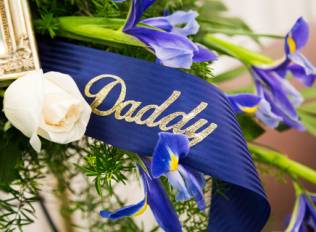
I used to think my relationship with my father was unique, different: complicated on its best day and toxic, disruptive, and unbearable on its worst. I know now it’s not unique.
I have always known—well maybe not always, but for a very long time—that I would most likely not be attending my father’s funeral. I made that choice in my mind and in my heart a long time ago. Not due to lack of love, but for personal preservation. For my own health. For my own happiness. For my sanity. For my spirit. He didn’t need to be sick for me to envision the day that he would pass; after all if I have learned anything in my 49 years of this journey, it is that we are all dying. And we should not assume it is going to be when we are old.
My dad was diagnosed with stage 4 cancer a few months back and it had spread to various parts of his body—the prognosis wasn’t good. I really don’t know all the details; most of my family members didn’t speak to me about it, and I take responsibility for not asking. For the ones who stayed silent to protect me and my heart, I am forever grateful. And for those who didn’t whisper a word because they thought I was a self-centered, disrespectful, heartless, unkind, unforgiving, uncaring, cold-hearted, and insensitive daughter, I understand those perceptions too; that is part of my internal struggle and at times exactly how I feel about myself.
I used to think my relationship with my father was unique, different: complicated on its best day and toxic, disruptive, and unbearable on its worst. I know now it’s not unique. There are many people who for a variety of reasons have infrequent contact (or like me, no contact at all) with one or both of their parents.
I am what is known as an ACOA: Adult Child of an Alcoholic.
My parents divorced when I was nine years old, and the oddest thing is I have no memory whatsoever of anything happy or any special moment with my father before that time. None.
The only memory I have of my daddy from my childhood before age nine is the drunken fighting. The chaos, the yelling, the screaming, the violence; my little brother and me not being picked up from the babysitter’s when it closed because he was out at the bar, and other memories of having to flee the house in the middle of the night. I have no recollection of any Christmas mornings opening gifts under the tree; a birthday party or vacation; a family dinner. No memory whatsoever, although we did all of those things. I know there were happy times, I have seen pictures of our family. My beautiful mom, my little brother, me, and our daddy in slightly cracked, old, seventies pictures looking like a perfect family.
But after years of therapy, I have learned and continue to learn so much, not only about being the child of an alcoholic but about trauma. I believe that things that terrify you—make you feel unsafe, frightened, scared—far outweigh any good.
My permanent estrangement from my dad came much later. I am filled with many happy memories after my parents’ divorce: weekend visits, camping, fishing, four-wheel driving in his big truck, snowmobiling, and mostly big family get togethers with all of my aunts, uncles, and cousins. Some would ask if I had forgiven my father for the past, and the honest answer is that I never looked at it in those terms. I didn’t need to forgive my father, I didn’t blame him or hate him; I felt nothing but love for him. Sure, the drinking continued throughout my teenage years, but I ignored the things that bothered me. It wasn’t that bad.
As I grew into a young adult, got married, and had children of my own, the dynamic changed. Or maybe it was exactly the same, only I saw things through a different lens. I now had two little boys of my own who were witnessing, analyzing, and interpreting, just as I did when I was a little girl. There was no violence or anything of that nature, but wounds don’t always leave broken bones and bruises. The drama-filled drunken theatrics continued and so our relationship was off and on. Off. On.
For me, the point of no contact with my father came when my younger brother became another alcoholic branch in our family tree. While I was trying to survive a war zone of 911 calls, hospital stays, psychiatrists, psychologists, seven rehab stays, several suicide attempts, denial, blame, and absolute destruction, the drunken late night calls from my father became too much. I never told him how they hurt me, like spraying gasoline on an inferno. I just simply hung up the phone. And eventually the calls stopped.
That was more than 12 years ago. As in my early childhood, the bad eventually overpowered any good.
Since I was a little girl, my perception was that alcohol was responsible for everything bad that happened in my life. And I did not come to this realization easily or lightly. Long before I was married, long before I had children of my own, there was my mom. My dad. My brother. And eventually a baby sister. The ones I loved more than anyone else in the whole world. I wish with all of my heart I could have changed some of these dynamics in my family and, God knows, I gave it my best shot. But I know now that task was not mine; it’s just my overdeveloped sense of responsibility coming from an alcoholic home.
Sadly, my brother lost his battle with alcohol addiction and mental illness in March 2012 by taking his own life. My brother’s drinking affected all of our lives in a negative way. I would have welcomed the chance to sit face to face with my own father if he wanted to and tell him that I understood, and that he should hold no blame where my brother is concerned. We were all in way over our heads. And that I love him, and my brother did too. I wish I had done things differently back then, as I made many mistakes myself.
My father and I do not need to work out out differences, we are are out of time. But we could both say sorry for hurting each other, it wasn’t intentional. My brother’s death could have brought our family closer together; he would have wanted that.
Perhaps for my dad, the point of no return was when I did the unthinkable. I wrote a memoir of my journey with my brother in the hope of helping other families to see the effects of childhood trauma, to not make the same mistakes, to take a different path, and to change.
But the truth is my father and I were estranged long before the mention of a book. So, it would not be fair to put our estrangement solely on my shoulders. I only take responsibility for my part.
After a few months, Dad’s cancer had spread, and I heard that he was hospitalized. I knew he didn’t have much time so, to look after my own thoughts and feelings, I made an appointment with my therapist. I have worked very hard to be a better and healthier version of myself—I take my own recovery very seriously. And I do mean recovery; although I don’t drink, I too had to “recover.”
As my therapist and I talked for that hour, I accepted what was to come, and what I was sure of: I wasn’t going to cry when he died. Not because there was a lack of love, but I had mourned the loss of my father a long time ago.
Less than a week later, I woke up early on February 5th, put on my robe, poured myself a coffee, and turned on my iPhone. As I scrolled through Facebook I saw a post, something about heaven got another angel. My father had passed away.
A whirlwind of pictures flashed though my mind.
I had completely misjudged my reaction: my eyes instantly filled with tears. I was wrong. I did cry. And cried. And cried. I was overwhelmed with emotion: this is all so messed up; it is not how families are supposed to be. It is not what I would want and totally against who I am.
I spent the next two evenings crying myself to sleep as I knew it was official—I wasn’t going to the funeral.
I won’t stay away out of anger, spite, or stubbornness. Whether someone else thinks I am right or wrong, what is best for me is being steadfast and confident in my knowledge that I am the daughter, not the parent. If it had been my instinct to run to my father’s side when he was sick, I would have done that when he was healthy. In my life, I do not react anymore out of pity or guilt, misinterpreting those sentiments as love. I did that most of my life, and I lost my own identity in the process.
I will stay away from the funeral, not because I didn’t love my dad, but because I did. We all must live with the consequences of our choices and I am no different from him. I would never disrespect his wife, his other children, his friends, or even some of my own family by being there. I would never want to cause them pain with my presence and I am sorry for their loss.
My father’s drinking affected my life in a negative way, but that doesn’t mean he wasn’t a good person. He was loved by many, had lots of friends, other children who accepted him for who he was, and he continued a relationship and was married to his third wife for almost 27 years. Most likely, the funeral home will be filled with a couple hundred people. All of this is true.
My absence just means that on this journey of life, the relationship between him and me wasn’t good for me. It wasn’t healthy and what I needed. And I am allowed to decide.
It’s days later. While still crying, I am imagining all of those people at the funeral tomorrow wondering why I’m not there; judging and whispering that I am self-centered, disrespectful, heartless, unkind, unforgiving, uncaring, and cold-hearted.
I have been plagued with the haunting visions of my father leaving his little farmhouse for the last time, knowing he was going to the hospital to die. Looking to the right at the garden where the children had Easter egg hunts, to the left at the creek where we used to snowmobile together in the cold Alberta winters. Perhaps as he got closer to the car, he looked to the right and the garage where we all used to sit in front of the campfire as a family that included my brother, my sister and her daughter, and my husband and me with our sons. Happy. A simpler time, years before all of this fell apart. And then I realized, maybe that isn’t what my dad saw; maybe it’s what I see.
As I crawled into bed, my feelings of guilt had begun to subside, no more visions of my frail father lying in a hospital room hoping his daughter would arrive. I would have no reason to believe he ever thought that—and I know that is just my heart playing with my head.
I do wish things were different, and I am sorry that I won’t be at my father’s funeral.
What anyone thinks of that really has nothing to do with me.
Sometimes it is hard for the outside world to understand. But for your own survival you need to think of your own needs over and above someone else’s. That is not selfish or callous (I have learned this too). It’s necessary.
My tears will eventually subside; they always do. But for tonight, if you don’t mind, I am going to shed tears for the little girl whose Daddy didn’t call.
Jodee Prouse is a mom, wife, sister, friend and author of the memoir, The Sun is Gone: A Sister Lost in Secrets, Shame, and Addiction, and How I Broke Free. She is an outspoken advocate to eliminate the shame and stigma surrounding addiction and mental illness and empowering women through their journey of life and family crisis. Visit jodeeprouse.com to learn more.

