Tag: marijuana laws

  • Kamala Harris Praises Illinois For Legalizing Marijuana

    Kamala Harris Praises Illinois For Legalizing Marijuana

    This is not the first time that Senator Harris (D-CA) has spoken out in favor of legalized cannabis.

    Democratic presidential hopeful, Senator Kamala Harris, took to Twitter this week to praise Illinois for legalizing marijuana and moving to expunge the records of people with marijuana-related criminal records. 

    “Thankful states like Illinois are stepping up to correct the mistakes of our past. It’s time to do the same at the federal level,” Harris wrote on Twitter

    Illinois Governor J.B. Pritzker signed legislation this week that makes recreational cannabis legal for adults who are 21 or over. At the same time, the legislation will automatically expunge records for people who were caught with 30 grams of cannabis or less, while others with more serious offenses can petition the court for expungement. 

    Harris Talks Cannabis Reform In Her Book

    This is not the first time that Harris (D-CA) has spoken out in favor of legalized cannabis. In January she explicitly called for cannabis law reform in her book The Truths We Hold: An American Journey

    “Something else it’s past time we get done is dismantling the failed war on drugs—starting with legalizing marijuana,” she wrote. “We need to legalize marijuana and regulate it, and we need to expunge nonviolent marijuana-related offenses from the records of millions of people who have been arrested and incarcerated so they can get on with their lives.”

    More broadly, she wrote about drugs: “”We also need to stop treating drug addiction like a public safety crisis instead of what it is: a public health crisis. When someone is suffering from addiction, their situation is made worse, not better, by involvement in the criminal justice system.”

    Harris formerly worked as a prosecutor—as San Francisco’s district attorney and then attorney general of California—and has said that race undoubtedly plays a role in who is tried for marijuana crimes. 

    “The fact is marijuana laws are not applied and enforced the same way for all people. African-Americans use marijuana at roughly the same rate as whites, but are approximately four times more likely to be arrested for possession. That’s just not fair,” she has said in the past. 

    In addition, Harris has admitted that she smoked pot in the past.  

    “Look I joke about it, I have joked about it. Half my family is from Jamaica, are you kidding me?” she said in February. “I have had concerns, which I think—first of all, let me just make this statement very clear, I believe we need to legalize marijuana. Now, that being said… we need to research, which is one of the reasons we need to legalize it. We need to move it on the schedule so that we can research the impact of weed on a developing brain. You know, that part of the brain that develops judgment, actually begins its growth at age 18 through age 24.”

    View the original article at thefix.com

  • Chuck Schumer, Hakeem Jeffries Unveil Marijuana Decriminalization Bill

    Chuck Schumer, Hakeem Jeffries Unveil Marijuana Decriminalization Bill

    Schumer and Jeffries announced the bill in a video where they discussed its provisions and intended impact.

    A pair of Democratic lawmakers have partnered on a new bill that seeks to decriminalize marijuana at the federal level.

    Senate Minority Leader Chuck Schumer and Representative Hakeem Jeffries joined forces for the Marijuana Freedom and Opportunity Act, which would remove marijuana from the federal Controlled Substances Act, while also offering support to small business owners involved in cannabis-related industries and funding toward the Department of Justice (DOJ) to support expungement programs for marijuana convictions at the state and local level.

    The bill is the second such effort in two years for Schumer, who, in describing the bill, said, “What we’re saying is very simple. Let each state do what it wants.”

    Schumer and Jeffries announced the bill in a video where the two discussed the bill’s provisions and intended impact. Decriminalization, as Schumer noted, will allow the states to create their own legislation regarding marijuana and remove concerns for sellers, distributors and users about federal prosecution.

    The bill also includes the aforementioned expungement program funds for the DOJ, which Jeffries said would “[create] opportunity and economic space [that] will be tremendous.”

    He also noted that removing criminal marijuana charges would change the course of “lives and communities that have been ruined in large measure by the overcriminalization.”

    Small cannabis business owners, especially women or people of color, will also benefit through support from the Small Business Administration, which is included in the bill. “Let’s not have some big fancy corporation, some big tobacco company make all the money,” said Schumer in the video. Additionally, the Huffington Post reported that the bill will provide millions of dollars for research into the effects of marijuana on brain function and driving impairment.

    “The Marijuana Freedom and Opportunity Act is a phenomenal step forward in terms of social, racial and economic justice in the context of what many people view as the failed War on Drugs that has been with us for decades,” said Jeffries.

    As High Times noted, the bill will most likely face opposition from Senate Republicans, but it’s not clear how Donald Trump will respond. The president previously voiced support for a legalization bill introduced by Senator Cory Gardner (R-Colorado) in 2018.

    View the original article at thefix.com

  • Marijuana Laws in Rhode Island

    Marijuana Laws in Rhode Island

    ARTICLE OVERVIEWMarijuana is legal for medical use in Rhode Island. It is still illegal for recreational use but there are efforts being taken towards new legalization.

    Table of Contents:

    Is Marijuana Legal?

    Since 2006, marijuana has been medically legal in the state of Rhode Island under the law called, “Approved Qualifying Debilitating Medical Conditions”[1]. Though there are proposals in the works, Rhode Island continues to view marijuana as illegal for recreational use. In other words, without a proper medical card, being in possession of marijuana is against the law and will result in penalties.

    Cannabinoid Oil

    The Ocean State legalized cannabinoid oil, known as CBD, back in 2015. Because of its relation to marijuana, there are rules and regulations to be followed when it comes to purchasing and producing cannabinoid products. For example, cannabinoid products are not allowed to have THC content of more than 0.3%.

    [banner variant=”article-1″]

    CBD was made legal to purchase across the nation for two purposes:

    1. It doesn’t get you high.
    2. It has many medical benefits.

    CBD is the chemical within cannabis plants used to treatmedical conditions such as [2]:

    • Anxiety
    • Inflammation
    • Intractable epilepsy
    • Pain
    • Psychosis
    • Seizures

    Marijuana Laws in Rhode Island

    As mentioned, marijuana is medically legal and recreationally illegal in Rhode Island. Without a proper medical card, you will face penalties for being in possession of marijuana. However, even with a medical card, there are still rules that you need to follow. [3] These include guidelines such as:

    You’re allowed to possess no more around 70 grams at a time.

    [banner variant=”article-2″]

    You may be in possession of up to 12 plants and up to 12 seedlings.

    Two or more people with medical cards are allowed to harvest marijuana under the following regulations. Non-residential spaces cannot grow more than 10 ounces of usable marijuana, 48 plants, and 48 seedlings. Residential spaces cannot grow more than 10 ounces of usable marijuana, 24 plants, and 24 seedlings.

    [banner variant=”sidebar-1″]

    The laws for medical marijuana patients work in the same way as recreational alcohol. You are NOT allowed to drive while intoxicated nor consume marijuana in a public place.

    Furthermore, people with medical cards are only allowed to legally purchase marijuana through a qualified dispensary. A fellow card holder is allowed to share his or her marijuana with you. S/He is not allowed to sell to you. These rules are an attempt to stop the distribution of illicit substances within the state.

    [banner variant=”sidebar-3″]

    Penalties

    Penalties for the possession, sale, or trafficking of marijuana in Rhode Island vary based on your circumstance. For example, if you have over 1 kg of cannabis, you’re automatically considered to have the intent to sell. However, if you have less than 1 kg BUT also have an assortment of selling material like baggies or a scale, you can also be charged with intent to sell. The following table gives you a basic idea of marijuana possession laws and penalties within the state of Rhode Island.

    Again, these laws vary depending on your situation. For example, if you’re caught selling within 300 yards of a school, all penalties automatically double. If you’re caught selling to a minor, you receive a minimum fine of $10,000 along with a minimum sentence of 2 to 5 years.

    Marijuana DUI

    DUI laws for marijuana in Rhode Island work like the laws set up for drunk driving. The only huge difference is you can be charged more for possession of marijuana on top of your DUI. [4] Furthermore, the charges you receive will depend on your circumstance. For example, if you have a child in the car while driving under the influence of marijuana, you can expect to be face more penalties.

    The following are offenses with the general penalties involved with them. Understand, you can receive more or less of a consequence, depending on your situation.

    • First Offense

    ○ Up to one year in jail.
    ○ Suspended license for 3 to 12 months.
    ○ Fines of up to $800.
    ○ 10 to 60 hours of community services.
    ○ Driving school.

    [banner variant=”article-5″]
    • Second Offense

    ○ Minimum 10 day jail sentence, maximum 1 year.
    ○ Suspended license for 1 to 2 years.
    ○ Mandatory drug treatment.
    ○ Fines of up to $1,500.

    • Third Offense

    ○ Minimum 3 year jail sentence, maximum 5 years.
    ○ 3 years of license suspension.
    ○ Mandatory drug treatment.
    ○ Fines of up to $5,000.

    If somebody was INJURED or KILLED due to your DUI, the penalties will be much greater. It’s common for these situations to bring upon felony charges, especially if your DUI causes a fatality. You’ll automatically be charged with vehicular manslaughter and can face upwards of life in prison.

    Views on Marijuana

    Currently, at the time of writing, marijuana advocates are taking action to legalize marijuana in the state of Rhode Island. With fellow New England states Vermont, Massachusetts, and Maine already allowing recreational cannabis, it wouldn’t be surprising if Rhode Island joined in too. In fact, a recent public opinion poll found that more people in Rhode Island favor legalization than discourage it. [6]

    With this in mind, the laws mentioned throughout this article may change in the near future. However, as is currently happening with legal states, rules and regulations surrounding cannabis is constantly changing. Therefore, the future of its legal status within the state and how it’ll be regulated remains a question up for debate.

    Is Marijuana Addictive?

    There are many out there who will tell you marijuana isn’t addictive. The unfortunate truth is, they’re absolutely wrong! Marijuana contains addictive qualities in a similar way to other drugs. People who smoke cannabis usually are addicted to its psychoactive elements and use the drug for mental and emotional reasons.

    You know marijuana causes a dependence because when a chronic user suddenly stops, they experience withdrawals. This is when the body begins to need marijuana in order to function normally. When marijuana is suddenly taken out of the system or when a high begins to wear off, you may feel the following:

    • Anger
    • Anxiety
    • Depression
    • Difficulty concentrating
    • Irritability
    • Mood changes
    • Trouble sleeping

    People also use marijuana for a lot of physical reasons as well. Some smokers will tell you they need marijuana in order to sleep properly. Or they have trouble maintaining an appetite without it. This is due to the fact that the body has adjusted to marijuana. Physical addiction can cause the following in individuals:

    • Aggression
    • Cravings
    • Difficulty falling asleep
    • Insomnia
    • Loss of appetite
    • Raise in body temperature
    • Restlessness
    • Sweating

    If you or anyone you love is currently struggling with a marijuana addiction, we can help. Our American Addiction Center hotline operators can walk you through the treatment process and answer any questions you may have.

    You are not alone.

    If you want to quit, reach out for help today.

    Marijuana Treatment

    Since marijuana affects people differently, treatment also needs to be individualize. Marijuana affects a person’s psychology and, therefore, treatment tends to focus on talk therapies. [5] The mental reasons we use marijuana are often very personal and need to be identified on an equally personal level.

    Keep in mind that a treatment facility should be customized to your needs rather than vice versa. Depending on where you go, the way in which the facility goes about treatment may differ. However, most reputable facilities will offer similar steps during treatment. These include:

    1. Medical Assessment

    A reputable rehab follows protocol and first offers patients a complete medical evaluation upon intake. This will involve drug tests, interviews, and a full medical and family history. This data is neededin order to discover the best course of treatment for you.

    2. Detox

    People go through detox when withdrawal symptoms are very strong and require medical supervision. Since marijuana’s physical withdrawals usually aren’t strong, you might not need to go through this step. Chronic smokers and those who use marijuana with other drugs can benefit from detox to flush out their system.

    3. Psychological Treatment

    When it comes to treatment, counseling is the most important step. Many people use cannabis as a means of relieving emotional stress or handling day-to-day life. The goal of psychological treatment is to change your thoughts, patterns, and beliefs. As mentioned, talk therapy is often the most common and effective therapy option when it comes to marijuana. This therapy will be a combination of individual and group counseling.

    4. Educational Sessions

    During treatment, it’s important to be enrolled in educational sessions which teach you about addiction. Learning about how drugs affect the brain can help you stay away from them in the future! The importance of this is to make you aware of the dangers and penalties which can arise through an addiction. It also hopes to prevent you from relapse.

    5. Supportive Services

    Most treatment facilities off supportive services. These include vocational training, housing assistance, financial assistance, legal assistance, and medical assistance. Not everyone will need this kind of help, but it should be in place.

    Your Questions

    Still have questions about weed in RI? If you have any further questions pertaining to marijuana laws in the state of Rhode Island or marijuana addiction and treatment, we invite you to ask them below.

    If you have any advice or information to share on these topics, we’d also love to hear from you. We try to reply to each comment in a prompt and personal manner.

    Reference Sources: [1] State of Rhode Island Department of Health: Medical Marijuana in Rhode Island
    [2] National Center of Complementary and Integrative Health: Health Benefits of Marijuana
    [3] NORML: Looking to Reform Marijuana Laws in RI
    [4] DMV.org: Rhode Island DUI & DWI Laws
    [5] National Institute on Drug Abuse: Is Marijuana Addictive?
    [6]Providence Journal: 3 of 5 in RI Support Legal Recreational Marijuana
    [banner variant=”article-6″]

    View the original article at addictionblog.org

  • Marijuana Laws in California

    Marijuana Laws in California

    ARTICLE OVERVIEW: This article outlines current marijuana laws, regulations, and penalties in the state of California. Your questions are welcomed at the end.

    Table Of Contents:

    Is Marijuana Legal?

    Marijuana is legal for medical and recreational use in California. The Adult Use of Marijuana Act,or Proposition 64, legalized recreational use of cannabis in November 2016 to anyone over the age of 21. The Compassionate Use Act of 1996 legalized medical use of marijuana to those over 18 with a proper medical card. Both of these acts continue to be in effect.

    However, it’s important to remember lawmakers are still trying to figure out how to make legal cannabis work.

    [banner variant=”article-1″]

    In fact, legalization a new concept to the country as a whole; many laws are constantly changing.The truth is the state is still figuring out the logistics. For example, it was recently reported that a law is currently in the works to expunge prior convictions or decrease ongoing sentences for prior marijuana charges. [1] The law isn’t yet in effect as the bill still requires a signature from Governor Jerry Brown. You can follow updates concerning this issue here:

    In addition, there have been struggles regulating cannabis business. In July 2018, new standards were set for labels, packaging, and distribution. [2] When this law was enacted, legal marijuana stores had to get rid of their entire supply and wait for a new one to come in. This was a big hit to people who were purchasing cannabis regularly and, in turn, caused a flood back into the illicit market.

    Marijuana Laws in California

    In terms of the laws set under the Adult Use of Marijuana Act, the state allows the following:
    • For cannabis to be consumed in a private location.
    • For people to hold a maximum of 28.5 grams, or about an ounce.
    • For people to hold up to 8 grams of concentrates.
    • For people to cultivate up to 6 plants per residency.

    What the state doesn’t allow is the following:

    • Consumption of cannabis in public.
    • Manufacture without licensing.
    • Operation of a vehicle while under the influence.
    • Smoking or ingesting cannabis while you’re a passenger in a vehicle.
    • Possessing, ingesting, or smoking marijuana within 1,000 feet of a daycare, school, or youth center while children are present.

    It should be noted, though marijuana is legal in the entire state of California, only 18 of 58 counties in the state allow legal marijuana businesses and cultivations on a business scale. Therefore, those who reside in the other 40 counties run much higher risks as marijuana is only obtainable through illegal means.

    [banner variant=”article-2″]

    Furthermore, since cannabis remains illegal on a federal level, you aren’t allowed to travel from California with marijuana through state lines. So, marijuana possession can be charged as a crime if you leave the state unless the state you enter directly has legalized cannabis as well, such as Oregon or Nevada.

    Penalties

    There are regulations that serve as the backbone to marijuana laws and are meant to keep people safe and responsible when consuming. Furthermore, legality doesn’t mean the drug is safe. Just like alcohol, marijuana comes with side effects which are often overlooked. Here you can find a list of possession penalties, but keep in mind the regulations are subject to change.

    1. Possession penalties

    [banner variant=”sidebar-1″]

    1.1. Possession of up to one ounce (28.5 grams) of cannabis or 8 grams of concentrate

    [banner variant=”sidebar-3″]

    1.2 Possession of more than one ounce (28.5 grams) of cannabis or 8 grams of concentrate.

    1.3 Possession of up to one ounce (28.5 grams) of cannabis or 8 grams of concentrate upon the grounds of, or within, any school providing instruction in kindergarten or any of grades 1-12, inclusive, during the hours the school is open for classes or school-related programs

    1.4 Possessing, smoking, or ingesting cannabis or cannabis products in or upon the grounds of a school, day care center, or youth center while children are present.

    [banner variant=”article-5″]

    1.5 Possession of cannabis for sale

    1.6 Possession of an open container or package of cannabis or cannabis products while driving, operating, or riding as a passenger in a motor vehicle, boat, aircraft or other vehicle used for transportation.

    Marijuana DUI

    Driving under the influence laws for marijuana work very similar to DUI alcohol laws. The only difference is law enforcement measures alcohol through blood alcohol concentration, or BAC, whereas they have no way of measuring a cannabis high. Therefore, having any amount of cannabis in your system can result in a DUI as the result of marijuana consumption.

    NOTE HERE: Sometimes, house arrest or work programs are alternate sentences for jail time. Additionally, you might be a candidate for drug court and seek alternate sentencing in the state.The penalties for DUI of marijuana offenses in the State of California are as follows [3]:

    1st-Time Offender

    • A fine between $390 and $1,000.
    • Jail time of anywhere between 48 hours and 6 months.
    • License suspension of up to 6 months.
    • 3 month DUI school or 30 hours of classes.
    • Up to 3 years of probation.

    2nd-Time Offender

    • A fine between $390 and $1,000.
    • Jail time of anywhere between 96 hours to 1 year.
    • License suspension of up to 2 years.
    • 18 to 30 months of DUI school.
    • Up to 3 years of probation.

    3rd-Time Offender

    • A fine between $390 and $1,000.
    • Jail time of anywhere between 120 days to 1 year.
    • License suspension of anywhere between 1 to 3 years.
    • 30 months of DUI school.
    • 3 to 5 years of informal probation.

    These penalties become more severe if your DUI results in someone else’s injury. Depending on the situation, you could be charged with a felony which results in a fine upwards of $5,000 and/or risk 16 months to 4 years in prison.If your DUI caused a fatality, you will be prosecuted under vehicular manslaughter or other of the state’s murder laws. Even if the death was a result of an accident. This can lead you into a 15-year to life prison sentence.

    Views on Marijuana

    As discussed, there are 40 counties within California which consider it illegal to run a marijuana business or cultivation. With this in mind, we begin to see that the whole state doesn’t have the open opinion to cannabis as we might expect.

    For example, just because marijuana is legal doesn’t mean employers want to see it show up on adrug test. In fact, depending on the company, your cannabis consumption might cost you a job. This isn’t the case for every job. Some companies will allow you to use weed as long as you don’t get high on the job. But any job that requires operation of machinery can legally require clean drug tests.

    Another example, just as with alcohol, parents who consume cannabis are at risk when it comes to child custody laws. It all depends on the situation your case finds itself in. If a judge or jury finds your child or children are at risk due to your marijuana use, police records will be sought out from the following:

    • Law enforcement agencies
    • Medical facilities
    • Social welfare agencies
    • Third-party eye-witness(es)

    The court has a right to do this under California Family Code 3011. Furthermore, they have the right to drug test you if they’re suspicious of your child’s safety. At the end of the day, courts are looking out for your children and their well-being. Their two main concerns when it comes to cannabis consumption are:

    1. The harm caused to parents due to drug exposure.
    2. The harm caused to children due to drug exposure.

    With all this in mind, it’s understandable that not everyone has the same views when it comes to cannabis. Just because it’s legal doesn’t mean you’re guaranteed specific rights. It’s important to look into these matters before deciding to recreationally consume.

    Is Marijuana Addictive?

    Yes! Contrast to popular belief, marijuana has addictive qualities. Due to the fact that THC – the chemical in cannabis which gets you high – is psychoactive, people will feel physical addiction symptoms and more dominant mental addiction symptoms.

    How do you know if you’re addicted, or not?

    To begin, you can look at the physical signs. Not everyone who consumes cannabis will have these traits as the drug effects everyone differently. Furthermore, it’s unlikely someone will be addicted to cannabis if they smoke on rare occasions, such as once every few months. Chronic, daily users begin to manifest some of the following signs:

    • Aggression
    • Cravings
    • Difficulty falling asleep
    • Difficulty sleeping
    • Loss of appetite
    • Raise in body temperature
    • Restlessness
    • Sweating

    Most of marijuana’s addictive qualities take place within the brain. Its psychoactive factors are very similar to other hallucinogens such as LSD due to the fact that it heavily affects emotions and mentality. The risks include:

    • Anger
    • Anxiety
    • Depression
    • Difficulty concentrating
    • Irritability
    • Mood changes

    Though the short-term effects have their consequences, long-term cannabis use brings much greater risks. [5] Especially, when marijuana consumption starts at a younger age.

    In a study done in New Zealand, it was found that tenacious marijuana use from adolescence to adulthood showed a loss of 6 to 8 IQ points. The study found that those who smoked during adolescence then quit upon becoming an adult never regained those loss IQ points. However, those who didn’t smoke during adolescence but started a persistent habit during adulthood never lost said IQ points.

    Regular marijuana also has a tendency to bring upon withdrawal symptoms that can last for weeks. This is when the body and brain react to a lack of THC and improperly function without the chemical. Though cannabis withdrawal symptoms aren’t as strong as other drug withdrawals, such as heroin, they are real. So, if you are dependent on marijuana, you can experience the following when you try to quit:

    • Abdominal cramps
    • Aggression
    • Anxiety
    • Chills
    • Cravings
    • Headaches
    • Irritability
    • Lack of concentration
    • Lack of focus
    • Loss of appetite
    • Mild depression
    • Mood swings
    • Nausea
    • Restlessness
    • Sleep disorders
    • Sweating
    • Weight loss

    If you or anyone you love is currently struggling with a marijuana addiction, there are available resources to help you. Feel free to give us a call. Our hotline operators are ready to talk with you about medical treatment options.

    Marijuana Treatment

    Luckily, there are options available for marijuana treatment. It works a bit differently compared to other drugs considering the psychological implications of the addiction. Cannabis addiction treatment works in the following 5 steps.

    1. Medical Assessment

    When you enter a reputable rehabilitation facility, you’ll be given a medical assessment as a means of determining the best course of treatment for you. This usually includes drug tests, interviews, and a full medical and family history.

    2. Detox

    Not everyone who enters rehabilitation for marijuana treatment will required to go through detox. It can be helpful to certain individuals – especially those who chronically smoke or for those using other drugs in combination with weed – but it isn’t necessary for everyone. During detox, you’ll receive professional assistance in “weening” off the drug through monitoring of your health and aid in relieving certain symptoms.

    3. Psychological Treatments

    Talk therapy is the most important aspect of marijuana treatment. During rehab, you’ll learn how to get through day-to-day life without the use of cannabis. This is done through a change in thoughts, patterns, and beliefs. Once you identify your unique thought processes, counselors can help provide you with alternative ways of thinking and behaving without marijuana.

    4. Educational Sessions

    After or during psychological treatment, you’ll be enrolled in educational sessions which teach you about addiction. This is vital as those who are addicted tend to not be aware as to how addiction affects them.

    5. Supportive Services

    Within reputable treatment facilities, supportive services are offered. These include vocational training, housing assistance, financial assistance, legal assistance, and medical assistance. Just as with detox, not everyone will need this part of treatment. However, it’s there for those who can benefit from it.

    Your Questions

    Still have questions?

    Wondering if you need to quit?

    If you have further questions about marijuana laws or marijuana addiction treatment, we invite you to ask them below. If you have any further insight or advice for people, we’d also love to hear from you. We try to reply to each comment in a prompt and personal manner.

    Reference Sources:[1] NPR: California law would expunge many marijuana related crimes
    [2] Cannabis Regulations in California State
    [3] DUI penalties for California
    [4] SHRM: Can CA Employers Still Test for Marijuana?
    [5] NIDA: What are Marijuana’s Long Term Effects on the Brain?
    [banner variant=”article-6″]

    View the original article at addictionblog.org

  • Legal Risks Prevent New Moms From Getting Reliable Info About Cannabis Use

    Legal Risks Prevent New Moms From Getting Reliable Info About Cannabis Use

    The possibility of legal repercussions stop women who are pregnant or breastfeeding from starting a dialogue about marijuana use with their health care providers. 

    Pregnant women are finding it hard to get reliable information about the safety of cannabis use during pregnancy, in part because of very limited research on the subject, and in part because bringing it up with health care providers could trigger legal interventions. 

    Speaking with Weedmaps, Dr. Thomas Hale, the acting executive director of the InfantRisk Center, said that he hears from thousands of women who want to better understand the risks of cannabis use while pregnant or breastfeeding.

    “None of us will admit that it’s safe because we just don’t know,” said Hale.

    Some studies have connected marijuana use with brain changes in infants, while others have indicated that some THC (the active ingredient in marijuana) passes to an infant through breast milk. However, the studies are not definitive, in part because it’s difficult to study marijuana due to its Schedule I status

    The same status makes it difficult for many women to discuss marijuana use candidly with their health care providers. That’s why many parents turn to InfantRisk, where they can call in anonymously to get information, Hale said.

    “A pharmacist like myself or my colleague obstetrician, if we know a mom is using or encounter a mom that’s using a drug in pregnancy or during breastfeeding, in most states it is what we call a reportable offense. You’re supposed to report it.”

    This could cause providers and patients to take a “don’t ask, don’t tell” approach to cannabis use. However, this is dangerous in and of itself. A new study published in Preventive Medicine found that many women interpret their providers’ silence about marijuana as an indication that the drug isn’t dangerous during pregnancy. 

    “Some stated not receiving adequate information about the risk of cannabis use or how to quit from the providers, even when they actively sought support,” the study authors wrote. “Some women perceived that not communicating and addressing cannabis health risk during pregnancy by the maternity care providers or social workers, or not having specific counseling provided, might indicate that cannabis does not represent a significant concern for the outcome of their pregnancy.”

    This is particularly concerning because marijuana use during pregnancy is rising, and cannabis is the most frequently used drug among pregnant women. 

    Overall, it’s important for women to be able to safely discuss marijuana use with their doctors. 

    “A lack of communication with health care providers regarding the health aspects of cannabis was evident,” study authors wrote. “A discussion about health concerns surrounding cannabis use may influence women’s perceptions of risk and help them to make informed choices.” 

    View the original article at thefix.com

  • Will Florida Repeal Its Ban On Marijuana Smoking?

    Will Florida Repeal Its Ban On Marijuana Smoking?

    Florida’s newly elected governor says the ban was not “up to snuff.” 

    Newly elected Florida Governor Ron DeSantis has asked his state’s legislature to drop a ban on smoking marijuana.

    DeSantis, a Republican, announced his decision at a press conference on January 17, where he said the ban was not “up to snuff,” and doubled down on his decision by stating that if lawmakers don’t implement the change by mid-March, he’ll drop former governor Rick Scott’s appeal of a judge’s ruling which prohibited the ban because it violated the state’s amendment to legalize medical cannabis

    Amendment 2 was intended to legalize the use of medical marijuana for individuals living with a variety of debilitating conditions or ailments with the approval of a licensed state physician. Though 71% of voters approved the bill in 2016, the state legislature did not implement Amendment 2 in 2017, prompting Scott to call for a special session in the summer of that year to address its implementation.

    The Florida State Legislature then passed Senate Bill 8A, which established regulations for the amendment. These included a cap on the number of retail dispensaries, as well as a ban on smoking medical marijuana—though cannabis in spray, oil or vapor form was allowed.

    Orlando attorney John Morgan filed a lawsuit to challenge the smoking ban, which a Leon County circuit court judge ruled in favor of in May 2018. The Florida Health Department appealed the ruling, which is the subject of DeSantis’ request.

    “What the Florida legislature has done to implement the people’s will has not been done in accordance with what the amendment advised,” said DeSantis at the January 17 announcement. “Whether patients have to smoke it or not, who am I to judge that? I want people to be able to having their suffering relieved. I don’t think this law is up to snuff.”

    DeSantis also plans to remove regulations and drop appeals in several other cases involving licensing for medical marijuana companies to grow, manufacture and sell their own product. 

    “We have a lot of fish to fry in Florida,” he said. “The last thing I want to be doing is cleaning up something that should have been done two years ago. I don’t want to continue fighting some of these old battles.”

    In an interview after the press conference, John Morgan called the governor’s decision a “victory for the people of Florida. This plant was put into nature by God for us, and it works.”

    View the original article at thefix.com

  • Confusing Law Led to Marijuana Arrests In California

    Confusing Law Led to Marijuana Arrests In California

    A recent high-profile stop has led to a lawsuit by two former highway patrol officers who now operate a cannabis transportation business. 

    Recreational cannabis may be legal in California, but complex laws in the state mean officers are still regularly pulling people over and seizing marijuana. In fact, in 2018, California Highway Patrol officers seized more cannabis than they had any other year since 2014. 

    According to The Sacramento Bee, a recent high-profile stop has led to a lawsuit by two former highway patrol officers who now operate a cannabis transportation business, Wild Rivers Transport. Rick Barry, 48, and Brian Clemann, 47, were stopped and their car was searched after a canine indicated the scent of marijuana. Although the two didn’t have cannabis in the car, they did have $257,000 in cash, which officers took and turned over to the Department of Homeland Security. 

    Now Barry and Clemann are suing the highway patrol, hoping a judge will rule that local and state law enforcement can’t interfere in the legal transport of marijuana

    “It appears the [California Highway Patrol] will stop at nothing to disrupt the lawful and legal transport of items involved in the medicinal cannabis industry,” they said in a press release. “Although all our invoices, licenses, and required paperwork were in order, the [California Highway Patrol] spent several hours trying to come up with charges for our lawful activity.”

    In California, the Bureau of Cannabis Control announced Jan. 16 that marijuana deliveries and transports can take cannabis anywhere in the state, “provided that such delivery is conducted in compliance with all delivery provisions of this division.”

    The specifics of California’s marijuana laws — which have the potential to influence a massive industry — have taken time to work out. 

    “These approved regulations are the culmination of more than two years of hard work by California’s cannabis licensing authorities,” Bureau Chief Lori Ajax said in a press release. “Public feedback was invaluable in helping us develop clear regulations for cannabis businesses and ensuring public safety.”

    Law enforcement was not pleased with the decision, according to David Swing, president of the California Police Chiefs Association.

    “We are deeply concerned with the adoption of the new cannabis regulations, which allow for the delivery of cannabis anywhere in the state. We are already having trouble enforcing a new and complex industry, and this allowance will only make enforcement even more difficult,” he said.

    A spokesperson for the California Highway Patrol said that agencies need to be able to stop black-market transports. 

    “In order to legally transport cannabis in California for commercial purposes, a person must possess the appropriate (Bureau of Cannabis Control) license and comply with the [Bureau of Cannabis Control] administrative regulations,” the spokesperson said.

    View the original article at thefix.com

  • Marijuana Laws in Nevada

    Marijuana Laws in Nevada

    ARTICLE OVERVIEW:Nevada is one of the ten states in America where marijuana is legalized, both medically and recreationally. Yet, with legalization comes a set of laws and regulations many aren’t aware of. This article outlines these laws and the penalties the state levies if you break them.

    TABLE OF CONTENTS:

    Is Marijuana Legal in Nevada?

    Yes. Marijuana is legal for recreational and medical use in Nevada.

    Marijuana became medically legal in 1998 under the Nevada Medical Marijuana Act to anyone over 18 with a proper medical card issued through a doctor. Marijuana became legal for recreational use in 2014 to anyone over the age of 21 via the Initiative to Regulate and Tax Marijuana.

    However, legality doesn’t mean complete freedom on the use, possession, sale, or trafficking of weed. Just like alcohol, there are regulations surrounding the newly legalized drug in order to make sure people are safe and responsible with their consumption.

    It should be noted, just because cannabis is legal doesn’t mean it’s safe. Just as with alcohol, there are side effects to marijuana that people tend to overlook.

    Furthermore, laws aren’t completely set in stone yet. Since the state of Nevada is responsible for all regulations surrounding cannabis – and not the federal government – there are changes being made to the rules consistently. For example, in California, it recently became a law for people with prior marijuana convictions are eligible to have charges expunged from their records. Though a law as such hasn’t been set forth in Nevada, it’s very possible we’ll witness some changes in the near future.

    The importance of mentioning this is to be informed that lawmakers are still trying to figure out how to make legal cannabis work.

    Marijuana Laws in Nevada

    According to Nevada’s state website, anyone over the age of 21 is allowed to:

    • Possess up to 1 ounce of marijuana.
    • Possess up to ⅛ of an ounce (3.5 grams) of concentrates.
    • Possess up to 6 marijuana plants per person (no more than 12 in a household).

    However, there are regulations surrounding these allowances. In terms of possession and consumption:

    • It’s illegal to consume marijuana in public.
    • It’s illegal to consume marijuana in a vehicle, even if you are a passenger.
    • It’s illegal to use marijuana under the age of 21.
    • It’s illegal to pose as someone else as a means of obtaining marijuana.
    • It’s illegal to give marijuana to a minor (charges will be higher if the minor is under 18).
    • It’s illegal to operate a motor vehicle while under the influence of marijuana.
    • It’s illegal to purchase marijuana from anywhere other than a state-licensed store.

    In terms of growing plants, the following regulations are set in place:

    • You must grow plants within an enclosed area such as a closet or greenhouse with a locked door to limit access to them.
    • You cannot plant marijuana in a place that’s visible from a public place.
    • You must grow plants on your own property and, if you live on a property you don’t own, you must get permission to grow from the owner of the property.
    • You may not grow cannabis within 25 miles of a state-licensed store, in a place which is visible to the public, or on a property you don’t own/don’t have permission to plant on.

    Penalties

    Penalties will be charged to people who don’t follow the above rules. The general penalties are.

    Furthermore, it remains highly illegal across the country to traffic marijuana. You’re only allowed possession of a large amount if you have a state license to either sell through a store or cultivate cannabis. If you’re caught transporting or importing without a license, you will be charged with a felony, even if you’re unaware of the drug’s presence.

    These laws and penalties are structured under NRS 453.3385. Each penalty depends on how much marijuana you’re in possession of when you’re caught:

    Low-Level Trafficking If you’re in possession of 50 pounds, but less than 1,000 pounds, you’ll be charged with a Category C Felony.
    Mid-Level Trafficking If you’re in possession of 1,000 pounds, but less than 5,000 pounds, you’ll be charged with a Category B Felony.
    Large-Level Trafficking If you’re in possession of 5,000 pounds or more, you’ll be charged with a Category A Felony.

    In order to get a sense of the consequences, the following list explains the typical penalties attached to each category of a felony within Nevada:

    Marijuana DUI

    Do not get high and drive!

    Marijuana DUIs work similarly to alcohol-related DUIs. If you’re under the age of 21, penalties may vary. However, most penalties are strict.

    When you receive your first DUI, you’ll be charged with a misdemeanor which will result in the following consequences:

    • Between 2 days to 6 months in a state jail and/or up to 96 hours of community service.
    • A fine which will range between $400 and $1,000.
    • A Nevada driving under the influence school.
    • The Nevada Victim Panel (also known as a MADD lecture).
    • 90-day driver’s suspension.

    When you receive a second DUI, you can expect:

    • Up to 6 months in a state jail and/or residential confinement.
    • A fine which will be no more than $1,000.
    • A drug and alcohol treatment program.
    • The Nevada Victim Impact Panel.
    • 1-year driver’s license suspension.

    When you receive a third DUI, you can expect:

    • Between 1 to 6 years in prison.
    • A fine which will be no more than $5,000.
    • Alcohol and drug evaluations and/or alcohol and drug treatment.
    • The Nevada Victim Impact Panel.
    • 3-year driver’s license suspension.

    It should be noted that if a DUI inflicts either pain or death, you will be prosecuted under harsher penalties. In many cases, just hurting someone results in a Category B Felony which results in 20 years imprisonment and a fine of up to $5,000.

    Also, if you have previous DUI charges against you and get another which results in the death of another person, you’ll automatically be charged with a Category A felony. This will get you betweeen 25 years to life imprisonment without possibility of parole until after 10 years.

    If you are under the influence of marijuana and need a ride, it’s important to remember you have options other than driving yourself. These include:

    1. Calling a sober friend to pick you up.
    2. Calling a ride-sharing service, such as Uber or Lyft.
    3. Using public transportation, such as a taxi, bus, or train.

    Views on Marijuana

    Recreational cannabis was barely won in the state of Nevada – the final vote resulted in a 54 to 46 split. In fact, if you were to look at a map of the vote, you’ll notice the majority of regions in Nevada were against marijuana legalization. Therefore, we can’t define the entire state’s views on marijuana through the fact that it’s legalized.

    Just as with California, each county has its own rules and regulations when it comes to cannabis consumption. Though the law has been embraced within the areas surrounding Las Vegas and Reno, most of the state hasn’t set up marijuana dispensaries. And they may not feel any need to in the near future.

    This is important to note because though it’s legal to consume cannabis throughout the entire state, it’s illegal to purchase marijuana from sources besides state-licensed dispensaries. Therefore, those in the regions without dispensaries are at risk of breaking the law in order to gain a legal supply.

    Furthermore, if marijuana shows up on a drug test, you may be denied certain benefits, such as work or welfare.

    Is Marijuana Addictive?

    Marijuana can absolutely be addictive – both physically and mentally. It’s estimated that 30% of people who smoke cannabis have some level of a marijuana use disorder. This is more likely the case if people consume marijuana prior to the age of 18.

    The physical aspects of addiction will not appear with everyone who smokes. For the most part, chronic smokers (people who smoke daily) are the ones most effected. Physical addiction qualities will reveal the following signs:

    • Aggression
    • Cravings
    • Difficulty falling asleep
    • Difficulty sleeping
    • Loss of appetite
    • Raise in body temperature
    • Restlessness
    • Sweating

    The mental aspects of marijuana addiction are more prominent. Delta-9-tetrahydrocannabinol (THC), the main active ingredient in cannabis, causes the drug to be psychoactive. Meaning people will experience a more mental high rather than a physical. Therefore, the addiction is likewise more mental. The psychological symptoms of addiction to weed often include:

    • Anger
    • Anxiety
    • Depression
    • Difficulty concentrating
    • Irritability
    • Mood changes

    People who are physically dependent on marijuana can expect to feel withdrawal symptoms when they quit using. Withdrawal occurs when the brain and body return to a natural, THC-freestate. Not everyone will experience the same withdrawal symptoms, however, the following is a list of the most common symptoms reported by people:

    • Abdominal cramps
    • Aggression
    • Anxiety.
    • Chills
    • Cravings
    • Headaches
    • Irritability
    • Lack of concentration
    • Lack of focus
    • Lack of appetite
    • Mild depression
    • Mood swings
    • Nausea
    • Restlessness
    • Sleep disorders
    • Sweating
    • Weight loss

    If you or anyone you love is currently struggling with marijuana addiction, there are available resources to help you. Feel free to give us a call for advice.

    Marijuana Treatment

    If you or anyone you love is struggling with marijuana addiction, there are marijuana addiction treatment options available. Since addiction is very personal and differs from person to person, treatment will likewise differ. Typically, you can expect to take the following five steps:

    1. Medical Assessment

    Through drug tests, interviews, and a full medical/family history, your addiction will be evaluated for the sake of discovering the best treatment course for you.

    1. Detox

    Since marijuana dependence isn’t as brutal as other drugs, not everyone will need to enter detox. However, those who do will want to make sure they find themselves a reputable detox center. Not only for the sake of having professional assistance for weaning off the drug, but also to relieve specific withdrawal symptoms.

    1. Psychological Treatments

    The purpose of psychological treatment and talk therapy is to teach you how to go back to your day-to-day life without using marijuana to handle emotional and life stressors. It begins with taking personal responsibility and build from here.

    Some people will find individual therapy most beneficial. This allows for a one-on-one interaction with a professional who seeks to discover the root of your marijuana addiction and help you change your throught and beliefs. Others find group therapy more beneficial as it allows you to relate with those going through similar problems.

    1. Educational Sessions

    One of the most important things you can do for yourself is to learn about addiction and how weed works on the brain. The goal is to make you aware of the psychoactive effects of THC to help prevent relapse and consider alternative ways to feel good.

    1. Supportive Services

    Some individuals will benefit from supportive services. These include:

    • Financial assistance
    • Housing assistance
    • Legal assistance
    • Medical assistance
    • Vocational training

    Your Questions

    Marijuana can be useful. But it can also get in the way of your best self. If you’re ready for help, please reach out and ask. Learn more about how marijuana addiction is diagnosed and treated by professionals. You don’t need to do it alone.

    If you have any further questions pertaining to marijuana laws in Nevada or cannabis addiction, we invite you to ask them in the comments below. We try to reply to each comment in a prompt and personal manner. If you have any advice to give when it comes to these topics, we would also love to hear from you.


    View the original article at addictionblog.org

  • Utah Lawmaker Tries Pot For First Time On Facebook Live

    Utah Lawmaker Tries Pot For First Time On Facebook Live

    “I decided it was about time that at least one legislator knew a little bit about marijuana before we changed all the laws,” said the state senator.

    A Utah state senator decided to do some hands-on research before voting on the state’s marijuana policy in the upcoming November election.

    Jim Dabakis, a Democrat, took to Facebook Live to stream himself trying marijuana for the first time. He ate an edible gummy bear in Las Vegas, where recreational weed is legal.

    “I decided it was about time that at least one legislator knew a little bit about marijuana before we changed all the laws,” Dabakis said in the video. “I don’t think there’s a senator that’s used marijuana. I think maybe nobody has ever smoked marijuana and we’re going to make the laws.”

    Dabakis said “with great sacrifice” he went to Vegas on his own accord to give pot a try. However, he doesn’t like smoke, so he opted for an edible instead.

    “I wouldn’t recommend it as a sheer candy because it’s a little bit bitter,” he said.

    After trying the candy, Dabakis said that the experience wasn’t remarkable

    “It was no big deal,” Dabakis told USA Today. “It was fine. I just felt a little high.”

    In a follow-up video, Dabakis said he “wouldn’t recommend shooting up marijuana to anybody.” However, he called on everyone in Utah to just “mellow out” about marijuana.

    “The people who are terrified by it seem to be the people who have never tried it,” he said.

    In fact, he recommends that all his colleagues takes a moment to familiarize themselves with the issue at hand.

    “I think the reefer madness crowd – you guys, you need to try it. It’s not that big a deal,” he said in the video.

    He reinforced that stance when speaking with USA Today.

    “I want all my colleagues to get amnesty and go get a gummy bear or smoke a marijuana cigarette,” he said. “I think everybody is afraid of what they don’t know about.”

    Utah voters will consider legalizing a medical marijuana program in November. The issue has been fiercely debated in the state, where a heavy Mormon influence has resulted in some of the strictest alcohol laws in the nation. While the proposition to legalize medical marijuana seems to be slightly ahead by voters, the governor of Utah recently said that even if it doesn’t pass the state is headed toward legalization of medical cannabis.

    “The good news here is that whether [Prop 2] passes or fails, we’re going to arrive at the same point,” Utah Gov. Gary Herbert told The Salt Lake Tribune.

    View the original article at thefix.com

  • Jeff Sessions: DOJ Won't Back Down On Marijuana Laws

    Jeff Sessions: DOJ Won't Back Down On Marijuana Laws

    “States have a right to set their own laws and will do so, and we will follow the federal law,” Sessions said.

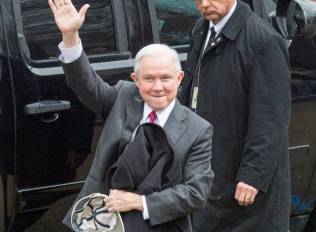
    At a Boston press conference about a federal sting operation that busted about two dozen people on immigration fraud, reporters went a bit off topic and asked U.S. Attorney General Jeff Sessions about individual states’ rights to create and enforce their own marijuana laws.

    Sessions was clear in his anti-marijuana stance, affirming that under his purview the Department of Justice will follow federal marijuana laws. “States have a right to set their own laws and will do so, and we will follow the federal law,” Sessions responded to the question.

    Earlier this year, Sessions wrote a memo that reversed a decision by the Obama-era Department of Justice to be more hands-off when it comes to states that have legalized marijuana. “The previous issuance of guidance undermines the rule of law and the ability of our local, state, tribal, and federal law enforcement partners to carry out this mission,” he wrote.

    The question at the Boston press conference was pertinent because two years ago, the state of Massachusetts legalized marijuana, but as of now still has not set up systems for its retail sale and purchase in the state. If Sessions goes after Massachusetts dispensaries, it would be disastrous for such a budding industry.

    “The American republic will not be better if there are marijuana sales on every street corner,” Sessions expanded on his answer.

    The sentiment was reflective of a statement the attorney general made during a 2016 Senate hearing: “Good people don’t smoke marijuana.”

    Despite the threats he’s made about marijuana, Massachusetts cannabis regulators are not worried. They’re confident even after they start retailing marijuana in their state, that the federal government will not intrude.

    Steve Hoffman, the chairperson of the Cannabis Control Commision, believes that a recent statement from one of Sessions’ federal attorneys, Andrew Lelling, seems to suggest that federal policy still resembles the previous hands-off policy.

    Federal focus around marijuana enforcement, according to Lelling, is focused on three things: making sure marijuana isn’t being passed to illegal markets, making sure it isn’t being distributed to minors, and cracking down on criminals seeking to transport marijuana across state lines.

    Hoffman is confident that the measures Massachusetts is putting in place will address these three priorities and thus the state will not draw Sessions’ ire.

    View the original article at thefix.com