Tag: marijuana legalization

  • Surgeon General: "This Ain't Your Mother's Marijuana"

    Surgeon General: "This Ain't Your Mother's Marijuana"

    “While the perceived harm of marijuana is decreasing, the scary truth is that the actual potential for harm is increasing,” Surgeon General Jerome Adams says.

    US Surgeon General Jerome Adams and Health Human Services Secretary Alex Azar issued a warning Thursday (Aug. 28) about the dangers of marijuana, particularly for young people and pregnant women.

    During the conference, Adams warned that new marijuana strains are more powerful, and thus more dangerous: “This ain’t your mother’s marijuana,” he said, according to ABC News

    The press conference was held to announce a new advisory and public outreach campaign to raise awareness about the risks of marijuana on brain health. Adams said that research shows that marijuana is particularly dangerous for developing brains. That includes the brains of fetuses, since cannabis use by a pregnant woman can affect her fetus, he said.

    Normalizing Marijuana

    At the event, Adams and Azar pushed back on the idea that marijuana is safe. Adams said that the “rapid normalization” of cannabis use is concerning, and that many users might be misinformed about the health risks of using pot.

    “While the perceived harm of marijuana is decreasing, the scary truth is that the actual potential for harm is increasing,” he said. “Not enough people known that today’s marijuana is far more potent than in days past. The higher the THC delivery, the higher the risk.”

    Azar pointed out that in addition to being harmful, marijuana is still fully illegal under federal law. 

    “State laws on marijuana has changed, but the science has not. And federal law has not,” he said.”

    It’s true that cannabis today is more potent than plants smoked in the past. According to the surgeon general, there was a three-fold increase in the potency of pot between 1995 and 2014. In addition, the proliferation of highly concentrated cannabis products, which are popular for vaping and in edibles, is concerning. 

    Concentrated Marijuana

    Using concentrated marijuana products — which about a quarter of teens admit doing — can increase risk for future drug use, a recent study found

    This is especially concerning because concentrated marijuana doesn’t share the same potent smell as other cannabis products, and it can be difficult for parents to identify. 

    Dr. Abigail Schlesinger, chief of the behavioral science division at UPMC’s Children’s Hospital of Pittsburgh, told NBC News that parents need to be aware of cannabis concentrates, and that they can have long-term effects for teens.

    “Parents need to know about the risks,” Schlesinger said. “This is not your grandparents’ cannabis. It’s more concentrated. And there’s a lot of reason to believe that in the adolescent years, it alters brain development.”

    View the original article at thefix.com

  • Inside Oregon's Massive Marijuana 'Surplus'

    Inside Oregon's Massive Marijuana 'Surplus'

    Just how much of Oregon’s alleged six year marijuana ‘surplus’ is usable product? 

    In January, Oregon officials reported that the state had more than six years’ worth of legal marijuana to satisfy demand. However, according to Vice, much of that “oversupply” is unusable product.

    The same agency that released the six-year stat, the Oregon Liquor Control Commission (OLCC), which regulates the marijuana industry, also admitted that not all of the extra weed would be adequate enough to sell on the legal market.

    “Almost certainly some amount of the existing inventory in the recreational system will never be sold,” the OLCC stated in its January legislative report. “It may become too stale to be sold or is of insufficient quality to compete in the current market environment. In fact, anecdotally some of it may already be waste that has not yet been disposed of.”

    To address the apparent surplus, Oregon legislators enacted legislation this year to limit the number of suppliers when there is a surplus and allow producers to sell cannabis out of state.

    Out With The Old

    But Vice cited accounts of “hundreds of pounds of weed rotting in trash bags,” bringing to light the many reasons that producers may hesitate to dispose of excess product that’s going bad. According to the OLCC, a quarter of the “usable marijuana” flower in the legal production system is from before the 2018 harvest.

    “How much of the official inventory is usually old product or marginal trim is a big question,” writes Vice’s Jon Walker. “Rules on disposal of extra weed, optimism about low quality product eventually having some value, and the raw emotional attachment many longtime growers have to their crop have created incentives to rarely—if ever—throw out flower.”

    A procurement manager at Hydra Distribution, Tim Garrison, explained to Vice that there’s a reason disposing of marijuana is a last priority—it is a “pain in the butt to waste out.”

    Regulations require the disposal of marijuana to be done in a very “specific manner,” and has to be done on camera.

    The result is “hundreds of pounds” of marijuana waste, “just sitting in big black bags” but still accounted for in the legal marijuana supply.

    View the original article at thefix.com

  • Hemp Confusion Forces Miami & Other Counties To Halt Minor Marijuana Arrests

    Hemp Confusion Forces Miami & Other Counties To Halt Minor Marijuana Arrests

    Police will be required to submit marijuana to state labs for testing in cases that would warrant felony charges.

    A new Florida law that legalized hemp has spurred police and prosecutors in Miami-Dade and other counties in the Sunshine State to halt arrests and cases for minor marijuana possession.

    The Miami-Dade State Attorney’s office announced the decision on August 9, 2019, and added that police will be required to submit marijuana to state labs for testing in cases that would warrant felony charges.

    The county’s new position echoes similar stances take throughout Florida, and as the Miami Herald noted, highlights the challenges faced by law enforcement and lawyers in a state where both hemp and medical marijuana are legal, but recreational marijuana use remains a prosecutable offense.

    Miami-Dade State Attorney Katherine Fernandez Rundle outlined the county’s new measures in a three-page memo sent to its police departments, which put a halt on marijuana prosecutions in Miami, as the city’s CBS TV affiliate, WFOR, noted in its coverage.

    Hemp VS Marijuana

    “Since hemp and cannabis both come from the same plant, they look, smell and feel the same,” wrote Rundle in her memo. “There is no way to visually or microscopically distinguish hemp from marijuana.”

    Rundle’s comments address the “odor plus” policy that some police departments employ as a go-ahead for officers to conduct probable cause searches on potential possession suspects. It also underscores another major hurdle for South Florida police: currently, none of the region’s police crime labs are equipped to test for THC, which will require law enforcement to submit cannabis samples to “another DEA-licensed facility for quantitative testing,” as Rundle wrote in the memo.

    Faced with the twin roadblocks, Rundle advised law enforcement agencies, “Since every marijuana case will now require an expert, and necessitate a significant expenditure by the State of Florida, barring exceptional circumstance on a particular case, we will not be prosecuting misdemeanor marijuana possession cases.”

    For many counties and cities in South Florida, this was already the case. As the Miami Herald noted, Miami-Dade and several other cities stopped aggressive prosecution of possession cases several years ago, and have instead implemented “civil citation” programs which levies a fine for minor possession charges.

    Even cases that have been spawned from arrests have been dropped in Miami-Dade if the defendant did not generate any additional charges for a period of at least 60 days.

    Additional counties and cities, including Seminole and Brevard counties and the city of Tallahassee, have adopted similar positions in regard to minor possession charges, and State Rep. Shevrin Jones (D-West Park) hopes to make that stance a statewide law.

    The Miami Herald detailed a proposal filed by his office on August 7 that would reduce penalties for possession charges involving 20 grams or less of cannabis and products that contain 600 mg or less of THC.

    View the original article at thefix.com

  • How Cannabis Dispensaries Impacted Opioid Death Rates

    How Cannabis Dispensaries Impacted Opioid Death Rates

    Access to marijuana dispensaries played a role in reducing opioid deaths by 21%, according to a new study.

    With the opioid crisis in America still a major concern, many have been in search of a solution. While cannabis becoming legal across the country is certainly not a cure-all, according to a report in Leafly, cannabis dispensaries have reportedly reduced opioid deaths by 21%.

    Economists at the University of Massachusetts and Colorado State University conducted a study on cannabis’ effect on the opioid crisis. As their report states, “Our principal finding is that recreational marijuana access significantly decreases opioid mortality, with the most pronounced effects for synthetic opioids. [This] stems primarily from access via dispensaries rather than legality per se.”

    Leafly cited another report in 2014 from JAMA, which claimed that in states with medical marijuana laws, there were 25% fewer opioid deaths than in states without medical marijuana laws.

    Studying the data, the current research showed that 47,600 people died from opioids in the U.S. in 2017. If dispensaries did indeed reduce the death rate, that means that close to 10,000 people were saved from opioid overdoses.

    “Our results have direct relevance for policy, as they indicate that recent expansions to marijuana access have significant co-benefits in the form of reduced opioid mortality,” researchers wrote. “States with legal access to marijuana were far less affected by the opioid mortality boom of the past decade than those without. Thus, our work provides important food for thought for state and federal authorities that continue to mull medical and/or recreational legalization of marijuana.”

    Lead author Nathan Chan thinks that people may be “dealing with pain through marijuana use, and therefore they’re less likely to take on addictive opioids.”

    In a previous report in Leafly, Philippe Lucas, a cannabis researcher in Canada, said, “Whether it’s medical use or recreational use, cannabis appears to be having an impact on the rates of opioid abuse. If physicians start recommending the use of medical cannabis prior to introducing patients to opioids, those patients that find cannabis to be a successful treatment for their chronic pain might never have to walk down the very tricky path of opioid use that all too often leads to abuse or overuse or overdose.”

    Not only is the opioid crisis a major concern in the U.S., but Lucas added that in Canada, “Opioid overdose is the most common cause of accidental death… Right now in Canada and in U.S. states with medical marijuana, physicians are encouraged to prescribe opioids first and if those don’t work, cannabis is considered as a third or fourth-line treatment option. We need to flip that around and make cannabis the second-line treatment option and move opioids to third or fourth option if cannabinoids are not successful.”

    View the original article at thefix.com

  • Meth 2.0: How Marijuana Legalization Set the Stage for a Newer, Stronger Methamphetamine

    Meth 2.0: How Marijuana Legalization Set the Stage for a Newer, Stronger Methamphetamine

    When people think of methamphetamine, they think of the old-fashioned meth lab and they’re not aware of the dangerous, highly addictive meth that we’re dealing with now.

    What’s known as methamphetamine, crystal meth, or meth has always been prevalent in America’s drug underworld, we just don’t hear about it as much in the mainstream media due to the opioid crisis being front and center on the nightly news. But in the 1990s, meth was public enemy number one. The rise of the Internet made recipes readily available for anyone who wanted to cook it up and reporters had a field day covering the resulting explosions in homes and mobile labs. Domestic production was especially prevalent in Missouri, which came to be known as the meth capital of the United States.

    Very Pure and Relatively Cheap

    But the meth scene that everyone had grown accustomed to slowly declined over the last 20 years, with explosions and arrests in Missouri dropping to almost none. At the same time, Mexican-based methamphetamine imports increased dramatically. Today, almost 90% of the methamphetamine in the United States comes from Mexican super labs and is primarily manufactured by the cartels. The biggest differences between domestic and foreign-made meth are the potency level, price point, and accessibility.

    “It’s a lot like Breaking Bad,” Tim Lohmar, the St. Charles County Prosecuting Attorney, tells The Fix. “And if you’re familiar with that show, you know that the purity of the methamphetamine and the ease of the mass production is what made it so addictive and relatively cheap. These Mexican labs are making a very pure methamphetamine. It’s almost night and day different than your old-fashioned basement meth lab sort of thing. They can mass produce the meth and distribute it at a reduced price, which consequently has led to a rise in local consumption.”

    William Callahan, Special Agent-in-Charge of the DEA St. Louis Division, says that according to the 2018 National Drug Threat Assessment, “Methamphetamine sampled through the DEA profiling program is almost 97% pure, while prices remain low and stable.” There are still some of the small shake-and-bake style labs across the state, but the vast majority of the methamphetamines coming into Missouri are from south of the border.

    Psychosis and Overdoses on the Rise

    The new improved drug contributed to almost 30 deaths last year, a jump from 7 the year before. Overdoses are on the rise.

    “It’s a lot stronger, so we’re seeing a lot more psychosis, but we’re also seeing it being tainted with fentanyl, which is leading to more deaths.” Brandon Costerison, project manager of the National Council on Alcoholism and Drug Abuse (NCADA) in St. Louis, tells The Fix. “They’re making speedballs, like people used to do with cocaine and heroin in the ‘80s.”

    Lohmar thinks that most of the overdoses, especially ones that result in death, occur when people combine meth with something else like fentanyl or heroin. “A lot of the local suppliers will try to break down the methamphetamine, the pure methamphetamine, and put a filler in there,” he says. “And the person who’s ingesting it doesn’t even know what they’re ingesting, and that’s how we get a lot of these overdose situations.”

    With opioids killing people at an unprecedented rate, meth has been viewed as less risky and lower priority… Until recently.

    “Methamphetamine takes years, typically, to kill someone, whereas opioids can kill you the first time.” Costerison says. “When we’re looking at death tolls, opioids by far are leading, but we do see a lot of people dying either directly from methamphetamines or from complications associated with methamphetamine use.”

    Lohmar says that while we still have an opioid crisis, he thinks “it’s starting to plateau a little bit. I don’t know that the overdoses are decreasing, but I don’t think they’re increasing at the same rate they have been over the last handful of years. Seven, eight years ago, very few people knew about the opioid crisis, and nowadays everybody knows about it. Meanwhile, I think, when people think of methamphetamine, they think of the old-fashioned meth lab and they’re not aware of the dangerous, highly addictive meth that we’re dealing with now.”

    Despite the opioid epidemic taking center stage, “Meth has never flown under the radar at DEA.” Callahan tells The Fix. “Our agents work relentlessly to identify those involved in meth distribution domestically and internationally. Meth may not kill as many people; however continuous meth use does result in significant health issues.”

    Obstacles in Treating Methamphetamine Addiction

    Adults are using more meth than young people. “Folks tend to get into [meth] after the age of 18, though some do start using earlier,” Costerison says. “The biggest struggle with methamphetamine is that there’s not really any medications that help with the treatment. With opioids, we have methadone, Suboxone, Vivitrol. But when it comes to treating methamphetamine addiction there’s really no medication to help with the withdrawals and cravings.” The lack of medication-assisted treatment is a major obstacle for Missouri health officials who try to get people into long-term recovery.

    “There’s a lot of different things that we see when somebody starts withdrawing.” Costerison says. “At first, there’s the itchiness, irritability, and cravings. [Then] there’s depression, hallucinations, paranoia, and anxiety. After that [initial] crash, the cravings really kick up. But in the third stage the cravings start to subside. That can last 30 weeks or longer, depending on how much somebody’s been using.”

    The meth market has also been impacted by the legalization of marijuana, which has meant less income for the cartels. “The cartels were the major suppliers and producers of marijuana, historically, over the last 30-40 years,” Lohmar says. “And now that a lot of states have legalized marijuana, whether it’s recreational or medicinal, that’s cut into their market. That’s when they turned to heroin first, and now they’re turning to crystal methamphetamine. They’re always trying to stay one step ahead of the game.”

    The cartels can get the precursor ingredients for meth easily in Mexico and set up big super labs, allowing them to make a very high-potency, pure methamphetamine à la Walter White. With meth flooding Missouri, local law enforcement has ramped up their efforts to stop the flow. But since the distributors typically reside out of state, a lot of local efforts to climb the food chain end up turning into federal investigations.

    “Identifying meth suppliers has always been a top priority for the Drug Enforcement Administration.” Callahan tells The Fix. “We work closely with local and state law enforcement to identify violators and interdict drugs before they hit the street for retail sales. [We conduct] a thorough investigation aimed at dismantling the entire organization, including everyone from the kingpin to the money launderers, transporters, and dealers. The DEA also investigates the diversion of chemicals intended for the use of producing meth.”

    At the state level, “the goal is to try and find a small-time user and get them to supply information to move up the food chain and get the big players in the distribution networks,” Lohmar says. “We’ve got our undercover drug task force. We’ve got our highway interdiction team to intercept the traffickers coming through the state via the interstate highways. We’ve got a really good working relationship not just with the DEA, but with the U.S. Attorney’s office. There’s been a much bigger emphasis on meth, just because there’s a lot more out there.”

    Treating Addiction as a Health Issue, Not a Crime

    But as the drug war has proved unwinnable, authorities are starting to look at the problems here in Missouri as more of a health issue instead of a criminal one, at least in the lower echelons of the drug trade. As methamphetamine has moved out of the trailer parks and into the suburbs and inner cities, there has been a substantial increase of meth users entering treatment facilities. Lohmar says that locally, most of St. Charles County’s attention is spent dealing with the consumers rather than the distributors.

    “Our position now, really, across the board, but especially with somebody who’s an addict, is that we want to give them every opportunity to stay out of jail,” Lohmar says. “And sometimes they don’t take advantage of those opportunities, but the ones who do, I think, those are some good success stories. I think that’s a positive breakthrough.”

    Lohman says that the drug war era of harsh mandatory sentences is being replaced with a more humane view of drug addiction.

    “I’ve been in office for seven years and ever since I’ve been here and probably even a little bit before that, we’re looking at it more as an addiction issue as opposed to a criminal problem. Now, obviously, it’s a crime, but we also know that a lot of these folks who are addicted wouldn’t be committing crimes had it not been for their addictions.

    “We’re trying to use things like the treatment courts as alternative sentences, or alternative programs,” he says. “We’re giving people the chance to complete the program, and if they do, in some cases their charges are dismissed, or in other cases they don’t spend a day in jail, or things like that. So, we try to incentivize the treatments to give them a chance to improve their lives, and it’s been pretty successful.”

    View the original article at thefix.com

  • Kamala Harris Praises Illinois For Legalizing Marijuana

    Kamala Harris Praises Illinois For Legalizing Marijuana

    This is not the first time that Senator Harris (D-CA) has spoken out in favor of legalized cannabis.

    Democratic presidential hopeful, Senator Kamala Harris, took to Twitter this week to praise Illinois for legalizing marijuana and moving to expunge the records of people with marijuana-related criminal records. 

    “Thankful states like Illinois are stepping up to correct the mistakes of our past. It’s time to do the same at the federal level,” Harris wrote on Twitter

    Illinois Governor J.B. Pritzker signed legislation this week that makes recreational cannabis legal for adults who are 21 or over. At the same time, the legislation will automatically expunge records for people who were caught with 30 grams of cannabis or less, while others with more serious offenses can petition the court for expungement. 

    Harris Talks Cannabis Reform In Her Book

    This is not the first time that Harris (D-CA) has spoken out in favor of legalized cannabis. In January she explicitly called for cannabis law reform in her book The Truths We Hold: An American Journey

    “Something else it’s past time we get done is dismantling the failed war on drugs—starting with legalizing marijuana,” she wrote. “We need to legalize marijuana and regulate it, and we need to expunge nonviolent marijuana-related offenses from the records of millions of people who have been arrested and incarcerated so they can get on with their lives.”

    More broadly, she wrote about drugs: “”We also need to stop treating drug addiction like a public safety crisis instead of what it is: a public health crisis. When someone is suffering from addiction, their situation is made worse, not better, by involvement in the criminal justice system.”

    Harris formerly worked as a prosecutor—as San Francisco’s district attorney and then attorney general of California—and has said that race undoubtedly plays a role in who is tried for marijuana crimes. 

    “The fact is marijuana laws are not applied and enforced the same way for all people. African-Americans use marijuana at roughly the same rate as whites, but are approximately four times more likely to be arrested for possession. That’s just not fair,” she has said in the past. 

    In addition, Harris has admitted that she smoked pot in the past.  

    “Look I joke about it, I have joked about it. Half my family is from Jamaica, are you kidding me?” she said in February. “I have had concerns, which I think—first of all, let me just make this statement very clear, I believe we need to legalize marijuana. Now, that being said… we need to research, which is one of the reasons we need to legalize it. We need to move it on the schedule so that we can research the impact of weed on a developing brain. You know, that part of the brain that develops judgment, actually begins its growth at age 18 through age 24.”

    View the original article at thefix.com
  • Illegal Marijuana Growers Are Damaging The Environment

    Illegal Marijuana Growers Are Damaging The Environment

    The use of toxic pesticides on public land has increased dramatically over the past several years—exposing surrounding wildlife and people to their harmful effects.

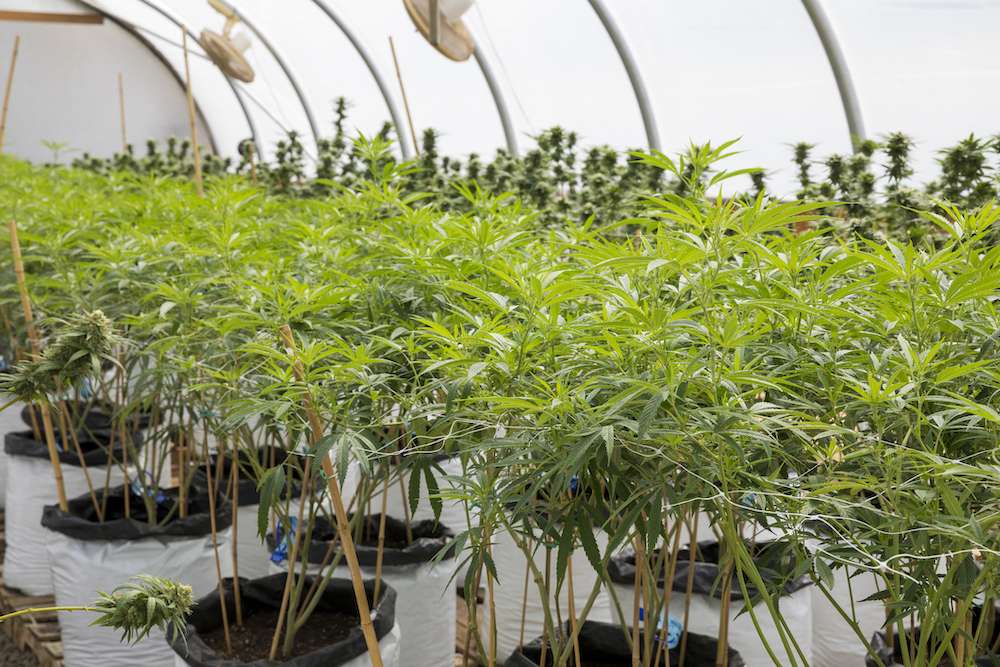
    Illegal marijuana growers are inflicting a significant amount of damage on the environment. So far, 160 toxic illegal grow sites have been reclaimed (cleaned) in California. But 830 more are on a waiting list.

    Part of the reason why this process is so taxing is the health hazard posed to authorities and cleanup crews who encounter these sites. According to a recent feature in Playboy, the use of toxic pesticides has “increased dramatically over the past several years”—exposing surrounding wildlife and people to their harmful effects.

    Federal officials in California have shifted their focus from regulating the legal marijuana industry to cracking down on these toxic illegal grow sites established on public land, according to U.S. Attorney McGregor Scott of the Eastern District of California. “This isn’t about the marijuana, it’s about the damage that’s being done,” said Scott. “What is happening here is illegal under anybody’s law.”

    Hurting Wildlife

    The threat to the environment, wildlife and public health is concerning. One pesticide of particular concern is carbofuran, said to be so powerful that a quarter-teaspoon can kill a 300-pound bear, according to researcher Mourad Gabriel.

    Aside from the chemical contamination of the soil, water, plants and wildlife, illegal growers leave behind thousands of tons of trash that require a helicopter to be airlifted away. Water theft and diversion and land erosion from irrigation are also hurting the natural ecosystem.

    Playboy met with Gabriel, fellow Integral Ecology Research Center (IERC) researcher Greta Wengert, and law enforcement officials as they examined one illegal grow site near Plummer Peak in Northern California.

    In 2012, carbofuran was detected in 15% of illegal grow sites visited by the IERC. In 2018, that number reached almost 85%. That year, 89% of illegal grow sites were confirmed or strongly suspected to be contaminated with “highly deadly toxic chemicals,” according to the IERC. According to the Environmental Protection Agency, there is no amount of carbofuran that is safe for people.

    Illegal marijuana growers are using the highly toxic chemical, and ones like it, to not only deter wildlife from the plants, but authorities as well. A suspect arrested during the 2018 growing season in an illegal grow site in Trinity County “strongly implied that illicit growers are increasing carbofuran use in part to deter enforcement actions, and some have adopted the practice of leaving carbofuran containers and other signs of use in plain view so teams will leave the sites without eradicating the plants,” according to a safety notice issued last September.

    This speaks to the significant hazard the pesticide poses to human health. Carbofuran and other toxic pesticide exposure has landed environmental and law enforcement officials in the hospital.

    Side Effects From Toxic Pesticides

    Studies on the effects of smoking marijuana tainted by toxic pesticides is lacking, as Planet Natural noted. And because marijuana is still illegal at the federal level, pesticide use on marijuana is not regulated by the EPA.

    Symptoms of exposure to these pesticides include “nausea, vomiting, diarrhea, labored breathing, cyanosis, convulsions, and unconsciousness” according to one public health alert.

    Illegal marijuana grows exist outside of California as well. The presence of illegal drug traffickers has been found in 72 national forests in 21 states. It’s a “major national problem,” said U.S. Forest Service Chief Forester Vicki Christiansen.

    View the original article at thefix.com

  • Colorado Still Struggling With Marijuana Field Sobriety Tests

    Colorado Still Struggling With Marijuana Field Sobriety Tests

    Traffic fatalities involving drivers with marijuana in their system have risen as proper impairment testing continues to be an issue in the state.

    As Colorado marks the fifth anniversary of legalizing recreational marijuana, the problem of impaired driving—and how to properly test for impairment—remains as elusive as it was in 2014.

    As an article in the Routt County daily newspaper Steamboat Pilot & Today noted, according to state law an individual is under the influence if more than five nanograms of THC is present in their bloodstream. But how to properly and legally test drivers remains out of the reach of police in the Centennial State, and users have expressed concern that if a method is discovered, they could test over the limit even if they are not legally impaired.

    As a 2016-2017 report from the Substance Abuse and Mental Health Services Administration (SAMHSA) found, twice as many Coloradans smoke marijuana than residents of other states, and the number of adults in that demographic has risen since 2014.

    Traffic fatalities involving drivers with marijuana in their system have also risen from 75 in 2014 to 139 in 2017. Statistics like these fuel the call for impairment testing, but the facts behind the latter data also underscore the challenges inherent to such a test.

    The problem arises from the fact that the number of Colorado drivers involved in a traffic fatality who tested above the legal limit for THC has actually dropped, from 52 in 2016 to 35 the following year.

    As Reason noted, this may be due to the fact that THC remains detectable in a user’s system for up to 30 days, and drivers who test positive at the time of a crash may not, in fact, be legally impaired.

    THC Lingers

    As the Pilot & Today article stated, police are aware of this conflict. While field sobriety tests for alcohol impairment can be accurate at a rate between 91 and 94%, detecting marijuana impairment depends largely on blood tests.

    “There is no go-to tool that is considered reliable across the board to determine if someone is impaired by marijuana,” said former assistant district attorney of Routt County Matt Karzen in the article, who noted that most cases stem from a plea deal in which drivers plead guilty to driving while impaired, a traffic infraction which usually results in a fine and revoked driving privileges for 90 days—far less than a DUI conviction.

    Marijuana advocates and law enforcement alike see this information as proof positive for more accurate means of measuring marijuana impairment, but efforts by lawmakers in Colorado have come up short; a bill proposed in 2019 would have empowered officers with the full right to determine impairment through a combination of field sobriety tests—observation and coordination tests—and blood testing. The bill was met with opposition and currently remains postponed until a February 2020 review.

    5-Nanogram Limit

    Legal representatives like Karzen and police officers have been encouraged to pursue impairment cases in which the individual is both clearly impaired—as the Pilot & Today noted, those exhibiting memory loss, poor driving or if marijuana smoke is evident. These signs, along with a blood test above the legal limit, are the best possible indicators at the moment for driving impairment.

    “I’m very uncomfortable proceeding with a criminal prosecution on impaired driving based only on the five-nanogram limit,” said Karzen.

    View the original article at thefix.com

  • Teen Marijuana Use Drops Amid Legalization

    Teen Marijuana Use Drops Amid Legalization

    Teen marijuana use is down 8% in states where recreational marijuana is legal. 

    Legalizing recreational cannabis has lead to a decrease in teen use in many states, according to a study published this week that contradicts previous research of how legalization affects teen pot use. 

    The study, published in the journal JAMA Pediatrics, found that recreational marijuana laws were associated with an 8% decrease in teen pot use, and a 9% decrease in frequent use. 

    Recreational Use

    “Because our study is based on more policy variation than prior work, we view our estimates as the most credible to date in the literature,” study author Mark Anderson told CNN. He emphasized that the study focused on recreational legalization, not legalization for medical use. 

    “Just to be clear we found no effect on teen use following legalization for medical purposes, but evidence of a possible reduction in use following legalization for recreational purposes,” he said. 

    The researchers looked at data from the U.S. Centers for Disease Control and Prevention’s annual national Youth Risk Behavior Surveys, which polled 1.4 million high schoolers between 1993 and 2017.

    Anderson would like to see the data reviewed again in a few years in order to reflect more widespread recreational legalization efforts. 

    “Because many recreational marijuana laws have been passed so recently, we do observe limited post-treatment data for some of these states,” he said. “In a few years, it would make sense to update our estimates as more data become available.”

    Stanford University professor of pediatrics Bonnie Halpern-Felsher said that the study needs an in-depth look, since it found different results from previous research. 

    “I think the big question is why,” she said. “Why are they seeing in this national dataset decreases—pretty significant decreases—when other studies are finding no difference?”

    Age Restrictions

    One possible explanation that researchers float in the paper is that teens are not able to buy legal cannabis because of the age restriction (only those 21 and over can access it), and legalization has lead to fewer opportunities to buy on the black market. Halpern-Felsher agreed that this is possible. 

    “Maybe now because of having legalization, you don’t have the street sales anymore,” she said. “So dispensaries, we would hope, would be better at carding and checking for age verification.”

    Whatever the reason for the decrease, she emphasized that education is key in maintaining teens’ health amid legalization. 

    “The other question is, are youth getting the message about the fact that using marijuana during adolescence is more harmful because of their brain development?” she said. “Given the legalization, we need more education around marijuana or cannabis use for youth and we don’t really have a lot of education.”

    View the original article at thefix.com

  • California's #Weedwise Campaign Aims To Combat Illegal Pot

    California's #Weedwise Campaign Aims To Combat Illegal Pot

    The public information campaign will highlight the potential health risks of consuming illegal marijuana

    In an effort to stem California’s flourishing black market marijuana trade, the state’s cannabis regulatory bureau has launched a digital public information campaign called “Get #weedwise,” which will encourage consumers to buy marijuana products from licensed businesses.

    The three-year, $1.7 million campaign, which kicked off June 21, is also intended as a warning to unlicensed businesses and growers, which will be targeted for shutdown as part of a larger campaign that is also focused on expediting business licenses. 

    The #weedwise campaign will be disseminated via ads on mobile phones and social media sites as well as billboards; Lori Ajax, chief of the state’s Bureau of Cannabis Control, which is overseeing the ads, noted that its focus will “directly impact consumer safety by clarifying that only cannabis purchased from licensed retailers has met the safety’s standards.”

    Digital ads will detail health risks that can be incurred by purchasing illegal cannabis, including exposure to chemicals, mold, metals and even fecal matter.

    Consumers who wish to confirm that their retailers of choice are licensed are directed to the state’s online database, where they can enter information about businesses by address or license number. 

    A confluence of high taxes and buyer loyalty to black market sources has helped to undercut California’s attempt to earn a revenue windfall from cannabis since Proposition 64 legalized it for recreational use in 2016.

    Legal business owners have also complained to state officials about these issues, as well as a perceived lack of action against illegal businesses, which are estimated to number more than 1,000 in Los Angeles alone. However, the ad campaign has been largely met with a positive response.

    “It’s overdue, said Virgil Grant, a dispensary owner and co-founder of California Minority Alliance, a cannabis industry group. “If consumers turn against unlicensed shops, then they can’t exist.”

    Bureau spokesperson Alex Traverso told KOVR, the CBS affiliate in Sacramento, that the Get #weedwise campaign is one part of a larger, three-pronged effort to curb illegal sales that will include the closure of illegal businesses and growers, and expediting licenses to business.

    “When you have a government agency saying here’s how you know what’s legal and illegal, we feel like that’s a linchpin for success,” said Jerred Kiloh, president of the United Cannabis Business Alliance in Los Angeles. 

    View the original article at thefix.com