Tag: marijuana legalization

  • Huge Cannabis Industry Deal Suggests Federal Legalization Could Be Close

    Huge Cannabis Industry Deal Suggests Federal Legalization Could Be Close

    Rumors of federal cannabis legalization have been brewing ever since key anti-cannabis leaders have left the White House.

    A multi-billion dollar deal between two big cannabis companies could signal that the end of prohibition is near, according to an article in Forbes.

    Canopy Growth, the biggest cannabis company in the world, recently signed a $3.4 billion agreement to acquire the well-known U.S. medical marijuana firm Acreage Holdings.

    However, this deal will not go into effect until after cannabis becomes federally legal in the country.

    Industry experts are now speculating that such a big deal between cannabis companies that are powerful enough to have lobbyists in Washington, D.C. could mean that there is a yet-unannounced plan to legalize the drug soon—perhaps even within the year.

    “Our right to acquire Acreage secures our entrance strategy into the United States as soon as a federally-permissible pathway exists,” reads the Canopy Growth press release on the merger.

    Mike Adams of Forbes and Cannabis Now notes that the company that makes Corona beer owns 37% of Canopy Growth’s equity and has been working with them to make THC-infused beverages in Canada. It looks like “Big Alcohol is becoming Big Cannabis,” Adams writes.

    Rumors of imminent federal cannabis legalization have been brewing ever since shakeups in the White House have removed some key anti-cannabis leaders and replaced them with individuals with a more accepting view on the drug, which remains in the federal Schedule I classification alongside heroin.

    In November 2018, former House Rules Committee chairman Pete Sessions lost his bid for re-election. Sessions was known for blocking any pro-cannabis legislation that came up, which he could do in his position as chairman. With him gone, as well as former U.S. Attorney General Jeff Sessions, there is now a clear path for legalization.

    “This is the first Congress in history where, going into it, it seems that broad marijuana reforms are actually achievable,” said Tom Angell of Marijuana Moment early this year.

    At the same time, in February the World Health Organization (WHO) called on the UN to reclassify cannabis to recognize the substance’s medical applications. Like in the U.S., the UN still has cannabis under its most tightly regulated classification and considers it to be “particularly dangerous.” WHO argued in their report that the current classification has fallen behind modern research.

    “The World Health Organization has proposed rescheduling cannabis within international law to take account of the growing evidence for medical applications of the drug, reversing its position held for the past 60 years that cannabis should not be used in legitimate medical practice,” the report reads.


    View the original article at thefix.com

  • Netflix Doc "Grass Is Greener" Explores How Marijuana Shaped America

    Netflix Doc "Grass Is Greener" Explores How Marijuana Shaped America

    The new Netflix documentary spotlights marijuana’s role in shaping culture, music and politics in the U.S. 

    Marijuana—cannabis, weed, pot, bud, reefer—has played a significant role in shaping American society since the early 1900s.

    Most of that has to do with how the plant has been demonized from generation to generation, as the government broadcasted anti-marijuana propaganda to the public despite the evidence that marijuana was and is not the menace to society it has been claimed to be.

    A new Netflix documentary, Grass Is Greener, traces back the history of American drug policy to illustrate how we as a society came to believe that this relatively benign, naturally occurring substance could wreak havoc on people’s lives, how it shaped the evolution of music and culture in the United States, and how it became a symbol of resistance to the powers that be.

    The documentary, directed and narrated by hip hop pioneer and “long-time cannabis connoisseur and advocate” Fab 5 Freddy (Fred Brathwaite), became available for streaming on Netflix, fittingly, over the weekend on 4/20. 

    “How is it that a mild intoxicant, a plant that grows naturally all over the world, could be so feared by the American government and become worthy of a war?” Brathwaite asks.

    The short answer: Harry Anslinger. As the first head of the Bureau of Narcotics in the 1930s, Anslinger launched a racist anti-marijuana crusade sparking fear and spreading false information to the public. He played a major role in demonizing the plant. It was his roundabout way of vilifying black jazz musicians like Louis Armstrong (“one of our glorious, early potheads”) and Mexican people.

    Back then, the fear was that marijuana, which was infused in the jazz scene, was bringing white and black people together, says Baz Dreisinger of John Jay College of Criminal Justice in the documentary. As jazz music gained steam around the world, so did the U.S. government’s anti-marijuana fervor.

    From here, marijuana further influenced music and culture by paving the way for the Beat Generation and the hippie movement.

    The documentary highlights two instances where the state commissioned a report to study the effects of marijuana—and in both instances, the conclusion was the same.

    “The occasional use of marijuana does not do any physical harm and may not do any psychological harm,” the Shafer Commission stated during the 1970s. They were appointed by former President Richard Nixon—the man who declared drugs Public Enemy Number 1 and declared the “War on Drugs” as we know it—to study marijuana. Nixon was expecting the commission’s findings to support his anti-weed stance, but they found the opposite.

    “There has been previous misinformation, false statements, and for that reason, we’ve attempted to demythologize the drug,” the commission stated. “Unfortunately, because marijuana has become politicized, the realities have become blurred.”

    Years earlier, a 1944 report commissioned by New York City Mayor Fiorello La Guardia stated a similar conclusion. However, the laws did not reflect the report’s findings. Lawmakers “chose propaganda, chose racism” instead, said Kassandra Frederique, New York State Director of the Drug Policy Alliance.

    There is so much more that is covered in Grass Is Greener—from the legendary drug dealers of jazz and hip hop, to the damning testimony of Nixon administration official John Ehrlichman who revealed that the administration lied about drugs to vilify people of color and anti-war protestors.

    Whether you partake or not, it’s incredible to witness the enormous role that weed has played in shaping American history. 

    View the original article at thefix.com

  • Denver Votes To Allow Social Marijuana Use

    Denver Votes To Allow Social Marijuana Use

    Proponents of the measure say that it will cut down on public marijuana use and exposure to kids.

    The city of Denver, which was a leader in the recreational marijuana legalization movement, is moving forward with plans to make it easier for people to open businesses that allow social consumption of marijuana

    Councilmember Kendra Black introduced a measure that would relax the rules dictating how far businesses that allow marijuana consumption must be from recreational centers, childcare facilities and other protected establishments. The city council passed the measure by a 9-2 vote on Monday (April 15). The measure will open an additional 2.2 square miles of space for cannabis businesses, the city said. 

    “There are many people who we have heard from who want to open a business but cannot find a location,” Black told The Denver Post. Although the city passed a law in 2016 allowing social marijuana businesses, like cannabis cafes, there are only two in town, largely because of the strict regulations. 

    The law currently requires businesses to be 1,000 feet from schools, a stipulation that will remain. However, the city council measure will allow social-use businesses to operate closer to other community and child-focused facilities as long as they are more than 500 feet away. 

    Proponents of the measure said that it will cut down on public marijuana use, which is illegal, and reduce the frequency of cannabis being used in front of kids. 

    Stacy Lynn, who advocates for access to medical cannabis for kids, said that the measure is important for protecting young people. “If they have nowhere to consume, they will do it in front of our children,” she said. “How do you get it off the street? You put it in a closed, secure building.”

    However, opponents said that the city shouldn’t be strengthening the cannabis industry. 

    Luke Niforatos, who leads a group opposed to the commercialization of cannabis, said, “I don’t think it’s the job of any member of an elected government to make it easier for a drug industry to make more money, to make it easier for people to use drugs.” 

    Others, including Councilwoman Robin Kniech, said that the city has spent far too much time tinkering with cannabis regulations. 

    She said, “There is no evidence whatsoever that kids are at risk from an activity happening in a building they cannot see at 1,000 feet, 500 feet or next door. We have so many huge challenges facing out city, and the time we have spent on this… frankly offends me.”

    View the original article at thefix.com

  • New Jersey Governor Issues Ultimatum Over Recreational Pot

    New Jersey Governor Issues Ultimatum Over Recreational Pot

    Governor Phil Murphy is giving lawmakers until May to approve recreational marijuana…or else.

    After a failed effort to get recreational marijuana passed during his first 100 days in office, New Jersey Governor Phil Murphy told lawmakers this week that they have until May to approve recreational marijuana, or he will expand the state’s medical marijuana program by executive order. 

    “We’re not going to wait around a lot. I’m prepared to hold off for a short amount of time, but we’re holding back enormous demand for more access” Murphy said, according to the Asbury Park Press. “I’m still confident we can get it done legislatively and I’m prepared and certainly open-minded and quite supportive for the Legislature to go back at it and find those last couple of votes we didn’t quite get. But that can’t be an unending calendar.”

    Murphy, a Democrat, has been a vocal advocate for marijuana reform in the state. However, in March a vote to legalize marijuana in New Jersey was cancelled because lawmakers could not gather enough votes to ensure that the measure would pass. 

    “Certainly, I’m disappointed, but we are not defeated,” Murphy told The New York Times then. “Justice may be delayed, but justice will not be denied.”

    Now, votes on marijuana legalization are scheduled for the end of May in the state Senate and Assembly. 

    “I think it’s possible we can get this done in May,” state Sen. Nick Scutari, a Democrat in favor of legalization said. “But we can’t pass it unless we have the votes.”

    Bill Caruso, who is a leader in calling for marijuana reform in the state and a board member for New Jersey United for Marijuana Reform, said that postponing the vote was a smart choice. 

    He said, ”If they had another day, they would have been there. That’s how close it was. But I think a wise decision was made to hold off. There was such a short time between some very good and very substantive changes to this bill that confused a lot of folks. So they made a wise decision to stop trying to push it through.”

    Caruso said that it’s important that marijuana is legalized through a legislative vote, because that will ensure that the bill’s social justice components are passed. A public referendum would simply allow voters to select yes or no, essentially starting over on the legislative process of drafting the law.  

    He said, ”When you vote on this legislatively, you get to telegraph everything you’re going to do in the bill. If the Legislature is just given a blank check by the voters, people would be motivated for different reasons. We have the luxury of making this very difficult decision and looking at it in a global way. There is a need to get this right.”

    View the original article at thefix.com

  • Black Market Cannabis Thrives In California, Despite Legal Options

    Black Market Cannabis Thrives In California, Despite Legal Options

    Some customers would rather give their business to the black market to avoid the highly taxed, legal option. 

    A combination of high taxes, buyer loyalty and legal red tape has allowed black market sales of marijuana in California to flourish, despite its legality for both medical and recreational use.

    That’s the opinion of High Times, which detailed the conundrum faced by buyers and sellers in the Golden State: the 15% tax imposed on marijuana from licensed state dispensaries is too steep for some consumers, who turn to street dealers despite the threat of legal repercussion. 

    Complicating matters are a lack of manpower and resources to fight black market sales and the relative complexity of licensing for prospective cannabis dispensaries. Stuck in the middle of this push-and-pull are consumers, especially medicinal marijuana users, who don’t want to turn to street sales, but can’t afford California’s tax rates.

    To underscore the choices faced by consumers, High Times cites 2016 figures from Statista, which list the street value of an ounce of marijuana at $218 dollars, while the same amount from a legal dispensary costs $299. For Jake Heraty, a college student at San Francisco with serious health issues, that price differential determines whether or not he’ll eat dinner on a given day.

    “I’d prefer to go to a store and pick out just what I want,” he told High Times. “But when you have to pay an extra 15% in taxes, there’s really no questions. I just can’t afford to throw down 20 extra dollars so the state can get their share of the cannabis market.”

    High Times also spoke to “Marco,” a Bay Area dealer who illustrated why trust is also a factor in consumers choosing black market buys over dispensaries. An abundance of new growers and distributors without the years of experience earned by those in the illicit trade has resulted in what he called “B to C grade product floating around.” That undercuts return customers and trust, which according to Marco, is key to his transactions.

    “People don’t often consider family and relations that’s been built through the years between seller and buyer,” he explained. “The legal market just doesn’t have that yet.”

    And if those new industry participants manage to get their product to a legal market, they still face a host of regulations from both state and federal agencies that challenge the basic operations of many new businesses.

    As High Times noted, regulations established in 2018 required new labels for many cannabis products, which effectively forced dispensary owners to remove salable goods from their shelves. 

    The Times also quoted criminal defense attorney Marc Wasserman, one-half of Pot Brothers at Law, which provides representation to California marijuana businesses.

    According to Wasserman, a lack of tax deductions has hindered the ability of legal dispensaries to move into black market business; write-offs for expenses allowed to most businesses are prohibited for cannabis companies. “Cannabis businesses have to deal with form 280-E of the IRS,” he said. “When you fill out this form, you’re saying, ‘We’re dealing an illegal Schedule 1 drug, but the government still wants its cut.’ Yet, they don’t allow you to take typical write-offs.” 

    This confluence of restriction, taxation and bureaucracy is what has sent California pot consumers back to dealers like Marco—a situation that isn’t preferred by individuals like Jake Heraty.

    “I’ve seen the stores, and they’re much more attractive than a trap house,” he told High Times. “If I could afford it, I’d be in those shops. It’s unfortunate California’s government is more concerned about getting their share of the cut rather than providing their residents with an affordable service.”

    View the original article at thefix.com

  • Woman Accused Of Running Multimillion-Dollar Black Market Pot Operation

    Woman Accused Of Running Multimillion-Dollar Black Market Pot Operation

    The Massachusetts resident was charged with conspiring to distribute more than 100 kilograms of marijuana.

    Recreational marijuana may be legal in Massachusetts, but black market operations will not be tolerated in the state, judging by the experience of one woman who is now facing federal drug-trafficking charges for allegedly operating a black market pot service. 

    Milton resident Deana Martin was charged with conspiring to distribute more than 100 kilograms of marijuana, according to a press release by the U.S. State Attorney General’s Office. Martin allegedly operated a black market business between 2015 and 2018 that had about 25 employees and grossed more than $14 million from 2016 to 2018. 

    The company, Northern Herb, claimed to be a medical marijuana company, but did not check that clients had medical marijuana licenses. It was not clear whether Northern Herb was a licensed medical marijuana provider in the state. The company operated online, selling marijuana, pre-rolled joints and marijuana-infused edibles that were delivered to clients. 

    In addition to operating outside the medical marijuana field, the company got into trouble for leaving packages unattended at homes and in apartment hallways. This would allow the drugs to potentially be picked up by someone other than the person who had ordered them. 

    Martin apparently planned to incentivize her employees for selling a certain amount of marijuana each month. 

    “One such incentivized tier, for instance, would be for selling more than 10 pounds of marijuana per month,” the Attorney General’s Office said. 

    Despite the fact that cannabis became legal in Massachusetts in 2017, Martin was not interested in joining the legal market. In Massachusetts, marijuana is taxed at 17% and local governments can add an additional tax on top of that. In an email discussing tax rates for legal cannabis businesses, Martin wrote, “Zero taxes is still better.”

    Although she didn’t file taxes for the businesses, Martin claimed an income of $80,000 a month during the time that she was operating Northern Herb. She used the money to pay down her mortgage, which was about $300,000, and to purchase a Porsche, court documents said. 

    She did not pay any taxes for the business, or provide employees with proper tax documentation, the Attorney General’s Office said. In fact, she laundered the money that came through the business and hid it in accounts that were not in her name, the Attorney General’s Office said. 

    If Martin is convicted of the federal charges, she faces a mandatory minimum sentence of five years, and up to 40 years in prison. She could also be fined up to $5 million. 

    View the original article at thefix.com

  • NIDA Director Nora Volkow Talks Marijuana Research, Kratom

    NIDA Director Nora Volkow Talks Marijuana Research, Kratom

    Volkow testified before Congress about the difficulties of researching Schedule I drugs like marijuana.  

    Nora Volkow, director of the National Institute on Drug Abuse (NIDA), said during congressional testimony this week that designating a drug with Schedule I status can inhibit much-needed research. 

    “Indeed, the moment that a drug gets a Schedule I, which is done in order to protect the public so that they don’t get exposed to it, it makes research much harder,” Nora Volkow said, according to Marijuana Moment. “This is because [researchers] actually have to through a registration process that is actually lengthy and cumbersome.”

    Schedule I status is reserved for drugs that have no accepted medical use and are highly addictive. It includes heroin, but also marijuana. Other dangerous drugs, like cocaine and methamphetamine, are placed in the less restrictive Schedule 2 status.

    Many people would like to see marijuana reclassified, or unclassified all together. 

    Although marijuana is accepted for medical use in the majority of the country, it is “very difficult” for researchers to study the drug, because of its Schedule I status. Even in states where cannabis is legal for medical or recreational purposes, researchers and institutions can risk losing their federal funding if they study it without going through the federal process.

    This leaves many questions about the safety of products from marijuana to CBD, Volkow said. 

    The federal research process for marijuana includes lengthy delays because the Drug Enforcement Administration (DEA) limits the number of permits allowed for studying marijuana, and the amount of cannabis that can be grown for research purposes. Despite promising to issue more permits, the DEA has not yet significantly increased the ability of researchers to study marijuana

    Volkow also spoke about whether the herb kratom should receive Schedule I status. She said that doing so would “make it very difficult for our researchers to get ahold of the pharmacological compound itself.”

    Rep. Mark Pocan (D-WI) suggested that the benefits of scheduling kratom (like restricting public use) might be outweighed by the negative consequence of limiting research.

    “There seems to be—all the problems we’re trying to untangle right now around cannabis, marijuana specifically, because of Schedule I, I’d hate to see us put another drug there and then have to try to work backwards,” he said. “If we’re not there already, it allows you to continue to do the research.”

    NIDA, the DEA and the FDA are all working on a process to streamline drug research, looking for a “path that will allow researchers to work with Schedule I drugs in a safe way, but without actually expediting that process,” according to Volkow.

    View the original article at thefix.com

  • Michigan Grapples With Marijuana Licensing

    Michigan Grapples With Marijuana Licensing

    Michigan has been slow to give out business licenses to sell marijuana.

    A judge in Michigan ruled this week that the state could not shut down marijuana retailers while they await a review of their application for a license to sell marijuana.

    The ruling highlights the latest in a series of hurdles facing states in the process of setting up a retail marijuana market. In Michigan, which became the first midwestern state to legalize recreational cannabis last November, marijuana business owners have complained about the state’s slow approval process. 

    Because the state has been slow to give out licenses, dispensaries have been allowed to remain open while their applications were reviewed, according to the Detroit Metro Times.

    There had been a deadline of March 31, but on Thursday (March 28) a judge from the Michigan Court of Claims barred the state from shutting down the shops. 

    “Until further order of the court, [The Bureau of Marijuana Regulation] will maintain the status quo and not enforce the March 31 deadline with respect to both temporary operating facilities and caregiver products,” said David Harns, a spokesman for the Michigan Department of Licensing and Regulatory Affairs.

    Even though Michigan legalized marijuana, the slow pace of setting up its legal market has allowed illegal sales to continue to thrive. Not to mention the steep cost of obtaining a license to sell marijuana—which includes a $6,000 application fee and $66,000 a year for the license.

    The state has struggled to license enough dispensaries to keep up with demand, Harns said in February

    “We are focused on moving ahead by setting [a] regulatory framework to help create an industry in which licensed businesses can be successful,” he said. “We are constantly in contact with stakeholders, licensed operators and applicants to get a better understanding of how the regulatory environment affects them.”

    Michigan isn’t the only state that has legalized marijuana only to grapple with licensing issues.

    In March, the Sacramento Bee reported that California officials had approved only a fraction of its total applications received. The state gave out temporary licenses as a way to keep the legal market going despite the slow approval process.

    However, those temporary licenses are set to expire in the coming months and California has yet to approve enough permanent licensing to support the legal cannabis industry. 

    “This is the worst way to transition a multibillion-dollar agricultural crop, which employs thousands of Californians. Without legal licenses, there isn’t a legal, regulated market in California,” said State Sen. Mike McGuire, a Democrat who sponsored a bill to extend the validity of temporary licenses. 

    McGuire added, “In a time where the Golden State is working overtime to bring the cannabis industry out of the black market and into the light of a legal regulatory environment, we can’t afford to let good actors who want to comply with state law fall out of our regulated market just because timelines are too short and departments have been unable to process applications in time due to the sheer number of applications.”

    View the original article at thefix.com

  • Edibles, Legal Pot ER Visits Increase In Colorado

    Edibles, Legal Pot ER Visits Increase In Colorado

    Although edibles make up only 0.32% of legal cannabis sales in the state, they were blamed for 10.7% of emergency room visits. 

    Since Colorado legalized recreational marijuana in 2012, cannabis-related emergency room visits have nearly tripled, and people who used edibles were more likely to end up in the hospital than people who smoked pot.

    The findings were part of a study published this week in the Annals of Internal Medicine. Looking at data from one hospital in Colorado, researchers found that although edibles make up only 0.32% of legal cannabis sales in the state, they were blamed for 10.7% of emergency room visits. 

    People who took edibles were also more likely to report serious psychotic symptoms: 18% of people who went to the ER after eating edibles reported these symptoms, compared with just 10% of people who went to the ER after smoking. 

    Lead author Andrew Monte told Rolling Stone that people who took edibles were more likely to end up in the ER because any adverse effects they experienced were likely to last longer than adverse effects in people who smoked cannabis. 

    “My initial hypothesis was that people were stacking doses and getting too high of a dose,” he said. “But after analyzing these data, I actually think it is that adverse symptoms from edible consumption last longer than when people smoke. This leads to more opportunity to say, ‘I need to go to the ER.’”

    The executive director of NORML, Erik Altieri, told Rolling Stone that since the research only looked at one hospital in one state, people shouldn’t draw universal conclusions from it. He said that overall, emergency room visits caused by marijuana are rare, and usually not very serious. 

    “While we support increased public education and enhanced labeling to inform consumers about how to responsibly consume edibles and in what doses, it is important to note that the overwhelming majority of ER cases related solely to marijuana result in the patient simply being hydrated and let go in an hour or two,” he said. 

    Still, with marijuana being legalized in more places and edibles being widely available, some people urge public caution until there is more research into the effects and potential dangers of edibles. In Canada, researchers believe that an elderly man experienced a heart attack after eating a lollipop laced with cannabis. 

    “The outcome of this case is important with new marijuana legalization—hopefully with marijuana use no longer criminalized, more research into the cardiovascular side effects will emerge,” researchers wrote in the Canadian Journal of Cardiology

    View the original article at thefix.com

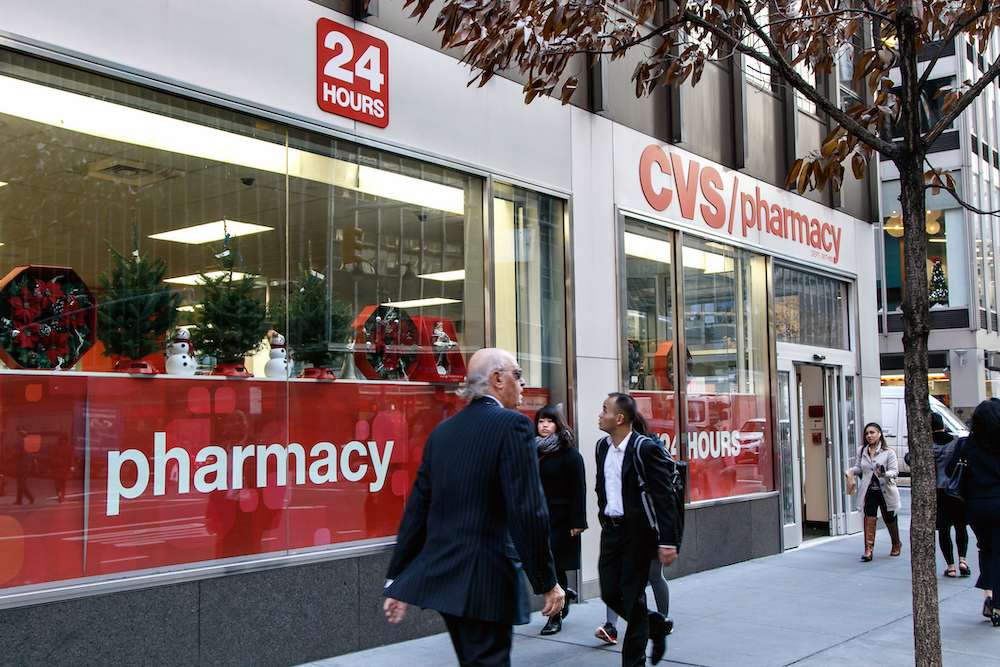
  • CVS Stores Will Offer CBD Products In 800 Locations

    CVS Stores Will Offer CBD Products In 800 Locations

    A line of topical cannabis-derived products will be available in 800 CVS locations across eight states. 

    CVS announced that it will now offer CBD topical products to customers in eight states across the United States.

    The pharmacy chain, which is the largest in the country with more than 9,900 retail locations, has entered into a deal with cannabis retailer Curaleaf Holdings to carry its line of cannabis-derived products in 800 stores located across eight states.

    Curaleaf CEO Joseph Lusardi told investors that he hopes to see an increase in the number of CVS locations carrying his products soon.

    CBD, or cannabidiol, is a naturally occurring cannabis compound that does not have a euphoric effect on the user.

    While the Food and Drug Administration (FDA) regards CBD as a drug, and has banned its use in foods and beverages that are pending regulation, proponents consider it therapeutic for a variety of health conditions. CBD is included in numerous and widely available products, including the creams, sprays, roll-ons, lotions and salves sold by Curaleaf that will be available to consumers at CVS.

    As MarketWatch noted, CVS stores in Alabama, California, Colorado, Illinois, Indiana, Kentucky, Maryland and Tennessee will sell Curaleaf products. Recreational marijuana is legal in California and Colorado, and medical marijuana is legal in Illinois and Maryland, but both are prohibited in the other four states on the list. None of the locations will sell food products or health supplements containing CBD.

    Lusardi also said that Curaleaf—which operates 40 cannabis dispensaries in 12 states—is in the process of striking similar deals with other large consumer chains. 

    “We’ve been having dialogue with national retailers for many months now,” he said. “We’ve got a number of potentially exciting partnerships in the pipeline.”

    MarketWatch also noted that the announcement of the distribution deal sent stock prices up for both companies on March 21st. It was good news for Curaleaf, which had reported net losses of $16.5 million for the fourth quarter just one day prior, but the news of the deal sent shares up 20% to more than $8 per share the following day.

    Revenue for the quarter was also up by a significant amount—$32 million, up from $6.3 million in 2018. In all, Curaleaf stock has risen more than 50% in the last three months, while shares in CVS rose more than 2% in Thursday’s trading.

    View the original article at thefix.com