Tag: medication-assisted treatment

  • Will Nearly 2,000 Pending Opioid Lawsuits End In A Master Settlement?

    Will Nearly 2,000 Pending Opioid Lawsuits End In A Master Settlement?

    Attorneys are attempting to put together a settlement that would make a “meaningful impact on the deeply tragic opioid crisis.”

    There are now nearly 2,000 opioid lawsuits pending in federal court. States, counties and cities across the U.S. are seeking to hold drug companies like Purdue Pharma, Johnson & Johnson and McKesson accountable for fueling the national opioid epidemic.

    The companies are accused of aggressive and improper marketing of opioid drugs like OxyContin and downplaying the risks of developing a drug use disorder.

    With so many lawsuits seeking money damages for the devastating impact that opioid abuse has inflicted on American communities, the question of how they will be dealt with remains.

    The Master Plan

    In June, a group of attorneys representing 1,200 counties, cities and towns proposed a plan to reach a settlement with two-dozen drugmakers and distributors. One of the attorneys, Joe Rice, was the architect of the 1998 Master Settlement between 46 states and major U.S. cigarette manufacturers, WBUR reported. “Tens of billions of dollars would be needed to make a significant—a real significant impact on this epidemic,” said Rice.

    The plan is “ambitious and creative but fundamentally flawed,” according to attorney Mark A. Gottlieb, executive director of the Public Health Advocacy Institute at Northeastern University School of Law. Gottlieb, wary of its potential impact, emphasized the importance of making a strong statement with the massive settlement that would provide closure for both parties. Ideally it would be a symbolic end to the opioid crisis.

    “While any new ‘master settlement’ must primarily compensate the plaintiffs for their losses, a settlement that simply moves money around, as the tobacco settlement did, has no chance at having a meaningful impact on the deeply tragic opioid crisis,” wrote Gottlieb in his commentary.

    Safeguarding The Future

    Gottlieb proposed securing a portion of the settlement that will go to future safeguards against similar crises. He suggests an independent foundation to serve as a watchdog over the pain management and addiction treatment industries, to provide opioid prescribing education, to fund treatment and prevention programs, to fund addiction-related medications such as naloxone and buprenorphine, and to advise policymakers on relevant legislation.

    “We must ensure that we do not squander the opportunity to address the opioid crisis through a coordinated public health approach in the next settlement,” Gottlieb wrote.

    View the original article at thefix.com

  • High-Risk Counties For Opioid Deaths Identified By New Study

    High-Risk Counties For Opioid Deaths Identified By New Study

    For a new study, researchers examined the most high-risk places for opioid overdose and overdose deaths.

    As many as 13% of counties in the U.S. are classified as high risk for people with opioid use disorder, because they have high overdose rates and few treatment options, according to a new study that looked at overdose data from around the country. 

    The study, published in JAMA Network Open, aimed to understand overdoes rates by county in order to better distribute resources for recovery efforts. 

    “We hope policymakers can use this information to funnel additional money and resources to specific counties within their states,” said lead author Rebecca Haffajee, assistant professor of health management and policy at the University of Michigan School of Public Health. 

    Nearly 25% Of Counties Had A High-Rate Of Overdose Deaths 

    Around 24% of counties (751) had a high rate of overdose deaths. Researchers found that 46% of counties did not have a provider who prescribed medication-assisted treatment, while 71% of rural counties did not have a publicly available provider of opioid treatment. 

    “We need more strategies to augment and increase the primary care provider workforce in those high-risk counties, people who are willing and able to provide opioid use disorder treatments,” Haffajee said. 

    In addition to increasing the number of care providers, the researchers pointed out that better job opportunities were linked to lower overdose rates. Counties with more employment, more providers and younger residents had a lower risk of overdose deaths. 

    The balance between overdose rates and available providers played out differently in rural versus urban counties, Haffajee pointed out. 

    “In rural areas, the opioid crisis is often still a prescription opioid issue. But in metropolitan counties, highly potent illicit fentanyl and other synthetic opioids are more prevalent and are killing people,” she said. “That’s likely why we identified metropolitan areas as higher-risk, despite the fact that these counties typically have some (just not enough) treatment providers.”

    Access To Medication-Assisted Treatment Is The Key

    Information like that can help governments to more efficiently distribute money and resources. 

    “Understanding these differences at the sub-state level and coming up with strategies that target specific county needs can allow us to more efficiently channel the limited amount of resources we have to combat this crisis.” 

    The researchers wrote, “Although overall buprenorphine-waivered clinicians and funds for [opioid use disorder] treatment to states have increased in recent years, to have the largest effect on the opioid crisis these resources need to be funneled to local county areas with the greatest unmet need, together with new models of care to reach people with [opioid use disorder].”

    For example, “prioritizing fund allocation and clinician workforce augmentation efforts around [medication-assisted treatment] in nonmicropolitan counties, including in many Appalachian and Mountain regions, could be particularly effective in reducing opioid-related risks,” they wrote. 

    View the original article at thefix.com

  • New Jersey EMTs Now Allowed To Offer Suboxone After Overdose

    New Jersey EMTs Now Allowed To Offer Suboxone After Overdose

    New Jersey’s health commissioner said that getting people Suboxone as soon as possible could change the course of treatment at a critical moment. 

    The rising prevalence of naloxone has contributed to the first decrease in overdose deaths in decades, and now health officials in New Jersey are hoping to use medications to take an even bigger chunk out of the overdose death rate, by administering buprenorphine to patients almost immediately after an overdose.  

    The Initiative Is The First Of Its Kind In The U.S.

    The New Jersey initiative, announced in June, will allow EMTs to administer buprenorphine (brand name: Suboxone) to patients who have been treated for an overdose. This could reduce their feelings of withdrawal and give them more chance of connecting with long-term treatment. 

    “This comes out of left field, and it’s very interesting,” University of California professor Dr. Dan Ciccarone told STAT. “It’s a potentially brilliant idea.”

    Doctors need a special waiver to prescribe buprenorphine, but under the New Jersey initiative EMTs would be able to give a dose with permission from the emergency room doctors that they work under, as long as those doctors hold the waiver.

    EMTs Can Give A Dose Of Suboxone With Permission From ER Doctors

    Then, a patient could be connected with a doctor who can prescribe the treatment long-term and help connect the patient with over recovery supports. Ciccarone said that removing the initial barrier to buprenorphine could become the standard of care. 

    “Here we are basically suggesting that we’re going to treat the person in as well-meaning and patient-centric a manner as possible,” he said. “And that means naloxone plus a softer landing with buprenorphine.”

    Shereef Elnahal, New Jersey’s health commissioner, said that getting people buprenorphine as soon as possible could change the course of treatment at a critical moment. 

    “We had a lot of paramedics telling us that someone would be in an ambulance, knocked out, and then receive naloxone, and they would run out of the ambulance,” Elnahal told The Atlantic. Giving buprenorphine after naloxone could reduce withdrawal and make people more receptive to care. 

    “Buprenorphine is a critical medication that doesn’t just bring folks into recovery – it can also dampen the devastating effects of opioid withdrawal,” Elnahal said in a statement. “That’s why equipping our EMS professionals with this drug is so important.”

    James Langabeer, a researcher at the University of Texas Health Science Center at Houston, said the program has promise, but will also require EMTs to integrate new decision-making protocols around medication-assisted treatment. He added that the initiative will only really make a difference if overdose victims are connected with long-term care. 

    “It’s a really positive first step — but the next step is the next day,” he said. “They’ve got to be linked to continuing treatment.”

    View the original article at thefix.com

  • Patients Discuss Their Naltrexone Implants

    Patients Discuss Their Naltrexone Implants

    The implant is currently not available in the United States.

    Six years ago, Peta Walker was ready to give up her fight against heroin and amphetamine addiction. She had tried medication-assisted treatment with methadone, but it had not worked for her.

    Desperate, she tried one more thing: a long-lasting stomach implant that releases naltrexone, a medication sold under the brand name Vivitrol that blocks the effects of opioids. 

    To Walker’s surprise and delight, it worked. “I’m doing things that I always dreamed of,” she told The New York Times

    Currently in the United States, naltrexone is available as a daily tablet or as a shot that lasts for a month. But the implant that Walker received from a doctor in Australia lasts for six months. 

    The doctor, George O’Neil, has been using the implants for nearly 20 years. The device isn’t approved in Australia, but he is able to give it to patients because the law allows people at risk of death to try unregulated medical treatments. The procedure costs about $4,800 U.S. dollars (about $7,000 Australian dollars). 

    For decades, O’Neil has been content to use his device on a relatively small scale, but now the implant is gaining international attention. “I’m good at dreaming, but there’s people around me good at doing,” O’Neil said. 

    When the Times reported the story, researchers from Columbia University in New York were watching O’Neil place an implant in a patient. The research team has been awarded nearly $7 million to study the possibility of a naltrexone implant, with an additional $14 million in funding available if the results are promising. 

    Dr. Adam Bisaga, a professor of psychiatry who is leading the study, said that a long-lasting implant is more appealing than a shot because it helps people commit to a longer stretch of sobriety. 

    “If we have a way of targeting the ambivalence—and the way you do that is long-acting preparation—that will be a major advance,” he said. “In the U.S., it’s pretty clear that it’s an acceptable and viable treatment.”

    Vivitrol, the injectable form of naltrexone, is already a popular medication in the United States because it lasts for a month and is not an opioid, unlike methadone and other medication-assisted treatment options. That makes it particularly appealing in law enforcement settings and jail, because it is impossible to divert Vivitrol for illegal use. The implant, if approved in the U.S., could broaden the appeal of naltrexone even more. 

    However, all forms of naltrexone do have some drawbacks. People who use naltrexone and then use opioids are at increased risk for overdose. In addition, to get started on the drugs people need to go through opioid withdrawal to first clear opioids from the system. 

    Despite that, the drug—and the implant—appeals to many people, including 25-year-old Jessica Martin, who received the implant recently. 

    “I feel better now coming here,” she said. “I feel confident that I’ll stop it.”

    View the original article at thefix.com

  • Researchers Posing As Opioid Users Struggle To Get Treatment Appointments

    Researchers Posing As Opioid Users Struggle To Get Treatment Appointments

    Researchers posing as Medicaid patients in need of buprenorphine were often denied appointments by providers. 

    Researchers called hundreds of addiction treatment providers across the U.S. while posing as individuals in need of help—in a study of the barriers that people with addiction disorders face when seeking treatment. What they found was a minefield of discouragement, especially when they were posing as people on Medicaid.

    According to ABC News, two researchers reading from scripts called 546 prescribers of the opioid addiction treatment drug, buprenorphine, to attempt to schedule an initial screening appointment.

    After three tries, 77 of the prescribers were unreachable, often due to outdated contact information on government websites. When they were able to make contact at all, 46% of prescribers denied the researchers appointments when they said they were on Medicaid, compared to 38% when they said they could pay with cash.

    This is a serious problem in light of the fact that finding the motivation to go through such a frustrating process is even more difficult when you’re coping with an addiction disorder, says study co-author Dr. Michael Barnett.

    “Think about the last time you had to make four or five phone calls in a row and how annoying that was,” he explained. “Addiction makes doing tasks like that even harder.”

    According to the Kaiser Family Foundation, 38% of “nonelderly” people with opioid use disorders are covered by Medicaid. Analysis by the foundation found that those on Medicaid were twice as likely to receive treatment for addiction than those with either private insurance or no insurance.

    However, the results of this latest study suggest that prescribers are still reluctant to take patients on Medicaid, likely because it doesn’t pay as much as private insurance. 

    This is particularly true for doctors, who only agreed to schedule appointments 40% of the time. Nurse practitioners and physician assistants, on the other hand, agreed to appointments 70% of the time.

    Other barriers included the cost of buprenorphine treatment, which averaged $250 to start but could go as high as $500, plus lab fees. Additionally, some states require Medicaid patients to try other avenues of treatment before they’re allowed to go on buprenorphine in spite of multiple studies finding it more effective than many other forms of opioid addiction treatment.

    “Abundant evidence shows that methadone, buprenorphine, and naltrexone all reduce opioid use and opioid use disorder-related symptoms, and they reduce the risk of infectious disease transmission as well as criminal behavior associated with drug use,” reads the National Institute on Drug Abuse website. NIDA Director Dr. Nora Volkow said of the study that the barriers discovered “should be eliminated.”

    View the original article at thefix.com

  • 7 Things I Wish I Could Tell My Parents About My Addiction

    7 Things I Wish I Could Tell My Parents About My Addiction

    Here, on this motel floor, I need to know that you still love me. If it isn’t too painful for you, please visit me in rehab. When I tell you that I’m finally ready to get clean, please believe me even if it’s the 100th time.

    I constantly find myself in conversations with both of my parents about that dark time in my life. In the beginning of my sobriety, I tried to explain to them about opioid receptors and dopamine levels but it never seemed to make a difference. Many parents have a “You did this because you are weak!” mindset. They think that you can just quit. Well, Mom…

    1. I Can’t Just Quit

    I’ve been tired of this life for a long time and I have the desire to be the person you once trusted. But every time I quit, I get sick and believe that life just isn’t worth living. I’ve tried to get clean but once the fog clears I realize how much I’ve damaged my life and I go back. I wish I could snap my fingers and be normal with a job and home, but my brain has changed. I want to be the child who you loved unconditionally but I’m not, I’m sick. I don’t like sleeping outside and going to rehab every few months, but that’s what this drug has done to me. It’s a part of me now and unless I have it I can’t even get out of bed. I hate myself and what I’m putting you through, but my mind and body are broken right now.

    2. This Isn’t Your Fault

    This didn’t happen because you left me to cry it out in the crib for too long or because you weren’t strict enough. There isn’t a recipe that you followed to make me a drug addict. This happened because I tried something out of curiosity and my brain and body responded in a way that made it impossible to stop. Ever since that first time, my brain hasn’t worked the same. I am not lazy, stupid, or weak. I wish that I could sleep this off with a hot shower and an iron-rich diet but it doesn’t work like that. It started off as fun, but now I’m trapped.

    3. My Addiction Shouldn’t Be the Topic of Gossip

    I wish you could tell all your coworkers that I graduated from that expensive university we planned on me attending. I know you aren’t proud of me right now, but I’m still a person. I want you to heal and be able to talk about how much I’ve hurt you, but please don’t use me and my addiction as entertainment. I am still your child.

    You might not know much about how addiction works but I need for you to keep my most embarrassing secret close to you. Your coworkers and distant relatives don’t need to know that I’m in jail yet again. My great grandmother that lives a thousand miles away doesn’t want to hear about how I am living in a dirty motel. Unless I’m a threat to them or their belongings, I ask that you protect my dignity. People assume the absolute worst about people like me and I’m not proud of anything I’ve done to feed my addiction. Along with getting high, I have engaged in degrading behaviors and even exposed myself to disease and violence.

    When people hear, “My child is a drug addict,” they think about every negative thing they’ve ever seen in a movie or heard on the news and they will apply it to me. Why would you even want to share these awful things? Talk about the president or what movie you just saw instead. When I get better, I will have to face what I have done and accept the mistakes that I have made. I will have to face the people that you shared my humiliation with. Please don’t think that I am asking you to suffer in silence. There are support groups and therapists who have the knowledge and skills to help you get through this, too.

    4. Try to Learn About My Addiction

    Did you know that the American Medical Association classifies my addiction as a disease? I didn’t make this up to make you feel sorry for me, it really is. I made the initial choice to start using drugs but when I wanted to stop, my brain said no. It made everything else in the world unenjoyable. Could you imagine not being able to enjoy your favorite piece of cake from the best bakery in town? This is my life right now. The chemicals in my brain have been reprogrammed to want one thing only.

    If you don’t believe me, and you probably won’t, take ten minutes and do a little research on addiction. While you are clicking on different links and learning about what I’m going through, please look at all of the different treatment options too. Did you know that there is a medication you can give me in an emergency that will reverse an opioid overdose at home? It’s called naloxone and you can get it from the pharmacy and it could possibly save my life.

    I know that you want me to get better. I do, too, but it’s much harder than just saying no. It’s important that you know that there are some medications available that can help my cravings and others that will completely block the effects of opioids. Whether or not these are what’s best for me is something I will have to decide on my own but you should know about them. As long as I am seeking treatment or have even talked about how I want to get better, I am still here fighting.

    5. I Have Suffered Through Incredible Trauma

    I have seen death and loss. I have lost my dignity and self-respect. Some of my friends have died because of these drugs and I have been close to death myself.

    I don’t know if I’ll ever be able to talk about the terrible things that have happened in my addiction because I know how much it will hurt you. You might say that this is my fault and that I’m weak, but I’m not. I’m in here fighting with these memories and still waking up in the morning. When I get clean, I will need time to heal. I will need counseling and even a little bit of space.

    6. I’m Sorry

    I’m sorry I stole from you and constantly lied to you. I’m sorry I didn’t make it to Thanksgiving last year, and I’m sorry you found me unconscious. I’m sorry that I made you cry. If I had a penny for every regret, I could pay you back for everything you’ve done for me. Right now, however, I would probably spend that money on drugs because I’m sick. One day I hope that you will forgive me. I don’t expect you to forgive me soon, but hopefully you realize that your child is still in here.

    7. Please Don’t Give Up on Me

    I’m not asking you to give me money, that ship has long sailed. I’m not asking you to let me come home or even to trust me right now. Here, on this motel floor, I need to know that you still love me. I need you to call me and tell me how you are. Please be a constant in my life, even if it’s just through text messages. If it isn’t too painful for you, please visit me in rehab. When I tell you that I’m finally ready to get clean, please believe me even if it’s the 100th time. If I tell you that I’m going to start taking medication to help with my sobriety, be proud of me! Don’t tell me that I’m trading one drug for another, because I’m trying.

    Just please, don’t give up on me.

    View the original article at thefix.com

  • HIV Prevention Pill Offered to Opioid Users in Philadelphia

    HIV Prevention Pill Offered to Opioid Users in Philadelphia

    A recent op-ed makes the case that Philly doctors should evaluate all medication-assisted treatment patients for PrEP. 

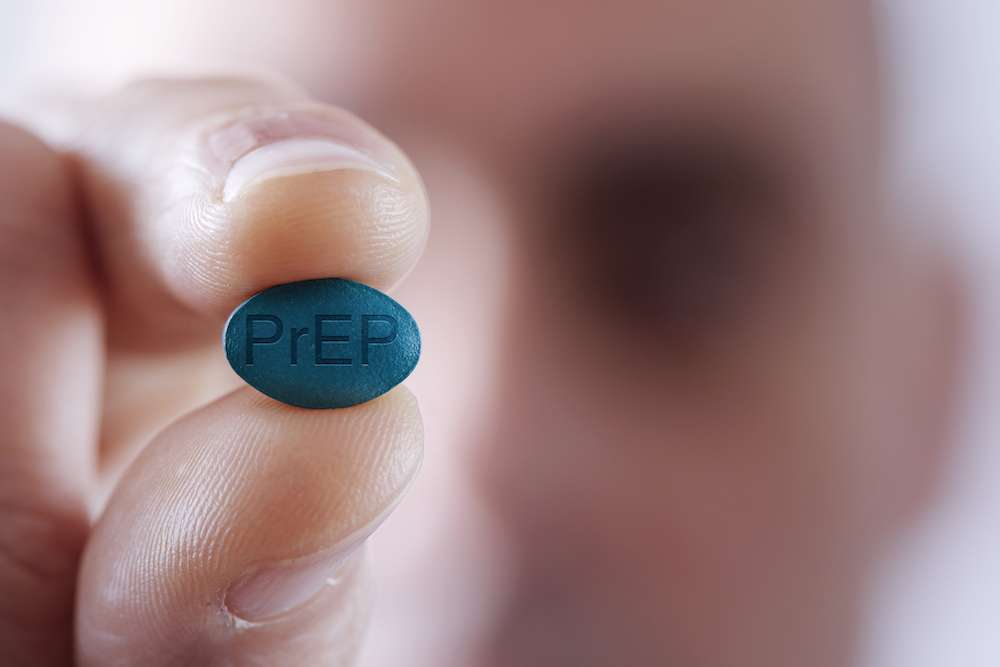
    An increase in the number of IV drug users infected with HIV in Philadelphia has spurred the city’s health department to train medical providers in the use of pre-exposure prophylaxis (PrEP), a pill that can prevent HIV infection.

    An op-ed piece in the Philadelphia Inquirer suggested that making PrEP and medication-assisted treatment (MAT) available to this demographic could not only provide much-needed assistance to an at-risk population, but as the story’s author noted, would also place Philadelphia at the forefront of helping to prevent the spread of HIV among that demographic. 

    The Inquirer noted that while the overall number of new HIV cases has been on the decline since the mid-2000s, with current statistics showing that 19,199 Philadelphia residents live with HIV, the number of individuals who acquired HIV through IV drugs rose from 45 cases in 2017 to 61 in 2018.

    The newspaper also cited a study by the National HIV Behavioral Surveillance System, which linked the rise in new infections to a high number of sex workers in Philadelphia. According to the study’s findings, 51% of women with new infections and 30% of male subjects had traded sex for money, drugs or other goods.

    Coverage of the rise in cases by the Philadelphia Tribune found that city health agencies have increased education efforts regarding the use of PrEP among HIV patients. These include the Philadelphia Department of Public Health, which trained doctors in areas with high rates of HIV about talking to their patients about the medication.  

    The non-profit syringe exchange program Prevention Point worked directly with IV drug users to let them know about how to get PrEP. The Tribune piece noted that the emergency departments of Temple University Hospital and Episcopal Hospital offered screenings for HIV and STDs. 

    The city’s Federally Qualified Health Centers and many primary care physicians offer PrEP as well. If the patient is found to be HIV-positive, doctors at these hospitals, centers and practices work with the individual to begin immediate treatment with PrEP. The medication is fully covered by most health plans, and when taken under the supervision of a medical provider, has reportedly few to no side effects.

    Despite this, the Inquirer op-ed noted that many local providers and treatment centers may not be aware of the availability of MAT with PrEP for HIV. The story advocated consistent referral of the medication to not only stem the tide of new cases, but to establish Philadelphia at the forefront of such treatment.

    “These type of local emerging best practices offer a way bridging national policy, clinical guidelines, local contexts and patient choice,” wrote the op-ed’s author, Kevin Moore, who serves as director of care coordination at ARS Treatment Centers.

    View the original article at thefix.com
  • Why Aren’t Doctors Prescribing Suboxone To More Black Patients?

    Why Aren’t Doctors Prescribing Suboxone To More Black Patients?

    The total number of buprenorphine-related visits has surged but the number of black Americans receiving the medication has not increased.

    The racial disparity in the prescribing of opioid treatment drugs like Suboxone is highlighted in a new study out of the University of Michigan.

    The study, published in JAMA, looked at two national surveys of prescriptions as reported by physicians between the years 2012 and 2015.

    While the total number of buprenorphine-related medical visits drastically increased to 13.4 million during this time span, researchers noted that the number of buprenorphine prescriptions did not increase among African-Americans, or any other minorities.

    Buprenorphine, most commonly known by the brand name Suboxone, is a medication that dramatically reduces opioid cravings and blocks the effects of opioids.

    “White Americans have 35 times as many buprenorphine-related visits than black Americans,” Dr. Pooja Lagisetty, an assistant professor of medicine at the University of Michigan Medical School and the study’s corresponding author, told NPR.

    Although white Americans have been the face of the opioid epidemic, the number of overdose deaths among black Americans is now rising faster than their white counterparts.

    In addition, there is a shortage of clinicians and clinics prescribing buprenorphine, Dr. Andrew Kolodny, co-director of Opioid Policy Research at Brandeis University, told NPR.

    Currently, physicians must take on eight hours of training to become certified to prescribe buprenorphine. And even if they do receive authorization to prescribe it, they are then faced with a cap that only allows them to prescribe it to 30 patients in the first year and up to 100 patients afterwards.

    A bill in New York that would end the extra training required for physicians and nurses to dispense Suboxone, and the caps, has gained tremendous support. The special training for both doctors and nurses has meant that there are not enough providers who offer the life-saving drug.

    According to STAT News, only 5% of doctors have completed the training required to prescribe buprenorphine.

    In France, where additional restrictions on prescribing opioid addiction treatment drugs were removed in 1995, there was an 80% decrease in opioid overdoses in the subsequent years.

    Michael Botticelli, director of the Grayken Center for Addiction at Boston Medical Center and the former director of the Office of National Drug Control Policy, has questions about specific points of interest in the disparity between white and black patients receiving Suboxone.

    He questions if Medicaid reimbursement rates are too low to attract doctors to work with low-income patients, or if there is a scarcity of inner-city doctors prescribing buprenorphine, or if African Americans are not seeking the treatment for an unknown reason.

    White patients typically  paid cash (40%) or used private insurance (35%) to fund their buprenorphine treatment. A mere 25% used Medicaid and Medicare to pay for their visits.

    View the original article at thefix.com

  • Louisiana Prisoners To Be Guinea Pigs For Unapproved Naltrexone Implant

    Louisiana Prisoners To Be Guinea Pigs For Unapproved Naltrexone Implant

    Participation in the program is strictly voluntary but advocates of prisoners’ rights say it sets a “dangerous precedent.”

    A pilot program is drawing controversy over the use of Louisiana prisoners to test a surgical implant for the treatment of alcohol or opioid use disorder.

    While some laud the idea of expanding access to medication-assisted treatment (MAT) for substance use disorder, others are critical of the pilot program since the device, which delivers naltrexone in the body, is not approved by the Food and Drug Administration (FDA).

    “There’s extra precaution to be taken when there’s a vulnerable population,” said Bruce Reilly, deputy director of the Voice of the Experienced, a New Orleans-based organization which advocates for prisoners’ rights. “It’s commendable that we’re pursuing treatments. We’re moving in a positive direction. [But] to sidestep or overstep the FDA approval process, that’s a little troublesome when it comes to an incarcerated environment.”

    Naltrexone, which blocks the effects and cravings of opioids and alcohol, is only approved in pill or injection form—the implant is not.

    Treating prisoners with the FDA-approved naltrexone has yielded success before in the Louisiana prison system. As The Advocate notes, of the 100 prisoners who were given naltrexone over a two-year period in conjunction with education and therapy prior to their release, only 4 have since landed back in prison.

    Encouraged by this success, corrections officials seem to want to take it a step further by approving the surgical implant pilot program.

    This time, the Louisiana Department of Public Safety and Corrections partnered up with BioCorRx, the maker of the implant. The California-based health care company has donated 10 of the devices to the state of Louisiana to implant in 10 inmates. Corrections officials stress that it is completely voluntary to participate in the pilot program.

    At $700 each, the naltrexone implant is cheaper than the monthly injection (about $1,000 each). The implant is said to metabolize in the body over 3-4 months, while the injection must be administered monthly and the pill is taken daily.

    It’s not hard to see why the implant may be more cost-effective than the pill or injection, but without FDA approval none of that matters, say advocates of prisoners’ rights.

    “If you’re really concerned about the population, why don’t you start with what’s approved? Consent is always problematic (in prison),” said Dr. Josiah “Jody” Rich, co-director of The Center for Prisoner Health and Human Rights.

    BioCorRx CEO Brady Granier said the implants have yielded positive results in more than 1,000 people. But Rich is not convinced.

    “We have a pretty bad history with experimentation in American prisons, I think the least we can do is use drugs that have been declared safe by our regulatory board,” said Rich.

    “Just because it’s free… I think it’s a really dangerous precedent,” he added. “We can’t afford to be stupid about this.”

    View the original article at thefix.com

  • Finding Recovery and Support for Opioid Addiction on Social Media

    Finding Recovery and Support for Opioid Addiction on Social Media

    The rules state: We support everyone’s path to recovery, including Suboxone, Subutex, Methadone, Vivitrol, cannabis and kratom. We do not allow any debate as to whether or not being on maintenance meds means you are or aren’t clean.

    Four years ago, Dorothy had no support for her opioid addiction. As a mother and stepmother, she was afraid to be open about her struggle; if her children’s father or stepchildren’s mother found out, they might question her ability to be a good parent. She thought about attending recovery meetings but was worried they would shun her for being in active addiction or, some years later, for taking Suboxone, a partial opioid agonist, to manage her chronic pain. Luckily, she discovered a private Facebook group that supported people like her with opiate addiction.

    For the sake of full disclosure, I’m also a member of this group. While I enjoy my social media fill of cats dressed in dinosaur costumes, babies getting slices of Kraft singles thrown at their heads, and I love dad jokes just as much as the next person, I value this group the most.

    Addiction Support…on Facebook?

    The group quickly became a refuge for Dorothy and me, a digital safe haven where we could share our pains and joys behind the privacy of a screen.

    “I have made friends that I’m sure I’ll have for the rest of my life. I feel supported and secure here. What I love the most is how diverse we are. We run the gamut from people who are using to people who are totally abstinent and everything in between… All we ask is that people respect each other and everyone’s path to recovery,” Dorothy said.

    After participating in another group where members were shamed for taking Suboxone or methadone to manage their opioid addiction, I found Dorothy and the group’s perspective on harm reduction refreshing. In order to join the group, members must agree that they will not bash medication-assisted treatment (MAT). According to the official group guideline: “We support everyone’s path to recovery, including Suboxone, Subutex, Methadone, Vivitrol, cannabis and kratom. We do not allow any debate as to whether or not being on maintenance meds means you are or aren’t clean.”

    Another administrator added, “If you hate the fact there are active addicts in this group, if you don’t support MAT or [you] want to be a douche canoe to everyone you meet who doesn’t live up to your standards, LEAVE.”

    After nine months of participating in this group, Dorothy became a volunteer staff member, then administrator. On an average day, she spends six hours involved in the various tasks that keep the group running. Dorothy, along with eight other administrators and nine moderators, approves each post before it hits the page, ensuring that the posts follow group guidelines. The guidelines mirror that of an in-person support group: members must maintain each other’s confidentiality and privacy, be respectful, and refrain from giving medical advice, selling or seeking drugs, asking for money, or posting links to treatment centers.

    Sarah Burbank has also been a volunteer group administrator for four years and spends four to eight hours on the group each day. Sarah considers the members of the group to be family. “The group is a touchstone and an inspiration. I have watched some group members pass away and have to announce to the group a loved one or cherished member has passed away from the disease. Those are the darkest of days. But there are little milestones that we share that make it so special. Day 1! 30 days! Years clean! Getting children back and jobs and lives back. Those are the truly beautiful things that keep me here.”

    Dorothy and Sarah are not alone. This particular Facebook group has blossomed to 22,000 members. Members are hungry to share their stories, to be supported, validated, and encouraged. Posts reveal a complex tapestry of emotions: of recovery, struggle, pain, joy, heartbreak, victory and defeat, often all in a single post.

    Using Social Media to Forge Connections in Marginalized Groups

    It may seem contradictory to turn to social media for support for addiction. According to a 2018 Fix article based on research from Penn State, social media use is correlated with increased rates of depression and loneliness. Similarly, in 2011, Researchers Daria J. Kuss and Mark D. Griffiths systematically reviewed psychological literature and found that social media can be used for connection, but also that it may negatively impact relationships, work, and academic achievement. This and other evidence suggest social media can be an addiction just like alcohol and drugs.

    While it’s important to acknowledge this research and the potential negative impacts of social media, this critique fails to recognize the power of online social networks, especially for marginalized people. Toronto-based mental health professional Krystal Kavita Jagoo says, “For some, authentic human connection may only come online. Sometimes you don’t have those options in person.” Jagoo pointed out that social media or internet forums can feel safer for people of color, queer, trans, and non-binary folks, and people of differing abilities.

    Jagoo continued, “If you’ve had a traumatic experience and are able to hear from others about things someone has struggled with, you don’t feel as alone. Sometimes it’s just knowing that others understand what you’re going through; they can offer strategies or things that have worked for them that you might be more inclined [to try] than a professional who doesn’t have lived experience.”

    Jagoo herself has found valuable support online. “I think of how healing it has been to connect with folks of color around the world with respect to surviving oppression.” In order to maintain balance in our lives and avoid social media burnout, Jagoo recommends finding a group that is anti-oppressive, accepting, and feels rewarding. Setting and maintaining boundaries is important, as is making sure that you only check notifications when you have time and energy to engage, and unfollowing or leaving groups if they are feeling more draining than helpful.

    Both Dorothy and Sarah mentioned that it is difficult to be a group administrator while balancing their work and home lives. But by far, they feel the benefits outweigh the challenges of spending hours volunteering in the group. “The online community is really important because it allows people to connect in the safety of their own homes, anonymously if they choose. It gives us the ability to reach so many more people, people that we wouldn’t have otherwise had any contact with.”

    View the original article at thefix.com