Tag: medication-assisted treatment

  • Medication-Assisted Treatment Saves Lives But Is Severely Underutilized

    Medication-Assisted Treatment Saves Lives But Is Severely Underutilized

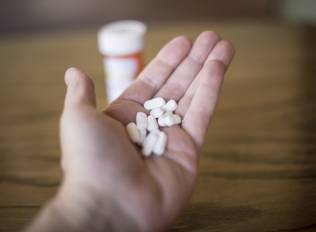
    A new study found that in the year after an overdose less than one-third of patients were prescribed methadone, buprenorphine or naltrexone.

    A new study found that drugs used to reduce opioid use in people with addiction are seriously underutilized.

    The medical journal Annals of Internal Medicine published the study, which followed close to 18,000 adults in Massachusetts. The participants in the study had gone to an emergency room between 2012 and 2014 for a non-fatal drug overdose.

    Although using drug therapy to treat opioid addiction is considered a “gold standard” of treatment, the study found that just 30% received any of the Food and Drug Administration-approved medication-assisted treatments.

    The FDA advises treatment for opioid addiction as a combination of behavioral therapy and the parallel use of one of three drugs. Methadone, buprenorphine, and naltrexone are all drugs approved for assistance in reducing drug cravings in those addicted to opioids.

    Science Daily reported that the study showed a 59% reduction in fatal opioid overdose for those receiving methadone, and a 38% reduction for those receiving buprenorphine over a 12-month period. The drug naltrexone was unable to be evaluated due to a small sample size.

    In the past, naltrexone has been shown to be as effective as methadone and buprenorphine, but there are high dropout rates and a refusal to try the drug in the first place.

    Science Daily reports this could be due to the fact that patients utilizing naltrexone cannot use any opioids for seven to 10 days. Methadone and buprenorphine can be started much sooner.

    As the opioid addiction crisis worsens, health officials are eager to find ways to assist people with addiction in withdrawal and abstinence from the drug. The Fix reported on an FDA-approved device that helps reduce opioid cravings, called “Drug Relief.”

    The study also found that in the year after an overdose, not quite one-third of patients were prescribed one of the three FDA approved drugs—with methadone at 11%, buprenorphine at 17%, and naltrexone at 6%. Five percent received more than one medication.

    According to Science Daily, Dr. Nora Volkow, director of the National Institute on Drug Abuse (NIDA), said, “A great part of the tragedy of this opioid crisis is that, unlike in previous such crises America has seen, we now possess effective treatment strategies that could address it and save many lives, yet tens of thousands of people die each year because they have not received these treatments. Ending the crisis will require changing policies to make these medications more accessible and educating primary care and emergency providers, among others, that opioid addiction is a medical illness that must be treated aggressively with the effective tools that are available.”

    View the original article at thefix.com

  • Generic Suboxone Strips Get The Green Light

    Generic Suboxone Strips Get The Green Light

    The FDA’s move could mean wider availability and more competitive pricing for the popular addiction-fighting drug. 

    The FDA last week sparked a flurry of legal wrangling when it gave the go-ahead for two drugmakers to sell generic versions of Suboxone strips.

    Part of an agency push to expand access to medication-assisted treatment, the move could open up the door to more competitive pricing for the popular addiction-fighting drug—but it also turns up the heat in an ongoing battle between drug companies intent on protecting profits. 

    “The FDA is taking new steps to advance the development of improved treatments for opioid use disorder, and to make sure these medicines are accessible to the patients who need them,” Commissioner Scott Gottlieb said in a statement. “That includes promoting the development of better drugs, and also facilitating market entry of generic versions of approved drugs to help ensure broader access.”

    Currently, the brand-name under-the-tongue strips are sold by Indivior and cost around $200 per month without insurance. The British company is already embroiled in litigation over claims that it strategically worked to block competition from generic Suboxone in order to maintain soaring profits. At one point, the drug brought in $2 billion in sales a year, according to FiercePharma.

    But now, the Pennsylvania-based drug maker Mylan and the India-based company Dr. Reddy’s both have the green light to bring out generic versions of the drug. Mylan did not immediately comment on the approval or its plans moving ahead, but the Hyderabad competitor issued a statement Friday praising the move and detailing its 2 mg, 4 mg, 8 mg and 12 mg formulations.

    “With opioid addiction becoming increasingly prevalent in America, the full approval and launch of our generic equivalent of Suboxone could not have come at a more critical time to help patients,” said Dr. Reddy’s CEO Alok Sonig. 

    But Indivior took the matter straight to the courthouse and on Friday—just a day after the FDA announcement—the company won a temporary restraining order blocking Dr. Reddy’s from moving forward with its product release in light of ongoing patent litigation. A judge will decide on the path ahead at a June 28 federal court hearing in New Jersey. 

    Indivior CEO Shaun Thaxter put out a statement expressing surprise at his competitor’s decision to launch the generic drug—and promised to keep up the courtroom fight.

    “We will continue to pursue all legal avenues, including an immediate injunction until the legal status of our intellectual property is confirmed by the courts,” he said.

    And Mylan won’t necessarily have an easier time pushing out its generic formulation of the medication-assisted treatment, as the company had previously agreed to delay its generic launch until 2023.

    Suboxone, which combines naloxone and buprenorphine to ease withdrawal and fight cravings, initially hit the U.S. market in 2002 as a pill. Five years later, Indivior announced plans to launch a sublingual film, a formulation that wouldn’t immediately have a generic alternative. 

    But in 2016, 35 states joined together to sue the company for anticompetitive practices. The states claimed that Indivior raised unfounded safety concerns to delay the FDA’s approval of the generic Suboxone tablet. Then, the company allegedly used those concerns to push strips over pills, a move that the states alleged was intended to prevent patients from taking generic versions of the pill. 

    The Federal Trade Commission (FTC) has since been investigating the company over antitrust claims, according to reports. 

    Whatever the legal drama surrounding the drug approvals, the FDA framed its announcement as an important step toward increasing access to lifesaving treatments and reducing stigma around medication-assisted treatments.

    “The FDA is also taking new steps to address the unfortunate stigma that’s sometimes associated with the use of opioid replacement therapy as a means to successfully treat addiction,” Gottlieb said. “When coupled with other social, medical and psychological services, medication-assisted treatments are often the most effective approach for opioid dependence.”

    View the original article at thefix.com

  • House Passes 25 Bills To Aid Fight Against Opioid Crisis

    House Passes 25 Bills To Aid Fight Against Opioid Crisis

    The bills cover a variety of issues ranging from improving sober living homes to disposal of unused medication.

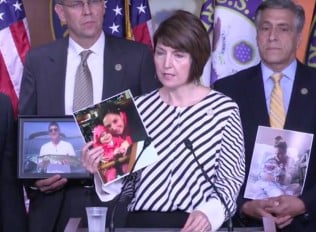
    In an effort to lend legislative support to the fight against the national opioid epidemic, the House of Representatives passed 25 bills that would provide crucial support to both government and public organizations to combat the crisis on a number of fronts.

    The bills, authored by both Democratic and Republican representatives, include measures to expand access to the overdose reversal drug naloxone, develop new forms of pain medication that are non-dependency-forming, and allow medical professionals to view a patient’s medical history for previous substance abuse.

    Greg Walden (R-OR), the Energy and Commerce Committee Chairman, and Michael C. Burger (R-TX), Health Subcommittee Chairman, said in a joint statement that the bills are “real solutions that will change how we respond to this crisis.”

    Among the bills passed are:

    • H.R. 449, the Synthetic Drug Awareness Act of 2018, which will require U.S. Surgeon General Jerome Adams to submit a “comprehensive report to Congress on the public health effects of the rise of synthetic drug use among youth aged 12 to 18,” authored by Reps. Hakeem Jeffries (D-NY) and Chris Collins (D-NY)
    • H.R. 4684, the Ensuring Access to Quality Sober Living Act of 2018, which will authorize the Substance Abuse and Mental Health Services Administration (SAMHSA) to “develop, publish, and disseminate best practices for operating recovery housing that promotes a safe environment for sustained recovery,” authored by Reps. Judy Chu (D-CA), Mimi Walters (R-CA), Gus Bilirakis (R-FL) and Raul Ruiz (D-CA)
    • H.R. 5009, Jessie’s Law, which will require the Department of Health and Human Services to develop the best way to present information about substance use disorder in a consenting patient’s history for medical professionals to make informed decisions about treatment, authored by Reps. Tim Walberg (R-MI) and Debbie Dingell (D-MD)
    • H.R. 5012, the Safe Disposal of Unused Medication Act, which will allow hospice employees to remove and dispose of unused controlled substances after the death of a patient, authored by Reps. Walberg and Dingell
    • H.R. 5327, the Comprehensive Opioid Recovery Centers Act of 2018, which will establish such centers to “dramatically improve the opportunities for individuals to establish and maintain long-term recovery through the use of FDA-approved medications and evidence-based treatment, authored by Health Subcommittee Vice Chairman Brett Guthrie (R-KY) and Ranking Member Gene Green (R-TX)
    • And H.R. 4275, the Empowering Pharmacists in the Fight Against Opioid Abuse Act, which will give pharmacists more information and ability to decline prescriptions for controlled substances which they suspect to be fraudulent or for abuse, authored by Reps. Mark DeSaulnier (D-CA) and Buddy Carter (R-GA).

    Reps. Walden and Burgess noted in their statement that the bills will “make our states and local communities better equipped in the nationwide efforts to stem this tide” of opioid dependency and overdose.

    The House will continue to review related bills on January 14, including H.R. 6069, which will require the Comptroller General to conduct a study on how virtual currencies are used to facilitate goods or services linked to drug or sex trafficking.

    View the original article at thefix.com

  • What's Fueling The Rise Of Meth?

    What's Fueling The Rise Of Meth?

    Ohio, Nevada, Utah and parts of Montana have seen a recent rise in methamphetamine use. 

    In rural Ohio, an increasing number of opioid users are turning to methamphetamine to get high, driven in part by a medication that is meant to help them stay sober. 

    “Right now that’s our biggest challenge—is methamphetamines,” Amanda Lee, a counselor at Health Recovery Services in McArthur, Ohio, told NPR. “I think partly because of the Vivitrol program.”

    Vivitrol is an injectable medication used to support recovery from opioid addiction. It works by blocking opioid receptors in the brain, so that people are not able to get high off opioids. However, Lee points out that when the underlying cause of addiction—like pain or trauma—is not addressed, desperate users simply find a new substance to abuse. 

    “The Vivitrol injection does not cover receptors in the brain for methamphetamines, so they can still get high on meth,” Lee said. “So they are using methamphetamines on top of the Vivitrol injection.”

    Lee said that in her opinion, methamphetamine is much more debilitating than opioids. 

    “There’s paranoia. There is hallucinations. It almost looks like people have schizophrenia,” she said. “Methamphetamines scare me more than opiates ever did.”

    “You can’t really describe the smell,” said Detective Ryan Cain, lead narcotics detective for Vinton County, Ohio. “It’s a combination of lithium out of a battery. A lot of them use Coleman camp fuel. It’s a solvent. They use ammonium nitrate, which is usually out of a cold pack. And all of it’s very cancerous.”

    Trecia Kimes-Brown, the county prosecutor, has seen how meth addiction, like opioids, involves the whole family

    “When you’re living in a house where people are making meth, it’s not just the health effects. These kids are living in these environments where, you know, they’re not being fed,” she said. “They’re not being clothed properly. They’re not being sent to school. They’re being mistreated. And they have a front-row seat to all of this.”

    In addition to meth produced locally, cheap meth from Mexico is now trafficked into Ohio by drug cartels south of the border, according to officials. 

    Ohio isn’t unique in how the drug crisis has shifted. In Kentucky, the focus on preventing opioid addiction also contributed to an increase in meth addiction. 

    “People say, ‘Why do you not have an opioid problem? Why does Daviess County not suffer the same problems?’” Sheriff Keith Cain said last month. “I’d like to say it’s because of progressive police work. But I think the prime reason we don’t have an opioid problem here is because our people are addicted to meth.”

    Nevada, Utah and parts of Montana have also seen a rise in methamphetamine use recently. 

    “Meth is kind of the forgotten drug out there, and it’s still a huge problem in our society,” Lt. Todd Royce with Utah Highway Patrol said last month. “It’s a horrible epidemic and it destroys families.”

    View the original article at thefix.com

  • Medical Schools Focus On Addiction Medicine Training In Light Of Opioid Crisis

    Medical Schools Focus On Addiction Medicine Training In Light Of Opioid Crisis

    Medical students are seeking out addiction medicine training and schools are making adjustments to fulfill their needs. 

    The opioid crisis is changing the way some medical schools are approaching training, according to the San Francisco Chronicle

    At the University of California, San Francisco (UCSF) School of Medicine, this is being done by implementing a yearlong fellowship in addiction medicine, the Chronicle reports. 

    The fellowship program is funded by the city and county of San Francisco and works to incorporate addiction medicine into overall medical training, rather than just psychiatric medicine. 

    Dr. Hannah Snyder is one of the fellowship participants and is expected to complete the program this month. 

    “I started learning about treating addiction and realizing we had highly effective medications to treat addiction,” Snyder told the Chronicle. “I got really excited about that because there’s a way to prevent people from having those complications in the first place.”

    According to the Chronicle, Snyder works at Ward 93 as part of the fellowship. Ward 93 is a methadone clinic at San Francisco General Hospital. There, she meets with patients to discuss treatment. 

    Snyder is also assisting other U.S. hospitals with new protocols for treating those with opioid use disorders. The Chronicle states that this “primarily means getting patients started on buprenorphine or methadone—two long-term prescription medications for opioid-use disorder—when they come to the hospital after overdosing or having severe withdrawal symptoms.” 

    The fellowship at UCSF School of Medicine isn’t the only one of its kind. In fact, since 2011, 52 U.S. addiction medicine fellowships have been accredited by the Addiction Medicine Foundation

    Fellowships are typically completed by doctors who have already finished their three- to six-year residency in a specific area and wish to take part in more training in a subspecialty, the Chronicle notes. It wasn’t until 2016 that addiction medicine was recognized as a subspecialty. 

    Dr. Anna Lembke, a psychiatrist at Stanford School of Medicine, is working to add addiction medicine courses to Stanford’s curriculum. 

    “It’s the dawning awareness within the medical community that addiction in general is a growing problem in our patient population,” she told the Chronicle. “The opioid epidemic has put it front and center in a way that gives people permission to focus on it. Suddenly there are research dollars available to study it, and federal grants. It has momentum it never had before.”

    At Stanford specifically, students are the ones pushing for additional education in the area. The Chronicle states that Alexander Ball, a fifth-year medical student, partnered with Lembke to create lectures centered around pain and addiction for first and second-year students. Some were incorporated into courses this year, and more will be next year, the Chronicle notes. 

    The lectures concentrate on opioid prescribing, administering buprenorphine and other medications and motivational interviewing, which is a counseling technique. 

    At UCSF, buprenorphine training has been offered as optional for residents and faculty since 2011, the Chronicle reports. Buprenorphine is used to treat opioid dependence and is a Schedule III narcotic, meaning doctors have to complete eight hours of training and get a waiver in order to prescribe it. 

    According to Dr. Scott Steiger, associate professor of medicine and psychiatry at UCSF, the buprenorphine training is drawing more and more medical professionals. 

    “Last year, we had to turn people away because we had reached our capacity for the room, which was 77,” Steiger told the Chronicle. “The next one (this spring), we had it in an auditorium to fit all the people. It’s telling that people are trying to get as much training as they can.”

    View the original article at thefix.com