Tag: memoir

  • Chapter 6: The Thrush’s Song

    Shauna Shepard, who works as a receptionist in the local health clinic, visited with me on my back porch. She shared why she drifted into substance abuse, and how she struggled to get — and remain — sober.

    After a man in my small Vermont town who had a heroin addiction committed suicide, I began asking questions about addiction. Numerous people shared their experiences with me — from medical workers to the local police to people in recovery. Shauna Shepard, who works as a receptionist in the local health clinic, visited with me on my back porch. She shared why she drifted into substance abuse, and how she struggled to get — and remain — sober.

    “Drugs,” Shauna finally said after a long silence, tapping her cigarette on the ashtray. “Drugs are really good. That’s the problem. When you’re using, it’s hard to imagine a life without them. For a long time, I didn’t know how to deal with my feelings any other way. It’s still hard for me to understand that getting high isn’t an option anymore.”

    I nodded; I knew all too well how using could be a carapace, a place to tuck in and hide, where you could pretend your life wasn’t unraveling.

    “You can go weeks, months, even years without using, and then you smell something or hear a certain song on the radio, or you see somebody, and — bam! — the cravings come right back. If you don’t keep your eye on that shit, it’ll get you.”

    “It? You mean cravings for drugs? Or your past?”

    “Both,” she said emphatically. “I mean, fuck. Emotions don’t go away. If you bury them, everything comes crashing out when someone asks you for a fucking pen, and they get the last six months of shit because they walked in at the wrong time.”

    I laughed. “So much shit can happen in six months.”

    She nodded, but she wasn’t smiling.

    I rubbed a fingertip around the edge of the saucer, staring at the ashes sprinkled over its center. “What’s it like for you to be sober?”

    “It’s harder. But it’s better. My job is good, and I want to keep it. I have money the day after I get paid. I’ve got my therapist and my doctor on speed dial. I have Vivitrol. But I still crave drugs. I don’t talk to anyone who uses. It’s easy for that shit to happen. You gotta be on your game.”

    “At least to me, you seem impressively aware of your game.”

    With one hand, she waved away my words. “I have terrible days, too. Just awful days. But if my mom can bury two kids and not have a drug issue, I should be able to do it. When my brother shot himself, his girlfriend was right there. She’s now married and has two kids. That’s just freaking amazing. If she can stay clean, then I should be able to stay sober, too.”

    “Can I reiterate my admiration again? So many people are just talk.”

    Shauna laughed. “Sometimes I downplay my trauma, but it made me who I am. I change my own oil, take out the garbage. I run the Weedwacker and stack firewood. I’ve repaired both mufflers on my car, just because I could.” Her jaw tightened. “But I don’t want to be taken advantage of.” She told me how one night, she left her house key in the outside lock. “When I woke up next morning and realized what I had done, I was so relieved to have survived. I told myself, See, you’re not going to fucking die.”

    “You’re afraid here? In small town Vermont?”

    “I always lock up at night. Always have, always will.” Cupping her hands around the lighter to shield the flame from the wind, she bent her head sideways and lit another cigarette.

    “I lock up, too. I have a restraining order against my ex.”

    She tapped her lighter on the table. “So you know.”

    “I do. I get it.”

    *

    As the dusk drifted in and the warm afternoon gave way to a crisp fall evening, our conversation wound down.

    Shauna continued, “I still feel like I have a long way to go. But I feel lucky. I mean, in my addiction I never had sex for money or drugs. I never had to pick out of the dumpster. My rock bottom wasn’t as low as others. I’m thankful for that.”

    I thought of my own gratitude for how well things had worked out for me, despite my drinking problem; I had my daughters and house, my work and my health.

    Our tabby cat Acer pushed his small pink nose against the window screen and meowed for his dinner. My daughter Gabriela usually fed him and his brother around this time.

    “It’s getting cold,” Shauna said, zipping up her jacket.

    “Just one more question. What advice would you give someone struggling with addiction?”

    Shauna stared up at the porch ceiling painted the pale blue of forget-me-not blossoms, a New England tradition. She paused for so long that I was about to thank her and cut off our talk when she looked back at me.

    “Recovery,” she offered, “is possible. That’s all.”

    “Oh . . .” I shivered. “It’s warm in the house. Come in, please. I’ll make tea.”

    She shook her head. “Thanks, but I should go. I’ve got to feed the dogs.” She glanced at Acer sitting on the windowsill. “Looks like your cat is hungry, too.”

    “Thank you again.”

    We walked to the edge of the driveway. Then, after an awkward pause, we stepped forward and embraced. She was so much taller than me that I barely reached her shoulders.

    When Shauna left, I gathered my two balls of yarn and my half-knit sweater and went inside the kitchen. I fed the cats who rubbed against my ankles, mewling with hunger. From the refrigerator, I pulled out the red enamel pan of leftover lentil and carrot soup I’d made earlier that week and set it on the stove to warm.

    Then I stepped out on the front steps to watch for my daughters to return home. Last summer, I had painted these steps dandelion yellow, a hardware store deal for a can of paint mistakenly mixed. Standing there, my bare feet pressed together, I wrapped my cardigan around my torso. Shauna and I had much more in common than locking doors at night. Why had I revealed nothing about my own struggle with addiction?

    *

    I wandered into the garden and snapped a few cucumbers from the prickly vines. Finally, I saw my daughters running on the other side of the cemetery, racing each other home, ponytails bobbing. As they rushed up the path, I unlatched the garden gate and held up the cucumbers.

    “Cukes. Yum. Did you put the soup on?” Molly asked, panting.

    “Ten minutes ago.” Together we walked up the steps. The girls untied their shoes on the back porch.

    “We saw the bald eagles by the reservoir again,” Gabriela said.

    “What luck. I wonder if they’re nesting there.”

    Molly opened the kitchen door, and the girls walked into our house. Before I headed in, too, I lined up my family’s shoes beneath the overhang. Through the glass door, I saw Molly cradling Acer against her chest, his hind paws in Gabriela’s hands as the two of them cooed over their beloved cat.

    Hidden in the thicket behind our house, the hermit thrush — a plain brown bird, small enough to fit in the palm of my hand — trilled its rippling melody, those unseen pearls of sound.

    In the center of the table where Shauna and I had sat that afternoon, the saucer was empty, save for crumbles of common garden dirt and a scattering of ashes. When I wasn’t looking, Shauna must have gathered her crushed cigarette butts. I grasped the saucer to dump the ashes and dirt over the railing then abruptly paused, wondering: If I had lived Shauna’s life, would I have had the strength to get sober? And if I had, would I have risked that sobriety for a stranger?

    In the kitchen, my daughters joked with each other, setting the table, the bowls and spoons clattering. The refrigerator opened and closed; the faucet ran. I stood in the dusk, my breath stirring that dusty ash.

    Excerpted from Unstitched: My Journey to Understand Opioid Addiction and How People and Communities Can Heal, available at Amazon and elsewhere.
    View the original article at thefix.com

  • Dear William: A Father's Memoir of Addiction, Recovery, Love, and Loss

    The last time David Magee saw his son alive, William told him to write their family’s story in the hopes of helping others. Days later, David found William dead from an accidental drug overdose.

    The officer standing in the doorway raised his arm when I stepped forward, blocking my entrance to my son’s apartment. I tried to peer over his blue-uniformed shoulder to gaze around the corner to where the body of my son sat on the couch. My precious William—I saw him take his first breaths at birth, and I’d cried as I looked down at him and pledged to keep him safe forever. Now, within a day of his final breath, I wanted to see him again.

    “Please,” I said to the officer.

    “Listen,” he said, and I dragged my eyes from straining to see William to the officer’s face. His brown eyes were stern but not unkind. “You don’t want to see this.”

    “I do,” I said. “It’s my son.”

    He glanced over his shoulder, then back at me. “Death isn’t pretty,” he said. “He’s bloated. His bowels turned loose. That’s what happens when people die and are left alone for a day or more.”

    I didn’t say anything. I couldn’t.

    “And there’s something else,” he said.

    “What?”

    “He’s still got a $20 bill rolled up in his hand used for whatever he was snorting.”

    I felt the pavement beneath my feet seem to tilt. I reached to steady myself on the splintered doorjamb one of the officers had forced open with a crowbar just minutes before.

    At his hip, the officer’s radio squawked. I knew the ambulance would be here soon. “Your son—we found him with his iPad in his lap. It looks like he was checking his email to see what time he was due at work in the morning.”

    Yes, William was proud of holding down that job at the Apple Store. He was trying to turn things around.

    “It’s typical, really,” the officer continued. “That’s how addicts are. Snorting a fix while hoping to do right and get to work the next day. It’s always about the moment.”

    This past year, William had been the chief trainer at the Apple Store, and he’d been talking again about heading to law school, the old dream seeming possible once more now that he was sober. He seemed to have put the troubles of the previous year, with his fits and starts in treatment, behind him. They’d kicked William out of one center in Colorado because he drank a bottle of cough syrup. Another center tossed him out because he and a fellow rehabber successfully schemed over two weeks to purchase one fentanyl pill each from someone in the community with a dental appointment. They swallowed their pills in secret, but glassy eyes ratted them out to other patients, who alerted counselors. When asked, William confessed, hoping the admission might move the counselors to give him a second chance. But they sent him packing back to Nashville, where his rehab treatment had begun. One counselor advised us to let William go homeless. “We’ll drop him off at the Salvation Army with his clothing and $10,” he said. “Often, that’s what it takes.”

    We knew that kind of tough-love, hit-rock-bottom stance might be right, but our parental training couldn’t stomach abandoning our son to sleep at the Salvation Army. Instead, my wife and I drove five hours from our home in Mississippi to Nashville to pick him up. He was fidgety but he hugged us firmly, looking into our eyes. We took him to dinner at Ruth’s Chris Steak House, and, Lord, it felt good to see his broad smile, our twenty-two-year-old son adoring us with warm, brown eyes. We told stories and laughed and smiled and swore the bites of rib eye drenched in hot butter were the best we’d ever had.

    The next morning, after deep sleep at a Hampton Inn under a thick white comforter with the air conditioner turned down so low William chuckled that he could see his breath, we found a substance treatment program willing to give him another chance.

    “This dance from one treatment center to another isn’t unusual,” a counselor explained at intake. “Parents drop their child off for a thirty-day treatment and assume it’s going to be thirty days. But that’s just the tip of the iceberg.” My wife and I exchanged a look; that’s exactly what we’d thought the first time we got William treatment. Thirty days and we’d have our boy home, safe and healthy.

    The counselor continued, “If opiates and benzos are involved, it often takes eight or nine thirty-day stays before they find the rhythm of sobriety and self-assuredness. The hard part for them is staying alive that long.”

    When we left William in Nashville for that first thirty-day treatment, weeks before Thanksgiving, we imagined we’d have him home for Christmas. In early December, we bought presents that we expected to share, sitting around the tree with our family of five blissfully together. But William needed more treatment. Thanksgiving turned into Christmas, and Christmas turned into the new year, and the new year turned into spring. We missed William so much, but finally, the treatment was beginning to stick. We saw progress in William’s eyes during rare visits, the hollowness carved by substances slowly refilling with remnants of his soul.

    Now, when parents ask me how they can tell if their kid is on drugs, I say, “Look into their eyes.” Eyes reveal the truth, and eyes cannot hide lies and pain. In William’s eyes, we saw hopeful glimmers that matched improved posture and demeanor. Progress, however, can become the addict’s worst enemy since renewed strength signals opportunity. Addicts go to rehab because substances knocked them down, yet once they are out of treatment and are feeling more confident, they forget just how quickly they can be knocked down again.

    Yet we, too, were feeling confident about William’s prospects. He’d always been scrappy, a hard worker. In college, he ran the four-hundred-meter hurdles in the Southeastern Conference Outdoor Track and Field Championships, despite the fact that he had short legs for a college hurdler. He overcame that by being determined, confident, and quick. And all the time he was competing at the Division 1 level, he was an A student in the Honors College. He’d set his mind on law school and people had told us that with his resumé he could get into most any law school in America.

    During that year after his graduation, in 2012, when William was in and out of treatment, I decided to quit my job as a newspaper editor to spend more time with him. I wanted to keep an eye on his progress and be there if he started to slide, so I visited him in Nashville every other week. He worried I was throwing my career away, but I would throw away anything to help him. Also, I had a plan. Instead of the daily grind of editing a newspaper, I thought quitting might provide the opportunity to return to a book project I’d abandoned. The Greatest Fight Ever was my take on the John L. Sullivan versus Jake Kilrain bare-knuckle boxing match of the late 1800s. The Sullivan-Kilrain fight was an epic heavyweight championship held in South Mississippi, lasting seventy-five rounds in sultry July heat, part showmanship theater and part brute brawl. I had researched the story for years and was once excited about explaining its role in the playing—and hyping—of sports today. I enjoyed sharing anecdotes over the years, like how the mayor of New Orleans served as a referee. Or that the notorious Midwestern gunslinger Bat Masterson took bets ringside on the fight, which set the standard for sports’ bigger-than-life culture that continues today.

    I had written other books by then, including some that found commercial success, but looking back at them from a distance, I judged none to be as excellent and useful as they could have been. I wanted the Sullivan-Kilrain fight story to change that. But William noticed as we visited that my enthusiasm for the story had evaporated. I wasn’t spending time crafting the manuscript.

    “You need to finish your book,” William said that April when I visited him in Nashville. We were eating breakfast at a café known for pancakes, but I was devouring bacon and eggs as William wrestled with a waffle doused with jelly.

    “I’m trying,” I said between sips of coffee. “It’s easy to tell a story, but it’s more difficult to tell a good story. That’s what I’m working at.”

    “You are a good writer. You can do it if you get focused.”

    “It’s hard to immerse yourself in a championship boxing match from the 1800s when you and your family are in the fight of a lifetime,” I said.

    William looked at me over his jelly-slathered waffle. He knew I wasn’t just referring to his struggles. I was referring to my own as well. Two years earlier, I’d almost destroyed our family completely through a string of spectacularly bad decisions, and we, individually and collectively, were fragile.

    “William,” I said. “I’m worried about you. I’m worried about me. I’m worried about all of us.”

    We hadn’t talked so much about my own self-immolation. But now William turned to me. “I’m sorry if the mistakes I’ve made were what made it worse for you. I mean—” he looked off and took a breath. “For so long, I thought drugs were for fun, and I didn’t realize how deep I was in. And then it was too late. I needed them. I’m sorry for making it harder on you and Mom.”

    “No, William, don’t put that on yourself. I caused my own problems. And I want to apologize to you too. I’m sorry for when you struggled in college and I was so caught up in my own life or career that I wasn’t there when you needed me. I failed you.”

    We went on that way for a while, saying the things that had burdened us, the things we’d needed to say for a long time. That weekend was our best, most direct connection in years. I was glad to sit beside my son over coffee and a breakfast we could live without for conversation we’d been dying for, glad I’d quit a decent editing job, glad even to stop pretending I was writing a book that no longer held my interest.

    “Maybe there’s another book you should be writing, Dad,” he said.

    “About sports?”

    “About us.”

    I looked at his plate, the waffle barely eaten. I looked at his eyes, shining with encouragement.

    “Do you ever think maybe other people could learn something from hearing about our story? I mean, when we were growing up, no one would have looked at our family, this all-American family that pretty much lacked for nothing, and predict how bad we’d crash. But maybe hearing what happened to us could help people. Maybe that’s the story you should tell.”

    “Maybe we should tell it together,” I said after a bite.

    “I’m not ready yet,” he said. “But one day, we’ll do it.”

    “Yes,” I said, clutching his hand in mine. “One day, we’ll do it.”

    We said goodbye then and told each other we loved each other, and I walked to my car.

    “Dad,” William called out.

    “Yeah?” I turned over my shoulder.

    “Make sure you finish that book,” he said.

    I stopped. “What book? The Greatest Fight Ever?”

    He smiled and waved goodbye.

    I wiped tears away, then drove home.

    That was the last time I ever saw my firstborn child.

    Five sleeps later, William died. He didn’t plan on dying. But the early days of sobriety can be the loneliest days. And it’s never hard for an addict to find an excuse.
     

    Excerpted from Dear William: A Father’s Memoir of Addiction, Recovery, Love, and Loss by David Magee, available November 2, 2021 at Amazon and elsewhere.

    View the original article at thefix.com

  • Addiction and Estrangement

    Remarkably, a tense relationship with a sister or brother in adolescence may contribute to substance abuse.

    Addiction can roil relationships with abuse, betrayal, and domestic violence, placing great stress on a family. Typically, parents and siblings who try to help or manage a family member’s addiction find themselves sapped of emotional energy and drained of financial resources. My survey shows as many as 10 percent of respondents suspect that a sibling is hiding an addiction.

    I wonder: Does the addiction produce family problems, or do a dysfunctional family’s issues result in addiction? It sounds like a chicken‑and‑egg question. I suppose at this moment the sequence of events doesn’t really matter to me. What I need is guidance on helping my brother conquer his alcoholism.

    Typically, when it comes to addiction, many experts advise using “tough love” to change behavior—promoting someone’s welfare by enforcing certain constraints on them or requiring them to take responsibility for their actions. The family uses relationships as leverage, threatening to expel the member who is addicted. The message of this model is explicit: “If you don’t shape up, we will cut you off.”

    Tough love relies on solid, established relationships; otherwise, the family member at risk may feel he or she has nothing to lose. My relationship with Scott is tenuous, anything but solid. He has lived without me for decades, and if I try tough love, he could easily revert to our former state of estrangement.

    I wonder if there might be another way.

    Possible Causes of Addiction

    Addiction is a complex phenomenon involving physiological, sociological, and psychological variables, and each user reflects some combination of these factors. In Scott’s case, because alcoholism doesn’t run in our family, I don’t think he has a biological predisposition to drink. I suspect my brother’s drinking results from other origins.

    Current research identifies unexpected influences that also may be at the root of addictive behavior, including emotional trauma, a hostile environment, and a lack of sufficient emotional connections. Addictive behavior may be closely tied to isolation and estrangement. Human beings have a natural and innate need to bond with others and belong to a social circle. When trauma disturbs the ability to attach and connect, a victim often seeks relief from pain through drugs, gambling, pornography, or some other vice.

    Canadian psychologist Dr. Bruce Alexander conducted a controversial study in the 1970s and 1980s that challenged earlier conclusions on the fundamental nature of addiction. Users, his research suggests, may be trying to address the absence of connection in their lives by drinking and/or using drugs. Working with rats, he found that isolated animals had nothing better to do than use drugs; rats placed in a more engaging environment avoided drug use.

    Similar results emerged when veterans of the war in Vietnam returned home. Some 20 percent of American troops were using heroin while in Vietnam, and psychologists feared that hundreds of thousands of soldiers would resume their lives in the United States as junkies. However, a study in the Archives of General Psychiatry reported that 95 percent simply stopped using, without rehab or agonizing withdrawal, when they returned home.

    These studies indicate that addiction is not just about brain chemistry. The environment in which the user lives is a factor. Addiction may, in part, be an adaptation to a lonely, disconnected, or dangerous life. Re‑ markably, a tense relationship with a sister or brother in adolescence may contribute to substance abuse. A 2012 study reported in the Journal of Marriage and Family entitled “Sibling Relationships and Influences in Childhood and Adolescence” found that tense sibling relationships make people more likely to use substances and to be depressed and anxious as teenagers.

    Those who grow up in homes where loving care is inconsistent, unstable, or absent do not develop the crucial neural wiring for emotional resilience, according to Dr. Gabor Maté, author of In the Realm of Hungry Ghosts, who is an expert in childhood development and trauma and has conducted extensive research in a medical practice for the underserved in downtown Vancouver. Children who are not consistently loved in their young lives often develop a sense that the world is an unsafe place and that people cannot be trusted. Maté suggests that emotional trauma and loss may lie at the core of addiction. Addiction and Estrangement

    A loving family fosters resilience in children, immunizing them from whatever challenges the world may bring. Dr. Maté has found high rates of childhood trauma among the addicts with whom he works, leading him to conclude that emotional damage in childhood may drive some people to use drugs to correct their dysregulated brain waves. “When you don’t have love and connection in your life when you are very, very young,” he explains, “then those important brain circuits just don’t develop properly. And under conditions of abuse, things just don’t develop properly and their brains then are susceptible then when they do the drugs.” He explains that drugs make these people with dysregulated brain waves feel normal, and even loved. “As one patient said to me,” he says, “when she did heroin for the first time, ‘it felt like a warm soft hug, just like a mother hugging a baby.’”

    Dr. Maté defines addiction broadly, having seen a wide variety of addicted behaviors among his patients. Substance abuse and pornography, for example, are widely accepted as addictions. For people damaged in childhood, he suggests that shopping, chronic overeating or dieting, incessantly checking the cell phone, amassing wealth or power or ultramarathon medals are ways of coping with pain.

    In a TED Talk, Dr. Maté, who was born to Jewish parents in Budapest just before the Germans occupied Hungary, identifies his own childhood traumas as a source of his addiction: spending thousands of dollars on a collection of classical CDs. He admits to having ignored his family—even neglecting patients in labor—when preoccupied with buying music. His obsessions with work and music, which he characterizes as addictions, have affected his children. “My kids get the same message that they’re not wanted,” he explains. “We pass on the trauma and we pass on the suffering, unconsciously, from one generation to the next. There are many, many ways to fill this emptiness . . . but the emptiness always goes back to what we didn’t get when we were very small.”

    That statement hits home. Though my brother and I didn’t live as Jews in a Nazi‑occupied country, we derivatively experienced the pain our mother suffered after her expulsion from Germany and the murder of her parents. Our mother’s childhood traumas resulted in her depression and absorption in the past and inhibited her ability to nurture her children.

    Still, in the end, it’s impossible to determine precisely the source of an addiction problem. Maybe it doesn’t matter anyway. The real question is, What can I do about it?
     

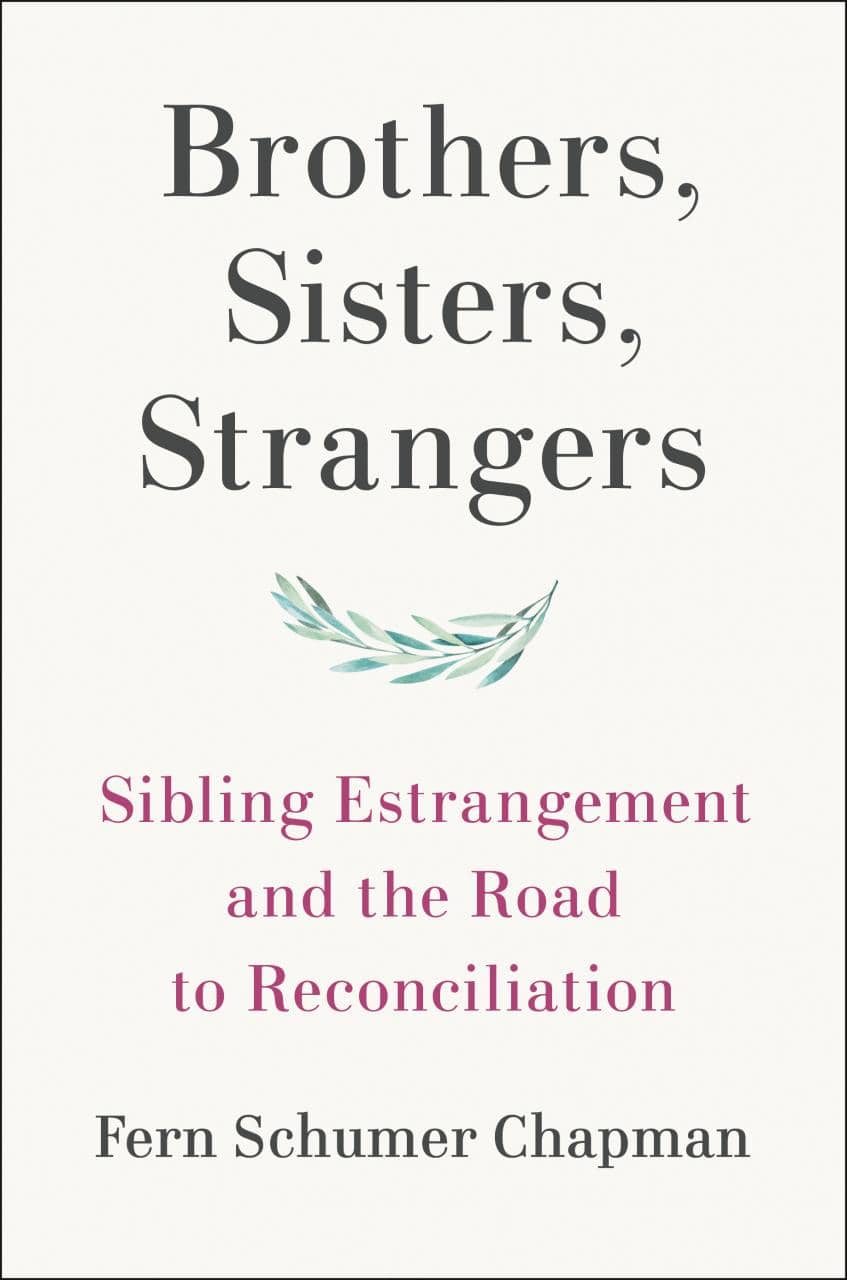
    Excerpted from BROTHERS, SISTERS, STRANGERS: Sibling Estrangement and the Road to Reconciliation by Fern Schumer Chapman, published by Viking Books, an imprint of Penguin Publishing Group, a division of Penguin Random House, LLC. Copyright © 2021 by Fern Schumer Chapman. Available now.

    View the original article at thefix.com

  • The End

    The End

    With each sip I take, my brain and body scream “you freaking alcoholic,” and I know at that moment I can no longer do this.

    The last drink I have is a flute of champagne.

    It’s New Year’s Eve.

    My husband reserves a special room for us at a nearby hotel. He buys an imperial bottle of Moet, a misplaced purchase for this particular occasion. We’re making a last ditch effort at saving our marriage. A gala’s going on in the ballroom below, where we journey to join the revelers.

    Lights twinkle, streamers hang, and chandeliers glisten.

    I hardly notice.

    The band plays songs that were once my favorites.

    I hardly hear. 

    Hoards of gleeful couples celebrate around us.

    We dance with them, pretending to have a good time.

    But I know the end is creeping near.

    My husband’s been having an affair with a woman half his age. He hasn’t come clean yet, but my gut knows something’s going on. So I bleach my hair a sassier shade of blond, starve myself in hopes of losing the weight I know he hates, turn myself inside out to get him to notice me again.

    But mostly I drink.

    Because of my Catholic upbringing, I have a list of rules I follow.

    My commandments of drinking. I only have three. Ten is too many.

    1) No drinking before 5:00. I watch the clock tick away the minutes. It drives me crazy.

    2) No drinking on Tuesdays or Thursdays. I break this all the time. It’s impossible not to.

    3) No hard liquor. Only wine and beer. I feel safe drinking those.

    Anything else means, well, I’ve become my parents.

    Or even worse, his. I can’t bear to go there.

    One night, when he takes off for a weekend conference, or so he says, I get so stinking drunk after tucking my daughter in for the night, I puke all over our pinewood floor. All over those rich amber boards I spent hours resurfacing with him, splattering my guts out next to our once sexually active and gleaming brass bed.

    Tarnished now from months of disuse.

    The following morning, my five-year-old daughter, with sleep encircling her concerned eyes, stands there staring at me, her bare feet immersed in clumps of yellow. The scrambled eggs I managed to whip up the night before are scattered across our bedroom floor, reeking so bad, I’m certain I’ll start retching again. I look down at the mess I made with little recollection of how it got there, then peer at my daughter, her eyes oozing the compassion of an old soul as she says, “Oh Mommy. Are you sick?” Shame grips every part of my trembling body. Its menacing hands, a vice around my pounding head. I can’t bear to look in her eyes. The fear of not remembering how I’ve gotten here is palpable. Every morsel of its terror is strewn across my barf-laden tongue and I’m certain my daughter knows the secret I’ve kept from myself and others for years.

    You’re an alcoholic. You can’t hide it anymore.

    Every last thread of that warm cloak of denial gets ripped away, and here I am, gazing into the eyes of my five-year old daughter who’s come to yank me out of my misery.

    It takes me two more months to quit.

    Two months of dragging my body, heavy with remorse, out of that tarnished brass bed to send my daughter off to school. Then crawling back into it and staying there, succumbing to the disjointed sleep of depression. Until the bus drops her off hours later, as her little finger, filled with endless kindergarten stories, pokes me awake.

    Each poke like being smacked in the face with my failures as a mother.

    The EndAnd then New Year’s Eve shows up and I dress in a slinky black outfit, a color fitting my descending mood, a dress I buy to win him back. The husband who twelve years before drives hundreds of miles to pursue this wayward woman, wooing me over a dinner I painstakingly prepare, as I allow myself to wonder if he in fact, may be the one. We dine on the roof of the 3rd floor apartment I rent on 23rd and Walnut, in the heart of Philadelphia where I work as a chef, and where I tell him over a bottle of crisp chardonnay that I might be an alcoholic. He laughs, and convinces me I’m not. He knows what alcoholics look like. Growing up with two of them, he assures me I am nothing at all like his parents.

    His mother, a sensuous woman with flaming hair and lips to match, passes out in the car on late afternoons after spending hours carousing with her best friend, a woman he’s grown to despise. Coming home from school, day after day, he finds her slumped on the bench seat of their black Buick sedan, dragging her into the house to make dinner for him and his little brother and sister, watching as she staggers around their kitchen. His father, a noted attorney in his early years, drinks until he can’t see and rarely comes home for supper. He loses his prestigious position in the law firm he fought to get into, and gets half his jaw removed from the mouth cancer he contracts from his unrestrained drinking. He dies at 52, a lonely and miserable man.

    “I know what alcoholics look like,” he says. “You’re not one of them.”

    I grab onto his reassurance and hold it tight.

    And with that we polish off the second bottle of chardonnay, crawl back through the kitchen window and slither onto the black and white checkered tile floor, in a haze of lust and booze, before we creep our way into my tousled and beckoning bed. It takes me another twelve years to hit bottom, to peek into the eyes of the only child I bring into this world, reflecting the shame I’ve carted around most of my life.

    So on New Year’s Eve, we make our way up in the hotel elevator. After crooning Auld Lang Syne with the crowd of other booze-laden partiers still hanging on to the evening’s festivities, as the bitter taste of letting go of something so dear, so close to my heart, seeps into my psyche. A woman who totters next to me still sings the song, with red stilettos dangling from her fingers. Her drunken haze reflects in my eyes as she nearly slides down the elevator wall.

    At that moment, I see myself.

    The realization reluctantly stumbles down the hall with me, knowing that gleaming bottle of Moet waits with open arms in the silver bucket we crammed with ice before leaving the room. Ripping off the foil encasing the lip of the bottle, my husband quickly unfastens the wire cage and pops the cork that hits the ceiling of our fancy room. Surely an omen for what follows. He carefully pours the sparkling wine, usually a favorite of mine, into two leaded flutes huddling atop our nightstand, making sure to divide this liquid gold evenly into the tall, slim goblets that leave rings at night’s end. We lift our glasses and make a toast, to the New Year and to us, though our eyes quickly break the connection, telling a different story.

    As soon as the bubbles hit my lips, from the wine that always evokes such tangible joy and plasters my tongue with memories, I know the gig’s up. It tastes like poison. I force myself to drink more, a distinctly foreign concept, coercing a smile that squirms across my face. I nearly gag as I continue to shove the bubbly liquid down my throat, not wanting to hurt my husband’s feelings, who spent half a week’s pay on this desperate celebration. But with each sip I take, my brain and body scream you freaking alcoholic, and I know at that moment I can no longer do this. When I put down that glass, on this fateful New Year’s Eve, I know I’ll never bring another ounce of liquor to my lips.

    I’m done.

    There’s no turning back.

    And as we tuck ourselves into bed, I keep it to myself. 

    Each kiss that night is loaded with self-loathing and disgust. 

    Those twelve years of knowing squeezes tightly into a fist of shame.

    Little does my husband know, if he climbs on top of me,

    he’ll be making love to death itself. 

    Instead, I turn the other way and cry myself silently to sleep.

    Your days of drinking have finally come to an end.

    And you can’t help but wonder…

    will your marriage follow?


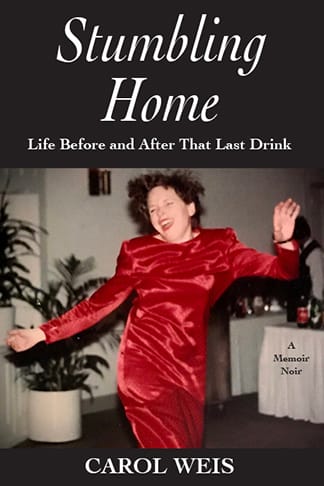
    Excerpted from STUMBLING HOME: Life Before and After That Last Drink by Carol Weis, now available on Amazon.

    View the original article at thefix.com

  • Intervention

    I did not know that the next time I held her body, it would be chips of bone and gritty ash in a small cardboard box.

    The following is an excerpt from The Heart and Other Monsters by Rose Andersen.

    I cannot remember my sister’s body. Her smell is gone to me. I do not recall the last time I touched her. I think I can almost pinpoint it: the day I asked her to leave my home after I figured out she had stopped detoxing and started shooting up again, all the while trying to sell my things to her drug dealer as I slept. When she left, she asked me for $20, and I told her that I would give it to her if she sent me a picture of a receipt to show me she spent the money on something other than drugs. “Thanks a lot,” she said, sarcastically. I hugged her, maybe. So much hinges on that maybe, the haunting maybe of our last touch.

    The last time I saw my sister was at an intervention at a shitty hotel in Small Town. Our family friend Debbie flew my stepmother and me there in her three-seater plane. The intervention was put together hastily by Sarah’s friend Noelle, who called us a few days beforehand, asking us to come. There were little resources or time to stage it properly—we couldn’t afford a trained interventionist to come. Noelle told us she was afraid Sarah was going to die. I agreed to fly with Debbie and Sharon because Small Town was far away from home and I didn’t want to drive.

    Debbie sat in the pilot’s seat, and I sat next to her. My stepmother was tucked in the third seat, directly behind us. It wasn’t until takeoff that I realized with my body what a terrible decision it was to fly. I am terrified of heights and extremely prone to motion sickness. I was not prepared for what it meant to be in a small plane.

    I could feel the outside while inside the plane. The vibration of chilly wind permeated through the tiny door and gripped my lungs, heart, head. It would have taken very little effort to open the door and fall, an endless horrifying fall to most-certain death. From the first swoop into the air, my stomach twisted into a mean, malicious fist that punched at my bowels and throat. For the next hour I sat trembling, my eyes shut tight. Through every dip, bounce, and shake, I held back bile and silently cried.

    When we landed, I lurched off the plane and threw up. I do not remember what color it was. My stepmom handed me a bottle of water and half a Xanax, and I sat, legs splayed on the runway, until I thought I could stand again.

    My sister vomited when she died. She shit. She bled. How much is required to leave our body before we are properly, truly, thoroughly dead? I dreamed one night that I sat with my sister’s dead body and tried to scoop all her bodily fluids back inside her. Everything wet was warm, but her body was ice-cold. I knew that if I could return this warmth to her, she would come back to life. My hands were dripping with her blood and excrement, and while begging her insides to return to her, I cried a great flood of mucus and tears. This I remember, while our last touch still evades me.

    My sister was late to her intervention. Many hours late. Seven of us, all women, five of us in sobriety, sat in that hot hotel room, repeatedly texting and calling Sarah’s boyfriend, Jack, to bring her to us. I realized later that he probably told her they were going to the hotel to get drugs.

    The hotel room was also where Sharon, Debbie, and I would be sleeping that night. It held two queen-size beds, our small amount of luggage, and four chairs we had discreetly borrowed from the hotel’s conference room. I sat on one of the beds, perched on the edge anxiously, trying not to make eye contact with anyone else. I didn’t know many of the other people there.

    When I told my mom about the intervention days before, I had immediately followed with “But you don’t need to come.” There were so many reasons. She has goats and donkeys, cats and dogs who needed to be taken care of. She didn’t have a vehicle that could make the drive. She could write a letter, I said, and I would give it to Sarah. The truth was, I didn’t feel like managing her now-acrimonious relationship with Sharon. I didn’t want to have to take care of my mom, on top of managing Sarah’s state of being. It occurred to me, sitting in this crowded, strange room, that I might have been wrong.

    Sitting diagonally across from me was Sarah’s close friend Noelle, who had organized everything. Sarah and Noelle had met in recovery, lived together at Ryan’s family home, and become close friends. They had remained friends even when Sarah started using again. Helen, a fair-haired middle-aged woman who was not one of the people Sarah knew from recovery but rather the mother of one of Sarah’s boyfriends, sat on the other bed. Sarah’s last sponsor, Lynn, sat near me. I had to stop myself from telling her how Sarah had used her name on her phone. Sitting in one of the chairs was the woman who was going to run the intervention. I cannot remember her name now, even though I can easily recall the sound of her loud, grating voice.

    The interventionist had worked at Shining Light Recovery, the rehab Sarah had been kicked out of about a year and a half before, and was the only person Noelle could find on short notice. She had run her fair share of interventions, she told us, but she made it clear that because she hadn’t had the time to work with us beforehand, this wouldn’t run like a proper intervention. She smelled like musty clothes and showed too many teeth when she laughed. She talked about when she used to drink, with a tone that sounded more like longing than regret. When she started to disclose private information about my sister’s time in rehab, I clenched my hands into a fist.

    “I’m the one that threw her out,” the woman said. “I mean, she’s a good kid, but once I caught her in the showers with that other girl, she had to go.” Someone else said something, but I couldn’t hear anyone else in the room. “No sexual conduct,” she continued. “The rules are there for a reason.” She chuckled and took a swig from her generic-brand cola. I felt hot and ill, my insides still a mess from the plane ride. We waited two more hours, listening to the interventionist talk, until Jack texted to say they had just pulled up.

    Intervention

    When my sister arrived, she walked into the room and announced loudly, “Oh fuck, here we go.” Then she sat, thin, resentful, and sneering, her hands stuffed into the front pocket of her sweatshirt. Oh fuck, here we go, I thought. The interventionist didn’t say much, in sharp contrast to her chattiness while we were waiting. She briefly explained the process; we would each have a chance to speak, and then Sarah could decide if she wanted to go to a detox center that night.

    We went in turns, speaking to Sarah directly or reading from a letter. Everyone had a different story, a different memory to start what they had to say, but everyone ended the same way: “Please get help. We are afraid you are going to die.” Sarah was stone-faced but crying silently. This was unusual. When Sarah cried, she was a wailer; we called it her monkey howl.

    When we were younger, we watched the movie Little Women again and again. We would often fast-forward through Beth’s death, but sometimes we would let the scene play out. We would curl up on our maroon couch and cry as Jo realized her younger sister had died. For a moment I wished for the two of us to be alone, watching Little Women for the hundredth time. I could almost feel her small head on my shoulder as she wailed, “Why did Beth have to die? It’s not fair.” She sat across the room and wouldn’t make eye contact with me.

    I addressed Sarah first with my mom’s letter. I started, “My dear little fawn, I know that things have gone wrong and that you have lost your way.” My voice cracked and I found I couldn’t continue, so I passed it to Noelle to read instead. It felt wrong to hear my mother’s words come out of Noelle’s mouth. Sarah was crying. She needs her mom, I thought frantically.

    When it came time to speak to her myself, my mind was blank. I was angry. I was angry that I had to fly in a shitty small plane and be in this shitty small room to convince my sister to care one-tenth as much about her life as we did. I was furious that she still had a smirk, even while crying, while we spoke to her. Mostly, I was angry because I knew nothing I could say could make her leave this terrible town I had driven her to years before, and come home. That somewhere in her story there was a mountain of my own mistakes that had helped lead us to this moment.

    “Sarah, I know you are angry and think that we are all here to make you feel bad. But we are here because we love you and are worried you might die. I don’t know what I would do if you died.” My sister sat quietly and listened. “I believe you can have any life you want.” I paused. “And I have to believe that I still know you enough to know that this isn’t the life you want.” The more I talked, the further away she seemed, until I trailed off and nodded to the next person to talk.

    After we had all spoken, Sarah rejected our help. She told us she had a plan to stop using on her own. “I have a guy I can buy methadone from, and I am going to do it by myself.” Methadone was used to treat opioid addicts; the drug reduced the physical effects of withdrawal, decreased cravings, and, if taken regularly, could block the effects of opioids. It can itself be addictive—it’s also an opioid. By law it can only be dispensed by an opioid treatment program, and the recommended length of treatment is a minimum of twelve months.

    “I have a guy I can buy five pills from,” Sarah insisted, as if that was comparable to a licensed methadone center, as if what she was suggesting wasn’t its own kind of dangerous.

    “But honey,” my stepmother said gently, “we are offering you help right now. You can go to a detox center tonight.”

    “Absolutely not. I am not going to go cold turkey.” Sarah was perceptibly shaking as she said this, the trauma of her past withdrawals palpable in her body. “I don’t know if I can trust you guys.”

    She gestured to my stepmom and me. “I felt really betrayed by what happened.” The heroin in her wallet, the confrontation at Sharon’s, Motel 6, breaking into her phone. “You guys don’t understand. Every other time I’ve done this, I’ve done this for you, for my family.” She sat up a little straighter. “For once in my life, it’s time for me to be selfish.”

    It was all I could do not to slap her across the face. I wanted desperately to feel my hand sting from the contact, to see her cheek bloom pink, to see if anything could hurt her. She wasn’t going to use methadone to get clean. She just wanted us to leave her alone. 

    I made an excuse about needing to buy earplugs to sleep that night and walked out. I did not hug her or look at her. I did not know I would not see her again. I did not know I would not remember our last touch. I did not know that the next time I held her body, it would be chips of bone and gritty ash in a small cardboard box.
     

    THE HEART AND OTHER MONSTERS (Bloomsbury; hardcover; 9781635575149; $24.00; 224 pages; July 7, 2020) by Rose Andersen is an intimate exploration of the opioid crisis as well as the American family, with all its flaws, affections, and challenges. Reminiscent of Alex Marzano-Lesnevich’s The Fact of a Body, Maggie Nelson’s Jane: A Murder, and Lacy M. Johnson’s The Other Side, Andersen’s debut is a potent, profoundly original journey into and out of loss. Available now.


    View the original article at thefix.com

  • My Daughter / Myself

    I would spend a decade trying to reconcile two feelings: complete hatred for the stranger who was living in my daughter’s body and total surrender to my love for her.

    (The following is an excerpt from a longer work.)

    The following summer, Oscar developed such serious health problems that we had to put him down. In July, Angel came over to say goodbye to him. Then Carter and I walked him to the vet and held him down while he received his injection. Annie couldn’t bear to be there. As we were sobbing over his dying body, unable to leave, the aide gently suggested that we needed to let go of him. We left the building and Carter and I held onto each other all the way home. Annie stayed in her room and I tried, unsuccessfully, to reach her.

    “Annie,” I said, knocking on her door, “please let me in. I know how you feel; we’re all sad to lose Oscar. I just want to hug you and tell you it’ll be okay. Please don’t isolate yourself like this. Come out and get something to eat with me and Carter.”

    “Mom, I couldn’t eat a thing right now. I just want to go to sleep. I’ll see you in the morning.”

    I couldn’t eat anything, either. We were both stunned by the absence of our much-beloved dog and, not surprisingly, we lost our appetites. Even bulimics can lose their appetites, at least for a while, when they’re sad.

    Another letting go served to uproot us as Angel and I sold our large house a month later. We all seemed to scatter like the four winds afterwards. Caroline had moved to California and Carter was living with a friend in D.C. I moved into a condominium near my high school, and Annie moved into a friend’s apartment.

    Her first year of living independently seemed uneventful at first. Frequently visiting her in the apartment she shared, I took her furniture from her old bedroom so she would feel at home in her new digs. But there were signs that she was changing. She had never had many boyfriends in high school. Then one Sunday morning I arrived to find a friend of hers on the sofa, clearly feeling at home. Later I learned he was a bartender at a watering hole and drug hotspot in Adams Morgan. Well, she was on her own. And by now she was twenty-one; I felt I didn’t have much leverage.

    In the spring, though two courses short of her graduation requirements at George Mason University, Annie was allowed to walk with her class, cap and gown and all.

    Angel, his wife and I all dressed up for our second child’s college graduation in the spring of 2001, and we all viewed this ceremony as a symbol of hope that Annie was willing and anxious to embrace her adulthood and take on more responsibilities, like other young people.

    “Hey, Mom, I want you to meet my friend Shelly. She got me through statistics sophomore year.”

    “Hi, Shelly, nice to meet you. Thanks for helping Annie. Is your family here today?”

    “No. They had to work. No big deal for them anyway.”

    “Oh. Well I think it’s a big deal, so congratulations from me! It was nice to meet you, Shelly, and good luck.”

    Annie’s graduation distracted us from being curious about what she was doing in the evenings. Again, she went to a lot of trouble to cover up behavior that she knew would alarm us and might threaten an intervention.

    Just like her mother.

    At the end of the summer, she asked if she could move into my basement. Her roommate was buying a condo, she said, and their lease was up anyway. Later on, when I watched in horror as the tragedy unfolded in my own house, I wondered about the truth of that. I thought maybe the roommate saw where Annie was going and asked her to leave. No matter. She was in my house now.

    The circle was about to close.

    Then a shocking discovery—a bowl of homemade methamphetamine on top of my dryer! I had been wondering about the stuff she’d left in my basement laundry room. I read the label: muriatic acid. I looked it up on my computer. So that’s what she used it for!

    I moved the bowl up to the kitchen and put it next to the sink, where recessed lighting bore down on it. She couldn’t miss it when she came in the front door. I thought I’d be ready for the confrontation.

    At 4:30 in the morning, she exploded into my bedroom while Gene and I were sleeping. I’m glad he was with me that night.

    “How dare you mess with my things downstairs! Don’t you ever touch my stuff again, you fucking bitch!” she roared. I thought I was dreaming when I saw her there, animal-like, with wild, blood-shot eyes.

    Gene held onto me as I sobbed into my pillow. “Oh God, this isn’t happening, Gene, please tell me this isn’t happening!”

    A half hour later, pulling myself together, I went downstairs to make coffee. I still had to go to work.

    Annie stomped upstairs from the basement with a garbage bag full of her clothes and brushed by me without a word or a look. After she slammed the door behind her, I ran to the kitchen window and saw her get into her car.

    My daughter went from crystal meth, to cocaine, to heroin, as though it were a smorgasbord of terrible choices. Despite four rehabs and family love, her addictive disease continued. There were periods of remission, but they were short-lived. My daughter lived in one pigsty after another, her boyfriends all drug addicts. I would spend a decade trying to reconcile two feelings: complete hatred for the stranger who was living in my daughter’s body and total surrender to my love for her.

    Because of our superficial differences, I didn’t realize right away how alike we were.

    We’ve both suffered from depression since we were young. The adults in our lives didn’t always acknowledge our screams. We turned to substance abuse for relief: food, cigarettes, and drugs. I added alcohol to my list, but I’m not aware that she ever drank alcoholically. My daughter moved on to heroin.

    At least I cleaned up well.

    Though Annie was no longer living with me at that point, I tried to continue embracing her, accepting her, so she’d know she was still loved. But I couldn’t yet distinguish between helping and enabling.

    I did unwise, misguided, things: I gave her money; I paid her debts; I shielded her from jail when she broke the law.

    “Are you sure you don’t want us to contact the authorities about this, Mrs. Rabasa?” the rep asked me when she stole my identity to get a credit card.

    “Oh no,” terrified of her going to jail, “I’ll handle it.”

    And I did, badly.

    This was enabling at its worst. Convinced her addiction came from me, that guilt crippled me and my judgment.

    Placing a safety net beneath her only served to ease my anxiety. It did nothing to teach her the consequences of her behavior. I kept getting in her way.

    It felt like I was in the twilight zone whenever I visited her. My daughter was buried somewhere deep inside, but the addict was in charge. One body, split down the middle: my daughter, Annalise; and a hard-core drug addict. A surreal nightmare.

    Her apartment smelled of incense and dirty laundry. The soles of her shoes flopped until she could get some duct tape around them. She didn’t offer me anything to eat because there was no food in the refrigerator.

    Nothing.

    Twice while I was there she ran to the bathroom to vomit.

    Heroin. Dope sick.

    Annie was hijacked by a cruel disease—cruel because it robs you of yourself while you’re still alive. While destroying your mind, it keeps your body alive long enough to do a lot of damage before it actually kills you. For many drug addicts, it’s an agonizingly slow death.

    It was like looking at a movie of my life in reverse, erasing all the good fortune that brought me to where I was, leaving only the pain and ugliness—and hopelessness—of a wasted life. How I might have ended up.

    For better or worse, my life had been unfolding as many do with addictive personalities. But to see the same disease taking over the life of my child—to see that mirror up close in front of me—was threatening to be my undoing.

    Trying to hold it together, I was imploding. Like all addicts and families of addicts, survival can be reached from many places, but often from the bottom.

    Mine was waiting for me.
    Excerpted from Stepping Stones: A Memoir of Addiction, Loss, and Transformation, to be released on June 16 by She Writes Press. It is the sequel to the award-winning debut memoir, A Mother’s Story: Angie Doesn’t Live Here Anymore (Maggie C. Romero), available on Amazon and where other books are sold.

    View the original article at thefix.com

  • Redefining Recovery: The Evolution of the Addiction Memoir

    Redefining Recovery: The Evolution of the Addiction Memoir

    From “Drugstore Cowboy” to “My Fair Junkie,” the focus of addiction literature has shifted to recovery.

    In July, the Centers for Disease Control and Prevention announced that last year, overdose deaths dropped slightly—from 70,000 to 68,000—the first dip since 1990.

    “Lives are being saved, and we’re beginning to win the fight against this crisis,” tweeted Alex Azar, the U.S. secretary of health and human services.

    But who’s “we,” exactly?

    Though I doubt Azar had contemporary literature in mind in the fight against addiction, it was the first thing I thought of when I read the statistic. For years, drugs and alcohol were so romanticized in literary culture, the words “writer” and “addict” seemed inseparable. Here it’s worth noting that, while you and perhaps many of the authors listed here might disagree, for this article—and, truthfully, because I do in general—I’m merging alcoholism and drug addiction into one thing, even if the individual recovery looks different.

    Back in 1990—when overdose deaths began to climb—novels like Drugstore Cowboy (1990), Leaving Las Vegas (1990), and Jesus’ Son (1992) presented a glamorized view of addiction. While these depictions weren’t sanitized, and it could be argued that they were less celebratory of boozy culture than the party chic depicted by F. Scott Fitzgerald and Ernest Hemingway, or even the work of beat generation authors like Jack Kerouac and William S. Burroughs, or later Hunter S. Thompson, these portrayals left their mark.

    Sarah Hepola, author of 2014’s best-selling memoir, Blackout (a redemptive portrait of addiction), agrees that she, too, “link[ed] writing with drinking and a kind of artful indulgence and libertinism… something close to a job description.” 

    But the culture has changed dramatically, and books today—like Hepola’s—offer more views of recovery than debauchery.

    The groundwork was perhaps first laid with Caroline Knapp’s Drinking, A Love Story (1996). Knapp took on not only addiction, but cutting, anorexia, and compulsive spending. Harrowing as her account was, the narrative throughout was informed by the lens of inevitable sobriety.

    Hepola remembers reading that book, “Chardonnay in hand.” But even if her “stomach sank” when Knapp sobered up, Hepola sensed that the author “was also thriving.” For Hepola, reading that book was part of an awakening that sobriety “might not be the death [she] feared.”

    Yet it wasn’t until Mary Karr’s Lit came out in 2009 that readers really got the chance to see addiction from the vantage point of long-term sobriety. This isn’t to say Karr made recovery look easy. As Karr wrote, “I haven’t so much gone insane as awakened to the depth and breadth of my preexisting insanity, a bone-deep sadness or a sense of having been a mistake.” That she would recover, however, was a foregone conclusion. That she would flourish—more so as a sober person than a drunk one—was obvious from her career.

    Since then, books more focused on recovery than addiction began to trickle in. There was Bill Cleggs’ 90 Days (2012), Hepola’s Blackout (2014), Lisa F. Smith’s Girl Walks Out of a Bar (2016), Amy Dresner’s My Fair Junkie (2017), and Catherine Gray’s The Unexpected Joys of Being Sober (2017).

    Then last year brought an avalanche. Leslie Jamison’s The Recovering, Kristi Coulter’s Nothing Good Can Come from This, Janelle Hanchett’s I’m Just Happy to Be Here, Porochista Khakpour’s Sick, Stephanie Wittels Wachs’ Everything is Horrible and Wonderful, and Tom Macher’s Halfway all came out in 2018.

    And it was this plethora of titles that made me wonder, could this uptick in rehabilitative tales have contributed to the decrease in overdose deaths? 

    It may not be possible to establish a cause-effect relationship, but there are clear correlations between art and life. The Netflix show 13 Reasons Why (based on a novel of the same name), has faced tremendous backlash over alleged copycat suicides, and research has shown these concerns to be valid. And despite the number of holes that could be poked in this idea—starting with how incomplete this list of titles is and including the fact that this study was provoked by the broadcast and not the book—it’s undeniable that recovery from addiction has a new kind of cachet thanks to these books. 

    And this trend doesn’t show signs of slowing, with more recovery titles on the way, including Dan Peres’ As Needed for Pain (February 2020), Eileen Zimmerman’s Smacked: A Story of White Collar Ambition, Addiction, and Tragedy (February 2020), Erin Khar’s Strung Out: One Last Hit and Other Lies That Nearly Killed Me (February 2020), and Rose Andersen’s The Heart and Other Monsters: a Memoir (July 2020).

    What may be even more interesting—and, dare I say, hopeful—about these titles, is that each offers its own individual path in recovery. There’s no one right way to do it, which not only reflects reality, but might make the prospect more palatable to more people.

    Khar, for instance, recalls looking for relatable stories“There were very few books about drug addiction written by women, and I didn’t find any of them.” So she set out to write one.

    “I want my book to give people hope and to reduce the stigma around speaking about drug addiction,” says Khar. “I wrote Strung Out because it was the book I needed when I was younger.” 

    Andersen, whose forthcoming book addresses both her and her deceased sister’s addiction, puts it bluntly—”For so long, [the] addiction [narrative] has been centered on the white, male experience,” she says. “Even basic AA literature was written by and for men, so to expand the voices that can be read and heard in this genre is vital.”

    Another important facet of this trend is that getting sober isn’t the end of the story. Hepola puts it this way: “Addiction and alcoholism has been a helpful lens through which to understand my relationship with alcohol (and food and men), but it’s not the only lens.”

    These books reassure us that there is life beyond addiction, more to recovery than the sad dirge of replaying past exploits.

    “Sobriety is really about cracking open possibilities,” says Hepola. “A life that is so much bigger than the bar stool.”

    View the original article at thefix.com

  • Lara B. Sharp's Transformation

    Lara B. Sharp's Transformation

    “AA is like parenting for adults. I got to have it as a child. My mom abandoning me in AA was the best thing she ever did for me.”

    Close your eyes for a sec and pretend you’re watching a movie. It’s Christmas Eve, 1975. Lara, a five-year-old girl with white-gold hair, big green eyes, and olive skin, is scurrying to keep up with her mother, a five-foot-eight beauty.

    Noni’s hair is black, her eyes blacker. Her stiletto heels click at a manic pace on the Manhattan pavement. With her large pupils and long-legged strides, she seems to be on speed but could also be soused. Her upper body teeters down Delancey Street. By rote she steps over drunks and around junkies without slowing, oblivious to her daughter racing behind. Lara mimics Noni’s dodges and weaves, also unfazed by the bodies littering the sidewalk. 

    Everybody Has a Screwed-Up Childhood, Right?

    The Lower East Side neighborhood was “kind of peaceful then. Heroin addicts are docile,” Sharp tells The Fix. “They don’t make trouble.” Yet, as she and her Mom laughed at the late shoppers, a speeding bullet whizzed by Sharp’s head.

    “It was so close it blew out my left ear. We never saw doctors so nobody knew I lost my hearing on that side.” Noni frequently exploded at Sharp for “ignoring” her, but the child couldn’t hear much of what was said. Noni mistook the lack of response as proof that Sharp was dimwitted, or willfully not paying attention.

    “Everybody has a screwed-­­­up childhood, right?” Sharp smiles and shrugs. “The only kids I knew were like me—living with a single mom, with no idea who their father was. We were like goldfish in water. You can’t see the water because it’s all you know.”

    When her friend Marisol bragged about getting a letter from her father, Sharp didn’t believe her at first.

    “I was so jealous. Not only did Marisol have a father, she knew his name and where he was. She could go visit him. They had conversations.” In Sharp’s five-year-old brain, it didn’t matter that Marisol’s father lived in prison.

    Today Sharp is a graduate of Smith College and has written for Teen Vogue, Longreads, and is a top writer on Quora. Two years ago, her “Mansplaining Pool Post” went viral.

    Poolside Johnny

    Sharp explained what prompted the post: “Women all know a Poolside Johnny. We’ve met him in a hundred different places in a hundred different ways.” She was engrossed, reading Rebecca Solnit’s book Men Explain Things to Me, when a man walked up and offered to be her mentor. 

    “It was so funny. I started thumb-typing everything he said.” When she told him her name was Gloria Steinem, he responded “it’s too Jewish.”   

    “So I said, ‘How about Betty Friedan?’ He just wasn’t getting it. He didn’t know who they were or that they both went to Smith College. While he’s still talking, I popped the conversation on the internet.”

    When she realized he was not going to stop talking, she left. 

    “I took a long shower,” she said. “When I get out, my phone is blowing up! Facebook alerts. My first thought was a terrorist attack. Then I see it’s my post. It kept going and going.”

    The famous post has now been written about in 6 languages and 20 publications including Glamour, Elle, The Daily Mail, Huffington Post and Refinery29. Sharp was surprised by the attention, especially from literary agents who wanted to rep her memoir, Do the Hustle, about growing up in foster care.

    Love Is…

    “My mom taught me what I needed to know. Like how to falsify documents—birth certificates, marriage licenses. We ran them through tea and let them dry on the window sill to make them look aged.” She also gave Sharp notebooks “to write everything down,” and great advice, like “Sometimes abortions are better than husbands.”

    Beautiful Noni attracted men and married some. Sharp has no idea exactly how many.

    Sharp self-published her first book at age five. She folded pieces of paper into a book and punched holes in it with scissors, tying it together with a ribbon. The book was a gift for Noni’s most terrifying husband, who verbally and physically abused both of them. 

    Sharp’s book was titled Love Is. Each page contained an answer: A hug. A kiss. Asking someone how they are. She thought if he had that information, he would be nice.

    “It didn’t go as planned,” said Sharp. “He accused me of plagiarizing. A five-year-old. So yeah, that was my first book, Love Is for a sociopath.”

    Noni’s struggles with alcohol and drugs started before Sharp was born. “She was that way my whole life, which I think is good because if you had a great parent and then they go downhill, I’m sure it’s a lot harder.”

    Sharp didn’t know any other life: “I met a girl outside of our circle who invited me over. It was strange when we walked in and her mother wasn’t lying face down in a puddle of her own body fluid. I was so surprised when the girl’s mother served sandwiches at a table with matching chairs.”

    Sharp recalls Noni’s feelings were so overwhelming, she couldn’t control her behavior: “When my mother had a feeling, she expressed it by throwing a chair. When I voiced a feeling, even if it was just, I’m hungry, I’m hot, I’m tired, my mother’s immediate response was, ‘No you’re not.’”

    AA and Foster Care

    When Noni found AA, Sharp learned there were people in the world who lived and behaved differently. 

    “Sitting in those rooms, I listened to people express themselves. They did it so clearly, appropriately. Well, despite the cursing,” she laughs. “What I mean is, they’d use words to say what had happened and how it made them feel and talk about what they were going to do. They’d say things like, ‘I’m going to sit with the feeling.’ That’s when, at seven, I realized, ‘Wow, you don’t have to react to a feeling.’”

    By age eight, Sharp understood that Noni wasn’t bad, she was sick. “AA is like parenting for adults. I got to have it as a child. My mom abandoning me in AA was the best thing she ever did for me.” After getting her court slip signed, Noni would leave Sharp in the meeting while she went to the bar across the street. In those rooms, Sharp learned that addiction was hereditary and decided she didn’t want to test her luck. She considers herself an “alcoholic waiting to happen” and has always been cautious about drinking.

    At nine, Sharp went into foster care. At every new place she was shuffled to, she asked if they knew how to reach her mother.” Responses ranged from “No, she couldn’t take care of you” to “She left you and isn’t coming back.”

    “Noni never came to visit me. No one did.” She tried every number in her notebook. None worked. Finally, she reached one of Noni’s friends who said Noni had moved to Florida.

    “Birthdays passed—no calls, no cards. By 12, I started to believe she’d abandoned me,” Sharp said, “I figured nobody wants me because I’m unlovable. I talk too much, get in the way. I’m a burden.”

    Sharp told me, “I think those social workers were trying to help but, as fucked up as my mother was, before foster care, I knew she loved me. Foster care took that away.”

    The places she lived all had one thing in common: Jesus. Most of Sharp’s foster parents were fundamentalist Christians.

    “I didn’t do Jesus. I wasn’t down with that. I knew this hippie guy from Egypt didn’t look like Kurt Cobain. That nonsense never sat well with me. And I’m glad my mother passed on her rabid femininity. She never yelled ‘Oh my God.’ For her it was, ‘Oh my Goddess.’”

    On the Grift

    Some of the families had money, but many just liked collecting a check. They’d take in as many kids as they could but they’d spend the money and not feed the foster kids.

    “We were always so hungry,” said Sharp. “Whenever they gave us anything to eat it was rice.”

    As she got older, her options narrowed.

    “Once you hit double digits, the number of homes that will take you in plummets.”

    The majority of older kids live in group homes, residential facilities. Or, if there’s no place to put them, foster kids are sent to detention homes. Sharp says at group homes, there was a lot of Christianity, too.

    Sharp credits those East Village AA meetings with teaching her that if a situation is uncomfortable remove yourself from the situation. At 14, she ran away. Homeless, she wound up sleeping in Washington Square Park where she met “Gay Cher,” a transgender drug addict and sex worker.

    “We were on the grift together,” said Sharp. “Gay Cher became my BFF. She gave me a makeover so I could pass for 18, get a job, and earn enough to rent an apartment.”

    The plan worked. Sharp found jobs in the nightclub business: waitress, hostess, party promoter and bartender. She tried dancing and recalls: “I was a decent go-go dancer but never great at pole dancing. But I made a lot of money from then on.”

    Doing the Next Right Thing

    On 9/11 Sharp lost friends when the towers fell. Aching to do something but feeling helpless, she credits AA for guiding her to “do the next right thing.” At 31, she examined her life and realized she wanted to quit bartending. For years, she’d been serving alcohol to customers who had drinking problems. But, without any formal education, her opportunities were limited. As an avid reader since the days Noni left her alone in libraries, she decided to take the GED. On the day of the test, she ended up in the wrong room and was given a college exam instead of the high school equivalency placement. She aced it, and enrolled in a two-year associate’s degree program for free. After that she won a scholarship to Smith College. With hard work and luck, she found her way to a career as a writer. 

    “I’m not angry at my mom anymore. I’m grateful that she abandoned me in libraries and AA. Now I have a loving and kind husband. We live in a beautiful home in a safe and friendly neighborhood. I learned everything I needed to know to take care of myself. And I’ve done a damn good job.”

    Lara B. Sharp reads an excerpt from her memoir in progress:

    View the original article at thefix.com

  • Nothing Left to Prove: The Joy of Growing Older in Recovery

    Nothing Left to Prove: The Joy of Growing Older in Recovery

    I entered recovery in handcuffs. I had chipped teeth, abscesses, a fresh diagnosis of Hepatitis C. But there I was, sitting in my County orange-colored jumpsuit, breathing in the fragrance of fresh opportunities.

    I invested hundreds of thousands of dollars with the idea that I would be dead by the time I was 30 years old. I was killing myself on an installment plan, knowing the bill would one day be due. I’m not sure if it was genetics or environment, but unfortunately suicidal ideation was a frequent companion starting when I was in sixth grade. The soft-spoken psychologist in the glasses with the round frames said I was “depressed.” I wasn’t quite sure what that meant. I did know I was restless in my own skin. It would be five more years before the warm gloss of drugs lacquered over my feelings.

    If an early demise was the result of continuing on this path, young me speculated that I was willing to pay the price. I didn’t want to live long enough to be touched by the ugly reality the future had in store for me. Ugly was the world my parents lived in: Married for decades, they argued on a daily basis over his drinking and her compulsive shopping. I would sit in my footie pajamas, playing with my stuffed animals, pretending for a moment I was someone else. This was good training for my years of active addiction. I always wished I was someone different. 

    Addiction Was for Other People

    As I delved into the world of drugs, I saw the premature expiration date emerge in the people around me. People just looked older — pain trapped in their cloudy eyes. Young me said that could never happen. Addiction was for other people.

    I was both naive and nihilistic when I took those first few forays into “partying.” Day drinking led to cocaine-fueled nights. There were benzos and meth and whatever I could get my hands on. By the time I got to opioids, I was firmly entrenched in addiction. Heroin became the cornerstone of my self-defeating belief system: The only day worth living was today; that day was only worth living if I had enough drugs. As my habit increased, so did the sinking feeling in the pit of my upset stomach that any day might be my last.

    Maybe this wasn’t what I actually wanted for myself. 

    If Only…

    Wrapped in the covering of a slowly hardening young woman was still this quiet little being who wanted to know what it felt like to be loved. My body was a means for getting the attention I desired, the substances the keys to unlocking my inhibitions. I desperately sought the approval of others. If only I was thin enough, if only I was pretty enough, if only I changed these few things about myself maybe then you would love me. But heroin numbed my ability to care. 

    I had no value beyond what my body could obtain for me. While my addiction included many radically low points, the wear and tear on this unit forced me to gain perspective. Time was crawling along at the same snail’s pace of the dealers I paged from dirty payphones. This can’t be all that life has to offer. I spent nearly a decade dying — what would it be like to live?

    At 27-years-young, I entered recovery in handcuffs. The legacy of impermanence was marked on my physical self: chipped teeth, stretch marks from the weight I’d lost, gained, lost, and gained again. There were circles on my body from areas where I had picked my skin. Holes from abscesses. A fresh diagnosis of Hepatitis C. But there I was, sitting in my County orange-colored jumpsuit, breathing in the fragrance of fresh opportunities. 

    No Shortcuts to Healing

    Asking for rehab was, as the judge stated, the first “intelligent decision” I had made in a decade. I briskly completed a god-awful rehab with horrible success rates as I was eager to move to the next phase of life. I moved into a sober living facility with two garbage bags of belongings and the weight of all my regrets. It wasn’t the material possessions that concerned me, it was the fact that I was going to have to learn to adapt to the world using the vague internal strength I was told I possessed. I was now in charge of the well-being of this newly sober woman of substance. There would be no shortcuts to healing. 

    The process of unraveling the years of unhealthy living started with a whimper. There were 12-step meetings, shitty jobs, meditation, yoga, long walks, inventories, caffeine, terrible sex, and tears shed in front of a paid professional. I needed to cast off the attachment inherent to the vessel given to me by the universe before I could see my value. The adversity I have experienced has made me stronger; like coal pressed into a diamond, I learned I could shine. 

    The day before my 30th birthday, I started dating someone who I would later discover to be the love of my life. This was a less than perfect love, not like the ones in the books I read as a child. It was a realistic love, one that takes out the garbage. It was the kind of love I needed. I finished my degree at 35, and finished graduate school at 37. I found a career I actually enjoyed. I had my last child when I was almost 41. I began to not only see a future for myself but actually start to create one. 

    Hot Flashes and Freedom

    The passing of time has had many challenges: the death of my beloved mother, a few surgeries requiring opioids, my kids screaming they hate me. I have also outlived nearly everyone I knew. Yet, I am happier than I have ever been. There is a liberation of the spirit in knowing I have nothing left to prove. I enjoy the simple pleasures of a good face cream and a tight hug. I also dress in layers. 

    Perimenopause has been a horrible wake-up call. There are days when the anxiety makes me feel like I am slowly being ripped out of my skin. Caffeine, my last addiction, has become my enemy. In my 40’s, a bottomless cup of coffee has been replaced by herbal tea. Sleeping in a pool of sweat under two blankets and a sleeping bag was something I never expected to experience again after I kicked dope. It’s like my body is its own micro climate. My hair is thinning in spots. My nails are brittle. My tolerance for foolishness is at an all-time low. Yet, there is a freedom in being the raw and uncut version of myself. I have acceptance of my strengths and limitations. I want to enjoy every single day of my life. 

    I’m old now, or at least what I once considered old. I have three pairs of reading glasses strewn about my house. Hot flashes and night sweats are the current alarm bells that wake me up in the morning. My chest is starting to sag, followed by my neck. There’s the consistent search for garments that can adequately hide my midsection. I find myself asking for recommendations for shoes that have arch support. But I’ve also achieved a level of satisfaction knowing I have 21 years of mostly good decisions under my belt. At 49, I have the freedom I so desperately sought in my youth. 

    Tomorrow is not promised. And I don’t know how much longer I have left in this world. I spent hundreds of thousands of dollars trying to kill myself. But in the process of dying, I realized I wanted to live.

    View the original article at thefix.com

  • Losing Nanny: The Collateral Damage of Addiction

    Losing Nanny: The Collateral Damage of Addiction

    I can’t help but wonder what could’ve been if my mom’s addiction didn’t suck up and spit out every relationship and person it touched. 

    The few pictures I have of my nanny are stowed away in a cardboard box buried in the back of my bedroom closet. And while I don’t want to throw them away, I feel no urge to dig them out and display them in a faux-wood frame from Target that has the word family written in cursive ribbons around the edges. Although my nanny wasn’t the alcoholic, at least in my life, my relationship with her was just as fraught as the one I had with my mom, the alcoholic. And sadly, it was because of my mom’s addiction that my relationship with my nanny became what it did, and ultimately what it didn’t. 

    Nanny was born Katherine, but the adults called her Kitty. She was thin and never without a cigarette in hand. Her hair was charcoal black and full of thick bulbous curls. She lived on Indian Queen Lane in East Falls, Philadelphia on the first floor of a house she rented and shared with my pop-pop. I don’t know if they were ever legally married, but they had five children: my uncles Tim, Mike, and Larry, and my mom. Dot, the oldest, had a different father, which may be why she never became a drug addict or alcoholic like the rest of them. 

    Nanny and Pop-pop Drank Heavily and Fought Frequently

    According to my mother, when Nanny and Pop-pop were young, they drank heavily and fought frequently, and their public displays of destruction eventually caught the attention of social services. In one fell swoop, my uncles, my mom, and aunt Dot became orphans and were parceled out to stable families. But Nanny fought and got her kids back, which I assume is when she put down the drink for good. Pop-pop, although he retired his fists, died an alcoholic, his tattooed body hijacked by cancer. 

    After my parents divorced when I was four, my mom and I moved back to East Falls. Initially, Mom planned to move in with Nanny until she could afford to rent an apartment for us, but my pop-pop objected because he didn’t want us, “those two bitches,” eating all of his food. Instead, we moved in with my uncle Mike, who lived in an apartment under the Roosevelt Expressway on Ridge Avenue, an eight-minute walk from Nanny’s. I recall my mom and I having to sleep on the floor because Uncle Mike didn’t have furniture. Instead, he had a refrigerator full of Budweiser.

    Eventually, my mom found work waiting tables and Nanny took care of me during the day, walking me to Mifflin Preschool in the morning and picking me up in the afternoon. For lunch, she made ham, orange cheese, and potato chip sandwiches on white bread with mustard. And dessert was a handful of Oreo cookies from the frog-shaped cookie jar she kept on the kitchen table along with a cold, tall glass of full-fat milk. Apparently, Pop-pop was okay with me eating processed cheese and ham; as long as I didn’t dare go near his fried steak and potatoes.

    By the time my mom pulled together the money to rent an apartment, my nanny had assumed the role of default caretaker. My mom’s schedule became an endless stream of barely making it to work during the day, getting plastered at the bar at night, and hanging out with my alcoholic soon-to-be stepfather. Instead of my mom picking me up after lunch, I stayed with Nanny and watched her favorite soap opera, General Hospital, while she sucked backed cigarettes and ironed Pop-pop’s work pants. I sat at the kitchen table at night while she prepared dinner and then examined her every move as she scrubbed and dried each pot and plate. After my bath, I’d sit with her on the edge of the bed and watch M*A*S*H, a show about an American medical unit during the Korean War. 

    Damn It, Why Do I Have to Take Care of You?

    One night she brought in a bowl of black licorice balls and insisted I try one. Never a kid to turn down candy, I popped a ball in my mouth and quickly discovered how much I hated the taste of black licorice. 

    “How’s it?” Nanny asked without taking her eyes off the T.V.

    As saliva filled my mouth, the taste of licorice coated my tongue and slipped between every tooth, reaching the flesh of my cheeks and the back of my lips. Afraid of what would happen if I opened my mouth, I nodded my head yes and walked down the hall to the bathroom. In there, I leaned over the trashcan next to the toilet and spat the ball out. In an attempt to hide what I’d done, I grabbed a wad of toilet paper from the roll and threw it in over the black goo in the can. I don’t know why I did it, but when I got back to Nanny’s room, I sat on her bed, reached into the bowl, and popped another licorice ball in my mouth. I waited a minute, went back to the bathroom, and spit the ball out, just as I did with the first, covering it with toilet paper. I did that at least twice more before Nanny noticed and screamed, “Are you spitting that licorice out?” Terrified, I nodded my head. 

    “Why you doing that?” She asked.

    Still terrified to speak, I answered with a timid shoulder shrug.

    “Damn it, Dawn!” She wailed. “If you don’t like the goddamn things then don’t eat them.”

    Oddly, this was the only kind of interaction I recall having with my nanny. I’d do something typical for a little kid such as trip on my shoelaces, cry when I had to get shots, or accidentally pee on the toilet seat, and she’d scream “Damn it, Dawn!” She’d always follow that up with something like “It doesn’t hurt,” or “Stop being so dramatic,” or “What’d you do now?” 

    I’ve always wondered if what she really wanted to say after “Damn it, Dawn!” was “Why do I have to take care of you?” Looking back, I can’t say I’d blame her if she did.

    Nanny didn’t balk when my mom and I moved in with my stepdad or when they eventually married, even though he was glaringly wrong for her. Under my stepdad’s roof, my mom didn’t have to work, which meant she should have had time to look after me. But her love for alcohol and my stepdad’s penchant for violence made that nearly impossible. 

    Chaos, Instability, and Abuse

    The three of us lived together for four long and terrifying years, marked by a level of chaos, instability, and abuse that I’m still working out in therapy. I can only imagine how much more screwed-up I’d be as an adult if I hadn’t distanced myself from my mom at a young age. And although estrangement has been good for my mental and emotional well-being, it didn’t come without a cost. Cutting off contact with my mom meant severing ties with aunts, uncles, and cousins on that side of my family, relatives whose faces and voices I wouldn’t recognize today. That collateral damage included my nanny. 

    I can’t help but wonder what could’ve been if my mom’s addiction didn’t suck up and spit out every relationship and person it touched. 

    Like Pop-pop, Nanny died of cancer a handful of years ago, but because I was estranged from my mom, I never learned what kind of cancer she had or how long she had it before she passed. I didn’t go to her funeral because I knew my mom would be there and likely not sober. Even as an adult, concern for my own safety was stronger than my desire to pay my respects. I don’t regret that decision. 

    Regrets and Puzzle Pieces

    But I do regret the things I’ll never know about my nanny. I regret not knowing her maiden name, or what county in Ireland her parents were from. I’ll never know if she finished high school, if she had any aspirations beyond motherhood or if she resented having to take care of me when my mom couldn’t. Maybe these questions sound trivial, but for someone whose family has been battered and divided by addiction, the answers become the missing pieces to a puzzle you want to finish but can’t. 

    I still have some pieces, though: memories of potato chip sandwiches on white bread, a fat ceramic frog full of Oreo cookies, and a cardboard box of faded pictures buried in the back of my closet that I can’t throw away. 

    View the original article at thefix.com