Tag: mental health

  • Gloria Harrison: True Recovery Is the Healing of the Human Spirit

    Although Gloria experienced trauma, violence, and institutionalized oppression, she never gave up hope. Now, in recovery, she is a counselor and staunch recovery advocate. 

    True recovery is the healing of the human spirit.
    It is a profound recognition that we not only have the right to live
    but the right to be happy, to experience the joy of life.
    Recovery is possible if only you believe in your own self-worth.

    -Gloria Harrison

    Although the dream of achieving recovery from substance use disorders is difficult today for people outside of the Caucasian, straight, male normative bubble, there is no question that progress has been made. If you want to know how difficult it was to get help and compassionate support in the past, you just have to ask Gloria Harrison. Her story is a stark reminder of how far we have come and how far we still must go.

    As a young gay African American girl growing up in a Queens household overrun with drug abuse and childhood trauma, it is not surprising that she ended up becoming an addict who spent years homeless on the streets of New York. However, when you hear Gloria’s story, what is shocking is the brutality of the reactions she received when she reached out for help. At every turn, as a girl and a young woman, she was knocked down, put behind bars in prisons, and sent to terribly oppressive institutions.

    Gloria’s story is heartbreaking while also being an inspiration. Although she spent so much time downtrodden and beaten, she never gave up hope; her dream of recovery allowed her to transcend the bars of historical oppression.

    Today, as an active member of Voices of Community Activists & Leaders (VOCAL-NY), she fights to help people who experience what she suffered in the past. She is also a Certified Recovery Specialist in New York, and despite four of her twenty clients dying from drug overdoses during the COVID-19 pandemic, she continues to show up and give back, working with the Harlem United Harm Reduction Coalition and, as a Hepatitis C survivor, with Frosted (the Foundation for Research on Sexually Transmitted Diseases).

    Before delving into Gloria’s powerful and heartbreaking story, I must admit that it was not easy for me to decide to write this article. As a white Jewish male in long-term recovery, I was not sure that I was the proper person to recount her story for The Fix. Gloria’s passion and driving desire to have her story told, however, shifted my perspective.

    From my years in recovery, where I have worked a spiritual program, I know that sometimes when doors open for you, it is your role to walk through them with courage and faith.

    A Cold Childhood of Rejection and Confusion

    Like any child, Gloria dreamed of being born into the loving arms of a healthy family. However, in the 1950s in Queens, when you were born into a broken family where heavy responsibilities and constant loss embittered her mother, the arms were more than a little overwhelmed. The landscape of Gloria’s birth was cold and bleak.

    She does not believe that her family was self-destructive by nature. As she tells me, “We didn’t come into this world with intentions of trying to kill ourselves.” However, addiction and alcoholism plagued so many people living in the projects. It was the dark secret of their lives that was kept hidden and never discussed. Over many decades, more family members succumbed to the disease than survived. Although some managed to struggle onward, addiction became the tenor of the shadows that were their lives.

    Gloria’s mother had a temper and a judgmental streak. However, she was not an alcoholic or an addict. Gloria does remember the stories her mother told her of a difficult childhood. Here was a woman who overcame a terrifying case of polio as a teenager to become a singer. Despite these victories, her life became shrouded in the darkness of disappointment and despair.
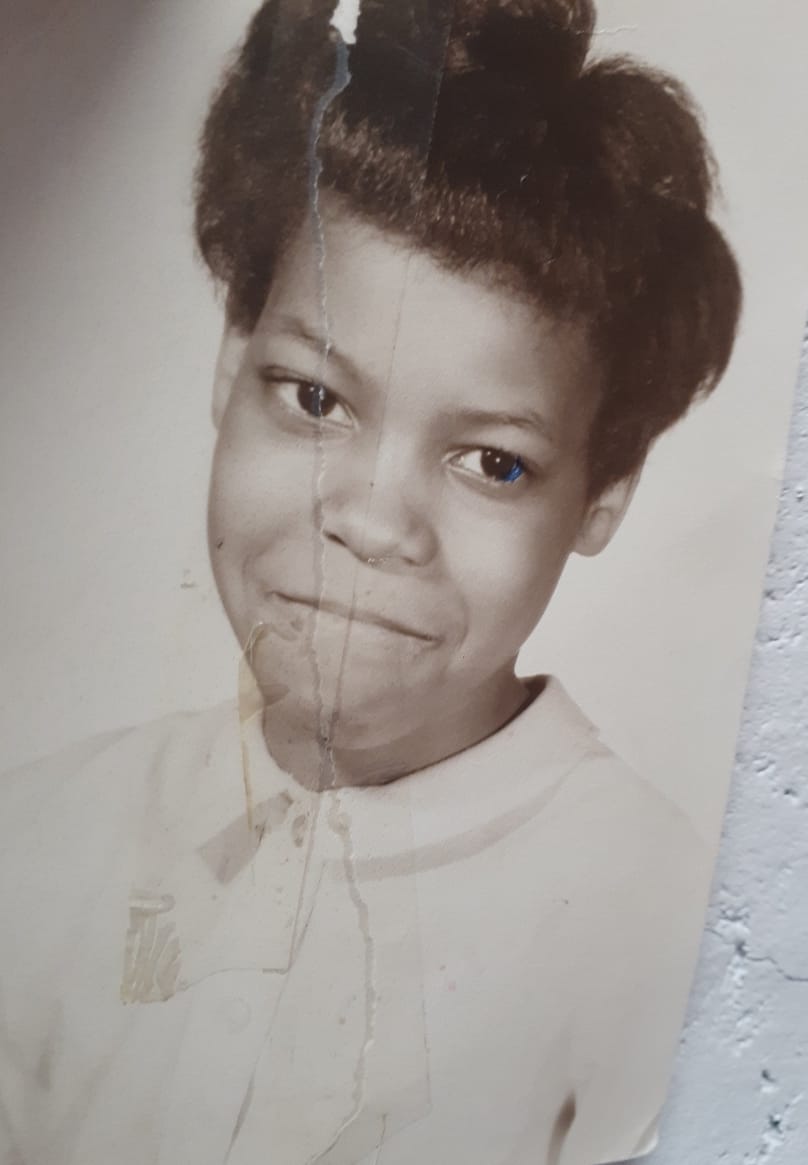
    Gloria Harrison: True Recovery Is the Healing of the Human Spirit

    In 1963, as a pre-teen, Gloria dreamed of going to the March on Washington with Martin Luther King, Jr., and the leaders of the Civil Rights Movement. Her mother even bought her a red beanie like the militant tam worn by the Black Panthers. Proudly wearing this sign of her awakening, Gloria went from house to house in Astoria, Queens, asking for donations to help her get to Washington, D.C. for the march. She raised $25 in change and proudly brought it home to show her mother.

    Excited, she did not realize it was the beginning of a long line of slaps in the face. Her mother refused to let her little girl go on her own to such an event. She was protective of her child. However, Gloria’s mom promised to open a bank account for her and deposit the money. Gloria could use it when she got older for the next march or a future demonstration. Gloria never got to turn this dream into a reality because her life quickly went from bad to worse.

    At thirteen, Gloria found herself in a mish-mash of confusing feelings and responsibilities. She knew she liked girls more than boys from a very early age, not just as friends. Awakening to her true self, Gloria felt worried and overwhelmed. If she was gay, how would anyone in her life ever love her or accept her?

    The pressure of this realization demanded an escape, mainly after her mother started to suspect that something was off with her daughter. At one point, she accused her daughter of being a “dirty lesbo” and threw a kitchen knife at her. Gloria didn’t know what to do. She tried to run away but realized she had nowhere to go. The only easy escape she could find was the common escape in her family: Drugs seemed the only option left on the table.

    The High Price of Addiction = The Shattering of Family Life

    In the mid-sixties, Gloria had nowhere to turn as a young gay African American teen. There were no counselors in her rundown public high school, and the usual suspects overwhelmed the teachers. Although the hippies were fighting the war in Vietnam on television, they did not reach out to troubled kids in the projects. Heck, most of them never left Manhattan, except for a day at the Brooklyn Zoo or Prospect Park. The Stonewall Riots of 1969 were far away, and Gay Rights was not part of almost anyone’s lexicon. Gloria had no options.

    What she did have was an aunt that shot heroin in her house with her drug-dealing boyfriend. She remembers when she first saw a bag of heroin, and she believed her cousin who told her the white powder was sugar. Sugar was expensive, and her mom seldom gave it to her brothers and sisters. Why was it in the living room in a little baggie?

    Later, she saw the white powder surrounded by used needles and cotton balls, and bloody rags. She quickly learned the truth, and she loved what the drug did to her aunt and the others. It was like it took all their cares away and made them super happy. Given such a recognition, Gloria’s initial interest sunk into a deeper fascination.

    At 14, she started shooting heroin with her aunt, and that first hit was like utter magic. It enveloped her in a warm bubble where nothing mattered, and everything was fine. Within weeks, Gloria was hanging out in shooting galleries with a devil may care attitude. As she told me, “I have always been a loner even when I was using drugs, and I always walked alone. I never associated with people who used drugs, except to get more for myself.”

    Consequences of the Escape = Institutions, Jails, and Homelessness

    Realizing that her daughter was doing drugs, Gloria’s mother decided to send her away. Gloria believes the drugs were a secondary cause. At her core, her mother could not understand Gloria’s sexuality. She hoped to find a program that would get her clean and turn her straight.

    It is essential to understand that nobody else in Gloria’s family was sent away to an institution for doing drugs. Nobody else’s addiction became a reason for institutionalization. Still, Gloria knows her mother loved her. After all, she has become her mother’s number one contact with life outside of her nursing home today.

    Also, Gloria sometimes wonders if the choice to send her away saved her life. Later, she still spent years homeless on the streets of Queens, Manhattan, the Bronx, and Brooklyn. Of the five boroughs of New York City, only Staten Island was spared her presence in the later depths of her addiction. However, being an addict as a teenager, the dangers are even more deadly.

    When her mother sent her away at fourteen, Gloria ended up in a string of the most hardcore institutions in the state of New York. She spent the first two years in the draconian cells of the Rockefeller Program. Referred to in a study in The Journal of Social History as “The Attila The Hun Law,” these ultra-punitive measures took freedom away from and punished even the youngest offenders. Gloria barely remembers the details of what happened.

    After two years in the Rockefeller Program, she was released and immediately relapsed. Quickly arrested, she was sent to Rikers Island long before her eighteenth birthday and put on Methadone. Although the year and a half at Rikers Island was bad, it was nothing compared to Albany, where they placed her in isolation for two months. The only time she saw another human face was when she was given her Methadone in the morning. During mealtimes, she was fed through a slot in her cell.

    Gloria says she went close to going insane. She cannot recall all the details of what happened next, but she does know that she spent an additional two in Raybrook. A state hospital built to house tuberculosis patients; it closed its doors in the early 1960s. In 1971, the state opened this dank facility as a “drug addiction treatment facility” for female inmates. Gloria does remember getting lots of Methadone, but she does not recall even a day of treatment.

    Losing Hope and Sinking into Homeless Drug Addiction in the Big Apple

    After Raybrook, she ended up in the Bedford Hills prison for a couple of years. By now, she was in her twenties, and her addiction kept her separate from her family. Gloria had lost hope of a reconciliation that would only came many years later.

    When she was released from Bedford Hills in 1982, nobody paid attention to her anymore. She became one more invisible homeless drug addict on the streets of the Big Apple. Being gay did not matter; being black did not matter, even being a woman did not matter; what mattered was that she was strung out with no money and no help and nothing to spare.

    Although she found a woman to love, and they protected each other when not scrambling to get high, she felt she had nothing. She bounced around from park bench to homeless shelter to street corners for ten years. There was trauma and violence, and extreme abuse. Although Gloria acknowledges that it happened, she will not talk about it.

    Later, after they found the path of recovery, her partner relapsed after being together for fifteen years. She went back to using, and Gloria stayed sober. It happens all the time. The question is, how did Gloria get sober in the first place?

    Embracing Education Led to Freedom from Addiction and Homelessness

    In the early 1990s, after a decade addicted on the streets, Gloria had had enough. Through the NEW (Non-traditional Employment for Women) Program in NYC, she discovered a way out. For the first time, it felt like people believed in her. Supported by the program, she took on a joint apprenticeship at the New York District College for Carpenters. Ever since she was a child, Gloria had been good with her hands.

    In the program, Gloria thrived, learning welding, sheet rocking, floor tiling, carpentry, and window installation. Later, she is proud to say that she helped repair some historical churches in Manhattan while also being part of a crew that built a skyscraper on Roosevelt Island and revamped La Guardia Airport. For a long time, work was the heart of this woman’s salvation.

    With a smile, Gloria says, “I loved that work. Those days were very exciting, and I realized that I could succeed in life at a higher level despite having a drug problem and once being a drug addict. Oh, how I wish I was out there now, working hard. There’s nothing better than tearing down old buildings and putting up something new.”

    Beyond dedicating herself to work, Gloria also focused on her recovery. She also managed to reconnect with her mother. Addiction was still commonplace in the projects, and too many family members had succumbed to the disease. She could not return to that world. Instead, Gloria chose to focus on her recovery, finding meaning in 12-Step meetings and a new family.

    Talking about her recovery without violating the traditions of the program, Gloria explains, “I didn’t want to take any chances, so I made sure I had two sponsors. Before making a choice, I studied each one. I saw how they carried themselves in the meetings and the people they chose to spend time with. I made sure they were walking the walk so that I could learn from them. Since I was very particular, I didn’t take chances. I knew the stakes were high. Thus, I often stayed to myself, keeping the focus on my recovery.”

    From Forging a Life to Embracing a Path of Recovery 24/7

    As she got older and the decades passed, Gloria embraced a 24/7 path of recovery. No longer able to do hard physical labor, she became a drug counselor. In that role, she advocates for harm reduction, needle exchange, prison reform, and decriminalization. Given her experience, she knew people would listen to her voice. Gloria did more than just get treatment after learning that she had caught Hepatitis C in the 1980s when she was sharing needles. She got certified in HCV and HIV counseling, helping others to learn how to help themselves.

    Today, Gloria Harrison is very active with VOCAL-NY. As highlighted on the organization’s website, “Since 1999, VOCAL-NY has been building power to end AIDS, the drug war, mass incarceration & homelessness.” Working hard for causes she believes in, Gloria constantly sends out petitions and pamphlets, educating people about how to vote against the stigma against addicts, injustices in the homeless population, and the horror of mass incarceration. One day at a time, she hopes to help change the country for the better.

    However, Gloria also knows that the path to recovery is easier today for facing all the “absurd barriers” that she faced as a young girl. Back in the day, being a woman and being gay, and being black were all barriers to recovery. Today, the tenor of the recovery industry has changed as the tenor of the country slowly changes as well. Every night, Gloria Harrison pictures young girls in trouble today like herself way back when. She prays for these troubled souls, hoping their path to recovery and healing will be easier than she experienced.

    A Final Word from Gloria

    (When Gloria communicates via text, she wants to make sure she is heard.)

    GOOD MORNING, FRIEND. I HOPE YOU ARE WELL-RESTED. I AM GRATEFUL. I LOVE THE STORY.

    I NEED TO MAKE SOMETHING CLEAR. MY MOTHER HAD A MENTAL AND PHYSICAL ILLNESS. SHE HAD POLIO AT THE AGE OF FOURTEEN BUT THAT DIDN’T STOP HER. SHE WENT THROUGH SO MUCH, AND I LOVE THE GROUND SHE WALKS ON. I BELIEVE THAT SHE WAS ASHAMED OF MY LIFESTYLE, BUT, AT THE SAME TIME, SHE LOVED ME. SHE GAVE ME HER STRENGTH & DETERMINATION. SHE GAVE ME HER NAME. SHE RAISED HER LIFE UP OVER HER DISABILITIES. SHE BECAME A STAR IN THE SKY FOR ALL AROUND HER.

    BEING THAT MY MOTHER WASN’T EDUCATED OR FINISHED SCHOOL, SHE DIDN’T KNOW ABOUT THE ROCKEFELLER PROGRAM. SHE ONLY WANTED TO SAVE HER TRUSTED SERVANT AND RESCUE HER BELOVED CHILD. SHE NEEDS ME NOW AND I AM ABLE TO HELP BECAUSE I WAS ABLE TO TURN MY LIFE AROUND COMPLETELY. SHE TRUSTS ME TODAY TO WATCH OVER HER WELLBEING, AND I FEEL BLESSED TO BE HER BELOVED CHILD AND TRUSTED SERVANT AGAIN. AS YOU HAVE MENTIONED TO ME, THE PATH OF RECOVERY IS THE PATH OF REDEMPTION.

    Postscript: A big thank from both Gloria and John to Ahbra Schiff for making this happen.

    View the original article at thefix.com

  • Havana syndrome fits the pattern of psychosomatic illness – but that doesn’t mean the symptoms aren’t real

    Mass psychogenic illness is a condition whereby people in a group feel sick because they think they have been exposed to something dangerous – even though there has been no actual exposure.

    In early September 2021, a CIA agent was evacuated from Serbia in the latest case of what the world now knows as “Havana syndrome.”

    Like most people, I first heard about Havana syndrome in the summer of 2017. Cuba was allegedly attacking employees of the U.S. Embassy in Havana in their homes and hotel rooms using a mysterious weapon. The victims reported a variety of symptoms, including headaches, dizziness, hearing loss, fatigue, mental fog and difficulty concentrating after hearing an eerie sound.

    Over the next year and a half, many theories were put forward regarding the symptoms and how a weapon may have caused them. Despite the lack of hard evidence, many experts suggested that a weapon of some sort was causing the symptoms.

    I am an emeritus professor of neurology who studies the inner ear, and my clinical focus is on dizziness and hearing loss. When news of these events broke, I was baffled. But after reading descriptions of the patients’ symptoms and test results, I began to doubt that some mysterious weapon was the cause.

    I have seen patients with the same symptoms as the embassy employees on a regular basis in my Dizziness Clinic at the University of California, Los Angeles. Most have psychosomatic symptoms – meaning the symptoms are real but arise from stress or emotional causes, not external ones. With a little reassurance and some treatments to lessen their symptoms, they get better.

    The available data on Havana syndrome matches closely with mass psychogenic illness – more commonly known as mass hysteria. So what is really happening with so–called Havana syndrome?

    A mysterious illness

    In late December 2016, an otherwise healthy undercover agent in his 30s arrived at the clinic of the U.S. Embassy in Cuba complaining of headaches, difficulty hearing and acute pain in his ear. The symptoms themselves were not alarming, but the agent reported that they developed after he heard “a beam of sound” that “seemed to have been directed at his home”.

    As word of the presumed attack spread, other people in the embassy community reported similar experiences. A former CIA officer who was in Cuba at the time later noted that the first patient “was lobbying, if not coercing, people to report symptoms and to connect the dots.”

    Patients from the U.S. Embassy were first sent to ear, nose and throat doctors at the University of Miami and then to brain specialists in Philadelphia. Physicians examined the embassy patients using a range of tests to measure hearing, balance and cognition. They also took MRIs of the patients’ brains. In the 21 patients examined, 15 to 18 experienced sleep disturbances and headaches as well as cognitive, auditory, balance and visual dysfunction. Despite these symptoms, brain MRIs and hearing tests were normal.

    A flurry of articles appeared in the media, many accepting the notion of an attack.

    From Cuba, Havana syndrome began to spread around the globe to embassies in China, Russia, Germany and Austria, and even to the streets of Washington.

    The Associated Press released a recording of the sound in Cuba, and biologists identified it as the call of a species of Cuban cricket.

    A sonic or microwave weapon?

    Initially, many experts and some of the physicians suggested that some sort of sonic weapon was to blame. The Miami team’s study in 2018 reported that 19 patients had dizziness caused by damage to the inner ear from some type of sonic weapon.

    This hypothesis has for the most part been discredited due to flaws in the studies, the fact there is no evidence that any sonic weapon could selectively damage the brain and nothing else, and because biologists identified the sounds in recordings of the supposed weapon to be a Cuban species of cricket.

    Some people have also proposed an alternative idea: a microwave radiation weapon.

    This hypothesis gained credibility when in December 2020, the National Academy of Science released a report concluding that “pulsed radiofrequency energy” was a likely cause for symptoms in at least some of the patients.

    If someone is exposed to high energy microwaves, they may sometimes briefly hear sounds. There is no actual sound, but in what is called the Frey effect, neurons in a person’s ear or brain are directly stimulated by microwaves and the person may “hear” a noise. These effects, though, are nothing like the sounds the victims described, and the simple fact that the sounds were recorded by several victims eliminates microwaves as the source. While directed energy weapons do exist, none that I know of could explain the symptoms or sounds reported by the embassy patients.

    Despite all these stories and theories, there is a problem: No physician has found a medical cause for the symptoms. And after five years of extensive searching, no evidence of a weapon has been found.

    Havana syndrome fits the pattern of psychosomatic illness – but that doesn’t mean the symptoms aren’t real
    Mass psychogenic illness – more commonly known as mass hysteria – is a well-documented phenomenon throughout history, as seen in this painting of an outbreak of dancing mania in the Middle Ages. Pieter Brueghel the Younger/WikimediaCommons

    Mass psychogenic illness

    Mass psychogenic illness is a condition whereby people in a group feel sick because they think they have been exposed to something dangerous – even though there has been no actual exposure. For example, as telephones became widely available at the turn of the 20th century, numerous telephone operators became sick with concussion-like symptoms attributed to “acoustic shock.” But despite decades of reports, no research has ever confirmed the existence of acoustic shock.

    I believe it is much more likely that mass psychogenic illness – not an energy weapon – is behind Havana syndrome.

    Mass psychogenic illness typically begins in a stressful environment. Sometimes it starts when an individual with an unrelated illness believes something mysterious caused their symptoms. This person then spreads the idea to the people around them and even to other groups, and it is often amplified by overzealous health workers and the mass media. Well-documented cases of mass psychogenic illness – like the dancing plagues of the Middle Ages – have occurred for centuries and continue to occur on a regular basis around the world. The symptoms are real, the result of changes in brain connections and chemistry. They can also last for years.

    The story of Havana syndrome looks to me like a textbook case of mass psychogenic illness. It started from a single undercover agent in Cuba – a person in what I imagine is a very stressful situation. This person had real symptoms, but blamed them on something mysterious – the strange sound he heard. He then told his colleagues at the embassy, and the idea spread. With the help of the media and medical community, the idea solidified and spread around the world. It checks all the boxes.

    Interestingly, the December 2020 National Academy of Science report concluded that mass psychogenic illness was a reasonable explanation for the patients’ symptoms, particularly the chronic symptoms, but that it lacked “patient-level data” to make such a diagnosis.

    The Cuban government itself has been investigating the supposed attacks over the years as well. The most detailed report, released on Sept. 13, 2021, concludes that there is no evidence of directed energy weapons and says that psychological causes are the only ones that cannot be dismissed.

    While not as sensational as the idea of a new secret weapon, mass psychogenic illness has historical precedents and can explain the wide variety of symptoms, lack of brain or ear damage and the subsequent spread around the world.

    [Understand new developments in science, health and technology, each week.Subscribe to The Conversation’s science newsletter.]The Conversation

    Robert Baloh, Professor of Neurology, University of California, Los Angeles

    This article is republished from The Conversation under a Creative Commons license. Read the original article.

  • Punk Rock Powers My Recovery Every Day

    Punk Rock Powers My Recovery Every Day

    A music addiction is cheaper than alcohol and drugs. And not only that, it’s healthy, invigorating, fun, and liberating.

    I was a disheveled and bedraggled disaster of a person back in the winter of 2012. I lived for alcohol. If beer was the entrée, crack-cocaine was my digestif. But after an intervention and rehab, I’ve been sober nine years now. I never could’ve done it without music.

    Even though I had spent most of my career working in the music industry as a producer for MTV News, music wasn’t really a significant part of my life during the worst of my drinking days. But when I was a teen and again now, music has been of utmost importance. Now as an adult I realize music is better than sex. 

    It’s better than drugs. And it’s better than alcohol. It’s a natural high. If given a choice between music and drugs, I choose music. Starting with punk.

    A Youth in Revolt

    “Where do you go now when you’re only 15?”
    Rancid, “Roots Radical,” off the 1994 album And Out Come the Wolves

    I’ve always felt like a bit of an outcast. As someone who struggles with the dual diagnosis of addiction and bipolar disorder, in a way, I am. But I’m proud to be an outcast, and my punk rock upbringing only reaffirmed that being different is cool.

    In the spring of 1995, March 9th to be exact — 26 years ago — I experienced my very first punk show. It was Rancid with the Lunachicks at the Metro in Chicago. I still have the ticket stub. I was 15. And in that crowd of about 1,000, I felt like I belonged. I had found my tribe. It was a moment that would transport me on a decades-long excursion, one that finds my punk rock heart still beating now and forever.

    I often think in retrospect that maybe there were signs and signals of my bipolar status as I grew up. I was in fact different from the others. And I was experiencing bouts of depression inside the halls and walls of high school. Freshman and sophomore years in particular I did not fit in. I was the quiet kid who had barely any friends. I didn’t belong to a social clique like everyone else. I was a rebel in disguise. Until I found punk rock. Then I let it all hang out.

    Punk Rock Powers My Recovery Every Day
    “Once a punk, always a punk.”

    Rock ‘n’ Roll High School

    I am a Catholic school refugee. Punk was my escape from the horrific bullying I experienced in high school. Back then, the kids from the suburbs threw keggers. We city kids — I had three or four punk rock friends — were pretty much sober, save for smoking the occasional bowl of weed if we had any. We were definitely overwhelmingly the minority at school as there were probably only five or so of us in a school of 1,400. For the most part, though, we found our own fun at music venues like the Fireside Bowl and the Metro. We went to shows every weekend at the now-defunct Fireside – the CBGB or punk mecca of Chicago that used to host $5 punk and ska shows almost every night.

    The Fireside was dilapidated but charming. It was a rundown bowling alley in a rough neighborhood with a small stage in the corner. You couldn’t actually bowl there and the ceiling felt like it was going to cave in. It was a smoke-filled room with a beer-soaked carpet. Punks sported colorful mohawks, and silver-studded motorcycle jackets. Every show was $5.

    My few friends and I practically lived at the Fireside. We also drove to punk shows all over the city and suburbs of Chicago – from VFW Halls to church basements to punk houses.

    The Fireside has since been fixed up and has become a working bowling alley with no live music. A casualty of my youth. But it was a cathedral of music for me when it was still a working club. After every show, we would cruise Lake Shore Drive blasting The Clash or The Ramones. I felt so comfortable in my own skin during those halcyon days.

    Punk Rock Powers My Recovery Every Day
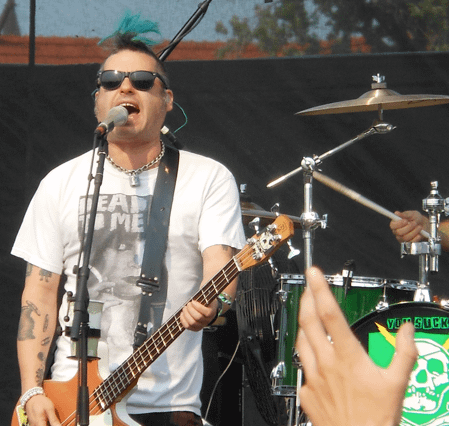
    Fat Mike of NOFX at Riot Fest in Chicago, 2012

    Punk Up the Volume

    Punk isn’t just a style of music, it’s a dynamic idea. It’s about grassroots activism and power to the people. It’s about sticking up for the little guy, empowering the youth, lifting up the poor, and welcoming the ostracized.

    Punk is inherently anti-establishment. Punk values celebrate that which is abnormal. It is also about pointing out hypocrisy in politics and standing up against politicians who wield too much power and influence, and are racist, homophobic, transphobic, and xenophobic.

    Everyone is welcome under the umbrella of punk rock. And if you are a musician, they say all you need to play punk is three chords and a bad attitude. Fast and loud is punk at its core.

    They say “once a punk, always a punk” and it’s true.

    Punk was and still is sacred and liturgical to me. The music mollified my depression and made me feel a sense of belonging. I went wherever punk rock took me. My ethos — developed through the lens of the punk aesthetic — still pulses through my punk rock veins. It is entrenched in every fiber of my being.

    Punk Rock Powers My Recovery Every Day
    Godfather of Punk Iggy Pop at Riot Fest in Chicago, 2015

    A New Day

    Now, whether it’s on Spotify on the subway or on vinyl at home, I listen to music intently two to three hours a day. Music is my TV. It’s not just on in the background; I give it my full, undivided attention.

    I started collecting vinyl about eight years ago right around the time I got sober and I have since amassed more than 100 record albums. There’s a reason why people in audiophile circles refer to vinyl as “black crack.” It’s addictive.

    I’m glad I’m addicted to something abstract, something that is not a substance. A music addiction is cheaper than alcohol and drugs. And not only that, it’s healthy, invigorating, fun, and liberating.

    And while my music taste continues to evolve, I’m still a punk rocker through and through. My love affair with punk may have started 26 years ago, but it soldiers on today, even though I mostly listen to indie rock and jazz these days. I recently started bleaching my hair again, platinum blonde as I had when I was a punker back in high school. It’s fun and it also hides the greys.

    Looking back on my musical self, I knew there was a reason why I can feel the music. Why tiny little flourishes of notes or guitar riffs or drumbeats can make my entire body tingle instantly. Why lyrics speak to me like the Bible and the sound of a needle dropping and popping on a record fills me with anticipation

    Punk is a movement that lives inside me. It surrounds me. It grounds me. Fifteen or 41 years-old, I’m a punk rocker for life. I’d rather be a punk rocker than an active alcoholic. I’m a proud music addict. I get my fix every day. 

    Please enjoy and subscribe to this Spotify playlist I made of old-school punk anthems and new classics. It’s by no means comprehensive, but it’s pretty close.

    View the original article at thefix.com

  • New Intergenerational Trauma Workbook Offers Process Strategies for Healing

    New Intergenerational Trauma Workbook Offers Process Strategies for Healing

    By following the clearly outlined steps to healing in the workbook, one can start healing the emotional wounds brought on by unaddressed intergenerational trauma.

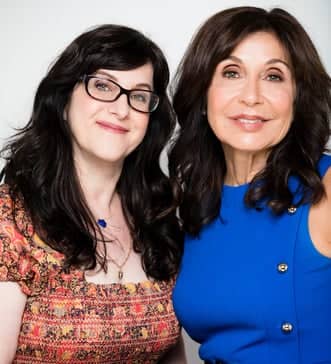
    In the Intergenerational Trauma Workbook, Dr. Lynne Friedman-Gell, PhD, and Dr. Joanne Barron, PsyD, apply years of practical clinical experience to foster a healing journey. Available on Amazon, this valuable addition to both the self-help and mental health categories is perfect for a post-pandemic world. With so many people uncovering intergenerational trauma while isolated during the extended quarantines, the co-authors offer a direct approach. The book shows how to confront and ultimately integrate past demons from within the shadowy depths of the human psyche.

    Addressing such a difficult challenge, the Intergenerational Trauma Workbook: Strategies to Support Your Journey of Discovery, Growth, and Healing provides a straightforward and empathetic roadmap that leads to actual healing. Dr. Gell and Dr. Barron explain how unintegrated memories affect a person negatively without the individual being aware of what is happening. Rather than being remembered or recollected, the unintegrated memories become painful symptomology.

    By following the clearly outlined steps to healing in the workbook, finding freedom from what feels like chronic pain of the mind and the body is possible. Yes, the emotional wounds of childhood often fail to integrate into the adult psyche. Never processed or even addressed, they morph into demons. In response, the workbook is all about processing.

    Clearly-Defined Chapters about Processing Intergenerational Trauma

    The workbook is divided into clearly defined chapters that provide a roadmap to recovery from trauma. In the first chapter, the authors focus on “Understanding Intergenerational Trauma,” providing the reader with an orientation to the subject matter while defining key terminology for future lessons. From a multitude of perspectives, they mine the depths of intergenerational trauma. Expressing with a clarity of voice balanced with compassion, they write, “Intergenerational trauma enables a traumatic event to affect not only the person who experiences it but also others to whom the impact is passed down through generations.”

    New Intergenerational Trauma Workbook Offers Process Strategies for HealingThe chapters carefully outline how the workbook is to be used and the psychological underpinnings behind the exercises. Moreover, they use individual stories to demonstrate the ideas being expressed. Thus, moments of identification are fostered where someone using the workbook can see themselves in the examples being presented. Overall, the organization of the workbook is well-designed to help someone face the difficult challenge of dealing with their legacy of intergenerational trauma

    In terms of the chapter organization, the authors make the smart choice to start with the microcosm of the individual and their personal challenges. By beginning with the person’s beliefs and emotions using the workbook, these chapters keep the beginning stages of healing contained. Afterward, a chapter on healing the body leads to expanding the process to others and the healing of external relationships. As a tool to promote actual recovery, the Intergenerational Trauma Workbook is successful because it does not rush the process. It allows for a natural flow of healing at whatever pace fits the needs and personal experiences of the person using the workbook.

    A Strong Addition to Self-Help Shelves in a Time of Trauma Awareness

    In a 2017 interview that I did for The Fix with Dr. Gabor Maté, one of the preeminent addictionologists of our time, he spoke about how the United States suffered from traumaphobia. The rise of the 21st-century divide in our country came about because our social institutions and popular culture avoid discussing trauma. Beyond avoiding, they do everything they can to distract us from the reality of trauma. However, after the pandemic, I don’t believe that these old mechanisms will work anymore.

    Losing their functionality, people will need tools to deal with the intergenerational trauma that has been repressed on both microcosmic and macrocosmic levels for such a long time. The pain from below is rising, and it can no longer be ignored. In need of practical and accessible tools, many people will be relieved first to discover and then use the Intergenerational Trauma Workbook by Dr. Lynne Friedman-Gell and Dr. Joanne Barron. In this resonant work, they will be able to find a way to begin the healing process.

    View the original article at thefix.com

  • Kids Already Coping With Mental Disorders Spiral as Pandemic Topples Vital Support Systems

    When states and communities fail to provide children the services they need to live at home, kids can deteriorate and even wind up in jail.

    A bag of Doritos, that’s all Princess wanted.

    Her mom calls her Princess, but her real name is Lindsey. She’s 17 and lives with her mom, Sandra, a nurse, outside Atlanta. On May 17, 2020, a Sunday, Lindsey decided she didn’t want breakfast; she wanted Doritos. So she left home and walked to Family Dollar, taking her pants off on the way, while her mom followed on foot, talking to the police on her phone as they went.

    Lindsey has autism. It can be hard for her to communicate and navigate social situations. She thrives on routine and gets special help at school. Or got help, before the coronavirus pandemic closed schools and forced tens of millions of children to stay home. Sandra said that’s when their living hell started.

    “It’s like her brain was wired,” she said. “She’d just put on her jacket, and she’s out the door. And I’m chasing her.”

    On May 17, Sandra chased her all the way to Family Dollar. Hours later, Lindsey was in jail, charged with assaulting her mom. (KHN and NPR are not using the family’s last name.)

    Lindsey is one of almost 3 million children in the U.S. who have a serious emotional or behavioral health condition. When the pandemic forced schools and doctors’ offices to close last spring, it also cut children off from the trained teachers and therapists who understand their needs.

    As a result, many, like Lindsey, spiraled into emergency rooms and even police custody. Federal data shows a nationwide surge of kids in mental health crisis during the pandemic — a surge that’s further taxing an already overstretched safety net.

    ‘Take Her’

    Even after schools closed, Lindsey continued to wake up early, get dressed and wait for the bus. When she realized it had stopped coming, Sandra said, her daughter just started walking out of the house, wandering, a few times a week.

    In those situations, Sandra did what many families in crisis report they’ve had to do since the pandemic began: race through the short list of places she could call for help.

    First, her state’s mental health crisis hotline. But they often put Sandra on hold.

    “This is ridiculous,” she said of the wait. “It’s supposed to be a crisis team. But I’m on hold for 40, 50 minutes. And by the time you get on the phone, [the crisis] is done!”

    Then there’s the local hospital’s emergency room, but Sandra said she had taken Lindsey there for previous crises and been told there isn’t much they can do.

    That’s why, on May 17, when Lindsey walked to Family Dollar in just a red T-shirt and underwear to get that bag of Doritos, Sandra called the last option on her list: the police.

    Sandra arrived at the store before the police and paid for the chips. According to Sandra and police records, when an officer approached, Lindsey grew agitated and hit her mom on the back, hard.

    Sandra said she explained to the officer: “‘She’s autistic. You know, I’m OK. I’m a nurse. I just need to take her home and give her her medication.’”

    Lindsey takes a mood stabilizer, but because she left home before breakfast, she hadn’t taken it that morning. The officer asked if Sandra wanted to take her to the nearest hospital.

    The hospital wouldn’t be able to help Lindsey, Sandra said. It hadn’t before. “They already told me, ‘Ma’am, there’s nothing we can do.’ They just check her labs, it’s fine, and they ship her back home. There’s nothing [the hospital] can do,” she recalled telling the officer.

    Sandra asked if the police could drive her daughter home so the teen could take her medication, but the officer said no, they couldn’t. The only other thing they could do, the officer said, was take Lindsey to jail for hitting her mom.

    “I’ve tried everything,” Sandra said, exasperated. She paced the parking lot, feeling hopeless, sad and out of options. Finally, in tears, she told the officers, “Take her.”

    Lindsey does not like to be touched and fought back when authorities tried to handcuff her. Several officers wrestled her to the ground. At that point, Sandra protested and said an officer threatened to arrest her, too, if she didn’t back away. Lindsey was taken to jail, where she spent much of the night until Sandra was able to post bail.

    Clayton County Solicitor-General Charles Brooks denied that Sandra was threatened with arrest and said that while Lindsey’s case is still pending, his office “is working to ensure that the resolution in this matter involves a plan for medication compliance and not punitive action.”

    Sandra isn’t alone in her experience. Multiple families interviewed for this story reported similar experiences of calling in the police when a child was in crisis because caretakers didn’t feel they had any other option.

    ‘The Whole System Is Really Grinding to a Halt’

    Roughly 6% of U.S. children ages 6 through 17 are living with serious emotional or behavioral difficulties, including children with autism, severe anxiety, depression and trauma-related mental health conditions.

    Many of these children depend on schools for access to vital therapies. When schools and doctors’ offices stopped providing in-person services last spring, kids were untethered from the people and supports they rely on.

    “The lack of in-person services is really detrimental,” said Dr. Susan Duffy, a pediatrician and professor of emergency medicine at Brown University.

    Marjorie, a mother in Florida, said her 15-year-old son has suffered during these disruptions. He has attention deficit hyperactivity disorder and oppositional defiant disorder, a condition marked by frequent and persistent hostility. Little things — like being asked to do schoolwork — can send him into a rage, leading to holes punched in walls, broken doors and violent threats. (Marjorie asked that we not use the family’s last name or her son’s first name to protect her son’s privacy and future prospects.)

    The pandemic has shifted both school and her son’s therapy sessions online. But Marjorie said virtual therapy isn’t working because her son doesn’t focus well during sessions and tries to watch TV instead. Lately, she has simply been canceling them.

    “I was paying for appointments and there was no therapeutic value,” Marjorie said.

    The issues cut across socioeconomic lines — affecting families with private insurance, like Marjorie, as well as those who receive coverage through Medicaid, a federal-state program that provides health insurance to low-income people and those with disabilities.

    In the first few months of the pandemic, between March and May, children on Medicaid received 44% fewer outpatient mental health services — including therapy and in-home support — compared to the same time period in 2019, according to the Centers for Medicare & Medicaid Services. That’s even after accounting for increased telehealth appointments.

    And while the nation’s ERs have seen a decline in overall visits, there was a relative increase in mental health visits for kids in 2020 compared with 2019.

    The Centers for Disease Control and Prevention found that, from April to October last year, hospitals across the U.S. saw a 24% increase in the proportion of mental health emergency visits for children ages 5 to 11, and a 31% increase for children ages 12 to 17.

    “Proportionally, the number of mental health visits is far more significant than it has been in the past,” said Duffy. “Not only are we seeing more children, more children are being admitted” to inpatient care.

    That’s because there are fewer outpatient services now available to children, she said, and because the conditions of the children showing up at ERs “are more serious.”

    This crisis is not only making life harder for these kids and their families, but it’s also stressing the entire health care system.

    Child and adolescent psychiatrists working in hospitals around the country said children are increasingly “boarding” in emergency departments for days, waiting for inpatient admission to a regular hospital or psychiatric hospital.

    Before the pandemic, there was already a shortage of inpatient psychiatric beds for children, said Dr. Christopher Bellonci, a child psychiatrist at Judge Baker Children’s Center in Boston. That shortage has only gotten worse as hospitals cut capacity to allow for more physical distancing within psychiatric units.

    “The whole system is really grinding to a halt at a time when we have unprecedented need,” Bellonci said.

    ‘A Signal That the Rest of Your System Doesn’t Work’

    Psychiatrists on the front lines share the frustrations of parents struggling to find help for their children.

    Part of the problem is there have never been enough psychiatrists and therapists trained to work with children, intervening in the early stages of their illness, said Dr. Jennifer Havens, a child psychiatrist at New York University.

    “Tons of people showing up in emergency rooms in bad shape is a signal that the rest of your system doesn’t work,” she said.

    Too often, Havens said, services aren’t available until children are older — and in crisis. “Often for people who don’t have access to services, we wait until they’re too big to be managed.”

    While the pandemic has made life harder for Marjorie and her son in Florida, she said it has always been difficult to find the support and care he needs. Last fall, he needed a psychiatric evaluation, but the nearest specialist who would accept her commercial insurance was 100 miles away, in Alabama.

    “Even when you have the money or you have the insurance, it is still a travesty,” Marjorie said. “You cannot get help for these kids.”

    Parents are frustrated, and so are psychiatrists on the front lines. Dr. C.J. Glawe, who leads the psychiatric crisis department at Nationwide Children’s Hospital in Columbus, Ohio, said that once a child is stabilized after a crisis it can be hard to explain to parents that they may not be able to find follow-up care anywhere near their home.

    “Especially when I can clearly tell you I know exactly what you need, I just can’t give it to you,” Glawe said. “It’s demoralizing.”

    When states and communities fail to provide children the services they need to live at home, kids can deteriorate and even wind up in jail, like Lindsey. At that point, Glawe said, the cost and level of care required will be even higher, whether that’s hospitalization or long stays in residential treatment facilities.

    That’s exactly the scenario Sandra, Lindsey’s mom, is hoping to avoid for her Princess.

    “For me, as a nurse and as a provider, that will be the last thing for my daughter,” she said. “It’s like [state and local leaders] leave it to the school and the parent to deal with, and they don’t care. And that’s the problem. It’s sad because, if I’m not here …”

    Her voice trailed off as tears welled.

    “She didn’t ask to have autism.”

    To help families like Sandra’s and Marjorie’s, advocates said, all levels of government need to invest in creating a mental health system that’s accessible to anyone who needs it.

    But given that many states have seen their revenues drop due to the pandemic, there’s a concern services will instead be cut — at a time when the need has never been greater.


    This story is part of a reporting partnership that includes NPR, Illinois Public Media and Kaiser Health News.

    View the original article at thefix.com

  • Helping Your Child Through Difficult Times

    All too often when we look beyond a child’s drinking or drug use we discover their struggle to manage intolerable thoughts, feelings or memories is a core issue that needs treatment.

    I have been a mental health and addictions counselor for over two decades. I’ve treated adults and adolescents diagnosed with serious psychiatric and substance abuse issues at one of the nation’s premier psychiatric hospitals. After informing parents of their child’s substance abuse history the most frequent response I heard from them was “I had no idea this was going on.” Or if they suspected their child was using a substance, they were shocked at how extensive it was.

    Adolescent substance abuse continues to invade too many of our families, leaving parents confused and without a roadmap to guide them in finding help for their child. Today, more than 40 percent of seniors and one-third of tenth graders are vaping a substance like marijuana. Twenty percent of teens report abusing prescription drugs like Xanax, Ritalin and Adderall.

    As the parent of an addicted child, feelings of helplessness, blame and fear can drown out any sense of hope. But in the pages of my book The Addicted Child: A Parent’s Guide to Adolescent Substance Abuse they receive the information and resources needed to help their child through assessment, treatment and recovery.

    Alcohol and drugs have the power to change a child’s brain and influence behaviors so I include a chapter on the neuroscience of substance abuse. In non-technical language parents learn how substances work in the adolescent brain.

    Because the best treatment starts with a comprehensive assessment there’s a chapter explaining which assessments are critical for a proper diagnosis. These assessments go beyond looking just at a child’s history of using substances. All too often when we look beyond a child’s drinking or drug use we discover their struggle to manage intolerable thoughts, feelings or memories is a core issue that needs treatment. While not every child using alcohol or drugs has an underlying psychological issue, for those that do, treating the alcohol or drug problem without treating the mental health issue can be a treatment plan doomed to fail.

    Other chapters in The Addicted Child address issues such as eating disorders, self-injury, gaming and cell phone use which often accompany a child’s use of substances. Parents learn the warning signs for these disorders and the warning signs that often accompany alcohol and drug use. Parents also learn which drugs are invading today’s adolescent population and how to recognize them.

    Parents often need guidance when looking for treatment options. There is no “one size fits all” treatment approach to addiction. For this reason, I have included chapters explaining the important principles of adolescent substance abuse treatment and various treatment options available for families. There is also a chapter listing helpful resources for parents.

    Very few things are more destructive to a family than having someone, especially a child, addicted to alcohol or drugs. While working on an adolescent treatment unit I met parents struggling to understand and accept their child’s psychiatric and substance use issues. For most of these families it was a heart-breaking experience. Sadly, many families do not have the financial resources to send their child to a nationally acclaimed hospital like the Menninger Clinic in Houston. Their desperate search for help often leaves them feeling alone and without a roadmap to guide them through the process of their child’s assessment and treatment. It’s for these families that I wrote my book, The Addicted Child: A Parent’s Guide to Adolescent Substance Abuse. You can find The Addicted Child on Amazon and at the following website: https://www.helptheaddictedchild.com

    View the original article at thefix.com

  • Double or Nothing: The Two Diseases That Want Me Dead

    My depression didn’t entirely cause my alcoholism, but it certainly played a key role.

    I have two diseases that want me dead.

    One is addiction, a progressive, incurable and potentially fatal disease that presents as a physical compulsion and mental obsession. I am addicted to alcohol and, as an alcoholic, can never successfully drink again.

    There is no cure, only ways of arresting the vicious cycle of binge, remorse and repeat that leads to ever-deeper bottoms. My alcoholism took me not only to unemployment but unemployability; not only selfishness but self-destruction; not only deteriorating health and heartache but abject desperation and insanity.

    My other deadly illness is depression. By this, I mean clinical depression – a necessary distinction considering the widespread, ill-informed use of the phrase “I’m depressed” to describe mere sadness. The difference is that sadness is rational while depression decidedly is not. Depression is not an emotion; it is a chemical imbalance that leads to hopelessness and self-loathing and, for that reason, is the leading cause of suicide.

    Mourning a loved one is understandable and altogether appropriate; that is sadness. Climbing to the roof of a six-story building and nearly jumping because I considered myself toxic and worthless, as I did in my mid-20s, is not normal and certainly not healthy; that is depression.

    I will be an alcoholic and depressive for as long as I am alive. But while neither is curable, both are certainly treatable. And increasingly, I’m finding that my progress in recovering from one disease is paying substantial dividends in combatting the other.

    Weller Than Well

    I took my final drink on October 10, 2011, the last in a long line of cheap beer cans littering my car. Wherever I was going, I never got there; instead, I crashed into a taxi and kept driving. Police frown upon that. I spent the night in jail and the next six months sans license. I was in trouble physically, spiritually, and now legally, and I had finally experienced enough pain to seek salvation.

    I got sober through Alcoholics Anonymous. There are several programs effective in arresting addiction; AA just happens to be the most prolific, and embodied the sort of group-centric empathy I needed during the precarious early stages of recovery. There are few things more alienating than being unable to stop doing something that you damn well know is destroying your life. Meeting consistently with others who’ve experienced this tragic uniqueness made me realize I wasn’t alone, and provided a glimmer of something that had long been extinguished: hope.

    Unlike traditional ailments, addiction is largely a “takes one to help one” disease. I needed to know that others had drank like me and gone on to recover by following certain suggestions. AA provided both the road to recovery and, through those that had walked the path before me, the trail guides. 

    It isn’t rocket science. AA and other forms of group-centric recovery thrive on a few basic tenets. I admitted I had a problem, and saw that others had solved that problem by adhering to certain instructions. I accepted that my addiction had been driven by certain personality flaws, and that active addiction had only exacerbated these shortcomings. I made concerted efforts to begin not only amending my actions through face-to-face apologies, but also diminishing the underlying character defects that had fueled my alcoholism.

    In the process, I did not recover so much as reinvent myself. Nine years into my recovery, I am not the same person I was before becoming an alcoholic. I am better than that catastrophically damaged person.

    Like no other illnesses, recovery from addiction can make sufferers weller than well. I am not 2005 Chris – pre-problem drinker Chris. I am Chris 2.0. Stronger, smarter, wiser.

    And that brings me to my other incurable illness.

    So Low I Might Get High

    My battle with depression predates my alcoholism. In fact, the aforementioned rooftop suicidal gesture came before I was a heavy drinker. Like many people with concurrent diseases that impact mental health, one malady helped lead to another. My depression didn’t entirely cause my alcoholism, but it certainly played a key role.

    For me, bouts of depression descend like a dense, befuddling fog. At its worst, I have been struck suddenly dumb, unable to complete coherent sentences or comprehend dialogue. My wife once likened my slow, confused aura to talking with an astronaut on the moon; there was a five-second delay in transmission, and my response was garbled even when it finally arrived.

    My depression is clinical, meaning it is officially diagnosed. I am medicated for it and see a psychiatrist regularly. Upon getting sober, the first cross-disease benefit was that the anti-depressants I took daily were no longer being drowned in a sea of booze. The result of this newfound “as directed” prescription regimen was the depression tamping down from chronic to episodic. For the first time in nearly a decade, there were significant stretches where I was depression-free.

    Still, come the depression did, in random waves that enveloped me out of nowhere, zapping the hopeful vibes and purposeful momentum of early recovery. The sudden shift in mood and motivation was stark, striking and scary. Above all else, I was frightened that an episode of depression would trigger a relapse of alcoholism.

    In recovery from addiction we are taught, for good reason, that sobriety is the most important thing in our lives, because we are patently unable to do anything truly worthwhile without it. If we drink or drug, the blessings of recovery will disappear, and fast.

    Ironically, and perhaps tragicomically, by far the most formidable threat to my sobriety was my depression. One of the diseases trying to kill me was persistently attempting to get its partner in crime back. Inject some hopelessness and self-loathing into a recently sober addict’s tenuous optimism and self-esteem, and there’s a good chance he’ll piss away the best shot he’s ever had at a happy, content existence.

    For months and even years into recovery, my only defense against depression episodes was intentional inactivity. Upon recognizing the syrupy sludge of depression draining my energy – a quicksand that made everything more strenuous and, mentally, seem not worth the extra effort – I would do my best to detach from as much as possible. My routine would dwindle to a questionably effective workday and, if any energy was left, what little exercise I could muster, an attempt to dislodge some depression with some natural dopamine – a stopgap measure that rarely bought more than half an hour of relief.

    Most alarmingly, during bouts of depression I would disconnect from my recovery from alcoholism, often going weeks without attending meetings or reaching out to sober companions. In depressive episodes, the hopeful messages of group-centric recovery rang hollow, and at times even felt offensive. How dare these people be joyous, grateful and free while I was miserable, bitter and stuck.

    Over an extended timeline, though, life had improved dramatically. As a direct result of sobriety and its teachings, my status as a husband and an executive improved drastically. In rapid succession I bought a house, rescued a dog and became a father. My depressive episodes grew fewer and further between.

    But when they came, I was playing a dangerous game. I now had a lot more to lose than my physical sobriety and, despite being rarer, my depressive episodes were almost more intimidating for what they represented: irrational hopelessness amid a life that, when compared to many others, was fortunate and blessed. So when depression descended, I did the only thing that seemed logical: I whittled life down to its barest minimum, and waited the disease out. I put life on pause while the blackness slowly receded to varying shades of gray and, finally, clearheaded lucidity returned.

    Essentially, I became depression’s willing hostage. I didn’t want it to derail me, and didn’t have a healthier means of dealing with it.

    And then suddenly, I did.

    Beating Back a Bully

    For the second time in my life, I have hope against an incurable disease where before there was hopelessness. And though I can’t place into precise words exactly how it happened, I’m hoping my experience can benefit others. For the countless battling mental illness while recovering from addiction, my hope is to give you hope.

    Last fall, just as I was celebrating eight years sober, I hit a wall of depression the likes of which I hadn’t encountered in a while. Like most depressive episodes, its origin was indistinct. It had indeed been a tough year – I had lost a close relative and had an unrelated health scare, among other challenges – but trying to pinpoint depression triggers is generally guesswork.

    Anyway, there it was. A big, fat funk, deeper and darker than I’d experienced in years. But for whatever reason, this time my reaction was different. Always, my routine was to place mental roadblocks in front of my depression. I justified this by telling myself, understandably, that depression’s feelings were irrational and, therefore, not worth confronting.

    This time, for whatever reason, I took a different tack. For the first time, I leaned in rather than leaning out. I stood there and felt the harsh feelings brought on by depression rather than running from them. Whether it was sober muscle memory or simple fed-upedness, I had had enough of cowering in a corner while depression pressed pause on my life.

    The result? It hurt. A lot. But if battling depression is a prize fight, I won by majority decision. And having stood up to my most menacing bully, I fear the inevitable rematch far less.

    This would not have been possible – and is not recommended – earlier in recovery. In hindsight, I’m realizing that at least part of the reason I finally confronted my depression was that, after eight years of recovery work and a vastly improved life, I had placed enough positives around me that depression’s irrational pessimism couldn’t fully penetrate them. I had built up just enough self-esteem through just enough estimable acts that the self-loathing pull of depression couldn’t drag me down as far. I stumbled and wobbled, but I did not fall.

    Depression also prompted a highly unexpected reaction: gratitude. Its wistful sadness made me pause, sigh, even tear up. It made me look around longingly and grasp the blessings that, during my typically time-impoverished existence, I often take for granted. It made me feel guilty for not fully appreciating the positives in my life… but this guilt was laced with vows to cherish life more once depression invariably lifted, as it always did. There’s a difference between hopeless shame and hopeful guilt; the former yields self-hatred, the latter self-improvement.

    In this way, the tools acquired in recovery from addiction were wielded effectively against depression. There is a retail recovery element at play here: Though not as simple as a “buy one get one free” scenario, I’ve learned that fully buying into continued recovery from alcoholism can lead to significant savings on the pain depression can cause me. I have a craziness-combating coupon, and it’s not expiring anytime soon.

    To be clear: This is by no means a “totally solved” happy ending. Confronting my depression meant facing some demons that have been stalking me for decades. You don’t slay dragons that large in one sitting. I have, however, made a promising start. I have discovered that progress against complicated chronic afflictions is indeed possible, and can sometimes flow unexpectedly from sources one wouldn’t expect.

    View the original article at thefix.com

  • Opinion: The Opioid Crisis + COVID-19 = The Perfect Storm

    How can the addiction treatment community continue to assist people who are now being left even more isolated and desperate?

    Addiction – a chronic relapsing brain disorder, and a disease that gets deeply personal. It gets low-down and dirty, too.

    If you’re not an addict yourself, you surely know someone who is.

    You know someone abusing their opioid prescriptions, not because it’s a barrier to their pain, but because it’s a potent way to make them feel happier. You know someone whose alcohol consumption is dangerously high and verging on alcoholic – if they’re not already there, of course. Your kids will certainly know someone who abuses recreational drugs like they were going out of fashion. They’ll also know other students who swallow ADHD prescription tablets (as a study aid) because it makes them get their grades, and keeps their parents, people like you, happy.

    Among the people who are in your extended family, among your circle of friends, or someone within your workplace – at the very least, one, probably several more, will be a secret drug addict or an alcoholic. At the very least.

    It doesn’t discriminate. It certainly doesn’t care where you live either, just like most other diseases, and now this new coronavirusCOVID-19.

    Arizona & The Opioid Crisis

    Over the last 3 years, in Arizona alone, there have been more than 5,000 opioid-related deaths. Add to that the 40,000-plus opioid overdoses that have taken place during the same period, and you realize that COVID-19 has never been the only serious health issue the state continues to face, or the rest of the U.S., for that matter.

    In our “new reality” of social distancing and masks, more than 2 people every single day die from an opioid overdose in Arizona. Nearly half of those are aged 25-44 years old – in their prime, you might say.

    Opioids are not the only addictive group of substances that is costing young Arizonan lives right now either.

    From the abuse of “study aid” drugs, like Adderall and other ADHD medications, to the “party drugs,” like cocaine and ecstacy, and so to opioid prescription meds, and, if circumstances allow, a slow and deadly progression to heroin – addiction is damaging lives, if not ending them way too soon.

    These drugs did so before anyone had ever heard of COVID-19, and they’ll continue to do so after, or even if the world ultimately finds another drug – the elusive coronavirus vaccine – it is hoping for.

    Opioids + COVID-19 = The Perfect Storm

    We now live in this time of coronavirus. With the ongoing opioid epidemic, the question arises:

    How can the addiction treatment community continue to assist people who are now being left even more isolated and desperate, still with their chronic desire to get as high as they can, or drunker than yesterday?

    Furthermore, coronavirus has raised questions itself about the ongoing mental health needs of our population as a whole, and drug addicts and alcoholics continue to feature heavily in any statistics you offer up about those in the U.S. living with a mental health disorder.

    In fact, around half of those with a substance use disorder (SUD) or an alcohol use disorder (AUD) – the medical terminology for addiction – are simultaneously living with their own mental health disorder, such as major depression, severe anxiety or even a trauma-related disorder like PTSD.

    How are these predominantly socially-disadvantaged people able to receive the treatment they really need when they have been directed to isolate and socially distance themselves even further?

    This is why I believe the conditions for a “perfect storm” of widespread deteriorating mental health and self-medication through continued substance abuse are here now, with overdoses and fatalities rising across the addiction spectrum.

    There will be many drug or alcohol abusers living in Arizona who will be lost to us, and the majority will be young people in the age group of 25-44 mentioned previously, left isolated and unnoticed by an over-occupied medical community.

    The U.S. opioid epidemic plus the global coronavirus pandemic.

    A deceitfully isolating disorder in a time of generalized social isolation. For some, there will be no safe harbor from this, and it will wash them away from the lives of their families and friends without any chance of rescue whatsoever. The perfect storm – our perfect storm.

    Today, the truth is that successful addiction recovery has become exponentially more difficult. Apart from ongoing isolation to contend with, there exists an unfounded but very real distrust of medical facilities per se, and a real personal problem in maintaining good physical and mental health practices, eg. through nutrition and physical activity.

    Innovation: The Ideal Recovery Answer for Isolated Substance Addicts?

    Digital technology has advanced far further than its creators and financial promoters ever envisaged – or has it? We have become a society where it doesn’t matter where you are in the world, you’re always close by to loved ones you wish to talk to, friends you want to have a laugh with, and colleagues you need to share information with.

    Communication anywhere with anyone is as simple as the proverbial ABC.

    However, if you think that innovation and digital technology – sitting in front of your laptop or tablet, in other words – can provide the answers to the questions raised earlier about the timely provision of professional addiction or mental health treatment to those that need it, then you’re wrong. If only it were all that simple and straightforward.

    Online meetings of 12-Step organizations, like Alcoholics Anonymous, Narcotics Anonymous, and others, have been available for many years. However, all of these support organizations realize that an online or virtual 12-Step meeting is not the real thing. They are a temporary substitute and no more.

    In fact, they are a poor substitute when compared to the face-to-face and hands-on meetings that continue to be held successfully all over the nation and all year round.

    The various “sober aware” and “sober curious” communities that are present online do not provide a realistic treatment option to any substance addicts whatsoever, whether their SUD or AUD has been clinically diagnosed or not. Furthermore, the current crop of online addiction treatment and recovery programs available are currently statistically unproven in terms of successful outcomes, and with no official accreditation.

    That said, there is limited evidence that “telemental health care” does have several benefits in terms of more timely interventions in those with mental illness generally, particularly when these people are located in isolated communities.

    I honestly wouldn’t know, as there is no official patient outcome data for these services. In fact, by the time that data is able to be impartially and officially collected, these groups and so-called programs may have already lost their internet presence.

    Online “help” (you honestly couldn’t call it an actual treatment) with addiction is severely limited and nowhere near approaching the answer. Here’s exactly why…

    Substance addiction is an utterly isolating disorder. It can obliterate close family bonds, destroy what keeps us close together as friends, and will happily rampage unabated through any social life you may still hold onto, accepting no prisoners. Bleak isolation like you’ve never known before.

    Corona has little on addiction.

    Addiction is the catalyst behind premature death, the end of families and their marriages, long-term unemployment, and endless legal issues. It costs financially too – countless billions of dollars every year are lost to this disorder, over double that of any other neurological disease.

    Let me be absolutely clear and concise – there exists no replacement whatsoever for your hand held by another when lying in an intensive care bed, scared you’ll become just another coronavirus statistic, and there exists no replacement for the smiles, warmth, and openness of fellow recovering drug addicts meeting in a daily support group, especially on those days when you came so close, so very close, to using or drinking again.

    There’s little difference between the two either.

    The online addiction treatment industry is still in its childhood. It truly is an industry too, as you’ll only buy the brand and the product; you’ll never actually meet those telling you how to best change your life.

    At present, it falls woefully short.

    Really, what would you prefer? A mask-wearing addiction professional, clinically qualified to assist with your detox, your medication if needed, and your psychological needs, located in an accredited treatment facility (formally certified as being coronavirus-free), among peers, fellow addicts, and trained medical staff?

    Or a video image on a computer screen of someone you will never meet, who is telling you to do things you’ve never done before? At least, successfully?

    As society moves towards a more home-orientated existence, with WFH (working from home) the new norm, consider this:

    Would a specialized medical professional treating your disease ask you to consider “getting better from home,” as an alternative to the hospital?

    All we can hope for – the best that we can hope for – is that coronavirus soon leaves the state lines of Arizona, and that can continue all of our recoveries as successfully as before. Until then, the advice is simple – take the best help you can from wherever you can get it. Sadly, you are yet to find it on a computer screen.

    One last thought before I sign off…

    Protective masks may well become standard attire in our unknown future. So why, oh why, can they not make these transparent? Just take a moment… We’d be able to see each other – our friends, our colleagues, even complete strangers in the street – smile again.

    View the original article at thefix.com

  • Failing

    Would we be able to reach across the distance—and our failings—to touch each other, to smile?

    We’re together for the first time in five years, the three of us. Three sisters. Terry, the oldest, pastes us together with persistence and illusion. She believes we can be a family, that we are a family. Julie, the youngest, bites her lower lip and wears a worried brow, even while she drives her red Miata with the top down to her job as a South Carolina attorney. She left home for law school fifteen years ago and comes back only for weddings or other landmark celebrations like this, or for Christmas every two years. And me, in the middle. I moved to Connecticut almost twenty years ago to cut free from my tangled roots, I thought, and to be near the hospital where I learned to stop drinking and to want to live again.

    I suspect my newest illness—Chronic Fatigue Syndrome—structures my life in a way my family must find limiting. At least that’s what I think when I hear their voices in my head. You’re tired all the time? Go to bed earlier. You can’t think straight? You’re an Ivy League graduate, for heaven’s sake. Start jogging again. You’ll feel better.

    But when I’m tucked away, writing in the pretty place on Long Island Sound I call home, half an hour from Manhattan, surrounded by people who drive German and Italian cars and wear Prada and Polo, I pretend their success is mine and that my medical bills and dwindling bank accounts and lost jobs and derailed relationships don’t much.

    When I return Upstate to the tricky terrain on chilly Lake Ontario, though, my creative ambitions seem paltry and a little suspect. I feel I’ve failed. But, I remind myself, I’m thin. And I used to have enviable, respectable jobs. And I saw the Picasso exhibit at the Met. I hang onto those vanities like life preservers tossed to me in rough seas.

    We’re together to celebrate our mother’s birthday, her seventy-fifth. Each of us brings her gifts to the party. Collectively, we also bring 130 years of survival skills, learned, not on some Outward-Bound wilderness adventure with a trusted coach, but in this family, where I, at least, believed no one was to be trusted.

    *****

    For three weeks, we made plans. When I called to ask Terry what I could contribute to the buffet, she discouraged me from bringing anything other than Tom. “As for sleeping arrangements,” she mused. “I’ll put Julie and Ken in the guest room. You can sleep in Katie’s room, and Tom can take the den.” She paused. “But the pullout sleeps two if you want to stay with him.” 

    Terry and I have been sisters for forty-four years. We emerged, screaming, flailing, from the same womb, played hide and seek in the same neighborhood, suffered algebra in the same high school. But before that clause (“. . . if you want to stay with Tom.”), we never talked about touching men or sleeping with them. When I hung up and told Tom about this tender talk between my sister and me, I was baffled when he said, “I guess they think I’m okay.” How could he shape so private a moment between Terry and me into something about him? But I shook off his self-absorption. He’s not Catholic. He wasn’t raised in a home where no one touched without wriggling to get free. And he doesn’t know how important it is to try to get to know your sister when you’ve spent three decades shoring up the distance from her and you’re no longer sure why.

    When I called Julie, she railed because Terry decided the party date and time without asking her. “Why did I offer to help if she’s taking care of everything?”

    I’m the middle sister. I’m in the middle, again and always, but I welcomed Julie’s rant. Any connection would feel better than the unexplained plateau we tolerated between us since her marriage ten years earlier. “I don’t know what to wear,” she said, trying to regain her equilibrium.

    “Pants and a sweater maybe,” I posited gingerly, not wanting to sever the tentative thread between us. “April’s still winter upstate.”

    “I might need something new.” The thought of a shopping mission jumpstarted Julie’s party stride. “They’re all on special diets,” she said, “so we’ll need to make sure everyone has something to eat. Dad can’t have nuts, remember?”

    * * * * * *

    Tom and I set out late Friday morning, my mood dipping as we rode the thruway into Rockland County and beyond. The sky hung as heavy and gray as it did six months ago when we went home for Thanksgiving, me with the same faint hope. Maybe this time things will be different.

    When we pulled into Terry and Bill’s driveway five hours later, stiff from sitting, Dad rushed to the door, his hair whiter and thinner. For a moment I mistook him for his father. And before he hugged me, I remembered that one Father’s Day brunch, when my father raged at his father because Grandpa couldn’t hear the waitress when she rattled off the holiday specials. “Stop!” I yelled. Why did I need to tell him to stop hurting his father? All I wanted was to be his favorite girl.

    His favorite girl? A dicey proposition. “How’s my favorite girl?” he’d ask when he hustled in, late—again—for dinner.

    “We don’t have favorites,” Mom was quick to point out as she slid a reheated plate across the table to him.

    Stop. I pulled myself back to Terry’s foyer. We hadn’t yet said hello, and I had dredged the silt of the River Past. Say hello. My father hugged me tight—he at least was generous with his hugs, though from him they never stopped feeling dangerous. We don’t have favorites. Although I hugged back, I stiffened in his arms and drew away too quickly. “You remember Tom?” Then I kissed Mom who, smaller than she used to be, still held her affection in reserve. “Hi, hon.”

    “You made it.” Terry said, smiling as she came in from the kitchen, wearing a gingham apron over her Mom jeans. “How was the drive?”

    As soon as I answered— “An hour or two too long”—I wondered if she thought my words meant I didn’t want to be there. We attempted a hug, and I held on a little too long, searching for something bigger, warmer, because in her stiffness, I heard questions. Is she angry because I don’t do my share? (Who wouldn’t be?) That she’s the one who drives Dad to his cataract surgery and perms Mom’s hair? (Of course, she’s angry.)

    “Nice outfit,” she said, and I resisted suggesting a livelier hair color for her.

    When Terry offered her cheek for a quick kiss, I saw Julie at the edge of the foyer, half in, half out, arms crossed. “You look great,” I said, hoping to breathe a little fire into her. “Hi.” She stretched the one syllable to two, an octave higher than her normal speaking voice, trying to sound different than she looked, as if she were frozen, unable to come closer.

    Hungry?” Terry asked.

    “Starved,” I said, not letting on that, more than food, I wanted a belly full of comfort.

    Tom and I brought in the dinner fixings—ravioli and salad greens I bought at Stewart’s market, bread and cheesecake from Josephine’s bakery—and Terry, Julie and I set about making the meal. Before Terry lifted the lid from the cooking ravioli, I knew she would sample one before she pronounced, “They’re done.” Then she would wrap the dish towel around the pot so she wouldn’t burn herself when she lifted it from the stove and dumped the steaming pasta into her twenty-year-old stainless colander with the rickety feet in the sink.

    I knew, too, how Julie would stand at the counter, her shoulders sloping forward, while she diced tomatoes and chopped garlic.

    I knew their rhythms, their postures, but I wanted to reach to them, to ask them please, would they look at me, would they be my friends. Instead, I wondered why it seemed so hard to say something spontaneous, or to laugh from our bellies.

    “Stewart’s was so crowded when I shopped, I had to meditate to steady myself when I got home, even before I unloaded my bags.”

    They turned to me when I took a stab at something genuine, but their tilted heads, their uncomprehending eyes signaled they didn’t know know how post-shopping meditation worked or why it should be necessary.

    “How are the grocery prices in Connecticut?” Terry asked, and my hope for connection vaporized as rapidly as the steam rising off the ravioli.

    *****

    Party day. Relatives arrive from across the county. My cousin, Peter, the accountant, the one I was sure, when I was six, I would marry, with his wife, Marie, still perky, still chatty, still in love. My teacher cousin, Patricia, with her professor husband, Art, who sports a ponytail and more stomach than when I saw him last. Janice, married to Cousin Dave, squints as she walks in the door. “Madeleine?” She needs time to adjust to the light. “It’s been fifteen years!” She stretches out her arms and hugs me the way I want my sisters to hug me. “I’ve missed you.”

    One cousin, Karen, the one who took too many pills ten years ago, isn’t here. But her brothers are, and I feel like a part of them should be missing because their sister is dead. As if maybe each of them should be minus an ear or a hand, some physical part because Karen died. How is it you two are here when your sister isn’t?

    My uncles walk in, proud of their new plastic knees and hips. Here are my aunts, who shampooed my hair with castile soap, taught me to bake Teatime Tassies, and let me dress up in their yellowed wedding dresses in their dark attics. Each of them hobble-shuffles in, looking a little dazed by all the fuss.

    For almost twenty years, I kept my distance from these relatives, these potential friends, visiting every year or so for a day or two of polite, disingenuous conversation. I needed to banish myself, I suppose. After all, there was the drinking, and the fact that I hadn’t amounted to much, given all that potential they all told me I had. But at this party I look them in the eyes when I talk, trying to recover a little of what I lost by staying away. Uncle Frank tells me my maladies must emanate from some emotional twist, or from the fact that I’m alone, away from my family. Like a working man’s Gabriel Garcia Marquez, he confides magically real stories about men from the factory who went blind from jealousy or ended up in wheelchairs from unexpressed fears. “Why don’t you come home, honey?” Home? Is this still my home? Was it ever?

    There’s a lot of red in this house, I notice, when I scan the crowd. Except for Terry, whose hair still imitates the non-offensive light brown we were born with, each of us female cousins wear some shade or other of red hair: medium red beech; burgundy berry; Cinna berry; sunset blonde. And though my mother and her two sisters didn’t plan this, each of them is in red: tiny Aunt Emma in the knit dress she wore for last year’s Christmas portrait with her ten grandchildren; Aunt Anna in a red and black striped twinset with a black skirt; and Mom in a red blazer and skirt. They sit on the couch, one wearing a strand of pearls, another a locket, the other her “good” watch because this is a special occasion.

    All this red surprises me. We’re not what you’d call a red family. We may glower underneath; but as a rule, we don’t flare or flame. The Slavic temperament prefers to smolder chalky gray, while the red burns beneath the surface.

    They look too small, these women, sitting next to each other, after I ask to take their picture. And there’s too much distance between them. I want them to scrunch together—which they won’t—so they seem closer.

    No matter how far apart, though, it’s important that these three little women are together on this sofa, posing. Aunt Anna never used to let us take her picture. But maybe, like me, she knows there is something final about this portrait. Each of them is ill. Aunt Emma is diabetic; and, although we don’t yet know this, a cancer is growing in her left breast, just above her heart. Aunt Anna’s Parkinson’s disease is progressing, and Mom has a bad heart. I don’t know these specifics as I see these three women through my lens, but I know it’s inevitable. Something will happen to them soon.

    The flash goes off on my camera. Once. Twice. “That’s it.” Aunt Anna waves me away with her shaky arm. “Enough pictures.” She pushes herself off the couch and turns on the television to watch a golf tournament. The moment is over, but I have it on film, and in my heart.

    *****

    Mom is failing, Cousin Pat wrote in her holiday note about Aunt Emma. And when I called Aunt Anna on Christmas, she told me how she fell three times during the last month and Terry confirmed that, like Aunt Emma, Aunt Anna was failing.

    My father didn’t use the same word to describe my mother. Failing wasn’t a word that would come easily to him. But he apprised me in detail about Mom’s last neurologist appointment, when she would see him next, how he would adjust her medication schedule: eight in the morning, noon, four in the afternoon, and seven-thirty at night. I admired the way he structured her care. But when he barked at her to come to the phone, my stomach gripped. I worried he might be hurting her.

    After hanging up, I reached for the portrait of my mother and her sisters. I wondered. In twenty-five years, when my sisters and I are smaller, when we sit together for a picture on Terry’s seventy-fifth birthday, how much space would hang between us? Would we be able to reach across the distance—and our failings—to touch each other, to smile? I didn’t know. But I knew this: if I hoped to touch them in the future, I needed to reach to them now, as they are, not as I would have them be.

    Terry and Julie and I won’t sit for a portrait on Terry’s seventy-fifth birthday. She left us last year, victimized by a rare immune disorder, when she was sixty-two. So, there will be no photo. Only the memory of wanting one. And the hope, too long postponed, that the distance between us would narrow if we only reached to one another, even if just a little.

    View the original article at thefix.com

  • Isolation, Disruption and Confusion: Coping With Dementia During a Pandemic

    The pandemic has been devastating to older adults and their families when they are unable to see each other and provide practical and emotional support.

    GARDENA, Calif. — Daisy Conant, 91, thrives off routine.

    One of her favorites is reading the newspaper with her morning coffee. But, lately, the news surrounding the coronavirus pandemic has been more agitating than pleasurable. “We’re dropping like flies,” she said one recent morning, throwing her hands up.

    “She gets fearful,” explained her grandson Erik Hayhurst, 27. “I sort of have to pull her back and walk her through the facts.”

    Conant hasn’t been diagnosed with dementia, but her family has a history of Alzheimer’s. She had been living independently in her home of 60 years, but Hayhurst decided to move in with her in 2018 after she showed clear signs of memory loss and fell repeatedly.

    For a while, Conant remained active, meeting up with friends and neighbors to walk around her neighborhood, attend church and visit the corner market. Hayhurst, a project management consultant, juggled caregiving with his job.

    Then COVID-19 came, wrecking Conant’s routine and isolating her from friends and loved ones. Hayhurst has had to remake his life, too. He suddenly became his grandmother’s only caregiver — other family members can visit only from the lawn.

    The coronavirus has upended the lives of dementia patients and their caregivers. Adult day care programs, memory cafes and support groups have shut down or moved online, providing less help for caregivers and less social and mental stimulation for patients. Fear of spreading the virus limits in-person visits from friends and family.

    These changes have disrupted long-standing routines that millions of people with dementia rely on to help maintain health and happiness, making life harder on them and their caregivers.

    “The pandemic has been devastating to older adults and their families when they are unable to see each other and provide practical and emotional support,” said Lynn Friss Feinberg, a senior strategic policy adviser at AARP Public Policy Institute.

    Nearly 6 million Americans age 65 and older have Alzheimer’s disease, the most common type of dementia. An estimated 70% of them live in the community, primarily in traditional home settings, according to the Alzheimer’s Association 2020 Facts and Figures journal.

    People with dementia, particularly those in the advanced stages of the disease, live in the moment, said Sandy Markwood, CEO of the National Association of Area Agencies on Aging. They may not understand why family members aren’t visiting or, when they do, don’t come into the house, she added.

    “Visitation under the current restrictions, such as a drive-by or window visit, can actually result in more confusion,” Markwood said.

    The burden of helping patients cope with these changes often falls on the more than 16 million people who provide unpaid care for people with Alzheimer’s or other dementias in the United States.

    The Alzheimer’s Association’s 24-hour Helpline has seen a shift in the type of assistance requested during the pandemic. Callers need more emotional support, their situations are more complex, and there’s a greater “heaviness” to the calls, said Susan Howland, programs director for the Alzheimer’s Association California Southland Chapter.

    “So many [callers] are seeking advice on how to address gaps in care,” said Beth Kallmyer, the association’s vice president of care and support. “Others are simply feeling overwhelmed and just need someone to reassure them.”

    Because many activities that bolstered dementia patients and their caregivers have been canceled due to physical-distancing requirements, dementia and caregiver support organizations are expanding or trying other strategies, such as virtual wellness activities, check-in calls from nurses and online caregiver support groups. EngAGED, an online resource center for older adults, maintains a directory of innovative programs developed since the onset of the COVID-19 pandemic.

    They include pen pal services and letter-writing campaigns, robotic pets and weekly online choir rehearsals.

    Hayhurst has experienced some rocky moments during the pandemic.

    For instance, he said, it was hard for Conant to understand why she needed to wear a mask. Eventually, he made it part of the routine when they leave the house on daily walks, and Conant has even learned to put on her mask without prompting.

    “At first it was a challenge,” Hayhurst said. “She knows it’s part of the ritual now.”

    People with dementia can become agitated when being taught new things, said Dr. Lon Schneider, director of the Alzheimer’s Disease Research Center at the University of Southern California. To reduce distress, he said, caregivers should enforce mask-wearing only when necessary.

    That was a lesson Gina Moran of Fountain Valley, California, learned early on. Moran, 43, cares for her 85-year-old mother, Alba Moran, who was diagnosed with Alzheimer’s in 2007.

    “I try to use the same words every time,” Moran said. “I tell her there’s a virus going around that’s killing a lot of people, especially the elderly. And she’ll respond, ‘Oh, I’m at that age.’”

    If Moran forgets to explain the need for a mask or social distancing, her mother gets combative. She raises her voice and refuses to listen to Moran, much like a child throwing a tantrum, Moran said. “I can’t go into more information than that because she won’t understand,” she said. “I try to keep it simple.”

    The pandemic is also exacerbating feelings of isolation and loneliness, and not just for people with dementia, said Dr. Jin Hui Joo, associate professor of psychiatry and behavioral sciences at the Johns Hopkins University School of Medicine. “Caregivers are lonely, too.”

    When stay-at-home orders first came down in March, Hayhurst’s grandmother repeatedly said she felt lonesome, he recalled. “The lack of interaction has made her feel far more isolated,” he said.

    To keep her connected with family and friends, he regularly sets up Zoom calls.

    But Conant struggles with the concept of seeing familiar faces through the computer screen. During a Zoom call on her birthday last month, Conant tried to cut pieces of cake for her guests.

    Moran also feels isolated, in part because she’s getting less help from family. In addition to caring for her mom, Moran studies sociology online and is in the process of adopting 1-year-old Viviana.

    Right now, to minimize her mother’s exposure to the virus, Moran’s sister is the only person who visits a couple of times a week.

    “She stays with my mom and baby so I can get some sleep,” Moran said.

    Before COVID, she used to get out more on her own. Losing that bit of free time makes her feel lonely and sad, she admitted.

    “I would get my nails done, run errands by myself and go out on lunch dates with friends,” Moran said. “But not anymore.”

    Subscribe to KHN’s free Morning Briefing.

    View the original article at thefix.com