
Tag: mental health issues

  • 2 States Become First To Require Mental Health Education In Schools

    2 States Become First To Require Mental Health Education In Schools

    Mental health advocates believe early intervention is key to lowering the suicide rate and effectively addressing mental health.

    Mental health education is now required in two U.S. states, New York and Virginia, from as young as the elementary school level. The respective laws were enacted on Sunday, July 1.

    The goal is to counter the growing suicide rate and give support to young people who may be vulnerable to mental illness early on. Suicide is the second leading cause of death among people aged 15-24, according to the CDC.

    Since 1999, the suicide rate has increased by 30% in the United States, the agency reported in June.

    Mental health advocates believe that early intervention is key to lowering the suicide rate and effectively addressing mental health. The New York law states that “90% of youth who die by suicide suffer from depression or another diagnosable and treatable mental illness at the time of their death.”

    Lack of mental health support can result in fatal consequences. Virginia state Senator Creigh Deeds saw this for himself, with the suicide death of his 24-year-old son Austin “Gus” Deeds in 2013.

    In the aftermath, Deeds said “the system failed my son” when it could not provide a psychiatric bed less than 24 hours before his son’s death.

    Deeds created the Virginia law with the help of Albemarle County high school students who had presented a proposal to address mental health issues in schools to the state senator in 2017.

    “I was impressed by their thoughtfulness, because a lot of these young people had seen bullying. They had seen depression,” said Deeds, according to CNN. “They had seen classmates that had died by suicide. It’s part of tearing down the stigma and providing some equality with those that struggle with mental health.”

    Virginia’s law adds mental health education to the physical education and health curriculum for 9th and 10th graders.

    In New York, mental health is now included in the health curriculum in elementary, middle, and high schools. “[Mental health] is an integral part of our overall health and should be an integral part of health education in New York schools,” the law states.

    Half of lifetime mental health issues develop before age 14, but on average, most will wait 10 years before seeking help, according to the National Alliance on Mental Illness (NAMI).

    View the original article at thefix.com

  • Chester Bennington's Widow Talks Mental Health, Suicide Prevention

    Chester Bennington's Widow Talks Mental Health, Suicide Prevention

    “If we can find good coping mechanisms, if we have people we trust that we can talk to, that helps us make better choices for ourselves. My husband didn’t have that in a lot of situations.”

    In the wake of the suicides of Anthony Bourdain and Kate Spade, Chester Bennington’s widow Talinda Bennington has continued speaking out about mental health and suicide prevention.

    It has been nearly a year since Bennington died by suicide on July 20, 2017 at the age of 41. In a recent CNN town hall with Anderson Cooper, Talinda described realizing that there were warning signs before her husband died. “I am now more educated about those signs, but they were definitely there: the hopelessness, the change of behavior, isolation.”

    Talinda was used to her husband being depressed, adding, “That was all part of our daily life. Sometimes, some signs were there more than others. Sometimes, they weren’t there at all.”

    The rocker was in good spirits in the days leading up to his death. Talinda shared, “He was [at] his best. We were on a family vacation, and he decided to go back home to do a television commercial. This was not a time where we or any of our family suspected this to happen, which is terrifying… We thought everything was OK.”

    Unlike her husband, Talinda did not suffer from depression. “Watching my husband go through it, I had no idea. I could not relate.”

    Bennington was very open in interviews about his struggles with depression, addiction, and dealing with the trauma of being sexually abused when he was young.

    In an interview that was released shortly after his death, he said, “My whole life, I’ve just felt a little off. I find myself getting into these patterns of behavior or thought—especially when I’m stuck up here [in my head]; I like to say that ‘this is like a bad neighborhood, and I should not go walking alone.”

    “If we can find good coping mechanisms, if we have people we trust that we can talk to, that helps us make better choices for ourselves,” Talinda said. “And my husband didn’t have that in a lot of situations.”

    His Linkin Park bandmate Mike Shinoda is also speaking out about mental health. Shinoda, who recently released a solo album titled Post Traumatic, told Billboard, “It was so weird being given a membership to this club that I never wanted to be a part of. One thing I’ve learned, in terms of mental health, we talk about it being like physical health. Mental health should be the same. Mental health is just health. The way we get to that point is to check in with ourselves.”

    If you or someone you know is thinking about suicide, call 1-800-273-TALK (8255) in the United States. To find a suicide helpline outside the U.S., visit IASP or Suicide.org.

    View the original article at thefix.com

  • Lady Gaga Gives Passionate Speech About Mental Health

    Lady Gaga Gives Passionate Speech About Mental Health

    “I have struggled for a long time, both being public and not public about my mental health issues… But I truly believe that secrets keep you sick.”

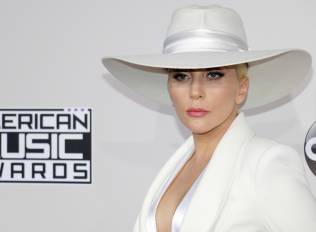
    Lady Gaga joined her mother on stage at the 10th annual Children Mending Hearts Empathy Rocks fundraiser on Sunday (June 10), where she presented her mother Cynthia Germanotta with the Global Changemakers Award for her role as co-founder of the Born This Way Foundation.

    The mother-daughter team established the foundation in 2012, with the goal of empowering youth by providing “genuine opportunities, quality resources, and platforms to make their voices heard.”

    Before presenting her mother with the award, Gaga (born Stefani Germanotta) shared her personal stake in the foundation’s work, as well as the driving force behind it.

    “I have struggled for a long time, both being public and not public about my mental health issues or my mental illness. But I truly believe that secrets keep you sick,” she said.

    The eclectic singer emphasized the importance of kindness. “We [the foundation] bring people together to have real, honest conversations and to be kind. Kindness is not an afterthought to our work. It is the driving power for everything we do,” she said. “To me, almost every problem you can think of can be solved with kindness… Sometimes people think it is weak. It is tremendously powerful.

    “It can change the way that we view each other, the way that we view our communities and the way that we work. Even the way that we feel about ourselves, by being kinder to ourselves. We need more kindness in the world.”

    She thanked her mother for standing by her through it all, “Thank you, Mom, for not being afraid of my darkest thoughts and for doing what many don’t realize goes very far: just holding my hand and running an organization that helps hold the hands of others and join the hands of others. I love you. Suicidal ideation feels like a spell, and we have to have empathy. Be kind and help each other break the spell and live and thrive.”

    Last year, Gaga lent her voice to the Heads Together campaign, the initiative spearheaded by the British Royals—Prince William, Duchess Kate Middleton, and Prince Harry—to de-stigmatize mental illness and encourage people to seek help. The singer video-chatted with Prince William for a promotional video, discussing the importance of caring for one’s mental health and how talking about it can break down the stigma and shame of struggling with it.

    Gaga told William that it was gratifying to be able to open up to her fans without shame. “Even though it was hard, it was the best thing that could come out of my mental illness—to share it with other people and let our generation, as well as other generations, know that if you are feeling not well in your mind, you’re not alone. And people that you think would never have a problem, do.”

    View the original article at thefix.com

  • Ariana Grande Opens Up About PTSD, Anxiety

    Ariana Grande Opens Up About PTSD, Anxiety

    The pop singer describes how the suicide bombing that occurred at her Manchester concert in May 2017 affected her.

    In May 2017, Ariana Grande had just finished performing at the Manchester Arena in Manchester, England when a suicide bomb attack occurred in the foyer of the arena, taking the lives of 22 people and injuring many more.

    It was an event that she says fueled her post-traumatic stress disorder (PTSD), a subject she has a difficult time discussing today.

    As the singer told Vogue, “It’s hard to talk about because so many people have suffered such severe, tremendous loss. But, yeah, it’s a real thing. I know those families and my fans, and everyone there experienced a tremendous amount of it as well. Time is the biggest thing. I feel like I shouldn’t even be talking about my own experience—like I shouldn’t even say anything.”

    Grande added that looking back on the event, “I don’t think I’ll ever know how to talk about it and not cry.”

    Grande told Time, “The processing part” of her grief “is going to take forever.” She was reluctant to talk about the bombing because, “I don’t want to give it that much power.

    “Music is supposed to be the safest thing in the world. I think that’s why it’s still so heavy on my heart every single day. I wish there was more that I could fix. You think with time it’ll become easier to talk about. Or you’ll make peace with it. But every day I wait for that peace to come and it’s still very painful.”

    Grande admits she’s also been struggling with anxiety before the release of her new album, Sweetener. “I think a lot of people have anxiety, especially right now,” she says. “My anxiety has anxiety…”

    Grande then admitted, “I’ve always had anxiety. I’ve never really spoken about it because I thought everyone had it.” She told Time, “I never opened up about it, because I thought that was how life was supposed to feel,” but she added, “when I got home from tour it was the most severe I think it’s ever been.”

    Like a lot of artists, Grande threw her emotions into her music, saying that after going into therapy, “I felt more inclined to tap into my feelings because I was spending more time with them. I was talking about them more. I was in therapy more… When I started to take care of myself more, then came balance, and freedom, and joy. It poured out into the music.” 

    View the original article at thefix.com

  • Olivia Munn Details Depression & Anxiety Struggles, Urges People To Seek Help

    Olivia Munn Details Depression & Anxiety Struggles, Urges People To Seek Help

    Munn got candid about her past struggles with depression and anxiety on Instagram.

    In just one week, the passing of designer Kate Spade and chef Anthony Bourdain has reignited the conversation surrounding depression and suicide. And on Thursday, the CDC reported that from 1999 to 2016, the suicide rate in the U.S. increased in “nearly every state.” Suicide is the 10th leading cause of death in the United States.

    In a recent Instagram post, Olivia Munn shared her own experience with depression and anxiety, hoping to encourage people to shed the shame and seek help.

    “I have lived with anxiety and sporadic bouts of depression for most of my adult life,” wrote the former Daily Show correspondent. “Ten years ago I tackled it, learned to fully understand it and haven’t felt the dark depths of depression in about a decade. But before that, thoughts of suicide crossed my mind more than a few times.”

    Her caption accompanied a list of international suicide hotlines including phone numbers from Argentina, Botswana, and Japan.

    “Please don’t hesitate to call for you or someone you think needs help,” she wrote. “A phone call could change everything.”

    The former TV journalist, actress and model herself has struggled with managing depression and anxiety. According to a WebMD feature from 2015, Munn consulted a doctor and therapist when she began having panic attacks.

    Growing up, depression wasn’t a topic of discussion in her family. Her mother would tell Munn and her siblings to “figure it out,” and they were “never allowed to feel sorry for ourselves.”

    Munn also began seeing a hypnotist to help manage her anxiety and trichotillomania (the “hair-pulling disorder”). Munn began working with a trainer and focusing on exercise, which helped with her anxiety.

    Munn gave insight as someone who contemplated suicide “more than a few times.”

    “For those who don’t understand depression, when someone is in that place it’s not because they want to die, it’s because the ongoing, relentless darkness is too painful to endure anymore,” she wrote in her Instagram post. “You don’t have to suffer from anxiety and depression to feel that low. Something very sad or traumatic can happen to you just once to bring about that feeling of despair.

    “But please listen to me,” she continued, “from someone who is telling you that she’s been where you are, when I say that SUICIDE IS NOT THE RIGHT CHOICE.”

    Munn hopes to encourage more people to seek support with her message.

    “With suicide, there’s no do-overs. Please try every single option you can before making a choice that cannot be undone.”

    View the original article at thefix.com

  • Kanye West On Mental Health Issues: It's Not a Disability, It's A Super Power"

    Kanye West On Mental Health Issues: It's Not a Disability, It's A Super Power"

    The rapper opened up about being newly diagnosed with a “mental condition” during a recent interview.

    Kanye West has just released his new album, Ye, which tackles a wide variety of subjects, including his marriage to Kim Kardashian, as well as his mental health with the song “Yikes.”

    In “Yikes,” West says he is bipolar, which he calls a “superpower,” and in the song he states it “ain’t no disability, I’m a superhero.”

    Bipolar disorder is also a major focus on the cover of the album. “I hate being bi-polar it’s awesome,” is scrawled in neon green across the cover, while the mountains of Wyoming loom in the background.

    West then opened up to radio personality Big Boy about his mental health, saying, “I’m so blessed and so privileged because think about people that have issues that are not Kanye West, that can’t go and make that [music] and make you feel like it’s all good. I’d never been diagnosed and I was like 39 years old… That’s why I said on the album, ‘It’s not a disability, it’s a super power.’”

    Naturally, West’s revelation has stirred up a wide variety of reactions and controversy. As Yahoo reports, the reaction on Twitter has been mixed.

    One fan tweeted, “Kanye calling Bipolar his superpower was inspiring,” while another added, “Quite a way to end Mental Health Awareness Month to have Kanye West, one of the biggest people on the planet, reveal he’s dealing with bipolar disorder and call it a superpower.”

    Yet another person remarked, “Look, I’m not gonna tell someone how they should feel and talk about their mental illness. But someone with Kanye’s platform glorifying bipolar disorder as a ‘superpower’ and potentially discouraging folks from seeking treatment and help is not good.”

    Mental health advocates also have mixed feelings about West’s revelation. Eric Youngstrom, PhD, who is the acting director of The Center for Excellence in Research and Treatment of Bipolar Disorder, felt that West coming forward about his mental health condition “reduces the shame and stigma around it. The messaging of this is that having a mental health condition doesn’t mean you’re ill or broke, and that’s extremely powerful.”

    Yet John Mayer, PhD, tells Yahoo, “Saying [bipolar disorder] is a superpower denies your need to cope and accept your illness.”

    West’s mental health revelation comes on the heels of his previous confession that he was hooked on opioids. “I was drugged the fuck out,” he told TMZ.

    He was also featured on the Travis Scott song “Watch,” in which he rapped, “Wanna know how pain feels? I got off my main pills. Bet my wifey stay close, she know I’m on my Bezos. Opioid addiction, pharmacy’s the real trap. Sometimes I feel trapped, Jordan with no Phil Jack.”

    View the original article at thefix.com