“She opened the door for her peers to also come out and not feel shamed by this illness and she is a real hero in my family,” Kennedy said.
After losing his 22-year-old cousin to an apparent overdose last week, Patrick J. Kennedy is speaking out and hopes the nation is listening.
According to People, Kennedy, a former Rhode Island Congressman and son of Ted Kennedy, appeared on NBC Nightly News the evening following Saoirse Kennedy Hill’s death. He spoke about how Saoirse had been open about her struggles with mental health in the past.
“She opened the door for her peers to also come out and not feel shamed by this illness and she is a real hero in my family,” Kennedy said. “She broke the silence. And we mourn her loss but her memory will live on as someone who wasn’t going to keep silent and wasn’t going to be feeling as if she had something shameful, but rather something medical that she sought treatment for.”
“This affects every single family in America,” he added. “It’s way past time that we deal with this in a way that we would deal with any other public health crisis.”
Saoirse’s Legacy
Kennedy also took to Twitter to speak about his cousin’s legacy and her courage to share her struggles. He shared a link to an essay about life after a suicide attempt, which she had written at age 19.
“Saoirse’s sincere account of her depression is a powerful reminder of how so many people suffer alone and feel isolated,” Kennedy tweeted. “I am proud Saoirse was able to be open and tell her story. I encourage everyone to read her words.”
“Feel what she felt. Do whatever you can from your position in life to stop the isolation, the stigma, and the devastating lack of acknowledgment that often leads to tragedy,” he added in another tweet. “Families across the nation, including ours, are suffering. We must come out of the shadows.”
The Family Statement
Others in the Kennedy family have also spoken about the loss of Saoirse.
“Our hearts are shattered by the loss of our beloved Saoirse,” her family said in a statement. “Her life was filled with hope, promise, and love. She cared deeply about friends and family, especially her mother Courtney, her father Paul, her stepmother Stephanie, and her grandmother Ethel.”
Saoirse was found unresponsive at Ethel’s home Thursday, August 1, a source tells People, and was later pronounced dead. Ethel, 91, also commented on the loss of her granddaughter.
“The world is a little less beautiful today,” she said. “She lit up our lives with her love, her peals of laughter and her generous spirit. Saoirse was passionately moved by the causes of human rights and women’s empowerment and found great joy in volunteer work, working alongside indigenous communities to build schools in Mexico. We will love her and miss her forever.”
It’s been one year since Lovato’s near-fatal overdose that made headlines.
One year after the overdose that sent singer Demi Lovato to the hospital, USA Todaylaid out her milestones over the past 12 months as she’s gotten her life back on track. After a stay in rehab, Lovato has been focusing on her mental health, signed with pop star agent Scooter Braun, took on body-shaming trolls, and worked on her upcoming album.
On July 24, 2018, Lovato was rushed to the hospital in an ambulance after overdosing on oxycodone laced with fentanyl. That was just over a month after releasing the single “Sober,” which revealed that she had recently relapsed after remaining sober for six years. She stayed in the hospital for two weeks before being transferred to in-patient rehab.
Getting Help In 2012
Lovato initially entered addiction treatment in 2012 after her substance use problems began to impact her career to the point that her management team threatened to quit. She had previously been in treatment programs for mental health issues including bulimia, depression, and self-harm, and was eventually diagnosed with bipolar disorder.
Though Lovato has been fairly open about her mental health and addiction issues, she asked people not to pry and speculate about her issues in a Twitter post following her overdose.
“If I feel like the world needs to know something, I will tell them MYSELF,” she wrote on December 22, 2018. “All my fans need to know is I’m working hard on myself, I’m happy and clean and I’m SO grateful for their support.”
Lovato signed with Scooter Braun, a music manager known for getting musicians through difficult periods of their lives, in May. He will likely have a more behind-the-scenes role than a direct influence, according to USA Today and senior director of music for Billboard Magazine Jason Lipshutz.
“Obviously Scooter has demonstrated an ability to manage difficult situations when it comes to pop artists, from Justin Bieber overcoming his controversy to Ariana Grande dealing with tragedy following Manchester (bombing) in 2017,” said Lipshutz.
In March, Lovato came down on Inquisitr for an article focusing on her weight despite the fact that her struggles with an eating disorder have been public knowledge for some time. The singer posted a screenshot of the article headline about her “fuller figure” with the message “I AM MORE THAN MY WEIGHT.”
According to an anonymous source who spoke to People, Lovato is now “very focused on staying healthy,” taking boxing classes and going on hikes with friends in her spare time. She was also reportedly looking happy and healthy at a birthday dinner for her friend and fellow singer Chloe Star Nakhjavanpour.
New Music
She also recently posted on Instagram about her excitement around her upcoming album and a chance to tell her own story honestly.
“You know what’s great about making an album?” she wrote. “You get to say anything you want, be as open and honest as possible and finally tell your side of the story regardless of who might not like it.”
Therapy is already a reach for people of certain cultures. Aside from other obstacles like cost and access to mental health services, traditionally, Hispanic, black and Asian cultures aren’t very warm to mental health counseling.
A recent report by WFAE in Charlotte, North Carolina explored this subject in the Asheville area.
“In Hispanic cultures, in black cultures, you’re expected to tough it out,” explained Michelle Álvarez, a therapist who has worked in Asheville for over a year. “Therapy is for crazy people. Why would you go and air your dirty laundry to a stranger? I think some people might see it as a luxury for white people.”
Álvarez is under “a lot of pressure” as one of very few therapists of color, and a Spanish speaker, in her area. Some of her clients travel long hours to meet with her.
Less Diverse Than America
The lack of diversity in the mental health profession is stark. According to the American Psychological Association, in 2015 around 86% of psychologists in the US were white—while 5% were Hispanic, 5% were Asian, and 4% were black. As the APA noted, this breakdown is “less diverse than the US population as a whole.”
There has been much discussion regarding the benefits of having a therapist that a client can relate to. Having a shared cultural background is one way to help the client open up and feel comfortable in a session.
“It’s a sort of shorthand and familiarity we share with our clients, not having to explain everything,” said Álvarez. “It ends up being more comfortable for the therapist and the client.”
To offset this lack of diversity, a number of POC-centric mental health directories have emerged—including Therapy for Black Girls, the National Queer & Trans Therapists of Color Network, and Melanin and Mental Health.
“The research has been consistent in showing that the relationship that the client has with the therapist is the most important thing that will determine whether therapy is going to be effective,” said Dr. Joy Harden Bradford, who created Therapy for Black Girls in 2014. “So anything that makes you feel like you will have a closer relationship with the person who is going to be your therapist is something that we want to choose.”
The use of mental health patients in fear-based entertainment has been long debated.
A “Psych Ward” themed escape room will get a new theme by the end of the year, after a local non-profit organization voiced concern over the stigmatizing stereotype that the room seemed to play on.
The escape room is a popular group activity that challenges small groups of players to solve puzzles in order to escape different scenarios. This one in particular, created by The Escape Room in West Des Moines and Ankeny, Iowa, players must race the clock to figure out where Dr. Shaston Gunter, a chemical engineer admitted to the psychiatric ward, will release a toxic chemical in the city.
Stigma
This type of scenario stigmatizes people living with mental illness, says a local mental health organization.
“It’s because of the negativity and stereotypes related to mental illness they think this is okay,” said Peggy Huppert, executive director of the Iowa chapter of the National Alliance on Mental Illness (NAMI). “It’s actually very hurtful.”
“It was the name and the description which we objected to, which plays on all the stigma and negative stereotypes that the psych ward is something to be scared of, it’s a scary place, the people in it are scary,” she added.
NAMI requested that The Escape Room end its “Psych Ward” room. Owner Nate Tvedt said they will replace it with a brand new theme by the end of the year.
While he acknowledged that the current theme may be offensive to some, he said that the room is more focused on the puzzles rather than the psych ward setting. “We’ve had thousands of people come in and go through this room,” said Tvedt. “It’s not a scary room on the inside. The room itself, once you get inside of it, it’s just harmless puzzles.”
While some have said that NAMI is being “too sensitive” about the game, it’s not hard to see why it would be offensive to people affected by mental illness. The psych ward or “asylum” is a pretty common theme in the escape room world. And they are often accompanied by stereotypical images of, for example, a dilapidated and filthy hospital room with eerie markings scrawled on the walls.
The use of mental health patients in fear-based entertainment has been long debated.
Is it harmless fun? Or should “asylum” themed horror attractions be shunned altogether?
Kid Cudi, Big Sean and Jay-Z are just a few of the hip-hop artists who are helping to break mental health stigma by being open about therapy, depression and anxiety.
Speaking about mental health, substance abuse and suicide may have been taboo in the past, especially in hip hop and communities of color. But growing discussion, acceptance and understanding of these important issues today are encouraging young people of color to seek help for problems they otherwise would have swept under the rug.
Generally, people of color are discouraged to speak up about such issues. As Van Jones said in a conversation with rapper and business mogul Jay-Z last year, the stigma around mental health is ingrained in the African American community.
“You know, mental health, trauma, PTSD is so rampant in our community. As scared as black folks are of the cops, we are more scared of therapists. We are not trying to go to therapy,” Jones said.
Jay-Z (born Shawn Carter), who does not hide the fact that he sees a therapist, shared, “As you grow, you realize the ridiculousness of the stigma attached to it. You just talk to someone about your problems, you know.”
He expanded that therapy could benefit children who would otherwise struggle to process certain experiences and emotions. “I think actually it should be in our schools,” said Carter. “Children have the most going on, their minds aren’t fully developed… You don’t have the language to navigate it.”
Starting The Conversation
A new feature in High Snobiety illustrates how hip hop’s relationship with mental health awareness has evolved over the years. While the genre has long favored more aggressively masculine personalities, modern artists like Diddy, Big Sean, Kanye West, Kid Cudi, Timbaland and Fat Joe have shared their personal battles with depression, anxiety, bipolar disorder, substance abuse, grief and trauma—pushing the conversation further.
“I have noticed a shift, in that a lot more people of color seek psychotherapy than in the past and their decisions are far less motivated by a current crisis. A great number of the cases I received were from people who became aware of the role of their own mental health in the struggle for racial equality,” said Eben Louw, a therapist from Berlin specializing in black/ethnic minority clients.
“Empowerment programs and anti-discrimination awareness events have also sensitized people of color to their basic human rights, which includes the right to health. This made some of my clients more aware that they are entitled to mental health and a better quality of life.”
“I think we’ve come a long way,” said Daphne C. Watkins, PhD, a professor at the School of Social Work at the University of Michigan and founder and director of The YBMen Project. “We’re finally at a place in society where not only are black men talking more about their deepest, darkest, emotional thoughts and feelings but we as a society are more open to hearing what they have to say.”
People magazine has given props to Ariana Grande and 45 other celebs who have opened up about their mental health.
The stigma surrounding mental health is being dismantled as people go public with their own struggles, including celebrities who have used their platform for advocacy. To celebrate, People put together a list of big names who have come forward.
Among the celebrities mentioned was pop star Ariana Grande, who has struggled with PTSD and anxiety after a bombing attack at one of her performances in Manchester, UK.
“I think a lot of people have anxiety, especially right now,” Grande said. “My anxiety has anxiety… I’ve always had anxiety. I’ve never really spoken about it because I thought everyone had it, but when I got home from tour it was the most severe I think it’s ever been.”
“I feel everything very intensely,” she wrote, “and have committed to doing this tour during a time in my life when I’m still processing a lot… so sometimes I cry a lot!”
Kid Cudi Opens Up
Singer, rapper and actor Kid Cudi was also featured, having spoken before about being “ashamed” to discuss his mental health
“I was really good at keeping my troubles hidden… even from my friends,” Cudi said on Red Table Talk. “I really was good with that. And it’s scary because you hear people say, ‘I had no clue.’ I really went out of my way to keep what I was going through hidden because I was ashamed.”
Riverdale actress Lili Reinhart made the list too, once announcing that she was seeking treatment for depression in a February Instagram post.
“Friendly reminder for anyone who needs to hear it. Therapy is never something to feel ashamed of. Everyone can benefit from seeing a therapist. Doesn’t matter how old or ‘proud’ you’re trying to be,” she wrote. “We are all human. And we all struggle. Don’t suffer in silence. Don’t feel embarrassed to ask for help. I’m 22. I have anxiety and depression And today I started therapy again.”
The Royals Lead The Way
Even Prince Harry was recognized, having made big strides in the UK as he spoke openly about his depression and advocated for mental health.
“We were all beginning to grasp that mental fitness was an issue worth talking about, for every one of us,” he said in a speech. “And while just talking doesn’t cure all ills, we are now shattering the silence that was a real barrier to progress. People are now really talking about their own well-being and how to help those around us.”
Many more made the list as advocacy for mental health continues to gain traction, including Janet Jackson, singer Camila Cabello, and comedian Pete Davidson.
Sophia Ng is using her platform as Miss Global to “remove the stigma that exists around mental health.”
A counselor-turned-beauty queen is on a mission to de-stigmatize mental health in the Asian community, which has long considered it a taboo subject.
Last August, Sophia Ng, 27, won her first pageant and was crowned Miss Asian America. The Vancouver-born, Hong Kong-raised therapist who had zero experience in pageantry was encouraged to enter the competition to further her mission.
Ng is using her platform to break the taboo of speaking about mental health.
“I was once in a suicide depression, and in my hour of darkness, I believed I was worthless and that life was not worth living,” she said during the Miss Asian America competition.
In February, Ng was crowned Miss Global in her second-ever pageant, and stepped down as Miss Asian America.
The beauty queen is drawing from her own experience with depression to spread her message that it’s “okay not to be okay.”
“My passion is removing the stigma that exists around mental health,” she said at a recent banquet sponsored by the Chinese Association of Herculese, speaking in both Cantonese and English. “And I’m currently doing that by doing a lot of speaking engagements, especially with college students, educating them about this.”
Growing up, Ng played dreamed of playing volleyball professionally, according to her profile provided by Miss Global. But at 16, she tore her ACL and MCL during a basketball tournament and had to have left-knee reconstructive surgery. The psychological toll of the long recovery time and feeling incapacitated, Ng said she became depressed. She isolated herself.
“While I was still… recovering physically, my mind definitely began to sort of spiral downwards,” she told KQED.
After a suicide attempt with sleeping pills, Ng saw a therapist who was able to give her a positive outlet to examine her issues. This experience inspired her to pursue a career in psychology.
As a Chinese woman, Ng is able to understand the Asian community’s general apprehension to discussing mental health.
Until recently, she counseled students in San Francisco schools, but left her job to move back to Hong Kong to be closer to family.
Eventually, Ng would like to open her own therapy practice and help schools and companies support mental health.
“We have champions in all walks of life. I was like, where are the champions of schizophrenia and bipolar?” said the exhibit’s creator.
An art exhibit in New Hampshire is aiming to break down the stigma around mental illness by displaying 99 life-sized portraits of people who have been touched by mental illness—33 with bipolar disorder, 33 with schizophrenia, and 33 family members.
The photographs, part of an exhibit called “99 Faces,” were taken by Boston-based artist Lynda Michaud Cutrell, according to The Valley News. They are on display at Dartmouth-Hitchcock Medical Center in Lebanon, New Hampshire’s largest hospital, from April to September.
Cutrell wanted to give people with mental illness a chance to advocate for themselves and their loved ones.
“We have champions in all walks of life,” she said. “I was like, where are the champions of schizophrenia and bipolar?”
Cutrell said that people who see the person behind a diagnosis are more likely to support that person, and less likely to ostracize or “other” them. When attitudes toward mental illness change, “it’s usually because you meet a person,” she said.
Dartmouth-Hitchcock Medical Center provides psychiatric services and hosts support groups for people with mental illness and their family members. Marianne Barthel, arts program director at the hospital, said that the exhibit can give hope to patients and to the people who come to the hospital for support groups related to mental illness.
“It was really in an effort to de-stigmatize mental health and help give inspiration to those living with mental illness that there are others out there like them who are living successful lives with jobs and families,” Barthel told NHPR. “It really breaks down barriers when you can have a discussion about a serious or personal issue by looking at art.”
Dartmouth’s Director of Psychiatry, Alan Green, had similar thoughts. “We hope this exhibit will help people understand (that). As a society, we need to realize that this is part of our responsibility,” he said.
Cutrell was inspired by a family member who is grappling with mental illness. She connected with many of the portraits’ subjects through the National Alliance on Mental Illness.
“Once I found one family member, I realized there were other family members,” she said.
Most people she spoke to were excited to be involved with the project.
She said, “I think how open people became when I gave them this space to be part of something important. It was kind of like a new social value.”
In addition to highlighting her subjects with mental illness, the exhibit makes a nod to the genetic components of the diseases by displaying an artistic representation of a DNA strand from a person with schizophrenia.
“Whoever it would be, there are some genes that contribute,” Cutrell said.
Medical gaslighting — when a health care provider tells you that your symptoms are all in your head or it’s just stress — can take an enormous toll on your mental health.
Trigger Warning: The following story mentions a suicide attempt. Proceed with caution. If you feel you are at risk and need help, skip the story and get help now. Options include: Calling the U.S. National Suicide Prevention Hotline at 800-273-TALK (8255), calling 911, and calling a friend or family member to stay with you until emergency medical personnel arrive to help you.
It’s the night before my first appointment with a new allergist. I don’t even bother trying to sleep. I’m too nervous. Instead of sleep, I refresh my twitter and Facebook feeds. I take care of the laundry, reveling in one of the few perks that comes with insomnia, like free rein of the apartment laundry room at 3:30 a.m.
My husband wakes up for work at 6 a.m. He doesn’t even bother asking if I got any sleep. He knows I’m already afraid, even before I set foot outside our apartment: am I going to come home crying and broken? I don’t expect to be believed anymore by the very doctors I seek out for medical treatment, and I’m never surprised when my complaints of chronic (and still undiagnosed) symptoms are reduced to nothing more than orders to “eat less” and “move more,” or worse yet: “it’s all in your head.”
I used to blame myself. Maybe the doctors were right. Maybe I was crazy. They are the experts, after all.
“I was diagnosed with rheumatoid arthritis several years ago. While I got a diagnosis fairly quickly and easily, it prompted me to learn more about autoimmune diseases in general. I quickly realized how many other autoimmune patients — the majority of whom are women — weren’t nearly so lucky as I was,” she said. “I started paying more attention to how many women I knew seemed to have a story of health care providers who didn’t take their symptoms seriously — who dismissed them as ‘normal’ or ‘just stress’ or even disbelieved them entirely.”
The result of being dismissed by the medical community for legitimate complaints is that women are labeled “complainers” during their early searches for answers.
This all sounds so familiar to me that it is both comforting to know I am not alone and utterly depressing that there are so many of us being ignored by the doctors we entrust with our care.
My own experiences with gender-based medical gaslighting stretches back decades, starting with the pediatrician who dismissed my hesitant admission that I thought I might have an eating disorder. And just a few weeks ago, a dermatologist flat-out told me that the painful, chronic, and recurrent skin lesions I have been experiencing since my daughter was born almost 12 years ago — and that I am quite certain are the result of an undiagnosed autoimmune condition — are nothing more than a reflection of my dermatillomania (skin picking disorder).
When I tried to explain yet again that I only dig at the swollen spots to relive the buildup of pressure, he prescribed me Gabapentin, smiled, and told me to make an appointment for a follow-up in six months.
This Girl Thinks She Has an Eating Disorder
When I was 15, I sat in my pediatrician’s office in shock, listening to her tell the dietitian in the hallway that I just needed a talk-though on healthy eating and to send me home with some pamphlets on diet and exercise. The doctor had closed the door behind her, of course. But she hadn’t accounted for the paper-thin walls.
“This girl thinks she has an eating disorder because she can’t stick to a diet,” I heard my doctor say. I wanted the floor to open up beneath me. Instead, I nodded and smiled when the door opened, forcing my smile bigger as the dietitian gave me my pamphlets. When I got home, I promptly binged and purged, and continued to do so for six more years because I wasn’t taken seriously when I stammered my way through the phrase: “I think I have an eating disorder.”
A Burden in the Emergency Room
When I was 21, I attempted suicide before realizing that dead was permanent and scared myself into action. I called my boyfriend at the time for help, but soon I was feeling smaller and more of a burden in the emergency room than I had felt before the suicide attempt.
When the nurse asked if I felt like hurting myself again, I lied and said I was fine because I knew that if I said I still felt suicidal, they wouldn’t let me leave. I couldn’t figure out how to explain that “feeling suicidal” didn’t mean I wanted to attempt to harm myself again, but it didn’t matter. The nurse didn’t give a damn, anyway. When I said I was fine, she sighed in obvious relief, but it wasn’t relief that I was actually fine (I wasn’t), it was relief that she wouldn’t have to deal with me anymore. She didn’t say it, but I felt like I was just another messed up college kid to deal with. I was checked off her list of things that mattered, and went home to cry myself to sleep.
People Like You Can’t Be Helped
When I was in my mid-30’s, I sat before a dermatologist who was examining me for that recurring rash and inflammation cycle that results in painful sores and welts coving my entire body. He asked me if I pick at my skin, looking at my arms and face. I nodded, honest, and told him I knew I needed to see a therapist or psychiatrist about anti-anxiety meds to control the compulsions to pick at myself, and asked him how he could help me with my skin.
“People like you can’t be helped,” was the reply that his nurse later apologized for as I sat on the exam table weeping and broken, once again dismissed by the medical professional I had sought out.
Misdiagnosed
I thought that maybe I’d have better luck with a nurse practitioner.
My appointment coincided with a flare-up of my symptoms. Sitting before her with my daughter at my side, I watched her watch me, taking stock of the bright pink, weepy rash that went from chin to chest and the scabs and new lesions on my arms and legs. There was something very obviously wrong, and I remember thinking how lucky I was that my skin was on fire, my entire body inflamed inside and out for her to see. The fact that children on the street saw it and stopped, stared, and pointed at me before their mothers hurried them away actually had me looking forward to the appointment. I wasn’t crazy: there was (and still is) really something wrong with me. The proof was in the mirror.
Instead, she ignored my description of my symptoms, disregarded the pattern in which they appeared, and asked me how often I exercised and what my diet consisted of. She told me I was likely diabetic (I wasn’t), and that all of my health problems would resolve if I ate less and exercised more.
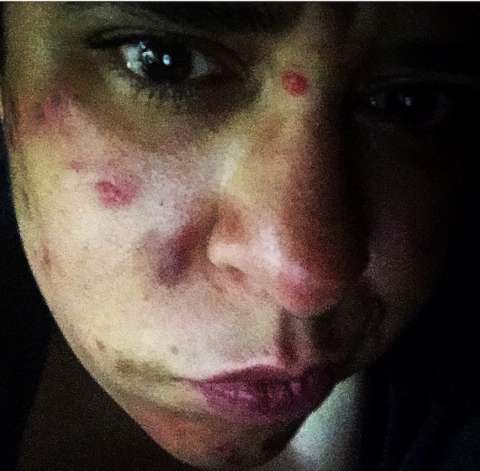
The author on the day of her appointment.
It took two years before I was brave enough to see another doctor -any doctor – after that one. I’m still searching for answers and a doctor who will listen. All I have to show for it are severe anxiety and soaring blood pressure readings at the end of every appointment.
Medical Gaslighting and Mental Health
To Dusenbery, my experience makes sense and fits with the research and stories she shares in her book.
“I think medical gaslighting can take an enormous toll on your mental health. Even for very privileged women, it can be very difficult to trust yourself and what your body is telling you and push back when an expert with a white coat and an MD is insisting that ‘nothing is wrong,’” she said. “I have to believe that many health care providers simply don’t realize the harm they’re capable of causing by dismissing or disbelieving women’s reports of their symptoms.”
There are the good ones, of course. The doctors who have believed something is wrong but couldn’t find the answer. These are the doctors who treat their patients with respect and dignity and listen. And then there are the ones like the dermatologist who told me people like me could not be fixed.
But I know better now. I am not the one who is broken.
If you or someone you know may be at risk for suicide, immediately seek help. You are not alone.
Options include:
Calling the U.S. National Suicide Prevention Hotline at 800-273-TALK (8255)
Calling 911
Calling a friend or family member to stay with you until emergency medical personnel arrive to help you.
The “Damages” actress spoke about the stigma surrounding those with mental health issues during a recent lecture.
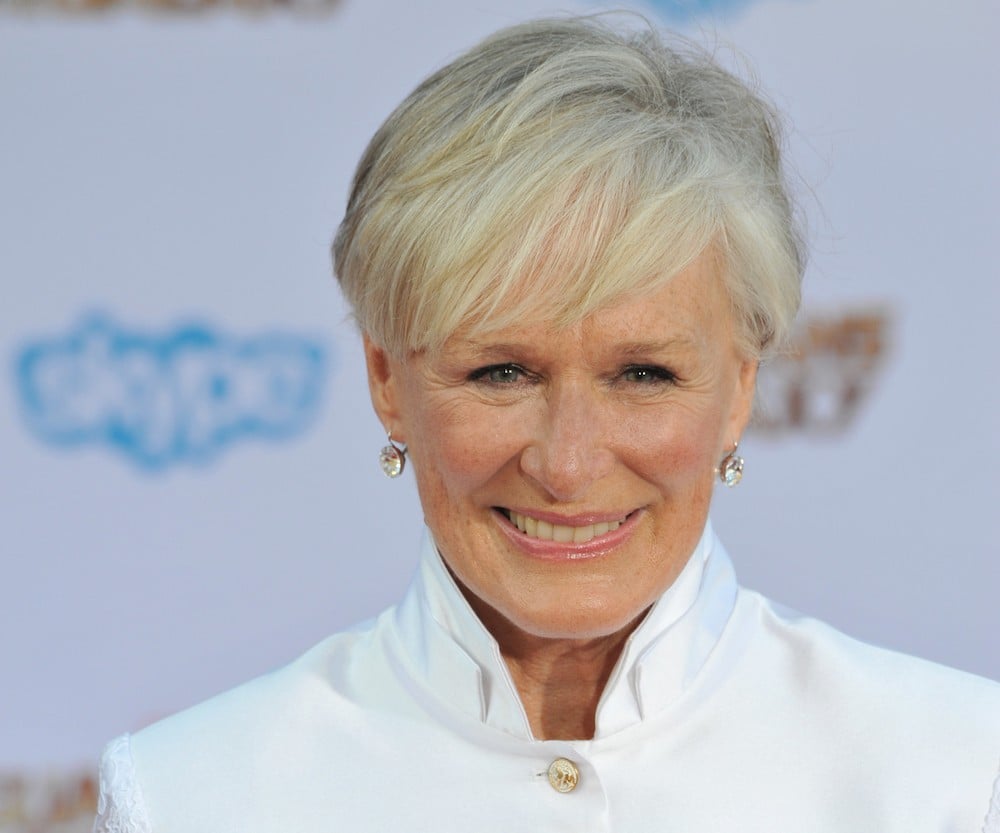
Golden Globe winner and vocal mental health advocate Glenn Close took another opportunity to speak on the dangers of stigma against mental illness during a recent lecture in central Ohio.
The renowned actress was invited to speak as part of the Jefferson Series, described as “a collection of stimulating forums featuring some of the world’s most compelling and esteemed thinkers” that takes place in New Albany, Ohio each year.
During her lecture, Close talked about mental illness in her family and about her book Resilience: Two Sisters and a Story of Mental Illness. Her sister, Jessie Close, has bipolar disorder and Glenn Close herself has dealt with depression at times throughout her life.
However, due largely to stigma against mental illness and a silence around the issue within their family, Jessie remained undiagnosed until the age of 50.
According to a CBS interview from March 2018, Glenn Close was alarmed to discover how often those with bipolar disorder die by suicide and realized that she could have easily lost her sister.
These revelations led the two Close sisters to establish the anti-stigma foundation Bring Change 2 Mind in 2010. Glenn Close has since used her fame to speak out against the stigma surrounding mental illness that kept her family quiet on the issue for so long.
“I come from a family that had no vocabulary for mental illness,” Close wrote in 2016. “Toxic stigma and the social mores of the time made any conversation about possible mental health issues taboo. The lack of conversation was very costly.”
In her recent lecture, Close encouraged people to examine their own attitudes around mental illness that might be preventing them from seeking help or offering help to a struggling family member.
“You have to examine yourself to see whether you have any kind of stigma that’s just been inadvertently fed into you and then realize your family member can lead a viable life,” she said. “You can have a life, but you have to get help. And the sooner you get help, the better your life will be.”