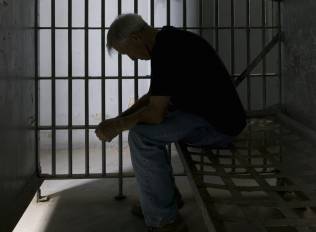
Tag: mental health

  • State Of Mental Health In America "Still Quite Bleak," Report Says

    State Of Mental Health In America "Still Quite Bleak," Report Says

    New data shows “alarming increases in adult suicidal thoughts and major depression in youth.”

    Talking about mental health is becoming less taboo, but is this making a real difference? 

    According to a new report that offers a snapshot of mental health in the United States, overall the picture is “still quite bleak.”

    The annual State of Mental Health report, compiled by Mental Health America (MHA), saw encouraging trends since the release of the first report. These include slight decreases in the number of American adults who have mental health concerns (18.19% to 18.07%) or substance use problems (8.76% to 7.93%).

    However, according to president and CEO of MHA Paul Gionfriddo, the data shows “alarming increases in adult suicidal thoughts and major depression in youth.”

    An estimated 9.8 million adults experience suicidal thoughts—an increase of 200,000 people since 2017. And more than 2 million young people were diagnosed with severe major depression, according to the report.

    Overall, more than 24 million Americans living with mental health issues go untreated.

    “Despite mental health being something that more and more people are talking about—far too many people are still suffering. People are simply not receiving the treatment they need to live healthy and productive lives—and too many don’t see a way out,” said Gionfriddo in a press release.

    The MHA report ranked all 50 states and Washington, D.C. based on rates of mental health issues and access to treatment. Minnesota came out on top at #1, with Nevada ranked #51. States ranked higher were deemed to have lower prevalence of mental health issues and better access to treatment, while states ranked lower were deemed to have more mental health issues with less access to care.

    The report also studied the long-term impact of childhood trauma, and determined that youth affected by trauma are more likely to have problems at school such as missing school, being removed from classrooms, and struggling with schoolwork.

    Thus MHA “strongly supports” integrating mental health services in schools. Early intervention and education can prevent the development of more severe mental health problems and help kids deal with trauma.

    This year, New York became the first state to require mental health education across all grades. Virginia enacted a similar rule this year, requiring mental health education to be taught in the 9th and 10th grades.

    “When young people learn about mental health and that it is an important aspect of overall health and well-being, the likelihood increases they will be able to effectively recognize signs and symptoms in themselves and others will know where to turn for help—and it will decrease the stigma that attaches to help-seeking,” said NY’s Education Commissioner MaryEllen Elia.

    View the original article at thefix.com

  • Trauma and Addiction Recovery Workbook [BOOK REVIEW]

    Trauma and Addiction Recovery Workbook [BOOK REVIEW]

    Trauma Is Personal

    Trauma isn’t just a buzzword in addiction treatment. It’s a reality that many men, women, young adults, and children face … every day. Trauma can take the form of a life-changing event. Psychology Today explains trauma as the result of ”any distressing or life-threatening event”. Trauma is usually caused by an external force that we cannot control:

    • A natural disaster
    • A person who forces us to do or witness something horrible
    • War
    • Terrorism or school shootings

    According to the Substance Abuse and Mental Health Services Administration (SAMHSA), research has shown that traumatic experiences are associated with both behavioral health and chronic physical health conditions, especially those traumatic events that occur during childhood. Still, trauma and addiction co-occur often and in all kinds of populations.

    How someone responds to a traumatic experience is personal. But there are some commonalities in the ways we cope as humans, and the ways that we can help. So, if you’ve been through trauma…you ARE NOT DOOMED to live with lasting negative effects. While difficulties and stress reactions are normal,you can address these challenges and explore healing.

    A Path to Healing

    Traumatic experiences can contribute to chronic physical and mental health conditions. But you can move through the pain and come out the other side. One way to do that is by reading a new book called, “Recovery from Trauma, Addiction, or Both” by Dr. Lisa M. Najavits.

    Herself the victim of a violent assault while in graduate school, the author’s personal empathy for trauma combined with trends in “Co-Occuring Disorders”, or the treatment of addiction and mental health disorders. Her latest book presents science-based self-help strategies that you can use no matter where you are in your recovery. Every chapter features testimonials from people who have “been there” before you. Plus, the text is designed to be worked through over time.

    Overall, I give this book a hearty “thumbs up.”

    Why I Recommend This Book

    As a workbook, “Recovery from Trauma, Addiction, or Both works to your advantage. First of all, it’s based on clinical practice. Dr. Najavits has been using evidence-based clinical skills for decades. The text include background reading for context. Then, Dr. Najavits has included reflection questions, surveys, exercises, and action points in every chapter.

    Second, you can advance at your own rate, or use the workbook as an adjunct to talk therapy. It is truly a tool that can move you towards becoming your best self. However, be fairly warned. There is a lot of work to do. And most of the time, you may not want to approach that work on your own.

    Still, if you are ready to work through trauma, this book will teach you how to:

    • Keep yourself safe and find support.
    • Set your own goals and make a plan to achieve them at your own pace.
    • Learn coping skills so that the future is better than the past.

    However, I personally think it best that you also commit to talk therapy. In my experience, scheduling regular, weekly appointments with a psychotherapist, addiction counselor, or a spiritual/religious guide is critical to moving forward. When we are hurt the most, we need a guide.

    When you’re ready to seek out professional support for treatment of addiction, trauma, or both, here are a list of possibilities.

    1. Rehabs. Search the SAMHSA website. For rehab that specialize in trauma AND addiction treatment. Or, call our number listed on this page for confidential information on where to get treatment.

    2. Professionals. Clinical psychiatrists or psychologists who have specialized in addiction treatment can offer suitable advice on resolving trauma and substance abuse issues. You can search the APA directory to find a psychotherapist and the APA directory to find a psychiatrist. Or, check with your State’s Department of Social Services to be connected to a licensed clinical social worker.

    3. Support Groups. These are non-formal meetings between people who share their experiences in order to gain positive result in recovery. The U.S. Veteran’s Association suggests the following support groups for trauma

    • Anxiety and Depression Association of America offers a list of support groups across the country for a number of different mental health conditions, including PTSD.
    • Sidran Institute Help Desk Help Desk locates support groups for people who have experienced trauma. Sidran does not offer clinical care or counseling services, but can help you locate care or support.
    • National Alliance on Mental Illness (NAMI) Information HelpLine provides support, referral and information on mental illness care. You may also find family support groups in a NAMI state or local affiliate online or by calling 1(800)950-NAMI (6264).

    What I Learned From This Book

    Because this book is easy-to-read, you can essentially open any chapter and take away some key learning moments for yourself. It’s workbook, so the process is highly personal. The three mostinteresting things that I learned from this book are:

    1. It’s best to treat trauma and addiction at the same time. It does not help to treat addiction first and then address trauma. You might actually be delaying healing or cause yourself unnecessary misery when you do this. Instead, a good treatment provider will address them both together.

    2. You can shop around for counselors. The therapeutic relationship is something you need to feel comfortable with. And not everyone will resonate with your own personal need. So, don’t feel like you need to do trauma work with the first person you come across. Instead, take your time and vet the person first. Ask for referrals. And do your homework.

    3. Re-living past trauma is not necessary to resolving it. Repeat that. This insight was MAJOR for me. Maybe I’ve seen to many movies with hypnotists…but I had a LARGE misconception about trauma work. So, just know that you do not need to smell, see, touch, or taste the past in order to live more comfortably in the moment. What a relief!

    Conclusion

    Clearly, the effects of traumatic events place a heavy burden on individuals, families, and communities. However, research and practice are combining to offer us new pathways forward.

    This book – Recovery from Trauma, Addiction, or Both … is worth buying. In fact, it might just be the best book you ever buy. Why?

    Because you are worth it! This book offers just the right kind of gentle guidance toward positive action that it takes to change your life. But only YOU CAN DO THE WORK. Why not spend the $12 and get started today?

    View the original article at

  • Change is Strange: Coping with Change in Addiction Recovery

    Change is Strange: Coping with Change in Addiction Recovery

    What Are “Changes”?

    For the past several months I have been experiencing a lot of change. But what does that mean? I’ve been asking some questions:

    • What do we mean by change?
    • How do we view change?
    • What does change do to us?

    Simply defined, change is, “the act of making or becoming different.”

    Those are small words for such an often series of tumultuous acts. Change can be sudden and unexpected, or it can be thought out and planned. But no matter how much we plan for change, it can throw us in a loop. We can feel lost. Anxiety and fear can take over. In sum, change is strange.

    Change is Strange: A First Hand Account

    Take for instance how I have spent my life’s work working in the behavioral health care field, most notably in the addiction and mental health arena. I’ve spent decades either teaching on the university level or helping others to change. I have worked with thousands of students as well as hundreds of families whose loved ones experience the maladies of abuse. This has included:

    • Chronic pain
    • Disordered eating
    • Disordered shopping
    • Compulsive gambling

    … other process disorders coupled with anxiety and depression. All the while, the name of the game is to motivate, facilitate, inspire them to change their behaviors. The goal is to fool those neuro tags and change the way one responds to life.

    Well, let me tell you first hand, “Change is strange”. I travel for work. Over the last few months, I have worked in London, New York, Fargo, Clovis, Mountainside, Long Beach and Malibu. I have changed some of the work I do from consulting at one place to consulting at a few others. Consulting means you go into a center with essentially clean eyes and knowledge about the subject matter you are asked to look at. As such, one becomes a partial part of something.

    As a consultant, one’s job is well defined. In my case, most of the time it centers around developing curriculum, training and working with others. As such, you must learn all about the entities and perspectives in the workplace. In other words, you must put yourself in their shoes. You must identity with and try to understand all the nuances of a treatment environment, even though you are not present all the time.

    Looking at Attachment

    This is a tightrope walk. I honor the professionals, the work they are doing, and their processes for accomplishing their goals. Nonetheless, in doing so, I find that I become attached to the people, places, and things I encounter.

    When a consulting job ends, there is a little hole inside of me that misses that place, that staff, those people.

    And so, faces and places change. I found this experience to be bittersweet, having learned tons about a new subject matter. Hence, whether it’s abrupt or planned, saying goodbye is difficult. Change is strange!

    Moving to a New Home Shakes Things Up

    Recently, my husband, dogs, and all our things were picked up and moved. The process has shaken up the molecules of knowing where everything is in its rightful place. It’s difficult to know where things are: from where silverware sits to where the best grocery store is to wondering, “Where did I put this or that?”.. to not knowing exactly where to go, what to do, or who to meet.

    My sense of direction, belonging, and trajectory have all been thrown into a clothes dryer and the dial turned up to maximum spin. I don’t know where I’m going to fall when the tumble dry finishes. Indeed, change is strange.

    Many of you know we have relocated to the desert. Mr. Wadas – my husband – as I affectionately call him, is happy as a clam after spending months making a new home. He can walk out onto our back patio and look up at the stars every night, see the harvest moon, and can play golf for a cheap ticket at the best clubs.

    As a former athletic director, moves are a way of life for him. He changed university colors many a time. As an athlete, he learned that there is always another game to play. If you lose one you get up the next day, dust yourself off, learn from the plays, train harder, and go back out. His mantra is:

    “Preparation plus opportunity equals success.”

    He rolls with the punches, another way of dealing with the emotional highs and lows of transition.

    How Being an ACOA Informs My Response to Change

    For me, the adult child of an alcoholic and the daughter of a Loretta Young-type mother who vacationed and moved constantly, change doesn’t settle well in my bones. In addition to this, I’m a woman who experienced many sudden deaths of close family.

    I don’t move.

    In WeHo, my previous residence, I only moved two doors down from our condo to a home. I fell in love with the city, learned, laughed, walked everywhere in the neighborhood feel of WeHo, met so many new people, volunteered at the Sheriff’s station, tripped in disbelief over a growing homeless population, protested the marijuana stores, made friends with the doormen at Sunset Marquis, experienced the vastness of the treatment and recovery industry, hiked up to Soul Cycle every morning, riding alongside artists, designers, celebrities, etc., and felt a strong sense of community. I felt energized, activated and secure with the sounds of La Cienega roaring in the background.

    And then life took some turns and we chose to move.

    I have been coming to the desert for more than 35 years. I know the streets, have a few professional friends here, and can find my way around. Still, I don’t know all the places. There is a flood of new faces. Yet, there is a familiarity in unfamiliarity.

    I Turn to the Tools of Recovery

    What I do have that I embrace are the tools of recovery for any environment in the world. As such, this means that:

    • I try six meetings and try six more.
    • I try six spinning studios and try six more instructors.
    • I use the telephone (I don’t know my landline number even that was switched).
    • I reach out to new and old friends, suiting up and showing up.
    • I trade Melrose Place for Lowes (really!)

    More than anything, it means feeling my feelings.

    I grieve the changes and welcome new beginnings. I shed some tears, write an article about FOMO (the fear of missing out), as I am missing all the L.A. events and its robust treatment community. It means facetiming with grandchildren instead of hugging in person.

    And in the process, I am finding my groove.

    This morning, as I see the desert sky come up… I am grateful. Grateful that I got to learn so much about chronic pain and how to work with families in that arena. I’m grateful for the synergy of the city, for learning about life in the fast lane, for traveling near and far in the pursuit of wellness, for learning from such great folks along the way from Sean Firtel to Brad Lamm, Jonathan Rauch, Jeffrey Merrick, James Flowers to Cole Rucker, Heather Hayes and Eve Ruff, Judith Landau, Denise Klein, Charlene Short Majors, Monica Phillips Priya Chaudri, Ed and Mary Ann Spatola, Dawn Hedgepath.

    There are so many more!

    How to Get Through Periods of Change

    So, now I am here in the desert, being gentle with myself. I realize that I am in the process of becoming. “Be gentle with your soul,” I say to others. Now I am saying that to myself.

    In this new chapter, the tools of recovery are important. Here they are:

    • Empathy
    • Establishing new rituals
    • Exercise
    • Feeling one’s feelings
    • Meetings
    • Nutrition
    • Peer Support
    • Professional consultation
    • Telephone calls

    So, if you are in the midst of doing something different – taking something out of your daily routine or adding something in – please remember it takes 60-90 days to change just one behavior. When you are trying to adjust, adapt, or learn about so many new things… let those neurons fire off and remember you are attaching to new ways of being.

    You will be OK.

    Change is strange! As John West, Co- Owner of The Guest House . hared on Facebook:

    “A shark in a fish tank will grow eight inches but in the ocean it will grow eight feet or more. The shark will never grow out of its environment. The same is true with you. Many times we are around small thinking so we don’t grow. Change your environment and watch yourself grow.”

    How are you growing today?

    How are you addressing change?

    Let me know and I will compile your wisdom and share with everyone.

    View the original article at

  • Michelle Williams Talks Depression, Getting Treatment In New Interview

    Michelle Williams Talks Depression, Getting Treatment In New Interview

    “For months, I was slipping and slipping and slipping [and] before you knew it I was at the bottom of the pit looking up.”

    This past spring, Michelle Williams reunited with Beyoncé and Kelly Rowland for a Destiny’s Child reunion at Coachella. Not long after, Williams checked into the hospital to deal with her depression.

    Williams sat down with Good Morning America to give the world an update on her mental health.

    Williams appeared on the show with her fiancé, Chad Johnson. She told Robin Roberts, “I am just sitting here and fighting back tears. I’m just thankful to be here to tell this story.”

    Williams fought her depression as hard as she could, but she eventually realized she couldn’t do it without help.

    “I was like, ‘Just fight it, you’ve been here before. I’m identifying it… I just didn’t do enough,” she said. “So for months, I was slipping and slipping and slipping [and] before you knew it I was at the bottom of the pit looking up like, ‘Am I really here again?’ And I suffered by myself. I didn’t want to tell anybody.”

    Williams had struggled with depression since she was 13. “I didn’t want anyone to be like, ‘Oh my gosh, here we go again. I thought you were over it.’”

    Johnson knew something was wrong, but he confessed that he didn’t understand what was going on with Williams at first. “The relationship just seemed to be slipping out of my hands. I could see [her] spiraling, but I had no idea that it was depression.”

    Once Williams decided to get help, she announced on Instagram, “I recently listened to the same advice I have given to thousands around the world and sought help from a great team of healthcare professionals.” She also vowed to “always lead by example as I tirelessly advocate for the betterment of those in need.”

    As a celebrity in the public eye, Williams also wants to help reduce the stigma many have with mental health that often prevents them from getting treatment.

    “When I was in the mental health facility, I didn’t see anybody that looked crazy,” she says. “I didn’t see anybody strapped up, I didn’t see anybody doing crazy behavior. And literally since then, I watch my mouth. I don’t call people crazy anymore. Some people… they just need help.”

    View the original article at thefix.com

  • A Medication For Postpartum Depression?

    A Medication For Postpartum Depression?

    Currently, there are no FDA-approved drugs specifically to treat postpartum depression.

    The FDA is considering the approval of a new medication that would treat severe postpartum depression.

    While most women experience “baby blues” after childbirth, some experience more severe, longer-lasting symptoms, known as postpartum depression (PPD).

    Currently there are no FDA-approved drugs specifically to treat PPD. And data on the efficacy of existing antidepressants on PPD is limited.

    Brexanolone (brand name Zulresso) may change that, Fortune reports.

    How does brexanolone differ from existing antidepressants?

    Brexanolone mimics the functioning of the human hormone known as allopregnanolone. Allopregnanolone increases in a woman’s body during pregnancy and peaks during the third trimester. After delivery, however, levels of allopregnanolone fall abruptly, the FDA explains.

    Brexanolone, an injection, works to return women to pre-delivery levels of allopregnanolone. 

    Postpartum depression is considered a life-threatening condition because of the risk of suicide, the FDA says. “It also has profound negative effects on the maternal-infant bond and later infant development.”

    According to the FDA, suicide is the most common cause of maternal death after childbirth in the developed world. Approximately 12% of births are affected by PPD in the United States.

    Despite how many women experience PPD, some say it is not talked about enough.

    “I think people need to talk about it more because it’s almost like the fourth trimester, it’s part of the pregnancy,” said tennis champ Serena Williams, while sharing her own experience with PPD.

    “How can I feel this way when everything is so great? I’ve had a hard time coming to terms with that, and I hesitated to even talk about this,” said TV personality Chrissy Teigen.

    “I couldn’t figure out why I was so unhappy. I blamed it on being tired and possibly growing out of the role: ‘Maybe I’m just not a goofy person anymore. Maybe I’m just supposed to be a mom,’” the Lip Sync Battle host said.

    Symptoms of postpartum depression can arise within the first few weeks after giving birth. Some may begin earlier (during pregnancy) or later (up to a year after birth), according to Mayo Clinic.

    An FDA advisory committee voted 18-0 that Zulresso is effective in treating PPD—however, they mentioned “some reservations about the safety of home infusion,” Seeking Alpha reports.

    A decision by the FDA is expected by December 19.

    View the original article at thefix.com

  • Oregon Tries To Break Cycle Of Jailing People With Mental Health Issues

    Oregon Tries To Break Cycle Of Jailing People With Mental Health Issues

    A new initiative was created to divert people with mental illness from the criminal justice system in Oregon.

    There’s been more attention given to the fact that a significant percentage of incarcerated Americans suffer from mental illness.

    “The vast majority of the individuals are not violent criminals,” according to the National Alliance on Mental Illness (NAMI). “Once in jail, many individuals don’t receive the treatment they need and end up getting worse, not better.”

    They also tend to remain in jail longer and are at a higher risk of victimization than the non-mentally ill.

    Officials in Oregon are trying to break this cycle with a new initiative: the Justice Reinvestment Initiative.

    A new committee of 28 officials from state law enforcement, justice and health care, government officials and more—named the Behavioral Health Justice Reinvestment Steering Committee—will submit policy recommendations for how to divert people with mental illness from the criminal justice system.

    The committee is planning to submit a plan for the 2019 legislative session.

    “The criminal justice system was designed to prevent, protect against and prosecute criminal offenses. It was not designed to treat mental illness or substance addiction,” said Oregon Health Authority Director Patrick Allen, who is on the committee.

    Instead of cycling this population in and out of jails, where they will receive no support, Allen says there needs to be a long-term solution. “The best way to support people with behavioral health needs is to connect them to treatment in their local communities. The Justice Reinvestment process will allow us to develop solutions that better promote individual recovery while preserving community safety.”

    Senate Republican Leader Jackie Winters is also on the committee. “It’s not appropriate for the jail to be the place for the mentally ill,” she said, according to the Statesman Journal. It is for the committee to figure out: “how do we treat the individual without sending them into the criminal justice system?”

    The committee has begun reviewing jails across Oregon and gauging the needs of counties. They will work in concert with state health and criminal justice officials, who will contribute data to the initiative.

    “We know that when we make meaningful change in behavioral health treatment and addiction recovery, we lift a burden off of our prisons, our hospitals, and our law enforcement,” said Governor Kate Brown.

    “Oregon successfully used justice reinvestment to slow prison growth and expand programs that help people succeed outside of prison. By focusing on the intersection of the behavioral health and criminal justice systems in this new model of reinvestment, we can continue to improve both health and public safety,” the governor said.

    View the original article at thefix.com

  • Chris Cornell’s Family Sues His Doctor Over Singer’s Suicide

    Chris Cornell’s Family Sues His Doctor Over Singer’s Suicide

    Vicky Cornell believes the doctor negligently prescribed her husband mood-altering drugs.

    Chris Cornell shocked the rock world when he suddenly took his own life in May last year. Now his wife, Vicky Cornell, and their children are suing the doctor who prescribed Chris a slew of prescription drugs that Vicky believes led him to his death.

    People obtained the lawsuit against Dr. Robert Koblin, which accuses him of “negligently and repeatedly [prescribing] mind-altering drugs and controlled substances,” including lorazepam and oxycodone.

    Koblin is accused of failing to consider Chris’ history of drug abuse and not properly following up on how the medications he prescribed were affecting Chris, the suit alleges. The drugs “clouded [Cornell’s] judgment and caused him to engage in dangerous, impulsive behaviors that he was unable to control, which cost him his life.”

    Chris was found dead at age 52, just hours after finishing a live performance with his band Audioslave. He had long struggled with substance abuse.

    “I went from being a daily drug user at 13 to having bad drug experiences and quitting drugs by the time I was 14,” he told Rolling Stone in a 1994 interview.

    At the time of his death, the late Soundgarden frontman had seven different drugs in his system, and although none of them were the actual cause of his death, Vicky believes an excess of anxiety drugs drove him to suicide.

    “Approximately a year before he died, he was prescribed a benzodiazepine to help him sleep,” she said. “He had torn his shoulder. The pain in the shoulder was waking him up at night and it was keeping him up.”

    There was no way he was suicidal, a family source believes. In the two weeks before his death, he delayed travel plans twice in order to avoid inclement weather. He even opted to drive a rental car for seven and a half hours instead of flying.

    “Clearly someone who was so hesitant and fearful to fly in these situations valued their life,” the source said. “These are not indications of someone with no regard to their well-being.”

    Following his death, Vicky said she found it hard not to blame herself. And, despite her husband being in a rock band, Chris was not another case of a hard rocker’s lifestyle catching up to him.

    “My husband was the furthest thing from a rock star junkie. He just wasn’t,” she said. “He was the best husband, the greatest father. I lost my soulmate and the love of my life.”

    View the original article at thefix.com

  • Generation Z Is Massively Stressed Out

    Generation Z Is Massively Stressed Out

    Generation Z is also the most likely to report mental health conditions, according to a new survey. 

    Issues such as gun violence, sexual assault and immigration are contributing to high levels of stress in Generation Z, according to new data. 

    According to the American Psychological Association’s annual Stress in America survey, Generation Z (those ages 15 to 21) has become more politically active this year and that the condition of the country is contributing to their stress levels. 

    The survey included data from 3,458 individuals 18 and older, as well as interviews with 300 teenagers ages 15 to 17. The purpose of the survey is to measure “attitudes and perception of stress to identify the leading sources of stress among the general public.”

    One of the main areas of concern among the younger generation was safety in schools. According to the survey, about 75% of Generation Z say that mass shootings contribute to their stress levels, and 72% said the same of school shootings specifically.

    The survey also found that about 74% of parents are concerned about the possibility of a school shooting. 

    In comparison, the survey found that 69% of millennials stress about mass shootings and 73% about school shootings. For Generation X and Baby Boomers, that decreased to about 58% for each. 

    “The pressures facing Generation Z are different from those that faced older generations at the same age. For example, mass shootings simply did not happen with the same scale and frequency when I was in school,” Arthur Evans, a psychologist and CEO of the American Psychological Association (APA), told CNN.

    According to APA spokeswoman Sophie Bethune, this is the 12th year that the APA has conducted this survey, but the first year it has asked participants about gun violence. 

    The survey also asked about issues such as immigration, climate change, rising suicide rates and reports of sexual harassment or abuse, CNN reports. 

    In doing so, it found that 68% of people between 18 and 21 were concerned about the state of the country, yet only 54% said they would be voting in November, which is well below the average of 70% across generations. 

    When it came to other issues, 57% of Generation Z considered separation and deportation of immigrant families to contribute to their stress levels, whereas only 45% of adults as a whole did. Similarly, 53% of Gen Z considered sexual harassment or abuse a stressor, compared to 39% of overall adults.  

    Evans says these differences have to do with the development of the brain and how it processes stress.

    However, there were some positive findings when it came to Generation Z. According to survey findings, members of this generation were more likely to report mental health conditions and more likely to speak out about challenges. 

    As a whole, the survey found that 75% of participants reported feeling hopeful about their future.

    View the original article at thefix.com

  • Lena Dunham Reveals She's Six Months Sober

    Lena Dunham Reveals She's Six Months Sober

    The “Girls” creator opened up about her benzo addiction on Dax Shepard’s podcast “Armchair Expert.”

    Actress Lena Dunham said she is six months sober after misusing anxiety medications, and that her body is still adjusting to this new normal. 

    Speaking with actor Dax Shepard on his podcast, Armchair Expert, Dunham said that although she was only using medications that her doctor had prescribed her, she realized that her use was becoming unhealthy. 

    “It stopped being, ‘I take one when I fly,’ and it started being like, ‘I take one when I’m awake,’” she said, according to The Hollywood Reporter.

    Dunham said that she spent three years using the powerful anti-anxiety medication Klonopin, a benzodiazepine, describing her habit as “misusing benzos, even though it was all quote unquote doctor prescribed.”

    Dunham said that at first, the medication seemed to help manage her anxiety and make her “feel like the person I was supposed to be.”

    “I was having crazy anxiety and having to show up for things that I didn’t feel equipped to show up for. But I know I need to do it, and when I take a Klonopin, I can do it,” Dunham said.

    “It was like suddenly I felt like the part of me that I knew was there was freed up to do her thing.”

    Dunham added that doctors were willing to continue writing her the prescriptions, especially after she was diagnosed with PTSD following sexual trauma and health issues. 

    “I didn’t have any trouble getting a doctor to tell me, ‘No, you’ve got serious anxiety issues, you should be taking this. This is how you should be existing,’” she said.

    During the time when her health was at her worst, she said that taking Klonopin was the only way to cope with extreme physical and emotional pain. 

    “It stopped feeling like I had panic attacks and it started feeling like I was a living panic attack,” she said. “During that time I was taking Klonopin, it wasn’t making it better but I just thought, ‘If I don’t take this, how much worse will it get?’”

    Dunham stopped taking the drug, but said that she had no idea that weaning off of it would be such an intense process. 

    “Nobody I know who are prescribed these medications is told, ‘By the way, when you try and get off this, it’s going to be like the most hellacious acid trip you’ve ever had where you’re fucking clutching the walls and the hair is blowing off your head and you can’t believe you found yourself in this situation,’” she said. 

    She added that she is still adjusting to life without benzos. 

    “I still feel like my brain is recalibrating itself to experience anxiety,” she said. “I just feel, literally, on my knees grateful every day.” 

    View the original article at thefix.com

  • Psilocybin Trials For Depression Treatment Get Greenlight From FDA

    Psilocybin Trials For Depression Treatment Get Greenlight From FDA

    The FDA has recognized the psychedelic compound’s therapeutic potential.

    The U.S. Food and Drug Administration has granted its “Breakthrough Therapy” designation to psilocybin-assisted treatment for depression.

    By giving psilocybin research its “Breakthrough Therapy” designation, the FDA is expediting the development and review of psilocybin—the psychedelic compound in “magic mushrooms”—based on the results of preliminary clinical trials that demonstrate its potential to perform better than available treatments.

    Previous research on psilocybin has yielded promising results for treating end-of-life anxiety and depression, alcohol and tobacco use disorder and obsessive compulsive disorder.

    With the FDA’s blessing, the first large-scale clinical trial for treating refractory (treatment-resistant) depression with psilocybin will run for about one year in Europe and North America.

    Psilocybin researchers say this is a significant development in the future of the psychedelic compound’s role in medicine.

    “FDA Breakthrough status is a big deal,” Matthew Johnson, PhD, associate professor of psychiatry and behavioral sciences at Johns Hopkins University, told Inverse. “It implies that the FDA recognizes the treatment is potentially one with a large impact on a largely under-treated condition.”

    Johnson and his colleagues recommend that the federal government re-categorize psilocybin to Schedule IV, instead of its current place in Schedule I, the category reserved for drugs defined as having a high potential for abuse and no medical value.

    In Schedule IV, psilocybin would instead be in the same category as Xanax and Ambien. The scientists say that while there’s less of a risk for harm than heroin (Schedule I), “that doesn’t mean [psilocybin is] safe, and they certainly need to be regulated in some fashion.”

    But while the FDA’s Breakthrough designation suggests that psilocybin is closer to mainstream acceptance than ever, it’s unlikely that the potential treatment will be widely distributed to the general population.

    Roland Griffiths, PhD, another prominent psilocybin researcher and a colleague of Johnson’s, says, “It seems unlikely that these are compounds that will be dispensed at a pharmacy.”

    “This is a significant positive development in the potential future regulatory approval of psilocybin, a classic psychedelic drug, for medicinal purposes,” Griffiths told Inverse.

    “After a decades-long hiatus of research with psilocybin and related psychedelic drugs, investigators in the United States and Europe have demonstrated the safety and preliminary signs of efficacy of psilocybin for a variety of therapeutic applications.”

    View the original article at thefix.com