Tag: meth epidemic

  • LA’s Homeless Population Is Being Devastated By Meth

    LA’s Homeless Population Is Being Devastated By Meth

    “Meth puts you in one of the deepest holes to climb out of,” said Los Angeles Police Chief Michel Moore.

    Mark Casanova estimates that 70% of the clients that he works with at Homeless Health Care Los Angeles are addicted to meth, a drug that wrecks their physical and mental health and makes it more difficult to connect them with services. 

    “It’s way cheaper, it lasts longer, you can smoke it or inject it, it’s easy to get,” Casanova told The Los Angeles Times, speaking about why homeless Californians are turning to meth much more than opioids. 

    In LA’s infamous Skid Row, meth addiction is a plague that contributes to crime and disruption, and pulls people further away from the social fabric that could help them get housing. 

    The LAPD Weighs In

    “Meth puts you in one of the deepest holes to climb out of,” said Los Angeles Police Chief Michel Moore. “It rots people from the inside out and absolutely owns their lives, and they will do anything in order to exist on it and pursue it.”

    Moore is fighting meth addiction through attacking the supply chain while others, including Dr. Susan Partovi, are taking a harm-reduction approach, working with needle exchanges and other public health programs. 

    Meth’s Dark Toll

    “Crystal meth is the plague of our society,” said Partovi, who once worked at county jails and now works at a needle exchange. “I was seeing 20- and 30-year-olds who had heart attacks and heart failure, and people with pulmonary hypertension who will need lung transplants. There were people who’d had strokes in their 30s.”

    Brian Hurley, head of addiction medicine for LA County’s Department of Health Services, said that meth use causes similar symptoms to mental illness, so it can be difficult to tell whether someone needs mental health treatment or addiction treatment. 

    “Meth is a huge driver of mental health issues because when you use meth, you can become psychotic and anxious and feel depressed,” he explained. 

    Despite the immense challenges, some people in LA’s homeless population do manage to get sober. Sean Romin works as an addiction specialist and has been sober for 15 years. Given his personal experience, he feels empathy for the people still using. 

    “No matter how down or how vulnerable or depressed you feel, meth has the tendency to just get rid of all that in a way that drinking or crack can’t do,” he said. “For eight, 10, 12 hours, you can feel like a normal human being. You can feel like there’s hope.”

    Some people, like Tommy Lee, 53, are able to tap into that hope long term. Lee, who is in recovery, is no longer using and was able to get into temporary housing. 

    “I got to where I was tired, my body was hurting, I couldn’t sleep and my heart was getting weak,” he said. “I’m still young and I want to get my life back. I’m trying my best.”


    View the original article at thefix.com

  • A Meth Crisis Is Growing In The Shadow Of The Opioid Epidemic

    A Meth Crisis Is Growing In The Shadow Of The Opioid Epidemic

    Meth-related deaths quadrupled from 2011 to 2017.

    Overdose deaths involving methamphetamine have more than quadrupled from 2011 to 2017 and authorities are struggling to keep up with the increases in addiction and erratic behavior caused by the drug.

    However, these alarming statistics have been overshadowed by the opioid epidemic and funding to address the problem has been sorely lacking.

    Drug trends tend to go back and forth from stimulants to depressants, and the public’s focus and efforts to combat addiction and overdose shift with time.

    As signs that the opioid epidemic may be leveling out have appeared and information campaigns have successfully warned people away from dangerous amounts of these depressants, meth use has become almost socially acceptable in some areas.

    According to “Kim,” a woman interviewed by NPR who has struggled with meth addiction for many years, the taboo against taking this intense stimulant has lessened over the years.

    “Now what I see, in any neighborhood, you can find it,” she said. “It’s not the same as it used to be where it was kind of taboo. It’s more socially accepted now.”

    Part of the reason the growing meth problem across the Midwest and West Coast has been overshadowed is likely because meth overdose is significantly less likely to end in death compared to opioid overdose.

    Opioids depress the central nervous system, and too much physical depression can cause an individual to stop breathing. With stimulants like meth, death is usually caused by a heart attack or brain hemorrhage or as a result of mixing the drug with depressants, including opioids.

    Reports of deaths from batches of meth contaminated with fentanyl have been increasing over the past year. Authorities believe that illicit drug manufacturers are handling meth on the same surfaces touched by the highly potent opioid, as tiny amounts of fentanyl can be enough to cause an overdose. Stimulants can also hide the signs of opioid overdose, so mixing the two can be especially dangerous.

    “Folks that are doing hardcore illicit drugs can be pretty fussy, too,” says University of California’s Dr. Daniel Ciccarone. “And most meth users really, really, really, really don’t want an unbeknownst fentanyl put into their methamphetamine.”

    At the same time, a higher number of older adults appear to be experimenting with meth. According to the program manager of the San Francisco AIDS Foundation’s Positive Reinforcement Opportunity Project, Rick Andrews, this may be due to the fact that older gay men were too nervous about HIV to engage in much drug use in their youth and are looking to make up for it.

    Older tissue can’t stand up to the high blood pressure and heart rates associated with stimulants in the way that young tissue can, resulting in more strokes and heart attacks.

    “They feel like they’ve missed out and they want to have a little fun and make up for lost time maybe,” Andrews said.

    View the original article at thefix.com

  • Meth Seizures Skyrocket

    Meth Seizures Skyrocket

    Overdoses are rising as well.

    While the nation focuses on fighting opioids, more people are turning to methamphetamine. Seizures of the drug are rising, according to a report by the Wall Street Journal

    According to Drug Enforcement Administration (DEA) officials, seizures of methamphetamine rose 118% between 2010 and 2017, according to the Cato Institute. In 2017, law enforcement conducted 347,807 seizures of meth.

    At the same time, overdose deaths from the illicit stimulant are rising, reaching more than 10,000 in 2017. 

    While meth has been more common in southern and western states, it is now showing up regularly in areas where it wasn’t prevalent before, including New England. There, DEA officer Jon DeLena said that the alarming trajectory of meth use reminded him of another drug that has rocked the region.

    “Everybody’s biggest fear is what it’s going to look like if meth hits us like fentanyl did,” DeLena told The Wall Street Journal. 

    The influx in meth is said to be driven in part by increased production of cheaper and more potent product by Mexican cartels. While in the past, meth production happened on a small scale, cartels have the means and motivation to push larger quantities into more regions. 

    That is why Dr. Jeffrey A. Singer, a senior fellow at the Cato Institute, argues that the U.S. should stop focusing on “fighting” the war on drugs, and instead focus on treating the underlying conditions that leave people vulnerable to substance abuse. 

    “Meth’s comeback shows why waging a war on drugs is like playing a game of ‘Whack-a-Mole,’” Singer wrote for the Washington Examiner last year. “The government cracked down on Sudafed (affecting millions of cold and allergy sufferers) while SWAT teams descended on domestic meth labs, and Mexican cartels popped up with a cheaper and better manufacturing system.

    “In the case of opioids, authorities reduced opioid prescription and production, and nonmedical users migrated over to more dangerous heroin and fentanyl, driving up the overdose rate.”

    In response to the most recent numbers, Singer wrote, “In 2005 Congress acted to address the ‘Meth Crisis.’ Shortly thereafter it turned its attention to the ‘Opioid Crisis.’ Now it is dealing with a fentanyl crisis and a replay of the meth crisis. How many more will die or suffer needlessly before lawmakers wise up?”

    As meth overdoses become more common, it has highlighted the limits of addiction medications. While opioid overdoses can often be reversed with Narcan (naloxone) and opioid use disorder can be treated with medication, there are few medical options to help people who abuse meth

    “We’re realizing that we don’t have everything we might wish we had to address these different kinds of drugs,” psychiatrist Margaret Jarvis, a distinguished fellow for the American Society of Addiction Medicine, said earlier this year. 

    View the original article at thefix.com

  • "Tsunami" Of Meth Discovered In Record-Breaking Drug Bust

    "Tsunami" Of Meth Discovered In Record-Breaking Drug Bust

    The historic 1.9 ton meth haul was worth over a billion dollars.

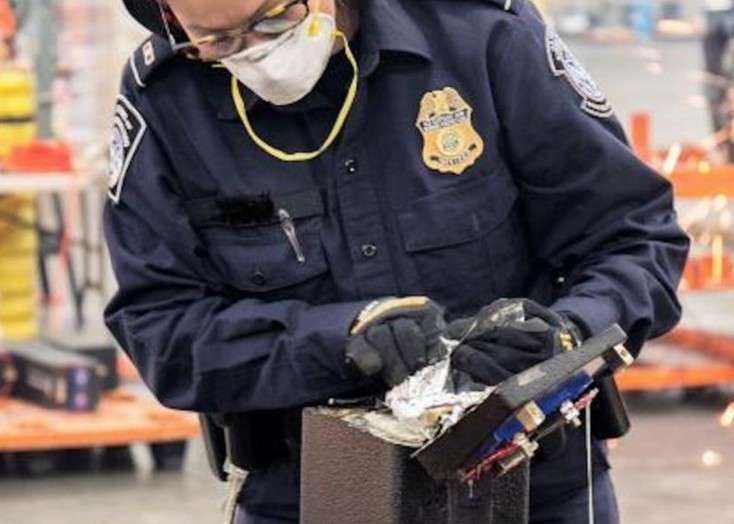
    US border officials in California seized a record-breaking shipment of meth, about 1.9 tons (3,800 pounds) worth around $1.3 billion, hidden in speakers and headed down under.

    Authorities say that the haul of meth broke two records, winning the dubious honor of being the largest amount of meth to be seized on US soil as well as the largest amount ever to be shipped to Australia. Some cocaine and heroin were also found hidden inside the speakers.

    The seizure was a joint effort between US Homeland Security, the DEA and the Australian Federal Police (AFP). On January 11, they managed to discover the drugs hidden inside the housing of a huge shipment of speakers which were packed away in dozens of metal boxes.

    Authorities have arrested two US citizens and four Australian citizens in connection with the shipment, believing them to be part of a larger US-based drug syndicate shipping drugs worldwide.

    The Australian authorities involved say that the bust prevented “a tsunami of ice” from reaching their country, which would have manifested as an estimated 17 million hits of meth. This would have been an especially large problem for the Australian state of Victoria, where the meth was headed, as sewage drug monitoring has found that the 6.3 million people living there use about 2 tons of meth a year.

    AFP Assistant Commissioner Bruce Hill claims that these drugs originate from Mexican cartels that have been pushing hard to get their products into Australia.

    “They have been sending smaller amounts over the years. This is now flagging intent Australia is now being targeted,” Hill told reporters. “The cartel is among one of the most powerful and violent drug trafficking syndicates in the world.”

    The previous largest seized meth shipment ever headed to Australia was a 1.3 ton shipment caught in December of 2017.

    View the original article at thefix.com

  • Ultralight Plane Drops Meth in California

    Ultralight Plane Drops Meth in California

    Officials say the meth that was dropped by the ultralight plane was worth more than $1.4 million.

    On Sunday, an ultralight plane slipped through the airspace between the US and Mexico with no lights on, dropping 60 bundles of methamphetamine and a get-away bike for the person who would pick up the drugs, into a farm field in Calexico, California, a town just over the border. 

    Despite the fact that the plane had no lights, border agents responded to where it was believed to have flown and found bundles full of a white powder that later tested positive for meth, according to The Desert Sun. Agents arrested two people in the area who they suspect were there to pick up the drugs from the plane. 

    Although the Calexico area is better known for drug tunnels that funnel narcotics into the US, Gloria Chavez, chief patrol agent in the area, said that planes also pose a risk when they are used by drug smugglers. 

    “Ultralight aircraft not only pose a threat to legitimate air traffic in the vicinity, but also to national security,” she said. “These aircraft are able to carry small payloads of dangerous cargo or dangerous people.”

    While 60 packages might have been a relatively small amount for drug smugglers, officials say the drugs dropped on Sunday are worth more than $1.4 million. 

    After making the drop, the plane flew back toward Mexico. The two people who were arrested were turned over to the Drug Enforcement Administration, which will be investigating the incident. 

    Calexico is a city of more than 38,000 on the border. Its sister city, Mexicali, sits just on the other side. The area is known for having tunnels used by cartels to smuggle narcotics into the United States. Earlier this year, a man who operated one of those tunnels was sentenced to 10 years in prison. 

    According to NBC News San Diego, 48-year-old Manuel Gallegos-Jimenez operated the tunnel, which was about a quarter of a mile long and had lights, ventilation and an elevator that could fit 10 people. The tunnel started in Mexico and emerged in the front room of a home in Calexico. 

    The case was significant because law enforcement watched the construction of the tunnel unfold after traffickers purchased the house in 2015. The tunnel began operating in February of 2016 and was raided in April of that year.

    At that time, law enforcement found nearly 3,000 pounds of drugs at the home, including marijuana worth $1.2 million and cocaine worth $22 million.

    View the original article at thefix.com

  • Montana Tribes To Feds: Help Our Community Fight Meth Addiction

    Montana Tribes To Feds: Help Our Community Fight Meth Addiction

    Addiction has undermined the infrastructure of the reservation, says one tribal board executive.

    Native American tribes in Montana are asking the federal government to help them confront methamphetamine addiction in their communities, which they say is causing health consequences and putting many children in foster care. 

    Members of the tribal executive board for the Fort Peck Assiniboine and Sioux Tribes met with U.S. Interior Secretary Ryan Zinke on May 20 in Poplar, Montana to ask for assistance in confronting addiction on the Hi-Line reservation, according to The Billings Gazette.

    “We have a massive drug problem in that we have a shortage of law enforcement, not only in our department, but in the county’s department. It’s pretty much overtaken us,” said Fort Peck Tribal Chairman Floyd Azure. “We have 107 kids in foster care right now, and the majority of that is because of drug problems and meth mainly. We had, last count, nine infants born addicted to meth. It’s tough to swallow when you see babies in that situation and they didn’t ask to be in that situation and they’re suffering.”

    Azure pointed out that addiction has undermined the infrastructure of the reservation, since many jobs are left empty for years because no applicants can pass a drug test. 

    Zinke, who oversees the Bureau of Indian Affairs as Interior Secretary, said that one way to break that cycle is to focus on treatment for mothers and grandmothers, who can then focus on raising the next generation so that they are not as heavily impacted by drugs. 

    “The fabric of the tribe is moms and grandmas. And when moms and grandmas are addicted, then the whole fabric of the tribe begins to rip,” Zinke said. “Then kids get transferred over to uncles and different relatives, and that’s a new set of challenges. We think that focusing on moms and grandmas on rehabilitation in a community is a priority, and it won’t solve the problem, but I think it’s the best solution up front.”

    Azure suggested opening a drug treatment center, while another member thought that providing housing for children whose families were impacted by addiction would help address the issue. 

    “To me, I think we need to help our children,” said Marva Chapman-Firemoon, a tribal board member. “That would be my first priority, maybe for us to get a dormitory. And I always say that the federal government took our kids off the reservation, took them to boarding schools and all that, but now we want a boarding school, or a dormitory, either one. I think that would be helpful because it would keep our children safe while we worked on the other ones.”

    View the original article at thefix.com