Tag: meth smuggling

  • Meth Seizures Skyrocket

    Meth Seizures Skyrocket

    Overdoses are rising as well.

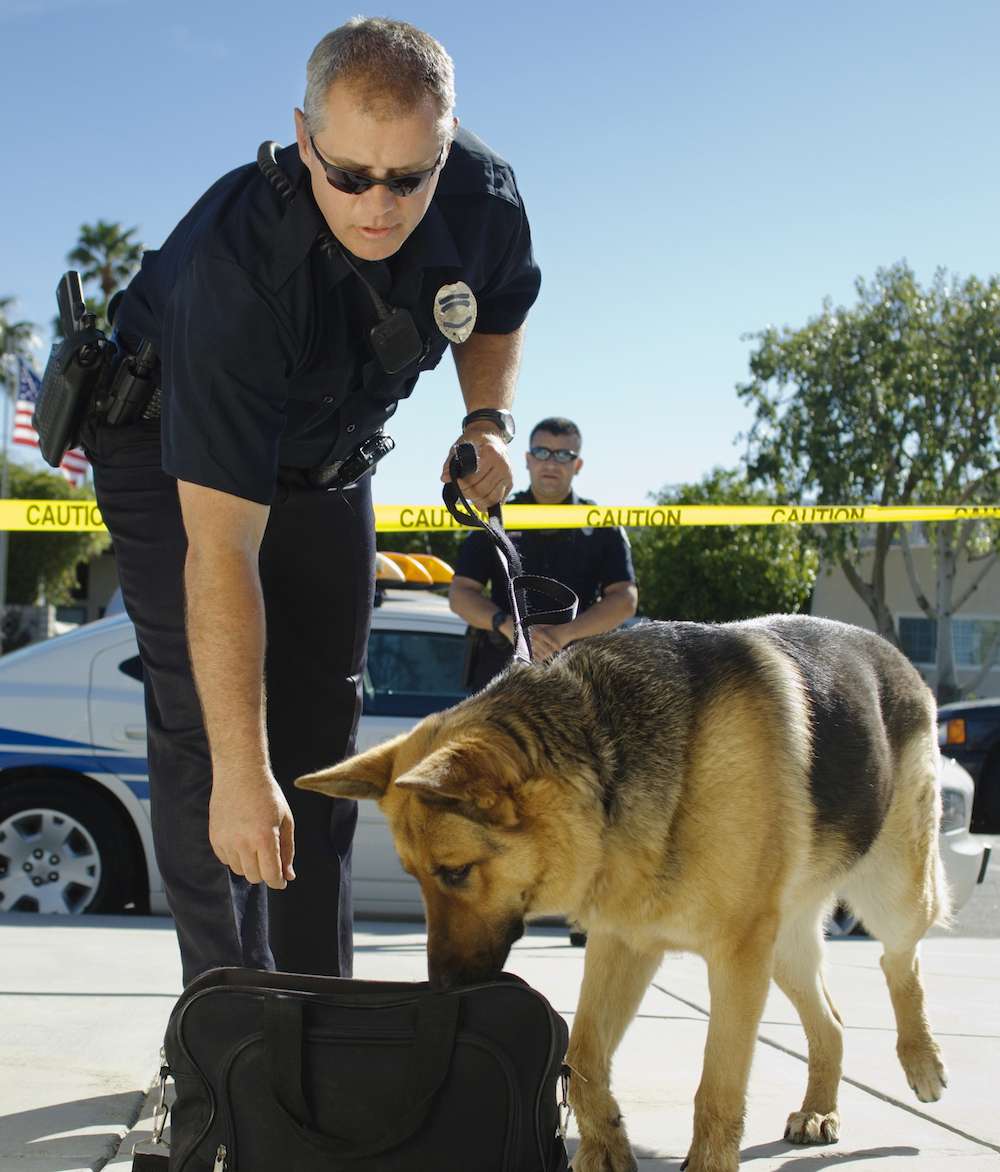
    While the nation focuses on fighting opioids, more people are turning to methamphetamine. Seizures of the drug are rising, according to a report by the Wall Street Journal

    According to Drug Enforcement Administration (DEA) officials, seizures of methamphetamine rose 118% between 2010 and 2017, according to the Cato Institute. In 2017, law enforcement conducted 347,807 seizures of meth.

    At the same time, overdose deaths from the illicit stimulant are rising, reaching more than 10,000 in 2017. 

    While meth has been more common in southern and western states, it is now showing up regularly in areas where it wasn’t prevalent before, including New England. There, DEA officer Jon DeLena said that the alarming trajectory of meth use reminded him of another drug that has rocked the region.

    “Everybody’s biggest fear is what it’s going to look like if meth hits us like fentanyl did,” DeLena told The Wall Street Journal. 

    The influx in meth is said to be driven in part by increased production of cheaper and more potent product by Mexican cartels. While in the past, meth production happened on a small scale, cartels have the means and motivation to push larger quantities into more regions. 

    That is why Dr. Jeffrey A. Singer, a senior fellow at the Cato Institute, argues that the U.S. should stop focusing on “fighting” the war on drugs, and instead focus on treating the underlying conditions that leave people vulnerable to substance abuse. 

    “Meth’s comeback shows why waging a war on drugs is like playing a game of ‘Whack-a-Mole,’” Singer wrote for the Washington Examiner last year. “The government cracked down on Sudafed (affecting millions of cold and allergy sufferers) while SWAT teams descended on domestic meth labs, and Mexican cartels popped up with a cheaper and better manufacturing system.

    “In the case of opioids, authorities reduced opioid prescription and production, and nonmedical users migrated over to more dangerous heroin and fentanyl, driving up the overdose rate.”

    In response to the most recent numbers, Singer wrote, “In 2005 Congress acted to address the ‘Meth Crisis.’ Shortly thereafter it turned its attention to the ‘Opioid Crisis.’ Now it is dealing with a fentanyl crisis and a replay of the meth crisis. How many more will die or suffer needlessly before lawmakers wise up?”

    As meth overdoses become more common, it has highlighted the limits of addiction medications. While opioid overdoses can often be reversed with Narcan (naloxone) and opioid use disorder can be treated with medication, there are few medical options to help people who abuse meth

    “We’re realizing that we don’t have everything we might wish we had to address these different kinds of drugs,” psychiatrist Margaret Jarvis, a distinguished fellow for the American Society of Addiction Medicine, said earlier this year. 
    View the original article at thefix.com

  • "Tsunami" Of Meth Discovered In Record-Breaking Drug Bust

    "Tsunami" Of Meth Discovered In Record-Breaking Drug Bust

    The historic 1.9 ton meth haul was worth over a billion dollars.

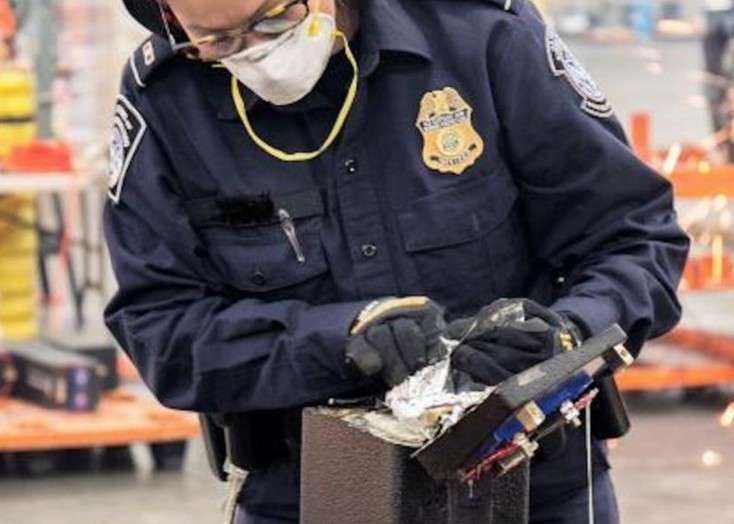
    US border officials in California seized a record-breaking shipment of meth, about 1.9 tons (3,800 pounds) worth around $1.3 billion, hidden in speakers and headed down under.

    Authorities say that the haul of meth broke two records, winning the dubious honor of being the largest amount of meth to be seized on US soil as well as the largest amount ever to be shipped to Australia. Some cocaine and heroin were also found hidden inside the speakers.

    The seizure was a joint effort between US Homeland Security, the DEA and the Australian Federal Police (AFP). On January 11, they managed to discover the drugs hidden inside the housing of a huge shipment of speakers which were packed away in dozens of metal boxes.

    Authorities have arrested two US citizens and four Australian citizens in connection with the shipment, believing them to be part of a larger US-based drug syndicate shipping drugs worldwide.

    The Australian authorities involved say that the bust prevented “a tsunami of ice” from reaching their country, which would have manifested as an estimated 17 million hits of meth. This would have been an especially large problem for the Australian state of Victoria, where the meth was headed, as sewage drug monitoring has found that the 6.3 million people living there use about 2 tons of meth a year.

    AFP Assistant Commissioner Bruce Hill claims that these drugs originate from Mexican cartels that have been pushing hard to get their products into Australia.

    “They have been sending smaller amounts over the years. This is now flagging intent Australia is now being targeted,” Hill told reporters. “The cartel is among one of the most powerful and violent drug trafficking syndicates in the world.”

    The previous largest seized meth shipment ever headed to Australia was a 1.3 ton shipment caught in December of 2017.

    View the original article at thefix.com

  • US, Canada Issue Travel Advisory For China After Controversial Drug Smuggling Case

    US, Canada Issue Travel Advisory For China After Controversial Drug Smuggling Case

    China has shot back by issuing a travel advisory warning of their own against Canada.

    Canada has warned its citizens to “exercise caution” while in or visiting China after a Chinese court sentenced a Canadian citizen to death for allegedly smuggling drugs.

    The travel advisory, issued on January 14, came on the heels of a similar warning to US citizens from the Department of State on January 3. Both actions have been linked in the media, though not by any of the three countries, to the arrest of a Chinese business executive in Canada on alleged fraud related to US sanctions on Iran, which was followed by the detainment of two high-profile Canadians in China amidst angry salvos and fraying diplomatic relations between all three countries.

    China has shot back by issuing a travel advisory warning of their own against Canada, advising Chinese citizens to “fully evaluate risks” of traveling to the north American country.

    Seemingly at the center of this flurry of activity is Robert Lloyd Schellenberg, a 36-year-old Canadian who had been sentenced in 2016 to 15 years in prison for his alleged role in a methamphetamine smuggling operation.

    Schellenberg, who claimed that he was a tourist who had been framed by Chinese criminals, earned a retrial from an appeals court in December 2018. But in a one-day trial on January 14, 2019, the Dalian Intermediate People’s Court declared him a “principal culprit” in the smuggling scheme and imposed the death penalty. Schellenberg is expected to appeal the ruling.

    Canada’s Global Affairs noted that approximately 200 Canadians are currently being held in China for a “variety of alleged infractions.” That number has largely remained stable, according to the department, until the arrest of Sabrina Meng Wanzhou in Vancouver on December 1.

    Meng, who is the chief financial officer of the Chinese telecommunications company Huawei, was apprehended at the request of the United States for her alleged role in fraudulent activity related to violation of US sanctions against Iran.

    President Donald Trump has said that he would intervene in the case in the name of preserving US relations with China.

    Nine days after Meng’s arrest, former Canadian diplomat Michael Kovrig and businessman Michael Spavor were arrested in China on allegations of “endangering national security,” which the South China Morning Post said was a term used by China to allege espionage. 

    As both The New York Times and Business Insider noted, the ruling has been viewed by foreign policy experts as an attempt to influence Canada’s decision to extradite Meng to the United States.

    Prime Minister Justin Trudeau told the Canadian Broadcasting Corporation on January 14 that Schellenberg’s sentence was “of extreme concern to us as a government, as it should be to all our international friends and allies, that China has chosen to begin to arbitrarily apply [the] death penalty.”

    Hours after Schellenberg’s sentencing, Canada’s Global Affairs issued the travel warning – the second such advisory from a world power against China in less than a month.

    The United States warned citizens, and in particular, US-Chinese or Americans of Chinese heritage to be aware of “exit bans,” which Beijing can use to “compel US citizens to participate in government investigations, to lure individuals back to China from abroad and to aid Chinese authorities in resolving civil disputes in favor of Chinese parties.”

    View the original article at thefix.com

  • Meth Shipment Was Disguised As Aztec Artifacts

    Meth Shipment Was Disguised As Aztec Artifacts

    A drug ring attempted to ship nearly 12 kilograms of meth to Hawaii disguised as decorative Aztec items.

    At first glance, they might have appeared to be ancient artifacts, or at least cheesy souvenir imitations, but a shipment of Aztec-style statues and calendars actually contained pure methamphetamine bound for Hawaii, federal officials say. 

    On Oct. 15, agents from Homeland Security Investigations (HSI) arrested eight people around Los Angeles, alleging they were involved in a drug ring that attempted to ship nearly 12 kilograms of meth to Hawaii disguised as decorative Aztec items. Officials say these were part of a “nearly 90-pound shipment that appeared to be colorful, decorative Mexican items, including replicas of the 500-year-old Aztec calendar stone.”

    A ninth suspect was already in federal custody on unrelated charges. 

    “Methamphetamine—no matter how it’s packaged—is a powerful drug that devastates our communities,” Mark Zito, assistant special agent in charge for HSI Los Angeles said in a press release. “HSI will continue to closely collaborate with our federal, state and local law enforcement partners to keep this dangerous contraband from reaching our streets.”

    Over the course of the last year, members of the ring have sent other meth shipments to Hawaii, the feds said. 

    The individuals named on the federal indictment in the case are Felix Salgado, 28, of Perris, who allegedly bought wholesale quantities of meth for the conspiracy; Vaimanino Lee Pomele, 49, of Garden Grove, who allegedly orchestrated the shipments to Hawaii and his wife, Alejandra Pomele, 44, who allegedly delivered narcotics; and six others.

    Recently meth seizures have been on the rise, fueled by Mexican cartels pushing the drug. 

    “They came in with much purer, much cheaper meth and just flooded this region of the country,” Richard Salter, a Drug Enforcement Administration agent with 27 years of experience, told KITV in September.  

    U.S. Customs and Border Protection has seen a 50% increase in the amount of meth seized compared to this time last year, according to Anne Maricich, deputy director of field operations for the agency’s San Diego ports of entry.

    “The other hard narcotics like cocaine, heroin and fentanyl, we see them—they’re prevalent at our border crossings, but nowhere near the quantities that we see of meth,” she said.

    View the original article at thefix.com