Tag: Methamphetamine

  • Meth Causes Most Overdoses In Western US, But Little Help Is Available

    Meth Causes Most Overdoses In Western US, But Little Help Is Available

    Meth is the deadliest drug in four out of five regions west of the Mississippi.

    Fentanyl and synthetic opioids are killing more people than any other drug nationally, but in the Western United States, methamphetamine is the most common drug in fatal overdoses, and there’s little public health professionals have been able to do to stop it.

    That’s according to data released Friday by the CDC, reported by The Salt Lake Tribune. Overdose data from 2017 showed that meth is the fourth deadliest drug nationally (after fentanyl, heroin and cocaine), but in all four out of five regions west of the Mississippi, it is the deadliest drug.

    There’s Not Enough Recovery Resources For Meth Addiction

    That’s concerning, because most addiction and recovery resources are aimed at fighting opioid addiction, said Dr. Michael Landen, with New Mexico’s health department. 

    He said, “I think we’re potentially going to be caught off guard with methamphetamine deaths, and we have to get our act together.”

    Addiction specialist and researcher Dr. Josh Bamberger told The San Francisco Chronicle that unlike treatment for opioid use disorder, there is no effective medication-assisted treatment for meth, or drugs that can reverse a meth overdose.

    “It’s a super frustrating place for a physician to be in,” he said. “The take-home lesson is that we have no effective medical treatment for amphetamine addiction. We’ve tried so many medications—antipsychotics, antidepressants, Adderall and more, but none of them has a long-term impact on the addiction. It is very hard to treat.”

    Meth Is Devastating San Francisco’s Homeless Population

    In San Francisco, where meth use is an epidemic among the homeless, researchers and public health officials have even tried paying people to stay clean, increasing the amount each week. 

    “It’s not great, but it seems to be the best way right now,” Bamberger said. 

    Part of the challenge in treating meth addiction is that people who have been using meth experience brain changes that can last long after the drug has left their system.

    Bamberger explained, “Some people continue to exhibit psychotic behavior for days, or even months. And that can involve not just paranoid delusions, but also formication (named after the formic acid ants exude), where you feel you have ants or worms under your skin. It’s awful.”

    Those symptoms can last long-term, he said.

    “It can ‘concretize’ existing mental conditions,” he explained. “In my 30 years of practice in San Francisco, there is no question that my least favorite drug is methamphetamine.”

    Many people addicted to meth, like “Roche,” a woman in her twenties, said they feel the hopelessness of their situation. 

    “Kick meth? Are you kidding?” she said. “When it’s got you, it’s got you. I have about 10 friends who are dead from smoking this—and not just from fentanyl being in it—and someday that will probably be me.”

    View the original article at thefix.com

  • Woman Accused Of Giving Co-Workers Meth-Laced Bean Dip 

    Woman Accused Of Giving Co-Workers Meth-Laced Bean Dip 

    The accused deli worker denies the allegation but co-workers claim she told them that the dip was meant for her and another person.

    An Oregon woman was arrested after feeding bean dip to co-workers that she had allegedly spiked with methamphetamine. Cassandra Medina-Hernandez, 38, was placed into custody after offering the dip to a co-worker, who became ill after consuming it.

    The co-worker, who was hospitalized, later tested positive for methamphetamine, which led investigators to question a friend of Medina-Hernandez. She eventually turned herself in to law enforcement, who arrested her on suspicion of recklessly endangering another person, among other charges.

    Heavy provided detailed information about the incident, which is alleged to have taken place on September 9 at a Thriftway grocery store in Jefferson, Oregon. The location’s assistant manager contacted police to report that her daughter, who also worked at the Thriftway, had been poisoned after accidentally ingesting meth.

    A Minor Was Involved

    According to a police affidavit, Kelsey Stanley, 27, entered the break room at the store and saw Medina-Hernandez, a Thriftway deli employee making bean dip. Stanley asked to try the dip, and she liked it enough to take some home.

    The affidavit also noted that at least one other store employee ate the dip, but they were not reported to have fallen ill. Police also noted that there was also no indication that any customers consumed any contaminated food products.

    After leaving the Thriftway store for home, Stanley consumed more of the dip, and told the deputy who wrote the affidavit that she thought it “tasted odd” at one point. She then returned to the Thriftway and reported feeling unwell—”unsteady on [her] feet and [her] stomach was upset,” according to the affidavit.

    Stanley was admitted to the emergency room at Santiam Hospital in Stayton, Oregon, where a urine test revealed that she had an unconfirmed positive for methamphetamine. She “emphatically” denied using the drug and allowed police to review her medical records.

    Authorities then spoke to two employees at the Thriftway, both of which confirmed that Medina-Hernandez had told them that she had laced the bean dip with methamphetamine, but had intended for it to be consumed by her and another individual.

    Surveillance Footage

    Review of surveillance video footage taken in the break room on September 9 showed Medina-Hernandez appearing to retrieve and conceal in her hand an item from behind a microwave station, and then placing both the dip and the concealed item on a plate.

    After several failed attempts to communicate with Medina-Hernandez, the investigating officer finally contacted her about the incident. She informed him that she would turn herself in, but failed to do so. Finally, on September 25, the officer received a call from the Linn County Parole and Probation Department, stating that she had turned herself in.

    Medina-Hernandez was then transported back to Marion County, where she was arrested on suspicion of unlawful delivery of methamphetamine, reckless endangerment and causing a person to ingest a controlled substance.

    According to the Portland CBS affiliate KOIN, Medina-Hernandez denied all of the accusations. Heavy noted that jail documents showed that she had been previously convicted on delivery and possession of meth, as well as assault in the fourth degree and robbery in the third degree, and had been arrested for identity theft and possession of a restricted weapon while a felon.

    Bail was set at $500,000, and a court appearance has been scheduled for October 9.

    View the original article at thefix.com

  • We Need Harm Reduction for All Drugs, Not Just Opioids

    We Need Harm Reduction for All Drugs, Not Just Opioids

    While we’ve made great strides with harm reduction for people who use opioids, we’re slow to provide non-abstinence-based treatment for people who use other drugs.

    A quick glance at the news reveals the catastrophic effects of opioids across the nation: around 120 people a day die from opioid-related overdoses. It’s so devastating that the nation is calling it an opioid epidemic. Yet even as we watch this tragedy unfold, we’re missing the point.

    By focusing exclusively on opioids, we’re overlooking the harm caused by other deadly drugs. How can we highlight harm reduction resources if we only focus our efforts on people who use one class of drug?

    The Problem with the Opioid “Epidemic”

    According to the Centers for Disease Control and Prevention, more than 700,000 people died from a drug overdose between 1999 and 2017. Sixty-eight percent of those deaths in 2017 involved an opioid — approximately 70,200. However, that’s not the 100 percent that the “epidemic” coverage would have us believe.

    While I’m not arguing that the opioid-related deaths shouldn’t be covered — they should! — I am saying the problem with zeroing in on the opioid epidemic is that we are focusing too narrowly on the harms caused by one drug and are blinding ourselves to the impact of other deadly drugs. We should be reporting on those, too.

    A more accurate picture of drug-related deaths in 2017, according to the CDC, looks like this:

    • Alcohol was responsible for the deaths of 88,000 people
    • Cocaine misuse killed 13,942 people
    • Benzodiazepine misuse was responsible for 11,537 deaths
    • Psychostimulant misuse, including methamphetamines, was responsible for 10,333 deaths.

    Those aren’t insignificant numbers, so why are they being overlooked? I asked recovery activist Brooke Feldman for her perspective.

    “The sensationalized and narrow focus on opioids fails to account for the fact that people who develop an opioid use disorder typically used other drugs before and alongside opioids,” Feldman said. “So, we really have a polysubstance use situation, not merely an opioid use situation.”

    She continues, “Focusing on opioids only had led to the erection of an opioid-only infrastructure that will be useless for the next great drug binge and is barely relevant to address the deadliest drug used, which is alcohol.”

    The Deadliest Drug: Alcohol

    Alcohol is responsible for more deaths than any other drug. But we overlook it for two reasons: because it’s legal, and because it’s a socially acceptable drug. Not only that, but advertising actively promotes its use — you only have to look on Instagram or Etsy to see how widely excessive use of alcohol is normalized — especially among mothers and millennials. These advertisers have been smart to market alcohol as a means of self-care — encouraging drinking to help unwind from the stresses of the week — and as a means of coping with motherhood

    Social media reinforces the message that alcohol is a tool to cope with stress and something that should be paired with our favorite stress-relieving activities, like yoga. Captions on Instagram read like “Vino and vinyasa,” “Mommy’s medicine,” “Mommy juice,” “It’s wine o’clock,” “Surviving motherhood one bottle at a time,” and “When being an adult starts to get you down, just remember that now you can buy wine whenever you want.”

    Perhaps what is most insidious about alcohol is that it heavily impacts marginalized and oppressed communities. For example, Black women over 45 are the fastest-growing population with alcohol use disorder. And the LGBTQ+ community is 18 percent more likely to have alcohol use disorder than the general population.

    Alcohol aside, looking at the harm done by other drugs, we can see that opioids are no longer the leading cause of drug-related death in some states. In Oregon, statistics show, deaths related to meth outnumber those that involve one of the most common opioids, heroin. In fact, there has been a threefold increase in meth-related deaths over the last ten years, despite the restriction on pseudoephedrine products, which now require a prescription. 

    Similarly, in Missouri, which was ground zero for home-based meth labs 20 years ago, the recent spotlight on opioids has overshadowed an influx of a stronger, purer kind of methamphetamine. Deaths related to the new and improved drug are on the rise.

    Oregon’s state medical examiner Karen Gunson speaks to this disparity of focusing on opioids over other deaths and the damage that those other drugs cause. “Opioids are pretty lethal and can cause death by themselves, but meth is insidious. It kills you in stages and it affects the fabric of society more than opioids. It just doesn’t kill people. It is chaos itself.”

    Abstinence Is Not Attainable for Everyone

    Our approach to recovery has been too one-dimensional, stating that complete abstinence is the goal. But this perspective is outdated. Abstinence isn’t attainable for everyone. If it were, then more people would be in recovery. However, harm reduction is attainable. It reduces deaths, treats medical conditions related to drug use, reduces the transmission of diseases, and provides options for treatment services. In fact, people who use safe injection sites are four times more likely to access treatment.

    “Whether it is with problematic use of alcohol, tobacco, cocaine, methamphetamine, etc. use, centering harm-reduction principles and practices would likely engage more people than an abysmal 1 out of 10 people who could use but do not receive SUD (Substance Use Disorder) treatment,” Feldman explains. “Requiring immediate and total abstinence rather than seeking to address overall well-being and quality of life concerns is a barrier to engagement — and sadly, it is placing the focus more on symptom reduction than it is on what is causing the symptom of chaotic drug use in the first place.”

    Harm Reduction for All Drugs Means Fewer Deaths

    Our focus on the opioid crisis has helped improve harm reduction resources — like the increased availability of naloxone to reverse overdoses, and the more accepted use of pharmacotherapy and medication-assisted treatment (which has now been endorsed as a primary treatment by the Substance Abuse and Mental Health Services Administration), and some safe injection sites — but it has also meant we aren’t concentrating as much on research, funding, and education devoted to harm reduction practices for other harmful drugs. The result is that we have fewer resources and less awareness when it comes to keeping people who use non-opioid drugs safe.

    We need to look at reducing harm across the spectrum of drug use to reduce all deaths. More safe usage sites, clean tools, safe disposal bins, medical assistance, education, referral to other support services, and access to pharmacotherapy (including drugs to treat or mitigate harms of alcohol use disorder and the development of new medications for help with other substances). Specialized treatment other than abstinence should be accessible for people who use all drugs — not just opioids. 

    View the original article at thefix.com

  • Meth 2.0: How Marijuana Legalization Set the Stage for a Newer, Stronger Methamphetamine

    Meth 2.0: How Marijuana Legalization Set the Stage for a Newer, Stronger Methamphetamine

    When people think of methamphetamine, they think of the old-fashioned meth lab and they’re not aware of the dangerous, highly addictive meth that we’re dealing with now.

    What’s known as methamphetamine, crystal meth, or meth has always been prevalent in America’s drug underworld, we just don’t hear about it as much in the mainstream media due to the opioid crisis being front and center on the nightly news. But in the 1990s, meth was public enemy number one. The rise of the Internet made recipes readily available for anyone who wanted to cook it up and reporters had a field day covering the resulting explosions in homes and mobile labs. Domestic production was especially prevalent in Missouri, which came to be known as the meth capital of the United States.

    Very Pure and Relatively Cheap

    But the meth scene that everyone had grown accustomed to slowly declined over the last 20 years, with explosions and arrests in Missouri dropping to almost none. At the same time, Mexican-based methamphetamine imports increased dramatically. Today, almost 90% of the methamphetamine in the United States comes from Mexican super labs and is primarily manufactured by the cartels. The biggest differences between domestic and foreign-made meth are the potency level, price point, and accessibility.

    “It’s a lot like Breaking Bad,” Tim Lohmar, the St. Charles County Prosecuting Attorney, tells The Fix. “And if you’re familiar with that show, you know that the purity of the methamphetamine and the ease of the mass production is what made it so addictive and relatively cheap. These Mexican labs are making a very pure methamphetamine. It’s almost night and day different than your old-fashioned basement meth lab sort of thing. They can mass produce the meth and distribute it at a reduced price, which consequently has led to a rise in local consumption.”

    William Callahan, Special Agent-in-Charge of the DEA St. Louis Division, says that according to the 2018 National Drug Threat Assessment, “Methamphetamine sampled through the DEA profiling program is almost 97% pure, while prices remain low and stable.” There are still some of the small shake-and-bake style labs across the state, but the vast majority of the methamphetamines coming into Missouri are from south of the border.

    Psychosis and Overdoses on the Rise

    The new improved drug contributed to almost 30 deaths last year, a jump from 7 the year before. Overdoses are on the rise.

    “It’s a lot stronger, so we’re seeing a lot more psychosis, but we’re also seeing it being tainted with fentanyl, which is leading to more deaths.” Brandon Costerison, project manager of the National Council on Alcoholism and Drug Abuse (NCADA) in St. Louis, tells The Fix. “They’re making speedballs, like people used to do with cocaine and heroin in the ‘80s.”

    Lohmar thinks that most of the overdoses, especially ones that result in death, occur when people combine meth with something else like fentanyl or heroin. “A lot of the local suppliers will try to break down the methamphetamine, the pure methamphetamine, and put a filler in there,” he says. “And the person who’s ingesting it doesn’t even know what they’re ingesting, and that’s how we get a lot of these overdose situations.”

    With opioids killing people at an unprecedented rate, meth has been viewed as less risky and lower priority… Until recently.

    “Methamphetamine takes years, typically, to kill someone, whereas opioids can kill you the first time.” Costerison says. “When we’re looking at death tolls, opioids by far are leading, but we do see a lot of people dying either directly from methamphetamines or from complications associated with methamphetamine use.”

    Lohmar says that while we still have an opioid crisis, he thinks “it’s starting to plateau a little bit. I don’t know that the overdoses are decreasing, but I don’t think they’re increasing at the same rate they have been over the last handful of years. Seven, eight years ago, very few people knew about the opioid crisis, and nowadays everybody knows about it. Meanwhile, I think, when people think of methamphetamine, they think of the old-fashioned meth lab and they’re not aware of the dangerous, highly addictive meth that we’re dealing with now.”

    Despite the opioid epidemic taking center stage, “Meth has never flown under the radar at DEA.” Callahan tells The Fix. “Our agents work relentlessly to identify those involved in meth distribution domestically and internationally. Meth may not kill as many people; however continuous meth use does result in significant health issues.”

    Obstacles in Treating Methamphetamine Addiction

    Adults are using more meth than young people. “Folks tend to get into [meth] after the age of 18, though some do start using earlier,” Costerison says. “The biggest struggle with methamphetamine is that there’s not really any medications that help with the treatment. With opioids, we have methadone, Suboxone, Vivitrol. But when it comes to treating methamphetamine addiction there’s really no medication to help with the withdrawals and cravings.” The lack of medication-assisted treatment is a major obstacle for Missouri health officials who try to get people into long-term recovery.

    “There’s a lot of different things that we see when somebody starts withdrawing.” Costerison says. “At first, there’s the itchiness, irritability, and cravings. [Then] there’s depression, hallucinations, paranoia, and anxiety. After that [initial] crash, the cravings really kick up. But in the third stage the cravings start to subside. That can last 30 weeks or longer, depending on how much somebody’s been using.”

    The meth market has also been impacted by the legalization of marijuana, which has meant less income for the cartels. “The cartels were the major suppliers and producers of marijuana, historically, over the last 30-40 years,” Lohmar says. “And now that a lot of states have legalized marijuana, whether it’s recreational or medicinal, that’s cut into their market. That’s when they turned to heroin first, and now they’re turning to crystal methamphetamine. They’re always trying to stay one step ahead of the game.”

    The cartels can get the precursor ingredients for meth easily in Mexico and set up big super labs, allowing them to make a very high-potency, pure methamphetamine à la Walter White. With meth flooding Missouri, local law enforcement has ramped up their efforts to stop the flow. But since the distributors typically reside out of state, a lot of local efforts to climb the food chain end up turning into federal investigations.

    “Identifying meth suppliers has always been a top priority for the Drug Enforcement Administration.” Callahan tells The Fix. “We work closely with local and state law enforcement to identify violators and interdict drugs before they hit the street for retail sales. [We conduct] a thorough investigation aimed at dismantling the entire organization, including everyone from the kingpin to the money launderers, transporters, and dealers. The DEA also investigates the diversion of chemicals intended for the use of producing meth.”

    At the state level, “the goal is to try and find a small-time user and get them to supply information to move up the food chain and get the big players in the distribution networks,” Lohmar says. “We’ve got our undercover drug task force. We’ve got our highway interdiction team to intercept the traffickers coming through the state via the interstate highways. We’ve got a really good working relationship not just with the DEA, but with the U.S. Attorney’s office. There’s been a much bigger emphasis on meth, just because there’s a lot more out there.”

    Treating Addiction as a Health Issue, Not a Crime

    But as the drug war has proved unwinnable, authorities are starting to look at the problems here in Missouri as more of a health issue instead of a criminal one, at least in the lower echelons of the drug trade. As methamphetamine has moved out of the trailer parks and into the suburbs and inner cities, there has been a substantial increase of meth users entering treatment facilities. Lohmar says that locally, most of St. Charles County’s attention is spent dealing with the consumers rather than the distributors.

    “Our position now, really, across the board, but especially with somebody who’s an addict, is that we want to give them every opportunity to stay out of jail,” Lohmar says. “And sometimes they don’t take advantage of those opportunities, but the ones who do, I think, those are some good success stories. I think that’s a positive breakthrough.”

    Lohman says that the drug war era of harsh mandatory sentences is being replaced with a more humane view of drug addiction.

    “I’ve been in office for seven years and ever since I’ve been here and probably even a little bit before that, we’re looking at it more as an addiction issue as opposed to a criminal problem. Now, obviously, it’s a crime, but we also know that a lot of these folks who are addicted wouldn’t be committing crimes had it not been for their addictions.

    “We’re trying to use things like the treatment courts as alternative sentences, or alternative programs,” he says. “We’re giving people the chance to complete the program, and if they do, in some cases their charges are dismissed, or in other cases they don’t spend a day in jail, or things like that. So, we try to incentivize the treatments to give them a chance to improve their lives, and it’s been pretty successful.”

    View the original article at thefix.com

  • Second Man Dies Of Meth Overdose In Democratic Donor Ed Buck's Apartment

    Second Man Dies Of Meth Overdose In Democratic Donor Ed Buck's Apartment

    A wrongful death suit brought against Buck alleges that he has a “well-documented history of isolating black men for predatory sexual encounters.”

    Prominent Democratic donor and activist Ed Buck is being accused of preying on vulnerable black men and providing them drugs, after a second man was found dead in his home of a methamphetamine overdose. 

    Timothy Dean, 55, died in Buck’s apartment in early January. Gemmel Moore, 26, died in the apartment in July 2017. Although both deaths were determined to be caused by accidental methamphetamine overdose, Buck was initially considered a suspect in Moore’s death, according to The New York Times.

    However, the charges were dropped because the prosecution could not show “beyond a reasonable doubt that suspect Buck furnished drugs to Gemmel Moore or that suspect Buck possessed drugs,” according to court documents. 

    Following Dean’s death, the Los Angeles County Sheriff’s Department said that it would be investigating. 

    “It is suspicious that this has happened twice now, so we’re going to conduct a thorough investigation to determine if it is criminal in nature,” Lt. Derrick Alfred said in January. The department would not provide an update on the investigation this week.

    Buck, 64, has maintained his innocence. “Mr. Buck had nothing to do with the death,” his lawyer said. 

    Moore’s mother has filed a wrongful death suit against Buck, alleging that he had a “well-documented history of isolating black men for predatory sexual encounters.” These included giving the men drugs and looking on as they “cling to life,” the suit alleges. 

    Some in the black LGBTQ community have been outspoken about Buck’s predatory behavior. Social activist Jasmyne Cannick looked into the circumstances of Moore’s death and posted the following warning on Twitter before Dean died, according to NBC News:

    “If another young, Black gay man overdoses or worse dies at Democratic donor Ed Buck’s apartment it’s going to be the fault of the sheriff’s department and LA District Attorney for not stopping him when they had the opportunity to.”

    Cannick said that the deaths highlight the grim reality of a dynamic that is often overlooked. 

    “Our stories aren’t told and our lives are seen as expendable. It’s very easy to write off someone who dies of a drug overdose who was working as a sex worker, but Gemmel was as much a part of our community as the many other young men like him,” Cannick said. “It may not be pretty, but white gay men taking advantage of young Black men in our community is not unusual—it’s just not talked about in mainstream America.”

    View the original article at thefix.com

  • Meth Seizures Skyrocket

    Meth Seizures Skyrocket

    Overdoses are rising as well.

    While the nation focuses on fighting opioids, more people are turning to methamphetamine. Seizures of the drug are rising, according to a report by the Wall Street Journal

    According to Drug Enforcement Administration (DEA) officials, seizures of methamphetamine rose 118% between 2010 and 2017, according to the Cato Institute. In 2017, law enforcement conducted 347,807 seizures of meth.

    At the same time, overdose deaths from the illicit stimulant are rising, reaching more than 10,000 in 2017. 

    While meth has been more common in southern and western states, it is now showing up regularly in areas where it wasn’t prevalent before, including New England. There, DEA officer Jon DeLena said that the alarming trajectory of meth use reminded him of another drug that has rocked the region.

    “Everybody’s biggest fear is what it’s going to look like if meth hits us like fentanyl did,” DeLena told The Wall Street Journal. 

    The influx in meth is said to be driven in part by increased production of cheaper and more potent product by Mexican cartels. While in the past, meth production happened on a small scale, cartels have the means and motivation to push larger quantities into more regions. 

    That is why Dr. Jeffrey A. Singer, a senior fellow at the Cato Institute, argues that the U.S. should stop focusing on “fighting” the war on drugs, and instead focus on treating the underlying conditions that leave people vulnerable to substance abuse. 

    “Meth’s comeback shows why waging a war on drugs is like playing a game of ‘Whack-a-Mole,’” Singer wrote for the Washington Examiner last year. “The government cracked down on Sudafed (affecting millions of cold and allergy sufferers) while SWAT teams descended on domestic meth labs, and Mexican cartels popped up with a cheaper and better manufacturing system.

    “In the case of opioids, authorities reduced opioid prescription and production, and nonmedical users migrated over to more dangerous heroin and fentanyl, driving up the overdose rate.”

    In response to the most recent numbers, Singer wrote, “In 2005 Congress acted to address the ‘Meth Crisis.’ Shortly thereafter it turned its attention to the ‘Opioid Crisis.’ Now it is dealing with a fentanyl crisis and a replay of the meth crisis. How many more will die or suffer needlessly before lawmakers wise up?”

    As meth overdoses become more common, it has highlighted the limits of addiction medications. While opioid overdoses can often be reversed with Narcan (naloxone) and opioid use disorder can be treated with medication, there are few medical options to help people who abuse meth

    “We’re realizing that we don’t have everything we might wish we had to address these different kinds of drugs,” psychiatrist Margaret Jarvis, a distinguished fellow for the American Society of Addiction Medicine, said earlier this year. 

    View the original article at thefix.com

  • People With Meth Addiction Are Finding Help Online

    People With Meth Addiction Are Finding Help Online

    “We stay connected online, and we don’t judge anybody on what path they’re on,” says the founder of a Facebook support group for meth addiction.

    Fellowship has always been an important part of recovery. Today, online communities help bring people together, including current and former drug users. 

    “My online support network is huge. I know many people from all over the U.S. and also in other countries,” Jameil White, who has been sober for about three years, told U.S. News and World Reports.

    Today, White runs both a Facebook page and a Facebook group for people who are currently struggling or who have struggled with meth addiction. The private group, called Sobriety 101, has nearly 9,000 members who support each other in recovery.

    “Some of them are members of (Alcoholics Anonymous), (Narcotics Anonymous). You also have members like myself who no longer go to meetings, but they still need that community and that network, and they reach out through online groups,” White said. 

    The online groups can supplement local support systems, she added. 

    “We stay connected online, and we don’t judge anybody on what path they’re on. Whether they’re still in active addiction and they’re struggling, or whether they’re seeking help, we all take the time and volunteer and answer messages and talk to people. We’re their friends—we allow them to call us if they need to. We go so far as trying to find them local meetings or rehab treatment centers, or anything we can to get them the help they need.”

    It’s not just people in recovery who are turning to Facebook and other online platforms for support. Loved ones of people with substance use disorder are also connecting online.

    Six years ago, Julie Richards started the Mothers Against Meth Alliance. She uses her Facebook page—which has more than 5,000 Likes—to educate people about the signs of meth addiction, especially among Native Americans living on North Dakota’s Pine Ridge Indian Reservation. 

    “Nobody wanted to believe meth was here, but I just kept doing these walks, I kept going everywhere I can to bring this awareness, I just kept it up,” she said. “Now, people are like, ‘What can we do to help you?’—whether it be gas money, or coming out on patrol with us.”

    Richards’ daughter is in jail for charges related to her meth addiction. Richards tells other young people that her daughter is one of the lucky ones. 

    “I tell these kids, ‘There’s only two roads that this meth is going to take you to: one is prison, and the other one is death. It’s up to you. If you’re lucky, you’ll end up in prison.’”

    Suzette Schoenfeld, whose son struggled with meth addiction, also runs a group for people with meth addiction and their loved ones. 

    “There’s a big problem with meth in this country, a big white wave,” she said. “People need help, and they’re not getting the help they need. A lot of people reach out for love and understanding, and we’re all learning about this together. I’m hoping that we’re helping each other through this.”

    View the original article at thefix.com

  • Inside North Korea’s Meth Epidemic

    Inside North Korea’s Meth Epidemic

    “Ice has become a best-selling holiday gift item. Drug dealers don’t have enough supply for their buyers,” said one North Korean source.

    One might assume that one of the harshest dictatorships on earth would have a zero-tolerance policy for drugs, but reports suggest that North Korea has a thriving methamphetamine market, and that the drug is even a popular gift for the Lunar New Year. 

    “Ice has become a best-selling holiday gift item,” a North Korean source told Radio Free Asia. “Drug dealers don’t have enough supply for their buyers.”

    According to the New York Times, methamphetamine has long been associated with North Korea. A 2014 report found that the state began manufacturing and exporting methamphetamine in the 1990s as a way to access currency despite trade restrictions.

    Most of the meth was exported through China or given at sea to criminal organizations from Japan and China. The production was “clearly sponsored and controlled” by the government, the report found, but it began to decline in the mid-2000s. 

    With no government-sanctioned channels to export the drug, many manufacturers began selling to locals. Over time, meth became a popular gift used at celebrations, including New Year’s. 

    “Since the mid-2000s, drugs have become commonplace and the people now think that the holidays are not a joyful time if there are no drugs for them to enjoy,” the source told Radio Free Asia. “Social stigmas surrounding drug use [have disappeared], so people now feel that something big is missing if they don’t have ice or opium prepared as a holiday gift.”

    It’s become so mainstream that people no longer try to hide their use, the source said. 

    “In the past, ice users would try to be discreet, not wanting others to know that they were buying, but these days nobody seems to care.”

    Political scientist Justin Hastings, who studies North Korean drug trafficking, said that so many officials take bribes that the country’s economy benefits from looking the other way when it comes to meth use. 

    “Over time, this has resulted in a culture where people are willing to take risks to make money, and official state prohibition has little meaning,” he said. 

    In addition, the culture doesn’t view meth as a powerful and harmful addictive drug, but rather sees it as a small indulgence. North Korea expert Andrei Lankov says that there is a “significant underestimation” about the risks of drug use in North Korea. 

    “Meth, until recently, has been largely seen inside North Korea as a kind of very powerful energy drug—something like Red Bull, amplified,” he said.

    Despite this attitude, more North Koreans are becoming addicted to the drug, according to a second source who spoke with Radio Free Asia

    “An increasing number of people are becoming addicted, and ice is sold even in rural and remote areas,” they said. 

    View the original article at thefix.com

  • "Tsunami" Of Meth Discovered In Record-Breaking Drug Bust

    "Tsunami" Of Meth Discovered In Record-Breaking Drug Bust

    The historic 1.9 ton meth haul was worth over a billion dollars.

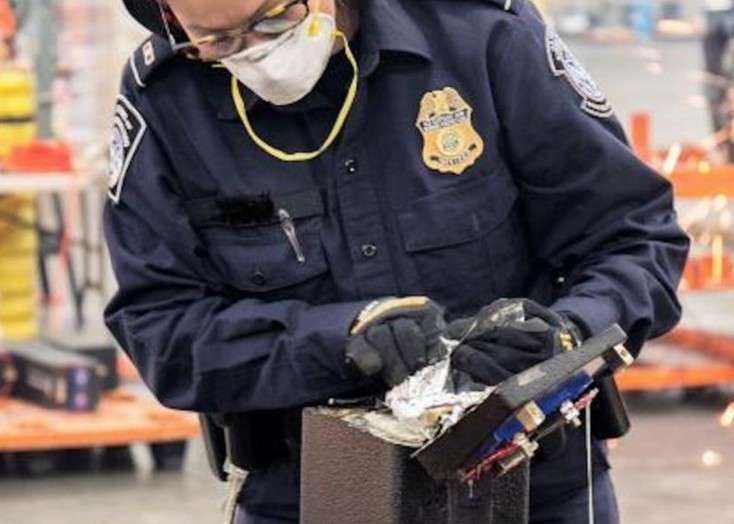
    US border officials in California seized a record-breaking shipment of meth, about 1.9 tons (3,800 pounds) worth around $1.3 billion, hidden in speakers and headed down under.

    Authorities say that the haul of meth broke two records, winning the dubious honor of being the largest amount of meth to be seized on US soil as well as the largest amount ever to be shipped to Australia. Some cocaine and heroin were also found hidden inside the speakers.

    The seizure was a joint effort between US Homeland Security, the DEA and the Australian Federal Police (AFP). On January 11, they managed to discover the drugs hidden inside the housing of a huge shipment of speakers which were packed away in dozens of metal boxes.

    Authorities have arrested two US citizens and four Australian citizens in connection with the shipment, believing them to be part of a larger US-based drug syndicate shipping drugs worldwide.

    The Australian authorities involved say that the bust prevented “a tsunami of ice” from reaching their country, which would have manifested as an estimated 17 million hits of meth. This would have been an especially large problem for the Australian state of Victoria, where the meth was headed, as sewage drug monitoring has found that the 6.3 million people living there use about 2 tons of meth a year.

    AFP Assistant Commissioner Bruce Hill claims that these drugs originate from Mexican cartels that have been pushing hard to get their products into Australia.

    “They have been sending smaller amounts over the years. This is now flagging intent Australia is now being targeted,” Hill told reporters. “The cartel is among one of the most powerful and violent drug trafficking syndicates in the world.”

    The previous largest seized meth shipment ever headed to Australia was a 1.3 ton shipment caught in December of 2017.

    View the original article at thefix.com

  • Woman Claims Food In IHOP Break Room Contained Meth

    Woman Claims Food In IHOP Break Room Contained Meth

    An IHOP spokesperson says the allegations are “completely unfounded.”

    A Texas woman says that she felt intoxicated and ill after eating food in an IHOP employee break room. She now alleges the food was contaminated with methamphetamine. 

    According to the Dallas Morning News, the woman ate food that was free for employees during her break. She started feeling sick and went to her doctor and then the emergency room for treatment. That’s when she tested positive for methamphetamine and told police that the drugs must have entered her system from the food at IHOP because she is not a recreational drug user. 

    A report from the Abilene Police Department noted that the woman “does not use drugs and believes someone put that in the food she ate,” according to Big Country. The police are investigating whether the food was tampered with, but a police officer said that the investigation hadn’t been able to confirm the woman’s story. 

    An IHOP spokesperson noted that the chain usually passes health inspections with flying colors, but said that the restaurant is working with police in this case. 

    “The safety and well-being of team members and guests is a top priority. These allegations are completely unfounded. The franchisee of this location is continuing to investigate this individual’s claim, including working with local authorities,” the spokesperson said. 

    The story may seem far-fetched, but similar stories indicate that it could possibly be true.

    Last year, a North Carolina woman was charged after she reportedly laced a coworker’s drink with methamphetamine following a workplace dispute. In that case the coworker drank the beverage and started feeling sick. When he tested positive for methamphetamine at the hospital he told police that he had been poisoned. 

    The man was lucky to get out of the situation relatively unscathed, said Hudson Police Chief Richard Blevins, who was involved with the case. 

    “With an unknown amount of a controlled substance like methamphetamine, you never know what dangers it may pose,” he said. “You never know what underlying health conditions that may have a negative effect on so it’s definitely a very dangerous situation.”

    Also last year, authorities in Germany began investigating a man who they believe killed 21 coworkers over 20 years by poisoning their lunches. According to The Takeout, the man was caught on camera sprinkling his coworkers’ food with “lead acetate, a poison that could have caused severe organ damage,” according to a criminal lab report. 

    The man had worked at the company where he poisoned people for 38 years, and was described as “conspicuously inconspicuous.” He had not commented on the charges. 

    View the original article at thefix.com