The woman’s brother says their dad groomed them to become criminals as they were growing up.
Last May, Kenna Harmon was sentenced to more than 21 years in prison after admitting to her role in leading one of the largest methamphetamine rings in Missouri’s history. But her life seemed destined for trouble long before that.
“They had people, drug addicts coming in and out of the [house] 24 hours a day. People I wouldn’t allow in my yard were in his house,” Harmon’s uncle said at her sentencing hearing, according to the Springfield News-Leader. The uncle tried to gain custody, but was not able to. Harmon’s brother said that he and his sister grew up with little parenting.
“Our dad was not much of a father figure,” Jeff Harmon said. “He was training us how to be criminals, to be point-blank with it. Every single person in my family has been to prison already, including myself.”
Kenna learned the lesson well, becoming one of the most prosperous drug dealers in the state. She even paid more than $300,000 in cash to build an elaborate stash house, where authorities later found guns, marijuana and meth.
Beginning in her 20s, Harmon was charged with drug felonies but stayed out of prison, receiving probation instead. However, when she married her husband Daniel, who was also a drug dealer, the couple started pushing hundreds of pounds of meth throughout the state.
In December of 2013 the couple was pulled over with meth, guns and cash in the car. Harmon leapt from the vehicle while her husband drove off. Although he was apprehended and held in jail, she escaped by foot. Rather than cutting back her empire after the close call, she began peddling even larger amounts of drugs in her husband’s absence.
She funneled hundreds of thousands of dollars through a tattoo shop in Branson, Missouri, hoping to keep law enforcement from following the cash. She kept some money to build her stash house and take a trip to Hawaii, all while being watched by federal agents.
On Thanksgiving of 2014, agents listening to a wire tap heard Harmon make plans to meet another meth kingpin for a buy. They moved in, arresting both.
After spending months in jail and detoxing from meth, Harmon began cooperating with officials, her lawyer said.
“She was heavily using methamphetamine to the point that she was in a fog for probably two or three months,” the lawyer said. “She didn’t understand… what was going on.”
When she read her case file she seemed remorseful, reportedly saying, “This is what I was doing to the people around here.”
Her biggest regret, however, was involving her son in a circle of crime, she said at her sentencing.
“Most importantly, I want to mention how I failed my son. My uncle brought it up to me the other day whenever we were talking about our family life and he said, ‘How’s your son?,’ and I just broke down because, you know, although I didn’t beat my child, I didn’t give him much of a better life than what was given me, and that’s horrible.”
“They go hand-in-hand. Many are literally just making meth, just to sell it, and support their heroin habit,” said a Pennsylvania police chief.
As the nation focuses on the dangers of the synthetic opioid fentanyl, use of methamphetamine has continued to rise around the country. However, in rural Pennsylvania, law enforcement said that there is no sense in parsing the issue because opioid abuse and meth abuse are so closely tied.
“We’ve seen a four-apartment complex burn to the ground relatively quickly because of a meth fire,” he said.
The problem is so widespread that the town has earned the nickname “Methwick,” Strish said.
“Yes, our numbers were very intense for a community of 10,000,” he added.
Still, while 55 people had been arrested for meth possession in Berwick this year, 86 were arrested for heroin possession.
In Dubois, Pennsylvania, another rural town, law enforcement and community members gathered at a fundraiser for the family of Officer Patrick Straub, who was killed in September during a head-on crash with a driver who had “off the charts” amounts of methamphetamine in his system.
“He was a good person that deserved better. He loved his wife, loved his child,” DuBois City Police Cpl. Matthew Robertson said. “Always spoke about his child. Beautiful little girl.”
The driver, 32-year-old Corey Alan Williams, was also killed in the accident, leaving behind two daughters. The tragedy was just the latest meth-related incident that has left DuBois families reeling.
Speaking at the fundraiser, DuBois Police Chief Blaine Clark said that the city has seen a 129% increase in drug reports, driven by meth use.
“It’s crazy. I’ve never seen something boom as quick as it did,” he said.
Clark said that he sees long-time users turn into “zombies,” leaving their kids uncared for. “You go into these houses and there’s kids and, like, three or four meth heads laying around,” he said.
Both Dubois and Berwick are along a major highway that makes it easy for dealers and drug users to travel to and from the surrounding states with drugs.
“We’re getting a lot of local people going down to Akron, Ohio. That’s a big hot spot,” said Clark. “They’re going to Johnstown area, and they’re going to Philly and Pittsburgh.”
That’s why law enforcement has been targeting dealers who are bringing drugs into the area.
“We want to get the dealers who are bringing this poison in, that’s who we’re after,” Clark said.
According to a new study, the number of meth-related hospitalizations is increasing much faster than opioid-related hospitalizations.
The number of people visiting the hospital because of amphetamine-related illnesses rose 245% between 2008 and 2015, but the unprecedented rise in meth-related emergencies continues to be overshadowed by the opioid epidemic, experts say.
“Nobody is paying attention,” Jane Maxwell, a researcher at the Addiction Research Institute at the University of Texas at Austin, told Kaiser Health News. “We have really undercut treatment for methamphetamine. Meth has been completely overshadowed by opioids.”
According to a study published this week in The Journal of the American Medical Association, the number of meth-related hospitalizations is increasing much faster than opioid-related hospitalizations, which rose 46% during the same period. In addition, the cost of treating people who are using methamphetamines rose from $436 million in 2003 to nearly $2.2 billion by 2015, with Medicaid covering most of the cost.
“There is not a day that goes by that I don’t see someone acutely intoxicated on methamphetamine,” said Dr. Tarak Trivedi, an emergency room physician in Los Angeles and Santa Clara counties in California. “It’s a huge problem, and it is 100 percent spilling over into the emergency room.”
Opioids still kill more Americans than meth — claiming about 49,000 lives last year, compared with 10,000 deaths caused by methamphetamine. However, doctors and law enforcement are concerned about the escalating use of meth, which can lead to a variety of physical and mental-health complications, including psychosis.
“It taxes your first responders, your emergency rooms, your coroners,” said Robert Pennal, a retired supervisor with the California Department of Justice. “It’s an incredible burden on the health system.”
Methamphetamine can cause psychotic symptoms as people come down from their high. In addition, users experience a high heart rate that can lead to congestive heart failure in the long run. Cardio-vascular and psychiatric issues were the leading causes of amphetamine-related hospitalizations, the JAMA study found. Researchers also noted that about half of the hospitalizations involved another drug in addition to amphetamines.
“Meth is very, very destructive,” said Jon Lopey, the sheriff-coroner of Siskiyou County, California and a member of the executive board of the California Peace Officers Association. “It is just so debilitating the way it ruins lives and health.”
Dr. Tyler Winkelman, a physician at Hennepin Healthcare in Minneapolis and author of the JAMA study, said that because of the opioid epidemic “we have not been properly keeping tabs on other substance use trends as robustly as we should.”
The woman says she is being framed and plans to fight the charges being levied against her.
A North Carolina woman took a workplace dispute to the next level when she reportedly laced a coworker’s drink with methamphetamine as part of an on-going disagreement, causing him to need medical attention.
Charissa Walker, 41, has been charged with possession of meth and felony contaminating food and drink. She was allegedly caught on video surveillance putting drugs into a coworkers drink in the break room of BeoCare, a medical equipment factory in Hudson, North Carolina, according to WSOC TV.
Police say that the man whose drink she tampered with ingested an unknown quantity of meth. He went to the hospital, where he tested positive for the drug and told police that he had been poisoned.
Walker told a reporter that she knew the man whose drink was tampered with, but she wasn’t the one to put drugs in his drink.
“There was an ongoing situation and I was just blown away. I didn’t know what to think,” Walker said.
Police asked to search her vehicle and reportedly found drugs there, but Walker said she is being framed.
“They asked if they could search my vehicle and I said sure,” she said. “They searched my vehicle and I think it was all like a complete setup.”
Although the co-worker was okay, the police say that the situation could have been a lot worse.
“With an unknown amount of a controlled substance like methamphetamine, you never know what dangers it may pose,” Hudson Police Chief Richard Blevins said. “You never know what underlying health conditions that may have a negative effect on so it’s definitely a very dangerous situation.”
Walker was released from jail on a $15,000 bond and said that she plans to fight the charges and hire a lawyer to help her do so.
The nation is reportedly experiencing a rise in meth-related overdoses. While the drug was once made in small batches locally, it is now being pushed by Mexican cartels who are manufacturing it for cheaper than ever.
Last month, the DEA warned parents to be aware of meth in their children’s Halloween candy, since edible forms of the drug have been spotted.
“These treats can look like traditional candies, but can have harmful effects if consumed by a child,” the DEA said in a news release. “The DEA and law enforcement agencies throughout the country have seen an increase of seizures of drug-laced edibles, including but not limited to chocolates, suckers and gummies.”
A drug ring attempted to ship nearly 12 kilograms of meth to Hawaii disguised as decorative Aztec items.
At first glance, they might have appeared to be ancient artifacts, or at least cheesy souvenir imitations, but a shipment of Aztec-style statues and calendars actually contained pure methamphetamine bound for Hawaii, federal officials say.
On Oct. 15, agents from Homeland Security Investigations (HSI) arrested eight people around Los Angeles, alleging they were involved in a drug ring that attempted to ship nearly 12 kilograms of meth to Hawaii disguised as decorative Aztec items. Officials say these were part of a “nearly 90-pound shipment that appeared to be colorful, decorative Mexican items, including replicas of the 500-year-old Aztec calendar stone.”
A ninth suspect was already in federal custody on unrelated charges.
“Methamphetamine—no matter how it’s packaged—is a powerful drug that devastates our communities,” Mark Zito, assistant special agent in charge for HSI Los Angeles said in a press release. “HSI will continue to closely collaborate with our federal, state and local law enforcement partners to keep this dangerous contraband from reaching our streets.”
Over the course of the last year, members of the ring have sent other meth shipments to Hawaii, the feds said.
The individuals named on the federal indictment in the case are Felix Salgado, 28, of Perris, who allegedly bought wholesale quantities of meth for the conspiracy; Vaimanino Lee Pomele, 49, of Garden Grove, who allegedly orchestrated the shipments to Hawaii and his wife, Alejandra Pomele, 44, who allegedly delivered narcotics; and six others.
Recently meth seizures have been on the rise, fueled by Mexican cartels pushing the drug.
“They came in with much purer, much cheaper meth and just flooded this region of the country,” Richard Salter, a Drug Enforcement Administration agent with 27 years of experience, told KITVin September.
U.S. Customs and Border Protection has seen a 50% increase in the amount of meth seized compared to this time last year, according to Anne Maricich, deputy director of field operations for the agency’s San Diego ports of entry.
“The other hard narcotics like cocaine, heroin and fentanyl, we see them—they’re prevalent at our border crossings, but nowhere near the quantities that we see of meth,” she said.
“They came in with much purer, much cheaper meth and just flooded this region of the country,” says one DEA agent.
While the opioid epidemic has been at the forefront of headlines and national attention, another danger has also been growing in the background: the use of methamphetamine in small, rural areas of the country.
According to Rolling Stone, meth was previously prominent in the 1990s due to “new synthesizing methods,” which allowed individuals to use cold medicine and cleaning products to create the drug in their homes.
Eventually, due to limiting over-the-counter access to certain medications via the Combat Methamphetamine Epidemic Act (2006), domestic meth lab seizures dropped drastically.
However, this wasn’t because meth ceased to exist, Rolling Stone notes. Instead, the market reportedly shifted to Mexico, where “superlabs” managed by Mexico’s Sinaloa drug cartel can create a large quantity of the drug in pure form and at cheap rates.
Such superlabs can cook hundreds of pounds of meth daily and at 95 to 99% purity. And, according to CNN, an ounce of meth today goes for $250 to $450 in Oklahoma, versus the $1,100 it cost in 2012. Similar price drops have been reported in Virginia, Ohio and Florida.
In addition to price drops, certain states are also seeing increases in meth-related deaths. In Oklahoma, fatal meth overdoses have doubled in just five years.
“They came in with much purer, much cheaper meth and just flooded this region of the country,” DEA Agent Richard Salter told CNN.
Oklahoma isn’t alone. In Alaska, Rolling Stone reports, meth overdoses quadrupled in the eight years between 2008 and 2016. Florida, according to the Department of Law Enforcement’s 2016 report, is seeing fatal overdoses four times higher than they were six years ago. And, according to a recent report, meth seizures have tripled within two years in Southwest Virginia.
U.S. Customs and Border Protection reports that meth seizures have increased tenfold in the past eight years—from 8,900 pounds in 2010 to about 82,000 pounds so far this year. Despite that fact, the drug is still making its way into U.S. states like California and Arizona, then being taken to distribution areas like Atlanta.
From there, it makes its way into smaller, rural areas.
Mark Woodward, spokesman with the Oklahoma Bureau of Narcotics, tells CNN that while attention is being directed to the opioid epidemic, meth is being left behind.
“There’s so much attention—not just in Oklahoma, but nationwide—on the opioid crisis,” Woodward said. “But our single most deadly individual drug is methamphetamine.”
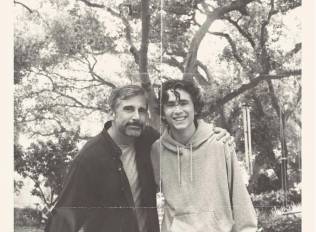
“A really cool expression of the family bond in the film is how the love survives everything that the disease can throw at it. Despite so much trauma, at the very end, you see that that core love never goes away.”The journey from addiction to recovery is a personal one, with details usually confined to family, friends, and maybe a therapist’s office or sobriety fellowship. But what happens when you open the doors to the public, laying bare the trials and triumphs that got you to this point? Since the publication of his father’s award-winning memoir, Beautiful Boy: A Father’s Journey Through His Son’s Addiction, his own memoir, Tweak: Growing Up on Methamphetamines, and his writing for The Fix and other publications, Nic Sheff’s experiences with addiction and his subsequent recovery have played out under the public’s gaze.
Now, with the Amazon Studios wide release of the feature film Beautiful Boyon October 12th, Nic Sheff is going to experience a whole new level of recognition and fame. Now more than ever, anonymity is a thing of the past, but he remains dedicated to his personal recovery and the principles of a healthy program. With the premiere fast approaching, The Fix is honored that Nic took time to sit down and talk to us.
The Fix: How did you and your father decide to initiate and move forward with the movie project? Was it agreed upon from the beginning that your book and his book would be turned into a combined film if successful? How did you go about deciding to combine Tweak: Growing Up on Methamphetamines with the Beautiful Boy story, or was this choice made by the filmmakers?
Nic Sheff: We always thought the best idea was to combine the two books. Right after publication, we met with Jeremy Kleiner, a producer with Plan B Productions, and this is before the company had won two Academy Awards for producing 12 Years a Slave and Moonlight. They were just starting out, but when we sat down with him over dinner, I just felt that he got what we were trying to do with the books. Also, we had a friend in common who had been a heroin addict and had died due to this disease. It gave us an immediate emotional connection.
You have to realize that there have been so many movies about addiction that show the downward spiral of a person as the drugs overtake their life. Many of these films show these people hitting bottom, then end with them dying or getting into rehab and ending on a hopeful note. Although there have been some great movies like that, our idea was to do something different. We wanted to show the effect the addiction has on the family because my Dad had written about it so amazingly in Beautiful Boy. We wanted to combine the family narrative with the addiction narrative.
Along with that combination, we wanted to show a process that so many people experience when they first try to get sober — the cycle of relapse caused by the pain of being without the drugs and having to face your feelings. When the pain comes, we reach out to the one thing that we know has kind of made us happy for so long, and we end up relapsing. As soon as we take the drugs again, they immediately take hold, and we can’t stop. I felt that process of relapsing had never been depicted in films. We wanted a movie that shows how hard it is to get out of that cycle. Ultimately, the answer, if there is an answer, is that there is a love that exists within a family, and that love never goes away. The ending of the movie doesn’t tie up the story with a bow, but it does emphasize that that love is still there. It will never go away. I know that is not true in all cases, but it was true in our story. As a result, I thought it was a really powerful way to end the story.
Nic Sheff Image Credit: UCLA Friends of the Semel Institute Open Mind Community Lecture and Film Series
In an interview with Variety, Timothée Chalamet said about first meeting you, “It was all trepidation on my part — nerves and anxiety — which was immediately settled by [the] extraordinarily warm and kind and intelligent and wise person that Nic is, that is innate to him but also through his experiences and his life.” What was it like for you to meet the actor that would play you and tell your most deeply personal story on film? What do you think stands out about his portrayal of you?
God, that is so sweet of him to say that about me. He’s such a sweet guy. I must admit that I wasn’t familiar with Timothée’s work when we first met at a coffee shop. As soon as he came in, I saw that he has this incredible energy and passion for his work. Sure, I could tell that he was nervous about meeting me, but he also was just so committed to getting it right. I immediately felt comfortable with him because I knew he was coming to the role with a very open mind. He wanted to make his portrayal of this young person struggling with addiction as honest and as authentic as possible. He was so willing to learn in an active way.
He asked me a million questions about everything from the emotions I was feeling to the physicality of what it actually looks like to be high on these drugs and what it looks like to be detoxing from these drugs. There’s something really amazing that Timothée does in the movie. It’s something I feel that I’ve not ever seen in a movie about addiction before. Even as he’s in the trenches and high and doing these unconscionable things like breaking into his parents’ house and stealing from his little brother and sister – at the very moments when he’s being volatile and angry and out of control – he conveys this self-awareness that he doesn’t want to be this person and he doesn’t want to be taking these actions. It seems like his body is almost possessed.
As a performer, Timothée was able to hold those two contradictory elements at once. He really expresses that sense of being trapped in the addiction and the behavior. At the same time, you see him fighting to hold onto who he was before the addiction took over; you can see how much guilt and shame he feels about everything he is doing, even while he is doing it. I thought that was so remarkable because it was exactly how I felt when I was out there. I saw myself doing these behaviors, and I was so horrified at myself, but I couldn’t stop. Indeed, that feeling of powerlessness is so devastating. It’s at the heart of the disease, and to see it captured so well on film I thought was truly remarkable.
At the Colorado Health Symposium in August, you talk about how watching the movie makes you feel so grateful because it’s such an amazing reminder of the miracle of recovery. Is gratitude the very heart of your recovery?
Absolutely. Although I know the film wasn’t made for this reason, I felt that the filmmakers gave me such an incredible gift by making this movie. It is such a visceral reminder of everything we went through as a family. It’s such a great help for me because I’m still very much involved in recovery. It’s a big part of my life every single day. In some ways, however, I have moved on. I write for television now, and I am doing things that aren’t necessarily connected to telling my story and writing about addiction. Seeing the movie, seeing my life reflected back to me, it hit home in a way that I hadn’t felt in a long time. I felt again on a very deep level what an incredible miracle it is that I survived and how much came back to me. My family and I have such a close relationship, and it’s beyond anything I ever thought possible. It makes me so grateful.
Every day, gratitude is such an essential part of my existence. Battling this disease, I have gone through such hell that coming out the other side is something I need to acknowledge on a daily basis. I try to be grateful and to express my gratitude. The amazing thing about being sober is how you learn to appreciate and love the simple moments of life. I am so grateful to be able to go out on a walk with my dogs or go out to dinner with my wife. The little things are so sweet like just watching a movie. Gratitude is a gift of sobriety that I keep close to me.
Like you, I first tried drugs when I was eleven years old, smoking pot. Although I didn’t develop a problem until high school, I know my eyes were opened to that feeling of escape. It felt like an answer. Did you feel this way as well? Do you believe the movie effectively highlights the real dangers of early drug use?
Yes, I felt that way exactly when I first smoked pot when I was eleven. I felt this very immediate sense of relief. Up until that point, I had felt so insecure and uncomfortable in my own skin. I just didn’t fit in anywhere. Smoking pot for the first time felt like the first real answer that I had ever found. I kept turning to drugs to cope with everything from success to failure to shyness and everything in between. Thus, when I wasn’t using, I really developed no skills to handle what life threw at me. I kept going back to the drugs because they were the only coping mechanism that I’d ever learned.
In the movie, I do think we show that relapse is not about having a good time. Most people think addicts relapse because they want to keep the party going. They think we are enamored with this fast-paced life. In my experience, I was just in a tremendous amount of pain, and I kept reaching out to the drugs to try to feel better. I really see that theme well-expressed in the movie. Every time Timothée relapses, it’s because he’s in pain. He doesn’t want to relapse, but he can’t stop himself. He does not know how to break that cycle.
For example, there’s a scene in the movie where Timothée and Steve are smoking pot together. Timothée is in high school, and he’s convinced his Dad to smoke pot with him. In the scene, you see that the Dad is trying so hard to connect with his son on a personal level. He believes that smoking pot with his son might help connect them. However, for the son, he’s already in his disease. All he can focus on is the drug. In that scene, we see how he keeps bringing the topic back to the drugs, and he wants to hear about the other drugs his Dad is doing or has done. He wants ammunition so he can feel justified about his using, and he wants to be exonerated in the process from his feelings of guilt. He doesn’t care about connecting; he cares about what his disease wants him to care about. He’s so obviously obsessed with the drug. I definitely felt like I hadn’t seen anything like that before.
Dr. Gabor Maté writes, “The question is not why the addiction, but why the pain.” What does that quote mean to you? Do you agree with him? Is treating the underlying trauma behind the addiction the key to long-term sobriety?
I think that quote is amazing. It makes me remember my last treatment center. When I got there, they asked, “Why are you here?” I replied, “Because I am an addict, and I can’t stop using meth and heroin.” They said, “That’s not the reason that you’re here. It’s not because of the drugs. It’s because of the feelings that were making you use the drugs.”
I knew right away how true that was for me. As I said, I was in a lot of pain growing up, and drugs were the one thing that I found that made that feel better. I’m sure it’s different for many people, and I am not an expert in addiction. I am just sharing my own experience. It definitely was super helpful for me to start exploring and treating that underlying pain behind the addiction. Some of it was just chemical. Going on antidepressants helped at first, then I was diagnosed as bipolar. Now I am on lithium for the bipolar disorder. All of that stuff helped to address that pain and break the cycle.
To me, recovery is like trying to put together this puzzle. There are all these different puzzle pieces. They are not the same for everyone, but for me, those puzzle pieces have been therapy, medication, fellowship, and 12-step. All of these puzzle pieces come together to allow me to stay sober, and they are all really important. However, they are different for everybody. I wish there was one solution that worked for all people, but unfortunately, that’s not the case.
In Tweak: Growing Up on Methamphetamines, you write, “There is this crazy fear I have of being rejected by anyone – even people I don’t really care about. It’s always better to leave them first, cut all ties, and disappear. They can’t hurt me that way – no one can.” Is this fear at the very core of what drives the escapism of addiction?
That’s a fascinating question. I think it definitely was a big contributor to the pain that I needed to use the drugs to help relieve. As I’ve gotten more long-term sobriety and had the opportunity to work on myself, I have found that I have developed these amazing friendships with other people. I never before had anything like the friendships I have today. Before I got sober, it was too scary for me to be vulnerable enough to have friends. Having friends means the potential of losing those friends. The lasting friendships that I’ve been able to form mean so much to me. It’s such a gift.
You have to realize that my disease wants me to be alone. It wants me to be isolated so it can take control. When I was alone, my disease would be talking to me, and it would make me feel like I wasn’t worth anything. Still, it does take courage to have friendships. Without my recovery, I don’t think it would have ever happened. My recovery and those friendships go so well together.
Worrying does not serve me at all. When I get into that negative headspace, I still have a hard time getting out of it. Luckily, I have friends that I can talk about it with, and they help me get more perspective. They help me take a step back and see again the value of my life. It’s one of the greatest gifts of authentic connection.
You know from firsthand experience how hard the disease of addiction is on families. Should families see this film together? Should parents take their teenagers? If they do, how should they prepare both themselves and their kids for the film before and what should they do afterward?
It’s hard for me to be prescriptive about anything. I really only can express things that come from my own experiences. I do believe that having conversations about this subject are really important for a family to consider. I have learned a lot by going around with the film to screenings and talking with people afterward. The main reason I’m doing it is that this film opens the door to such a great opportunity to have conversations about these issues. Watching this film raises awareness by making it easier for people to have honest talks about this disease.
Even more importantly, it is helping to not only emphasize recovery but also reduce the stigma around addiction that prevents such talk in the first place. From my perspective and beyond my personal stake, I believe the more people that see this film, the better. It will raise conversations that might not have occurred without it.
It made me proud to be connected to this film after I first saw it, and I realized there is nothing glamorous about the drug use in the movie. There is a scene in the movie where the son relapses. He does drugs with this girl, and it doesn’t look like a lot of fun. Instead of presenting it as fun or wild or on the edge like they do in a lot of movies, you really see how much guilt and shame the son has about it. There is no party period. Right after it happens when he’s alone, he breaks down and starts crying.
The power of the movie is that it really shows that the reason people use is because of this pain that they are experiencing. Relapsing tends to be a desperate attempt to escape that pain. It also shows the effect that a relapse has on the family. It was painful to watch it on the screen and kind of relive it again.
Watching the film reminded me of when I first read my Dad’s book. It was so hard to realize and see how much of a negative effect I had on him and my whole family. It was important to me that the film would capture that feeling, and it does it so well. Thus, I believe it would be amazing for families to see this film together. I think it would encourage honest conversation afterward.
The one warning I would add to that recommendation is that for people in recovery, especially early recovery, it can be really triggering to watch the explicit drug use in the film. There are some very intense scenes of IV drug use that could be triggering. I would encourage people in early recovery not to put themselves in a position where they might be triggered. If they are worried that it might be a possibility, then I would recommend that they choose caution and not take an unnecessary risk.
In Tweak: Growing Up On Methamphetamines, you write, “Sure, I buried it. I buried it and buried it and turned away from everything light and sweet and delicate and lovely and became so scared and scarred and burdened and fucked up. But that goodness is there, inside – it must be.” Do you believe this movie can help people struggling with addiction find the goodness within themselves and embrace recovery? If so, how?
Wow! That’s creepy to hear that quote again. I haven’t gone back and read Tweak in such a long time, and hearing it is such a sad reminder of how I was feeling. It amazes me how far my life has come since then, and it makes me feel so grateful.
This movie exemplifies that gratitude by showing in such a beautiful way how much love there is within a family. You really see the love within our family, and it’s a reflection of the way that families are. I am so impressed by the incredible bond between parents and children, and also between brothers and sisters. A really cool expression of that bond in the film is how the love survives everything that the disease can throw at it. Despite so much trauma, at the very end, you see that that core love never goes away.
I remember when I was out using, I had this horrible thing happen. My girlfriend OD’d, and I had to call 911 and do CPR. Thankfully, she came out of it, but she had to go to the hospital. Of course, I went with her, and it was such a wake-up call. I decided I had to do something to stop all of this. I called my Dad, and I told him, “Okay, I don’t want to go into rehab, but I want to come home and get clean on my own.”
My Dad had learned enough at that point to know that wasn’t going to be a good idea, and I wasn’t going to be able to do it on my own. He knew he couldn’t let me come home and put everyone else at risk. He said to me, “No, you can’t come home. I really hope you get help, but I can’t help you unless you’re willing to go into treatment.”
When I heard that from him, I was devastated. It was devastating to hear that from my father. All I wanted to do was come home. I was angry and hung up the phone, but even at that moment, when he said I couldn’t come home, I also recall this profound awareness of his love for me. I knew he wasn’t drawing that boundary because he didn’t care about me. Even after everything that had happened, I instinctively knew that love was still there. In the movie, the themes include that such deep love never goes away and that forgiveness is always possible. For people struggling with addiction, that’s a powerful message that they need to hear and that needs to be heard.
Nic and David Sheff Image Credit: UCLA Friends of the Semel Institute Open Mind Community Lecture and Film Series
Prosecutors argue that the child died because the mother had used methamphetamine and amphetamine.
The homicide case against a Pennsylvania mother accused of accidentally killing her baby with drug-tainted breast milk will move forward, a judge ruled last week during an initial court appearance.
Samantha Jones was arrested in July after an autopsy found methadone, amphetamine and methamphetamine in the dead 11-week-old’s system. The Bucks County mother was charged with homicide from the start, but on Wednesday, Magisterial District Judge Lisa Gaier upheld the charge after hearing more from defense and prosecutors.
“They don’t know what happened here,” defense lawyer Louis Busico said, pointing out that investigators never tested his client’s breast milk. “I’m asking the court not to criminalize the death of this little child.”
But prosecutors argued that the drugs “had no business being inside that baby,” according to a news release.
“We are not alleging that this was an intentional killing of this baby,” prosecutor Kristin McElroy said. “But it certainly was reckless to know these drugs were in your body and continue to breast feed.”
The New Britain Township woman previously told investigators she was prescribed the methadone and that she’d stopped breastfeeding her boy three days before his death, when she switched to formula.
But the morning of April 2, the baby started crying and Jones decided to breastfeed because it was late and she was tired, she told police.
When her husband woke up for work, the baby was crying, so he made a bottle of formula and Jones fed him. Afterward, she fell asleep—and when she woke up an hour later the baby was white, with blood around his nose.
Jones and her mother tried CPR and called 911, but first responders were unable to save the baby, who died that day in the emergency room.
In court last week, Jones’ lawyer tried getting the homicide charge dismissed, saying the woman would never have hurt her boy and that the breast milk hadn’t actually tested for drugs.
“She was a wonderful mother to this little boy. I can tell you she was a loving mother to this little boy, and she was doing everything possible to improve herself and provide both her children and herself with a nice life,” Busico told ABC News. “She has another child who she loves dearly. She has an amazingly close and wonderful relationship with her own mom. But every day is a little piece of hell on earth, make no mistake about it.”
Authorities say the drugs in the truck had a street value between $2,000 and $4,000.
A California ice cream truck was selling much more than just innocent summer treats when authorities caught up with it earlier in the week, alleging that the truck was a front for a drug-dealing business.
Inside the Long Beach truck, cops found a bag of methamphetamine, marijuana in mason jars and small baggies, a box of sandwich bags, a scale, cash and a gun, according to The Long Beach Post. While it wasn’t clear whether the truck was actually selling ice cream, police say that its main purpose was to be a cover for drug sales.
The truck’s operators, George Sylvester Williams, 57, and Monti Michael Ware, 41, were arrested on Sunday afternoon. Williams is being held on $30,000 bail, and Ware is being held on $50,000 bail because he is also facing charges for possessing a gun while dealing drugs and possessing a gun as an ex-felon.
The Long Beach Police Department announced the arrest of the men, both from Long Beach, on Twitter.
Long Beach Police Department spokeswoman Arantxa Chavarria said that the drugs in the truck had a street value between $2,000 and $4,000.
This isn’t the first time that an ice cream truck has been used for cover for an illicit business. In June, authorities in Conyers, Georgia, arrested an ice cream truck driver after a teenager reported that the man was trying to break into a mailbox. When police caught up with the driver, 19-year-old Cameron Callaway, they found marijuana, scales and a gun inside the truck.
“He could very well have been selling marijuana out of the ice cream truck,” said Conyers police Sgt. Kim Lucas.
Neighbors said that they were not surprised, since the truck’s driver hadn’t exactly been inconspicuous.
“What ice cream man delivers ice cream at six in the morning, three in the morning?” said Jerri Rogers, who called police after her daughter saw the driver breaking into the mailbox. “My kids have been telling me, ‘He sells dope.’”
In 2014, another California ice cream truck driver was arrested after reportedly trying to sell methamphetamine to a customer. Kelly Brown, 62, was taken into custody after a witness called police and said, “The ice cream [truck] driver just tried to sell me some drugs,” according to The Huffington Post.
There have also been reports of ice cream truck drivers in Maryland and New York trying to use their vehicles to sell illicit drugs.
Scientists chose to use meth on the brain replica because much is still unknown about the the drug and its effects on the body.
It’s no secret that certain drugs are bad for your brain. However, scientists at Harvard’s Wyss Institute for Biologically Inspired Engineering can now tell you exactly how bad meth is for you, after dosing an artificial brain with the drug and watching the results.
To do this, researchers used organ chips, computer chips lined with living human cells that can be used to test how human organs function and react to substances.
In this case, the researchers were focused on the blood-brain barrier (BBB). This filter normally allows some substances to pass into the brain, while keeping other potentially harmful substances out. Using drugs, including meth, can alter the BBB, making it easier for toxins to reach the brain, according to Motherboard.
To show this and study exactly how it works, researchers dosed a brain chip mimicking the function of the BBB with meth.
“Just like in the brains of people who choose to smoke meth, the BBB chips started to leak,” Kit Parker, professor of Bioengineering and Applied Physics, told Digital Trends. “That’s exactly what happens when you smoke meth—and why you shouldn’t.”
Ben Maoz, one of three lead study authors from the Wyss Institute, said that the team chose meth because it is known to be particularly harmful to the brain.
“Our primary reason for choosing this drug is that it is one of the most addictive drugs responsible for thousands of deaths,” Maoz said to Motherboard via email. “Given this tragic statistic, it is surprising that much is still unknown. Therefore, we sought to use this novel system to unveil the metabolic effect of meth on the different parts of the [neurovascular unit].”
Researchers found that about 10% of the dose of meth went through the BBB, similar to what happens when people smoke meth. Researchers were then able to examine how parts of the brain communicate, giving them insight that they wouldn’t be able to glean without the organ chips.
“The novelty relating to organ chips is that they enable us to carry out what is essentially a ‘synthetic biology’ approach at the cell, tissue, and organ level,” said Donald Ingber, director of the Wyss Institute.
“In this study, we could use this synthetic approach to break down a complex organ—in this case, the human brain—into individual sub-compartments of the brain microvasculature and normally tightly intertwined neuronal networks. Because we can separate out each compartment and control ‘ins and outs,’ while analyzing them with state-of-the-art analytical technologies, we were able to gain insights into how cells within these different compartments communicate with each other.”