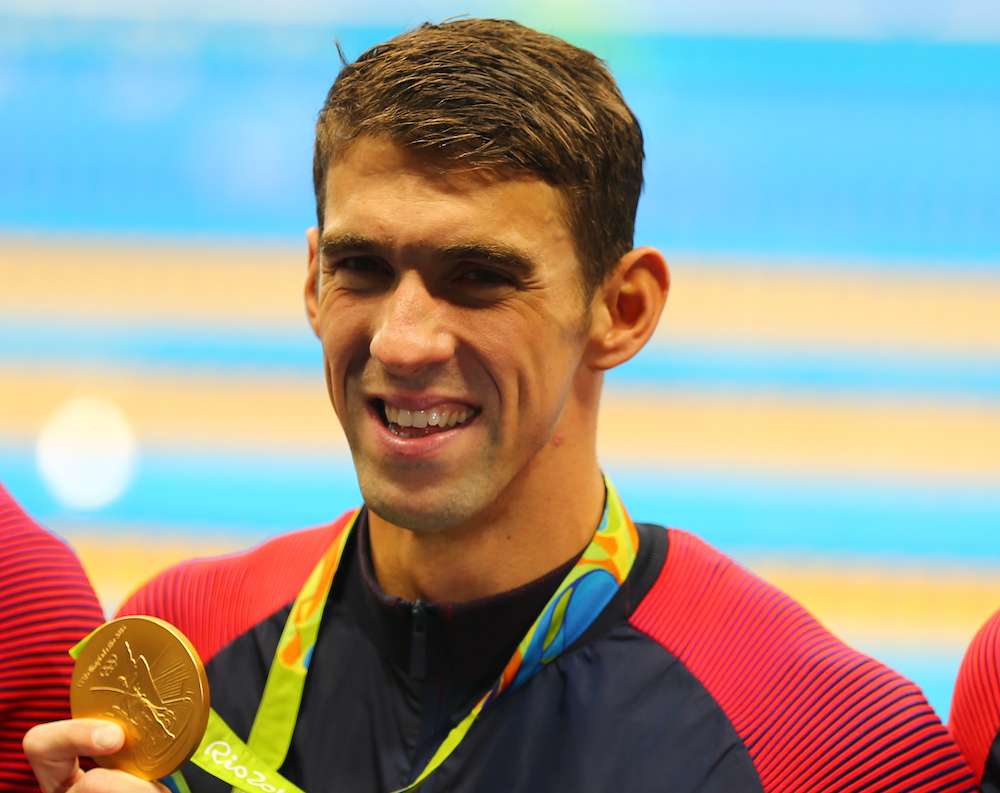
Tag: Michael Phelps

  • Michael Phelps Receives Award For Mental Health Advocacy

    Michael Phelps Receives Award For Mental Health Advocacy

    Phelps has been working to end the stigma associated with mental illness through his nonprofit foundation.

    With 23 Olympic gold medals, Michael Phelps is the most successful Olympian in history—but that didn’t stop him from experiencing mental illness. 

    “Probably my first real depression spell was after 2004, then the next big one was after 2008,” Phelps told the Associated Press in a recent interview, ESPN reported. “When you set out to be an Olympian, your whole life is put on hold. All the eggs are in one basket. I would say 2004, 2008, 2012, partly after ’16 (all Olympic years) I’ve dealt with pretty severe depression spells. I was kind of lost at that point.”

    After two DUIs, by 2014 Phelps checked himself into treatment, and since then he has been a vocal proponent for reducing stigma around depression and other mental illnesses. On Tuesday (May 21) Phelps received the Morton E. Ruderman Award in Inclusion for the work he has done to reduce stigma through the Michael Phelps Foundation.

    “Michael Phelps is a unique leader who has used his fame and status as the greatest swimmer of all time to challenge our society to remove stigma surrounding mental health,” said Jay Ruderman, president of the Ruderman Family Foundation. 

    Phelps never planned to become a mental health advocate. 

    “When I first really opened up about the struggles that I had in ’15, obviously I dreamed of being able to get more publicity to this and to really share my journey and have other people share their journeys with me as well,” he said. “Honestly, I never thought it would be as big as this, but it’s been a true dream to be able to watch the growth that mental health has taken, almost being at center stage.”

    Being able to help other people struggling with depression has meant more to him than his athletic success, he said. “Through this, if I can save one life, two lives, five lives, a thousand, a million, to me that’s so much more important than winning a gold medal.” 

    Phelps said that he has seen firsthand the difference that quality mental health treatment can make. Today, he is married with two children and a third on the way, and he has embraced his new role as a mental health advocate. 

    “When I was in my room and not wanting to talk to anybody for a number of days and not wanting to be alive, I wanted to see what other roads I could take to see if there was help,” he said. “I know it’s something that changed my life and saved my life and allowed me to be able to be where I am today, enjoying the platform of talking about something that’s so important.”

    View the original article at thefix.com

  • Michael Phelps Speaks Out About Battling Depression, Anxiety

    Michael Phelps Speaks Out About Battling Depression, Anxiety

    “I was so down on myself. I didn’t have any self-love and, quite honestly, I just didn’t want to be alive.” 

    Michael Phelps has won 28 Olympic medals, but despite his incredible history as a swimmer he’s also had serious bouts with depression, anxiety and alcoholism.

    Since getting help, Phelps has been very open with the public about what he went through, but he recently admitted on Today that he’s “struggling weekly” with his mental health.

    “From time to time, I’ll have bad days where I do go into a depression state,” Phelps said. “Being an athlete, you’re supposed to be strong and be able to push through anything. My struggles carried on through my career and I hid them well. There are so many people who struggle from very similar things that I go through and still go through… At times, it was a little scary and challenging to go through, but I found a way to get through it and I’m addressing these issues that I have.”

    Phelps has certainly come a long way since he hit his personal bottom in October 2014. Phelps said he was so engulfed in despair, he couldn’t leave the house for five days and felt suicidal.

    He admitted that he had “at least half a dozen depression spells” before this one. He recalled, “I was so down on myself. I didn’t have any self-love and quite honestly, I just didn’t want to be alive. It was a really, really, really crazy time for me and I didn’t want to see anybody. I saw myself as letting so many people down—and myself in particular. That’s hard to carry.”

    Finally something in Phelps clicked, and he “realized that I can ask for help and it’s going to be okay. For me, that’s what changed my life. I never asked for help really ever in my career. That was the first time that I really did that. I was basically on my knees, crying for help.”

    Since that dark time, Phelps has been very involved in getting help for others. He’s on the board of TalkSpace, a teletherapy company, and he was also interviewed for a documentary, Angst, where he discussed his anxiety.

    “I’m lucky to be able to sit down with a therapist and chat and talk and open up,” Phelps says. “It’s challenging for people to do… It’s something that continues to teach me more and more about myself.” 

    View the original article at thefix.com

  • Michael Phelps, Jared Leto & More Join Mental Health Awareness Broadcast

    Michael Phelps, Jared Leto & More Join Mental Health Awareness Broadcast

    Celebs and rock stars will join mental health experts for the live radio broadcast airing on September 9th at 7am.

    Artists, athletes, and mental health experts will come together for a two-hour radio special “I’m Listening,” to help raise awareness of the growing trend of depression and suicide—airing in time for National Suicide Prevention Week (September 9-15).

    Listeners can call in to the program to share stories about how mental health issues and suicide affected their lives. They can also share their stories via ImListening.org or through social media using the hashtag #ImListening.

    The Alternative Press reports that Mike Shinoda (of the band Linkin Park) and Jared Leto (30 Seconds to Mars) will join the live broadcast—which airs Sunday, September 9 at 7 a.m.

    While on the road, Shinoda has been paying tribute to his former bandmate and friend, Linkin Park vocalist Chester Bennington, who died by suicide in 2017, shocking family and fans.

    Michael Phelps will also be a part of the “I’m Listening” broadcast. The celebrated Olympian, who’s won 23 gold medals, has become a vocal advocate of mental health—promoting mental wellness and the importance of seeking help by sharing his own battles with depression, suicidal thoughts and problem drinking.

    Singer Alessia Cara will also appear on the broadcast. The singer and songwriter appeared on the song “1-800-273-8255” (named after the National Suicide Prevention Hotline) alongside rapper Logic and singer Khalid. The song was Grammy-nominated for Song of the Year.

    Actor and musician Jared Leto, the lead singer of 30 Seconds to Mars, and members of Pearl Jam, the Stone Temple Pilots and Third Eye Blind will also be featured on the live special.

    Mental health professionals will also join the broadcast, like Dr. Christopher Nowinski. The former WWE wrestler co-founded the Concussion Legacy Foundation in 2007, and wrote the book Head Games: Football’s Concussion Crisis, which addresses the long-term effects of head trauma in sports.

    Another is Dr. Ursula Whiteside, a clinical psychologist and CEO of NowMattersNow.org, a website dedicated to teaching research-based tools for how to help manage suicidal thoughts and mental health issues.

    Dr. Whiteside, who is certified for group and individual Dialectical Behavior Therapy (DBT), works with high-risk suicidal clients in her Seattle-based practice.

    “Hearing stories about people’s lives helps us understand suicide so we can approach this topic with people we care about,” she said. “I look forward to answering questions via phone and providing resources even after the on-air broadcast has concluded. This is critical given that suicide is something that 4% of Americans seriously consider.”

    Suicide is the 10th leading cause of death in the United States, claiming the lives of nearly 45,000 Americans each year, according to the American Foundation for Suicide Prevention.

    Depression is also widespread. According to WebMD, nearly 18.8 Americans over the age of 18 suffer from major depression. The majority will not seek treatment.

    View the original article at thefix.com