Tag: Michigan

  • Lead Found in Michigan Vape Cartridges

    Lead Found in Michigan Vape Cartridges

    State officials noted that manufacturers outside of the U.S. may still use lead to create their e-cigarette and vape cartridge products.

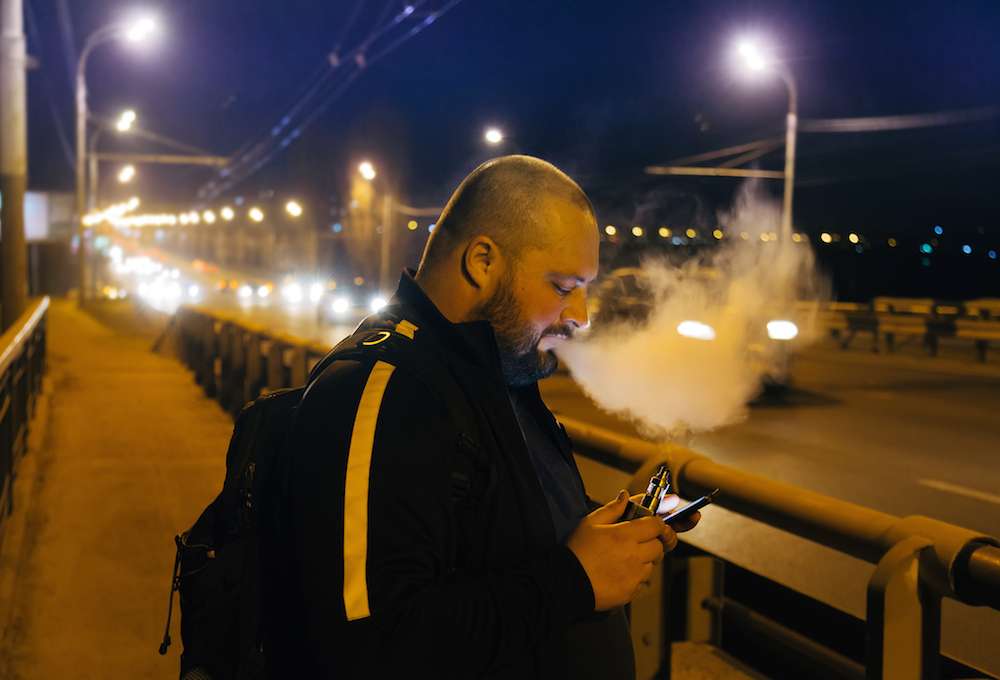
    Officials in Michigan are urging the state’s medicinal cannabis retailers to test their vape cartridges for heavy metals after several brands were found to have been contaminated with lead.

    A safety bulletin issued by the Michigan Department of Licensing and Regulatory Affairs (LARA) revealed that the Bureau of Marijuana Regulation (BMR) had identified and destroyed the contaminated cartridges, and encouraged retailers, as well as patients and caregivers, to have their products tested.

    Studies have shown that lead and other heavy metals, which have been detected in vapors from e-cigarette products, pose significant health risks to users.

    According to the LARA press release, the contaminated cartridges were discovered when the BMR entered the test results in the statewide monitoring system, per Michigan regulations that, as High Times noted, require samples from vape cartridges to be submitted for testing at state labs. The bulletin also noted that lead was not discovered in any ceramic vape products.

    As a result of the test findings, the BMR requested that licensed provisioning centers have their cartridges tested. Medical marijuana patients and caregivers that dispense medical marijuana could also have their cartridges tested for a fee at a licensed safety compliance facility.

    The bulletin also noted that while federal regulations have eliminated the need to add lead to brass or copper products as was done in the past, manufacturers outside of the United States may still use lead to create their e-cigarette and vape cartridge products. Lead and other metal contaminates can leak into the products’ e-liquids when they are exposed to the heating coils. The metals are present in the aerosols produced by heating the liquids, which are then inhaled by the user.

    Researchers at Johns Hopkins University found lead and other metals, including chromium, manganese and nickel, in vapors produced by some e-cigarette products. High Times quoted an interview in Forbes with medical device marketing consultant Rich Able, who said that chronic exposure to these chemicals could have a serious and detrimental effect on users’ health.

    “Neurotoxins such as lead are linked to increased risk of cardiovascular and kidney disease,” said Able. “The other metals listed are even more nefarious to human organs.”

    Able also noted that federal regulation of such products is key to preventing similar incidents of exposure. “To continue manufacturing these devices to the smoking population without further diligence and clinical review is unethical and unconscionable,” he said.


    View the original article at thefix.com

  • Michigan Company Sells Books, Gifts Marijuana, In Legal Gray Area

    Michigan Company Sells Books, Gifts Marijuana, In Legal Gray Area

    Blaze Michigan’s book bundles come with a special “edible” gift.

    While marijuana users in Michigan must wait for legal marijuana shops to open their doors, one store has found a clever workaround—gifting marijuana edibles to people who purchase book bundles. 

    Blaze Michigan sells bundles of books, which can be picked up in person or delivered. Consumers purchase the books, and if they are 21 or older they’ll receive a free gift. With bundle names like the Brownie Edible Book Bundle ($65), Full Vape Book Bundle ($90) and Mary Jane Flower Books ($80), it’s easy to guess what the free gift might be. 

    “You’re buying gifts, and then the gift is unknown. We try to hint at what the gift is going to be, by how we name our book bundles,” Blaze Michigan owner Stephanie Swearengin told WSBT 22

    The bundles are a big hit, Swearengin said. “Pretty much demand has been hard to keep up with for the most part.”

    Michigan became the first midwestern state to legalize recreational cannabis in 2018, but until shops begin opening in 2020, there are no outlets to legally purchase marijuana.

    Swearengin believes she has found a workaround, as she explained on Blaze Michigan’s website. 

    “We’ve talked to multiple lawyers about the issue and as far as we can tell it’s just a large gray area,” she said. “Just like medical dispensaries. I mean with the state and the federal law, it’s already a gray area. Even though medical marijuana has been legal, they can still get shut down by the feds. So if you ask me it’s all kind of gray.”

    However, Cass County Prosecutor Victor Fitz was not convinced that Blaze Michigan’s business model is legal. “People engaging in this activity are definitely subjecting themselves to potential prosecution.”

    Despite the semantics, the intent of businesses like Blaze Michigan is clear, Fitz said. 

    “Certainly when you’re gifting marijuana as part of the incentive of a transaction, that can very easily be interpreted that you are doing it for profit,” he said. “It’s wise for people to follow the law. Tread softly and be cautious. The step you make may end up in causing you to be in court resulting in a civil infraction, a misdemeanor, or even a felony conviction.”

    In 2017, a Massachusetts store was shut down for charging an admission free and then distributing free marijuana gifts to consumers. Recreational marijuana had been legalized in the state, but shops that could legally sell pot were not yet open. 

    “He can no longer do business like he’s doing right now—taking a cover at the door, leaving with a gift of marijuana,” the local police chief said at the time. “It’s not legal in the state to do that. He’s not a licensed distributor of marijuana. That’s yet to come.”

    View the original article at thefix.com

  • Low-Level Weed Cases Not A Priority, Michigan's Top Prosecutors Say

    Low-Level Weed Cases Not A Priority, Michigan's Top Prosecutors Say

    Michigan voters approved a ballot measure to legalize recreational marijuana last week.

    On the heels of a successful ballot measure that legalized recreational weed in Michigan, prosecutors last week put out a statement clarifying that pot is still illegal on a federal level – but they won’t make weed cases a priority. 

    “Marijuana continues to be an illegal drug under federal law,” Matthew Schneider and Andrew Birge, U.S. Attorneys for the Eastern and Western Districts of Michigan, wrote in a statement Thursday, according to the Detroit Free Press. “Because we have taken oaths to protect and defend the Constitution and the laws of the United States, we will not unilaterally immunize anyone from prosecution for violating federal laws simply because of the passage of Proposal One.”

    But – following the lead of federal prosecutors elsewhere – the duo said they wouldn’t make throwing resources at marijuana enforcement a priority. 

    “Our offices have never focused on the prosecution of marijuana users or low-level offenders, unless aggravating factors are present,” the federal prosecutors said. “That will not change.”

    The factors that could pique federal interest in a given case include everything from the involvement of other illegal drugs to suspects’ past criminal records and from the use of guns to the possibility of environmental contamination. 

    The ballot measure approved by 56% of Michigan voters on Tuesday will allow adults over 21 to grow and use weed legally, and it’ll take effect 10 days after the vote is certified.

    “The Proposal 1 campaign boiled down into one of fact versus fear,” Coalition to Regulate Marijuana Like Alcohol Spokesperson Josh Hovey said, according to Forbes. “The data from the nine other states to have legalized marijuana made clear that regulation and taxation are a better solution. Legalization of marijuana will end the unnecessary waste of law enforcement resources used to enforce the failed policy of prohibition while generating hundreds of millions of dollars each year for Michigan’s most important needs.”

    But, while Michiganders greenlit legal pot on Tuesday, the resignation of Attorney General Jeff Sessions a day later created some uncertainty about the future of the nation’s marijuana enforcement policies. 

    Although Sessions was no friend to marijuana reformers, he did clarify earlier this year that he was not interested in pursuing small-time weed cases due to a lack of resources for low-level crimes.

    It’s not clear what a new attorney general might mean for federal approaches to pot. 

    View the original article at thefix.com

  • 80-Year-Old Grandmother Arrested For Expired Medical Marijuana Card

    80-Year-Old Grandmother Arrested For Expired Medical Marijuana Card

    The Michigan-based grandmother was forced to spend a night in jail for letting her medical marijuana card lapse. 

    A Michigan grandmother who spent a night in jail for a small amount of cannabis has had her charges dismissed, and now she’s coming forward with her story to advocate for legal cannabis, which voters in Michigan will have a chance to vote on in November.

    Delores Saltzman, 80, of Clare County, Michigan, has been a medical cannabis patient for about four years, but ran into trouble when she let her registration expire. Saltzman uses cannabis to manage pain in lieu of opioid medication, which she said “caused stomach pains and vomiting.”

    “After I smoke I go down to a one, pain-wise,” Saltzman said, according to ABC 6. “Before I smoke, I would say I’m an 8 right now.”

    Saltzman was arrested on June 13, when Clare County Sheriff’s Deputy Ashley Gruno came to her home looking for her great-granddaughter, who had lost her phone and ID.

    When Gruno smelled cannabis in the home, Saltzman said it was hers. But because her state-issued medical cannabis card had expired, Gruno arrested and charged the grandmother with cannabis possession, a misdemeanor in the state of Michigan. Gruno seized less than an eighth of an ounce of cannabis from the home and Saltzman spent the night in jail.

    The charges were dismissed last week, Marijuana Moment reported, and Saltzman has renewed her registration.

    “Ms. Saltzman was encouraged to obtain her medical marijuana card and if she did so, the case would be dismissed,” said Clare County prosecutor Michelle Ambrozaitis. “She did obtain her medical marijuana card and the case was dismissed.”

    Now Saltzman is sharing her story ahead of November, when Michigan voters will decide if they want to legalize cannabis for adult use. Michigan would be the 10th U.S. state to do so.

    “I’m hoping that we all learn a lesson from this and that we make amends, and people will get out and vote for it,” Saltzman told WXMI. “We’re the ones that have to stand up we are the people, and we just got to fight for our rights.”

    Medical cannabis has been legal in Michigan since 2008, with the vote of more than 60% of Michigan voters.

    According to the Lansing State Journal, there are more than 218,000 registered medical cannabis patients and more than 38,000 caregivers in Michigan.

    Patients may possess up to 12 cannabis plants and up to 2.5 ounces the plant. Qualifying conditions range from cancer and HIV/AIDS to, more recently, autism, arthritis, and Tourette’s syndrome.

    View the original article at thefix.com

  • Celebrity Names Used By Ecstasy Ring To Order Drugs

    Celebrity Names Used By Ecstasy Ring To Order Drugs

    The use of the celebrity names drew the attention of customs agents and led to the eventual takedown of a drug ring.

    A Michigan father and son convicted for their alleged roles in a large-scale ecstasy distribution and manufacturing ring took what may have seemed—at least, to them—a unique approach to disguising their identities in order to reportedly purchase drugs and related paraphernalia for their alleged operation. Federal officials claim that they used the names of celebrities like Tim Allen and Tracy Morgan as aliases.

    Sylvester Boston Sr., and Sylvester Boston Jr., were sentenced to eight and nine years, respectively, in federal prison for their alleged participation in the drug ring, which they are accused of operating from a computer store on Detroit’s west side.

    The Bostons reportedly used the comedians’ names to order a pill press from China, but claimed that the aliases and burner phones used to place the orders were used for privacy reasons. Sylvester Boston, Jr., has denied the charges, claiming that he and his father sold energy-boosting pills, not illegal narcotics.

    The investigation, which was led by agents from U.S. Immigration and Customs Enforcement’s Homeland Security Investigations (HSI), began in 2013 when Customs and Border Protection officers seized an industrial pill press from China with fraudulent labels for shipment—specifically, Tracy Morgan’s name was written on the receipt.

    But the Bostons’ alleged use of celebrity names only drew the attention of customs agents, who opened a package addressed to Tim Allen and found BZP, a Schedule I drug and component in some ecstasy tablets which reportedly produces similar stimulation or hallucinogenic effects as MDMA.

    HSI agents, with the assistance of the Bureau of Alcohol, Tobacco, Firearms and Explosives (ATF), Michigan State Police and the Detroit Police Department began observing the Bostons’ business, S&B Computer Repairs, and used wiretaps to record the father and son reportedly placing orders for drugs and related paraphernalia on disposable cell phones.

    According to the investigation, the Bostons reportedly manufactured the pills using the press and hid them in potato chip bags, which were intercepted by federal agents.

    A raid was conducted on the Bostons’ store in 2014, and agents confiscated drugs, the pill press, multiple weapons and a bulletproof vest. In addition to the Bostons, seven other individuals were convicted for their role in the pill operation, and six received sentences ranging from two to seven-and-a-quarter years, with one individual sentenced as time served.

    In an interview with Detroit’s WDIV Local 4 station, Boston Jr., denied the charges levied against him, claiming that the pills he sold were legal, “caffeine-based” supplements, and blamed his conviction on several factors, including another individual whom he claimed was “part of the Iraq mafia,” an informant who confused his father whom Boston said suffered from schizophrenia; and his own attorney, whom he said forced him to agree to the plea deal that resulted in his nine-year sentence.

    “They pretty much ignore facts,” said Boston Jr.

    View the original article at thefix.com