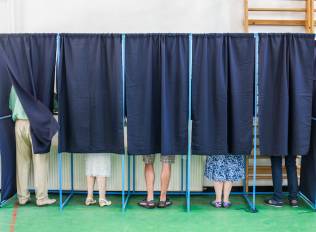
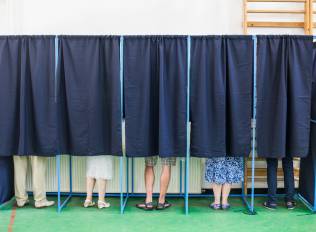
In one of the most talked-about reform wins of the midterm elections, Floridians approved restoring voting rights to most of the state’s roughly 1.4 million felons
Aside from boasting impressive voter turnout, the 2018 midterm elections ushered in a number of wins for criminal justice and drug policy reformers across the country. Florida felons stand to benefit from a ballot measure there, and a trio of successful marijuana initiatives will broaden legal access to cannabis in three states. Those were some of the most-touted changes approved last week, but there’s much more to celebrate (or mourn). Here’s our overview of how drug policy and criminal justice fared at the polls.
A Win for the Felons of Florida
In one of the most talked-about reform wins of the night, Floridians approved restoring voting rights to most of the state’s roughly 1.4 million felons. The ballot measure finally put to rest another piece of a regressive legacy from the days of Jim Crow, bringing the number of states with felony voting bans down to just two: Iowa and Kentucky.
The decades-old dictum was pushed into the state’s constitution after the Civil War, creating a lifetime restriction that only the governor and his Cabinet could overturn on a case-by-case basis.
During former Gov. Charlie Crist’s four-year tenure, more than 150,000 felons were granted access to the ballot box. But since Republican Gov. Rick Scott took over in 2011, just 3,000 formerly incarcerated Floridians have won back that right, according to NPR.
It was a system that disproportionately impacted minority voters; more than a fifth of potential black voters are banned from the ballot box due to criminal records.
But on Tuesday, 64 percent of the state’s voters decided to change that. Now, felons — except for those convicted of murder or sex offenses — regain the right to vote once they finish parole or probation.
It’s a change that could cause ripples far beyond the Sunshine State. Florida is consistently seen as a swing state with narrow margins for its coveted share of electoral votes; a slight shift in the voting population could have national impact.
In 2000, when the tight presidential race came down to Florida, roughly 500 votes separated the two candidates. It’s not clear which way a possible 1.4 million new voters might lean, but we’ll soon find out. The new law goes into effect in January.
Looking Back on Drug Laws
Aside from enfranchising felons, the Sunshine State also made waves with another ballot measure that could help cut the prison population by making new sentencing laws retroactive.
Until now, any time that legislators approved new laws or repealed old ones, the changes didn’t apply to anyone already locked up. The state’s constitution specifically banned that sort of retroactivity under a so-called “savings clause” aimed at preserving convictions, according to the Jacksonville Times-Union.
But now, if someone is sitting in prison on a strict mandatory minimum under a law that’s later repealed or if they’re locked up for something that later becomes legal — they might have a chance of getting out.
Reformers framed the measure as a means of reducing mass incarceration in a state still boasting a record-high prison population. But the change isn’t so much a step ahead as it is a game of catch-up; Florida was the only state with a ban on retroactivity baked into its constitution.
Speaking of Baked…
Four different states voted on pot-related measures last week, with mixed results.
Utah and Missouri both greenlit medical marijuana, joining more than 30 states that already allow it, according to the New York Times.
And, on the recreational front, 56 percent of Michigan voters got behind Proposal 1 to legalize weed for adults. The Great Lake State is now the 10th in the nation to just say yes to pot, a change that will take effect ten days after the election results are officially certified.
But despite three ballot successes and growing nationwide support behind legalizing weed, pot proponents lost out in North Dakota, where 59 percent rejected a measure that would have nixed most marijuana-related arrests. The state already allows medical marijuana, but cannabis advocates faced stiff opposition leading up to Election Day.
“It would have been a disaster for the state,” former state attorney general Bob Wefald, who chairs North Dakotans Against the Legalization of Recreational Marijuana, told the Grand Forks Herald.
Whatever the inclinations of North Dakota voters, the midterms as a whole seemed to cap a strong year for marijuana advocates – and NORML framed it as a sign of more to come.
“In 2019, we anticipate unprecedented legislative activity at the state level in favor of marijuana law reform legislation,” the group wrote on its website, “and we expect to see several significant legislative victories before the year’s end.”
A Blue Wave Sweeps Across the Biggest Incarcerator in Texas
Harris County – which has traditionally sent more people to state prison, more kids to juvenile lock-ups and more inmates to the death chamber than any other county in Texas – was swept away by Democratic candidates in Tuesday’s elections.
While the county – which is home to Houston, the nation’s fourth-largest city – already had Dems for mayor, sheriff and district attorney, many of the judges and some county commissioners were Republicans.
Now, all 59 of the judicial benches that were up for grabs are in the hands of Democrats and at least one socialist. That could have huge implications for progressive system reforms in a county that was already beginning to lean left after years of lock-em-up justice.
For one, the shift could help end the school-to-prison pipeline, as voters unseated the two juvenile court judges who accounted for more than one-fifth of all kids sent to state juvenile prisons. Now, all three of the juvenile benches will be held by Democrats, including a former teacher, a public defender and one of the 17 black women who won out in Houston on Tuesday.
The Election Day shake-up could also have a huge impact on the county’s ongoing bail litigation. Last year, a federal judge deemed the county’s bail system unconstitutional because it amounted to “wealth-based detention” for minor crimes. But the county and 14 of its 16 misdemeanor judges have spent millions in taxpayer dollars fighting that ruling, which has become a contentious issue in Houston criminal justice.
On top of all that, the new county judge — who is the county’s top executive and does not oversee a criminal court — is a 27-year-old Democrat who positioned herself as a justice reformer during the campaign. In a surprise election night upset after a close race, Lina Hidalgo — who came in with no experience in local politics — unseated the Republican who oversaw the county’s response to Harvey.
The Drug War Wins in Ohio
Voters in the Buckeye State rejected a progressive ballot measure that would have made drug possession a misdemeanor instead of a felony.
The would-be constitutional amendment was projected to cut back on the state’s bloated prison population and net millions in savings for taxpayers. Currently, the state-run lock-ups are at 132 percent capacity and, according to Ohio Policy Matters predictions, the rejected measure could have cut the prison population by at least 10,000 inmates.
Unlike in Florida, Ohio already had the ability to make new drug sentencing laws retroactive, so the new measure would have allowed already-convicted prisoners to petition the courts to apply the new law to them. And, aside from opening up the possibility of release for those already behind bars, the measure’s potential retroactivity would have meant that people who have already served their time could avoid some of the collateral consequences of a criminal conviction – like the loss of professional licenses – by having their old felonies turned into misdemeanors.
Backed in part by robust campaigns funded by the likes of George Soros and Mark Zuckerberg, the issue sparked contentious debate, and some argued that it could gut participation in the state’s drug court programs as arrestees wouldn’t have the threat of felony charges hanging over their heads when considering treatment.
But, amid an ongoing opioid crisis in the state, just over 63 percent of voters opposed the measure on Tuesday.
No More Slave Labor in Colorado
Coloradans amended their state constitution to get rid of a decades-old loophole that allowed slave labor in the state’s prisons. Now, the Centennial State can’t force its inmates to work for free.
The constitutional language that allowed the state to use free, forced prison labor dated back to the years after the Civil War, when states – mainly former slave states – started using an abusive convict leasing system to punish crimes, thus effectively reviving slavery under the guise of law-and-order.
Under federal law, that was still possible given the slippery wording of the 13th Amendment which ended slavery “except as a punishment for crime.” Constitutions in Colorado and at least 15 other states mirrored that language which meant that, even long after the end of convict leasing, prisons could force inmates to work for free.
But thanks to Tuesday’s vote in Colorado, that’s now no longer the case. Amendment A nixed the language that permitted slavery, replacing it with a concise sentence banning the practice: “The shall never be in this state either slavery or involuntary servitude.”
To an extent, the shift is only symbolic as the state’s prison labor programs were already considered voluntary, according to NPR.
Roughly 65 percent of voters supported the amendment, according to the Denver Post. But — even though it is 2018 — some 765,000 Coloradans cast votes in support of slavery.
A Loss and a Win for Reformers in Louisiana
Despite the gains for felons’ right in Florida, nearby Louisiana took a step in the opposite direction, passing a ballot measure that explicitly bans felons — unless pardoned — from seeking public office until five years after finishing their sentence.
Nearly three-quarters of voters supported the restriction. Before Tuesday’s decision, Louisiana was just one of three states that allowed felons to run for office as soon as they got out of jail or prison, according to Governing. Everywhere else, they have to wait till finishing parole or probation — if they can run at all.
This isn’t the first time the southern state has sought to ban freshly released felons from bids for office; two decades ago voters greenlit a similar ballot measure, but it was later struck down by the courts.
But the Bayou State offered some good news for reformers as well; Louisiana will now require unanimous verdicts for felony convictions, thanks to a different ballot measure. Previously, only 10 of 12 jurors needed to agree on guilt to put a defendant behind bars.
Food for Inmates
In another reform move from the Deep South, voters in two Alabama counties banned sheriffs from keeping for themselves leftover money intended for inmate food.
More than 86 percent of voters in Cullman County and Morgan County approved nixing the controversial practice that sparked national media coverage. Famously, the sheriff in Etowah County pocketed $750,000 from inmate food funds and then bought a $740,000 beach house.
Months after AL.com reported extensively on the sheriff’s surfside real estate purchase, the governor put out a memo clarifying that it’s not allowed. Now, the ballot measures reiterate that on a local level.