Tag: musicians

  • Elton John Biopic "Rocketman" Gets Childhood Trauma and Addiction Right

    Elton John Biopic "Rocketman" Gets Childhood Trauma and Addiction Right

    Vice’s Ryan Bassil writes that the movie understands how childhood trauma and addiction right.

    The minds behind Rocketman, the new Elton John biopic, understand how childhood trauma can lead to addiction, writes Vice’s Ryan Bassil.

    Rocketman’s narrative is anchored in an Alcoholics Anonymous meeting where Taron Egerton’s fictional Elton John shares his experiences with addiction.

    “I’m Elton Hercules John and I’m an alcoholic, cocaine addict, sex addict, bulimic, shopaholic…” Egerton says in the movie.

    The film has Egerton’s Elton John reflect on major events in his life in the AA meeting, providing audiences with insight into how traumatic events, especially in childhood, can ripple into substance abuse problems later down the line.

    In Bassil’s take on the film, he notes how well the film’s narrative, and Elton John’s real life, is reflected in the writings of Dr. Gabor Maté, author of In The Realm Of Hungry Ghosts: Close Encounters With Addiction.

    Maté defines addiction as “any behavior that a person craves, finds temporary relief or pleasure in but suffers negative consequences as a result of, and yet has difficulty giving up.”

    This is apparent in the movie and real-life Elton John, who spoke on his addictive behaviors in an interview with Variety earlier this month.

    “There were times I was having chest pains or staying up for three days at a time. I used to have spasms and be found on the floor and they’d put me back to bed and half an hour later I’d be doing the same. It’s crazy,” John said in the interview.

    Maté points to childhood trauma as a major factor in addiction.

    “Childhood trauma is the template for addiction—any addiction,” Maté writes. “All addictions are attempts to escape the deep pain of the hurt child, attempts temporarily soothing but ultimately futile.”

    Bassil points out that this narrative is present in the film, shown to the audience in the form of a young Elton John dealing with abuse at the hands of his father and his parents’ divorce. The real-life Elton also reflected on his childhood trauma in the Variety interview.

    “I’ve come to understand—as you get older you understand—the circumstances they went through. I’m not angry or bitter about that whatsoever, but it did leave a scar and that scar took a long time to heal—and maybe it will never heal totally,” he said.

    View the original article at thefix.com

  • Moby on Sobriety: "We Can't Hold On to Crazy, Magical Thinking"

    Moby on Sobriety: "We Can't Hold On to Crazy, Magical Thinking"

    A new memoir by music producer and artist Moby looks back on the highs and lows of his substance use.

    In his new book, Then It Fell Apart, producer/DJ and music artist Moby reflects on his rise to stardom in the early 2000s while struggling with destructive dependencies on alcohol and drugs.

    Moby (born Richard Melville Hall) has been sober for the past 11 years, during which he’s continued to create new music—most recently Long Ambients 2 (2019), his follow-up to 2016’s Long Ambients 1: Calm Sleep—and oversee several ventures outside recording, including a nonprofit vegan restaurant.

    The new book—which picks up where his previous memoir Porcelain (2016) left off—details his attempts “to fix childhood trauma with egregiously bad and clueless adult decisions. Not surprisingly, it didn’t work.”

    That early trauma—which included sexual abuse and his father’s suicide—was only exacerbated by his ascent to fame with albums like 1999’s Play and 2002’s 18. Though his music had made him globally famous, Moby reports in Apart that he was plagued by loneliness and panic attacks, which he began experiencing after using LSD as a teenager.

    “My belief, before I got sober, was that fame was going to fix my feelings of inadequacy,” he told San Francisco’s KQED. When that didn’t work, he turned to drugs, alcohol and sex. “I longed for things to work in that way,” he recalled. “I wanted to be fixed by these unhealthy external things.” But as he discovered, the combination only added to his internal misery.

    In 2002, Moby sought to gain sobriety and insight into the reasons for his personal struggles. He finally stopped using in 2008, and has remained clean since then. Of his journey, Moby said, “Part of sobriety—and a degree of spiritual fitness—is that we can’t in adulthood, hold onto crazy, magical thinking.”

    Then It Fell Apart ends just before Moby became sober; he told KQED that he’s saving that part of his story for a third volume, which will focus less on recovery and more on his pursuit of spiritual integrity. “I’m not a Christian, but my life is geared towards God, understanding God, trying to do God’s will,” he said. “Keeping in mind, I have no idea who or what God is.”

    He’s also learned to enjoy his time just outside the glare of the celebrity spotlight. “It’s really nice to just accept age, accept hair loss, accept diminishing commercial viability,” he explains. “Accepting these things and trying to learn from them is a lot more enjoyable and a lot healthier than angrily fighting entropy.”

    View the original article at thefix.com

  • Slipknot’s Corey Taylor Talks Social Media Addiction In New Book

    Slipknot’s Corey Taylor Talks Social Media Addiction In New Book

    The singer reveals his battle with social media and addiction in his new book.

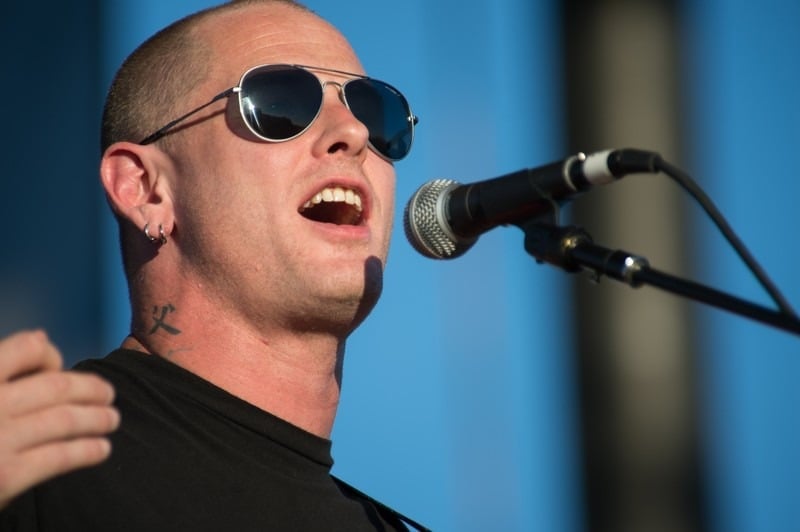
    Corey Taylor, the lead singer of Slipknot, has been very open with the public about his struggles with addiction, and in his next book, he’ll be confessing an addiction to social media.

    As Loudwire reports, Taylor will examine the link between addiction and social media in his new book, and it’s apparently something he understands firsthand.

    “There’s a flare in addiction right now and it’s one of the things I’m working on in my new book,” he explains. “There’s a correlation between that and social media – all of the shit that’s been triggered because of social media, the same kind of dopamine trigger. It’s compulsion, gratification, compulsion, gratification. It’s just a constant cycle.”

    Taylor admits he had become addicted to social media himself, adding he had “just gotten separated and I kind of went down a crazy wormhole and I was really depressed . . . I had just been through hell. Before, you’re a single guy, you go out, you play the scene, you do whatever. Now, you’ve got all this crazy shit at your fingertips. For an addict, it was fucking nuts.

    “Instagram, Twitter… it took me a while to get out of it,” Taylor continues. “For about three months solid, that’s all I did, ignoring my fucking duties and shit. The only time I would really fucking get away from it was when I was with my kids. Then the compulsion would come right back and I was like, ‘What is going in?’ It took me so long to settle that compulsion down … If I could get rid of it all, period, I would.”

    As far as Taylor’s belief that his addiction transferred to social media, there is certainly a lot of speculation these days about whether social media could be a true addiction that needs to be taken seriously. Many reports have found a link between social media and depression, and recently Marc Benioff, the CEO of Salesforce made the analogy between social media addiction and the cigarette industry.

    “It’s addictive,” Benioff told CNBC. “It’s not good for you. There’s people trying to get you to use it that even you don’t understand what’s going on. The government needs to really regulate what’s happening.”

    View the original article at thefix.com

  • John Mayer Details Giving Up Alcohol After Drake's Birthday Party

    John Mayer Details Giving Up Alcohol After Drake's Birthday Party

    “I was in my sixth day of the hangover… I went, ‘OK, John, what percentage of your potential would you like to have?’”

    Singer-songwriter John Mayer hasn’t had a drink in two years.

    “I just went deep one night, and I remember being like, ‘What happens if I keep going?’” he said in a new interview with Complex.

    The decision was simple. “It was Drake’s 30th birthday party, and I made quite a fool of myself,” he recalled. “And then I had a conversation with myself. I remember where I was. I was in my sixth day of the hangover… I went, ‘OK, John, what percentage of your potential would you like to have?’”

    There was no wrong answer, he told himself. But in the end, he wanted it all—100%.

    “The voice in my head said, ‘OK. Do you know what that means?’ I went, ‘We don’t have to talk anymore. I get it.’”

    The “Your Body Is a Wonderland” singer is hoping to show people that there are alternatives to drinking. “I want people to know that ‘that’s enough for now’ is on the menu, so to speak,” he said on social media October 2017.

    Giving up drinking—a very personal experience, he says—paved the way to new things. “The next year, I did four tours, I was in two bands, I was happy on airplanes.”

    Not drinking “feels like boredom at first,” he explained. But sticking with it will level everything out. “You’re like, ‘Oh, I”m not having these high highs.’ But if you work, you can bring the whole line up.”

    Mayer says because it is different for everyone, it’s hard to explain how he came to quit booze on his own.”It’s the most personal thing to people. If I were to tell other people how they could do it, it just is so particular to your own spirit and your own psychology that it’s almost impossible to develop one way of explaining it to someone else.”

    Mayer also recalled collaborating on a song with late rapper Mac Miller (born Malcolm McCormick). The Pittsburgh native died of a drug overdose on Sept. 7 in his home in Studio City, California.

    “I just wish it wasn’t fatal. I just wish figuring out your life didn’t take your life away from you,” Mayer says. “I don’t have an answer for how to fix that, but once you get old enough to understand how valuable life is, you look at people and go, ‘I just wish you could work this out.’”

    View the original article at thefix.com

  • The 1975’s Frontman Matty Healy: I Thought I Was A "Good Drug Addict"

    The 1975’s Frontman Matty Healy: I Thought I Was A "Good Drug Addict"

    The now-clean frontman of the band The 1975 reveals he was struggling with heroin addiction last year.

    Matty Healy, frontman of rock band The 1975, revealed in an interview with Billboard that he was under the influence of drugs for a large portion of 2017 but has since cleaned up his act.

    He first realized he may have a problem when he embarked on a benzodiazepine-fueled ego trip, ranting at his bandmates after they discovered he was smoking heroin again.

    “Listen, everyone has to get onboard because I’m the f—ing main deal,” Healy recalled telling his fellow band members, who have known him since they were in high school. “If you want the songs, we’re just going to have to get on with it.”

    He told them he planned to detox after they start recording their third album. But the next morning, he had regrets over the way he acted towards them.

    “I realized that was absolutely f—ing bulls—,” he told Billboard. Finding his bandmate George [Daniel], Healy told him “I should go to rehab.”

    Healy went to a Barbados rehab in November and stayed for seven weeks. While he is now clean of heroin, he recalls a time when he would be able to dump the habit for weeks at a time only to relapse when he was off on his own. Healy thought he was a “good drug addict,” but realized that the addiction could very easily cost him everything.

    “People had started to lose respect for me, but not an irredeemable amount,” he said.

    To hold himself accountable, he’s promised to take a drug test every week in front of his bandmates.

    Healy reflects on his struggles with heroin in the song “It’s Not Living If It’s Not With You” on the band’s upcoming album, A Brief Inquiry Into Online Relationships, and it’s definitely not a song meant to romanticize drugs.

    “I don’t want to fetishize it, because it’s really dull and it’s really dangerous,” he told Billboard. “The thought of being to a young person what people like [William S.] Burroughs were to me when I was a teenager makes me feel ill. … I still risked it.”

    Since getting clean of heroin, he’s also realized that he’s wasted time chasing things he thought would make him happy, but this pursuit does nothing for your own self-esteem.

    “I thought it would be like, ‘Ooh, a bit of gold, a Rolls-Royce’ — I never had a Rolls-Royce — ‘drugs with a pop star, shag that pop star’ — I didn’t shag any pop stars — all of the trappings of a music video,” he reflected. “And what you realize is the pursuit of happiness is this Sisyphean thing for most people. Thinking that the goal is to be happy is a bit mad. It’s more about fleeting moments of joy and knowing that life is hard.”

    While he is clean of heroin, Healy still chooses to smoke marijuana.

    View the original article at thefix.com

  • Turkish Rapper Ezhel On Trial for Encouraging Drug Use

    Turkish Rapper Ezhel On Trial for Encouraging Drug Use

    Prosecutors cite the rapper’s lyrics as dangerous examples for impressionable Turkish youths.

    Turkish rapper Ezhel faces up to 10 years in prison for “encouraging drug use in his songs,” according to the Hürriyet Daily News. It’s also the second time this year that the 28-year-old rapper has been charged with promoting drugs in his lyrics by anti-narcotics police.

    In recent years, Ezhel (born Ömer Sercan İpekçioğlu) has found both significant critical and commercial success. Following the release of his acclaimed 2017 album Müptezhel, Ezhel has made several high-profile live performances (including one with U.S. rapper Wiz Khalifa), not to mention garnering millions of views on his official YouTube channel.

    Unfortunately, it seems as if Ezhel’s success has put a target on his back when it comes to Turkish authorities, who are taking aim at the pro-drug messages he purportedly layers into his music. “Both [his] lyrics and the narrative of the songs as a whole” promote drug use, the latest indictment argues.

    The Istanbul Chief Prosecutor’s Office leveled its newest charges against Ezhel on July 11, less than a month after the rapper was last acquitted. Prosecutors routinely cite his Ezhel’s lyrics (“The brighter the lights, under the influence of marijuana, taking puffs”) as well as photos shared on Twitter (one in particular shows him with “the outlawed cannabis sativa plant”) as dangerous examples for impressionable Turkish youths.

    In his previous arrest, Ezhel defended himself by claiming his lyrics were nothing more than rhymes and that “he was not aware that he committed a crime with pictures and lyrics,” the Daily News noted.

    Ezhel’s latest arrest was met with an almost immediate public outcry in Turkey, with the hashtag “#FreeEzhel” immediately trending on Twitter and countless others expressing their support on social media.

    As prosecutors decried the rapper’s promotion of drug use via social media channels, anti-narcotics officers also paid a visit to Ezhel’s home, searching for illegal substances. “No element of a crime was found,” the Daily News reported, though THC metabolite (the active substance in cannabis) was, however, found in the rapper’s blood sample.

    Regardless, many supporters and fellow Turkish musicians believe his arrests are attempts to “censor his critical voice.”

    A member of an Istanbul-based music group told the UK’s Independent that the arrests say less about Ezhel’s music than it does continued tensions between free speech and censorship in their country.

    “It’s so sad to see this is really happening in Turkey,” the anonymous musician said. “[Ezhel] is a really talented musician and definitely doesn’t deserve to be in jail. He inspires people in a good way—not in a bad way. Let’s support art and not punish the people creating it.”

    Ezhel’s manager Riza Okcu applauded the “#FreeEzhel” movement and echoed sentiments that “writing a song cannot be a crime” in Turkey. “The government should arrest the real criminals,” Okcu added, saying that “rap music tells the truth about what happens in the streets.”

    Unfortunately, no matter what support Ezhel receives from the public, Turkish law carries a sentence of five to ten years in prison for “encouragement of drug use.”

    View the original article at thefix.com