Tag: naloxone access

  • New York Overdose Deaths Decline Slightly After Rising For 7 Years

    New York Overdose Deaths Decline Slightly After Rising For 7 Years

    “The decrease in drug overdose deaths is promising but far too many New Yorkers are still dying,” said New York Health Commissioner Dr. Oxiris Barbot.

    The official report for 2018 drug overdose deaths in New York City has been released, showing a slight 2.6% decrease from 2017 after being on the rise for seven years. Last year, there were 1,444 overdose deaths within city limits, compared to just 541 in 2010.

    Experts see this as a promising start after the city put forth millions of dollars in efforts to address this problem, particularly as the opioid epidemic has raged on. However, overdose deaths are still too high for anyone’s liking.

    “The decrease in drug overdose deaths is promising,” said New York Health Commissioner Dr. Oxiris Barbot, according to NBC. “But far too many New Yorkers are still dying.”

    The U.S. has experienced a “third wave” of the opioid epidemic in recent years due to the increasing prevalence of the highly potent fentanyl. This particular drug is often added to other illicit substances such as heroin or cocaine to increase the euphoric effect, and has been attributed to the heightened death toll of the opioid crisis.

    Around 80% of New York’s overdose death cases from 2018 involved an opioid, with around 50% involving cocaine.

    A Little Relief

    Thankfully, preliminary reports on overdose deaths throughout the country have suggested an overall downturn in the number of fatal cases after several years of severe and alarming spikes.

    Much of the nation’s efforts to combat the opioid epidemic have revolved around increasing the public’s access to naloxone, the drug that blocks opioid receptors in the brain, halting the effects of an overdose.

    Campaigns have been launched across the U.S. to install naloxone kits alongside general first aid kits in public places such as airports and hotels and to recruit people to act as “community responders,” using apps and widespread community involvement to save lives.

    Naloxone Access

    New York City alone has distributed around 230,000 naloxone kits in two years. The medication commonly comes in an easy-to-deploy nasal spray, which anyone can purchase from a local pharmacy and carry with them in case they or someone nearby suffers an overdose.

    Local governments have also invested in facilitating access to addiction treatment programs and businesses have contributed by implementing overdose detection technology in customer bathrooms in places like coffee shops and fast food establishments.

    Unfortunately, some possibly overlooked populations still saw a rise in the number of overdose deaths in New York, including among older adults ages 55 to 84.
    View the original article at thefix.com

  • New Jersey To Give Away Free Naloxone On June 18th

    New Jersey To Give Away Free Naloxone On June 18th

    The lifesaving medication will be available for free at select pharmacies in the state thanks to a new program. 

    New Jersey has launched a progressive initiative to combat the opioid epidemic. Naloxone, the opioid overdose reversing drug, will be available on June 18 for free through select New Jersey pharmacies.

    The pilot program was created through the New Jersey Board of Pharmacy and includes a number of large chain pharmacies including Walgreens, Rite Aid and CVS across New Jersey.

    Naloxone, brand name Narcan, is a drug that can be given through injection or nasal spray. Naloxone binds to opioid receptors in the brain and reverses opioid overdose.

    A large study looked at the possible benefits of Narcan availability in combating opioid overdose deaths.

    The paper, published in Addictive Behaviors, found conclusive positive results, and read, “Naloxone access and Good Samaritan laws are associated with 14% and 15% reductions, respectively, in opioid overdose deaths. Among African-Americans, naloxone and Good Samaritan laws reduce opioid overdose deaths by 23% and 26% respectively. Neither of these harm reduction measures result in increases in non-medical opioid use.”

    Not only did naloxone prevent many deaths, it did not have any unintended harmful side effects, such as increased opioid use. The study recommended that all opioid users, including those prescribed opioids for medical reasons, keep naloxone available at home.

    New Jersey Governor Phil Murphy is a staunch supporter of the new initiative. “The scourge of opioids continues to devastate families and communities across our state, and we must do everything we can to end the opioid epidemic,” said Murphy. “Through this initiative, people who are battling with addiction will be able to receive access to this critical medication and help them get on a path to recovery.”

    When naloxone is made available for free on June 18th at select pharmacies, it will be given away on a first come, first serve basis, no appointment necessary.

    The NJ Department of Health and the NJ Department of Human Services were recently granted $6 million for a program that will address overprescription of opioids in the medical community.

    New Jersey had over 3,000 opioid overdose deaths last year.

    “We are making the opioid overdose reversal drug naloxone available for free on June 18 to help New Jerseyans have the tools they need to support their friends and loved ones and to give us every opportunity to save lives and connect people with opioid addiction to treatment,” said NJ Human Services Commissioner Carole Johnson. 

    To see a list of participating pharmacies click here.

    View the original article at thefix.com

  • Community Of Responders Campaign Aims To End Overdose Deaths

    Community Of Responders Campaign Aims To End Overdose Deaths

    The program’s goal is for naloxone to be deployed within six minutes of an overdose starting, drastically increasing the chances of the victims’ survival.

    A new campaign growing out of Green, Ohio aims to turn community members into lifesaving first responders who are ready to act in case of an opioid overdose. Combining the efforts of Cover2 Resources, NaloxBox, NaloxoFind, Project DAWN and ODMAP, the Community of First Responders (CFR) is the first of its kind in the U.S.

    CFR was organized by Greg McNeil, founder of Cover2 Resources. McNeil lost his son, Sam, to a heroin overdose and has since dedicated his life to combating the epidemic of opioid overdose in the country.

    His latest endeavor began early this year when he met one of the creators of NaloxBox—wall-mounted boxes similar to those containing AEDs but that contain naloxone, an opioid overdose reversal drug. These boxes can be installed anywhere, including public buildings and businesses.

    McNeil was then connected to the founder of NaloxoFind, an app that allows anyone to find naloxone locations in the area. Combining these two just made sense, but McNeil’s primary concern was that ambulances often take too long to reach individuals suffering an overdose. 

    “When a 911 call comes in about an overdose, first responders have six minutes to respond before there is brain damage,” McNeil explained to The Fix. “In 10 minutes, they’re gone.”

    For maximum life-saving potential, McNeil came up with the idea to recruit members of the public to keep naloxone on their person and respond to overdose cases after being alerted via text message when one is reported nearby. The hope is that this program will allow naloxone to be deployed within six minutes of an overdose starting, drastically increasing the chances of the victims’ survival

    Green, Ohio will be the testing ground for this program. McNeil had worked previously with Green Mayor Gerard Neugebauer, who was described as being very supportive of the CFR program. NaloxBoxes have already been approved for parts of the city that are most prone to seeing overdose cases. 

    “The installations will take place over the next two weeks in five hotels along the I-77 corridor covering all three interchanges in the City of Green and at Akron Canton Airport,” said McNeil. “To the best of our knowledge, these are the first NaloxBox installations in hotels and airports in the country.”

    The official launch date for CFR is June 20, when McNeil and other leaders in the fight against the opioid crisis will host a community event presenting the new program, holding a live demonstration, and treating guests to a to-be-announced musical guest. 

    So far, the Green community has been overwhelmingly supportive of CFR even before its launch—and McNeil has set ambitious goals for its future.

    “Our immediate goal is to complete installation and training for all participating hotel and airport personnel by our event launch. After the official launch of the CFR program, our goal will be to double the number of participating businesses by the end of the year.”

    Check out the Cover2 Resources podcast for more information.

    View the original article at thefix.com

  • Inside The Push For Over-The-Counter Naloxone

    Inside The Push For Over-The-Counter Naloxone

    The FDA has recently taken an unprecedented step to kickstart the development of over-the-counter naloxone products. 

    Last week the FDA took an unprecedented step to make the anti-overdose drug naloxone directly available to opioid users.

    Currently, naloxone requires a prescription. But in an effort to make approval for non-prescription versions of the drug easier for pharmaceutical companies to get, the FDA developed sample labels that would meet federal Drug-Facts Label requirements for over-the-counter products. It marks the first time the drug agency has ever proactively created labelling to expedite the process.

    “Naloxone is a critical drug to help reduce opioid overdose deaths. Prevention and treatment of opioid overdose is an urgent priority,” the agency wrote in an unsigned statement. “Increased availability of naloxone for emergency treatment of overdoses is an important step.”

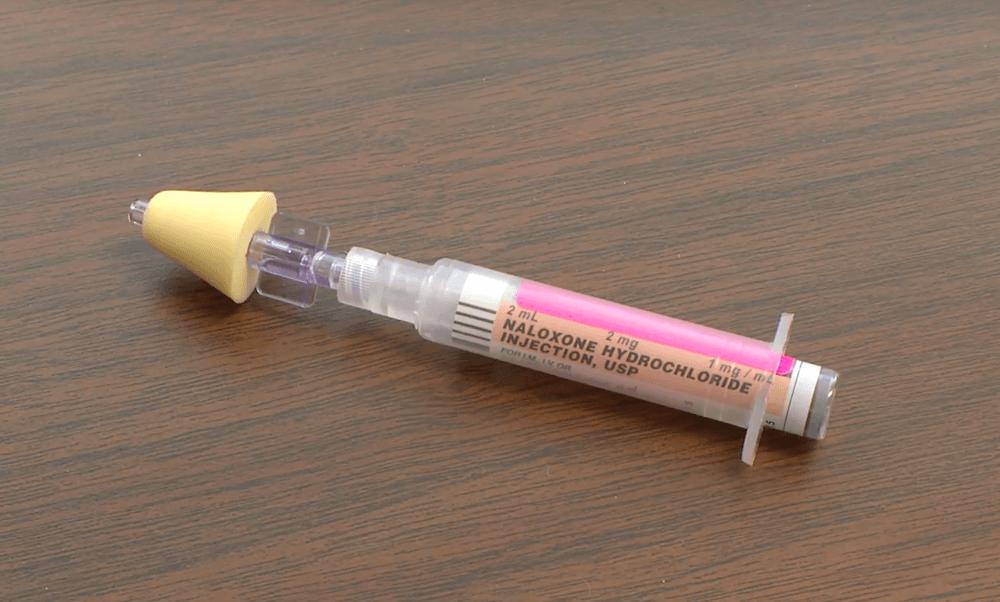
    The agency created two model labels, one for a nasal spray version of the drug and one for an auto-injector version. Both versions include a short information box about the drug and its uses, followed by an illustrated guide on how to administer the life-saving treatment and a warning about the drug’s expected effects.

    “These efforts should jumpstart the development of OTC naloxone products to promote wider access to this medicine,” the FDA wrote. The agency tested the labeling through a research contractor to verify that potential users could understand the images and warnings.

    “This work builds on our ongoing efforts to get this life-saving drug into the hands of those who need it most,” the statement continued. “In addition to the approval of injectable naloxone for use in a health care setting and both prescription auto-injector and intranasal forms of naloxone, which facilitate use by laypersons, we also released draft guidance to advance development of generic naloxone hydrochloride nasal spray.”

    The move comes amid a long-term rise in overdose deaths, as close to 48,000 people died from opioids in 2017 – double what the figure was seven years earlier, according to the federal agency. Overdoses can cause drug users to lose consciousness and stop breathing, but naloxone reverses those effects if given quickly enough. 

    Though the injectable version is pricier, a two-pack of the brand-name nasal spray version sells for about $125, according to CNBC. The generic is around $40 per dose. In theory, offering up a label that could make over-the-counter access easier might help lower those figures further by eliminating the need for would-be buyers to spend money on seeing a doctor for a prescription.

    “While the person administering naloxone should also seek immediate medical attention for the patient,” the agency said, “the bottom line is that wider availability of naloxone and quick action to administer it can save lives.”

    View the original article at thefix.com

  • Why Some Pharmacies Still Fail To Carry Naloxone

    Why Some Pharmacies Still Fail To Carry Naloxone

    Though many states have passed laws to expand naloxone access, some pharmacies have been too slow to get onboard with carrying the life-saving medication.

    According to new research, expanding access to naloxone still has room for improvement.

    Two new studies that surveyed pharmacies in California and Texas suggest that access to the opioid overdose “antidote” is still not optimal, despite the passage of laws across the U.S to expand naloxone access.

    Both California and Texas have passed laws that allow pharmacists to dispense naloxone without a prescription. But some pharmacies are still not on board with the new policies.

    “There is still significant room for improvement with regards to making this potentially lifesaving medication available to patents who need it,” said one researcher.

    Just 23.5% of retail pharmacies in California were dispensing naloxone sans prescription two years after the new policy was established. Dr. Talia Puzantian and Dr. James Gasper, who co-authored the research, say this may be due to a lack of training, stigma about substance use, and time, according to Family Practice News.

    In Texas, 83.7% of pharmacies surveyed said they would dispense naloxone without a prescription, while 76.4% said they currently stocked naloxone.

    The benefit of increasing access to naloxone—not only to first responders and medical providers, but the public—is to save lives, says Texas study lead Kirk Evoy of the University of Texas at Austin College of Pharmacy and University Health System in San Antonio.

    “Being able to administer naloxone immediately, while waiting for emergency medical services to arrive, greatly increases the chances of survival and reduces the risk of long-term negative health consequences, because the body cannot last long without oxygen,” Evoy said.

    Improving access to naloxone is just one way to lessen the death toll of the opioid crisis.

    The total number of drug overdose deaths in 2017 is projected to exceed 72,000, according to the Centers for Disease Control and Prevention (CDC).

    “I do not know how many of these people overdosed alone,” says Dr. Seth Landefeld of the University of Alabama at Birmingham in an editorial accompanying the research. “But ready availability of naloxone would undoubtedly have saved many lives.”

    While all 50 states and the District of Columbia have enacted some form of a naloxone access law, all but Nebraska allows for a pharmacist to dispense the drug without a prescription, according to PDAPS (Prescription Drug Abuse Policy System).

    Other naloxone access laws include providing immunity from criminal or civil liability for prescribers, pharmacists, and laypeople for dispensing or administering the drug.

    View the original article at thefix.com